



















Many people install LED lights and expect smooth dimming. Then flicker appears. Lights buzz or refuse to dim properly. The real issue is often misunderstood TRIAC dimming technology.
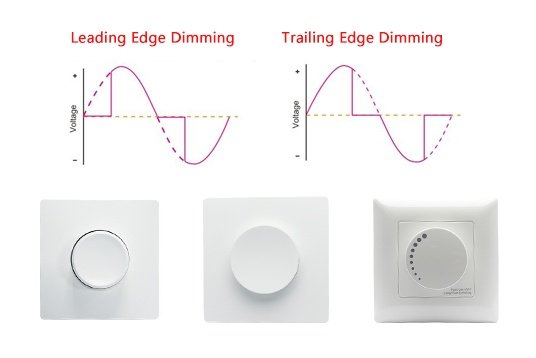
TRIAC dimming works by cutting part of the AC waveform using phase-cut control. Forward phase removes the beginning of each cycle, while reverse phase removes the end. This reduces the power delivered to the LED driver and lowers light output.

TRIAC dimming has existed for decades. It started with incandescent lighting. Today many LED systems still rely on it because the installed base of wall dimmers is huge. I often help customers understand how this old technology interacts with modern LED drivers.
Understanding the difference between forward phase and reverse phase dimming helps avoid flicker, buzzing, and compatibility problems. In this guide I will explain how TRIAC dimming works and how to design a stable LED dimming system.
What Is TRIAC Dimming in LED Lighting?
Many engineers assume TRIAC dimming is outdated. But many lighting projects still use it. Problems appear when LED drivers do not work correctly with these dimmers.
TRIAC dimming is a phase-cut dimming method that reduces AC power by cutting part of the waveform using a TRIAC semiconductor switch. LED drivers then convert the reduced input power into lower LED current, which decreases brightness.
Understanding the Core Principle
TRIAC stands for Triode for Alternating Current. It is an electronic switch that controls AC voltage.
When the dimmer delays the moment the TRIAC turns on, it removes part of the AC waveform. This process is called phase cutting.
The LED driver receives less energy per cycle. So the output current drops and the LED becomes dimmer.
Key Components in a TRIAC Dimming System
| Component | Function |
|---|---|
| หรี่ TRIAC | Cuts AC waveform to control power |
| AC mains supply | Provides alternating current |
| LED driver | Converts AC to regulated DC current |
| LED load | Produces light |
Why TRIAC Dimming Is Different for LEDs
Incandescent bulbs behave like resistors. When voltage drops, brightness drops smoothly.
LED systems are different. They require a driver circuit that regulates current.
So the dimmer does not directly control the LED. Instead it changes the input waveform to the driver. The driver must interpret that waveform correctly.
My Experience in Real Projects
In many projects I review driver specifications. I always look for tested dimmer compatibility lists.
If a supplier only writes “TRIAC dimmable” but does not provide tested dimmers, the product usually has limited compatibility. I have seen many installations suffer from flicker because of this.
Professional LED driver manufacturers normally provide:
- Tested dimmer model lists
- Dimming curves
- Minimum load information
These details show the driver was designed for stable TRIAC dimming.
How TRIAC Phase-Cut Dimming Technology Works?
Many people think dimming simply reduces voltage. But TRIAC dimming works differently. It modifies the AC waveform instead of lowering voltage continuously.
TRIAC phase-cut dimming controls brightness by delaying the conduction angle of the AC waveform. The dimmer turns on the TRIAC at a specific phase angle, allowing only part of each AC cycle to reach the LED driver.
Step-by-Step Operation
The process is simple but precise.
- AC voltage begins a new half cycle.
- The dimmer waits for a delay time.
- The TRIAC switches on.
- Remaining voltage passes to the load.
The delay determines brightness.
| Phase Angle | Power Delivered | ความสว่าง |
|---|---|---|
| 0° | 100% | Full brightness |
| 60° | ~75% | Medium brightness |
| 120° | ~40% | Dim |
| 150° | ~20% | Very dim |
Conduction Angle Explained
The conduction angle is the portion of the AC cycle allowed to pass.
A smaller conduction angle means less energy reaches the LED driver.
Why Drivers Must Handle Distorted Waveforms
Phase-cut dimming produces a waveform that is not smooth. It contains sharp edges and harmonic noise.
LED drivers must include special circuits:
- Input filtering
- Energy storage
- Dimming detection
Without these features the driver may misinterpret the waveform.
Real Design Challenge
In driver design the hardest part is low-end dimming stability.
At very low conduction angles the driver receives very little energy. Poor driver designs will:
- Flicker
- Drop out
- Jump brightness levels
Good drivers maintain stable output even when the conduction angle is small.
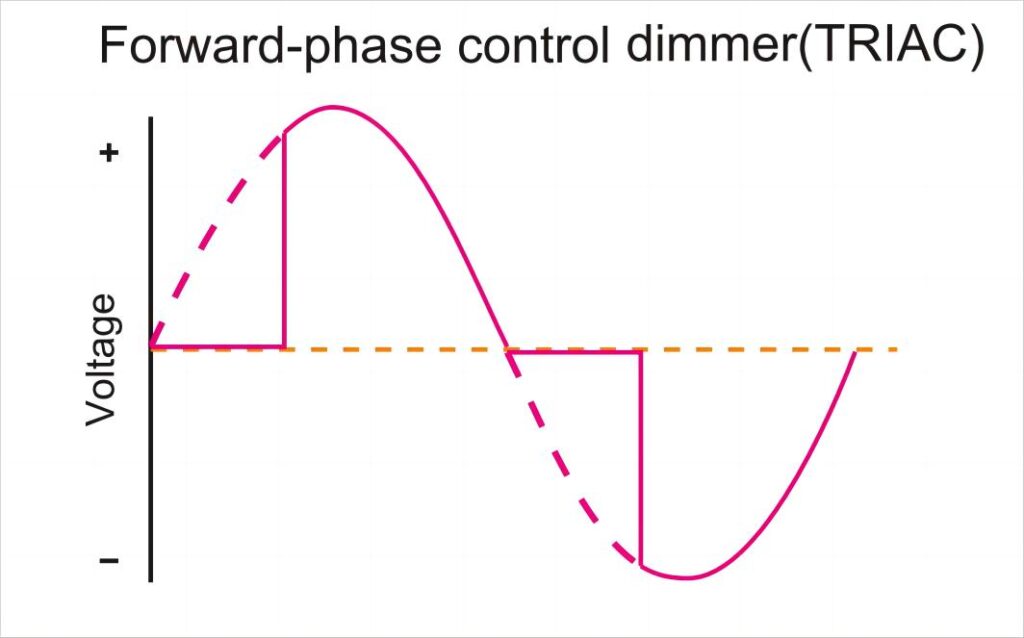
What Is Forward Phase (Leading Edge) Dimming?
Forward phase dimming is the oldest dimming method. It was designed for incandescent lighting many decades ago.
Forward phase dimming cuts the beginning of each AC waveform cycle. The TRIAC turns on after a delay, allowing only the later portion of the waveform to reach the load.
How Leading Edge Dimming Works
At the start of each half cycle, the TRIAC remains off.
Then the dimmer triggers it at a specific phase angle.
Once triggered, it stays on until the AC current crosses zero.
Waveform Characteristics
| ลักษณะเฉพาะ | คำอธิบาย |
|---|---|
| Cut portion | Beginning of waveform |
| Switch device | TRIAC |
| Load type | Mainly resistive loads |
| Noise level | Higher |
Why It Was Popular
Leading edge dimmers are simple and inexpensive.
They worked perfectly with incandescent lamps because the load is resistive.
The filament smooths the current naturally.
Challenges with LED Drivers
LED drivers are electronic devices. They behave more like capacitive loads.
Leading edge dimmers often cause:
- Current spikes
- Buzzing noise
- Flicker
My Observation from Field Installations
Many homes still use old TRIAC wall dimmers installed years ago.
When homeowners replace bulbs with LEDs, problems appear immediately.
The dimmer itself still works. But the LED driver was not designed to work with that waveform.
This is why compatibility testing matters so much.
What Is Reverse Phase (Trailing Edge) Dimming?
Reverse phase dimming was developed to improve compatibility with electronic loads like LED drivers.
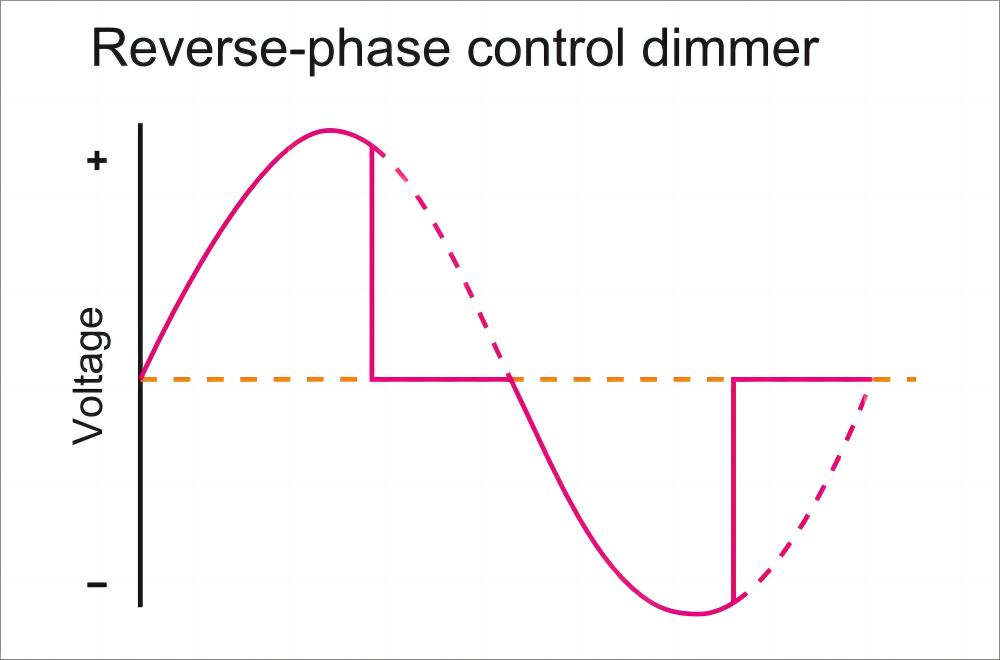
Reverse phase dimming cuts the end of each AC waveform instead of the beginning. The dimmer turns on immediately and switches off before the cycle ends.
Operating Principle
Trailing edge dimmers use different electronic switches such as MOSFETs or IGBTs.
The device turns on at the start of the cycle and switches off later.
Waveform Features
| ลักษณะเฉพาะ | คำอธิบาย |
|---|---|
| Cut portion | End of waveform |
| Switching device | MOSFET or IGBT |
| Noise level | Lower |
| LED compatibility | Better |
Why LEDs Prefer Trailing Edge Dimming
Trailing edge dimming produces a smoother current transition.
This reduces:
- Electromagnetic interference
- Acoustic noise
- Current spikes
Design Benefits
Reverse phase dimming improves:
- Low brightness stability
- Driver efficiency
- Flicker performance
Practical Example
In many modern lighting projects I recommend trailing edge dimmers whenever possible.
They cost slightly more. But they greatly reduce compatibility issues.
Forward Phase vs Reverse Phase Dimming: Key Differences?
Many buyers confuse these two dimming methods. But their electrical behavior is very different.
Forward phase dimming cuts the start of the waveform and uses TRIAC switches. Reverse phase dimming cuts the end and uses MOSFET or IGBT switches, offering better compatibility with LED drivers.

Comparison Table
| ลักษณะเฉพาะ | Forward Phase | Reverse Phase |
|---|---|---|
| Waveform cut | Beginning | End |
| Device | TRIAC | MOSFET / IGBT |
| Noise | Higher | Lower |
| LED compatibility | Medium | Better |
| Cost | Lower | Higher |
Performance Differences
Forward phase dimmers often generate sharp voltage spikes.
Trailing edge dimmers produce smoother transitions.
This difference greatly affects driver stability.
Market Reality
Despite technical advantages, forward phase dimmers remain dominant because:
- They are cheap
- They are widely installed
- They work with legacy wiring
What Buyers Should Check
When evaluating LED drivers, I always ask suppliers:
- Which dimmers were tested?
- What is the dimming range?
- Is there a dimming curve?
If the supplier cannot answer these questions clearly, compatibility risk is high.
Why TRIAC Dimming Is Still Used in Modern LED Lighting?
Many people ask why we still use TRIAC dimming if newer digital systems exist.
TRIAC dimming remains popular because millions of buildings already use TRIAC wall dimmers, making it the most compatible retrofit dimming solution for LED lighting.

Huge Installed Base
Homes, hotels, and offices already have TRIAC dimmers installed.
Replacing them would require expensive electrical upgrades.
Simple Wiring
TRIAC dimming works with standard AC wiring.
No additional control wires are required.
Low System Cost
| Dimming System | Typical Cost | Wiring |
|---|---|---|
| TRIAC | Low | Standard AC |
| 0-10V | Medium | Extra control wire |
| ต้าหลี่ | High | Digital bus |
| Smart wireless | Medium-High | Wireless + controller |
Retrofit Advantage
For LED retrofits, TRIAC dimming is often the easiest solution.
You simply replace the bulb or driver.
Real Industry Situation
In my experience, many commercial projects still require TRIAC compatibility because building owners want to keep existing dimmers.
So LED driver manufacturers must continue supporting this technology.
How TRIAC Dimmers Control LED Driver Output?
Many people think the dimmer directly controls LED brightness. But the LED driver actually performs the regulation.
TRIAC dimmers change the AC input waveform. The LED driver detects the phase-cut signal and adjusts its output current accordingly to control LED brightness.

Input Stage of the Driver
The driver receives chopped AC voltage.
The input circuit includes:
- Bridge rectifier
- EMI filter
- Bulk capacitor
Dimming Detection
The driver measures the conduction angle of the waveform.
This information tells the control circuit the dimming level.
Output Adjustment
The driver changes LED current using PWM or analog control.
| Input Phase Angle | Driver Response |
|---|---|
| Large conduction | High current |
| Medium conduction | Reduced current |
| Small conduction | Low current |
Why Driver Design Matters
Cheap drivers often lack accurate detection circuits.
They cannot interpret dimming signals properly.
This causes:
- Flicker
- Limited dimming range
- Step dimming
High-quality drivers use advanced control algorithms to stabilize the output.
Can TRIAC Dimmers Work with LED Lights?
Many homeowners ask this question when replacing incandescent bulbs.
Yes, TRIAC dimmers can work with LED lights, but only if the LED driver is specifically designed to support TRIAC phase-cut dimming.

Why Compatibility Is Not Guaranteed
LED bulbs contain electronic drivers.
Different drivers interpret dimming signals differently.
Key Compatibility Factors
| Factor | Impact |
|---|---|
| Driver circuit design | Determines dimming behavior |
| Dimmer type | Leading or trailing edge |
| Minimum load | Affects stability |
| Dimming range | Determines lowest brightness |
Typical Performance
Good TRIAC dimmable LEDs achieve:
- 100% to 10% dimming
- Sometimes down to 1%
What I Tell Buyers
When sourcing LED drivers, always request:
- Dimmer compatibility list
- Tested dimming curve
- Flicker data
These documents show real testing results.
Why LED Lights Flicker with TRIAC Dimmers?
Flicker is the most common complaint in TRIAC dimming systems.
LED flicker usually occurs because the LED driver cannot maintain stable output when the dimmer heavily cuts the AC waveform, especially at low brightness levels.
Common Causes
| Cause | คำอธิบาย |
|---|---|
| Low conduction angle | Insufficient energy |
| Driver instability | Poor circuit design |
| Dimmer incompatibility | Wrong dimmer type |
| Minimum load not met | Dimmer cannot operate properly |
Low-End Dimming Challenge
At low brightness the dimmer cuts most of the waveform.
The driver receives very little power.
Poor drivers cannot maintain regulation under these conditions.
Real Example
I once tested a driver labeled TRIAC dimmable.
But it flickered below 40% brightness.
The supplier had no compatibility list.
That was a clear warning sign.
Professional manufacturers usually provide real testing data.
Common Compatibility Issues Between TRIAC Dimmers and LED Drivers?
Many dimming problems come from mismatched equipment.
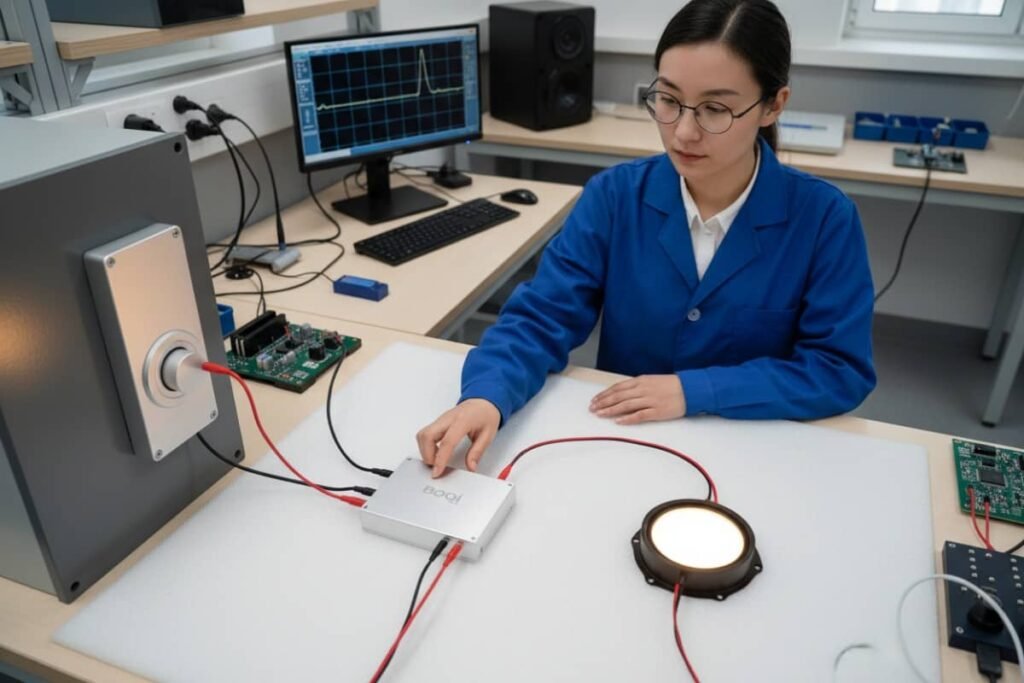
Compatibility issues occur when the electrical characteristics of the TRIAC dimmer and LED driver do not match, leading to flicker, noise, or limited dimming range.
Typical Issues
| Problem | Cause |
|---|---|
| Flicker | Driver cannot stabilize |
| Buzzing | Current spikes |
| Drop-out | Minimum load problem |
| Limited dimming | Driver detection limits |
Capacitive Load Problems
LED drivers behave like capacitors.
TRIAC dimmers expect resistive loads.
This mismatch can prevent the TRIAC from staying on during the cycle.
Testing Importance
Serious driver manufacturers test many dimmers from brands like:
- Lutron
- Leviton
- Schneider
They publish compatibility lists to help designers choose the right combination.
How to Choose a Compatible TRIAC Dimmable LED Driver?
Selecting the right driver is critical for stable dimming.
A compatible TRIAC dimmable LED driver should support both leading and trailing edge dimmers, provide tested dimmer compatibility lists, and maintain stable dimming down to low brightness levels.
Important Specifications
| ข้อมูลจำเพาะ | Why It Matters |
|---|---|
| Dimming range | Determines lowest brightness |
| Compatible dimmers | Shows real testing |
| Flicker index | Indicates visual comfort |
| Minimum load | Ensures stable operation |
What I Always Ask Suppliers
I normally request three documents:
- Dimmer compatibility list
- Dimming curve
- Flicker report
If these documents are missing, I become cautious.
Key Industry Insight
From my experience, when a supplier only writes “TRIAC dimmable” without any compatibility information, the driver often performs poorly at low brightness.
Professional manufacturers invest heavily in dimming testing.
This testing is a strong indicator of product quality.
Minimum Load Requirements in TRIAC Dimming Systems?
Minimum load is an often ignored parameter in dimming systems.
TRIAC dimmers require a minimum electrical load to operate correctly. If the LED load is too small, the dimmer may fail to trigger properly and cause flicker or instability.
Why Minimum Load Exists
TRIAC switches need enough current to stay on during each cycle.
Low current causes the TRIAC to switch off unexpectedly.
Traditional vs LED Loads
| Lighting Type | Typical Load |
|---|---|
| Incandescent | 60–100 W |
| LED lamp | 5–15 W |
This difference creates compatibility challenges.
Solutions
Common solutions include:
- Adding dummy loads
- Using LED-specific dimmers
- Using compatible drivers
Design Advice
In large projects I always calculate total load per dimmer to ensure it meets the dimmer’s minimum requirements.
How to Fix Flickering or Buzzing in TRIAC Dimming?
Many dimming problems can be solved with simple adjustments.
Fixing flicker or buzzing usually involves improving dimmer compatibility, increasing load stability, or replacing the LED driver with a better TRIAC-compatible design.
Troubleshooting Steps
| Step | Action |
|---|---|
| 1 | Check dimmer compatibility |
| 2 | Verify minimum load |
| 3 | Test another dimmer |
| 4 | Replace driver if needed |
Noise Sources
Buzzing often comes from:
- Magnetic vibration
- Current spikes
- Poor filtering
Practical Advice
In my projects, replacing the driver with a high-quality TRIAC dimmable driver usually solves most problems.
Advantages of TRIAC Dimming for Residential and Commercial Lighting?
Despite its age, TRIAC dimming still offers many benefits.
TRIAC dimming is simple, cost-effective, and compatible with existing AC wiring, making it one of the easiest ways to add dimming to residential and retrofit lighting projects.
Key Benefits
| Advantage | Explanation |
|---|---|
| Simple installation | Uses existing wiring |
| Low cost | No control system required |
| Wide availability | Many dimmer models exist |
Ideal Scenarios
TRIAC dimming works well in:
- Homes
- Restaurants
- Hotels
- Retail lighting
Retrofit Projects
Retrofit lighting often prioritizes simplicity and cost.
TRIAC dimming meets both requirements.
Limitations of TRIAC Phase-Cut Dimming Technology?
Even though TRIAC dimming is popular, it has clear limitations.
TRIAC phase-cut dimming struggles with LED compatibility, limited low-end dimming, and electrical noise due to waveform distortion.
Major Limitations
| Limitation | Impact |
|---|---|
| Waveform distortion | Causes flicker |
| Limited dimming range | Often stops above 5–10% |
| EMI noise | Affects electronics |
| Compatibility issues | Requires testing |
Comparison with Modern Systems
Digital dimming systems like ต้าหลี่ provide smoother control and better scalability.
But they require more complex infrastructure.
Realistic Expectation
TRIAC dimming works well for simple installations.
But advanced lighting control often requires modern digital protocols.
Typical Applications of TRIAC Dimming in Lighting Projects?
TRIAC dimming appears in many real lighting installations.
TRIAC dimming is commonly used in residential lighting, hospitality environments, retail spaces, and retrofit LED projects where existing wall dimmers are already installed.

Common Applications
| แอปพลิเคชัน | Reason |
|---|---|
| Homes | Simple dimming control |
| Restaurants | Mood lighting |
| Hotels | Guest room lighting |
| Retail stores | Accent lighting |
Retrofit Market
Retrofit projects represent a huge portion of the LED market.
TRIAC compatibility helps these projects upgrade quickly.
Lighting Design Impact
Dimming allows designers to adjust atmosphere and energy usage.
Even basic TRIAC dimming can greatly improve lighting flexibility.
Future Trends in TRIAC Dimming and LED Driver Technology?
Lighting technology continues to evolve. But TRIAC dimming will likely remain relevant for years.
Future TRIAC dimmable LED drivers will focus on improved compatibility, deeper dimming ranges, lower flicker, and better integration with modern lighting control systems.

Industry Direction
Driver manufacturers are improving:
- Dimming algorithms
- Flicker performance
- Universal dimmer compatibility
Hybrid Systems
Some drivers now support multiple dimming methods:
| Method | Purpose |
|---|---|
| TRIAC | Retrofit compatibility |
| 0-10V | Commercial control |
| ต้าหลี่ | Smart buildings |
My Perspective
From my experience, the most competitive LED driver manufacturers invest heavily in compatibility testing.
Providing full dimmer lists and dimming curves shows strong engineering capability.
Choosing the Right TRIAC Dimming Solution
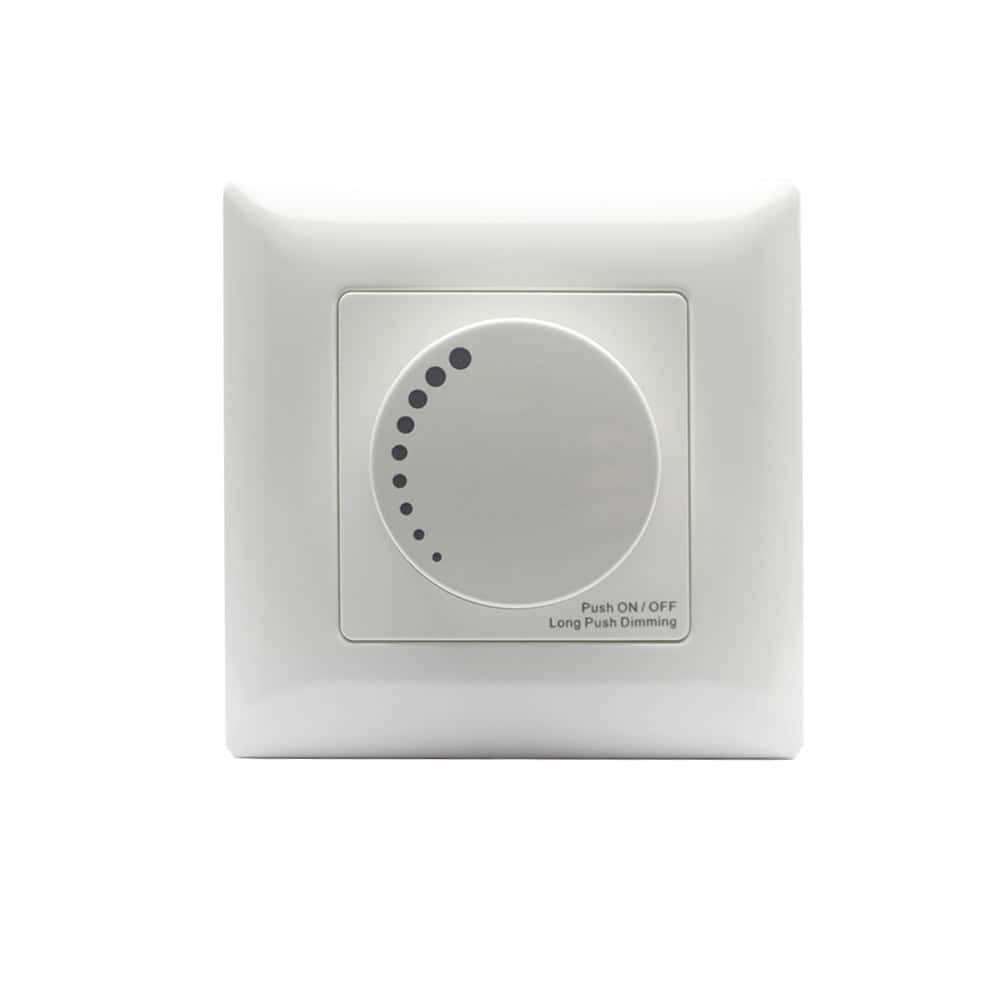
For many lighting projects, selecting the correct dimming method is essential for achieving flicker-free and stable performance. High-quality LED dimmers ensure compatibility with a wide range of drivers while maintaining energy efficiency.
boqi is a trusted Chinese manufacturer specializing in high-performance LED dimmers and dimmable LED drivers. Our solutions are designed for reliable forward-phase and reverse-phase dimming, supporting residential and commercial lighting applications worldwide. With CE and RoHS certifications, customizable options, fast lead times, and a 5-year warranty, boqi helps businesses implement durable, energy-efficient, and flicker-free lighting control systems.
Looking for a dependable TRIAC dimming solution for your next project? Choose boqi—where quality meets innovation.



Conclusion
TRIAC dimming remains essential for LED lighting retrofits. Understanding phase-cut behavior, compatibility testing, and driver design helps ensure stable, flicker-free dimming in real lighting projects.