














Los sistemas de iluminación a menudo parecen simples en la superficie. Sin embargo, muchos ingenieros y compradores luchan por entender cómo funciona realmente la regulación dentro de los sistemas LED.
Un regulador 0–10V funciona enviando una señal de control de CC de 0–10V a un driver LED compatible. El driver lee el nivel de voltaje y ajusta el brillo del LED proporcionalmente. Un voltaje más bajo produce una luz más tenue, mientras que 10V proporciona el brillo máximo.
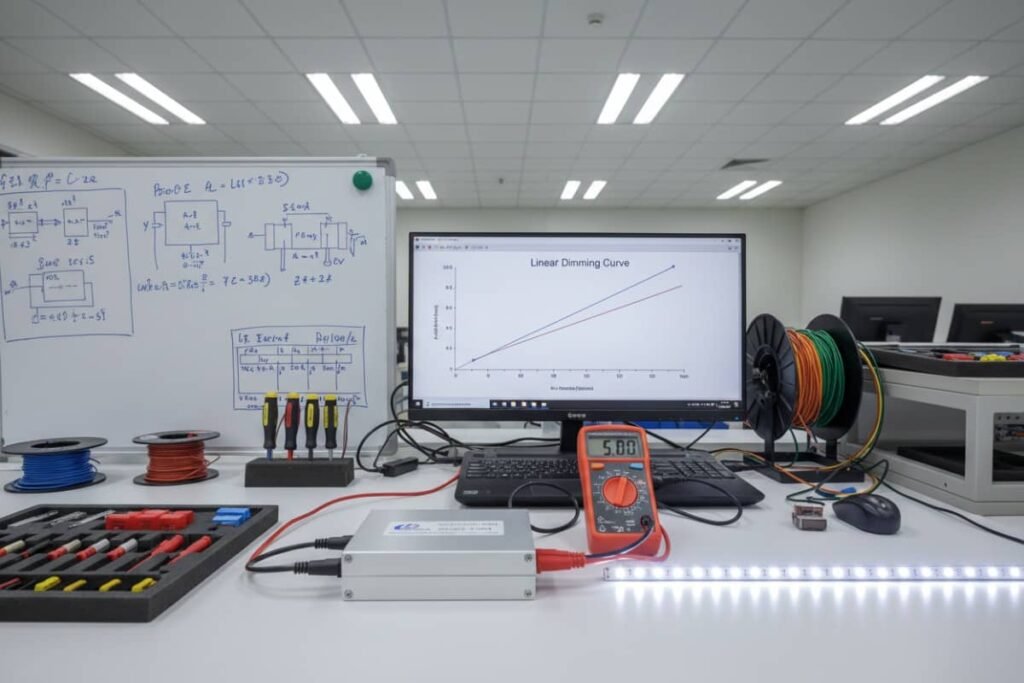
Cuando comencé a trabajar con drivers LED, noté que muchos clientes entendían las fuentes de alimentación LED pero se sentían confundidos con el control de regulación. Entre muchas tecnologías de regulación, la regulación 0–10V seguía siendo uno de los métodos más utilizados. Su simplicidad y fiabilidad siguen haciéndola una de las favoritas en proyectos de iluminación comercial.
¿Qué es un regulador 0–10V?
Muchos compradores de iluminación escuchan el término Atenuación 0–10V con frecuencia. Pero a menudo hacen una pregunta básica: ¿qué significa exactamente?
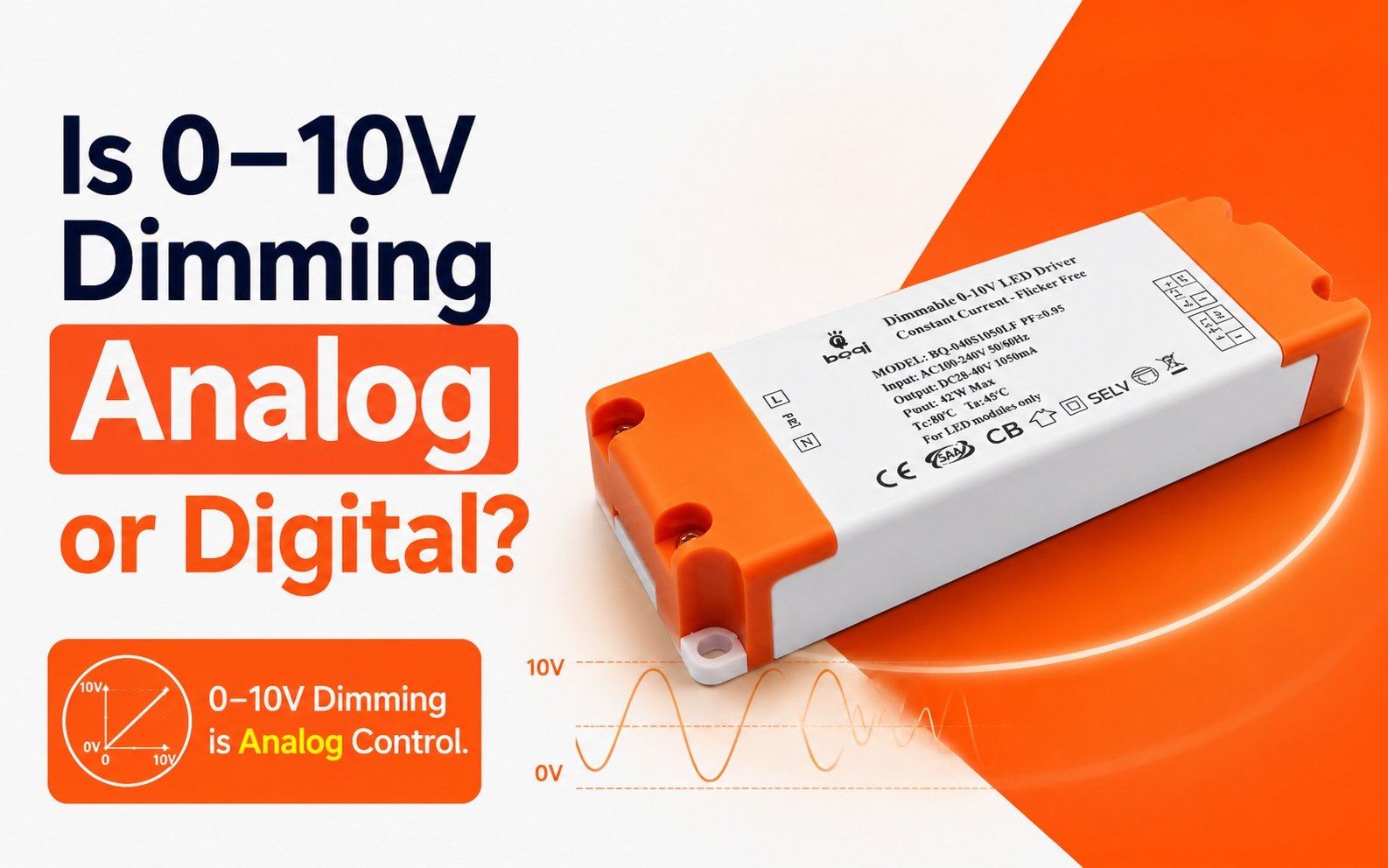
Un regulador 0–10V es un controlador de iluminación analógico que ajusta el brillo enviando una señal de voltaje de CC entre 0 y 10 voltios a un driver LED regulable. El nivel de voltaje controla directamente el nivel de salida de luz.

Definición de la tecnología de regulación 0–10V
La regulación 0–10V es una de las primeras tecnologías de control de iluminación electrónica. Funciona enviando una señal de CC de bajo voltaje al driver.
En términos simples, el regulador actúa como un regulador de voltaje. Genera una señal de control entre 0 voltios y 10 voltios. El driver LED lee constantemente esta señal. Luego ajusta la salida de corriente del LED según el nivel de voltaje.
El concepto es simple:
| Tensión de control | Potencia luminosa |
|---|---|
| 10 V | 100% brillo |
| 8V | ~80% brillo |
| 5 V | ~50% brillo |
| 2V | ~20% brillo |
| 0–1V | Brillo mínimo o APAGADO |
Este sistema separa el cableado de alimentación y el cableado de control. La alimentación de CA alimenta el driver LED. Los cables de regulación solo transportan la señal de control.
Este diseño hace que el sistema sea estable y fácil de gestionar.
Historia y desarrollo del control de iluminación 0–10V
El control 0–10V no comenzó con los LED. Se inició en sistemas de iluminación fluorescente hace décadas.
En los primeros días, los balastos fluorescentes usaban control de voltaje analógico para ajustar la salida de las lámparas. Los ingenieros encontraron este sistema simple y confiable. También funcionaba bien en grandes edificios comerciales.
Más tarde, cuando la iluminación LED se hizo popular, los fabricantes adaptaron el mismo concepto para los drivers LED.
La ventaja era clara. Los diseñadores de edificios ya entendían el sistema. Los instaladores ya conocían el método de cableado. Así, la tecnología pasó sin problemas de los sistemas fluorescentes a los LED.
Incluso hoy, muchos proyectos grandes aún dependen de este método de control maduro.
Por qué la regulación 0–10V sigue siendo popular en la iluminación comercial
A menudo veo compradores preguntar por qué esta tecnología antigua sigue existiendo cuando hay sistemas digitales disponibles.
La respuesta es simple: confiabilidad y simplicidad.
La regulación 0–10V tiene varias ventajas prácticas.
| Rasgo | Beneficio |
|---|---|
| Señal de control simple | Fácil para los instaladores |
| Componentes de bajo costo | Precio de sistema más bajo |
| Señal analógica estable | Rendimiento de regulación confiable |
| Amplia compatibilidad | Funciona con muchos drivers |
Muchos proyectos comerciales se preocupan más por la confiabilidad y el costo que por funciones avanzadas. Edificios de oficinas, almacenes y tiendas minoristas a menudo eligen soluciones fáciles de mantener.
Por eso la regulación 0–10V continúa siendo ampliamente utilizada en sistemas de iluminación LED modernos.
¿Cómo Funciona un Dimmer 0–10V?
Muchas personas entienden el concepto de control de voltaje. Pero aún quieren saber cómo el sistema realmente cambia el brillo del LED.
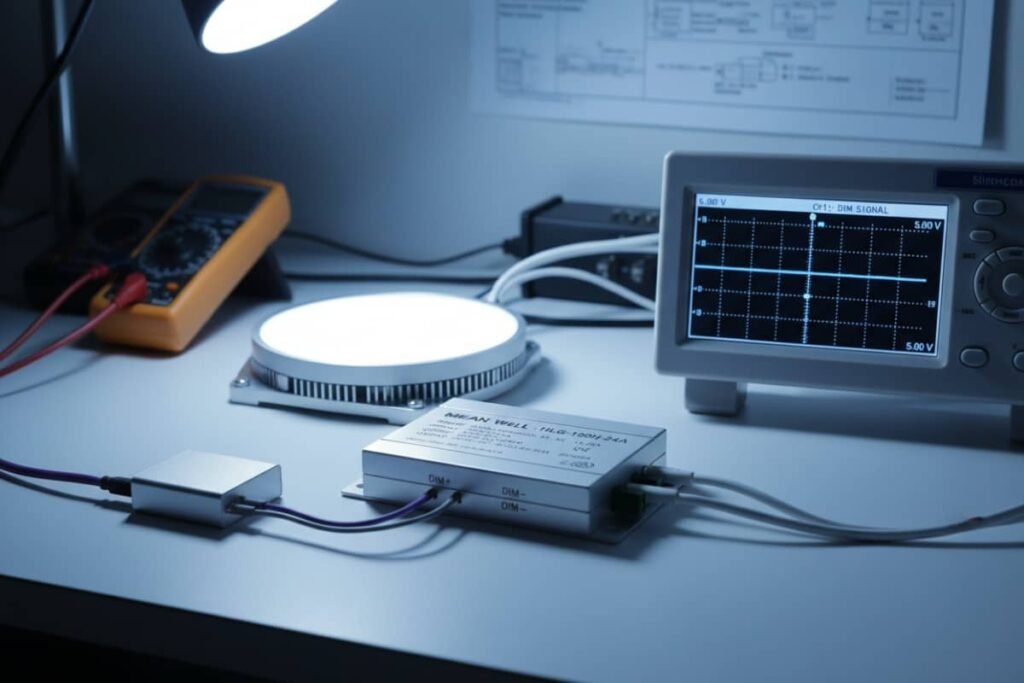
Un regulador 0–10V controla el brillo ajustando el voltaje de control enviado al driver LED. El driver convierte ese voltaje en una salida de corriente LED proporcional, que cambia directamente la intensidad de la luz.
Principio básico de funcionamiento del control de señal 0–10V
El proceso de regulación comienza con el controlador del regulador.
Cuando un usuario mueve el deslizador o la perilla del regulador, el regulador cambia el voltaje de salida. El voltaje de control varía entre 0V y 10V.
Dos cables de bajo voltaje conectan el regulador al driver LED. Estos cables transportan la señal.
Dentro del driver LED, un pequeño circuito de control lee el voltaje entrante. El driver luego traduce este voltaje en una señal de referencia interna.
El driver ajusta la corriente de salida del LED en consecuencia.
Todo el proceso funciona en tiempo real. Cuando el voltaje cambia, el brillo cambia inmediatamente.
Relación entre el nivel de voltaje y la salida de luz
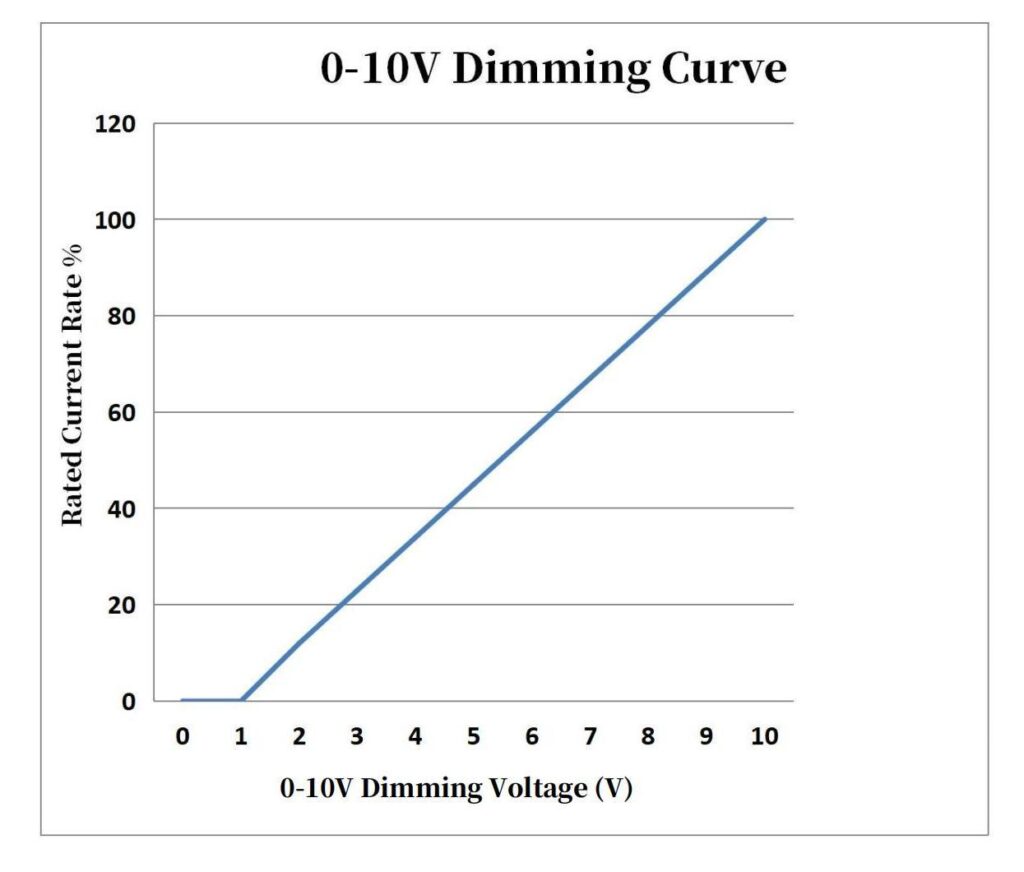
La relación entre voltaje y brillo es aproximadamente lineal.
Esto significa que la luz de salida sigue el voltaje de control proporcionalmente.
| Nivel de voltaje | Respuesta del driver | Brillo del LED |
|---|---|---|
| 10 V | Corriente de salida máxima | 100% |
| 7V | Corriente reducida | ~70% |
| 5 V | Corriente de salida a la mitad | ~50% |
| 2V | Corriente muy baja | ~20% |
| 0–1V | Corriente mínima | Luz mínima |
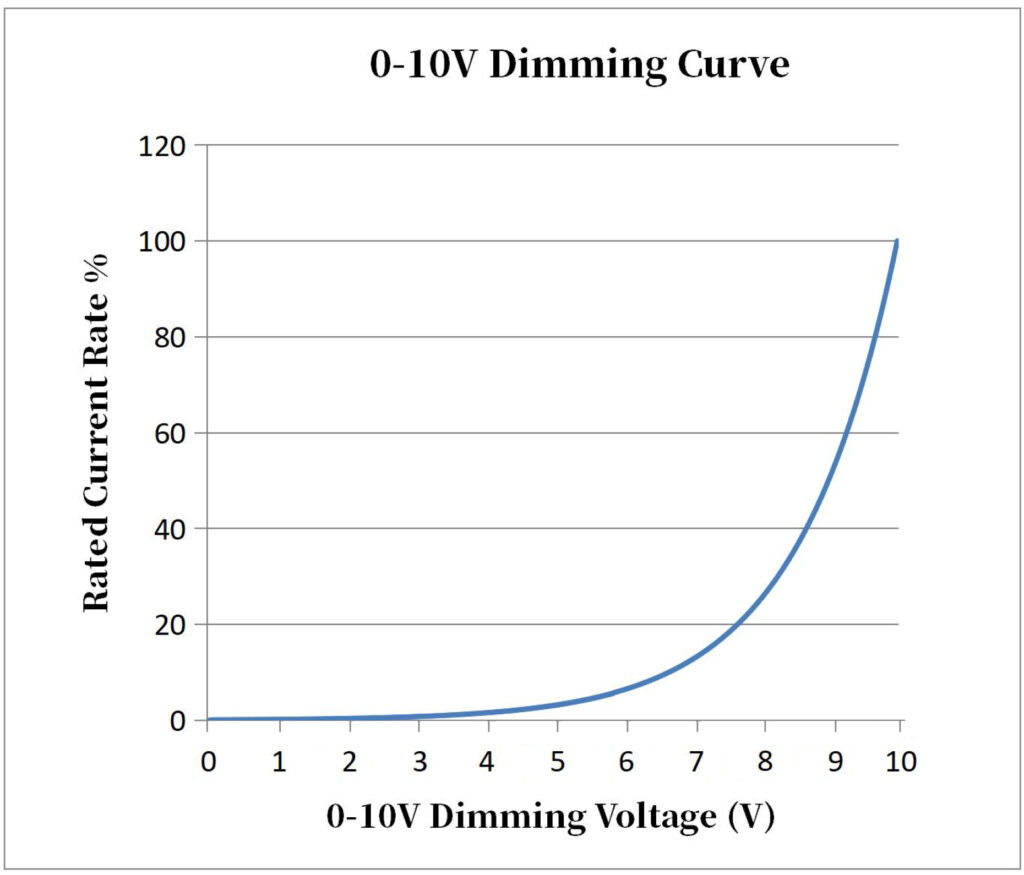
Sin embargo, cada fabricante de drivers puede implementar curvas de regulación ligeramente diferentes.
Algunos drivers utilizan regulación lineal. Otros utilizan regulación logarítmica para adaptarse a la percepción del ojo humano.
Este diseño mejora la experiencia visual de regulación.
Cómo responde el driver LED a las señales 0–10V
El driver LED desempeña el papel más importante en el sistema.
El regulador solo envía la señal. El driver realiza el control de potencia real.
Dentro del driver, un circuito de control convierte la señal de voltaje analógico en una orden de regulación de corriente.
El driver ajusta la corriente de salida mediante electrónica de potencia interna.
Este proceso incluye varias etapas.
| Etapa | Función |
|---|---|
| Detección de señal | Lee el voltaje de control |
| Procesamiento de control | Convierte el voltaje en comando de regulación |
| Regulación de corriente | Ajusta la corriente de salida del LED |
| Estabilización de salida | Mantiene una salida de luz estable |
Los drivers de alta calidad también incluyen filtrado y supresión de ruido. Estas características previenen el parpadeo y aseguran una regulación suave.
En mi experiencia, la calidad del driver a menudo determina si el sistema de regulación funciona correctamente.
¿Componentes clave de un sistema de regulación LED 0–10V?
Muchos compradores asumen que la regulación solo involucra un regulador. En realidad, el sistema contiene varios componentes clave.
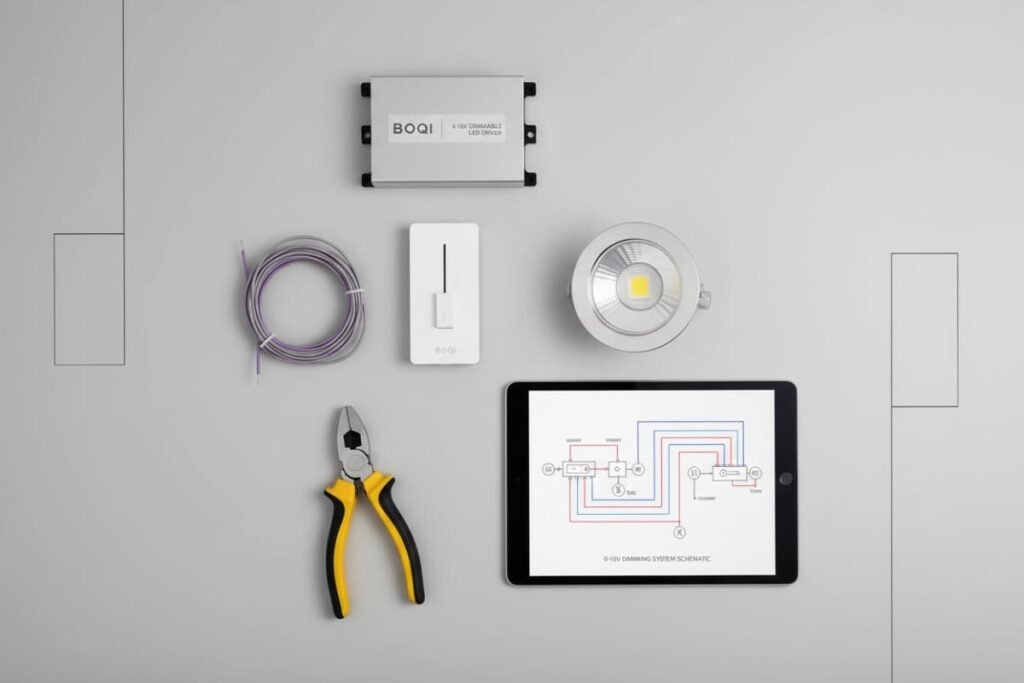
Un sistema de regulación 0–10V completo incluye un controlador regulador, un driver LED regulable 0–10V, luminarias LED y cableado de control de bajo voltaje que conecta el sistema.
Regulador 0–10V (controlador)
El regulador genera el voltaje de control.
Puede presentarse como un interruptor de pared, un panel de control o una interfaz de automatización de edificios.
Su función principal es emitir un voltaje entre 0V y 10V.
Algunos reguladores son controladores manuales. Otros se conectan a sistemas de control de iluminación o sistemas de gestión de edificios.
Las características típicas incluyen:
| Rasgo | Función |
|---|---|
| Salida de voltaje | Genera señal de 0–10V |
| Interfaz de usuario | Deslizador, perilla o control digital |
| Múltiples canales | Controla varias zonas de iluminación |
| Puertos de integración | Se conecta a sistemas de automatización |
Driver LED regulable 0–10V
El driver LED convierte la corriente alterna en corriente continua regulada para los LEDs.
A El driver regulable 0–10V incluye una entrada de control adicional para señales de regulación.
Este controlador monitorea continuamente el voltaje de atenuación.
Cuando el voltaje cambia, el controlador ajusta la salida de corriente del LED.
Las especificaciones importantes del controlador incluyen:
| Parámetro | Importancia |
|---|---|
| Rango de atenuación | Determina el brillo mínimo |
| Estabilidad de corriente | Previene el parpadeo |
| Velocidad de respuesta | Garantiza una atenuación suave |
| Compatibilidad | Funciona con diferentes atenuadores |
Luminarias LED
La luminaria LED contiene los módulos LED que producen luz.
La luminaria se conecta a la salida del controlador.
Cuando el controlador cambia la corriente, los LED cambian su brillo en consecuencia.
Las luminarias comerciales modernas están diseñadas específicamente para controladores regulables. Esto garantiza un rendimiento de atenuación estable.
Cableado de control de bajo voltaje
El cableado de control transporta la señal de atenuación.
Estos cables son independientes del cableado de alimentación de CA.
Generalmente, se utilizan dos cables:
| Cable | Función |
|---|---|
| Positivo (DIM+) | Señal de control |
| Negativo (DIM−) | Retorno de señal |
Debido a que el voltaje es muy bajo, el cableado no requiere aislamiento pesado.
Sin embargo, los instaladores deben seguir buenas prácticas de cableado para evitar interferencias en la señal.
¿Diagrama de cableado e instalación de regulación 0–10V?
Incluso los instaladores experimentados a veces cometen errores al cablear sistemas de atenuación.
Una instalación estándar de atenuación 0–10V conecta el atenuador al controlador LED a través de dos cables de control de bajo voltaje, mientras que el controlador recibe alimentación de CA por separado para operar la luminaria LED.
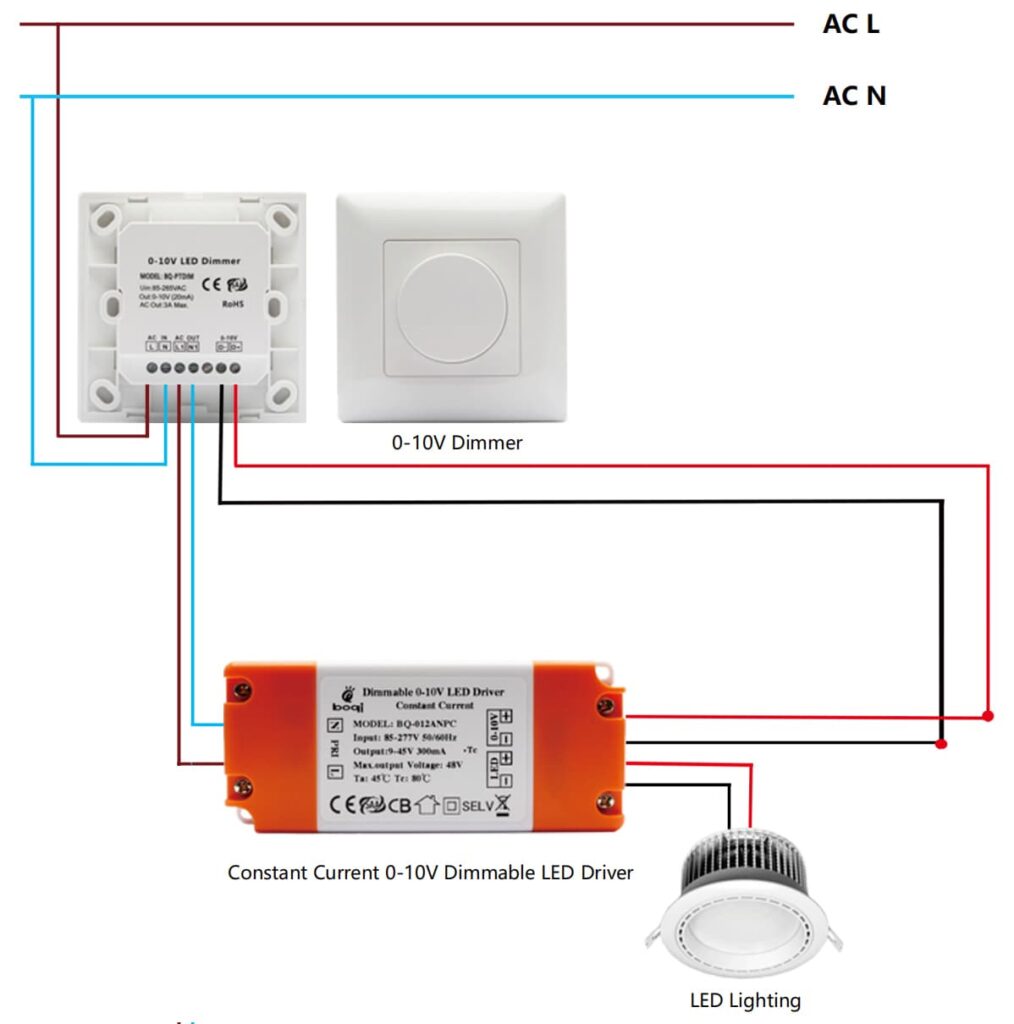
Configuración estándar de cableado de regulación 0–10V
El diseño del cableado es sencillo.
Hay dos circuitos principales.
- Circuito de alimentación de CA
- Circuito de atenuación de bajo voltaje
El circuito de alimentación alimenta el controlador LED.
El circuito de atenuación transporta la señal de control.
| Conexión | Descripción |
|---|---|
| Línea de CA | Proporciona alimentación de entrada |
| Neutro de CA | Completa el circuito de alimentación |
| DIM+ | Señal de atenuación positiva |
| DIM− | Señal de atenuación negativa |
Múltiples controladores LED pueden compartir la misma señal de atenuación.
Esto permite que un solo atenuador controle muchas luminarias.
Requisitos de polaridad para los cables de control
Muchas personas piensan que la polaridad no importa. En realidad, la polaridad correcta es importante.
Los cables de atenuación tienen dos terminales:
DIM+ y DIM−.
Si la polaridad se invierte, el controlador puede no detectar la señal correctamente.
Los posibles problemas incluyen:
- Sin respuesta de atenuación
- Rango de atenuación limitado
- Brillo inestable
Por lo tanto, los instaladores siempre deben seguir la etiqueta de cableado del controlador.
Mejores prácticas para instalación y seguridad
Una buena instalación mejora la confiabilidad del sistema.
A lo largo de los años he visto varias prácticas sencillas que previenen muchos problemas.
| Práctica | Razón |
|---|---|
| Separar los cables de control de los cables de alimentación | Reducir la interferencia |
| Utilizar cables blindados en tiradas largas | Mejorar la estabilidad de la señal |
| Mantener la polaridad del cableado correcta | Garantizar un control adecuado |
| Seguir las especificaciones del driver | Evitar problemas de compatibilidad |
Estos pasos pueden parecer básicos. Pero marcan una gran diferencia en grandes proyectos de iluminación.
¿Ventajas de usar regulación 0–10V en iluminación LED?
Hoy en día existen muchas tecnologías de iluminación. Sin embargo, muchos ingenieros siguen eligiendo sistemas de 0–10V.
La regulación de 0–10V proporciona un control de brillo suave, implementación de bajo costo, alta fiabilidad e integración sencilla con sistemas de iluminación comercial.
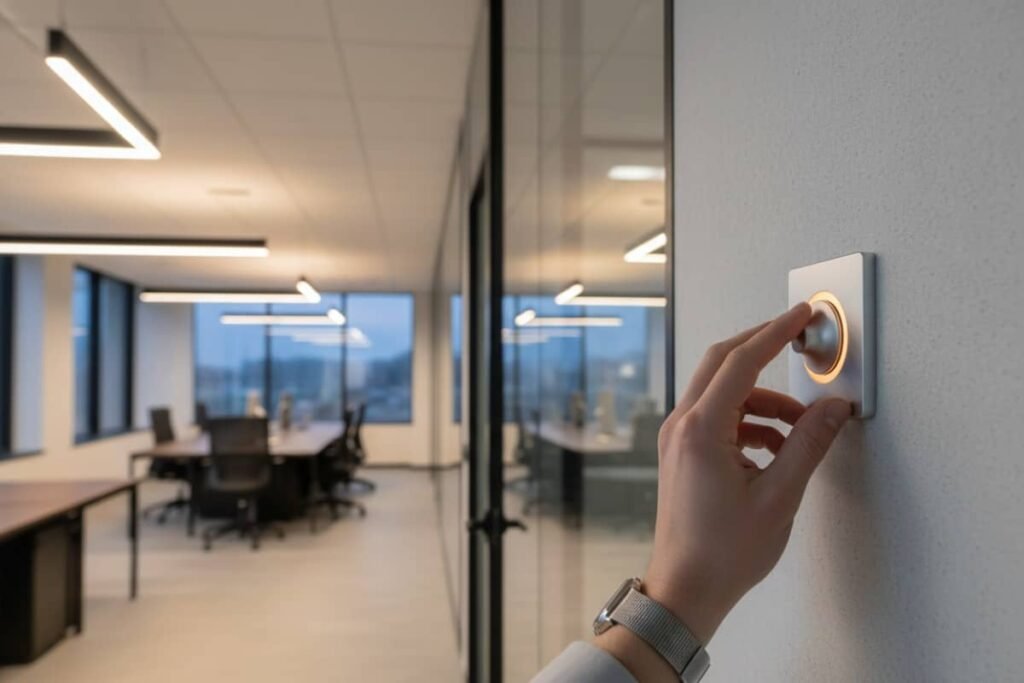
Regulación suave y sin parpadeos
Los sistemas de 0–10V de alta calidad producen una regulación muy suave.
La señal analógica cambia gradualmente. Esto permite que el driver LED ajuste la corriente de forma suave.
Este método reduce los problemas de parpadeo.
Los ojos humanos son sensibles a los cambios bruscos de brillo. La regulación suave mejora el confort visual.
Solución de control de iluminación rentable
El costo importa en grandes proyectos de iluminación.
En comparación con los sistemas digitales, la regulación de 0–10V es económica.
Los componentes son simples. El cableado también es sencillo.
| Factor de costo | Sistema de 0–10V |
|---|---|
| Hardware del dimmer | Baja |
| Complejidad del driver | Moderado |
| Requisitos de cableado | Simple |
| Costo de instalación | Baja |
Esto lo hace atractivo para proyectos con cientos o miles de luminarias.
Fácil integración con sistemas de iluminación comercial
La regulación de 0–10V se integra bien con muchos sistemas de control de edificios.
Los paneles de control de iluminación, los sensores de luz natural y los sensores de ocupación pueden emitir señales de 0–10V.
Esta flexibilidad hace que el sistema sea muy adaptable.
Alta fiabilidad para proyectos a gran escala
Los sistemas analógicos a menudo resultan muy fiables.
Hay menos problemas de comunicación digital. El sistema no depende de protocolos complejos.
Los edificios grandes suelen preferir sistemas que requieren un mantenimiento mínimo.
¿Regulación 0–10V frente a otras tecnologías de regulación LED?
Existen diferentes métodos de regulación para la iluminación LED. Cada método tiene ventajas y limitaciones.
La regulación de 0–10V se diferencia de la regulación TRIAC y DALI principalmente en el tipo de señal, la complejidad y las capacidades del sistema. Elegir el método correcto depende de los requisitos del proyecto.
0–10V frente a regulación TRIAC
La regulación TRIAC proviene de la iluminación incandescente tradicional.
Funciona cortando parte de la onda de CA.
| Rasgo | 0–10V | TRIAC |
|---|---|---|
| Tipo de señal | Control analógico de CC | Corte de fase de CA |
| Cableado | Cables de control separados | Misma línea de alimentación |
| Compatibilidad | Drivers comerciales | Iluminación residencial |
| Riesgo de parpadeo | Baja | Mayor |
La regulación TRIAC es común en la iluminación residencial.
El 0–10V funciona mejor para sistemas comerciales.
0–10V frente a regulación DALI
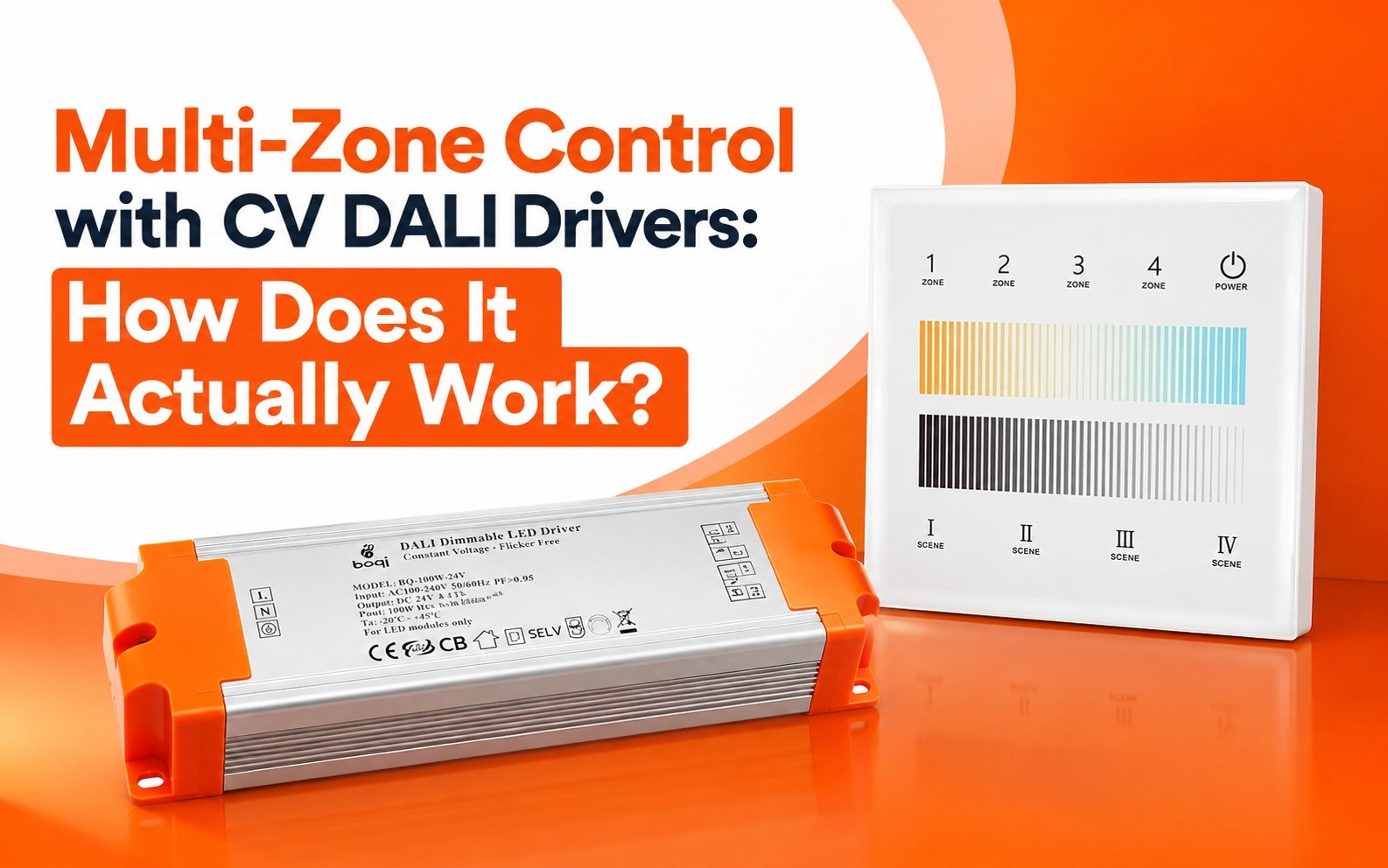
DALI es un protocolo de comunicación digital.
Permite el control de iluminación direccionable.
| Rasgo | 0–10V | DALI |
|---|---|---|
| Tipo de señal | Analógico | Digital |
| Control individual | No | Sí |
| Complejidad del sistema | Baja | Mayor |
| Coste | Más bajo | Mayor |
DALI ofrece funciones avanzadas como control de escenas y retroalimentación de dispositivos.
Sin embargo, también aumenta la complejidad del sistema.
Cuándo elegir cada método de regulación
Los requisitos del proyecto determinan el mejor método de atenuación.
| Solicitud | Método recomendado |
|---|---|
| Iluminación de oficinas | 0–10V |
| Iluminación residencial | TRIAC |
| Edificios inteligentes | DALI |
| Iluminación industrial | 0–10V |
En mis proyectos, a menudo recomiendo 0–10V para grandes espacios comerciales.
Equilibra costo, fiabilidad y rendimiento.
¿Aplicaciones comunes de los sistemas de regulación 0–10V?
La atenuación 0–10V aparece en muchos entornos comerciales.
La tecnología se utiliza ampliamente en oficinas, almacenes, espacios comerciales y sistemas de iluminación de edificios inteligentes porque proporciona un control de brillo fiable para grandes cantidades de luminarias.

Edificios de oficinas y comerciales
Los edificios de oficinas a menudo requieren un control de iluminación flexible.
Las salas de reuniones, los espacios de trabajo y los pasillos necesitan diferentes niveles de brillo.
Los sistemas 0–10V permiten el control centralizado de grandes zonas de iluminación.
Almacenes e iluminación industrial
Los espacios industriales requieren sistemas duraderos y sencillos.
Los equipos de mantenimiento prefieren tecnologías fiables.
La atenuación 0–10V funciona bien con luminarias LED de alta bahía.
Iluminación comercial y arquitectónica
Las tiendas minoristas a menudo ajustan los niveles de iluminación para destacar productos.
La iluminación arquitectónica también se beneficia de un control de atenuación suave.
Control de iluminación para edificios inteligentes
Muchos sistemas de edificios inteligentes todavía utilizan salidas 0–10V.
Los sensores y controladores de automatización envían señales de voltaje a los drivers.
Esto permite una gestión energéticamente eficiente de la iluminación.
¿Problemas comunes y solución de problemas en la regulación 0–10V?
Incluso los sistemas simples pueden experimentar problemas.
Los problemas comunes de atenuación 0–10V incluyen parpadeo de LED, rango de atenuación limitado e interferencia de señal en el cableado de control. La mayoría de los problemas se relacionan con la compatibilidad del driver o la calidad de la instalación.

Parpadeo del LED durante la regulación
El parpadeo suele aparecer en niveles de brillo bajos.
Las posibles causas incluyen:
- mala calidad del driver
- salida inestable del atenuador
- ruido eléctrico
Rango de atenuación limitado
Algunos sistemas no pueden atenuar por debajo del 20%.
Esto a menudo depende del diseño del driver.
Los drivers de alta calidad admiten una atenuación más profunda.
Interferencia de señal en el cableado de control
Los cables de control largos pueden captar ruido eléctrico.
Los instaladores deben separar el cableado de control del cableado de alimentación.
Los cables blindados pueden ayudar en edificios grandes.
¿Cómo elegir el regulador 0–10V y el driver LED adecuados?
Elegir componentes compatibles es fundamental para el rendimiento del sistema.
El atenuador 0–10V y el driver LED adecuados deben coincidir en compatibilidad de señal, clasificación de potencia y estándares de certificación para garantizar un rendimiento de atenuación estable y seguro.

Verificación de compatibilidad entre regulador y driver
No todos los atenuadores funcionan con todos los drivers.
Los fabricantes pueden implementar circuitos de control ligeramente diferentes.
Verifique siempre la documentación de compatibilidad.
Selección de la clasificación de potencia correcta
El driver debe soportar la carga LED.
| Parámetro | Importancia |
|---|---|
| Corriente de salida | Coincide con el módulo LED |
| Potencia de salida | Soporta la carga de la luminaria |
| Voltaje de entrada | Coincide con el voltaje de alimentación |
Certificaciones y estándares de calidad a considerar
Los proyectos comerciales a menudo requieren componentes certificados.
Las certificaciones comunes incluyen:
| Certificación | Región |
|---|---|
| UL | Norteamérica |
| CE | Europa |
| FCC | Cumplimiento de EMI |
Los productos certificados garantizan seguridad y fiabilidad.
¿Preguntas frecuentes sobre la regulación LED 0–10V?
Los compradores suelen hacer preguntas similares al seleccionar sistemas de regulación.
Comprender la compatibilidad de los drivers, los límites del sistema y las capacidades de control ayuda a los compradores a diseñar sistemas de regulación 0–10V fiables para proyectos de iluminación comercial.
¿Puede un regulador 0–10V funcionar sin un driver LED especial?
N.º.
Un driver LED estándar no puede interpretar una señal 0–10V.
Debe utilizar un El driver regulable 0–10V diseñado para este método de control.
¿Cuántos controladores LED puede controlar un atenuador de 0–10V?
Muchos drivers pueden compartir una señal de regulador.
El límite depende de la capacidad de corriente del regulador.
Los sistemas grandes pueden controlar docenas de drivers desde un solo regulador, como el regulador 0-10V de boqi que puede soportar 15 unidades de drivers LED regulables 0-10V.
¿Cuál es el nivel mínimo de regulación de los sistemas 0–10V?
La mayoría de los drivers regulan hasta un 10% de brillo.
Algunos drivers avanzados soportan 1% o incluso menos.
¿Es la regulación 0–10V adecuada para sistemas de iluminación inteligente?
Sí.
Muchos sistemas de control de edificios todavía emiten señales 0–10V.
Esto permite la integración con sensores y sistemas de automatización.
Conclusión
La regulación 0–10V sigue siendo uno de los métodos de control de iluminación LED más simples y fiables para proyectos comerciales, ofreciendo rendimiento estable, regulación suave y fácil integración del sistema.