















Las tiras LED TRIAC que se niegan a apagarse por completo casi nos costaron una relación con un distribuidor importante en Alemania el año pasado — y esa queja le enseñó a nuestro equipo de ingeniería una lección crítica.
Las tiras LED TRIAC no se apagan por completo porque una pequeña corriente de fuga fluye a través del dimmer incluso en su estado apagado. Ese voltaje residual energiza parcialmente el driver LED regulable, y como los LED necesitan muy poca potencia para emitir luz, la tira produce un brillo tenue o un destello periódico.
La causa raíz casi nunca es la propia tira LED. Es la interacción entre el dimmer, el Controlador LED 1, y la carga conectada. A continuación, desgloso exactamente por qué ocurre esto y qué puede hacer al respecto.
¿Qué causa que mis tiras LED TRIAC permanezcan tenuemente iluminadas incluso después de apagarlas?
Durante una auditoría de fábrica el trimestre pasado, conectamos la misma tira LED a tres dimmers TRIAC diferentes en nuestro banco de pruebas — y obtuvimos tres resultados completamente diferentes en estado apagado.
La causa principal es la corriente de fuga del atenuador. Los semiconductores TRIAC nunca logran un circuito abierto perfecto, por lo que pueden pasar de 1 a 5 mA de corriente incluso cuando el atenuador está apagado. Esa pequeña corriente es invisible para las bombillas incandescentes pero suficiente para hacer que las tiras LED brillen.

Por qué los LED reaccionan a las microcorrientes
Las bombillas incandescentes necesitan una corriente sustancial para calentar un filamento. Los LED no. Una corriente que sería completamente invisible en una lámpara halógena de 60 W puede producir un efecto de ghosting notable en una tira LED clasificada con solo unos pocos vatios. Esto no es un defecto. Es una consecuencia directa de la eficiencia del LED. La unión semiconductora 2 dentro de cada LED puede emitir fotones a niveles de microamperios. Esa sensibilidad es lo que hace que los LED sean energéticamente eficientes — y también lo que los hace vulnerables a cada miliamperio parásito en el circuito.
Las cinco causas raíz
He clasificado las causas según la frecuencia con que las encontramos en devoluciones reales de campo:
| Causa | Qué ocurre | Qué tan común |
|---|---|---|
| Regulador de intensidad corriente de fuga 3 | 1–5 mA pasan a través del TRIAC incluso cuando está apagado | Muy común |
| Requisito de carga mínima no cumplido | El dimmer no puede operar correctamente por debajo de su carga LED nominal | Común |
| Acoplamiento capacitivo en el cableado | Los cables vivos adyacentes inducen voltaje fantasma en el tramo conmutado | Moderado |
| Energía almacenada en los capacitores del driver | Los capacitores electrolíticos se descargan lentamente a través de los LED | Moderado |
| Piso de voltaje del firmware del dimmer | Los dimmers digitales establecen una salida mínima por encima del cero real de voltios | Menos común |
También hay un problema de corriente de retención 4 que vale la pena entender. Un TRIAC permanece enclavado — conduciendo — hasta que la corriente a través de él cae por debajo de un umbral llamado corriente de retención en cada cruce por cero de CA. Con cargas LED muy pequeñas, la corriente puede rondar cerca de ese umbral. El TRIAC puede no restablecerse completamente a su estado no conductivo en cada ciclo. El resultado es impredecible: a veces la tira se apaga, a veces no.
Comportamiento de borde de ataque vs. borde de corte
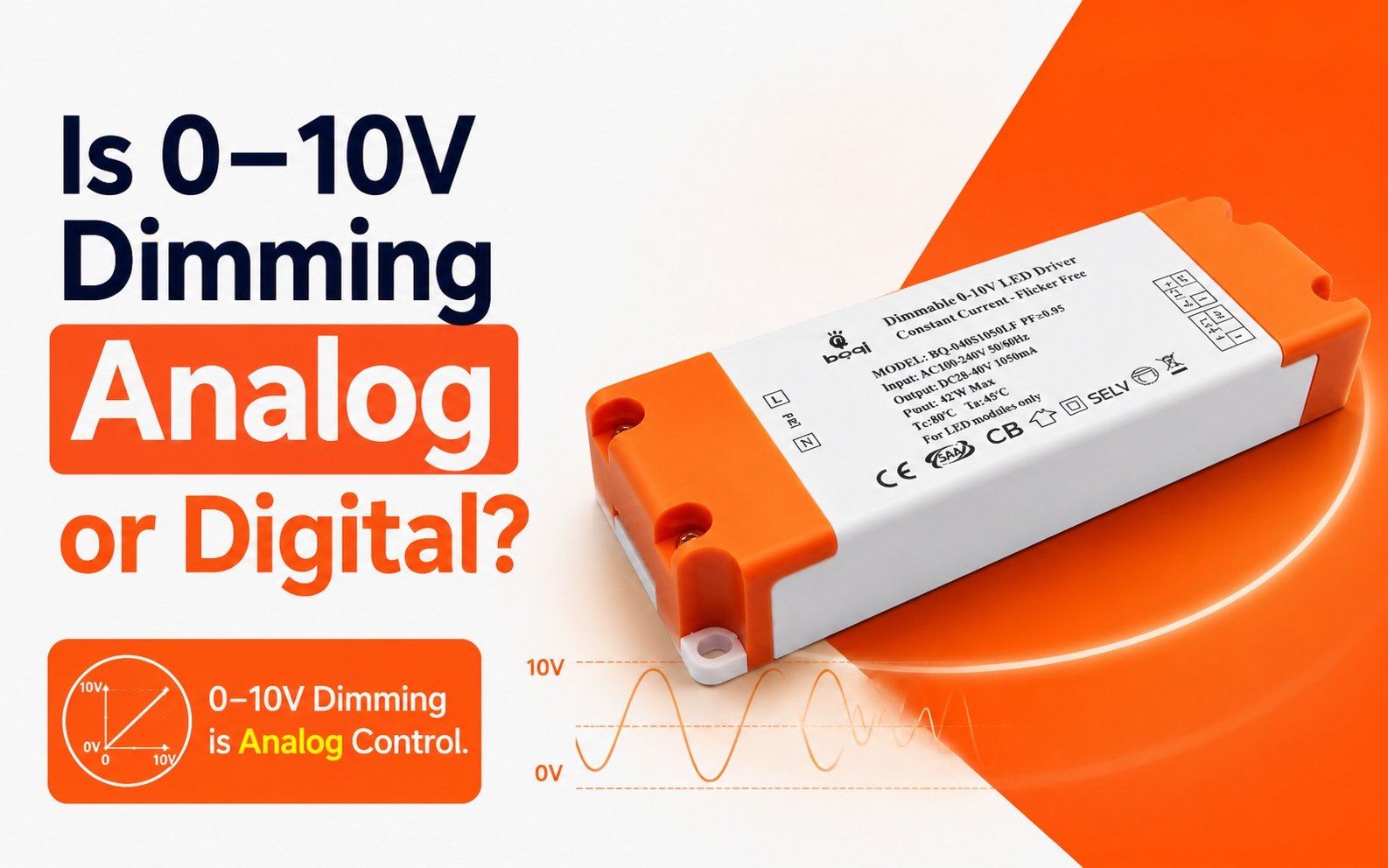
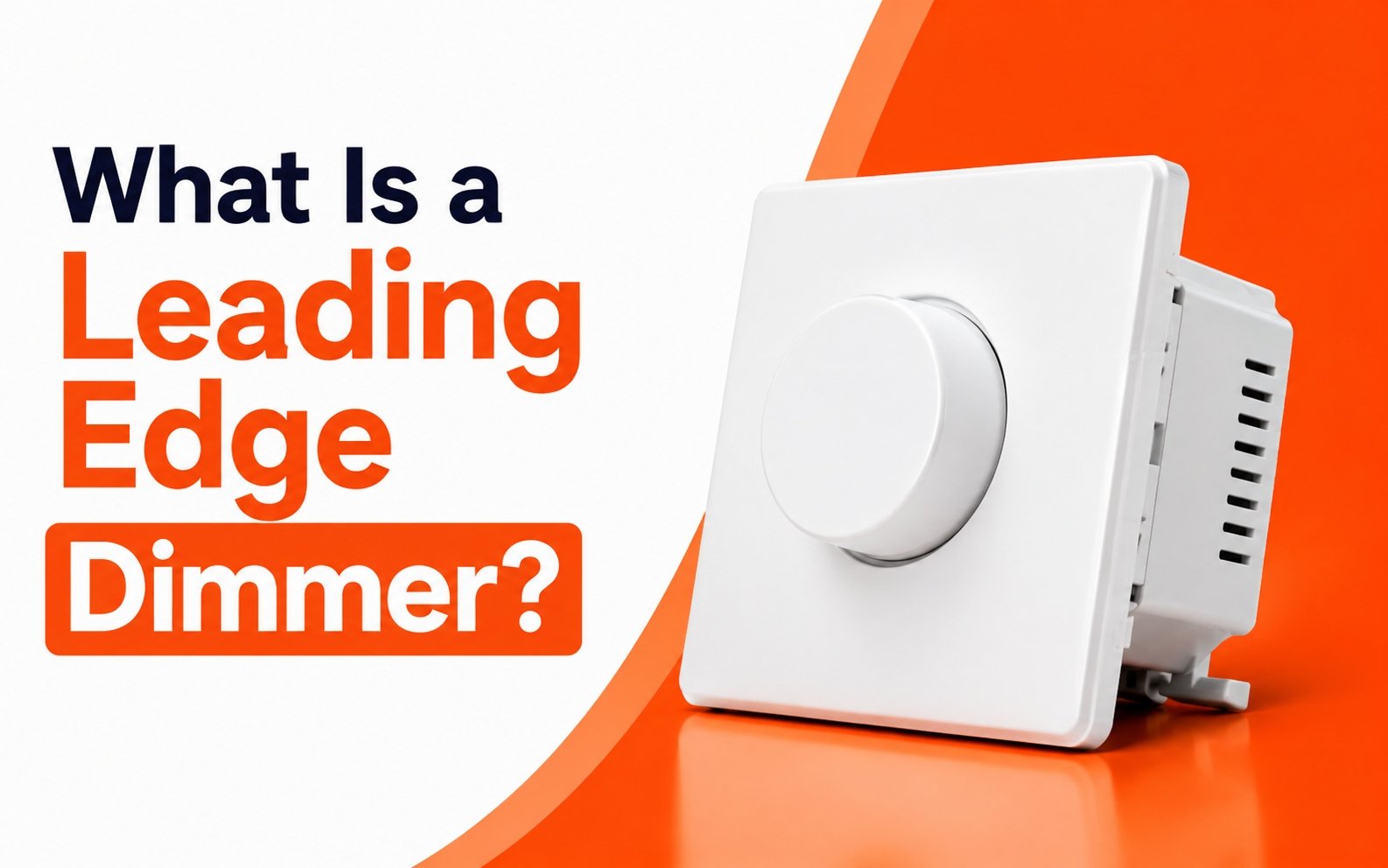
Un dimmer de borde de ataque corta el frente de cada semiciclo de CA. Un dimmer de borde de corte corta la parte trasera. Ambos tipos de atenuación por corte de fase 5 pueden fugar corriente, pero se comportan de manera diferente en el extremo inferior del rango de regulación.
En nuestras pruebas, los dimmers de corte posterior generalmente producen una regulación más suave en el extremo inferior. Pero “más suave” no siempre significa “cero real”. Ambos tipos pueden permitir que el voltaje residual llegue al driver si la red snubber interna del dimmer crea una ruta de derivación. Ese snubber — un circuito RC diseñado para proteger al TRIAC de picos de voltaje — es una ruta de CA permanente entre la línea y la carga. Existe en casi todos los dispositivos de regulación por corte de fase.
El ciclo de carga que causa el parpadeo
A veces la tira no brilla continuamente. En cambio, parpadea cada pocos segundos. Eso ocurre porque la corriente de fuga carga lentamente los capacitores de entrada dentro del driver LED. Cuando se acumula suficiente energía, el driver arranca brevemente, entrega un pulso de potencia a los LED, y los capacitores se descargan. Luego el ciclo se repite:
Corriente de fuga → el capacitor se carga → el driver arranca brevemente → los LED parpadean → el capacitor se descarga → el ciclo se repite
Este parpadeo periódico es más alarmante para los usuarios finales que un brillo tenue, pero la causa raíz es la misma: corriente residual del dimmer que llega a un driver que necesita muy poca energía para activarse.
¿Cómo puedo solucionar el problema del brillo residual al usar atenuadores TRIAC con tiras LED?
El compromiso que evaluamos en cada proyecto es claro: ¿debes tratar el síntoma en el lado de la carga, o resolver el problema a nivel del dimmer-driver?
Puede solucionar el resplandor residual añadiendo una resistencia de carga ficticia o un condensador de derivación LED en la salida, reemplazando el dimmer por uno clasificado para cargas LED bajas o, de manera más fiable, utilizando una combinación de driver LED regulable y dimmer emparejados y probados juntos como un sistema completo.

Soluciones rápidas vs. soluciones adecuadas
No todas las soluciones conllevan el mismo riesgo o costo. Aquí hay una comparación clasificada de la más simple a la más confiable:
| Solución | Cómo funciona | Pros | Contras |
|---|---|---|---|
| Resistencia de carga ficticia | Agrega una carga resistiva para elevar la potencia total por encima del requisito de carga mínima del dimmer | Económica, rápida de instalar | Desperdicia energía, puede sobrecalentarse si está mal dimensionada |
| Capacitor de derivación LED | Absorbe la corriente de fuga y evita que llegue al driver | Pequeño, económico | Debe tener la clasificación correcta; un valor incorrecto puede causar parpadeo o riesgo de seguridad |
| Reemplazar el dimmer | Usar un dimmer con menor carga mínima y clasificación LED adecuada | Resuelve la causa raíz en el interruptor | Mayor costo, requiere recableado |
| Sistema dimmer-driver emparejado | Usar un driver y dimmer probados juntos para compatibilidad de rango completo | Mejor confiabilidad en todas las condiciones de regulación | Requiere abastecerse de un solo ecosistema probado |
| Desconexión física basada en relé | Un relé abre físicamente el circuito cuando el dimmer llega a cero | Aislamiento galvánico verdadero, corriente cero garantizada | Agrega complejidad, costo y un componente adicional |
Por qué los componentes aleatorios son peligrosos
Uno de los mayores errores que veo en campo es un instalador agregando una resistencia o capacitor aleatorio para eliminar el efecto fantasma. Si el componente es de tamaño insuficiente, se sobrecalienta. Si es de tamaño excesivo, interfiere con el rendimiento de regulación. Y si no está clasificado para voltaje de red, se convierte en un riesgo de incendio.
Nuestro equipo de ingeniería ha probado docenas de componentes “solución” de posventa. Los resultados son inconsistentes. Algunos funcionan con un dimmer y fallan con otro. Algunos funcionan a temperatura ambiente pero fallan cuando la carcasa del driver se calienta durante la operación de verano. La deriva térmica de la sensibilidad de puerta del TRIAC empeora la corriente de fuga a medida que suben las temperaturas, por lo que una solución que funciona en un laboratorio frío puede fallar en un hueco de techo a 45 °C.
Recomiendo encarecidamente no agregar componentes no especificados sin consultar al fabricante del driver. La solución más económica no siempre es la más segura.
El enfoque a nivel de sistema
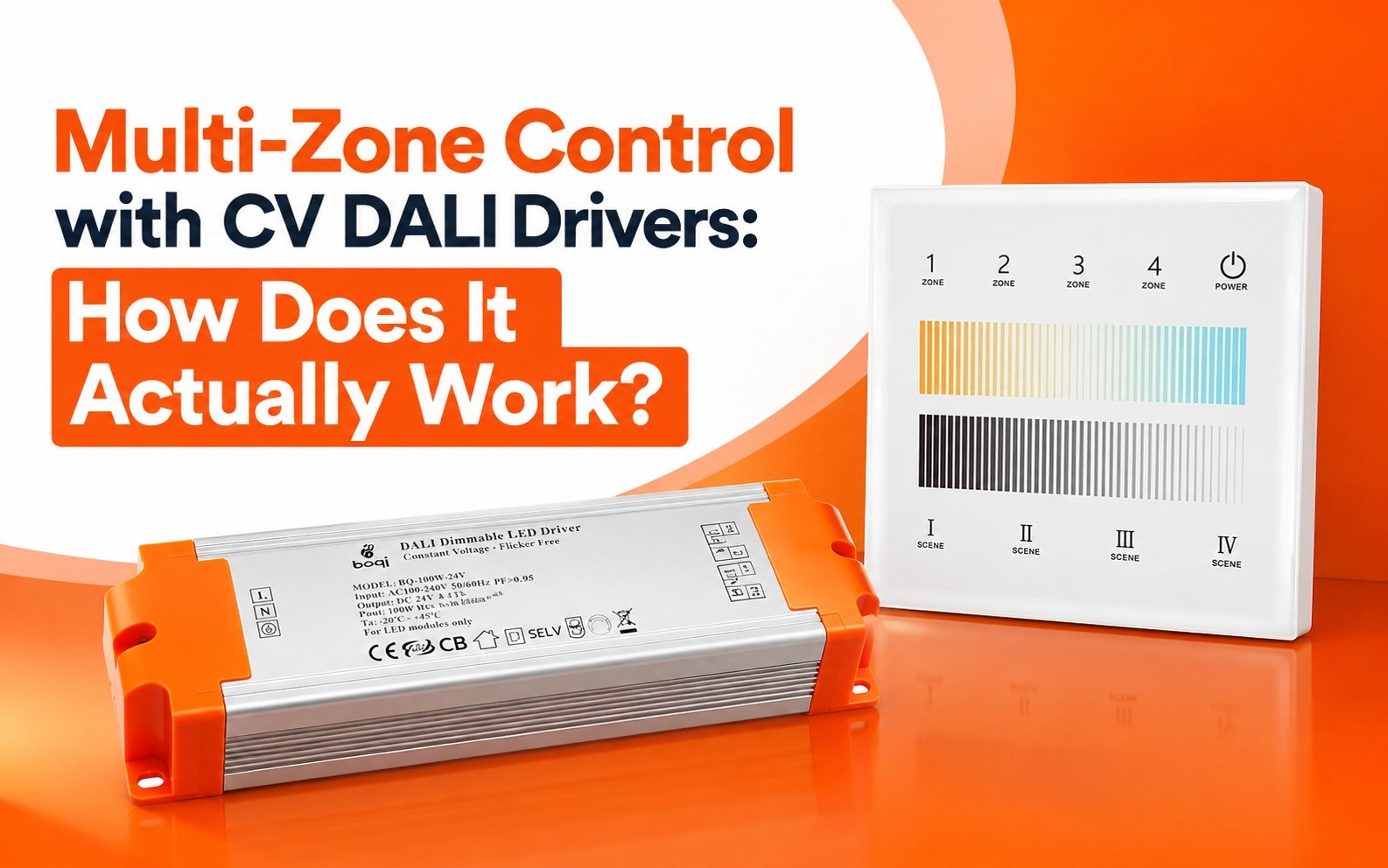
La ruta más confiable es tratar el dimmer, el driver y la carga LED como un sistema integrado. Cuando desarrollamos nuestros drivers LED TRIAC de voltaje constante Boqi, los probamos contra una lista de modelos de dimmer de corte inicial y dimmer de corte final compatibles. Esa prueba de compatibilidad cubre el comportamiento de arranque, el rango de regulación, el parpadeo y — de manera crítica — el comportamiento de apagado.
Un sistema correctamente emparejado elimina por completo la necesidad de componentes de derivación. También mejora la estabilidad de regulación, el rendimiento en el extremo inferior y la confiabilidad de arranque. Por eso siempre recomendamos que nuestros distribuidores y fabricantes de iluminación especifiquen el dimmer y el driver juntos, no como partidas separadas.
La misma tira LED puede apagarse perfectamente con el Dimmer A, brillar tenuemente con el Dimmer B y parpadear con el Dimmer C. Los dimmers TRIAC no son eléctricamente idénticos, incluso cuando todos se comercializan como “compatibles con LED”. Ese es el problema central, y el emparejamiento a nivel de sistema es la solución central.
¿Qué drivers LED debo especificar para evitar el apagado incompleto en mis proyectos de atenuación TRIAC?
Una gerente de compras en Singapur me dijo una vez que había probado cuatro drivers “compatibles con TRIAC” diferentes de cuatro proveedores — y solo uno se apagó limpiamente con el dimmer de su proyecto.
Especifique un controlador LED regulable que incluya una tabla de compatibilidad de reguladores probados, admita regulación por corte de fase tanto de borde de ataque como de borde de corte, tenga bajo consumo de energía en espera y cumpla con el requisito de carga mínima del regulador elegido. Los controladores sin datos de compatibilidad publicados son una apuesta arriesgada.

Qué buscar en la hoja de datos de un driver
No todas las hojas de datos te dicen lo que necesitas saber. Aquí están las especificaciones que más importan para prevenir un apagado incompleto:
| Especificación | Por qué es importante | Qué buscar |
|---|---|---|
| Tipo de regulación | Confirma la compatibilidad con regulación por corte de fase | “TRIAC / corte inicial / corte final” claramente indicado |
| Nivel mínimo de atenuación | Muestra qué tan bajo puede regular el driver | 1% o menor es ideal; 5% o mayor puede no alcanzar el apagado real con algunos dimmers |
| Potencia en espera | Energía consumida cuando el dimmer está al mínimo | Por debajo de 0.5 W reduce el voltaje residual y el riesgo de efecto fantasma |
| Lista de dimmers probados | Demuestra compatibilidad en el mundo real | Modelos de dimmer nombrados con resultados de rendimiento confirmados |
| Rango de voltaje de salida | Debe coincidir con tu tira LED | Voltaje constante: 12 V o 24 V CC |
| Potencia nominal vs. carga mínima del atenuador | El driver debe consumir suficiente corriente para que el atenuador funcione | Verifique que la potencia de entrada del driver supere la carga mínima LED indicada por el atenuador |
Voltaje constante vs. corriente constante
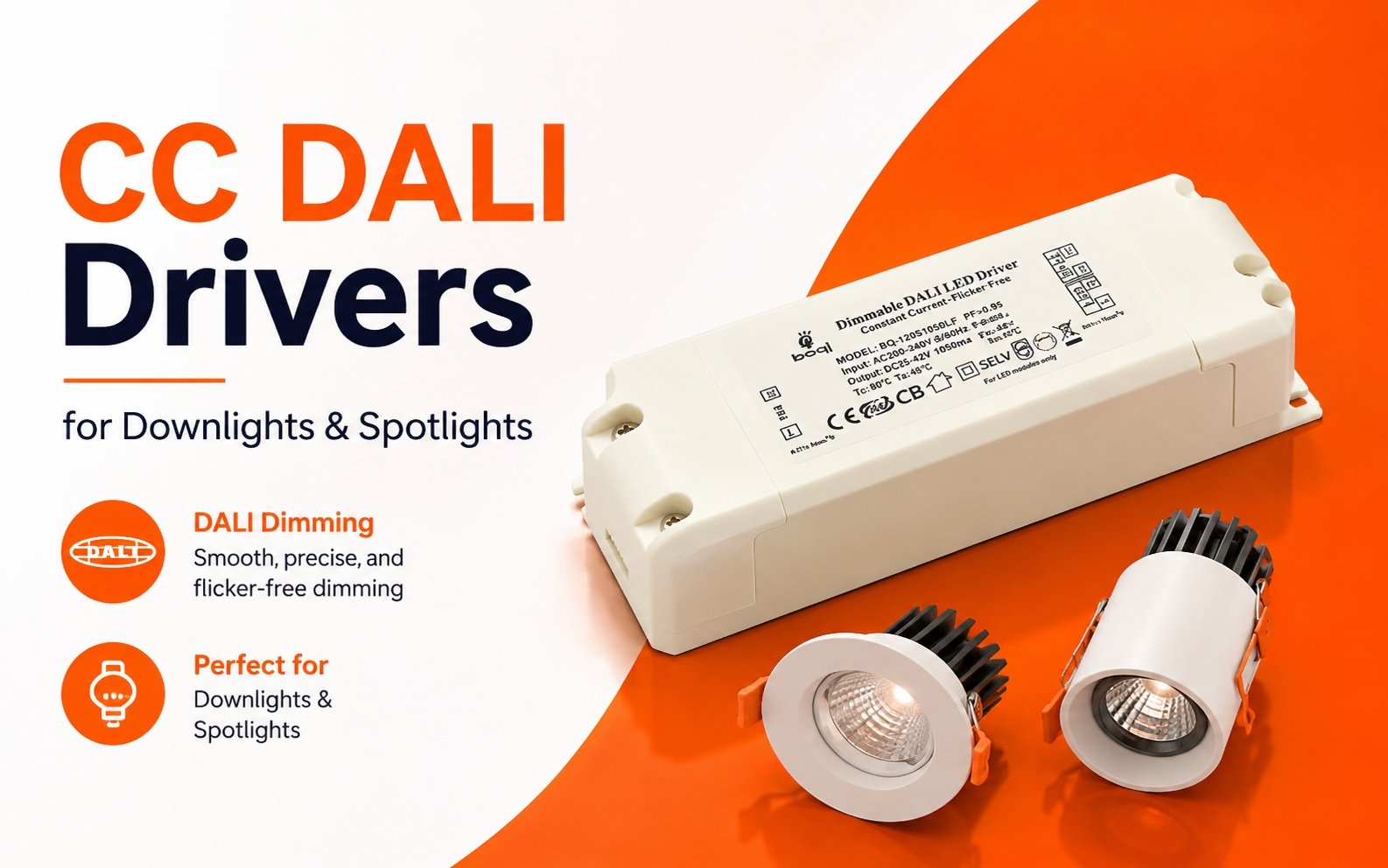
Para aplicaciones con tira LED, casi siempre se necesita un driver de voltaje constante. La propia tira contiene resistencias integradas que regulan la corriente hacia cada grupo de LEDs. Un controlador de corriente constante está diseñado para diferentes tipos de luminarias — paneles, downlights y productos similares donde los LEDs están conectados en serie.
Cuando diseñamos nuestros drivers LED TRIAC de voltaje constante Boqi, la etapa de entrada está optimizada para señales de atenuación por corte de fase. Eso significa que el corrección del factor de potencia 6 circuito y el filtro EMI están sintonizados para que los condensadores Y del filtro no creen rutas de fuga excesivas. La fuga de los condensadores Y del filtro EMI es una de las causas menos obvias del brillo fantasma. El propio filtro puede filtrar corrientes mínimas hacia la tierra del chasis, y si la tira LED está montada sobre un canal de aluminio conectado a tierra, se forma un circuito fantasma que evita por completo la ruta de alimentación prevista.
Por qué “Compatible con LED” no es suficiente
Muchos atenuadores se comercializan como “compatibles con LED”, pero esa etiqueta no tiene ningún estándar universal que la respalde. Simplemente significa que el atenuador ha sido diseñado pensando en cargas LED. No garantiza un funcionamiento limpio con su driver específico.
Lo mismo ocurre del lado del driver. Un driver etiquetado como “dimmable TRIAC” confirma que puede aceptar una entrada de CA con corte de fase. No confirma atenuación suave, arranque confiable ni apagado completo con todos los atenuadores TRIAC del mercado.
Es exactamente por esto que publicamos listas de compatibilidad de atenuadores probados con nuestros drivers Boqi. Nuestro equipo en Shenzhen somete cada modelo de driver a una batería de atenuadores de los mercados a los que exportamos — incluyendo modelos comunes en el Reino Unido, Alemania, Australia y el Sudeste Asiático. Ese proceso lleva tiempo, pero evita a nuestros distribuidores costosas fallas en campo y reclamaciones de garantía.
La verdadera pregunta que un responsable de compras debería hacer no es “¿Este driver es dimmable TRIAC?” sino “¿Se ha probado este driver con el atenuador específico que utiliza mi proyecto?” Si el proveedor no puede responder esa pregunta con datos, el riesgo queda en sus manos.
¿Cómo pruebo la compatibilidad con TRIAC antes de confirmar un pedido al por mayor con mi proveedor?
Una lección que aprendimos temprano en nuestro negocio de exportación: nunca aprobar un pedido al por mayor basándose en una sola prueba de banco a temperatura ambiente con cables cortos.
Pruebe la compatibilidad con TRIAC ejecutando el controlador LED y el atenuador juntos mediante un protocolo estructurado que verifica el arranque, la atenuación de rango completo, la estabilidad en el extremo inferior, el parpadeo y el apagado completo — luego repita a temperatura elevada y con la longitud máxima de cable para simular condiciones reales de campo.

Un protocolo de prueba práctico de siete pasos
Este es el protocolo que utilizamos internamente antes de aprobar un emparejamiento atenuador-driver para envío de producción:
- Prueba de arranque en frío. Encienda el atenuador desde cero. La tira LED debe iluminarse suavemente sin encenderse de golpe a un nivel de brillo aleatorio.
- Barrido de rango completo. Atenúe lentamente del 100% al mínimo. Observe si hay parpadeo, escalonamiento o saltos bruscos de brillo.
- Retención en el extremo bajo. Ajuste el atenuador a su nivel visible más bajo y déjelo durante 10 minutos. La salida debe permanecer estable sin parpadeo visible.
- Prueba de apagado. Apague el atenuador. La tira debe quedar completamente oscura en 2 segundos sin brillo residual ni destellos periódicos.
- Prueba térmica. Encierre el driver en un espacio que simule un hueco de techo o cavidad de mueble. Opere durante 2 horas a nivel de atenuación bajo, luego repita la prueba de apagado. La deriva térmica de la sensibilidad de puerta del TRIAC aumenta la corriente de fuga cuando el dispositivo está caliente.
- Prueba de longitud de cable. Agregue el tendido de cable máximo que espera en la instalación real. Los cables más largos aumentan el acoplamiento capacitivo, lo que puede introducir voltaje fantasma al circuito LED.
- Prueba con múltiples unidades. Conecte la cantidad de drivers que planea instalar en un solo circuito de atenuador. Múltiples drivers cambian la carga total y pueden llevar el sistema fuera de la ventana de operación del atenuador.
Cómo se ven las fallas
Cada patrón de falla apunta a una causa raíz diferente. Use esta tabla para diagnosticar lo que observa durante las pruebas:
| Síntoma durante la prueba | Causa probable | Acción recomendada |
|---|---|---|
| La tira se enciende de golpe al 30% en lugar del 0% | Piso de voltaje del firmware del atenuador ajustado demasiado alto | Pruebe un atenuador diferente o solicite ajuste de firmware |
| La tira parpadea a niveles bajos | La señal de corte de fase es inestable con ángulo de conducción bajo | Cambie de atenuador de borde de ataque a atenuador de borde de salida |
| Brillo tenue cuando está apagado | Corriente de fuga o derivación de red snubber | Confirme la compatibilidad atenuador-driver o use un sistema emparejado |
| Destello periódico cada 3–5 segundos | Ciclo de carga-descarga del condensador por voltaje residual | Agregue un condensador de derivación LED probado o cambie a un atenuador compatible |
| Funciona a temperatura ambiente pero brilla cuando está caliente | La deriva térmica aumenta la corriente de fuga del TRIAC | Use un atenuador con especificación de fuga más baja |
Cuántas muestras probar
Recomiendo probar al menos 3 muestras de cada componente. Las tolerancias de fabricación hacen que una muestra pueda pasar mientras otra falla en el margen. Si 1 de cada 3 muestras falla la prueba de apagado, eso es una señal de alerta para la confiabilidad en campo. Aplicamos esta regla a nuestra propia producción — cada lote de drivers LED TRIAC Boqi pasa por verificaciones puntuales de compatibilidad con atenuadores antes de aprobar el envío.
Cuándo solicitar muestras antes de ordenar
Si su proveedor no puede proporcionar una lista de compatibilidad de atenuadores probada, solicite muestras y ejecute el protocolo anterior usted mismo. El costo de 5 controladores de muestra y una semana de pruebas es mucho menor que el costo de un retiro de campo en miles de unidades. Este es el consejo que doy a cada nuevo distribuidor que nos contacta a través de nuestro sitio web o en ferias comerciales.
Un sistema de atenuación TRIAC siempre debe evaluarse como un sistema completo. La pregunta importante no es “¿Es este un atenuador TRIAC?” La pregunta es “¿Se ha probado y comprobado que este atenuador es compatible con este controlador LED específico?” Usar una combinación probada — como los controladores LED TRIAC de voltaje constante Boqi emparejados con atenuadores de borde inicial y borde final Boqi compatibles — brinda a los instaladores y fabricantes de iluminación un rendimiento más predecible en el arranque, el rango de atenuación, el control de parpadeo y el comportamiento de apagado.
Esa es la verdadera diferencia entre un sistema que atenúa con éxito durante una prueba rápida de banco y uno que opera de manera confiable en una instalación real durante años.
Conclusión
Las tiras LED TRIAC que no se apagan son un problema del sistema, no un defecto de la tira. Empareje su atenuador, controlador LED regulable y carga como un sistema probado para eliminar el brillo residual para siempre.
¿Interesado en adquirir los productos mencionados en este artículo? Vea los detalles y solicite una cotización aquí:
Notas al pie
Proporciona una descripción técnica general de los controladores LED y su papel fundamental en los circuitos de iluminación. ↩︎
Explicación autorizada de cómo operan las uniones semiconductoras LED y su eficiencia energética inherente. ↩︎
Definición científica y contexto de ingeniería para la corriente de fuga en circuitos electrónicos y semiconductores. ↩︎
Explica la operación del semiconductor TRIAC y el concepto de corriente de mantenimiento referenciado en el artículo. ↩︎
Estándares de la industria para la compatibilidad de atenuación entre iluminación de estado sólido y sistemas de atenuación por corte de fase. ↩︎
Explica el concepto eléctrico de corrección del factor de potencia utilizado en sistemas de iluminación de alta eficiencia. ↩︎