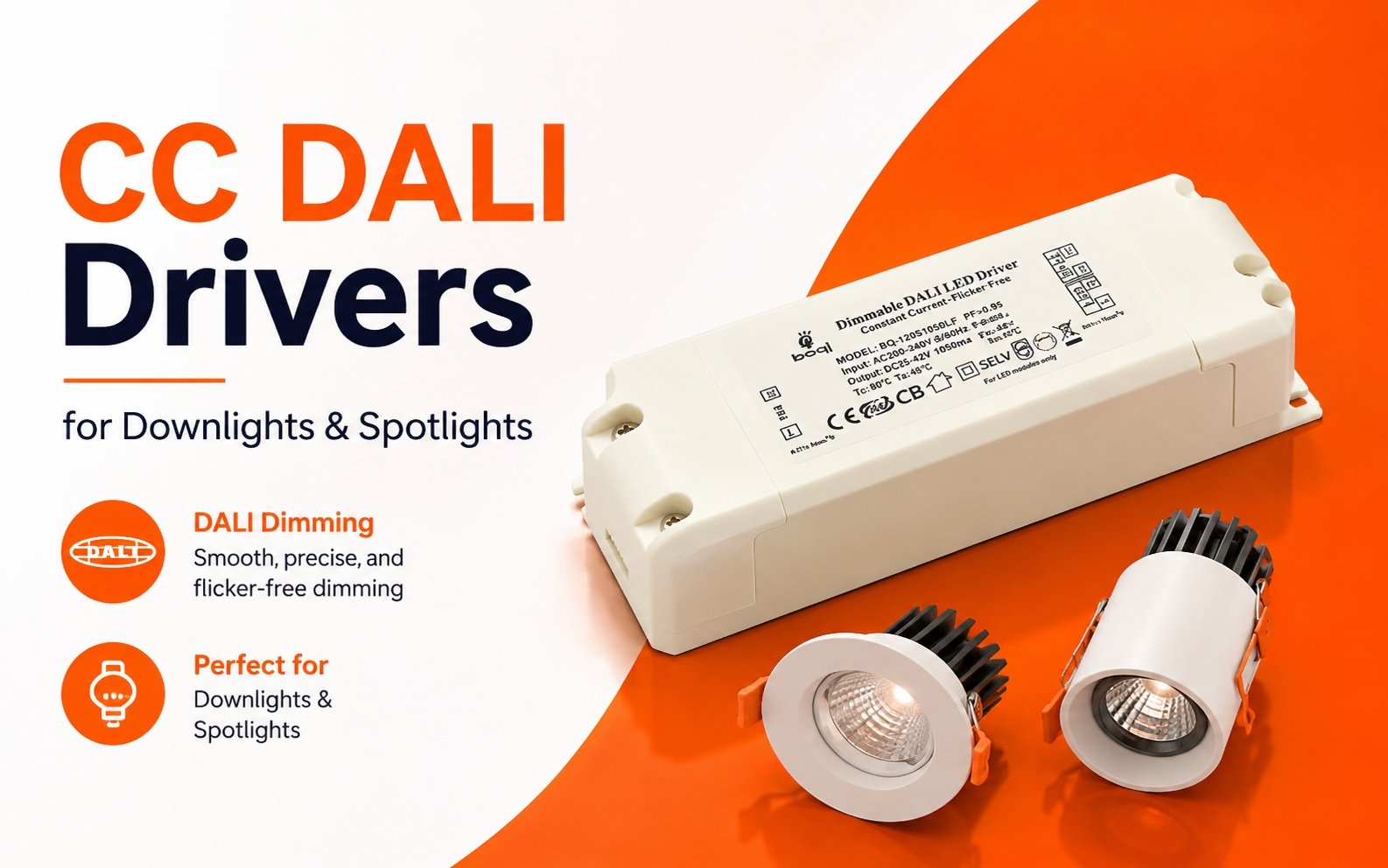















TRIAC LED-ленты, которые отказываются полностью выключаться, чуть не стоили нам отношений с крупным дистрибьютором в Германии в прошлом году — и эта жалоба преподала нашей инженерной команде критически важный урок.
TRIAC LED strips don’t turn off completely because a small leakage current flows through the dimmer even in its off state. That residual voltage partially energizes the dimmable LED driver, and because LEDs need very little power to emit light, the strip produces a faint glow or periodic flash.
Корневая причина почти никогда не кроется в самой LED-ленте. Это взаимодействие между диммером, Драйвер светодиода 1, и подключённой нагрузкой. Ниже я подробно разбираю, почему это происходит и что вы можете с этим сделать.
Почему мои светодиодные ленты с TRIAC-диммированием продолжают тускло светиться даже после выключения?
Во время аудита фабрики в прошлом квартале мы подключили одну и ту же LED-ленту к трём разным TRIAC-диммерам на нашем испытательном стенде — и получили три совершенно разных результата в выключенном состоянии.
Основная причина — ток утечки диммера. Полупроводники TRIAC никогда не достигают идеального разрыва цепи, поэтому даже когда диммер выключен, через него может проходить ток 1–5 мА. Этот крошечный ток незаметен для ламп накаливания, но его достаточно, чтобы светодиодные ленты светились.

Почему светодиоды реагируют на микротоки
Лампы накаливания требуют значительного тока для нагрева нити. Светодиоды — нет. Ток, который был бы совершенно незаметен в галогенной лампе мощностью 60 Вт, может вызвать заметный эффект призрачного свечения в LED-ленте мощностью всего несколько ватт. Это не дефект. Это прямое следствие эффективности светодиодов. полупроводниковый переход 2 внутри каждого светодиода может излучать фотоны при уровнях в микроамперы. Именно эта чувствительность делает светодиоды энергоэффективными — и одновременно уязвимыми к каждому паразитному миллиамперу в цепи.
Пять корневых причин
Я отсортировал причины по частоте их встречаемости в реальных полевых возвратах:
| Причина | Что происходит | Насколько распространено |
|---|---|---|
| Диммер ток утечки 3 | 1–5 мА протекает через TRIAC даже в выключенном состоянии | Очень распространено |
| Требование минимальной нагрузки не выполнено | Диммер не может работать корректно ниже своей номинальной LED-нагрузки | Распространено |
| Ёмкостная связь в проводке | Соседние фазные провода наводят паразитное напряжение в коммутируемую линию | Умеренный |
| Накопленная энергия в конденсаторах драйвера | Электролитические конденсаторы медленно разряжаются через светодиоды | Умеренный |
| Минимальный порог напряжения в прошивке диммера | Цифровые диммеры устанавливают минимальный выходной уровень выше истинного нуля вольт | Менее распространено |
Существует также проблема удерживающего тока 4 , которую стоит понять. TRIAC остаётся защёлкнутым — проводящим — пока ток через него не упадёт ниже порога, называемого удерживающим током, при каждом переходе переменного тока через ноль. При очень малых LED-нагрузках ток может колебаться вблизи этого порога. TRIAC может не полностью сброситься в непроводящее состояние в каждом цикле. Результат непредсказуем: иногда лента выключается, иногда — нет.
Поведение при переднем и заднем фронте отсечки
Диммер с передним фронтом отсекает начало каждого полупериода переменного тока. Диммер с задним фронтом отсекает конец. Оба типа фазово-срезанное затемнение 5 могут пропускать ток утечки, но ведут себя по-разному на нижнем пределе диапазона диммирования.
In our testing, trailing edge dimmers generally produce smoother low-end dimming. But “smoother” does not always mean “true zero.” Both types can allow residual voltage to reach the driver if the dimmer’s internal snubber network creates a bypass path. That snubber — an RC circuit designed to protect the TRIAC from voltage spikes — is a permanent AC path between line and load. It exists in nearly every phase-cut dimming device.
Цикл зарядки, вызывающий мигание
Иногда лента не светится непрерывно. Вместо этого она мигает каждые несколько секунд. Это происходит потому, что ток утечки медленно заряжает входные конденсаторы внутри LED-драйвера. Когда накапливается достаточно энергии, драйвер кратковременно запускается, подаёт импульс мощности на светодиоды, и конденсаторы разряжаются. Затем цикл повторяется:
Ток утечки → конденсатор заряжается → драйвер кратковременно запускается → светодиоды мигают → конденсатор разряжается → цикл повторяется
Это периодическое мигание пугает конечных пользователей больше, чем слабое свечение, но корневая причина та же: остаточный ток от диммера достигает драйвера, которому требуется очень мало энергии для пробуждения.
Как я могу устранить проблему остаточного свечения при использовании TRIAC-диммеров со светодиодными лентами?
The trade-off we weigh on every project is straightforward: should you treat the symptom at the load side, or solve the problem at the dimmer-driver level?
Вы можете устранить остаточное свечение, добавив резистор балластной нагрузки или байпасный конденсатор LED параллельно выходу, заменив диммер на модель, рассчитанную на низкие нагрузки LED, или — что наиболее надёжно — используя согласованную комбинацию диммируемого драйвера LED и диммера, протестированную совместно как единая система.

Быстрые решения vs. правильные решения
Not every fix carries the same risk or cost. Here is a comparison ranked from simplest to most reliable:
| Исправление | Как это работает | Плюсы | Cons |
|---|---|---|---|
| Dummy load resistor | Adds a resistive load to raise total wattage above the dimmer’s minimum load requirement | Cheap, fast to install | Wastes energy, can overheat if poorly sized |
| LED bypass capacitor | Absorbs leakage current and prevents it from reaching the driver | Small, inexpensive | Must be correctly rated; wrong value can cause flicker or safety risk |
| Replace the dimmer | Use a dimmer with lower minimum load and proper LED rating | Solves root cause at the switch | Higher cost, requires rewiring |
| Matched dimmer-driver system | Use a driver and dimmer tested together for full-range compatibility | Best reliability across all dimming conditions | Requires sourcing from a single tested ecosystem |
| Relay-based hard disconnect | A relay physically opens the circuit when the dimmer reaches zero | True galvanic isolation, guaranteed zero current | Adds complexity, cost, and an additional component |
Почему случайные компоненты опасны
One of the biggest mistakes I see in the field is an installer adding a random resistor or capacitor to eliminate the ghosting effect. If the component is undersized, it overheats. If it is oversized, it interferes with dimming performance. And if it is not rated for mains voltage, it becomes a fire risk.
Our engineering team has tested dozens of aftermarket “fix” components. The results are inconsistent. Some work with one dimmer and fail with another. Some work at room temperature but fail when the driver enclosure heats up during summer operation. Thermal drift of the TRIAC’s gate sensitivity makes the leakage current worse as temperatures rise, so a fix that works in a cool lab may fail in a ceiling void at 45 °C.
I strongly advise against adding unspecified components without consulting the driver manufacturer. The cheapest fix is not always the safest.
Системный подход
The most reliable path is to treat the dimmer, driver, and LED load as one integrated system. When we develop our Boqi constant-voltage TRIAC LED drivers, we test them against a list of compatible leading edge dimmer and trailing edge dimmer models. That compatibility testing covers startup behavior, dimming range, flicker, and — critically — turn-off behavior.
A properly matched system eliminates the need for bypass components entirely. It also improves dimming stability, low-end performance, and startup reliability. This is why we always recommend that our distributors and lighting manufacturers specify the dimmer and driver together, not as separate line items.
The same LED strip may turn off perfectly with Dimmer A, glow faintly with Dimmer B, and flicker with Dimmer C. TRIAC dimmers are not electrically identical, even when all of them are marketed as “LED compatible.” That is the core problem, and system-level matching is the core solution.
Какие LED-драйверы мне следует указать, чтобы избежать неполного отключения в моих проектах с TRIAC-диммированием?
A procurement manager in Singapore once told me she had tested four different “TRIAC-compatible” drivers from four suppliers — and only one turned off cleanly with her project’s dimmer.
Указывайте диммируемый светодиодный драйвер, в котором приведена таблица проверенной совместимости с диммерами, поддерживается как отсечка по переднему, так и по заднему фронту фазового регулирования, низкое энергопотребление в режиме ожидания и соответствует требованию минимальной нагрузки выбранного вами диммера. Драйверы без опубликованных данных о совместимости — это лотерея.

На что обращать внимание в даташите драйвера
Not every datasheet tells you what you need to know. Here are the specifications that matter most for preventing incomplete shut-off:
| Технические характеристики | Почему это важно | На что обратить внимание |
|---|---|---|
| Dimming type | Confirms phase-cut dimming compatibility | “TRIAC / leading edge / trailing edge” clearly stated |
| Минимальный уровень диммирования | Shows how low the driver can dim | 1% or lower is ideal; 5% or above may not reach true off with some dimmers |
| Standby power | Energy consumed when dimmer is at minimum | Below 0.5 W reduces residual voltage and ghosting risk |
| Tested dimmer list | Proves real-world compatibility | Named dimmer models with confirmed performance results |
| Диапазон выходного напряжения | Должен соответствовать вашей светодиодной ленте | Постоянное напряжение: 12 В или 24 В пост. тока |
| Номинальная мощность против минимальной нагрузки диммера | Драйвер должен потреблять достаточный ток для работы диммера | Проверьте, что входная мощность драйвера превышает указанную минимальную нагрузку диммера для светодиодов |
Стабилизация напряжения vs. стабилизация тока
Для применений со светодиодной лентой почти всегда требуется драйвер постоянного напряжения. Сама лента содержит встроенные резисторы, которые регулируют ток для каждого светодиодного кластера. A драйвера с постоянным током предназначен для других типов светильников — панельных светильников, встраиваемых светильников и аналогичных изделий, где светодиоды подключены последовательно.
Когда мы разрабатываем наши Boqi драйверы постоянного напряжения с TRIAC-диммированием, входной каскад оптимизирован для сигналов диммирования с отсечкой фазы. Это означает, что коррекции коэффициента мощности 6 схема и EMI-фильтр настроены так, чтобы Y-конденсаторы в фильтре не создавали чрезмерных путей утечки. Утечка Y-конденсаторов EMI-фильтра — одна из менее очевидных причин фантомного свечения. Сам фильтр может пропускать микротоки на заземление корпуса, и если светодиодная лента установлена на заземлённом алюминиевом профиле, образуется паразитная цепь, которая полностью обходит предусмотренный путь питания.
Why “LED Compatible” Is Not Enough
Многие диммеры продаются как “совместимые со светодиодами”, но за этой маркировкой нет единого стандарта. Она лишь означает, что диммер разработан с учётом светодиодных нагрузок. Она не гарантирует корректную работу с вашим конкретным драйвером.
То же самое справедливо и для драйвера. Драйвер с маркировкой “TRIAC dimmable” подтверждает, что он может принимать входной сигнал переменного тока с отсечкой фазы. Он не подтверждает плавное диммирование, надёжный запуск или полное отключение с каждым TRIAC-диммером на рынке.
Именно поэтому мы публикуем списки протестированной совместимости диммеров с нашими драйверами Boqi. Наша команда в Шэньчжэне прогоняет каждую модель драйвера через набор диммеров с рынков, в которые мы экспортируем, — включая модели, распространённые в Великобритании, Германии, Австралии и Юго-Восточной Азии. Этот процесс занимает время, но он спасает наших дистрибьюторов от дорогостоящих отказов на объектах и гарантийных претензий.
Настоящий вопрос, который должен задать специалист по закупкам, — не “Является ли этот драйвер TRIAC-диммируемым?”, а “Был ли этот драйвер протестирован с конкретным диммером, который используется в моём проекте?” Если поставщик не может ответить на этот вопрос данными, риск остаётся на вас.
Как мне проверить совместимость с TRIAC, прежде чем подтвердить оптовый заказ у моего поставщика?
Урок, который мы усвоили на раннем этапе нашего экспортного бизнеса: никогда не утверждайте оптовый заказ на основании одного стендового теста при комнатной температуре с короткими проводами.
Проверьте совместимость с TRIAC, запустив светодиодный драйвер и диммер вместе по структурированному протоколу, который проверяет запуск, полный диапазон диммирования, стабильность на нижнем пределе, мерцание и полное отключение — затем повторите при повышенной температуре и с максимальной длиной провода, чтобы смоделировать реальные условия эксплуатации.
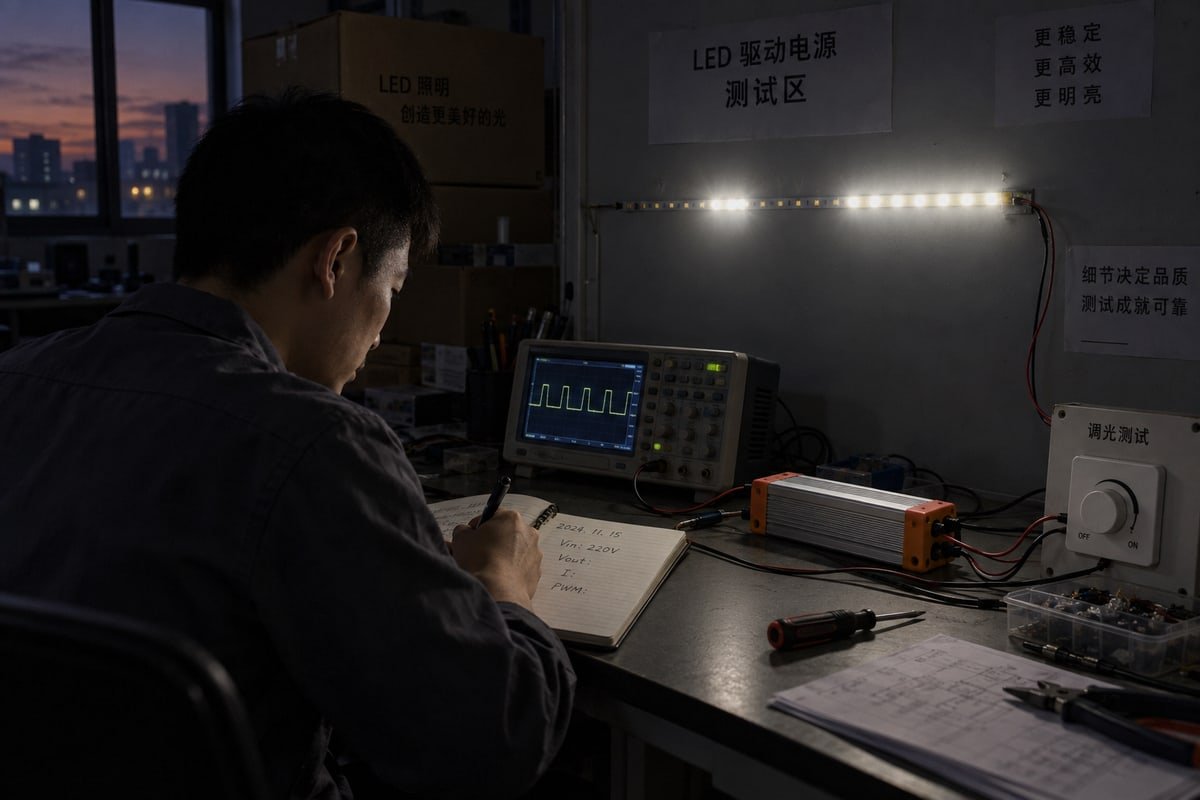
Практический протокол тестирования из семи шагов
Вот протокол, который мы используем внутри компании перед утверждением пары диммер-драйвер для серийной отгрузки:
- Тест холодного запуска. Включите диммер с нуля. Светодиодная лента должна плавно загореться без скачка на случайном уровне яркости.
- Прогон полного диапазона. Медленно уменьшайте яркость от 100% до минимума. Следите за мерцанием, ступенчатостью или резкими скачками яркости.
- Удержание на нижнем уровне. Установите диммер на самый низкий видимый уровень и оставьте на 10 минут. Выходной сигнал должен оставаться стабильным без видимого мерцания.
- Тест отключения. Переключите диммер в положение «выкл». Лента должна полностью погаснуть в течение 2 секунд без остаточного свечения и без периодического мигания.
- Тепловой тест. Поместите драйвер в замкнутое пространство, имитирующее запотолочное пространство или нишу в мебели. Запустите его на 2 часа на низком уровне диммирования, затем повторите тест отключения. Тепловой дрейф чувствительности затвора TRIAC увеличивает ток утечки, когда устройство нагрето.
- Тест длины проводов. Добавьте максимальную длину кабеля, которую вы ожидаете в реальной установке. Более длинные провода увеличивают ёмкостную связь, что может создать фантомное напряжение в светодиодной цепи.
- Тест с несколькими устройствами. Подключите то количество драйверов, которое вы планируете установить на одной цепи диммера. Несколько драйверов изменяют общую нагрузку и могут вывести систему за пределы рабочего окна диммера.
Как выглядят отказы
Каждый тип отказа указывает на свою первопричину. Используйте эту таблицу для диагностики того, что вы видите во время тестирования:
| Симптом во время теста | Вероятная причина | Рекомендуемое действие |
|---|---|---|
| Лента включается на 30% вместо 0% | Нижний порог напряжения в прошивке диммера установлен слишком высоко | Попробуйте другой диммер или запросите корректировку прошивки |
| Лента мерцает на низких уровнях | Сигнал с отсечкой фазы нестабилен при малом угле проводимости | Переключитесь с диммера с передним фронтом на диммер с задним фронтом |
| Слабое свечение в выключенном состоянии | Ток утечки или обход снабберной цепи | Подтвердите совместимость диммера и драйвера или используйте согласованную систему |
| Периодическая вспышка каждые 3–5 секунд | Цикл заряда-разряда конденсатора от остаточного напряжения | Добавьте протестированный обходной конденсатор для светодиодов или переключитесь на совместимый диммер |
| Работает при комнатной температуре, но светится в горячем состоянии | Тепловой дрейф увеличивает ток утечки TRIAC | Используйте диммер с более низким значением утечки |
Сколько образцов тестировать
Я рекомендую тестировать как минимум 3 образца каждого компонента. Производственные допуски означают, что один образец может пройти тест, а другой — отказать на граничном значении. Если 1 из 3 образцов не проходит тест отключения, это тревожный сигнал для надёжности на объекте. Мы применяем это правило к нашему собственному производству — каждая партия Boqi TRIAC LED драйверов проходит выборочные проверки совместимости с диммерами перед утверждением отгрузки.
Когда запрашивать образцы перед заказом
Если ваш поставщик не может предоставить проверенный список совместимости диммеров, запросите образцы и самостоятельно проведите протокол, описанный выше. Стоимость 5 образцов драйверов и недели тестирования намного меньше стоимости отзыва продукции с тысяч устройств. Это совет, который я даю каждому новому дистрибьютору, который связывается с нами через наш сайт или на торговых выставках.
Систему TRIAC-диммирования всегда следует оценивать как единую систему. Важный вопрос не “Является ли это TRIAC-диммером?” Вопрос в том: “Был ли этот диммер протестирован и подтверждён как совместимый с данным конкретным LED-драйвером?” Использование проверенной комбинации — например, TRIAC LED-драйверов постоянного напряжения Boqi в паре с совместимыми диммерами Boqi с передним и задним фронтом — даёт монтажникам и производителям светильников более предсказуемую работу при запуске, диапазоне диммирования, контроле мерцания и поведении при выключении.
Это и есть реальная разница между системой, которая успешно диммируется во время быстрого стендового теста, и той, которая надёжно работает в реальной установке годами.
Заключение
TRIAC LED-ленты, которые не выключаются, — это проблема системы, а не дефект ленты. Согласуйте диммер, диммируемый LED-драйвер и нагрузку как одну проверенную систему, чтобы навсегда устранить остаточное свечение.
Заинтересованы в закупке продуктов, упомянутых в этой статье? Смотрите подробности и запрашивайте коммерческое предложение здесь:
Сноски
Предоставляет технический обзор LED-драйверов и их фундаментальной роли в осветительных цепях. ↩︎
Авторитетное объяснение того, как работают полупроводниковые переходы LED и их присущая энергоэффективность. ↩︎
Научное определение и инженерный контекст тока утечки в электронных цепях и полупроводниках. ↩︎
Объясняет работу TRIAC-полупроводника и концепцию удерживающего тока, упомянутую в статье. ↩︎
Отраслевые стандарты совместимости диммирования между твердотельным освещением и системами фазового диммирования. ↩︎
Объясняет электрическую концепцию коррекции коэффициента мощности, используемую в высокоэффективных системах освещения. ↩︎