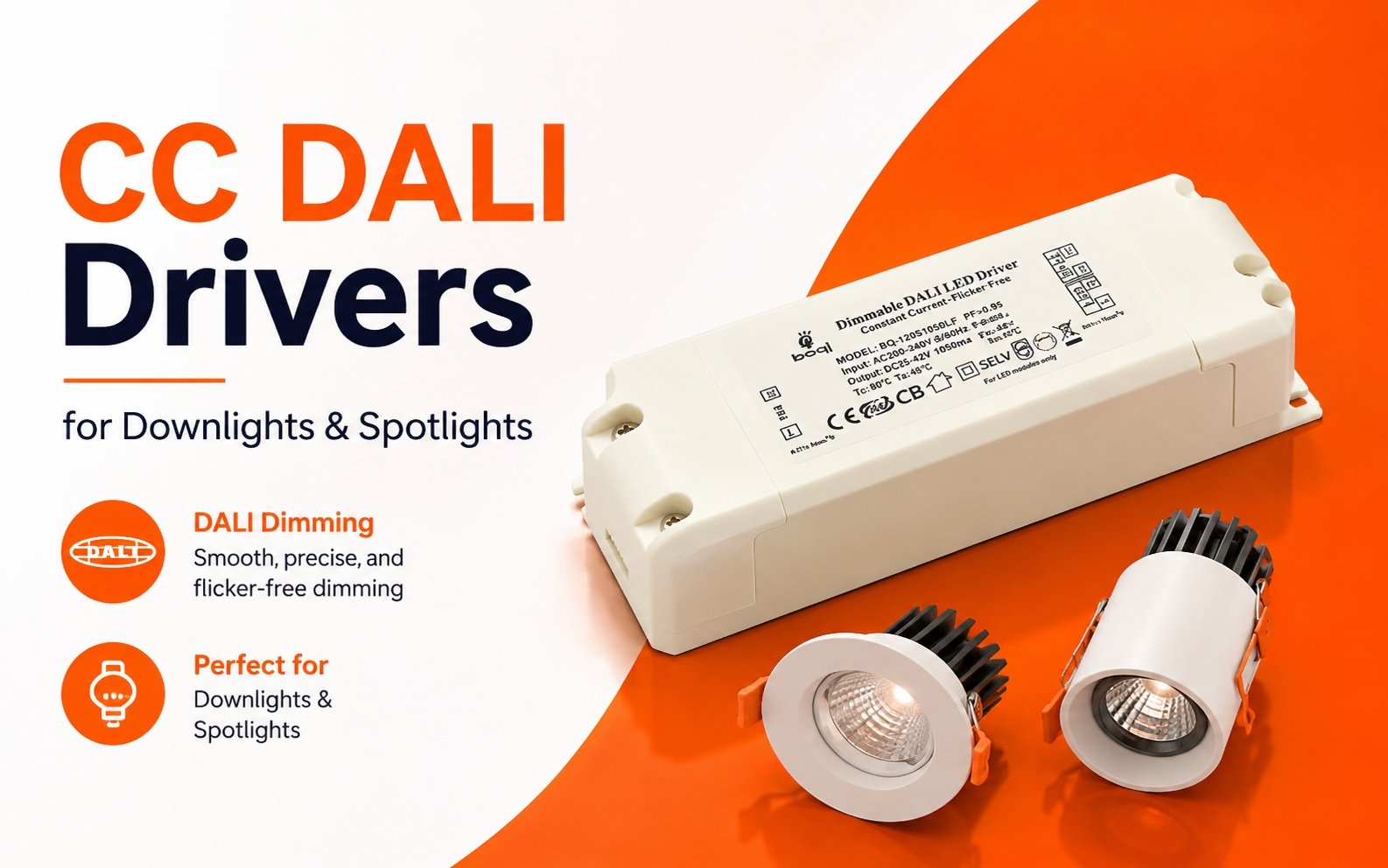















TRIAC-LED-Streifen, die sich nicht vollständig ausschalten lassen, hätten uns letztes Jahr fast eine wichtige Distributorenbeziehung in Deutschland gekostet — und diese Beschwerde hat unserem Entwicklungsteam eine entscheidende Lektion erteilt.
TRIAC-LED-Streifen schalten nicht vollständig ab, weil auch im ausgeschalteten Zustand ein kleiner Leckstrom durch den Dimmer fließt. Diese Restspannung versorgt den dimmbaren LED-Treiber teilweise mit Energie, und da LEDs nur sehr wenig Leistung benötigen, um Licht zu emittieren, erzeugt der Streifen ein schwaches Glimmen oder periodisches Blitzen.
Die Ursache liegt fast nie im LED-Streifen selbst. Es ist das Zusammenspiel zwischen dem Dimmer, dem LED-Treiber 1, und der angeschlossenen Last. Im Folgenden erkläre ich genau, warum dies geschieht und was Sie dagegen tun können.
Was verursacht, dass meine TRIAC LED-Streifen auch nach dem Ausschalten schwach weiterleuchten?
Während eines Werksaudits im letzten Quartal haben wir denselben LED-Streifen an drei verschiedene TRIAC-Dimmer auf unserem Prüfstand angeschlossen — und drei völlig unterschiedliche Ergebnisse im Aus-Zustand erhalten.
Die Hauptursache ist der Leckstrom des Dimmers. TRIAC-Halbleiter erreichen niemals einen perfekten offenen Stromkreis, sodass selbst bei ausgeschaltetem Dimmer 1–5 mA Strom fließen können. Dieser winzige Strom ist für Glühlampen unsichtbar, reicht aber aus, um LED-Streifen zum Glimmen zu bringen.

Warum LEDs auf Mikroströme reagieren
Glühlampen benötigen erheblichen Strom, um einen Glühfaden zu erhitzen. LEDs nicht. Ein Strom, der in einer 60-W-Halogenlampe völlig unsichtbar wäre, kann in einem LED-Streifen mit nur wenigen Watt Nennleistung einen merklichen Ghosting-Effekt erzeugen. Dies ist kein Defekt. Es ist eine direkte Folge der LED-Effizienz. Der Halbleiterübergang 2 in jeder LED kann Photonen bei Mikroampere-Pegeln emittieren. Diese Empfindlichkeit macht LEDs energieeffizient — und macht sie gleichzeitig anfällig für jeden Streustrom im Milliampere-Bereich im Stromkreis.
Die fünf Hauptursachen
Ich habe die Ursachen danach sortiert, wie häufig wir ihnen bei tatsächlichen Feldrückläufern begegnen:
| Ursache | Was passiert | Wie häufig |
|---|---|---|
| Dimmer Leckstrom 3 | 1–5 mA fließen selbst im ausgeschalteten Zustand durch den TRIAC | Sehr häufig |
| Mindestlastanforderung nicht erfüllt | Dimmer kann unterhalb seiner Nenn-LED-Last nicht korrekt arbeiten | Häufig |
| Kapazitive Kopplung in der Verkabelung | Benachbarte spannungsführende Leitungen induzieren eine Phantomspannung in den geschalteten Leiter | Mäßig |
| Gespeicherte Energie in Treiber-Kondensatoren | Elektrolytkondensatoren entladen sich langsam über die LEDs | Mäßig |
| Spannungsuntergrenze der Dimmer-Firmware | Digitale Dimmer legen einen Mindestausgang oberhalb von echten null Volt fest | Weniger häufig |
Es gibt auch ein Haltestrom 4 -Problem, das es zu verstehen lohnt. Ein TRIAC bleibt verriegelt — leitend —, bis der Strom durch ihn bei jedem Nulldurchgang der Wechselspannung unter einen Schwellenwert fällt, der als Haltestrom bezeichnet wird. Bei sehr kleinen LED-Lasten kann der Strom nahe an diesem Schwellenwert liegen. Der TRIAC setzt möglicherweise nicht in jedem Zyklus vollständig in seinen nichtleitenden Zustand zurück. Das Ergebnis ist unvorhersehbar: Manchmal schaltet sich der Streifen aus, manchmal nicht.
Phasenanschnitt vs. Phasenabschnitt
Ein Phasenanschnitt-Dimmer schneidet die Vorderseite jeder Wechselspannungs-Halbwelle ab. Ein Phasenabschnitt-Dimmer schneidet die Rückseite ab. Beide Arten von Phasenanschnittdimmung 5 können Strom lecken, verhalten sich jedoch am unteren Ende des Dimmbereichs unterschiedlich.
In unseren Tests erzeugen Phasenabschnittdimmer im Allgemeinen ein sanfteres Dimmverhalten im unteren Bereich. Aber “sanfter” bedeutet nicht immer “echte Null”. Beide Typen können Restspannung zum Treiber durchlassen, wenn das interne Snubber-Netzwerk des Dimmers einen Bypass-Pfad erzeugt. Dieser Snubber — eine RC-Schaltung zum Schutz des TRIAC vor Spannungsspitzen — ist ein permanenter Wechselstrompfad zwischen Phase und Last. Er ist in nahezu jedem Phasenanschnitt-Dimmgerät vorhanden.
Der Ladezyklus, der Blitzen verursacht
Manchmal glüht der Streifen nicht kontinuierlich. Stattdessen blitzt er alle paar Sekunden auf. Das geschieht, weil der Leckstrom die Eingangskondensatoren im LED-Treiber langsam auflädt. Wenn sich genügend Energie angesammelt hat, startet der Treiber kurz, gibt einen Leistungsimpuls an die LEDs ab, und die Kondensatoren entladen sich. Dann wiederholt sich der Zyklus:
Leckstrom → Kondensator lädt sich auf → Treiber startet kurz → LEDs blitzen → Kondensator entlädt sich → Zyklus wiederholt sich
Dieses periodische Blitzen ist für Endnutzer alarmierender als ein schwaches Glühen, aber die Ursache ist dieselbe: Reststrom vom Dimmer, der einen Treiber erreicht, der nur sehr wenig Energie zum Aufwachen benötigt.
Wie kann ich das Problem des Restleuchtens beheben, wenn TRIAC-Dimmer mit LED-Streifen verwendet werden?
Der Kompromiss, den wir bei jedem Projekt abwägen, ist eindeutig: Soll das Symptom auf der Lastseite behandelt oder das Problem auf Dimmer-Treiber-Ebene gelöst werden?
Sie können Restleuchten beheben, indem Sie einen Dummy-Lastwiderstand oder einen LED-Bypass-Kondensator über den Ausgang hinzufügen, den Dimmer durch einen für niedrige LED-Lasten ausgelegten ersetzen oder – am zuverlässigsten – eine aufeinander abgestimmte Kombination aus dimmbarem LED-Treiber und Dimmer verwenden, die gemeinsam als komplettes System getestet wurde.

Schnelle Lösungen vs. richtige Lösungen
Nicht jede Lösung birgt dasselbe Risiko oder dieselben Kosten. Hier ist ein Vergleich, geordnet von einfachster bis zuverlässigster Methode:
| Lösung | So funktioniert er | Profis | Nachteile |
|---|---|---|---|
| Dummy-Lastwiderstand | Fügt eine ohmsche Last hinzu, um die Gesamtwattzahl über die Mindestlastanforderung des Dimmers zu heben | Kostengünstig, schnell zu installieren | Verbraucht Energie, kann bei falscher Dimensionierung überhitzen |
| LED-Bypass-Kondensator | Absorbiert Leckstrom und verhindert, dass er den Treiber erreicht | Klein, kostengünstig | Muss korrekt dimensioniert sein; falscher Wert kann Flackern oder Sicherheitsrisiken verursachen |
| Dimmer austauschen | Einen Dimmer mit niedrigerer Mindestlast und ordnungsgemäßer LED-Einstufung verwenden | Löst die Grundursache am Schalter | Höhere Kosten, erfordert Neuverkabelung |
| Abgestimmtes Dimmer-Treiber-System | Einen Treiber und Dimmer verwenden, die zusammen auf Vollbereichskompatibilität getestet wurden | Beste Zuverlässigkeit unter allen Dimmbedingungen | Erfordert Beschaffung aus einem einzigen getesteten Ökosystem |
| Relaisbasierte Harttrennung | Ein Relais öffnet den Stromkreis physisch, wenn der Dimmer Null erreicht | Echte galvanische Trennung, garantierter Nullstrom | Erhöht Komplexität, Kosten und eine zusätzliche Komponente |
Warum zufällige Komponenten gefährlich sind
Einer der größten Fehler, die ich vor Ort sehe, ist ein Installateur, der einen beliebigen Widerstand oder Kondensator hinzufügt, um den Ghosting-Effekt zu beseitigen. Ist die Komponente unterdimensioniert, überhitzt sie. Ist sie überdimensioniert, beeinträchtigt sie die Dimmleistung. Und wenn sie nicht für Netzspannung ausgelegt ist, wird sie zum Brandrisiko.
Unser Entwicklungsteam hat Dutzende Aftermarket-“Reparatur”-Komponenten getestet. Die Ergebnisse sind inkonsistent. Manche funktionieren mit einem Dimmer und versagen mit einem anderen. Manche funktionieren bei Raumtemperatur, versagen aber, wenn sich das Treffergehäuse während des Sommerbetriebs aufheizt. Die thermische Drift der Gate-Empfindlichkeit des TRIAC verschlimmert den Leckstrom mit steigenden Temperaturen, sodass eine Lösung, die in einem kühlen Labor funktioniert, in einem Deckenholraum bei 45 °C versagen kann.
Ich rate dringend davon ab, nicht spezifizierte Komponenten ohne Rücksprache mit dem Treiberhersteller hinzuzufügen. Die billigste Lösung ist nicht immer die sicherste.
Der systemische Ansatz
Der zuverlässigste Weg ist, den Dimmer, den Treiber und die LED-Last als ein integriertes System zu behandeln. Wenn wir unsere Boqi Konstantspannungs-TRIAC-LED-Treiber entwickeln, testen wir sie gegen eine Liste kompatibler Phasenanschnittdimmer- und Phasenabschnittdimmer-Modelle. Diese Kompatibilitätstests umfassen Startverhalten, Dimmbereich, Flackern und — entscheidend — das Abschaltverhalten.
Ein ordnungsgemäß abgestimmtes System eliminiert die Notwendigkeit von Bypass-Komponenten vollständig. Es verbessert auch die Dimmstabilität, die Leistung im unteren Bereich und die Startzuverlässigkeit. Deshalb empfehlen wir unseren Distributoren und Leuchtenherstellern stets, den Dimmer und den Treiber gemeinsam zu spezifizieren, nicht als separate Positionen.
Derselbe LED-Streifen kann mit Dimmer A einwandfrei abschalten, mit Dimmer B schwach glimmen und mit Dimmer C flackern. TRIAC-Dimmer sind elektrisch nicht identisch, selbst wenn alle als “LED-kompatibel” vermarktet werden. Das ist das Kernproblem, und System-Level-Matching ist die Kernlösung.
Welche LED-Treiber sollte ich spezifizieren, um unvollständiges Abschalten in meinen TRIAC-Dimmprojekten zu vermeiden?
Eine Einkaufsmanagerin in Singapur erzählte mir einmal, sie habe vier verschiedene “TRIAC-kompatible” Treiber von vier Lieferanten getestet — und nur einer schaltete mit dem Dimmer ihres Projekts sauber ab.
Spezifizieren Sie einen dimmbaren LED-Treiber, der eine getestete Dimmer-Kompatibilitätstabelle auflistet, sowohl Phasenabschnitt- als auch Phasenanschnitt-Dimmung unterstützt, eine niedrige Standby-Leistungsaufnahme hat und die Mindestlastanforderung Ihres gewählten Dimmers erfüllt. Treiber ohne veröffentlichte Kompatibilitätsdaten sind ein Glücksspiel.

Worauf Sie im Treiber-Datenblatt achten sollten
Nicht jedes Datenblatt sagt Ihnen, was Sie wissen müssen. Hier sind die Spezifikationen, die zur Vermeidung unvollständiger Abschaltung am wichtigsten sind:
| Spezifikation | Warum es wichtig ist | Worauf Sie achten sollten |
|---|---|---|
| Dimmtyp | Bestätigt Phasenanschnitt-Dimmkompatibilität | “TRIAC / Phasenanschnitt / Phasenabschnitt” klar angegeben |
| Minimale Dimmstufe | Zeigt, wie niedrig der Treiber dimmen kann | 1% oder niedriger ist ideal; 5% oder höher erreicht mit manchen Dimmern möglicherweise keine echte Abschaltung |
| Standby-Leistung | Energieverbrauch, wenn der Dimmer auf Minimum steht | Unter 0,5 W reduziert Restspannung und Ghosting-Risiko |
| Getestete Dimmer-Liste | Belegt reale Kompatibilität | Benannte Dimmer-Modelle mit bestätigten Leistungsergebnissen |
| Ausgangsspannungsbereich | Muss zu Ihrem LED-Streifen passen | Konstantspannung: 12 V oder 24 V DC |
| Nennleistung vs. Dimmer-Mindestlast | Der Treiber muss genügend Strom ziehen, damit der Dimmer funktioniert | Prüfen Sie, ob die Eingangsleistung des Treibers die angegebene LED-Mindestlast des Dimmers überschreitet |
Konstantspannung vs. Konstantstrom
Für LED-Streifen-Anwendungen benötigen Sie fast immer einen Konstantspannungs-Treiber. Der Streifen selbst enthält integrierte Widerstände, die den Strom für jeden LED-Cluster regulieren. Ein Konstantstrom-Treibers ist für andere Leuchtentypen ausgelegt — Panel-Leuchten, Downlights und ähnliche Produkte, bei denen LEDs in Reihe geschaltet sind.
Wenn wir unsere Boqi Konstantspannungs-TRIAC-LED-Treiber entwickeln, ist die Eingangsstufe optimiert für Phasenanschnitt-Dimmsignale. Das bedeutet, dass die Blindleistungskompensation 6 Schaltung und der EMI-Filter so abgestimmt sind, dass die Y-Kondensatoren im Filter keine übermäßigen Leckpfade erzeugen. EMI-Filter-Y-Kondensator-Leckage ist eine der weniger offensichtlichen Ursachen für Ghost Glow. Der Filter selbst kann winzige Ströme an die Chassis-Masse ableiten, und wenn der LED-Streifen auf einem geerdeten Aluminiumkanal montiert ist, bildet sich ein Phantomstromkreis, der den vorgesehenen Strompfad vollständig umgeht.
Warum “LED-kompatibel” nicht ausreicht
Viele Dimmer werden als “LED-kompatibel” vermarktet, aber hinter diesem Label steht kein universeller Standard. Es bedeutet einfach, dass der Dimmer für LED-Lasten entwickelt wurde. Es garantiert keinen sauberen Betrieb mit Ihrem spezifischen Treiber.
Dasselbe gilt auf der Treiber-Seite. Ein Treiber mit der Bezeichnung “TRIAC dimmbar” bestätigt, dass er einen phasenangeschnittenen AC-Eingang akzeptieren kann. Es bestätigt nicht sanftes Dimmen, zuverlässigen Start oder vollständiges Abschalten mit jedem auf dem Markt erhältlichen TRIAC-Dimmer.
Genau deshalb veröffentlichen wir getestete Dimmer-Kompatibilitätslisten mit unseren Boqi-Treibern. Unser Team in Shenzhen testet jedes Treibermodell mit einer Reihe von Dimmern aus den Märkten, in die wir exportieren — einschließlich Modellen, die in Großbritannien, Deutschland, Australien und Südostasien verbreitet sind. Dieser Prozess dauert Zeit, aber er erspart unseren Distributoren kostspielige Feldausfälle und Garantieansprüche.
Die eigentliche Frage, die ein Beschaffungsverantwortlicher stellen sollte, ist nicht “Ist dieser Treiber TRIAC dimmbar?”, sondern “Wurde dieser Treiber mit dem spezifischen Dimmer getestet, den mein Projekt verwendet?” Wenn der Lieferant diese Frage nicht mit Daten beantworten kann, bleibt das Risiko bei Ihnen.
Wie teste ich die TRIAC-Kompatibilität, bevor ich eine Großbestellung bei meinem Lieferanten bestätige?
Eine Lektion, die wir früh in unserem Exportgeschäft gelernt haben: Genehmigen Sie niemals eine Großbestellung basierend auf einem einzigen Banktest bei Raumtemperatur mit kurzen Kabeln.
Testen Sie die TRIAC-Kompatibilität, indem Sie den LED-Treiber und den Dimmer zusammen durch ein strukturiertes Protokoll laufen lassen, das Start, Dimmen über den gesamten Bereich, Stabilität im unteren Bereich, Flackern und vollständiges Abschalten prüft — und wiederholen Sie dies dann bei erhöhter Temperatur und mit maximaler Kabellänge, um reale Feldbedingungen zu simulieren.
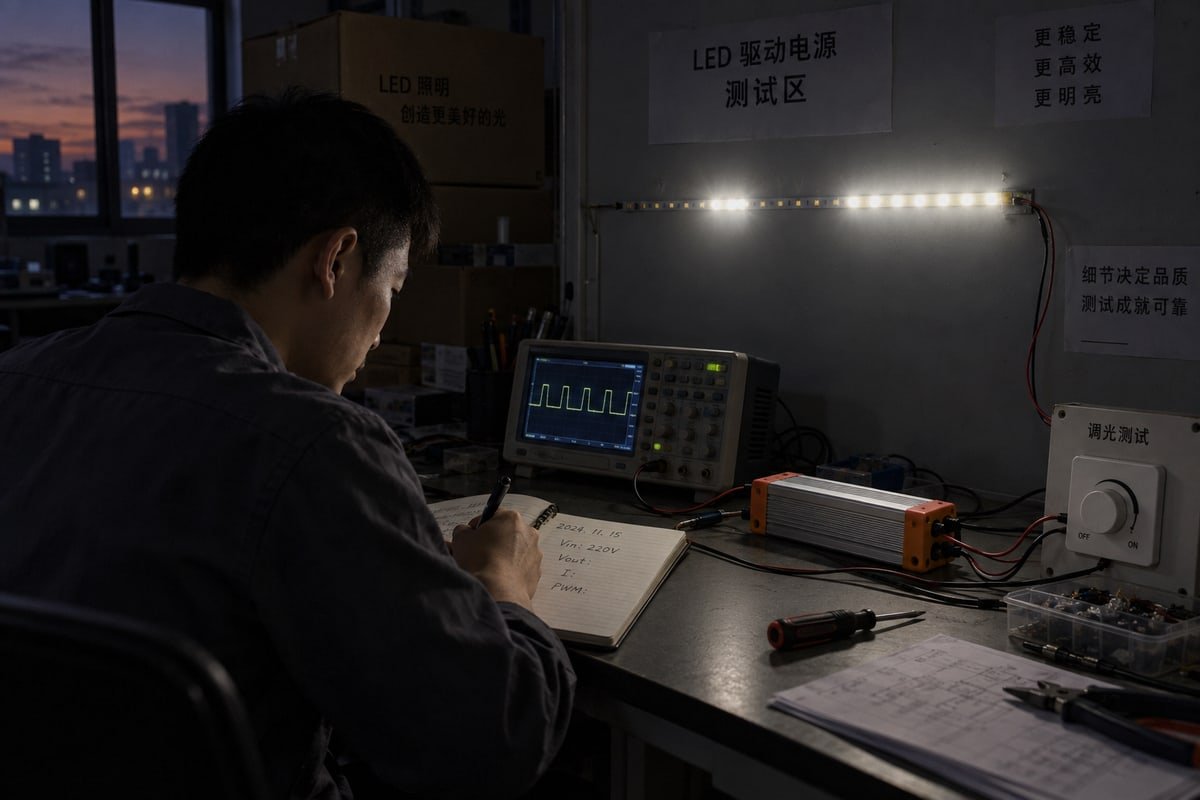
Ein praktisches siebenstufiges Testprotokoll
Hier ist das Protokoll, das wir intern verwenden, bevor wir eine Dimmer-Treiber-Paarung für den Produktionsversand freigeben:
- Kaltstart-Test. Schalten Sie den Dimmer von Null ein. Der LED-Streifen sollte sanft aufleuchten, ohne bei einer zufälligen Helligkeitsstufe aufzuspringen.
- Vollständiger Bereichsdurchlauf. Dimmen Sie langsam von 100% auf Minimum. Achten Sie auf Flackern, Stufenbildung oder abrupte Helligkeitssprünge.
- Low-End-Halte-Test. Stellen Sie den Dimmer auf seine niedrigste sichtbare Stufe und lassen Sie ihn 10 Minuten lang so. Die Ausgabe sollte stabil bleiben ohne sichtbares Flackern.
- Ausschalt-Test. Schalten Sie den Dimmer aus. Der Streifen muss innerhalb von 2 Sekunden vollständig dunkel werden, ohne Restleuchten und ohne periodisches Blinken.
- Thermischer Test. Schließen Sie den Treiber in einem Raum ein, der einen Deckenhohlraum oder ein Möbelhohlraum simuliert. Betreiben Sie ihn 2 Stunden lang bei niedriger Dimmstufe und wiederholen Sie dann den Ausschalt-Test. Thermische Drift der TRIAC-Gate-Empfindlichkeit erhöht den Leckstrom, wenn das Gerät heiß ist.
- Kabellängen-Test. Fügen Sie die maximale Kabellänge hinzu, die Sie in der realen Installation erwarten. Längere Kabel erhöhen die kapazitive Kopplung, was eine Phantomspannung in den LED-Stromkreis einbringen kann.
- Multi-Einheiten-Test. Schließen Sie die Anzahl der Treiber an, die Sie in einem einzelnen Dimmer-Stromkreis installieren möchten. Mehrere Treiber verändern die Gesamtlast und können das System außerhalb des Betriebsfensters des Dimmers bringen.
Wie Fehler aussehen
Jedes Fehlermuster weist auf eine andere Grundursache hin. Verwenden Sie diese Tabelle, um zu diagnostizieren, was Sie während des Tests sehen:
| Symptom während des Tests | Wahrscheinliche Ursache | Empfohlene Maßnahme |
|---|---|---|
| Streifen springt bei 30% statt 0% auf | Dimmer-Firmware-Spannungsuntergrenze zu hoch eingestellt | Versuchen Sie einen anderen Dimmer oder fordern Sie eine Firmware-Anpassung an |
| Streifen flackert bei niedrigen Stufen | Phasenanschnittsignal ist bei niedrigem Leitungswinkel instabil | Wechseln Sie von Phasenanschnitt-Dimmer zu Phasenabschnitt-Dimmer |
| Schwaches Leuchten im ausgeschalteten Zustand | Leckstrom oder Snubber-Netzwerk-Bypass | Bestätigen Sie die Dimmer-Treiber-Kompatibilität oder verwenden Sie ein abgestimmtes System |
| Periodisches Blitzen alle 3–5 Sekunden | Kondensator-Lade-Entlade-Zyklus durch Restspannung | Fügen Sie einen getesteten LED-Bypass-Kondensator hinzu oder wechseln Sie zu einem kompatiblen Dimmer |
| Funktioniert bei Raumtemperatur, leuchtet aber wenn heiß | Thermische Drift erhöht den TRIAC-Leckstrom | Verwenden Sie einen Dimmer mit niedrigerer Leckstromspezifikation |
Wie viele Muster getestet werden sollten
Ich empfehle, mindestens 3 Muster jeder Komponente zu testen. Fertigungstoleranzen bedeuten, dass ein Muster bestehen kann, während ein anderes am Grenzbereich versagt. Wenn 1 von 3 Mustern den Ausschalt-Test nicht besteht, ist das ein Warnsignal für die Feldzuverlässigkeit. Wir wenden diese Regel auf unsere eigene Produktion an — jede Charge Boqi TRIAC LED-Treiber durchläuft Dimmer-Kompatibilitäts-Stichprobenprüfungen, bevor wir den Versand freigeben.
Wann Muster vor der Bestellung angefordert werden sollten
Wenn Ihr Lieferant keine getestete Dimmer-Kompatibilitätsliste bereitstellen kann, fordern Sie Muster an und führen Sie das obige Protokoll selbst durch. Die Kosten für 5 Muster-Treiber und eine Woche Testing sind weitaus geringer als die Kosten eines Feldrückrufs für Tausende von Einheiten. Dies ist der Rat, den ich jedem neuen Distributor gebe, der uns über unsere Website oder auf Fachmessen kontaktiert.
Ein TRIAC-Dimmsystem sollte immer als vollständiges System bewertet werden. Die wichtige Frage ist nicht “Ist dies ein TRIAC-Dimmer?” Die Frage ist “Wurde dieser Dimmer getestet und als kompatibel mit diesem spezifischen LED-Treiber nachgewiesen?” Die Verwendung einer getesteten Kombination — wie Boqi Konstantspannungs-TRIAC-LED-Treiber in Kombination mit kompatiblen Boqi Phasenanschnitt- und Phasenabschnitt-Dimmern — gibt Installateuren und Leuchtenherstellern eine besser vorhersagbare Leistung über Startverhalten, Dimmbereich, Flimmerkontrolle und Ausschaltverhalten.
Das ist der wahre Unterschied zwischen einem System, das bei einem schnellen Bench-Test erfolgreich dimmt, und einem, das in einer realen Installation über Jahre zuverlässig funktioniert.
Schlussfolgerung
TRIAC LED-Streifen, die sich nicht ausschalten lassen, sind ein Systemproblem, kein Streifendefekt. Stimmen Sie Ihren Dimmer, dimmbaren LED-Treiber und die Last als ein getestetes System aufeinander ab, um Restleuchten dauerhaft zu beseitigen.
Interessiert an der Beschaffung der in diesem Artikel erwähnten Produkte? Details ansehen und ein Angebot anfordern hier:
Fußnoten
Bietet einen technischen Überblick über LED-Treiber und ihre grundlegende Rolle in Beleuchtungsschaltungen. ↩︎
Autoritative Erklärung, wie LED-Halbleiterübergänge funktionieren und ihre inhärente Energieeffizienz. ↩︎
Wissenschaftliche Definition und technischer Kontext für Leckstrom in elektronischen Schaltungen und Halbleitern. ↩︎
Erklärt den TRIAC-Halbleiterbetrieb und das im Artikel referenzierte Haltestromkonzept. ↩︎
Branchenstandards für Dimming-Kompatibilität zwischen Festkörperbeleuchtung und Phasenanschnitt-Dimmsystemen. ↩︎
Erklärt das elektrische Konzept der Leistungsfaktorkorrektur, das in hocheffizienten Beleuchtungssystemen verwendet wird. ↩︎