













Jeden Monat senden Käufer E-Mails an unsere Shenzhen-Fabrik bezüglich [CC DALI-Treiber](https://boqiled.com/?p=17779)n für Downlights und Spotlights, die flackern, nicht übereinstimmen oder früh ausfallen. IEC 62386-Konformität 1. Eine falsche Spezifikation kann ein gesamtes Projekt scheitern lassen.
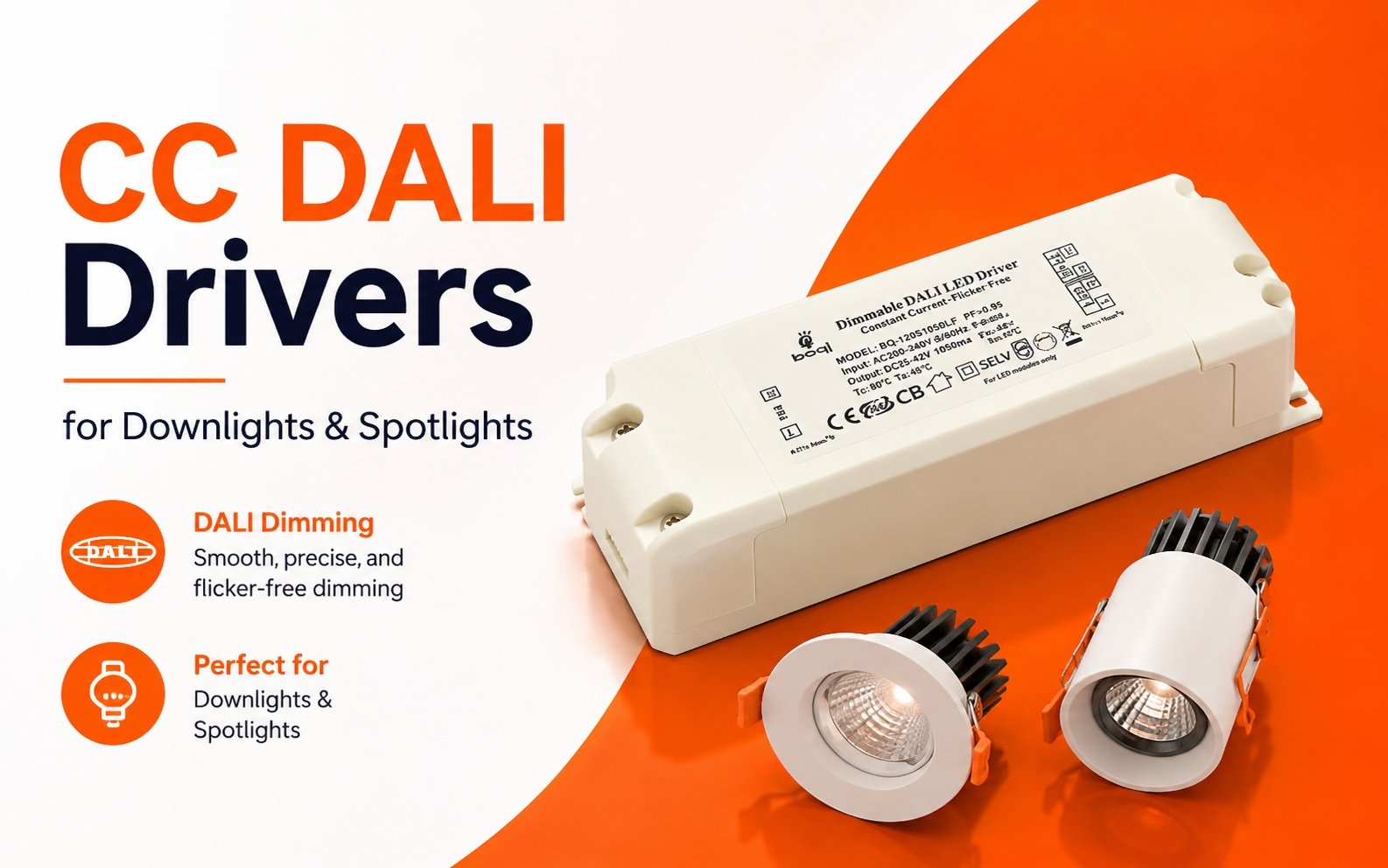
Ein CC-DALI-Treiber ist ein Konstantstrom-LED-Treiber, der über das digitale DALI-Dimmprotokoll gesteuert wird. Er liefert einen festen Strom – wie 350 mA, 500 mA oder 700 mA – an Downlight- und Spotlight-LED-Module. Wählen Sie ihn aus, indem Sie zuerst den LED-Strom abgleichen, dann den Durchlassspannungsbereich und anschließend die Wattzahl.
Diese kurze Antwort verbirgt viele Details. In diesem Leitfaden werde ich auf Auswahl, Anpassung, Zertifizierungsprüfungen und die Einhaltung enger Fristen ohne Überzahlung eingehen. Beginnen wir mit der Auswahllogik, da alles andere davon abhängt.
Wie wähle ich den richtigen CC-DALI-Treiber für meine Downlight- und Spotlight-Projekte aus?
Ein Einkaufsleiter in Singapur schickte mir einmal ein Datenblatt, das nur eine Zahl auflistete: 20W. Unsere Ingenieure mussten seine Bestellung stoppen, bevor sie zu einem Fehler wurde.
Wählen Sie einen CC DALI-Treiber, indem Sie zuerst den Nennstrom des LED-Moduls abgleichen—350, 500, 700 oder 1050 mA—dann bestätigen, dass das Ausgangsspannungsfenster des Treibers den Durchlassspannungsbereich der LED abdeckt, und schließlich Wattzahl, DALI-2-Funktionen, Dimmbereich und thermische Grenzen prüfen.
Der größte Fehler bei der Auswahl eines Konstantstrom-Treibers ist dieser Gedanke: "Mein Downlight hat 20W, also brauche ich einen 20W-Treiber." Das ist unvollständig. Die Wattzahl ist eine Folge von Strom × Durchlassspannung. Sie ist nicht der Ausgangspunkt.
Rückwärts vom LED-Modul arbeiten
Folgen Sie stattdessen dieser Kette: erforderlicher LED-Strom → LED-Durchlassspannungsbereich → Betriebsleistung → Treiberauswahl. Wenn beispielsweise ein COB-Modul mit 500 mA spezifiziert ist und bei etwa 30–36V arbeitet, muss der Treiber einen geregelten 500 mA liefern, während sein Ausgangsspannungsfenster 2 diesen Bereich abdeckt. Ein nominales 20W-Label allein sagt nichts über die elektrische Kompatibilität aus. Deshalb kommt es bei der LED-COB-Kompatibilität immer auf Strom und Spannung an, nicht auf die auf der Verpackung gedruckte Wattzahl.
Zwei versteckte Prüfungen, die die meisten Käufer überspringen
Prüfen Sie zuerst die tatsächliche Toleranz des geregelten Stroms, nicht nur den Nennwert. Zwei Treiber können beide 500 mA angeben, doch Unterschiede in der Stromregelung beeinflussen Helligkeitskonsistenz 3, Sperrschichttemperatur, Farbabstimmung und Lebensdauer. Dies ist am wichtigsten, wenn Dutzende Leuchten in einer Decke sitzen und identisch aussehen müssen.
Zweitens prüfen Sie die Mindestausgangsspannung. Ein CC-Treiber regelt nur innerhalb seines definierten Fensters, z. B. 500 mA bei 20–40V. Die LED-Durchlassspannung sinkt auch mit steigender Temperatur. Daher muss die Überlappung bei realer Betriebstemperatur gelten, nicht nur auf einem Datenblatt bei Raumtemperatur.
CC DALI vs. CV DALI auf einen Blick
| Feature | CC DALI-Treiber | CV DALI-Treiber |
|---|---|---|
| Ausgabe | Geregelter Strom | Geregelte Spannung |
| Typische Spezifikation | mA plus Spannungsbereich | Feste 12V oder 24V |
| Typische Last | COBs, Downlights, Spotlights | LED-Streifen, CV-Module |
| Primärer Abgleichparameter | LED-Strom | LED-Spannung |
| Hauptauswahlfehler | Auswahl nur nach Wattzahl | Auswahl der falschen Spannung |
DT6 oder DT8?
DT6-Betriebsgerät handhabt einkanalige Intensitätsdimmung und ist die Basis für die meisten Downlights. DT8 unterstützt Tunable-White-Technologie oder RGBW auf einer einzigen DALI-Adresse. Einige Käufer befürchten, dass sie überall für DT8 bezahlen müssen. Das müssen sie nicht. Wenn das Projekt nur eine sanfte Intensitätsregelung benötigt, ist DT6 ausreichend; spezifizieren Sie DT8 nur dort, wo eine Farbtemperaturabstimmung erforderlich ist. In jedem Fall bietet DALI flackerfreies Dimmen mit einer logarithmischen Kurve, die auf das menschliche Auge abgestimmt ist, adressierbare Steuerung von bis zu 64 Geräten pro Linie und einen polaritätsunabhängigen Zweidraht-Bus, der im selben Kabelkanal wie Netzleitungen verlegt werden kann—ideal für die Integration in Gebäudeautomationssysteme.
Kann ich CC DALI-Treiber mit meinem eigenen Markenlogo und meinen eigenen Spezifikationen individualisieren lassen?
Letzten Frühling lief auf unserer Shenzhen-Linie eine Private-Label-Charge mit orangefarbenen Endkappen und einem europäischen Kundenlogo, das neben dem CE-Zeichen siebgedruckt war. Anpassung ist für uns Tagesgeschäft.
Ja. Die meisten OEM/ODM-Lieferanten bieten CC-DALI-Treiber mit kundenspezifischen Logos, Private-Label-Verpackungen, angepassten Ausgangsströmen, Gehäusefarben und modifizierten Spezifikationen an. Käufer benötigen in der Regel eine unterzeichnete Vereinbarung, eine Mindestbestellmenge und eine genehmigte Etikettengestaltung, bevor die Serienproduktion beginnt.
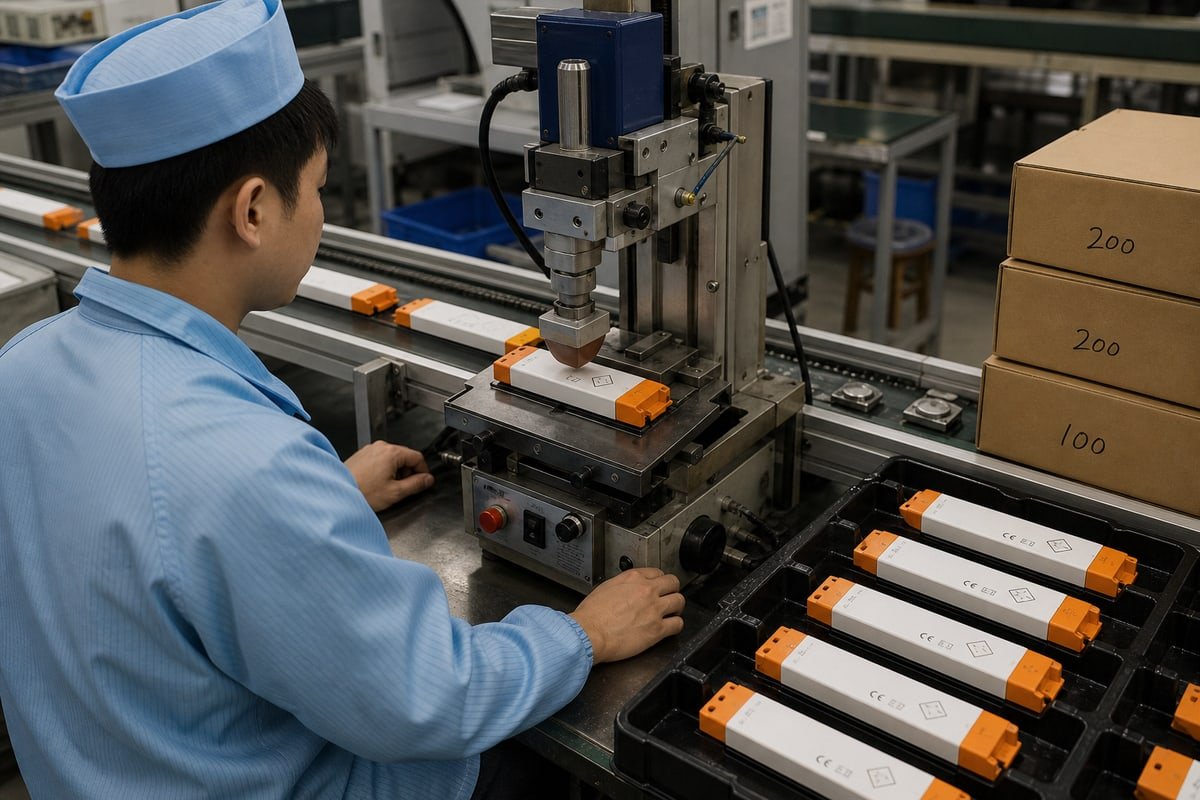
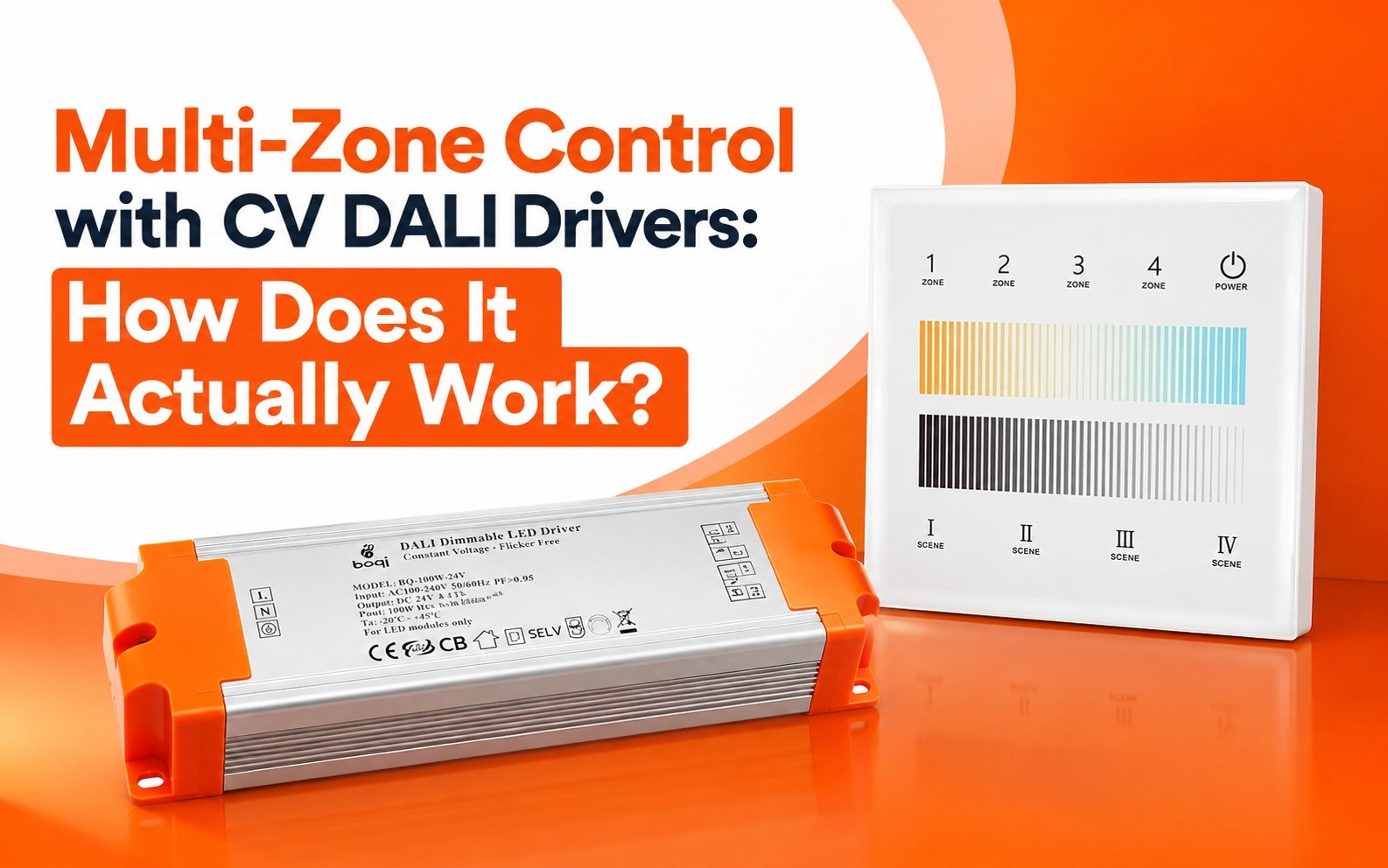
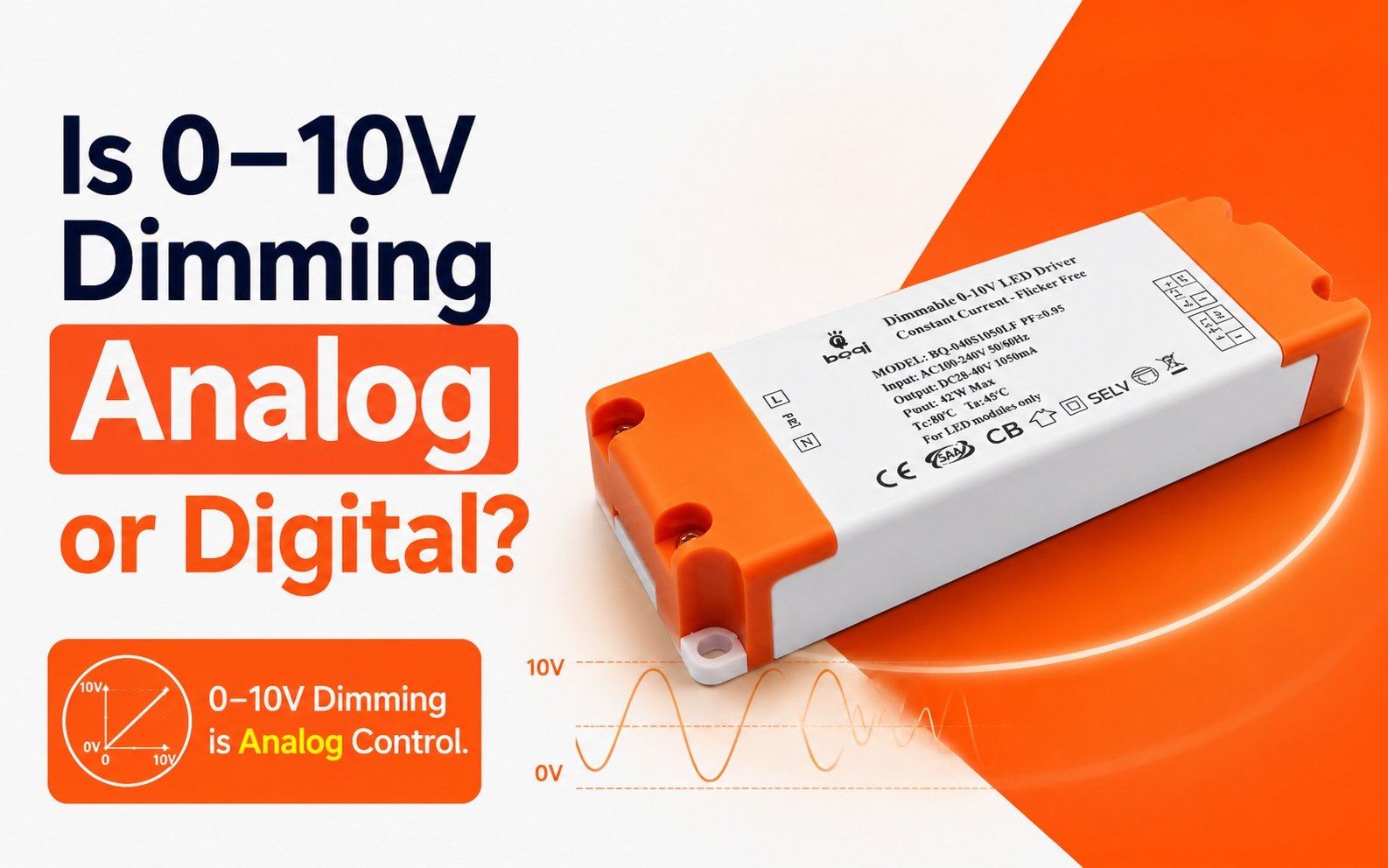
Private-Label-Arbeit geht weit über das Drucken eines Logos hinaus. Bei unseren schlanken Treibergehäusen—der weißen oberen Abdeckung mit dem gedruckten Spezifikationsetikett, den Klemmenblöcken mit L, N, PRI auf der Netzseite und LED und DALI auf der Ausgangsseite—kann fast jedes sichtbare und elektrische Element an die Markenstandards eines Kunden angepasst werden.
Hier ist der typische Anpassungsumfang, den wir für Markeninhaber und Großhändler übernehmen:
| Anpassungsbereich | Was kann geändert werden | Typische Hinweise |
|---|---|---|
| Markenbildung | Logo, Modellbezeichnung, Etikettenlayout, Verpackung | Druckfreigabe vor der Werkzeugfertigung |
| Gehäuse | Endkappenfarbe, Gehäusefarbe, Kennzeichnungsstil | Orange, Creme oder markenspezifische Farben |
| Elektrisch | Ausgangsstrom-Voreinstellungen, einstellbarer Ausgangsstrom, Spannungsfenster | DIP-Schalter oder Voreinstellungsauswahl reduziert SKUs |
| Steuerung | DT6 oder DT8, Push-Dim-Funktion als Dualmodus | Anpassung an das Steuerungsökosystem des Kunden |
| Konformität | Marktspezifische Zertifizierungszeichen auf dem Etikett | CE, CB, SAA, SELV wie erforderlich angegeben |
Unser Prozess läuft normalerweise in fünf Schritten ab: Sie teilen die Leuchten-Spezifikationen und den Zielmarkt mit; unsere Ingenieure schlagen die elektrische Spezifikation und das Etikettendesign vor; wir bauen markengekennzeichnete Muster; Sie testen diese in Ihren tatsächlichen Leuchten; dann führen wir die Pilotcharge durch und gehen in die Massenproduktion über. Ich dränge Kunden immer dazu, Muster im tatsächlichen Leuchtengehäuse zu testen, da geschlossene Downlights thermische Bedingungen erzeugen, die ein Labortest nie zeigt.
Für Käufer, die die neuesten Designtechnologien wünschen, kommen hier auch Trends ins Gespräch. D4i-fähige Plattformen verwandeln Downlights in IoT-Knoten mit standardisierter Sensorstromversorgung und gespeicherten Leuchtendaten. Matter-over-DALI-Bridging entsteht, sodass professionelle DALI-Downlights aus Verbraucher-Ökosystemen wie Apple Home gesteuert werden können. Einige nächste Generationen von Treibern tragen sogar melanopische Metadaten zur Unterstützung von zirkadianem Licht. Wenn Ihre Marke eine Roadmap in Richtung dieser Funktionen möchte, sprechen Sie dies während der ODM-Diskussion an – nicht nach Abschluss der Werkzeugfertigung.
Welche Qualitätszertifizierungen sollte ich vor der Großbestellung von CC-DALI-Treibern prüfen?
Früher in unserem Exportgeschäft habe ich gelernt, dass ein Zertifikat-PDF wenig bedeutet, bis man es auf die genaue Modellnummer zurückverfolgt. Diese Lektion prägt heute unseren gesamten QC-Prozess.
Vor der Massenbestellung sollten Sie die CE-, CB- und SAA-Sicherheitszertifizierungen, die SELV-Ausgangsklassifizierung, die IEC-62386-Konformität sowie die DALI-2-Zertifizierung für Interoperabilität überprüfen. Fordern Sie außerdem Prüfberichte an, die Ausgangsstromtoleranz, Restwelligkeit, Flimmerverhalten, Überspannungsschutz und thermisches Verhalten bei Volllast abdecken.
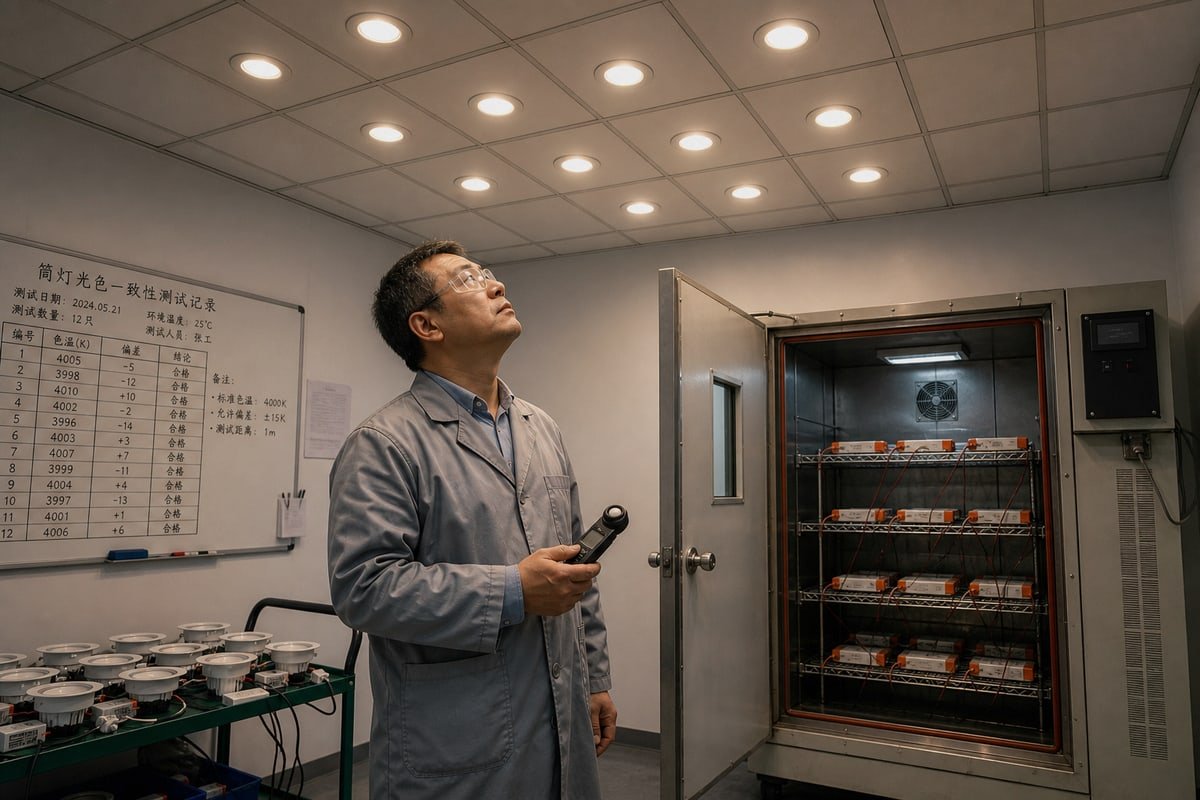
Die Zertifizierungsprüfung hat zwei Ebenen: die Papier- und die Produktebene. Beide sind wichtig, wenn Sie CC-DALI-Treiber für Downlights und Spotlights in großen Mengen bestellen, da eine schlechte Charge eine Marke beschädigen kann, deren Aufbau Jahre gedauert hat.
Die Papier-Ebene
Beginnen Sie mit den auf dem Treiberetikett aufgedruckten Zeichen und bestätigen Sie, dass jedes dem genauen Modell und der aktuellen Version entspricht, die Sie kaufen. Hier ist die Checkliste, die ich Beschaffungsteams gebe:
| Zertifizierung / Zeichen | Was es abdeckt | Warum es für Großbestellungen wichtig ist |
|---|---|---|
| CE | EU-Sicherheit und EMV-Konformität | Gesetzliche Anforderung für Europa |
| CB | Internationales IECEE-Prüfschema | Beschleunigt Zulassungen in mehreren Märkten |
| SAA | Australische elektrische Sicherheit | Erforderlich für Australien und oft in asiatisch-pazifischen Ausschreibungen geprüft |
| SELV-Ausgang | Sicherheits-Kleinspannungsausgang | Berührungssicherer Ausgang für Class-III-Leuchtenkonstruktionen |
| IEC 62386 | Der DALI-Standard selbst | Bestätigt, dass die digitale Schnittstelle der Spezifikation folgt |
| DALI-2-Zertifizierung 4 | Unabhängige Interoperabilitätstests | Behebt die Kompatibilitätslücken des ursprünglichen DALI |
Die DALI-2-Zertifizierung verdient besondere Aufmerksamkeit. Sie wird über das DALI-Alliance-Programm verifiziert und garantiert Interoperabilität zwischen Treibern, Sensoren und Controllern verschiedener Hersteller. Eine allgemeine "DALI-kompatible" Behauptung tut das nicht. Und denken Sie daran: DALI-Kompatibilität bedeutet nicht automatisch identische DALI-Funktionalität. Prüfen Sie die genauen unterstützten Gerätetypen, den Dimmbereich, das Fehlerverhalten und die Steuerungssystem-Kompatibilität für Ihr Projekt.
Die Produkt-Ebene
Fragen Sie über Zertifikate hinaus nach gemessenen Daten. Fordern Sie die tatsächliche Ausgangsstromtoleranz über eine Mustercharge an, da enge Regelung Helligkeit und Farbkonsistenz antreibt. Fragen Sie nach Welligkeitswerten am Ausgang – unter 3% ist ein starkes Benchmark für kompakte Leuchten-Treiber. Bestätigen Sie Überspannungs-, Kurzschluss-, Überlast- und Thermoschutz. Fragen Sie schließlich, wie der Lieferant jede Charge vor dem Versand altert und beprobt. In unserem eigenen QC-Raum hat der Burn-in unter Volllast in einem beheizten Gehäuse Probleme aufgedeckt, die Raumtemperaturtests völlig übersehen haben.
Wie balanciere ich Kosten und Lieferzeit bei der Beschaffung von CC-DALI-Treibern für eine knappe Frist aus?
Jedes Angebot, das wir vorbereiten, beinhaltet dieselbe Spannung: Schnellere Lieferung erhöht die Kosten, während niedrigere Kosten den Zeitplan verlängern. Die Balance zwischen beiden ist eine Fähigkeit, kein Glück.
Gleichen Sie Kosten und Lieferzeit aus, indem Sie Treiber mit einstellbarem Ausgangsstrom wählen, um SKUs zu reduzieren, den Bestand an Standardmodellen bestätigen, Spezifikationen frühzeitig festlegen und Sendungen aufteilen—Luftfracht für dringende Mengen, Seefracht für den Rest. Eine frühzeitige technische Abstimmung verhindert kostspielige Verzögerungen durch erneute Musterprüfungen.
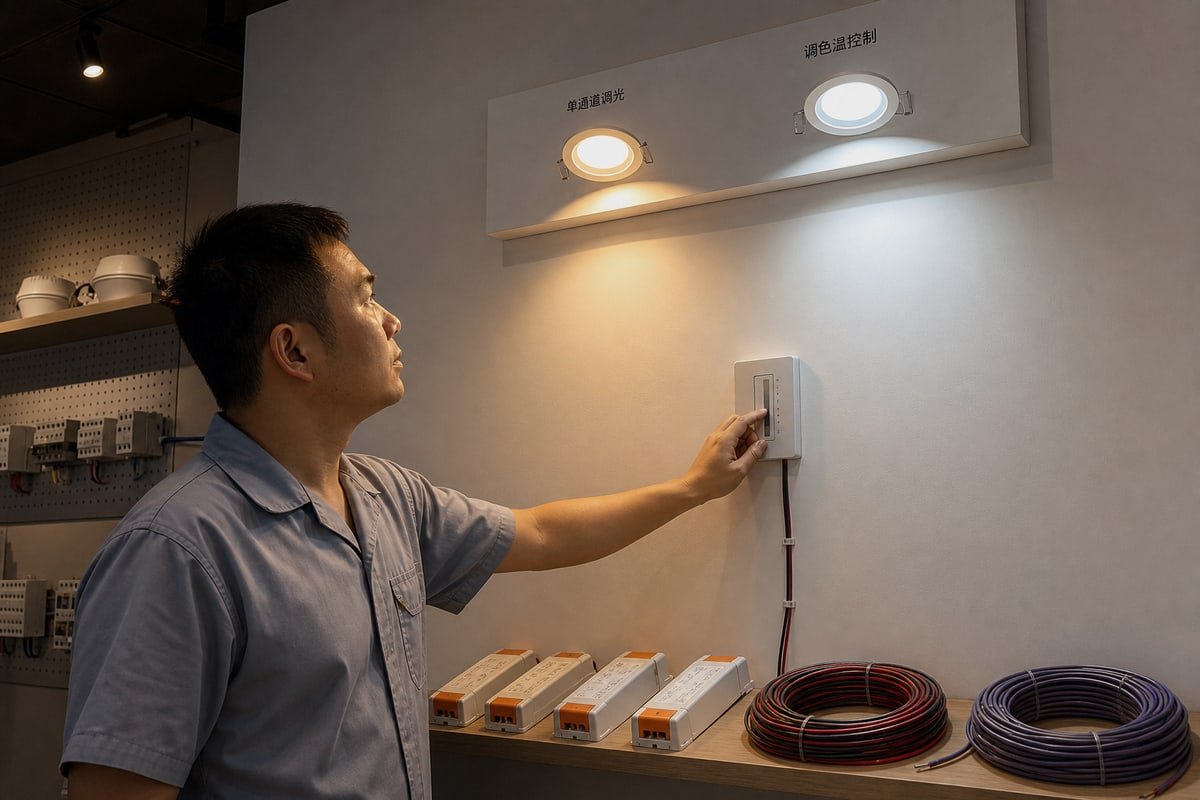
Termindruck ist der Ort, an dem die meisten Beschaffungsfehler passieren. Käufer überstürzen die Spezifikation, überspringen Mustertests und verlieren dann mehr Zeit mit der Behebung von Fehlern, als sie je gespart haben. Aus jahrelanger Erfahrung mit Lieferungen an Kunden in Singapur, Australien und Europa ist hier die Sequenz, die tatsächlich funktioniert:
- Legen Sie zuerst die elektrische Spezifikation fest. Bestätigen Sie LED-Strom, Durchlassspannungsfenster und erforderliche DALI-Funktionen, bevor Sie nach Preisen fragen. Eine erneute Beprobung aufgrund einer falschen Stromstärke ist der größte Zeitplan-Killer, den ich sehe.
- Bevorzugen Sie einstellbaren Ausgangsstrom. Ein Treiber, der über 350, 500, 700 und 1050 mA wählbar ist, deckt einen 5W–25W-Leuchtenbereich mit einer SKU ab. Weniger SKUs bedeuten schnellere Lagerverfügbarkeit, einfachere Prognosen und geringeres Lagerrisiko für Ihr Lager.
- Fragen Sie, was auf einer Standardplattform verfügbar ist. Ein individuelles Etikett auf einer bewährten Plattform wird um Wochen schneller geliefert als ein vollständig kundenspezifisches elektrisches Design. Sparen Sie sich tiefgreifende Anpassungen für Projekte mit ausreichend Zeitrahmen.
- Teilen Sie die Lieferung auf. Luftfrachten Sie die Menge, die für die erste Installationsphase benötigt wird, und senden Sie den Rest per Seefracht. So erreichen Sie den Baustellentermin, ohne Luftfrachtkosten für die gesamte Bestellung zu zahlen.
- Führen Sie Schritte parallel aus. Die Prüfung der Zertifizierungsdokumente, die Freigabe der Etikettengestaltung und die Mustertests können alle gleichzeitig erfolgen. Wir bearbeiten dringende Freigaben mit einigen Kunden über WhatsApp, da eine E-Mail-Schleife von zwei Tagen eine Verzögerung von zwei Tagen bedeutet.
Zwei Einwände kommen häufig vor. Erstens: "DALI-Systeme sind komplex in der Inbetriebnahme und verlangsamen daher Projekte." Die Inbetriebnahme erfordert zwar kompatible Controller, aber der zweidrahtige, polaritätsunabhängige Bus reduziert Verdrahtungsaufwand und Nacharbeit vor Ort, was in der Regel Zeit zurückgibt. Zweitens: "Stromeinstellbare Treiber sind flexibel, daher ist die Spezifikation weniger wichtig." Das Gegenteil ist der Fall – Flexibilität vergrößert den Raum für Fehler, daher müssen Strom-, Spannungs- und thermische Grenzwerte weiterhin sorgfältig gegen jede Leuchte geprüft werden.
Schlussfolgerung
Passen Sie zuerst den Strom an, dann den Spannungsbereich, dann die Wattzahl. Bestätigen Sie dann DALI-2-Funktionen, Zertifizierungen und Anpassungsbedingungen frühzeitig – damit Ihr CC-DALI-Treiberprojekt pünktlich, im Budget und flimmerfrei geliefert wird.
Fußnoten
Die IEC pflegt den Standard 62386, der das DALI-Protokoll für die digitale Lichtsteuerung definiert. ↩︎
Erläutert die elektrischen Anforderungen für den Betrieb von LEDs, insbesondere die Beziehung zwischen Strom und Spannung. ↩︎
Technischer Überblick über den LED-Betrieb und die Bedeutung der Stromregelung für eine stabile Lichtleistung. ↩︎
Offizielle Organisation für DALI-Standards, die die Interoperabilität zwischen Lichtsteuerungsprodukten sicherstellt. ↩︎