













Setiap bulan, pembeli mengirim email ke pabrik kami di Shenzhen tentang [CC DALI driver](https://boqiled.com/?p=17779) untuk downlight dan spotlight yang berkedip, tidak cocok, atau gagal lebih awal Kepatuhan IEC 62386 1. Satu spesifikasi yang salah dapat menggagalkan seluruh proyek.
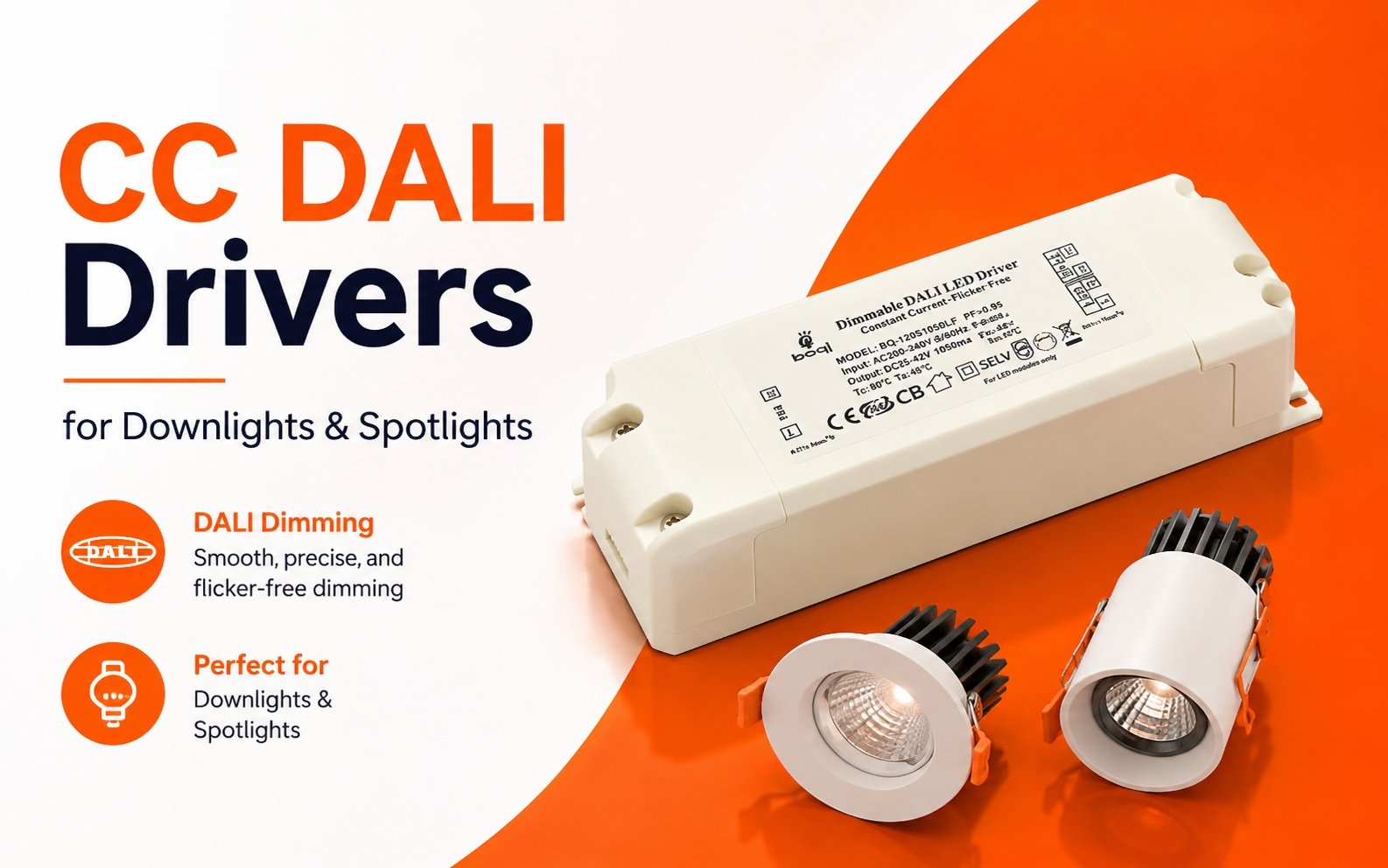
Driver CC DALI adalah driver LED arus konstan yang dikendalikan melalui protokol peredupan digital DALI. Driver ini memberikan arus tetap—seperti 350 mA, 500 mA, atau 700 mA—ke modul LED downlight dan spotlight. Pilih dengan mencocokkan arus LED terlebih dahulu, kemudian rentang tegangan maju, lalu watt.
Jawaban singkat itu menyembunyikan banyak detail. Dalam panduan ini, saya akan membahas pemilihan, kustomisasi, pemeriksaan sertifikasi, dan cara memenuhi tenggat waktu yang ketat tanpa membayar lebih. Mari kita mulai dengan logika pemilihan, karena semua hal lain bergantung padanya.
Bagaimana cara memilih driver DALI CC yang tepat untuk proyek downlight dan spotlight saya?
Seorang manajer pengadaan di Singapura pernah mengirimkan lembar spesifikasi yang hanya mencantumkan satu angka: 20W. Tim insinyur kami harus menghentikan pesanannya sebelum menjadi kesalahan.
Pilih CC DALI driver dengan mencocokkan arus pengenal modul LED terlebih dahulu—350, 500, 700, atau 1050 mA—lalu pastikan jendela tegangan keluaran driver mencakup rentang tegangan maju LED, dan terakhir periksa watt, fungsi DALI-2, rentang peredupan, dan batas termal.
Kesalahan terbesar dalam memilih driver arus konstan adalah pemikiran ini: "Downlight saya 20W, jadi saya butuh driver 20W." Itu tidak lengkap. Watt adalah hasil dari arus × tegangan maju. Itu bukan titik awal.
Bekerja Mundur dari Modul LED
Ikuti rantai ini sebagai gantinya: arus LED yang dibutuhkan → rentang tegangan maju LED → daya operasi → pemilihan driver. Misalnya, jika modul COB dispesifikasikan pada 500 mA dan beroperasi sekitar 30–36V, driver harus mengirimkan 500 mA yang teregulasi sementara jendela tegangan keluaran 2 mencakup rentang tersebut. Label nominal 20W saja tidak memberi tahu apa pun tentang kompatibilitas listrik. Inilah sebabnya kompatibilitas LED COB selalu bergantung pada arus dan tegangan, bukan watt yang tercetak di kemasan.
Dua Pemeriksaan Tersembunyi yang Sering Dilewatkan Pembeli
Pertama, periksa toleransi arus teregulasi yang sebenarnya, bukan hanya nilai nominalnya. Dua driver sama-sama dapat menyatakan 500 mA, namun perbedaan dalam regulasi arus memengaruhi konsistensi kecerahan 3, suhu sambungan, pencocokan warna, dan masa pakai. Ini paling penting ketika puluhan perlengkapan berada di satu langit-langit dan harus terlihat identik.
Kedua, periksa tegangan keluaran minimum. Driver CC hanya meregulasi di dalam jendela yang ditentukan, misalnya 500 mA pada 20–40V. Tegangan maju LED juga turun saat suhu naik. Jadi tumpang tindih harus berlaku pada suhu operasi nyata, bukan hanya pada lembar data suhu ruangan.
CC DALI vs CV DALI Sekilas
| Fitur | Driver DALI CC | Driver DALI CV |
|---|---|---|
| Keluaran | Arus teregulasi | Tegangan teregulasi |
| Spesifikasi umum | mA plus rentang tegangan | 12V atau 24V tetap |
| Beban umum | COB, downlight, spotlight | Strip LED, modul CV |
| Parameter pencocokan utama | Arus LED | Tegangan LED |
| Kesalahan pemilihan utama | Memilih berdasarkan watt saja | Memilih tegangan yang salah |
DT6 atau DT8?
Peralatan kontrol DT6 menangani peredupan intensitas saluran tunggal dan merupakan dasar untuk sebagian besar downlight. DT8 mendukung teknologi tunable white atau RGBW pada satu alamat DALI. Beberapa pembeli khawatir mereka harus membayar untuk DT8 di mana-mana. Mereka tidak perlu. Jika proyek hanya membutuhkan kontrol intensitas yang halus, DT6 sudah cukup; tentukan DT8 hanya jika penyesuaian suhu warna diperlukan. Bagaimanapun, DALI memberi Anda peredupan bebas kedip dengan kurva logaritmik yang cocok dengan mata manusia, kontrol beralamat hingga 64 perangkat per jalur, dan bus dua kabel yang tidak bergantung polaritas yang dapat berjalan di saluran yang sama dengan kabel listrik—ideal untuk integrasi dengan sistem otomasi bangunan.
Bisakah saya mendapatkan driver CC DALI yang disesuaikan dengan logo merek dan spesifikasi saya sendiri?
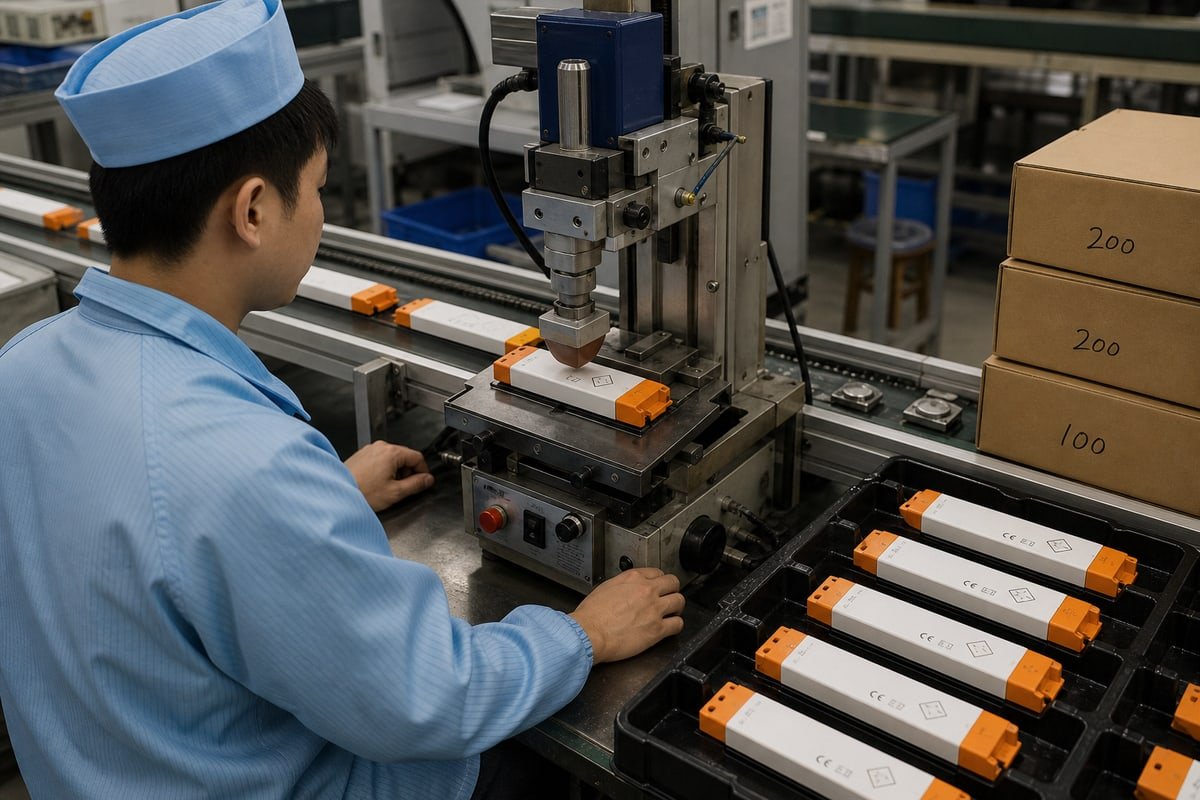
Musim semi lalu, jalur produksi Shenzhen kami menjalankan batch label pribadi dengan tutup ujung oranye dan logo klien Eropa yang dicetak sutra di samping tanda CE. Kustomisasi adalah pekerjaan sehari-hari bagi kami.
Ya. Sebagian besar pemasok OEM/ODM menawarkan driver DALI CC dengan logo kustom, kemasan label pribadi, arus keluaran yang disesuaikan, warna casing, dan spesifikasi yang diubah. Pembeli biasanya memerlukan perjanjian yang ditandatangani, jumlah pesanan minimum, dan karya seni label yang disetujui sebelum produksi massal dimulai.
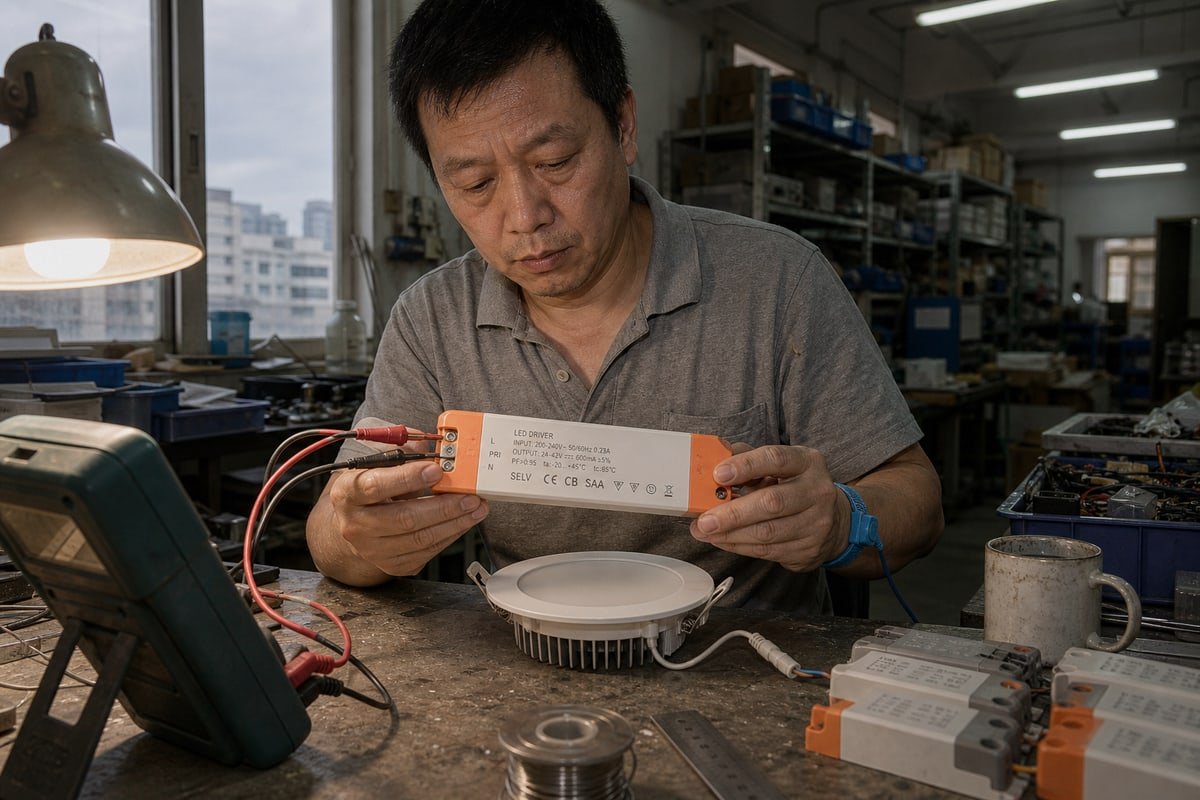
Pekerjaan label pribadi jauh melampaui pencetakan logo. Pada rumah driver ramping kami—panel atas putih dengan label spesifikasi tercetak, blok terminal bertanda L, N, PRI di sisi listrik dan LED serta DALI di sisi keluaran—hampir setiap elemen yang terlihat dan listrik dapat disesuaikan dengan standar merek klien.
Berikut adalah cakupan kustomisasi umum yang kami tangani untuk pemilik merek dan grosir:
| Area Kustomisasi | Apa yang Dapat Berubah | Catatan Khas |
|---|---|---|
| Branding | Logo, penamaan model, tata letak label, kemasan | Desain disetujui sebelum pencetakan dilakukan |
| Casing | Warna tutup ujung, warna rumah, gaya penandaan | Oranye, krem, atau warna khusus merek |
| Kelistrikan | Prasetel arus keluaran, arus keluaran yang dapat disesuaikan, jendela tegangan | Sakelar DIP atau pemilihan prasetel mengurangi jumlah SKU |
| Kontrol | DT6 atau DT8, fungsi push-dim sebagai mode ganda | Sesuaikan dengan ekosistem kontrol klien |
| Kepatuhan | Tanda sertifikasi khusus pasar pada label | CE, CB, SAA, SELV ditampilkan sesuai persyaratan |
Proses kami biasanya berjalan dalam lima langkah: Anda membagikan spesifikasi perlengkapan dan pasar target; insinyur kami mengusulkan spesifikasi kelistrikan dan desain label; kami membuat sampel bermerek; Anda mengujinya di luminer aktual Anda; kemudian kami menjalankan batch percontohan dan beralih ke produksi massal. Saya selalu mendorong klien untuk menguji sampel di dalam rumah perlengkapan yang sebenarnya, karena downlight tertutup menciptakan kondisi termal yang tidak pernah ditunjukkan oleh pengujian meja.
Bagi pembeli yang menginginkan teknologi desain terbaru, di sinilah tren memasuki percakapan. Platform siap-D4i mengubah downlight menjadi node IoT dengan daya sensor terstandarisasi dan data luminer tersimpan. Jembatan Matter-over-DALI sedang muncul sehingga downlight DALI profesional dapat dikontrol dari ekosistem konsumen seperti Apple Home. Beberapa driver generasi berikutnya bahkan membawa metadata melanopik untuk mendukung pencahayaan sirkadian. Jika merek Anda menginginkan peta jalan menuju fitur-fitur ini, sampaikan selama diskusi ODM—bukan setelah perkakas selesai.
Sertifikasi kualitas apa yang harus saya periksa sebelum memesan driver DALI CC dalam jumlah besar?
Di awal bisnis ekspor kami, saya belajar bahwa PDF sertifikat tidak berarti banyak sampai Anda menelusurinya ke nomor model yang tepat. Pelajaran itu kini membentuk seluruh proses QC kami.
Sebelum pemesanan dalam jumlah besar, verifikasi sertifikasi keamanan CE, CB, dan SAA, klasifikasi output SELV, kepatuhan terhadap IEC 62386, dan sertifikasi DALI-2 untuk interoperabilitas. Juga minta laporan pengujian yang mencakup toleransi arus output, riak, kinerja kedipan, perlindungan lonjakan, dan perilaku termal pada beban penuh.
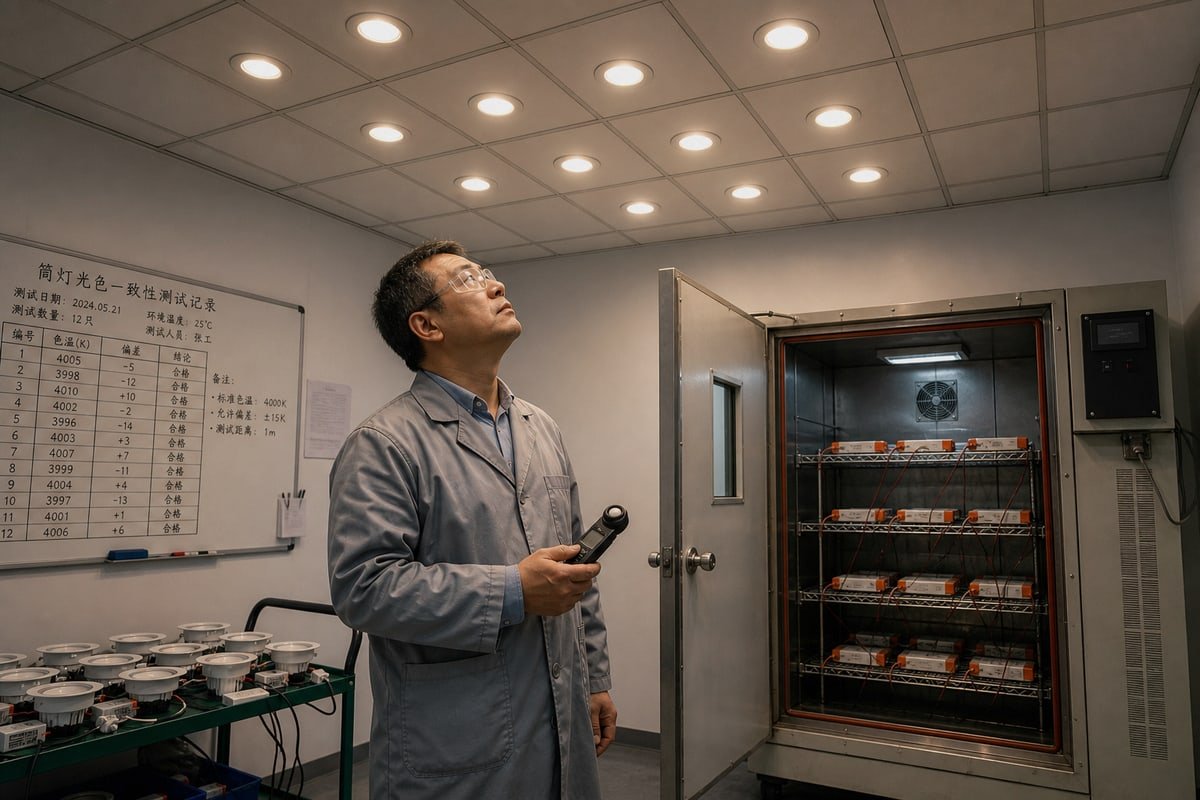
Pemeriksaan sertifikasi memiliki dua lapisan: lapisan kertas dan lapisan produk. Keduanya penting saat Anda memesan driver DALI CC untuk downlight dan spotlight dalam jumlah besar, karena satu batch yang buruk dapat merusak merek yang Anda bangun selama bertahun-tahun.
Lapisan Kertas
Mulailah dengan tanda yang dicetak pada label driver dan pastikan setiap tanda terpetakan ke model dan versi terkini yang Anda beli. Berikut adalah daftar periksa yang saya berikan kepada tim pengadaan:
| Sertifikasi / Tanda | Cakupan | Mengapa Penting untuk Pesanan Massal |
|---|---|---|
| CE | Kesesuaian keamanan dan EMC UE | Persyaratan hukum untuk Eropa |
| CB | Skema pengujian IECEE internasional | Mempercepat persetujuan di berbagai pasar |
| SAA | Keamanan kelistrikan Australia | Diwajibkan di Australia dan sering diperiksa dalam tender Asia-Pasifik |
| Output SELV | Output tegangan sangat rendah yang aman | Output sentuh-aman untuk desain luminer Kelas III |
| IEC 62386 | Standar DALI itu sendiri | Mengonfirmasi antarmuka digital mengikuti spesifikasi |
| Sertifikasi DALI-2 4 | Pengujian interoperabilitas independen | Mengatasi kesenjangan kompatibilitas DALI asli |
Sertifikasi DALI-2 memerlukan perhatian khusus. Ini diverifikasi melalui program DALI Alliance dan menjamin interoperabilitas antara driver, sensor, dan pengontrol dari berbagai produsen. Klaim "kompatibel DALI" generik tidak demikian. Dan ingat: kompatibilitas DALI tidak secara otomatis berarti fungsionalitas DALI yang identik. Periksa jenis perangkat yang didukung secara tepat, rentang peredupan, perilaku kegagalan, dan kompatibilitas sistem kontrol untuk proyek Anda.
Lapisan Produk
Di luar sertifikat, mintalah data terukur. Minta toleransi arus keluaran aktual di seluruh batch sampel, karena regulasi yang ketat mendorong konsistensi kecerahan dan warna. Minta angka riak keluaran—di bawah 3% adalah tolok ukur yang kuat untuk driver luminer kompak. Konfirmasikan perlindungan lonjakan, hubung singkat, kelebihan beban, dan termal. Terakhir, tanyakan bagaimana pemasok melakukan penuaan dan pengambilan sampel setiap batch sebelum pengiriman. Di ruang QC kami sendiri, burn-in beban penuh di dalam wadah berpemanas telah menangkap masalah yang tidak pernah terdeteksi oleh pengujian suhu ruangan.
Bagaimana cara menyeimbangkan biaya dan waktu pengiriman saat mencari driver CC DALI untuk tenggat waktu yang ketat?
Setiap kutipan yang kami siapkan melibatkan ketegangan yang sama: pengiriman lebih cepat menaikkan biaya, sementara biaya lebih rendah memperpanjang jadwal. Menyeimbangkan keduanya adalah keterampilan, bukan keberuntungan.
Seimbangkan biaya dan waktu tunggu dengan memilih driver arus keluaran yang dapat disesuaikan untuk mengurangi SKU, memastikan stok model standar, mengunci spesifikasi lebih awal, dan memecah pengiriman—angkutan udara untuk jumlah mendesak, angkutan laut untuk sisanya. Penyelarasan teknis sejak awal mencegah keterlambatan pengambilan sampel ulang yang mahal.
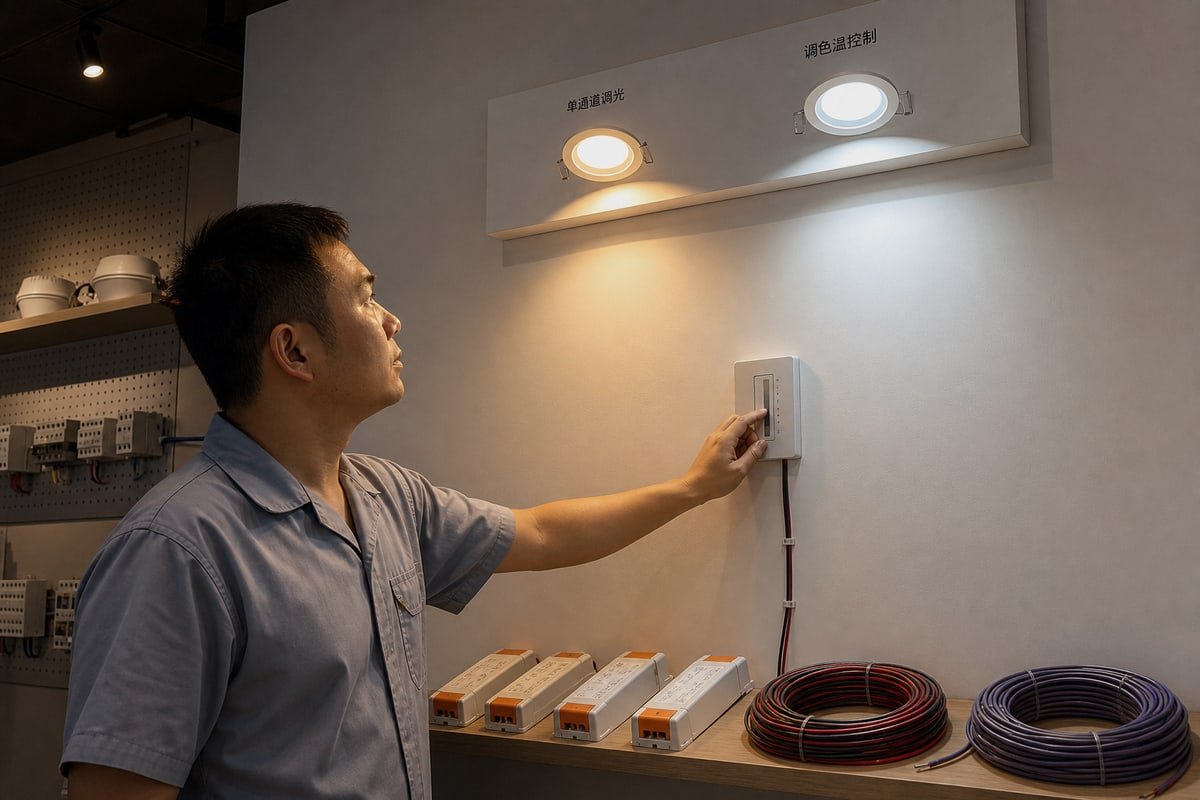
Tekanan tenggat waktu adalah tempat sebagian besar kesalahan pengadaan terjadi. Pembeli terburu-buru pada spesifikasi, melewatkan pengujian sampel, dan kemudian kehilangan lebih banyak waktu untuk memperbaiki kegagalan daripada yang pernah mereka hemat. Dari pengalaman bertahun-tahun mengirim ke klien di Singapura, Australia, dan Eropa, berikut adalah urutan yang benar-benar berhasil:
- Kunci spesifikasi kelistrikan terlebih dahulu. Konfirmasikan arus LED, jendela tegangan maju, dan fungsi DALI yang diperlukan sebelum meminta harga. Pengambilan sampel ulang karena peringkat arus yang salah adalah pembunuh jadwal terbesar yang saya lihat.
- Utamakan arus keluaran yang dapat disesuaikan. Driver yang dapat dipilih pada 350, 500, 700, dan 1050 mA mencakup rentang perlengkapan 5W–25W dengan satu SKU. Lebih sedikit SKU berarti ketersediaan stok lebih cepat, peramalan lebih sederhana, dan risiko inventaris lebih rendah untuk gudang Anda.
- Tanyakan apa yang tersedia pada platform standar. Label khusus pada platform yang sudah terbukti dapat dikirim lebih cepat berminggu-minggu dibandingkan desain kelistrikan yang sepenuhnya khusus. Simpan kustomisasi mendalam untuk proyek yang benar-benar memiliki waktu yang cukup.
- Pisahkan pengiriman. Kirim melalui udara jumlah yang dibutuhkan untuk tahap instalasi pertama, dan kirim sisanya melalui laut. Anda memenuhi jadwal di lokasi tanpa membayar tarif udara untuk seluruh pesanan.
- Jalankan langkah-langkah secara paralel. Peninjauan dokumen sertifikasi, persetujuan desain label, dan pengujian sampel dapat dilakukan secara bersamaan. Kami menangani persetujuan mendesak melalui WhatsApp dengan beberapa klien karena siklus email dua hari berarti keterlambatan dua hari.
Dua keberatan sering muncul. Pertama: "Sistem DALI rumit untuk dikomisioning, sehingga memperlambat proyek." Komisioning memang memerlukan pengontrol yang kompatibel, tetapi bus dua kabel yang tidak bergantung polaritas mengurangi pekerjaan pemasangan kabel dan pengerjaan ulang di lokasi, yang biasanya menghemat waktu. Kedua: "Driver dengan arus yang dapat disesuaikan itu fleksibel, sehingga spesifikasi menjadi kurang penting." Justru sebaliknya—fleksibilitas memperbesar ruang untuk kesalahan, sehingga batas arus, tegangan, dan termal tetap perlu dikonfirmasi secara cermat terhadap setiap perlengkapan lampu.
Kesimpulan
Cocokkan arus terlebih dahulu, rentang tegangan kedua, watt ketiga. Kemudian konfirmasikan fungsi DALI-2, sertifikasi, dan ketentuan kustomisasi sejak awal—sehingga proyek driver CC DALI Anda terkirim tepat waktu, sesuai anggaran, dan bebas kedipan.
Catatan kaki
IEC mengelola standar 62386 yang mendefinisikan protokol DALI untuk kontrol pencahayaan digital. ↩︎
Menjelaskan persyaratan kelistrikan untuk menggerakkan LED, khususnya hubungan antara arus dan tegangan. ↩︎
Tinjauan teknis tentang operasi LED dan pentingnya regulasi arus untuk keluaran cahaya yang stabil. ↩︎
Organisasi resmi untuk standar DALI, memastikan interoperabilitas antar produk kontrol pencahayaan. ↩︎