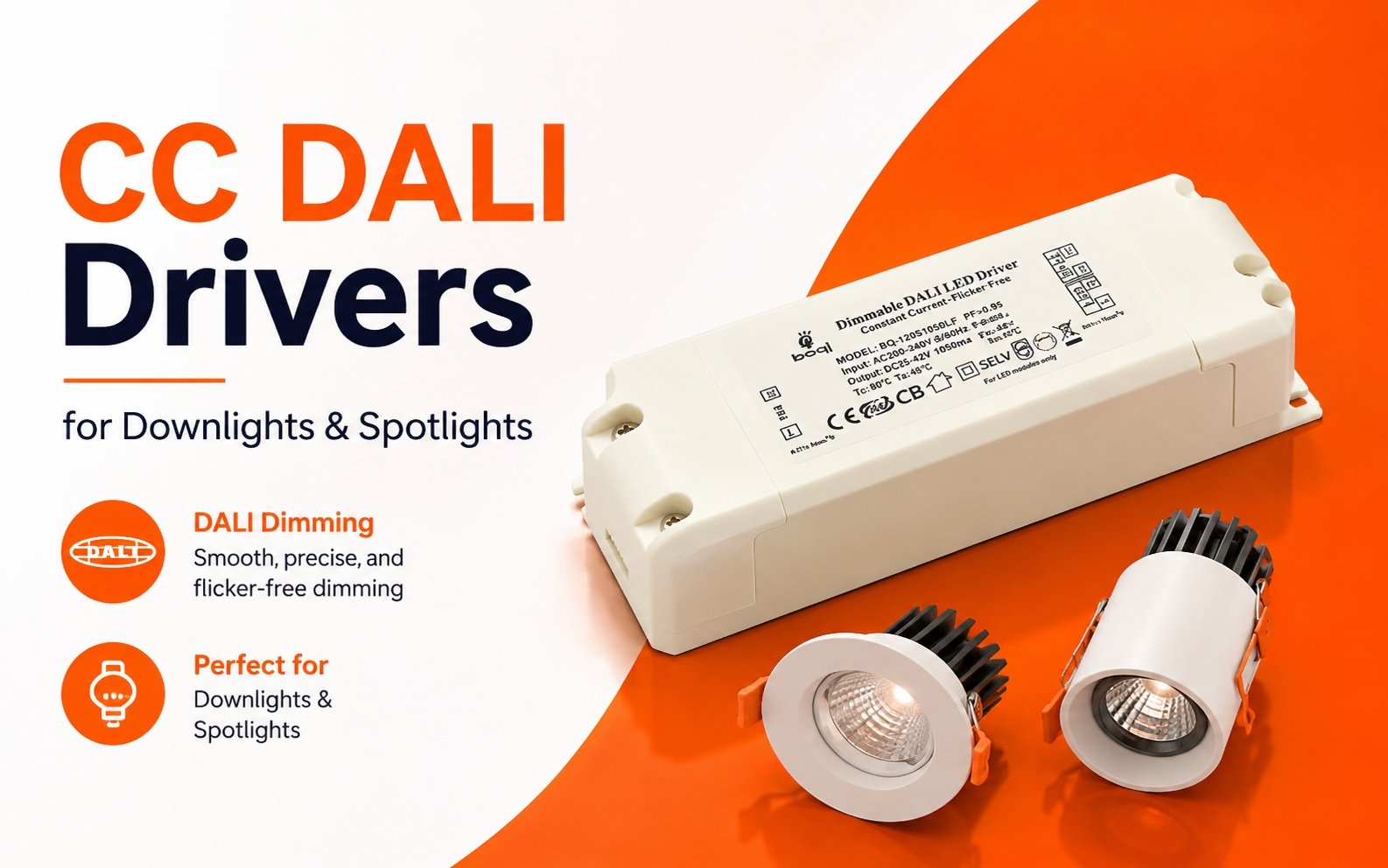














Varje månad mejlar köpare vår Shenzhen-fabrik om [CC DALI-drivrutiner](https://boqiled.com/?p=17779) för downlights och spotlights som flimrar, inte matchar eller går sönder i förtid IEC 62386-efterlevnad 1. En enda felaktig specifikation kan sänka ett helt projekt.
En CC DALI-drivare är en konstantströms-LED-drivare som styrs via DALI:s digitala dimningsprotokoll. Den levererar en fast ström—till exempel 350 mA, 500 mA eller 700 mA—till downlight- och spotlight-LED-moduler. Välj den genom att först matcha LED-strömmen, därefter framåtspänningsområdet, och sedan wattalet.
Det korta svaret döljer mycket detaljer. I den här guiden går jag igenom urval, anpassning, certifieringskontroller och hur du når en snäv deadline utan att betala för mycket. Låt oss börja med urvalslogiken, eftersom allt annat beror på den.
Hur väljer jag rätt CC DALI-driver för mina downlight- och spotlightprojekt?
En inköpschef i Singapore skickade en gång en specifikation som bara listade en siffra: 20W. Våra ingenjörer var tvungna att stoppa hennes order innan den blev ett misstag.
Välj en CC DALI-drivrutin genom att först matcha LED-modulens märkström—350, 500, 700 eller 1050 mA—bekräfta sedan att drivrutinens utspänningsfönster täcker LED:ens framåtspänningsområde, och kontrollera slutligen watt, DALI-2-funktioner, dimområde och termiska gränser.
Det största misstaget vid val av en konstantströmsdrivrutin är denna tanke: "Min downlight är 20W, så jag behöver en 20W-drivrutin." Det är ofullständigt. Watt är en konsekvens av ström × framåtspänning. Det är inte utgångspunkten.
Arbeta baklänges från LED-modulen
Följ istället denna kedja: erforderlig LED-ström → LED:ens framåtspänningsområde → driftseffekt → drivrutinsval. Till exempel, om en COB-modul är specificerad vid 500 mA och arbetar runt 30–36V, måste drivrutinen leverera en reglerad 500 mA medan dess utspänningsfönster 2 täcker det området. En nominell 20W-etikett säger ingenting om elektrisk kompatibilitet. Det är därför LED COB-kompatibilitet alltid handlar om ström och spänning, inte watten som står tryckt på lådan.
Två dolda kontroller de flesta köpare hoppar över
Kontrollera först den faktiska reglerade strömtoleransen, inte bara det nominella värdet. Två drivrutiner kan båda ange 500 mA, men skillnader i strömreglering påverkar ljusstyrkekonsistens 3, korsningstemperatur, färgmatchning och livslängd. Detta är viktigast när dussintals armaturer sitter i ett enda tak och måste se identiska ut.
För det andra, kontrollera minimiutspänningen. En CC-drivrutin reglerar bara inom sitt definierade fönster, till exempel 500 mA vid 20–40V. LED:ens framåtspänning sjunker också när temperaturen stiger. Så överlappningen måste hålla vid verklig driftstemperatur, inte bara på ett datablad vid rumstemperatur.
CC DALI vs CV DALI i korthet
| Funktion | CC DALI-driver | CV DALI-drivrutin |
|---|---|---|
| Produktion | Reglerad ström | Reglerad spänning |
| Typisk specifikation | mA plus spänningsområde | Fast 12V eller 24V |
| Typisk last | COB, downlights, spotlights | LED-remsor, CV-moduler |
| Primär matchningsparameter | LED-ström | LED-spänning |
| Vanligaste urvalsmisstaget | Val baserat enbart på watt | Val av fel spänning |
DT6 eller DT8?
DT6-styrutrustning hanterar enkanalig intensitetsdimning och är baslinjen för de flesta downlights. DT8 stödjer justerbar vit teknologi eller RGBW på en enda DALI-adress. Vissa köpare oroar sig för att de måste betala för DT8 överallt. Det behöver de inte. Om projektet bara behöver jämn intensitetskontroll räcker DT6; specificera DT8 endast där färgtemperaturjustering krävs. Oavsett vilket ger DALI dig flimmerfri dimning med en logaritmisk kurva anpassad till det mänskliga ögat, adresserbar styrning av upp till 64 enheter per linje och en polaritetsoberoende tvåtrådsbuss som kan köras i samma kabelrör som nätkablar—idealisk för integration med byggnadsautomationssystem.
Kan jag få CC DALI-drivrutiner anpassade med min egen varumärkeslogotyp och specifikationer?
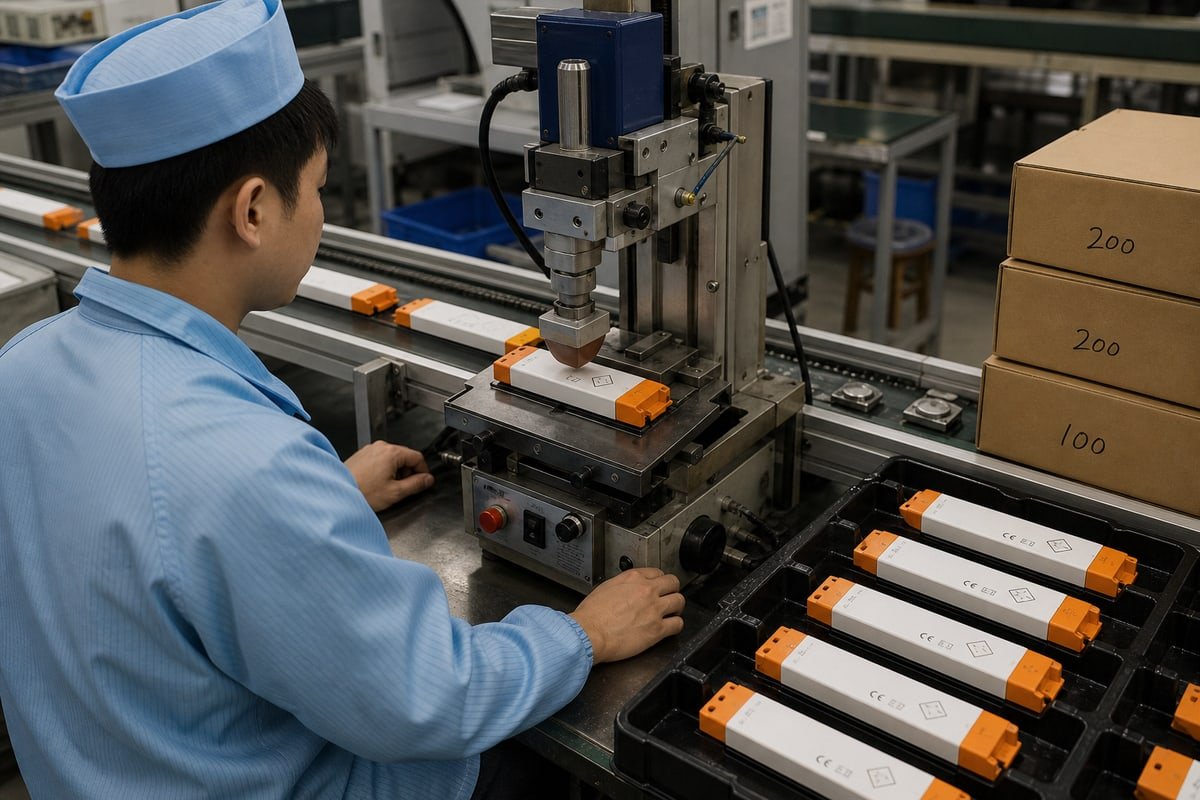
Förra våren körde vår Shenzhen-linje en privat etikettsbatch med orange ändkåpor och en europeisk kunds logotyp screentryckt bredvid CE-märket. Anpassning är vardag för oss.
Ja. De flesta OEM/ODM-leverantörer erbjuder CC DALI-drivdon med anpassade logotyper, privat etikettering, skräddarsydda utströmmar, höljesfärger och justerade specifikationer. Köpare behöver vanligtvis ett undertecknat avtal, en minimibeställningskvantitet och godkänd etikettgrafik innan massproduktion påbörjas.
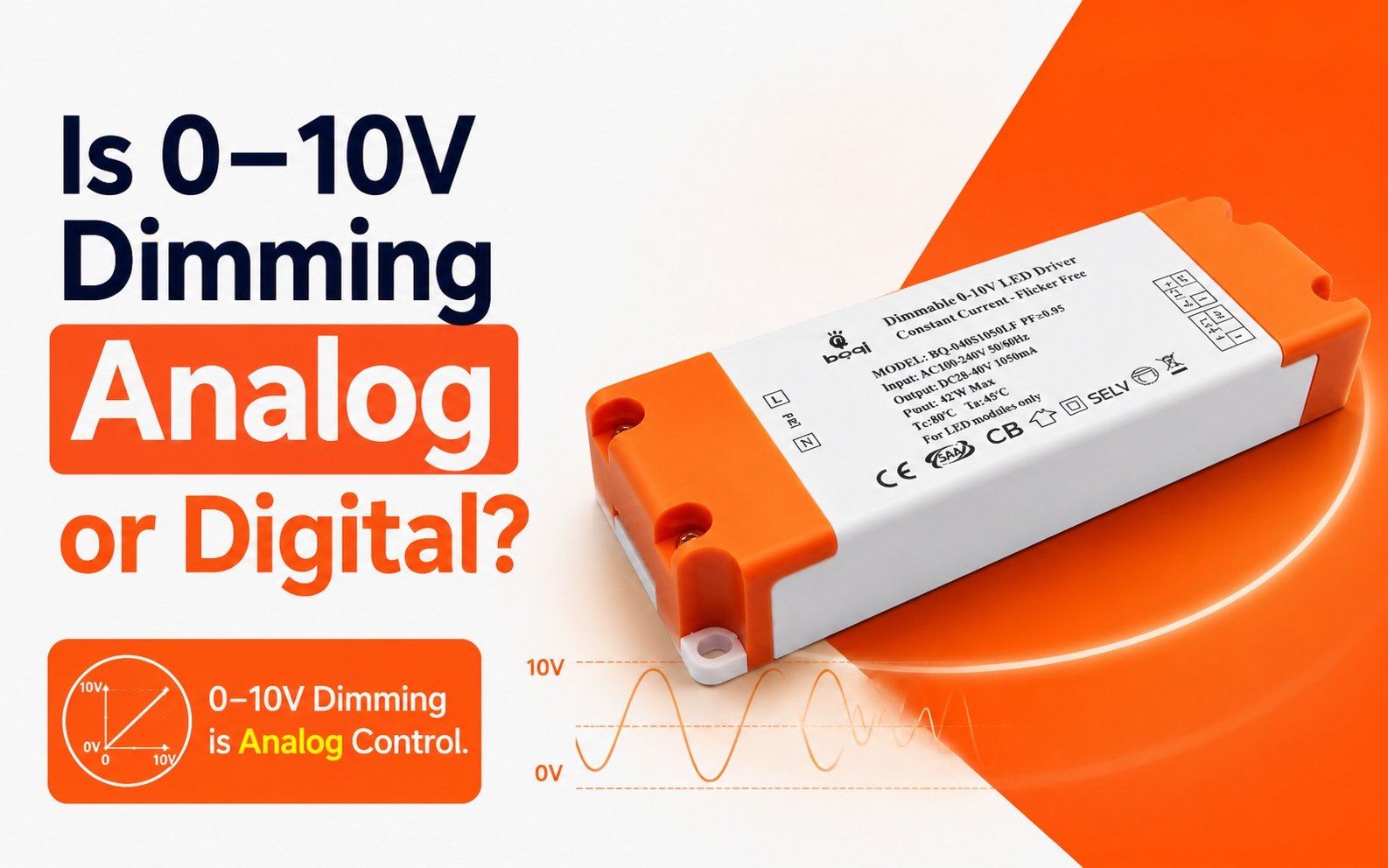
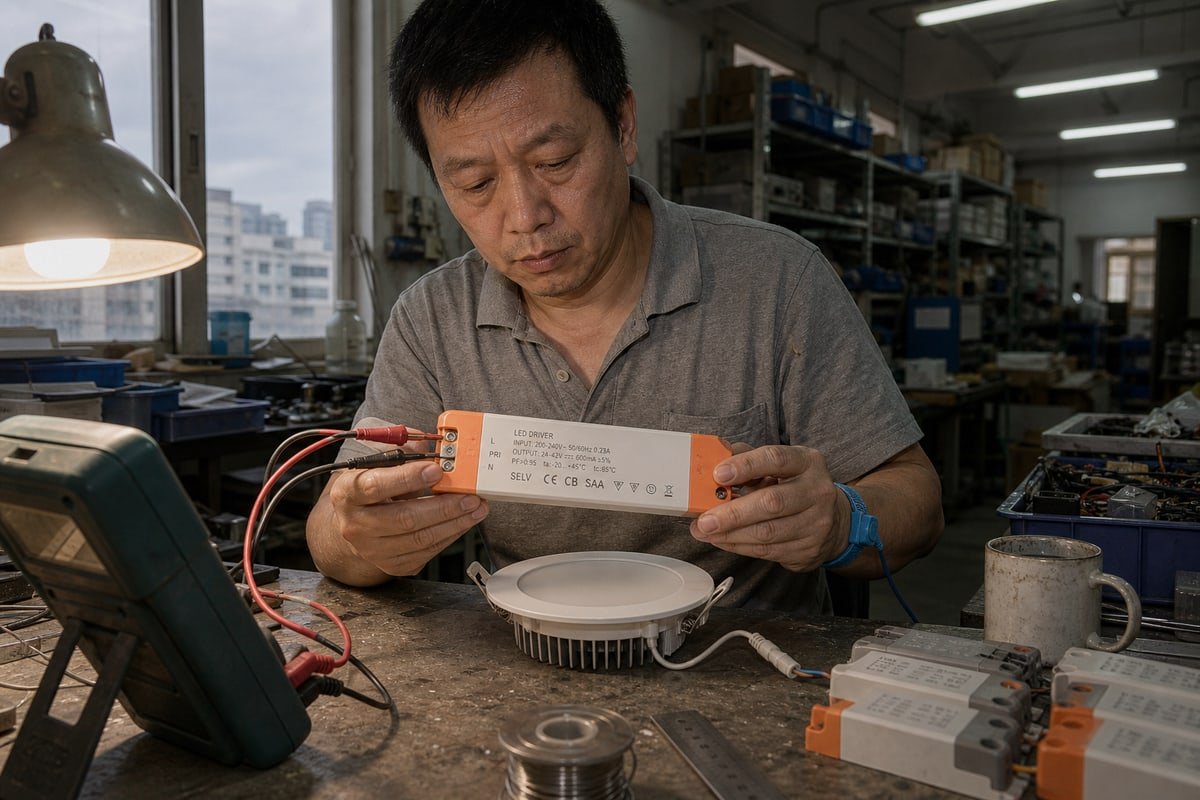
Privat etikettsarbete går långt bortom att trycka en logotyp. På våra smala drivrutinshus—den vita topppanelen med den tryckta specifikationsetiketten, plintarna märkta L, N, PRI på nätsidan och LED och DALI på utgångssidan—kan nästan varje synligt och elektriskt element anpassas till en kunds varumärkesstandard.
Här är den typiska anpassningsomfattningen vi hanterar för varumärkesägare och grossister:
| Anpassningsområde | Vad kan ändras | Typiska anmärkningar |
|---|---|---|
| Varumärkesprofilering | Logotyp, modellbeteckning, etikettlayout, förpackning | Konstgodkännande innan tryckverktyg tillverkas |
| Hölje | Ändkåpsfärg, höljesfärg, märkningsstil | Orange, kräm eller varumärkesspecifika färger |
| Elektrisk | Förinställd utström, justerbar utström, spänningsfönster | DIP-omkopplare eller förinställningsval minskar antalet SKU:er |
| Styrning | DT6 eller DT8, push-dim-funktionalitet som dubbelläge | Matcha kundens styrekosystem |
| Efterlevnad | Marknadsspecifika certifieringsmärkningar på etiketten | CE, CB, SAA, SELV visas enligt krav |
Vår process går vanligtvis i fem steg: du delar armaturspecifikationer och målmarknad; våra ingenjörer föreslår elspecifikation och etikettdesign; vi bygger varumärkta prover; du testar dem i dina faktiska armaturer; sedan kör vi pilotbatchen och går vidare till massproduktion. Jag uppmanar alltid kunder att testa prover inuti den faktiska armaturkåpan, eftersom infällda downlights skapar termiska förhållanden som ett bänktest aldrig visar.
För köpare som vill ha de senaste designteknologierna är detta också där trender kommer in i samtalet. D4i-klara plattformar förvandlar downlights till IoT-noder med standardiserad sensoreffekt och lagrad armaturdata. Matter-over-DALI-bryggning växer fram så att professionella DALI-downlights kan styras från konsumentekosystem som Apple Home. Vissa nästa generations drivdon bär till och med melanopiska metadata för att stödja cirkadisk belysning. Om ditt varumärke vill ha en färdplan mot dessa funktioner, ta upp det under ODM-diskussionen—inte efter att verktygen är färdiga.
Vilka kvalitetscertifieringar bör jag kontrollera innan jag beställer CC DALI-drivdon i bulk?
Tidigt i vår exportverksamhet lärde jag mig att ett certifikat-PDF betyder lite tills du spårar det till exakt modellnummer. Den läxan formar nu hela vår kvalitetskontrollprocess.
Före bulkbeställning, verifiera CE-, CB- och SAA-säkerhetscertifieringar, SELV-utgångsklassificering, IEC 62386-efterlevnad och DALI-2-certifiering för interoperabilitet. Begär även testrapporter som täcker utgångsströmstolerans, ripple, flimmerprestanda, överspänningsskydd och termiskt beteende vid full belastning.
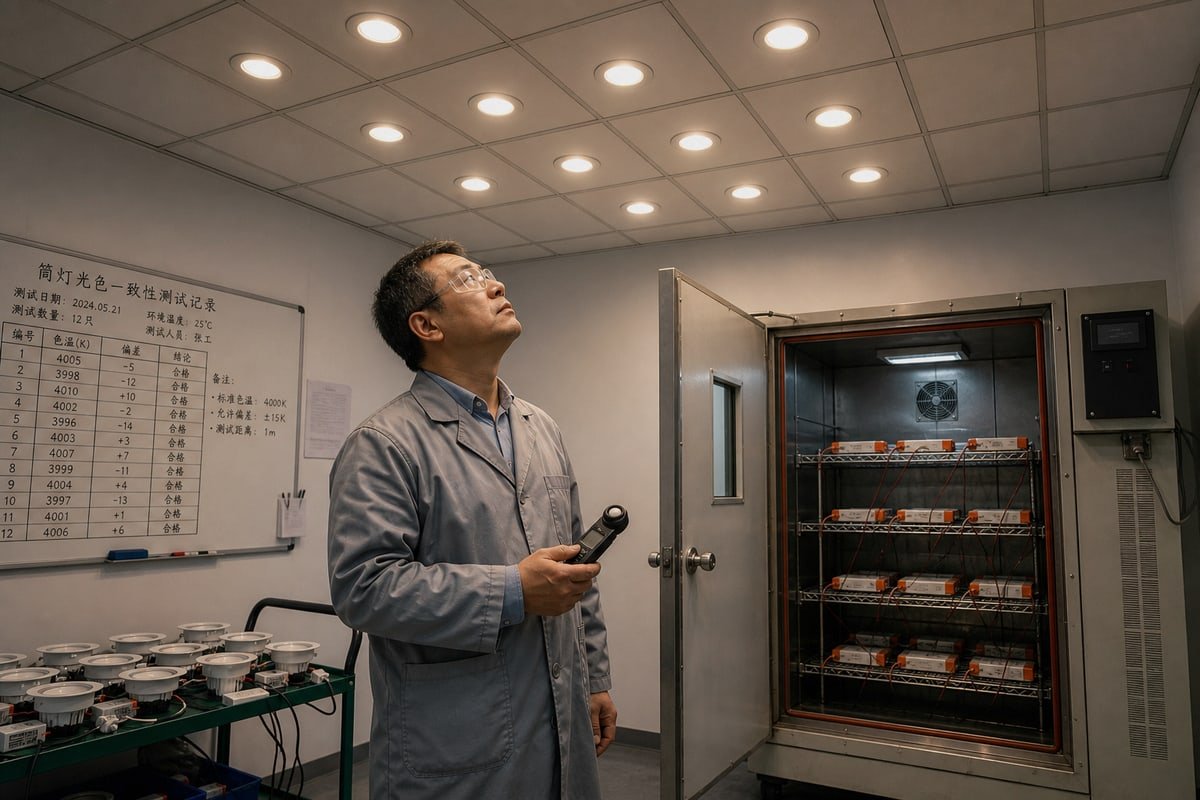
Certifieringskontroll har två lager: papperslagret och produktlagret. Båda spelar roll när du beställer CC DALI-drivdon för downlights och spotlights i bulk, eftersom en dålig batch kan skada ett varumärke du byggt i åratal.
Papperslagret
Börja med märkningarna på drivdonets etikett och bekräfta att varje en motsvarar exakt modell och aktuell version du köper. Här är checklistan jag ger inköpsgrupper:
| Certifiering / Märkning | Vad den omfattar | Varför den spelar roll för bulkorder |
|---|---|---|
| CE | EU-säkerhet och EMC-överensstämmelse | Lagkrav för Europa |
| CB | Internationellt IECEE-testsystem | Påskyndar godkännanden på flera marknader |
| SAA | Australisk elsäkerhet | Krav för Australien och ofta kontrollerad i Asien-Stillahavsregionens anbud |
| SELV-utgång | Säkerhetsspänning med extra låg utgångsspänning | Säker beröringsutgång för Klass III-armaturdesigner |
| IEC 62386 | Själva DALI-standarden | Bekräftar att det digitala gränssnittet följer specifikationen |
| DALI-2-certifiering 4 | Oberoende interoperabilitetstestning | Löser kompatibilitetsluckorna i original-DALI |
DALI-2-certifiering förtjänar särskild uppmärksamhet. Den verifieras genom DALI Alliance-programmet och garanterar interoperabilitet mellan drivdon, sensorer och styrenheter från olika tillverkare. Ett generiskt "DALI-kompatibelt" påstående gör inte det. Och kom ihåg: DALI-kompatibilitet betyder inte automatiskt identisk DALI-funktionalitet. Kontrollera exakt vilka stödda enhetstyper, dimområde, felbeteende och styrsystemkompatibilitet som gäller för ditt projekt.
Produktlagret
Utöver certifikat, be om uppmätta data. Begär faktisk utströmstolerans över en provbatch, eftersom snäv reglering driver ljusstyrka och färgkonsistens. Fråga efter rippelvärden på utgången—under 3% är ett starkt riktmärke för kompakta armaturdrivdon. Bekräfta överspännings-, kortslutnings-, överbelastnings- och termiskt skydd. Slutligen, fråga hur leverantören åldrar och provar varje batch före leverans. I vårt eget kvalitetskontrollrum har fullastad burn-in i en uppvärmd kapsling fångat problem som rumstemperaturtest helt missat.
Hur balanserar jag kostnad och ledtid vid inköp av CC DALI-drivdon när deadline är tight?
Varje offert vi förbereder involverar samma spänning: snabbare leverans höjer kostnaden, medan lägre kostnad förlänger tidplanen. Att balansera de två är en färdighet, inte tur.
Balansera kostnad och ledtid genom att välja drivdon med justerbar utström för att minska antalet SKU:er, bekräfta lager av standardmodeller, låsa specifikationer tidigt och dela upp leveranser—flygfrakt för brådskande kvantiteter, sjöfrakt för resterande. Tidig teknisk avstämning förhindrar kostsamma förseningar vid omprovning.
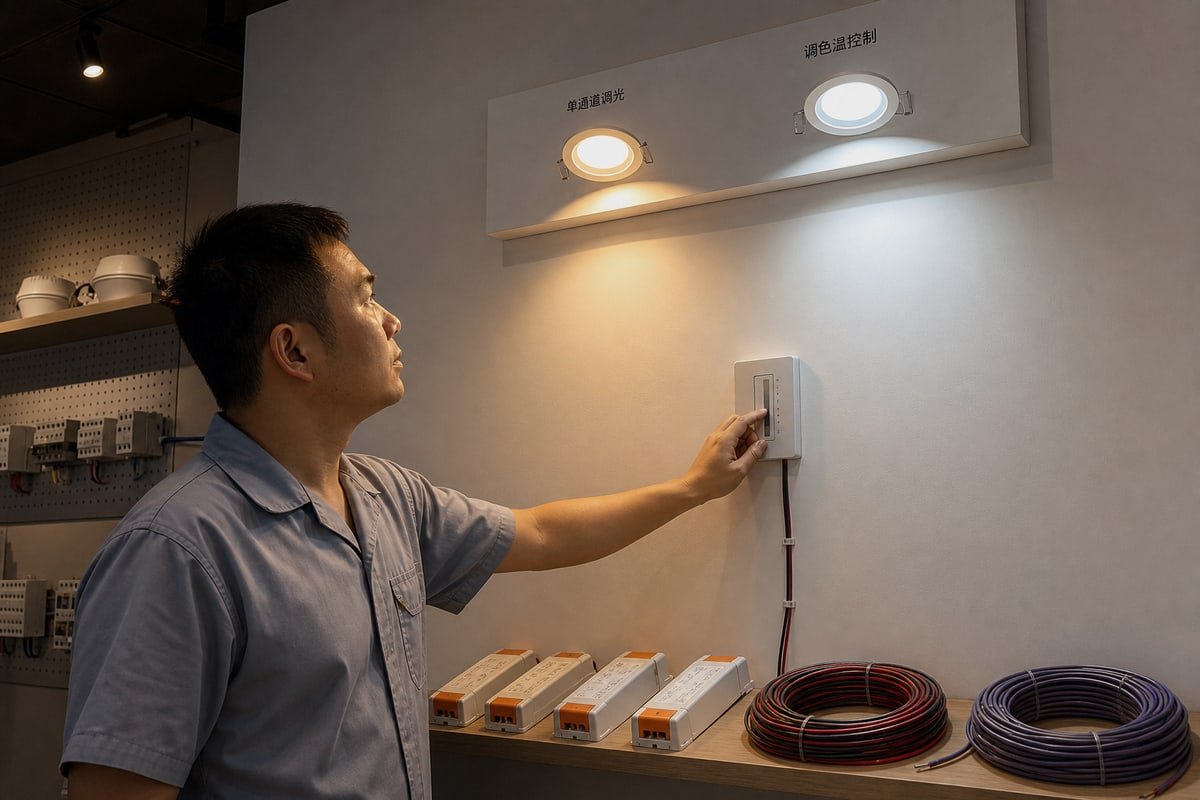
Deadlinetryck är där de flesta inköpsmisstag sker. Köpare stressar specifikationen, hoppar över provtestning och förlorar sedan mer tid på att åtgärda fel än de någonsin sparade. Från år av leveranser till kunder i Singapore, Australien och Europa, här är sekvensen som faktiskt fungerar:
- Lås elspecifikationen först. Bekräfta LED-ström, framåtspänningsfönster och nödvändiga DALI-funktioner innan du ber om priser. Omprovning på grund av fel strömklassificering är den enskilt största tidplansdödaren jag ser.
- Föredra justerbar utström. Ett drivdon som kan väljas mellan 350, 500, 700 och 1050 mA täcker ett 5W–25W-armaturområde med en SKU. Färre SKU:er innebär snabbare lagertillgänglighet, enklare prognostisering och lägre lagerrisk för ditt lager.
- Fråga vad som finns på en standardplattform. En anpassad etikett på en beprövad plattform levereras veckor snabbare än en helt anpassad elektrisk konstruktion. Spara djup anpassning för projekt med verklig tidsram.
- Dela upp leveransen. Flygfrakta den kvantitet som behövs för den första installationsfasen och skicka resten med sjöfrakt. Du når byggdatumet utan att betala flygfraktspriser för hela ordern.
- Kör steg parallellt. Granskning av certifieringsdokument, godkännande av etikettlayout och provning kan alla ske samtidigt. Vi hanterar brådskande godkännanden via WhatsApp med vissa kunder eftersom en tvådagars e-postloop är en tvådagars försening.
Två invändningar förekommer ofta. För det första: "DALI-system är komplexa att idriftsätta, så de saktar ner projekt." Idrifttagning kräver kompatibla styrenheter, men den tvåtrådiga, polaritetsoberoende bussen minskar kabelarbete och omarbetning på plats, vilket vanligtvis ger tillbaka tid. För det andra: "Drivdon med justerbar ström är flexibla, så specifikationen spelar mindre roll." Motsatsen är sann—flexibilitet ökar utrymmet för fel, så ström-, spännings- och termiska gränser måste fortfarande noggrant bekräftas mot varje armatur.
Slutsats
Matcha ström först, spänningsområde andra, wattal tredje. Bekräfta sedan DALI-2-funktioner, certifieringar och anpassningsvillkor tidigt—så att ditt CC DALI-drivdonsprojekt levereras i tid, inom budget och flimmerfritt.
Fotnoter
IEC upprätthåller standarden 62386 som definierar DALI-protokollet för digital ljusstyrning. ↩︎
Förklarar de elektriska kraven för att driva LED, specifikt förhållandet mellan ström och spänning. ↩︎
Teknisk översikt av LED-drift och vikten av strömreglering för stabil ljusutgång. ↩︎
Officiell organisation för DALI-standarder, som säkerställer interoperabilitet mellan ljusstyrningsprodukter. ↩︎