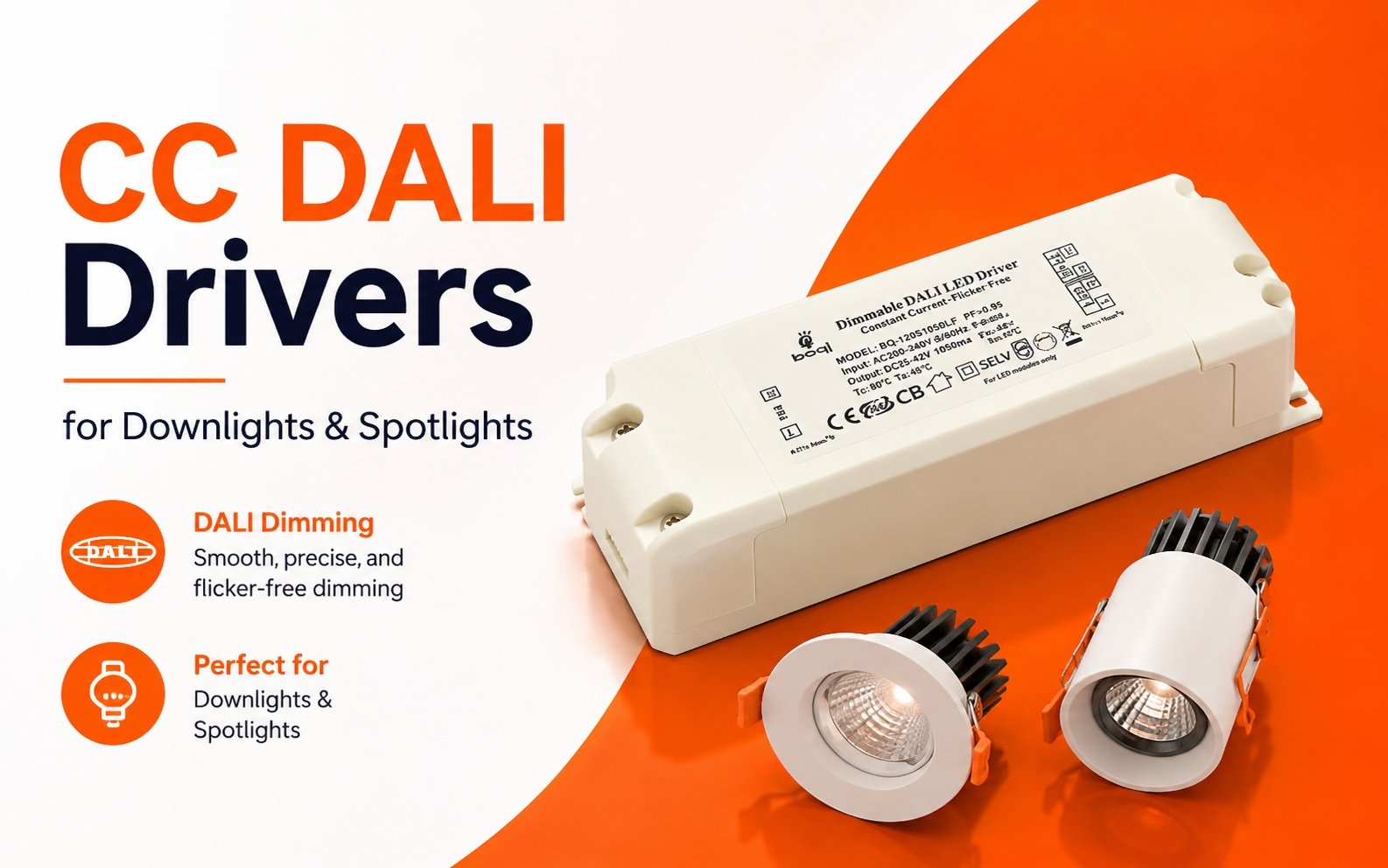















TRIAC LED-remsor som vägrar stängas av helt höll nästan på att kosta oss en viktig distributörsrelation i Tyskland förra året — och det klagomålet lärde vårt ingenjörsteam en avgörande läxa.
TRIAC LED-remsor stängs inte av helt eftersom en liten läckström flyter genom dimmern även i avstängt läge. Den kvarvarande spänningen ger delvis energi till den dimbara LED-drivern, och eftersom lysdioder behöver mycket lite effekt för att avge ljus, producerar remsan ett svagt sken eller periodiska blixtar.
Grundorsaken är nästan aldrig själva LED-remsan. Det är samspelet mellan dimmern, LED-drivertillverkarna 1, och den anslutna lasten. Nedan förklarar jag exakt varför detta händer och vad du kan göra åt det.
Vad orsakar att mina TRIAC LED-remsor förblir svagt upplysta även efter att jag stängt av dem?
Under en fabriksrevision förra kvartalet anslöt vi samma LED-remsa till tre olika TRIAC-dimmrar på vår testbänk — och fick tre helt olika resultat i avstängt läge.
Huvudorsaken är läckström från dimmern. TRIAC-halvledare uppnår aldrig en perfekt öppen krets, så 1–5 mA ström kan passera även när dimmern visar av. Den lilla strömmen är osynlig för glödlampor men tillräcklig för att få LED-remsor att glöda.

Varför lysdioder reagerar på mikroströmmar
Glödlampor behöver betydande ström för att värma en glödtråd. Lysdioder gör det inte. En ström som skulle vara helt osynlig i en 60 W halogenlampa kan producera en märkbar spökbelysningseffekt i en LED-remsa märkt för bara några watt. Detta är inte en defekt. Det är en direkt konsekvens av LED-effektiviteten. halvledarövergången 2 inuti varje LED kan avge fotoner vid mikroampere-nivåer. Den känsligheten är vad som gör lysdioder energieffektiva — och också vad som gör dem sårbara för varje strömilliampere i kretsen.
De fem grundorsakerna
Jag har sorterat orsakerna efter hur ofta vi stöter på dem i verkliga fältreturer:
| Orsak | Vad som händer | Hur vanligt |
|---|---|---|
| Dimmer läckström 3 | 1–5 mA passerar genom TRIAC:en även när den är avstängd | Mycket vanligt |
| Minimilastkrav ej uppfyllt | Dimmern kan inte fungera korrekt under sin märkta LED-last | Vanligt |
| Kapacitiv koppling i ledningar | Intilliggande fasledare inducerar fantomspänning i den kopplade ledningen | Måttlig |
| Lagrad energi i driver-kondensatorer | Elektrolytkondensatorer laddas ur långsamt genom lysdioderna | Måttlig |
| Dimmerns firmware-spänningsgolv | Digitala dimmrar sätter en minimiutgång över sann noll volt | Mindre vanligt |
Det finns också ett hållström 4 -problem värt att förstå. En TRIAC förblir låst — ledande — tills strömmen genom den sjunker under ett tröskelvärde som kallas hållström vid varje nollgenomgång av växelströmmen. Med mycket små LED-laster kan strömmen ligga nära den tröskeln. TRIAC:en kanske inte återställs helt till sitt icke-ledande tillstånd vid varje cykel. Resultatet är oförutsägbart: ibland stängs remsan av, ibland inte.
Ledande flank vs. släpande flank-beteende
En dimmer med ledande flank klipper framsidan av varje växelströms halvcykel. En dimmer med släpande flank klipper baksidan. Båda typerna av fasavskärningsdimring 5 kan läcka ström, men de beter sig olika vid den låga änden av dimringsområdet.
I våra tester ger bakkantsdimmrar i allmänhet jämnare dimning i det låga registret. Men “jämnare” betyder inte alltid “äkta noll”. Båda typerna kan släppa igenom restspänning till drivern om dimmerns interna snubberkrets skapar en förbikopplingsväg. Den snubbern — en RC-krets konstruerad för att skydda TRIAC:en mot spänningstoppar — är en permanent växelströmsväg mellan fas och last. Den finns i nästan varje fasvinkeldimmer.
Laddningscykeln som orsakar blinkningar
Ibland glöder inte remsan kontinuerligt. Istället blinkar den var några sekunder. Det händer eftersom läckströmmen långsamt laddar ingångskondensatorerna inuti LED-drivern. När tillräckligt med energi ackumuleras startar drivern kortvarigt, levererar en pulsspänning till lysdioderna, och kondensatorerna laddas ur. Sedan upprepas cykeln:
Läckström → kondensator laddas → drivern startar kortvarigt → lysdioder blinkar → kondensator laddas ur → cykeln upprepas
Denna periodiska blinkning är mer alarmerande för slutanvändare än ett svagt sken, men grundorsaken är densamma: restström från dimmern som når en driver som behöver väldigt lite energi för att vakna.
Hur kan jag åtgärda problemet med kvarvarande glöd när jag använder TRIAC-dimmrar med LED-remsor?
Avvägningen vi gör i varje projekt är enkel: bör du behandla symptomet på last-sidan, eller lösa problemet på dimmer-driver-nivå?
Du kan åtgärda kvarvarande glöd genom att lägga till ett dummy-lastmotstånd eller en LED-bypasskondensator över utgången, byta ut dimmern mot en som är klassad för låga LED-laster, eller — mest tillförlitligt — använda en matchad kombination av dimbar LED-driver och dimmer som testats tillsammans som ett komplett system.

Snabba lösningar vs. korrekta lösningar
Inte varje åtgärd innebär samma risk eller kostnad. Här är en jämförelse rangordnad från enklast till mest tillförlitlig:
| Åtgärd | Så fungerar det | Proffs | Nackdelar |
|---|---|---|---|
| Dummy-lastmotstånd | Tillför en resistiv last för att höja den totala effekten över dimmerns minimilastkrav | Billigt, snabbt att installera | Slösar energi, kan överhettas vid fel dimensionering |
| LED-bypasskondensator | Absorberar läckström och förhindrar att den når drivern | Liten, billig | Måste vara korrekt dimensionerad; fel värde kan orsaka flimmer eller säkerhetsrisk |
| Byt ut dimmern | Använd en dimmer med lägre minimilast och korrekt LED-klassning | Löser grundorsaken vid strömbrytaren | Högre kostnad, kräver omdragning av kablar |
| Matchat dimmer-driver-system | Använd en driver och dimmer som testats tillsammans för fullständig kompatibilitet | Bäst tillförlitlighet under alla dimningsförhållanden | Kräver inköp från ett enda testat ekosystem |
| Reläbaserad hård frånkoppling | Ett relä öppnar fysiskt kretsen när dimmern når noll | Äkta galvanisk isolering, garanterat nollström | Tillför komplexitet, kostnad och en extra komponent |
Varför slumpmässiga komponenter är farliga
Ett av de största misstag jag ser i fält är en installatör som lägger till ett slumpmässigt motstånd eller en kondensator för att eliminera spökljuset. Om komponenten är underdimensionerad överhettas den. Om den är överdimensionerad stör den dimningsprestandan. Och om den inte är klassad för nätspänning blir den en brandrisk.
Vårt ingenjörsteam har testat dussintals eftermarknads-“fix”-komponenter. Resultaten är inkonsekventa. Vissa fungerar med en dimmer och misslyckas med en annan. Vissa fungerar vid rumstemperatur men misslyckas när driverkapslingen värms upp under sommardrift. Termisk drift av TRIAC:ens gatenkänslighet förvärrar läckströmmen när temperaturen stiger, så en fix som fungerar i ett svalt labb kan misslyckas i ett takutrymme vid 45 °C.
Jag avråder starkt från att lägga till ospecificerade komponenter utan att konsultera drivertillverkaren. Den billigaste lösningen är inte alltid den säkraste.
Systemnivåansatsen
Den mest tillförlitliga vägen är att behandla dimmern, drivern och LED-lasten som ett integrerat system. När vi utvecklar våra Boqi konstantspännings-TRIAC LED-drivrar testar vi dem mot en lista av kompatibla framkantsdimmrar och bakkantsdimmrar. Den kompatibilitetstestningen täcker startbeteende, dimningsområde, flimmer och — kritiskt — avstängningsbeteende.
Ett korrekt matchat system eliminerar behovet av bypasskomponenter helt. Det förbättrar också dimningsstabilitet, prestanda i det låga registret och starttillförlitlighet. Det är därför vi alltid rekommenderar våra distributörer och belysningstillverkare att specificera dimmer och driver tillsammans, inte som separata rader.
Samma LED-remsa kan stängas av perfekt med Dimmer A, lysa svagt med Dimmer B och flimra med Dimmer C. TRIAC-dimmrar är inte elektriskt identiska, även när alla marknadsförs som “LED-kompatibla”. Det är kärnproblemet, och systemnivåmatchning är kärnlösningen.
Vilka LED-drivrutiner bör jag specificera för att undvika ofullständig avstängning i mina TRIAC-dimringsprojekt?
En inköpschef i Singapore berättade en gång för mig att hon hade testat fyra olika “TRIAC-kompatibla” drivrar från fyra leverantörer — och bara en stängdes av rent med projektets dimmer.
Specificera en dimbar LED-driver som listar en testad kompatibilitetstabell för dimrar, stöder både framkant- och bakkantfasdimning, har låg standbyströmförbrukning och uppfyller minimilastkravet för din valda dimmer. Drivrutiner utan publicerad kompatibilitetsdata är en chansning.

Vad du bör leta efter i ett driver-datablad
Inte varje datablad berättar vad du behöver veta. Här är de specifikationer som är viktigast för att förhindra ofullständig avstängning:
| Specifikation | Varför det spelar roll | Vad du ska leta efter |
|---|---|---|
| Dimningstyp | Bekräftar kompatibilitet med fasvinkeldimning | “TRIAC / framkant / bakkant” tydligt angivet |
| Lägsta dimmernivå | Visar hur lågt drivern kan dimma | 1% eller lägre är idealiskt; 5% eller högre kanske inte når äkta avstängning med vissa dimmrar |
| Standby-effekt | Energi som förbrukas när dimmern är på minimum | Under 0,5 W minskar restspänning och risk för spökljus |
| Lista över testade dimmrar | Bevisar kompatibilitet i verkligheten | Namngivna dimmermodeller med bekräftade prestandaresultat |
| Utspänningsområde | Måste matcha din LED-list | Konstant spänning: 12 V eller 24 V DC |
| Effektklassning vs. dimmerns minsta belastning | Drivdonet måste dra tillräcklig ström för att dimmern ska fungera | Kontrollera att drivdonets ingångseffekt överstiger dimmerns angivna LED-minimibelastning |
Konstant spänning vs. konstant ström
För LED-listapplikationer behöver du nästan alltid ett drivdon för konstant spänning. Själva listen innehåller inbyggda motstånd som reglerar strömmen till varje LED-kluster. En konstantströmsdrivrutin är konstruerad för olika armaturtyper — panellampor, downlights och liknande produkter där lysdioderna är seriekopplade.
När vi designar våra Boqi TRIAC LED-drivdon för konstant spänning är ingångssteget optimerat för fasvinkeldimmningssignaler. Det innebär att effektfaktorkorrigering 6 kretsen och EMI-filtret är avstämda så att Y-kondensatorerna i filtret inte skapar överdrivna läckvägar. Läckage från EMI-filtrets Y-kondensator är en av de mindre uppenbara orsakerna till spökglöd. Filtret i sig kan läcka små strömmar till chassijord, och om LED-listen är monterad på en jordad aluminiumprofil bildas en fantomkrets som helt kringgår den avsedda strömvägen.
Varför “LED-kompatibel” inte räcker
Många dimrar marknadsförs som “LED-kompatibla”, men den beteckningen har ingen universell standard bakom sig. Det betyder helt enkelt att dimmern har konstruerats med LED-belastningar i åtanke. Det garanterar inte problemfri drift med ditt specifika drivdon.
Detsamma gäller på drivdonssidan. Ett drivdon märkt “TRIAC-dimbart” bekräftar att det kan ta en fasvinklad AC-ingång. Det bekräftar inte jämn dimning, tillförlitlig start eller fullständig avstängning med varje TRIAC-dimmer på marknaden.
Det är just därför vi publicerar testade dimmerkompatibilitetslistor med våra Boqi-drivdon. Vårt team i Shenzhen kör varje drivdonsmodell genom en uppsättning dimrar från de marknader vi exporterar till — inklusive modeller som är vanliga i Storbritannien, Tyskland, Australien och Sydostasien. Den processen tar tid, men den räddar våra distributörer från kostsamma fältfel och garantianspråk.
Den verkliga frågan en inköpsansvarig bör ställa är inte “Är detta drivdon TRIAC-dimbart?” utan “Har detta drivdon testats med den specifika dimmer som mitt projekt använder?” Om leverantören inte kan svara på den frågan med data stannar risken hos dig.
Hur testar jag TRIAC-kompatibilitet innan jag bekräftar en bulkorder med min leverantör?
En läxa vi lärde oss tidigt i vår exportverksamhet: godkänn aldrig en bulkorder baserat på ett bänktest i rumstemperatur med korta kablar.
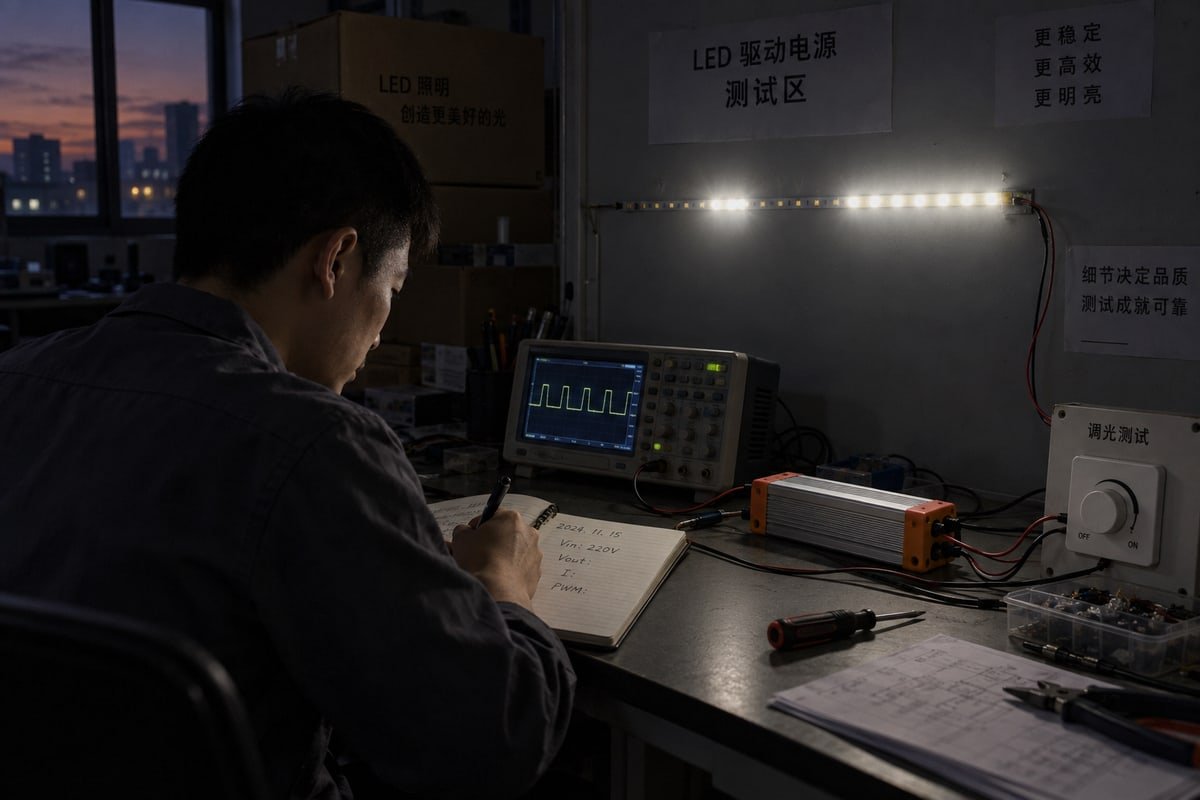
Testa TRIAC-kompatibilitet genom att köra LED-drivdonet och dimmern tillsammans enligt ett strukturerat protokoll som kontrollerar uppstart, dimning över hela området, stabilitet vid låg nivå, flimmer och fullständig avstängning — upprepa sedan vid förhöjd temperatur och med maximal kabellängd för att simulera verkliga fältförhållanden.
Ett praktiskt testprotokoll i sju steg
Här är det protokoll vi använder internt innan vi godkänner en dimmer-drivdon-parning för produktionsleverans:
- Kallstartstest. Slå på dimmern från noll. LED-listen ska tändas mjukt utan att poppa på vid en slumpmässig ljusstyrka.
- Svep över hela området. Dimra långsamt från 100% till minimum. Håll utkik efter flimmer, stegvisa hopp eller plötsliga ljusstyrkehopp.
- Håll vid låg nivå. Ställ in dimmern på dess lägsta synliga nivå och låt den stå i 10 minuter. Utgången ska förbli stabil utan synligt flimmer.
- Avstängningstest. Stäng av dimmern. Listen måste bli helt mörk inom 2 sekunder utan kvarvarande glöd och utan periodiskt blinkande.
- Termiskt test. Stäng in drivdonet i ett utrymme som simulerar ett takhålrum eller möbelhålrum. Kör det i 2 timmar vid låg dimningsnivå och upprepa sedan avstängningstestet. Termisk drift av TRIAC-gate-känslighet ökar läckströmmen när enheten är varm.
- Kabellängdstest. Lägg till den maximala kabeldragning du förväntar dig i den verkliga installationen. Längre kablar ökar kapacitiv koppling, vilket kan introducera fantomspänning till LED-kretsen.
- Test med flera enheter. Anslut det antal drivdon du planerar att installera på en enda dimmerkrets. Flera drivdon ändrar den totala belastningen och kan pressa systemet utanför dimmerns driftfönster.
Hur fel ser ut
Varje felmönster pekar på en olika grundorsak. Använd denna tabell för att diagnostisera det du ser under testning:
| Symtom under test | Trolig orsak | Rekommenderad åtgärd |
|---|---|---|
| Listen poppar på vid 30% istället för 0% | Dimmerns firmware-spänningsgolv inställt för högt | Prova en annan dimmer eller begär firmwarejustering |
| Listen flimrar vid låga nivåer | Fasvinkelsignalen är instabil vid låg ledningsvinkel | Byt från framkantsdimmer till bakkantsdimmer |
| Svag glöd när avstängd | Läckström eller snubberkretsens bypass | Bekräfta dimmer-drivdon-kompatibilitet eller använd ett matchat system |
| Periodiskt blixtrande var 3–5 sekund | Kondensatorns laddnings-urladdningscykel från restspänning | Lägg till en testad LED-bypasskondensator eller byt till en kompatibel dimmer |
| Fungerar vid rumstemperatur men glöder när den är varm | Termisk drift ökar TRIAC-läckström | Använd en dimmer med lägre läckspecifikation |
Hur många prover att testa
Jag rekommenderar att testa minst 3 prover av varje komponent. Tillverkningstoleranser innebär att ett prov kan passera medan ett annat misslyckas vid marginalen. Om 1 av 3 prover misslyckas med avstängningstestet är det en varningsflagga för fältillförlitlighet. Vi tillämpar denna regel på vår egen produktion — varje batch av Boqi TRIAC LED-drivdon genomgår stickprovskontroller av dimmerkompatibilitet innan vi godkänner leverans.
När man bör begära prover innan beställning
Om din leverantör inte kan tillhandahålla en testad kompatibilitetslista för dimrar, begär prover och kör protokollet ovan själv. Kostnaden för 5 provdrivdon och en veckas testning är långt mindre än kostnaden för en fältåterkallelse av tusentals enheter. Detta är rådet jag ger till varje ny distributör som kontaktar oss via vår webbplats eller på mässor.
Ett TRIAC-dimringssystem bör alltid utvärderas som ett komplett system. Den viktiga frågan är inte “Är detta en TRIAC-dimmer?” Frågan är “Har denna dimmer testats och bevisats kompatibel med detta specifika LED-drivdon?” Att använda en testad kombination — såsom Boqi konstantspännings-TRIAC-LED-drivdon parade med kompatibla Boqi framkant- och bakkantsdimrar — ger installatörer och belysningstillverkare mer förutsägbar prestanda vid uppstart, dimringsområde, flimmerkontroll och avstängningsbeteende.
Det är den verkliga skillnaden mellan ett system som dimrar framgångsrikt under ett snabbt bänktest och ett som fungerar tillförlitligt i en verklig installation i åratal.
Slutsats
TRIAC LED-remsor som inte stängs av är ett systemproblem, inte en remsdefekt. Matcha din dimmer, dimbara LED-drivdon och last som ett testat system för att eliminera kvarvarande glöd för gott.
Intresserad av att köpa produkterna som nämns i denna artikel? Se detaljer och begär en offert här:
Fotnoter
Ger en teknisk översikt av LED-drivdon och deras grundläggande roll i belysningskretsar. ↩︎
Auktoritativ förklaring av hur LED-halvledarövergångar fungerar och deras inneboende energieffektivitet. ↩︎
Vetenskaplig definition och teknisk kontext för läckström i elektroniska kretsar och halvledare. ↩︎
Förklarar TRIAC-halvledardrift och begreppet hållström som refereras i artikeln. ↩︎
Branschstandarder för dimringskompatibilitet mellan fasta belysningssystem och fasavskärningsdimringssystem. ↩︎
Förklarar det elektriska konceptet effektfaktorkorrigering som används i högeffektiva belysningssystem. ↩︎