














Le strisce LED TRIAC che non si spengono completamente ci sono quasi costate una relazione con un importante distributore in Germania l'anno scorso — e quel reclamo ha insegnato al nostro team di ingegneria una lezione fondamentale.
Le strisce LED TRIAC non si spengono completamente perché una piccola corrente di dispersione fluisce attraverso il dimmer anche nello stato spento. Quella tensione residua alimenta parzialmente il driver LED dimmerabile, e poiché i LED necessitano di pochissima potenza per emettere luce, la striscia produce un bagliore debole o un lampeggio periodico.
La causa principale quasi mai è la striscia LED stessa. È l'interazione tra il dimmer, il Driver LED 1, e il carico collegato. Di seguito, analizzo esattamente perché questo accade e cosa si può fare al riguardo.
Cosa causa il fatto che le mie strisce LED TRIAC rimangano debolmente illuminate anche dopo averle spente?
Durante un audit in fabbrica lo scorso trimestre, abbiamo collegato la stessa striscia LED a tre diversi dimmer TRIAC sul nostro banco di prova — e abbiamo ottenuto tre risultati completamente diversi nello stato spento.
La causa principale è la corrente di dispersione del dimmer. I semiconduttori TRIAC non raggiungono mai un circuito aperto perfetto, quindi 1–5 mA di corrente possono passare anche quando il dimmer risulta spento. Quella minuscola corrente è invisibile alle lampadine a incandescenza ma sufficiente a far brillare le strisce LED.

Perché i LED reagiscono alle micro-correnti
Le lampadine a incandescenza necessitano di una corrente sostanziale per riscaldare un filamento. I LED no. Una corrente che sarebbe completamente invisibile in una lampada alogena da 60 W può produrre un evidente effetto ghosting in una striscia LED da soli pochi watt. Questo non è un difetto. È una diretta conseguenza dell'efficienza dei LED. La giunzione a semiconduttore 2 all'interno di ogni LED può emettere fotoni a livelli di microampere. Questa sensibilità è ciò che rende i LED energeticamente efficienti — ed è anche ciò che li rende vulnerabili a ogni milliampere vagante nel circuito.
Le cinque cause principali
Ho classificato le cause in base alla frequenza con cui le incontriamo nei resi reali sul campo:
| Causa | Cosa succede | Quanto è comune |
|---|---|---|
| Dimmer corrente di dispersione 3 | 1–5 mA passano attraverso il TRIAC anche quando è spento | Molto comune |
| Requisito di carico minimo non soddisfatto | Il dimmer non può funzionare correttamente al di sotto del suo carico LED nominale | Comune |
| Accoppiamento capacitivo nel cablaggio | I fili in tensione adiacenti inducono una tensione fantasma nel ramo commutato | Moderato |
| Energia immagazzinata nei condensatori del driver | I condensatori elettrolitici si scaricano lentamente attraverso i LED | Moderato |
| Soglia di tensione minima del firmware del dimmer | I dimmer digitali impostano un'uscita minima al di sopra dello zero volt reale | Meno comune |
C'è anche un problema di corrente di mantenimento 4 che vale la pena comprendere. Un TRIAC rimane bloccato — in conduzione — finché la corrente che lo attraversa non scende al di sotto di una soglia chiamata corrente di mantenimento a ogni passaggio per lo zero della CA. Con carichi LED molto piccoli, la corrente può aggirarsi vicino a quella soglia. Il TRIAC potrebbe non resettarsi completamente al suo stato non conduttivo a ogni ciclo. Il risultato è imprevedibile: a volte la striscia si spegne, a volte no.
Comportamento leading edge vs. trailing edge
Un dimmer leading edge taglia la parte anteriore di ogni semi-ciclo CA. Un dimmer trailing edge taglia la parte posteriore. Entrambi i tipi di dimmerazione a taglio di fase 5 possono perdere corrente, ma si comportano diversamente all'estremità inferiore dell'intervallo di dimming.
Nei nostri test, i dimmer a taglio di fase posteriore producono generalmente una dimmerazione più fluida nella parte bassa. Ma “più fluida” non significa sempre “zero reale”. Entrambi i tipi possono consentire alla tensione residua di raggiungere il driver se la rete snubber interna del dimmer crea un percorso di bypass. Quello snubber — un circuito RC progettato per proteggere il TRIAC dai picchi di tensione — è un percorso AC permanente tra linea e carico. Esiste in quasi ogni dispositivo di dimmerazione a taglio di fase.
Il ciclo di carica che causa il lampeggio
A volte la striscia non brilla continuamente. Invece, lampeggia ogni pochi secondi. Ciò accade perché la corrente di dispersione carica lentamente i condensatori di ingresso all'interno del driver LED. Quando si accumula energia sufficiente, il driver si avvia brevemente, eroga un impulso di potenza ai LED, e i condensatori si scaricano. Poi il ciclo si ripete:
Corrente di dispersione → il condensatore si carica → il driver si avvia brevemente → i LED lampeggiano → il condensatore si scarica → il ciclo si ripete
Questo lampeggio periodico è più allarmante per gli utenti finali di un bagliore tenue, ma la causa principale è la stessa: corrente residua dal dimmer che raggiunge un driver che necessita di pochissima energia per attivarsi.
Come posso risolvere il problema del bagliore residuo quando si utilizzano dimmer TRIAC con strisce LED?
Il compromesso che valutiamo su ogni progetto è semplice: dovresti trattare il sintomo dal lato del carico, o risolvere il problema a livello dimmer-driver?
È possibile risolvere il bagliore residuo aggiungendo una resistenza di carico fittizia o un condensatore di bypass LED sull'uscita, sostituendo il dimmer con uno classificato per carichi LED bassi, oppure — in modo più affidabile — utilizzando una combinazione abbinata di driver LED dimmerabile e dimmer testata insieme come sistema completo.

Soluzioni rapide vs. soluzioni appropriate
Non ogni soluzione comporta lo stesso rischio o costo. Ecco un confronto classificato dal più semplice al più affidabile:
| Fissare | Come Funziona | Pro | Contro |
|---|---|---|---|
| Resistore di carico fittizio | Aggiunge un carico resistivo per elevare il wattaggio totale al di sopra del requisito di carico minimo del dimmer | Economico, rapido da installare | Spreca energia, può surriscaldarsi se dimensionato male |
| Condensatore di bypass LED | Assorbe la corrente di dispersione e impedisce che raggiunga il driver | Piccolo, economico | Deve essere valutato correttamente; un valore errato può causare sfarfallio o rischio di sicurezza |
| Sostituire il dimmer | Utilizzare un dimmer con carico minimo inferiore e classificazione LED adeguata | Risolve la causa principale all'interruttore | Costo più elevato, richiede ricablaggio |
| Sistema dimmer-driver abbinato | Utilizzare un driver e un dimmer testati insieme per la compatibilità a gamma completa | Migliore affidabilità in tutte le condizioni di dimmerazione | Richiede l'approvvigionamento da un unico ecosistema testato |
| Disconnessione fisica basata su relè | Un relè apre fisicamente il circuito quando il dimmer raggiunge lo zero | Vera isolamento galvanico, corrente zero garantita | Aggiunge complessità, costo e un componente aggiuntivo |
Perché i componenti casuali sono pericolosi
Uno degli errori più grandi che vedo sul campo è un installatore che aggiunge un resistore o un condensatore casuale per eliminare l'effetto ghosting. Se il componente è sottodimensionato, si surriscalda. Se è sovradimensionato, interferisce con le prestazioni di dimmerazione. E se non è classificato per la tensione di rete, diventa un rischio di incendio.
Il nostro team di ingegneria ha testato dozzine di componenti “fix” aftermarket. I risultati sono incoerenti. Alcuni funzionano con un dimmer e falliscono con un altro. Alcuni funzionano a temperatura ambiente ma falliscono quando l'involucro del driver si riscalda durante il funzionamento estivo. La deriva termica della sensibilità del gate del TRIAC peggiora la corrente di dispersione all'aumentare delle temperature, quindi una soluzione che funziona in un laboratorio fresco può fallire in un vano soffitto a 45 °C.
Sconsiglio vivamente di aggiungere componenti non specificati senza consultare il produttore del driver. La soluzione più economica non è sempre la più sicura.
L'approccio a livello di sistema
Il percorso più affidabile è trattare il dimmer, il driver e il carico LED come un unico sistema integrato. Quando sviluppiamo i nostri driver LED TRIAC a tensione costante Boqi, li testiamo contro un elenco di modelli di dimmer a taglio di fase anteriore e dimmer a taglio di fase posteriore compatibili. Quel test di compatibilità copre il comportamento all'avvio, la gamma di dimmerazione, lo sfarfallio e — criticamente — il comportamento allo spegnimento.
Un sistema correttamente abbinato elimina completamente la necessità di componenti di bypass. Migliora anche la stabilità della dimmerazione, le prestazioni nella parte bassa e l'affidabilità all'avvio. Questo è il motivo per cui raccomandiamo sempre ai nostri distributori e produttori di illuminazione di specificare il dimmer e il driver insieme, non come voci separate.
La stessa striscia LED può spegnersi perfettamente con il Dimmer A, brillare debolmente con il Dimmer B e sfarfallare con il Dimmer C. I dimmer TRIAC non sono elettricamente identici, anche quando tutti sono commercializzati come “compatibili con LED”. Questo è il problema principale, e l'abbinamento a livello di sistema è la soluzione principale.
Quali driver LED dovrei specificare per evitare lo spegnimento incompleto nei miei progetti di dimming TRIAC?
Una responsabile degli acquisti a Singapore una volta mi ha detto che aveva testato quattro diversi driver “compatibili TRIAC” da quattro fornitori — e solo uno si spegneva correttamente con il dimmer del suo progetto.
Specificare un driver LED dimmerabile che elenchi una tabella di compatibilità dei dimmer testata, supporti sia la regolazione di fase a taglio iniziale che a taglio finale, abbia un basso consumo in standby e soddisfi il requisito di carico minimo del dimmer scelto. I driver senza dati di compatibilità pubblicati sono un azzardo.

Cosa cercare in un datasheet del driver
Non ogni datasheet ti dice ciò che devi sapere. Ecco le specifiche che contano di più per prevenire lo spegnimento incompleto:
| Specifica | Perché è importante | Cosa cercare |
|---|---|---|
| Tipo di dimmerazione | Conferma la compatibilità con la dimmerazione a taglio di fase | “TRIAC / taglio di fase anteriore / taglio di fase posteriore” chiaramente indicato |
| Livello di dimmerazione minimo | Mostra quanto in basso il driver può dimmerare | 1% o inferiore è ideale; 5% o superiore potrebbe non raggiungere lo spegnimento reale con alcuni dimmer |
| Potenza in standby | Energia consumata quando il dimmer è al minimo | Inferiore a 0,5 W riduce la tensione residua e il rischio di ghosting |
| Elenco dei dimmer testati | Dimostra la compatibilità nel mondo reale | Modelli di dimmer specifici con risultati prestazionali confermati |
| Intervallo di tensione di uscita | Deve corrispondere alla tua striscia LED | Tensione costante: 12 V o 24 V DC |
| Potenza nominale vs. carico minimo del dimmer | Il driver deve assorbire corrente sufficiente per il funzionamento del dimmer | Verificare che la potenza in ingresso del driver superi il carico minimo LED dichiarato del dimmer |
Tensione costante vs. corrente costante
Per applicazioni con strisce LED, è quasi sempre necessario un driver a tensione costante. La striscia stessa contiene resistori integrati che regolano la corrente verso ciascun cluster di LED. Un driver a corrente costante è progettato per tipi di apparecchi diversi — pannelli luminosi, faretti incassati e prodotti simili in cui i LED sono cablati in serie.
Quando progettiamo i nostri driver LED TRIAC a tensione costante Boqi, lo stadio di ingresso è ottimizzato per segnali di dimming a taglio di fase. Questo significa che il stadi di correzione del fattore di potenza 6 circuito e il filtro EMI sono tarati in modo che i condensatori Y nel filtro non creino percorsi di dispersione eccessivi. La dispersione dei condensatori Y del filtro EMI è una delle cause meno evidenti del bagliore fantasma. Il filtro stesso può disperdere correnti minime verso la massa del telaio, e se la striscia LED è montata su un canale in alluminio messo a terra, si forma un circuito fantasma che bypassa completamente il percorso di alimentazione previsto.
Perché “Compatibile con LED” non è sufficiente
Molti dimmer sono commercializzati come “compatibili LED”, ma questa etichetta non ha uno standard universale alle spalle. Significa semplicemente che il dimmer è stato progettato tenendo conto dei carichi LED. Non garantisce un funzionamento pulito con il tuo driver specifico.
Lo stesso vale dal lato driver. Un driver etichettato “dimmerabile TRIAC” conferma che può accettare un ingresso AC a taglio di fase. Non conferma un dimming fluido, un avvio affidabile o uno spegnimento completo con ogni dimmer TRIAC sul mercato.
È esattamente per questo che pubblichiamo liste di compatibilità dei dimmer testate con i nostri driver Boqi. Il nostro team a Shenzhen sottopone ogni modello di driver a una batteria di dimmer provenienti dai mercati in cui esportiamo — inclusi modelli comuni nel Regno Unito, in Germania, in Australia e nel Sud-Est asiatico. Questo processo richiede tempo, ma evita ai nostri distributori costosi guasti sul campo e richieste di garanzia.
La vera domanda che un responsabile acquisti dovrebbe porsi non è “Questo driver è dimmerabile TRIAC?” ma “Questo driver è stato testato con il dimmer specifico utilizzato dal mio progetto?” Se il fornitore non può rispondere a questa domanda con i dati, il rischio resta a tuo carico.
Come posso testare la compatibilità TRIAC prima di confermare un ordine all'ingrosso con il mio fornitore?
Una lezione che abbiamo imparato agli inizi della nostra attività di esportazione: non approvare mai un ordine all'ingrosso basandosi su un singolo test al banco a temperatura ambiente con cavi corti.
Testare la compatibilità TRIAC eseguendo insieme il driver LED e il dimmer attraverso un protocollo strutturato che verifica l'avvio, la regolazione su tutta la gamma, la stabilità al minimo, lo sfarfallio e lo spegnimento completo — quindi ripetere ad alta temperatura e con la massima lunghezza del cavo per simulare le condizioni reali sul campo.
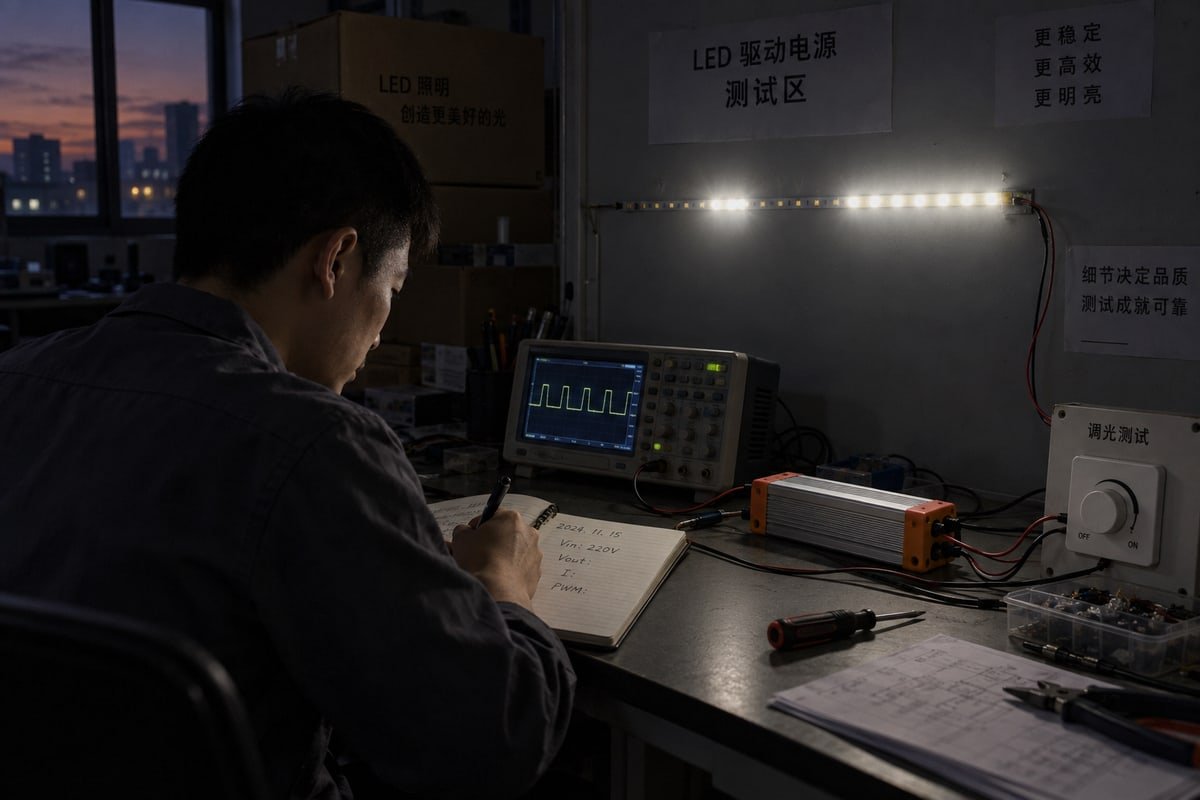
Un protocollo di test pratico in sette passaggi
Ecco il protocollo che utilizziamo internamente prima di approvare un abbinamento dimmer-driver per la spedizione in produzione:
- Test di avvio a freddo. Accendere il dimmer da zero. La striscia LED deve illuminarsi gradualmente senza accendersi bruscamente a un livello di luminosità casuale.
- Scansione a gamma completa. Dimmerare lentamente dal 100% al minimo. Osservare sfarfallio, scatti o salti bruschi di luminosità.
- Tenuta al minimo. Impostare il dimmer al suo livello visibile più basso e lasciarlo per 10 minuti. L'uscita deve rimanere stabile senza sfarfallio visibile.
- Test di spegnimento. Portare il dimmer su off. La striscia deve spegnersi completamente entro 2 secondi senza bagliore residuo e senza lampeggi periodici.
- Test termico. Racchiudere il driver in uno spazio che simuli un vuoto nel controsoffitto o una cavità di un mobile. Farlo funzionare per 2 ore a basso livello di dimming, poi ripetere il test di spegnimento. La deriva termica della sensibilità del gate TRIAC aumenta la corrente di dispersione quando il dispositivo è caldo.
- Test della lunghezza dei cavi. Aggiungere la lunghezza massima di cavo prevista nell'installazione reale. Cavi più lunghi aumentano l'accoppiamento capacitivo, che può introdurre tensione fantasma nel circuito LED.
- Test multi-unità. Collegare il numero di driver che si prevede di installare su un singolo circuito dimmer. Più driver modificano il carico totale e possono spingere il sistema al di fuori della finestra operativa del dimmer.
Come si manifestano i guasti
Ogni modello di guasto indica una causa radice diversa. Utilizzare questa tabella per diagnosticare ciò che si osserva durante il test:
| Sintomo durante il test | Causa Probabile | Azione raccomandata |
|---|---|---|
| La striscia si accende bruscamente al 30% invece che allo 0% | Soglia di tensione minima del firmware del dimmer impostata troppo alta | Provare un dimmer diverso o richiedere una regolazione del firmware |
| La striscia sfarfalla a bassi livelli | Il segnale a taglio di fase è instabile a basso angolo di conduzione | Passare da un dimmer a taglio iniziale a un dimmer a taglio finale |
| Debole bagliore da spento | Corrente di dispersione o bypass della rete snubber | Confermare la compatibilità dimmer-driver o utilizzare un sistema abbinato |
| Lampeggio periodico ogni 3–5 secondi | Ciclo di carica-scarica del condensatore da tensione residua | Aggiungere un condensatore di bypass LED testato o passare a un dimmer compatibile |
| Funziona a temperatura ambiente ma emette bagliore quando è caldo | La deriva termica aumenta la corrente di dispersione del TRIAC | Utilizzare un dimmer con specifica di dispersione inferiore |
Quanti campioni testare
Consiglio di testare almeno 3 campioni di ciascun componente. Le tolleranze di produzione fanno sì che un campione possa superare il test mentre un altro fallisca al limite. Se 1 campione su 3 non supera il test di spegnimento, è un campanello d'allarme per l'affidabilità sul campo. Applichiamo questa regola alla nostra stessa produzione — ogni lotto di driver LED TRIAC Boqi viene sottoposto a controlli a campione sulla compatibilità con i dimmer prima di approvare la spedizione.
Quando richiedere campioni prima di ordinare
Se il vostro fornitore non è in grado di fornire una lista di compatibilità con i dimmer testata, richiedete dei campioni ed eseguite voi stessi il protocollo sopra descritto. Il costo di 5 driver campione e una settimana di test è di gran lunga inferiore al costo di un richiamo sul campo di migliaia di unità. Questo è il consiglio che do a ogni nuovo distributore che ci contatta attraverso il nostro sito web o alle fiere del settore.
Un sistema di dimming TRIAC dovrebbe sempre essere valutato come un sistema completo. La domanda importante non è “Questo è un dimmer TRIAC?” La domanda è “Questo dimmer è stato testato e dimostrato compatibile con questo specifico driver LED?” L'utilizzo di una combinazione testata — come i driver LED TRIAC a tensione costante Boqi abbinati ai dimmer leading edge e trailing edge Boqi compatibili — offre agli installatori e ai produttori di illuminazione prestazioni più prevedibili in fase di avvio, range di dimming, controllo dello sfarfallio e comportamento allo spegnimento.
Questa è la vera differenza tra un sistema che dimma con successo durante un rapido test da banco e uno che funziona in modo affidabile in un'installazione reale per anni.
Conclusione
Le strisce LED TRIAC che non si spengono sono un problema di sistema, non un difetto della striscia. Abbinate dimmer, driver LED dimmerabile e carico come un unico sistema testato per eliminare definitivamente il bagliore residuo.
Interessato all'approvvigionamento dei prodotti menzionati in questo articolo? Consulta i dettagli e richiedi un preventivo qui:
Note a piè di pagina
Fornisce una panoramica tecnica dei driver LED e del loro ruolo fondamentale nei circuiti di illuminazione. ↩︎
Spiegazione autorevole di come funzionano le giunzioni a semiconduttore LED e della loro intrinseca efficienza energetica. ↩︎
Definizione scientifica e contesto ingegneristico della corrente di dispersione nei circuiti elettronici e nei semiconduttori. ↩︎
Spiega il funzionamento dei semiconduttori TRIAC e il concetto di corrente di mantenimento citato nell'articolo. ↩︎
Standard di settore per la compatibilità di dimming tra illuminazione a stato solido e sistemi di dimming a taglio di fase. ↩︎
Spiega il concetto elettrico di correzione del fattore di potenza utilizzato nei sistemi di illuminazione ad alta efficienza. ↩︎