










Most flickering or buzzing issues in dimmable LED systems come from using the wrong dimming type. But how can you tell which one your driver supports?
You can identify if a dimmable LED driver uses leading-edge or trailing-edge dimming by checking its label, model code, behavior under dimming, or testing with tools like an oscilloscope.
Choosing the right dimming method is not just a technical detail—it’s key to system performance, product lifespan, and user experience. I’ll break down the basics and show how to confidently identify the dimming type used in your LED driver.
Understanding the Basics: What Is Leading-Edge vs. Trailing-Edge Dimming?
Some LED drivers are loud and flicker when dimmed. Others stay silent and smooth. The reason? Different dimming technologies.
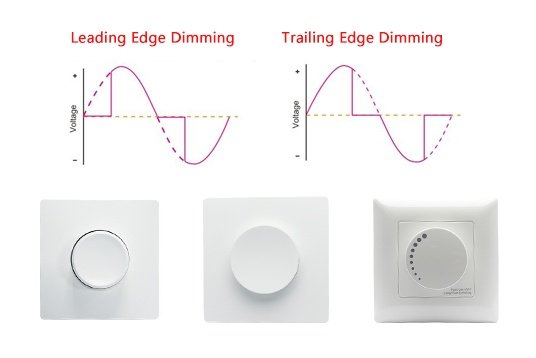
Leading-edge dimming (TRIAC) cuts the AC voltage at the beginning of the wave. Trailing-edge dimming (ELV or MOSFET) cuts it at the end. This timing difference affects compatibility and performance.

How each dimming type works
| Feature | Leading-Edge (TRIAC) | Trailing-Edge (ELV / MOSFET) |
|---|---|---|
| Phase Cut Type | Beginning of AC sine wave | End of AC sine wave |
| Typical Dimmer Label | RL load | RC load or ELV |
| Switch Type | Mechanical | Electronic |
| Compatibility | Halogen, incandescent, some LED | Most modern LEDs |
| Common Issues | Flicker, buzz with low loads | Less noise, smoother control |
| Cost | Lower | Slightly higher |
Why the difference matters in LED drivers
LED drivers are not simple resistive loads. They have capacitors, inductors, and ICs that react to voltage patterns. A mismatch between the driver and dimmer can cause visible problems. That’s why we need to look closely at compatibility.
Why It Matters: The Importance of Matching Driver and Dimmer Compatibility?
Mismatching a dimmer with your LED driver can cause customer complaints, safety issues, or product failure.
Using the wrong dimming type leads to flicker, shortened LED life, and even overheating. Matching ensures safety, performance, and peace of mind.
What goes wrong with mismatches
Flickering or Dead Zones
If you use a TRIAC dimmer with a trailing-edge-only driver, you might get unstable dimming or “dead zones” where nothing happens.
Buzzing Sounds
Some TRIAC dimmers generate audible noise when paired with modern electronic drivers.
Overload or Heat
Incorrect waveforms stress internal components. Drivers might overheat or fail early.
Warranty Issues
Many manufacturers void warranties if dimming is done with incompatible devices.
My own experience
Early in my LED career, I once paired a batch of TRIAC dimmers with new ELV-compatible drivers. Everything seemed fine in the lab, but once installed, customers complained of buzzing and flickering. We had to recall the units. Since then, I always double-check dimmer compatibility upfront.
Key Specifications to Check on the LED Driver Label
You don’t need to open the driver or guess. Often, the answer is on the label or datasheet.
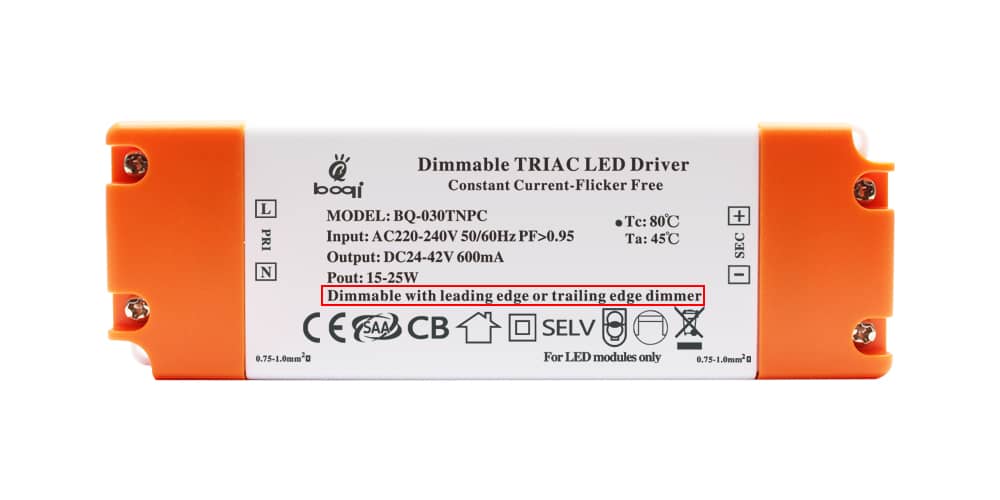
The driver label usually shows the dimming type—look for keywords like “Leading Edge”, “Trailing Edge”, “TRIAC,” “ELV,” “RC,” or “RL” to confirm the method.
What to look for on the label or datasheet
Common label terms
| Label Term | Meaning | Dimming Type |
|---|---|---|
| TRIAC | Triode for AC Control | Leading-edge |
| ELV | Electronic Low Voltage | Trailing-edge |
| RL Load | Resistive + Inductive | Leading-edge |
| RC Load | Resistive + Capacitive | Trailing-edge |
| Phase-Cut | General term (check notes) | Could be both |
| Dimmable (no type) | Unclear – check datasheet | Unknown |
Model codes and manufacturer notes
Some brands encode dimming type in the model number. Others mention it in the “dimming compatibility” section. Never assume—always verify.
Why labels aren’t always enough
Some generic drivers only say “dimmable” without clarifying the type. In these cases, further testing is needed (more on that below).
Visual and Performance Clues During Operation
Even if the label is missing, your eyes and ears can give clues about the dimming method.
Buzzing, flickering, or poor low-end dimming usually point to TRIAC issues. Smooth, silent dimming is a sign of ELV or trailing-edge control.
Clues you can observe
1. Flicker when dimming
TRIAC dimming often struggles with low-wattage LEDs. You may see visible flicker as the power waveform is chopped too early.
2. Audible buzzing
If the driver or dimmer buzzes, it’s likely a TRIAC mismatch. ELV dimmers are quieter.
3. Inconsistent dimming
Sudden jumps in brightness or dead spots indicate phase-cut mismatch.
4. Smoothness at low dim levels
Trailing-edge dimmers allow smoother control at the low end of brightness. This is especially important for mood lighting or residential use.
A field test I use
I always carry a test dimmer box with both TRIAC and ELV dimmers. I plug in unknown drivers and observe behavior. This saves time and helps avoid installing incompatible systems.
Tools and Techniques for Dimming Type Detection
When visual inspection isn’t enough, we can turn to tools and simple testing setups.
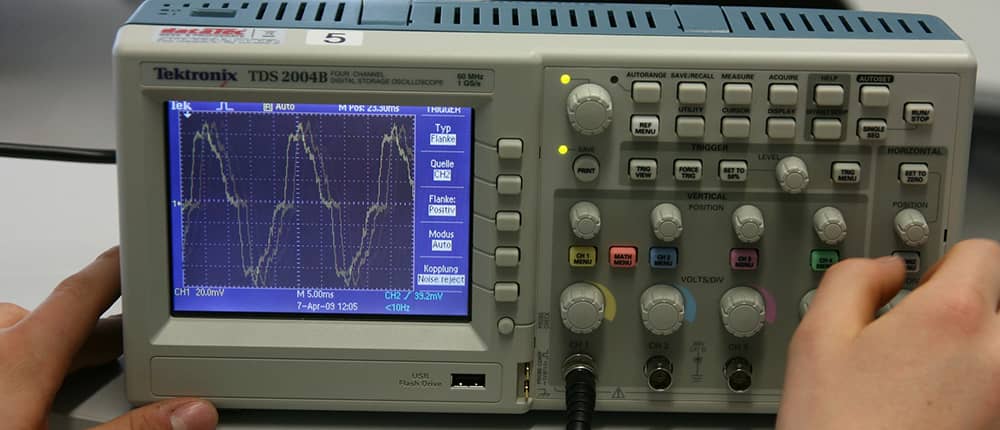
Use an oscilloscope, multimeter, or compatible dimmer to measure waveform shape and confirm the dimming type.
Basic methods to identify dimming type
1. Oscilloscope waveform analysis
| Signal Feature | Leading-Edge (TRIAC) | Trailing-Edge (ELV) |
|---|---|---|
| Cut-off location | Left side of sine wave | Right side of sine wave |
| Rise time | Fast, sometimes noisy | Smooth, controlled |
| Noise | More spike/noise | Cleaner waveform |
2. Multimeter test with a known load
Some multimeters can display RMS voltage changes. You can compare behavior using known RL or RC loads to guess the dimming type.
3. Test with known dimmer
Try the driver with a clearly labeled TRIAC and ELV dimmer. Observe which one works best.
4. Ask the factory
If you’re buying from a manufacturer, request a dimming waveform test report. At BOQI, we provide this as standard.
Leading-Edge or Trailing-Edge? Common Driver and Dimmer Pairings
Still unsure? Here’s what usually works together in real-world projects.
Halogen-style dimmers (TRIAC) work with some LED drivers, but for modern performance, trailing-edge dimmers pair better with most dimmable LED drivers.

boqi Highly Compatible Dimmer
Model: BQ-TTLDIM-CT
AC100-240V
5-400W
EU Standard 86 Type
Compatible With Leading Edge And Trailing Edge Dimming
Typical pairings
| LED Driver Type | Best Matching Dimmer Type | Notes |
|---|---|---|
| TRIAC dimmable driver | TRIAC (leading-edge) dimmer | Legacy systems, may buzz or flicker |
| ELV dimmable driver | ELV (trailing-edge) dimmer | Best for silent, smooth dimming |
| Phase-cut universal driver | TRIAC or ELV | Depends on design, test first |
| 0-10V / DALI driver | Not compatible with TRIAC/ELV | Use control dimmers only |
What I recommend
For residential or low-wattage LED setups, always go with trailing-edge dimmers. They offer better performance, lower risk of noise, and higher customer satisfaction.
BOQI’s Solution: Dimmable LED Drivers with Clear Dimming Type Labels
With so many dimming types and compatibility risks, it’s easy to make a mistake. That’s why we made it simple.
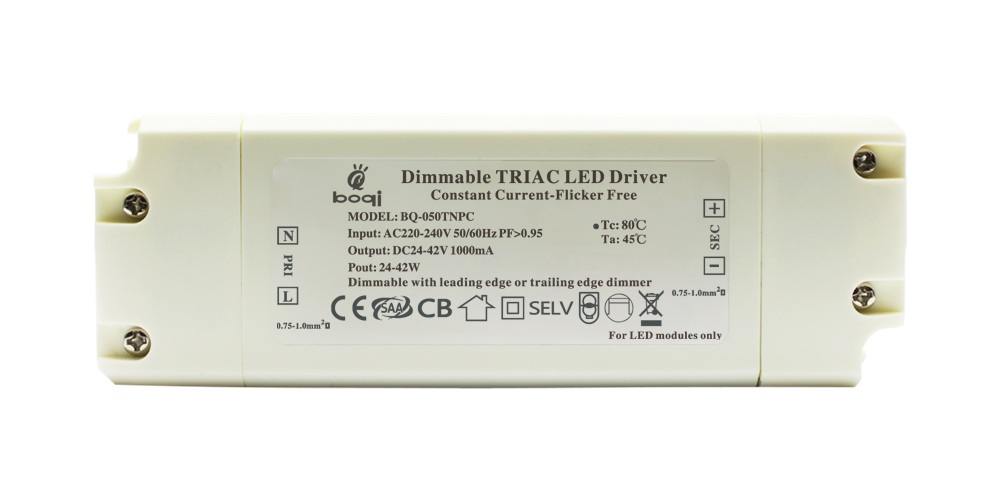
At BOQI, we clearly label every dimmable LED driver with its supported dimming type—TRIAC, ELV, or 0-10V—so professionals don’t have to guess.
How boqi helps buyers like you
- Clear Labels: Every driver includes dimming type on the case and box.
- Datasheets with Waveforms: We include dimming waveforms in every spec sheet.
- Testing Support: We provide compatibility testing if needed.
- Custom Design: Need dual-dimming? We offer combined TRIAC + 0-10V designs.
When I launched BOQI, one of my goals was to make life easier for buyers like Jacky. I know how stressful it is to manage compatibility across large product lines. So we focused on clarity, testing, and support. It’s how we became a reliable dimming partner for so many brands.
Conclusion
Identifying dimming type is easy when you know what to check—labels, behavior, and basic testing tell the whole story.