













Lorsque les lumières LED scintillent ou ne diminuent pas en douceur, ce n’est souvent pas la faute de l’ampoule, mais celle du driver.
Un driver LED dimmable TRIAC à courant constant est une alimentation qui maintient un courant de sortie stable tout en permettant la gradation via des variateurs muraux à coupure de phase comme le TRIAC. Il garantit une sortie lumineuse fluide et sans scintillement.
Si vous avez déjà rencontré des problèmes de compatibilité de gradation ou de scintillement dans des projets LED, cet article vous aidera. Je vais passer en revue tout ce que vous devez savoir sur les drivers LED dimmables TRIAC à courant constant—de leur fonctionnement au choix du bon modèle.
Introduction : Pourquoi les drivers à courant constant TRIAC sont-ils importants ?
L’éclairage doit sembler naturel, même lorsqu’il est diminué.
Les drivers à courant constant TRIAC permettent une gradation fluide et sans scintillement avec les variateurs muraux standard, offrant une solution économique et largement compatible pour les systèmes LED.
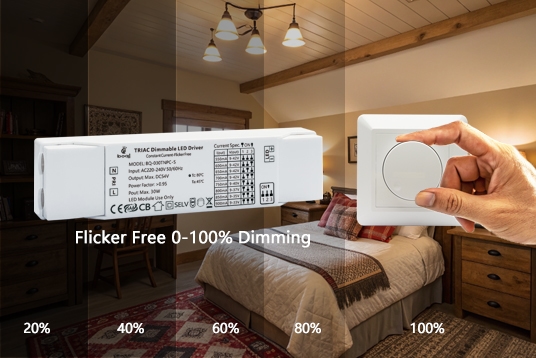
Lorsque j’ai commencé dans l’industrie LED, j’étais souvent frustré par les problèmes de gradation. De nombreux drivers LED ne fonctionnaient pas bien avec les variateurs muraux courants utilisés dans les maisons et les bureaux. Les clients rappelaient pour se plaindre de scintillement, de coupures ou d’une plage de gradation insuffisante. Une fois que j’ai découvert la valeur des drivers dimmables TRIAC à courant constant, tout a changé. Ces drivers sont devenus une solution de référence pour un éclairage LED stable et dimmable, en particulier pour les downlights et les panneaux lumineux.
Qu’est-ce que le TRIAC ?
Un simple variateur peut faire ou défaire votre système d’éclairage.
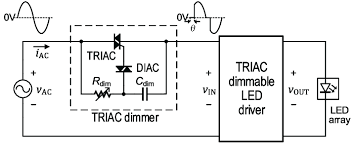
Le TRIAC (Triode pour courant alternatif) est un dispositif semi-conducteur utilisé dans de nombreux variateurs pour contrôler le flux de puissance en coupant la forme d’onde CA.
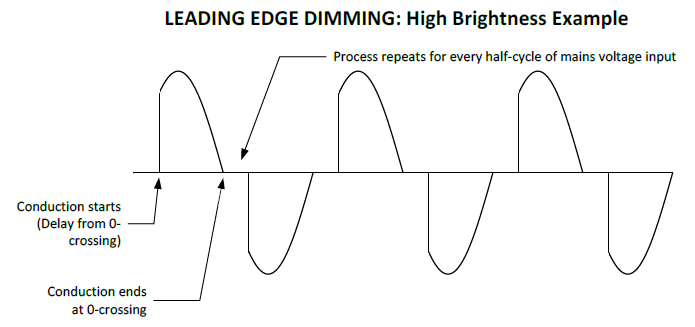
Comment le TRIAC fonctionne dans l’éclairage LED
Un TRIAC s’active à chaque demi-cycle de la sinusoïde CA et coupe une partie de la forme d’onde pour réduire la puissance. Ce processus est appelé gradation à coupure de phase. Les TRIAC sont largement utilisés car ils sont peu coûteux et compatibles avec la plupart des variateurs domestiques.
Cependant, les variateurs TRIAC standard ont été conçus à l’origine pour des charges résistives comme les ampoules à incandescence. Les LED, étant des charges électroniques plus complexes, nécessitent des drivers compatibles pour interpréter correctement la forme d’onde coupée.
| Fonction | La description |
|---|---|
| Angle de déclenchement | Retarde le moment où la puissance est activée pendant le cycle CA |
| Type de coupure de phase | Front montant ou front descendant |
| Cas d’utilisation | Variateurs muraux, en particulier dans les environnements résidentiels |
Gradation en front montant ou en front descendant ?
Toutes les coupures de gradation ne se valent pas.
La gradation en front montant coupe le début de la forme d’onde CA, tandis que le front descendant coupe la fin. La plupart des variateurs TRIAC utilisent un contrôle en front montant.
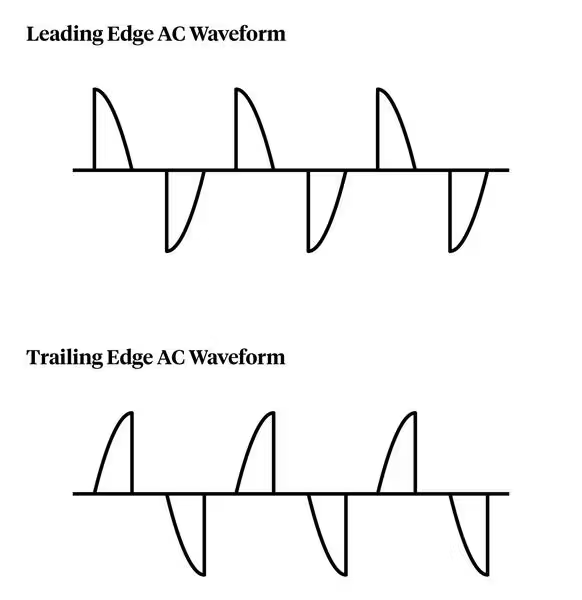
Différences clés entre les types de gradation
Les variateurs en front montant sont moins chers et plus courants. Ils utilisent des TRIAC pour couper le début de l’onde CA. Cependant, cela peut être agressif pour les LED à moins que le driver soit bien conçu.
Front descendant les variateurs utilisent des MOSFET pour couper la fin de l'onde. Ils sont plus fluides et mieux adaptés aux LED mais plus coûteux.
| Comparaison | Les variateurs en front montant | Front descendant |
|---|---|---|
| Coût | Plus faible | Plus élevé |
| Compatibilité | Variateurs TRIAC traditionnels | Variateurs spécifiques aux LED |
| Bruit | Peut provoquer un bourdonnement | Plus silencieux |
| Risque de scintillement | Plus élevé avec des drivers de mauvaise qualité | Plus faible |
Que signifie “ courant constant ” dans les drivers LED ?
Toute alimentation n'est pas égale—surtout pour les LED.
Le courant constant signifie que le driver délivre un courant de sortie fixe aux LED, garantissant une luminosité et une longévité constantes.
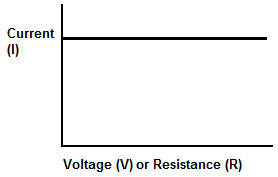
Pourquoi le courant constant est important
Les LED ne fonctionnent pas sous tension comme les ampoules traditionnelles—elles fonctionnent sous courant. Un courant excessif les surchauffe. Un courant insuffisant, et elles ne brillent pas correctement. Les drivers à courant constant résolvent ce problème en délivrant un courant stable indépendamment des fluctuations de tension.
| Paramètre | Driver à tension constante | Driver à courant constant |
|---|---|---|
| Contrôle de sortie | Tension fixe | Courant fixe |
| Application | les bandeaux LED | LED haute puissance, COB |
| Sécurité | Risque de suralimentation des LED | Plus sûr pour les LED uniques |
Comment fonctionne un driver dimmable TRIAC à courant constant
La gradation TRIAC rencontre la régulation de courant.
Ce driver convertit l'alimentation AC en courant DC régulé, interprète le signal de gradation et ajuste la sortie en conséquence pour gradater la LED en douceur.

Conversion de puissance
D'abord, l'entrée AC passe par redressement et filtrage pour devenir du DC. Ensuite, elle traverse un convertisseur à découpage (souvent une topologie buck ou flyback).
Traitement du signal à coupure de phase
Le signal de gradation d'entrée est une forme d'onde AC découpée. Un circuit de détection dédié capte l'angle de phase et le convertit en un signal de contrôle de gradation.
Régulation du courant
Le driver utilise des boucles de rétroaction pour maintenir un courant constant. Il ajuste la tension de sortie en temps réel pour maintenir un courant constant, même lorsque le signal de gradation varie.
| Bloc fonctionnel | Rôle |
|---|---|
| Filtre EMI | Réduit les interférences |
| Redresseur | Convertit le courant alternatif en courant continu |
| Détection de gradation | Lit l'angle de phase pour le contrôle de luminosité |
| Contrôle PWM | Ajuste la commutation pour la régulation de tension |
| Boucle de courant constant | Maintient le courant de sortie stable |
Le rôle d’un driver LED dimmable TRIAC à courant constant
C'est plus qu'une simple alimentation.
Ce driver garantit que les LED reçoivent le bon courant et la bonne luminosité, traduisant les signaux du variateur mural en une sortie lumineuse précise.
De nombreuses défaillances d'éclairage remontent à une mauvaise conception de driver. Un driver gradatable TRIAC bien conçu prévient le scintillement, le bourdonnement ou la dérive chromatique. Il joue un rôle critique dans la fiabilité du système et la satisfaction de l'utilisateur.
Caractéristiques clés des drivers à courant constant dimmables TRIAC
Les petites choses font une grande différence.
Les caractéristiques importantes incluent une large plage de gradation, une sortie sans scintillement, un facteur de puissance élevé, un faible THD, et une protection thermique/contre les courts-circuits.
| Caractéristique | La description |
|---|---|
| Plage de gradation | Typiquement 5% à 100% |
| Sortie sans scintillement | Indice de scintillement ≤ 5% |
| Facteur de puissance (PF) | > 0,9 pour l'efficacité |
| Distorsion harmonique totale (THD) | < 20% pour réduire les interférences |
| Protections de sécurité | OVP, SCP, OTP inclus |
Avantages pour les systèmes d’éclairage LED modernes
Une bonne gradation change toute l'expérience.
Les drivers à courant constant TRIAC améliorent l'efficacité énergétique, le confort d'éclairage et la durée de vie, tout en gardant les systèmes abordables et faciles à installer.
Voici une version propre et professionnelle sous forme de tableau des avantages — parfaite pour les pages produit boqi, les sections de comparaison, ou les présentations de style fiche technique.
| Avantage | La description |
|---|---|
| Efficacité énergétique améliorée | Une sortie à courant constant stable minimise les pertes de puissance et maximise l'efficacité des LED à tous les niveaux de luminosité. |
| Confort d'éclairage amélioré | Offre une gradation fluide et sans scintillement avec des transitions douces, améliorant le confort visuel et l'ambiance. |
| Durée de vie étendue des LED | Protège les LED contre les surintensités et les contraintes thermiques, ce qui prolonge leur durée de vie opérationnelle. |
| Conception de système économique | Utilise le câblage AC existant et les variateurs muraux standard — aucun besoin de recâblage ou de systèmes de contrôle complexes. |
| Installation facile et compatibilité | Fonctionne avec les variateurs TRIAC et à coupure de phase arrière courants, idéal pour les constructions neuves et les projets de rénovation. |
| Réduction du scintillement et du bruit | Le traitement avancé de coupure de phase minimise le bourdonnement, le scintillement et l'instabilité, même avec des charges LED de faible puissance. |
| Idéal pour les projets de rénovation | Permet de mettre à niveau les systèmes halogènes/incandescents vers les LED sans changer le variateur ou le câblage. |
| Performance stable sur toute la plage de charge | Prend en charge les charges minimales faibles et maintient une performance de gradation constante de la luminosité faible à élevée. |
| Meilleure expérience utilisateur | Crée des environnements d'éclairage confortables et stables dans les espaces résidentiels, commerciaux, de vente au détail et hôteliers. |
Qu'il s'agisse d'une installation résidentielle ou commerciale, ce type de driver répond aux exigences de performance et de coût. Dans mes projets, le passage aux drivers à courant constant gradables TRIAC a souvent réduit les plaintes des clients de plus de 80%.
Applications typiques
Vous les avez vus plus souvent que vous ne le pensez.
Ces drivers sont largement utilisés dans les downlights, les panneaux lumineux, les spots sur rail et les luminaires résidentiels nécessitant une gradation.

| Application | Pourquoi utiliser un driver CC TRIAC ? |
|---|---|
| Downlights résidentiels | Gradation fluide, rénovation facile |
| Panneaux de bureau | Réduit l'éblouissement, économise l'énergie |
| Spots sur rail | Ajustez la luminosité selon les besoins |
| Éclairage hôtelier | Créez l'ambiance avec une gradation fluide |
Considérations de compatibilité avec les luminaires LED et les variateurs
Tout ne fonctionne pas harmonieusement ensemble.
Vérifiez la compatibilité entre votre variateur, votre luminaire et votre driver pour éviter le scintillement, le bourdonnement ou une plage de gradation limitée.
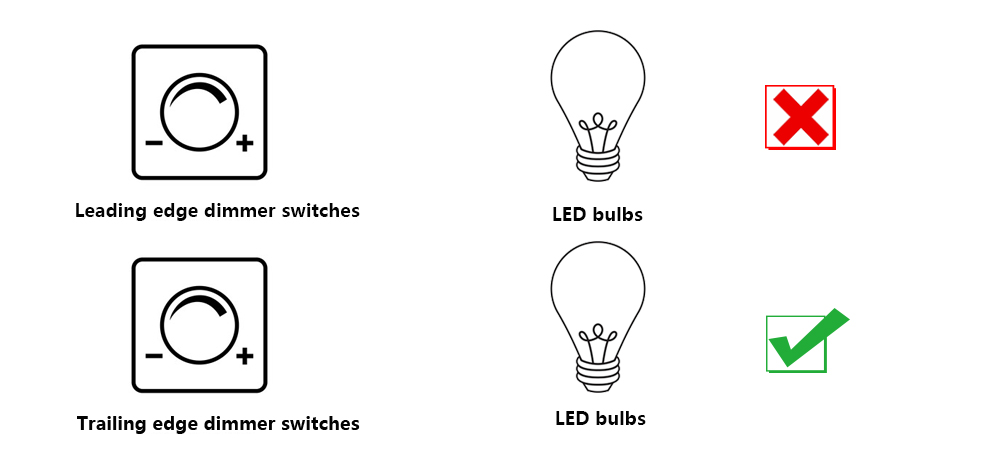
Testez toujours les variateurs avec l'installation LED réelle. Certains variateurs ont une exigence de charge minimale. D'autres peuvent fonctionner uniquement avec un contrôle à coupure de phase arrière. Choisissez un driver avec une certification de large compatibilité.
Aperçu du câblage et de l’installation
Ne compliquez pas le câblage.
Les drivers gradables TRIAC s'installent de manière similaire aux autres drivers à courant constant, mais l'entrée doit être connectée via le variateur mural.
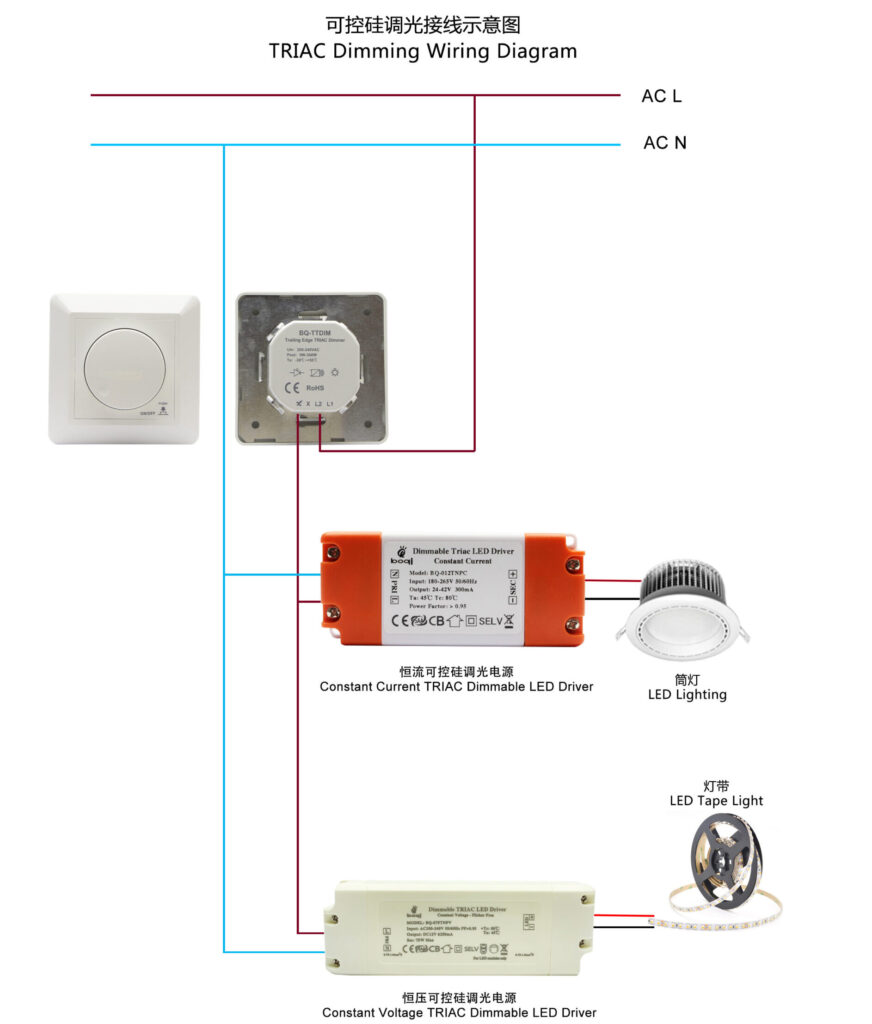
| Connexion | Instruction |
|---|---|
| Entrée AC | Connectez L/N via le variateur mural TRIAC |
| Sortie DC | Faites correspondre le courant de sortie aux exigences de la LED |
| Mise à la terre | Connectez toujours pour la sécurité |
Problèmes courants et guide de dépannage
Les choses peuvent encore mal tourner.
Les problèmes courants incluent le scintillement, l'absence de gradation, le bourdonnement ou une plage limitée — généralement dus à un variateur incompatible ou à des problèmes de câblage.
| Problème | Cause probable | Solution |
|---|---|---|
| Vaciller | Variateur incompatible | Essayez un autre variateur mural |
| Sans gradation | Défaillance du circuit de détection de phase | Remplacez le driver |
| Bruit de bourdonnement | Mauvaise qualité du variateur TRIAC | Utilisez un variateur à front descendant |
| Plage limitée | Driver non optimisé pour le variateur | Choisissez un driver à large plage |
Comment choisir le bon driver TRIAC à courant constant
Ne vous fiez pas uniquement aux spécifications.
Sélectionnez en fonction du courant de sortie, de la plage de tension, de la compatibilité avec le variateur, du facteur de puissance, des certifications et des performances thermiques.
Ce que je vérifie toujours avant de commander
- Courant de sortie : Correspondre aux exigences de la LED (par ex., 350mA, 700mA, 1050mA)
- Plage de tension : La tension directe de la LED doit se situer dans la plage
- Compatibilité de gradation : Testé avec des variateurs courants
- Certifications : TUV, CE, SAA, CB, RoHS
- Taille du driver : S'adapte au boîtier
Solutions de drivers dimmables TRIAC à courant constant boqi
Des solutions réelles, testées par des professionnels.
Chez boqi, nous proposons une gamme complète de drivers à courant constant gradables TRIAC et de variateurs LED à haute compatibilité, optimisés pour la fiabilité, la fluidité de gradation et le rapport coût-efficacité.

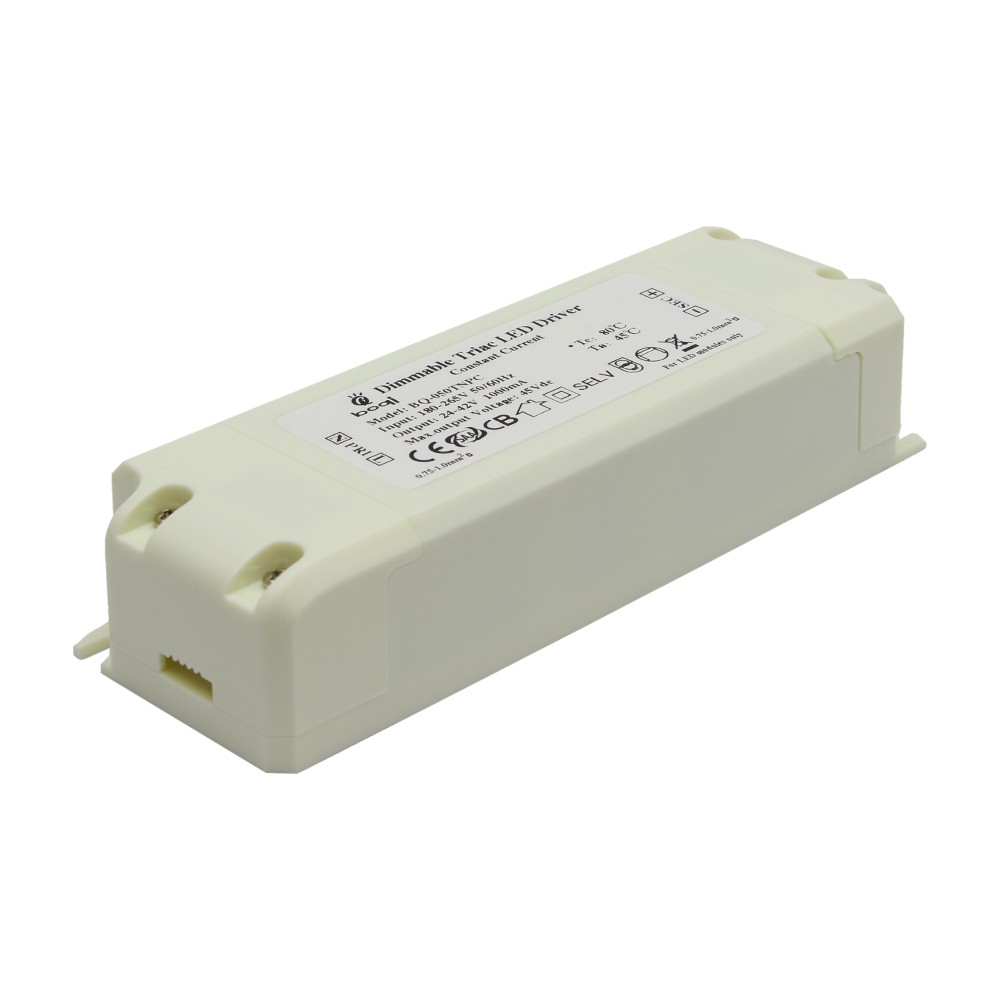

De 5W à 63W, nos drivers couvrent la plupart des besoins d'éclairage résidentiel et commercial. Nous concevons en gardant à l'esprit la compatibilité, la sécurité et la protection thermique. Je teste personnellement nos modèles avec plus de 10 variateurs avant leur lancement.
Conclusion
Les drivers à courant constant TRIAC sont la clé d'une gradation fluide et sans scintillement. Besoin d'aide pour en choisir un ? Trouvons ensemble la meilleure solution.