










Lighting control can feel complex and overwhelming—especially when you’re managing multiple zones or trying to sync lights with a smart platform.
DALI works in constant voltage LED systems by sending digital dimming commands to compatible drivers, enabling precise brightness control, grouping, and automation through a standardized two-wire interface.
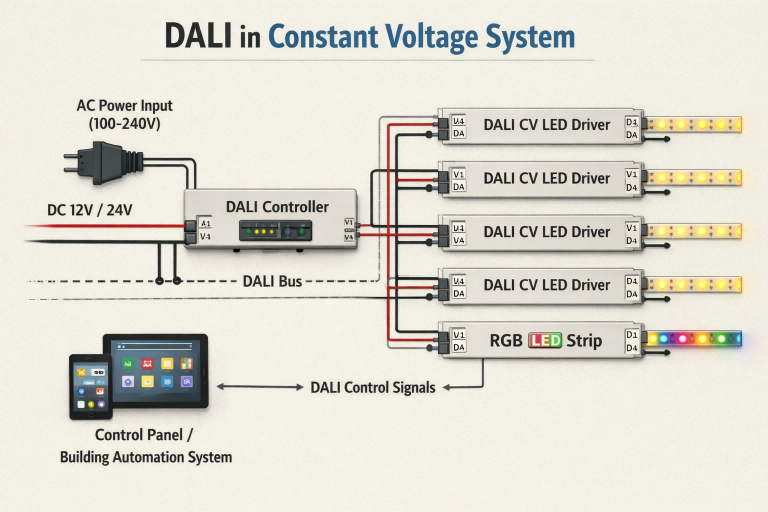
DALI isn’t just for fancy architectural lighting anymore. It’s becoming a go-to solution even in mainstream LED strip projects. In this guide, I’ll walk you through how it works in constant voltage setups and how we at BOQI design for it.
Understanding DALI: A Digital Lighting Control Protocol?
Modern lighting needs more than just on and off. What if you could program moods, control groups, or automate scenes with a single wire pair?
DALI is a two-way digital communication protocol used to control LED drivers and dimmers. It allows individual addressability, grouping, and scene-setting, all through a single control bus.
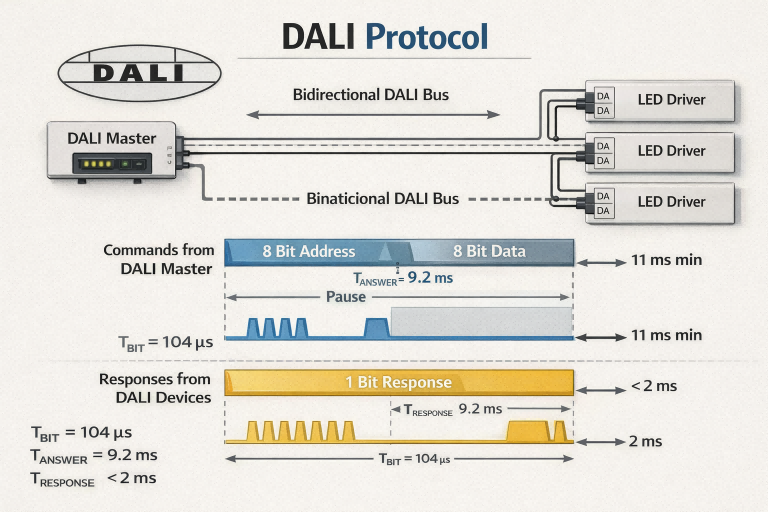
DALI in Action
DALI (Digital Addressable Lighting Interface) was created to standardize lighting control across different manufacturers. It replaced analog 0-10V systems, which had many limitations in large-scale projects.
| Feature | 0-10V System | DALI System |
|---|---|---|
| Control Type | Analog Voltage | Digital Signal |
| Wiring | One wire per channel | Two-wire shared bus |
| Individual Addressing | Not supported | Supported (up to 64 devices) |
| Bi-directional Feedback | No | Yes |
| Scene & Group Control | Limited | Extensive |
DALI’s major benefit is flexibility. You can reconfigure zones without rewiring, get feedback from drivers, and integrate with building management systems. This is crucial when controlling multiple constant voltage light zones, like in LED strip applications.
What Is a Constant Voltage LED System?
When working with LED strips, you’ll often hear terms like 12V, 24V, and “constant voltage.” But what exactly does that mean?
A constant voltage LED system provides a fixed output voltage (e.g., 12V or 24V), and LEDs are designed to operate at that specific voltage. The driver controls current indirectly, often using PWM.
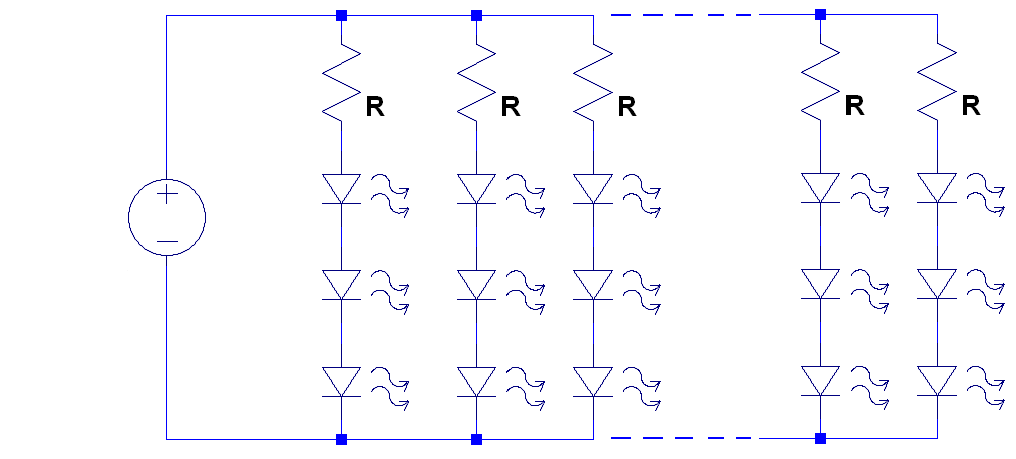
Components of a CV LED Setup
Constant voltage (CV) systems are especially common in LED strips and linear fixtures. Here’s what makes up the system:
Typical System Components
| Component | Role |
|---|---|
| Constant Voltage Driver | Supplies fixed voltage (12V/24V) |
| LED Strip | Accepts fixed voltage input, current limited internally |
| Dimming Control | Regulates brightness (often via PWM) |
| Controller (optional) | Interface for manual or remote control |
This is different from constant current (CC) systems, where the driver regulates current directly and voltage may vary. CV systems are ideal for longer LED strips where LEDs are connected in parallel.
How DALI Interfaces with Constant Voltage Drivers?
You might wonder: how does a digital protocol like DALI actually talk to a 12V or 24V driver?
DALI interfaces with constant voltage drivers by sending digital commands to a DALI-compatible driver, which then adjusts output via PWM to control LED brightness.
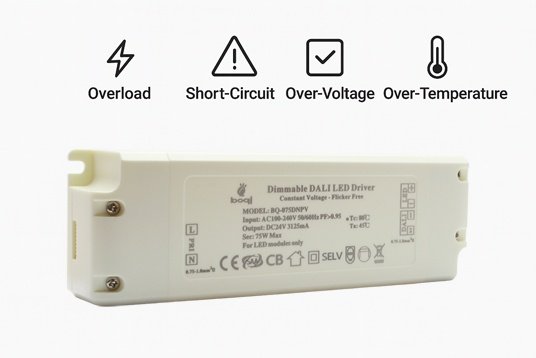
Breaking Down the Connection
1. DALI Bus Connection
A DALI line carries data through a two-wire bus. This bus connects to all drivers, regardless of whether they’re constant voltage or constant current.
2. Driver’s Internal MCU
The DALI driver has a microcontroller that decodes DALI commands. It reads instructions such as brightness level or scene ID.
3. PWM Dimming Output
In CV systems, the driver maintains a stable output voltage but adjusts brightness by modulating the width of voltage pulses (PWM).
| Step | Action |
|---|---|
| 1 | DALI signal sent from controller |
| 2 | Driver MCU decodes command |
| 3 | Driver adjusts PWM duty cycle |
| 4 | LED strip brightness changes |
Because DALI is addressable, multiple drivers can be controlled individually or grouped—even if they share the same power source.
Dimming Mechanism: How DALI Regulates Output Voltage?
Traditional dimming lowers voltage, but that doesn’t work well with LED strips. So how does DALI handle dimming in constant voltage setups?
DALI does not adjust the voltage itself. Instead, it uses the driver to vary the PWM duty cycle while keeping voltage constant, which effectively dims the LED output.
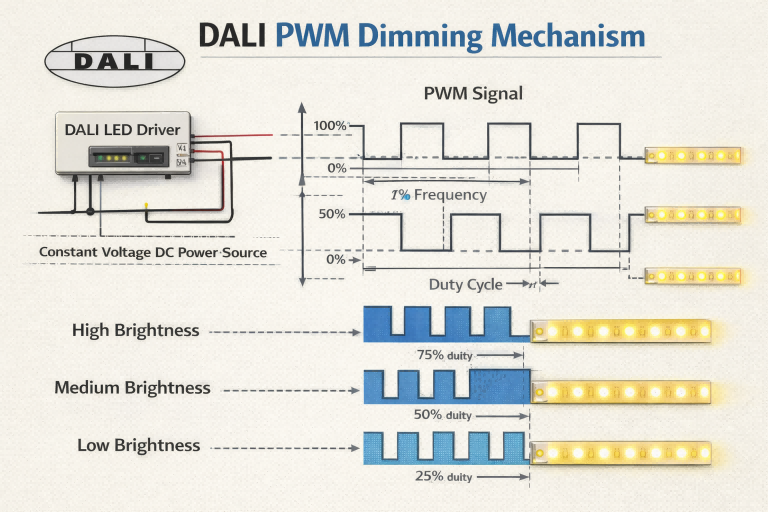
Understanding PWM in DALI Dimming
Pulse-width modulation (PWM) is the key mechanism for dimming in constant voltage systems. Here’s how it works:
Key Concepts
- Fixed Voltage: Always 12V or 24V
- Variable Duty Cycle: Percentage of time voltage is ON during each cycle
- Perceived Brightness: Lower duty cycle = lower brightness
Example PWM Table
| Duty Cycle (%) | LED Brightness Level (%) |
|---|---|
| 100% | 100% (Full brightness) |
| 75% | 75% |
| 50% | 50% |
| 10% | 10% |
| 0% | OFF |
This allows for smooth dimming without flicker. The DALI signal tells the driver what dimming level is needed, and the driver updates the PWM output accordingly.
Typical Wiring Diagram of a DALI Constant Voltage Setup?
A common question we get is: what does the wiring look like for a DALI-controlled CV LED system?
A standard DALI constant voltage wiring diagram includes a power supply, a DALI-compatible CV driver, DALI bus, and the LED strip. All devices share the same DALI line.
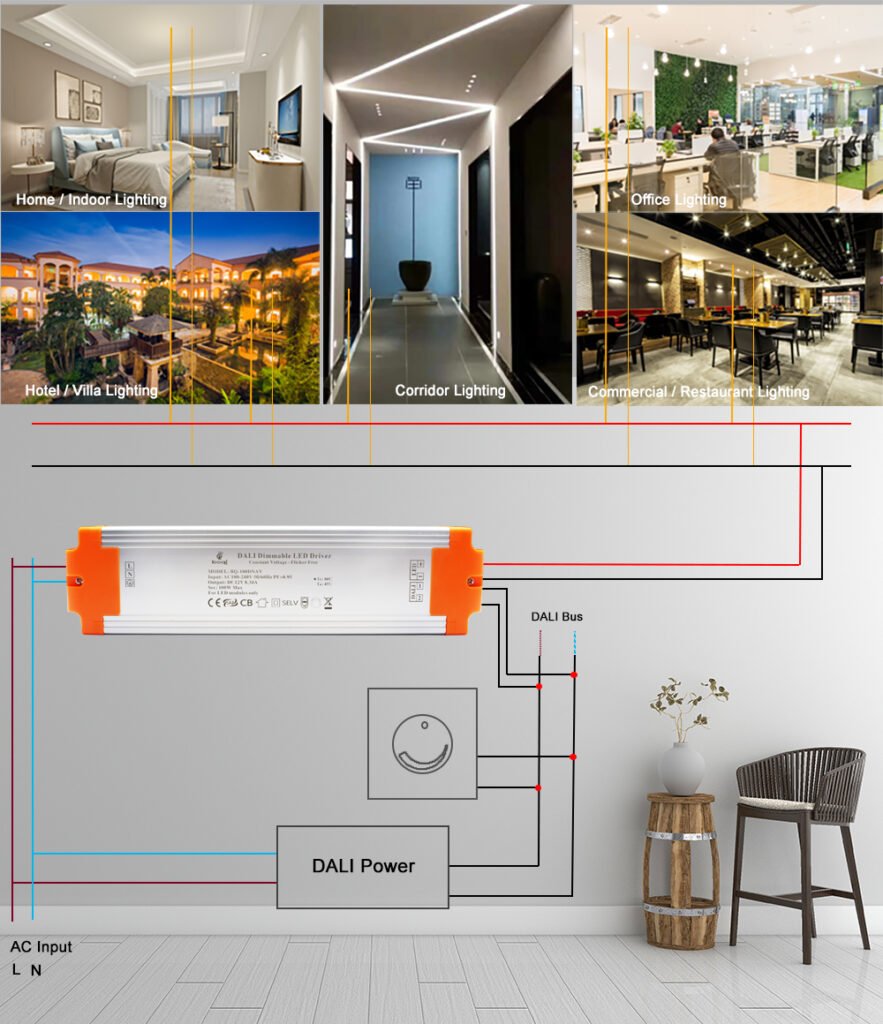
Wiring Layout
Components:
- AC Power Input
- DALI Master Controller
- DALI Bus (DA+, DA-)
- DALI CV Driver (12V/24V)
- LED Strip Load
Sample Wiring Diagram Table
| Wire Type | Connects To |
|---|---|
| AC Line/Neutral | Driver AC Input |
| DALI DA+, DA- | DALI Controller ↔ Driver |
| V+/V- Output | Driver ↔ LED Strip |
No need for multiple dimming wires or analog control lines. The DALI bus handles all communication and grouping over two simple wires.
Application Scenarios: Ideal Use Cases for DALI + CV Systems?
Where does this setup really shine? Who benefits most from this combo?
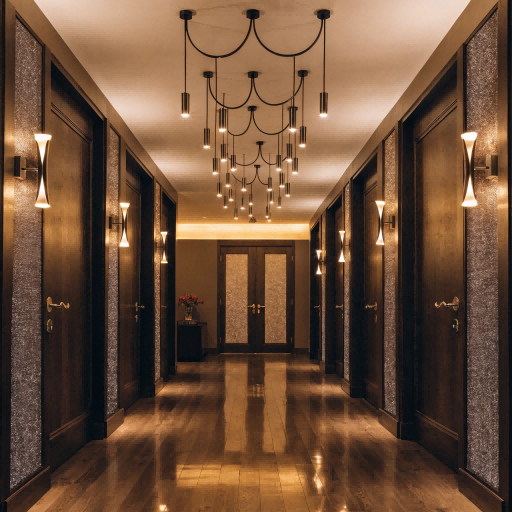
DALI and constant voltage systems are ideal for environments that demand dynamic lighting, zone control, or automation—like hotels, retail stores, and museums.
Real-World Examples
1. Hotels
In hospitality, lighting mood is everything. DALI allows scene setting for lobbies, guest rooms, and hallways with centralized control.
2. Shopping Malls
Mall lighting requires timed adjustments, accent lighting, and grouping by area. DALI’s programmability is a perfect fit.
3. Museums and Galleries
DALI enables fine-tuned dimming of LED strips to highlight artwork without glare or harsh shadows.
4. Offices & Conference Rooms
DALI-CV setups work well in linear light systems, allowing brightness adjustment based on natural light levels or occupancy.
Benefits of Using DALI in Constant Voltage Systems?
Why choose this solution over traditional setups?
DALI + CV systems offer precise control, flexible grouping, remote diagnostics, and integration with smart platforms—without adding wiring complexity.
Benefit Breakdown
| Benefit | Description |
|---|---|
| Scalable Control | Add or change zones without rewiring |
| High Compatibility | Works with most automation platforms |
| Digital Reliability | No signal degradation like analog dimming |
| Scene & Schedule Support | Customize per time, event, or occupancy |
| Energy Saving | Automate dimming based on usage or daylight |
| Fewer Wires Needed | Just two wires for all control signals |
Especially in large or dynamic spaces, this makes a huge difference in cost and flexibility.
BOQI’s DALI Constant Voltage Driver Range?
So what does BOQI offer in this space? A lot more than just basic drivers.
At boqi, we provide a full range of DALI constant voltage drivers, including 12V and 24V models, in power ratings from 30W to 240W, with certifications like CE, RoHS, and DALI-2.


Product Highlights
| Model Series | Voltage | Power Range | Certification | Interface |
|---|---|---|---|---|
| DNPV Series | 12V / 24V | 20W–75W | CE, SAA, RoHS | DALI Dim |
| DNAV Series | 12V / 24V | 75W–240W | CE, SAA, RoHS | DALI Dim |
Our products are tested across real-world applications. We design them with strict tolerance, high PF (power factor), and ultra-low standby power.
Integration Tips: Ensuring Compatibility and Smooth Operation?
Many users struggle with flickering or loss of control. How can we avoid these issues?
Ensure all devices support DALI-2, match voltage and power specs, and follow proper wiring and addressing rules to avoid compatibility problems.
Common Pitfalls and Fixes
1. Mismatched Voltage
Double-check that LED strips are rated for the same voltage as the driver.
2. Overloading
Always leave at least 10% headroom in power calculations.
3. Address Conflicts
Avoid duplicate addresses on the DALI bus. Use a DALI commissioning tool.
4. Incompatible Controller
Only use certified DALI-2 controllers for full compatibility.
5. Wiring Mistakes
Use proper polarity for DALI bus lines (DA+, DA-). Avoid signal interference.
Following these tips ensures a seamless experience—no flicker, no dropout.
Why boqi Is Trusted for Smart Dimming Solutions?
There are many suppliers out there. Why choose us?
boqi is trusted because we offer reliable, fully certified DALI dimming drivers with responsive support and deep technical know-how in LED dimming systems.
We started from the factory floor. We understand what works in production and in the field. That’s why clients from over 30 countries rely on us for dependable smart lighting solutions—especially when it comes to DALI in constant voltage systems.
Conclusion
DALI and constant voltage systems make advanced dimming simple, reliable, and scalable—especially with the right partner like boqi.