










When LED lights flicker or don’t dim smoothly, it’s often not the bulb’s fault—it’s the driver.
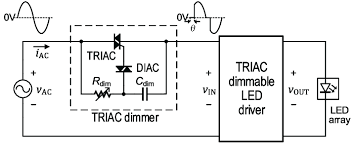
A Constant Current TRIAC Dimmable LED Driver is a power supply that maintains a steady output current while enabling dimming via phase-cut wall dimmers like TRIAC. It ensures smooth, flicker-free light output.
If you’ve ever struggled with dimming compatibility or flickering issues in LED projects, this article will help. I’ll walk through everything you need to know about Constant Current TRIAC dimmable LED drivers—from how they work to how to choose the right one.
Introduction: Why TRIAC Constant Current Drivers Matter?
Lighting should feel natural, even when dimmed.
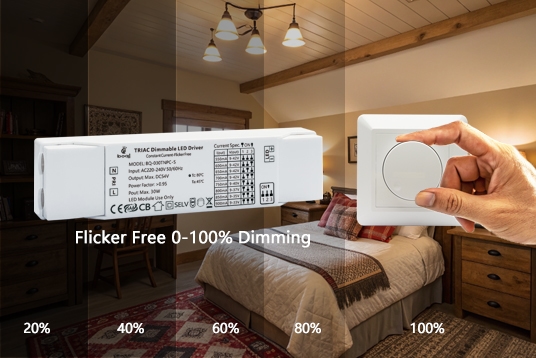
TRIAC constant current drivers enable smooth and flicker-free dimming with standard wall dimmers, offering a cost-effective and widely compatible solution for LED systems.
When I started in the LED industry, I was often frustrated by dimming issues. Many LED drivers didn’t play well with the common wall dimmers used in homes and offices. Clients would call back complaining about flickering, drop-out, or poor dimming range. Once I discovered the value of constant current TRIAC dimmable drivers, everything changed. These drivers have become a go-to solution for stable, dimmable LED lighting, especially for downlights and panel lights.
What Is TRIAC?
A simple dimmer can make or break your lighting system.
TRIAC (Triode for Alternating Current) is a semiconductor device used in many dimmers to control power flow by cutting the AC waveform.
How TRIAC Works in LED Lighting
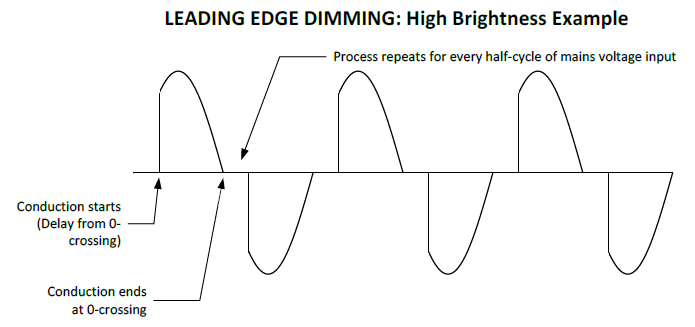
A TRIAC turns on during each half-cycle of the AC sine wave and cuts off part of the waveform to reduce power. This process is called phase-cut dimming. TRIACs are widely used because they’re inexpensive and compatible with most household dimmers.
However, standard TRIAC dimmers were originally designed for resistive loads like incandescent bulbs. LEDs, being more complex electronic loads, need compatible drivers to interpret the chopped waveform correctly.
| Function | Description |
|---|---|
| Triggering Angle | Delays when power is turned on during the AC cycle |
| Phase Cut Type | Leading-edge or trailing-edge |
| Use Case | Wall dimmers, especially in residential settings |
Leading-edge vs. Trailing-edge dimming?
Not all dimming cuts are the same.
Leading-edge dimming cuts the front of the AC waveform, while trailing-edge cuts the tail. Most TRIAC dimmers use leading-edge control.
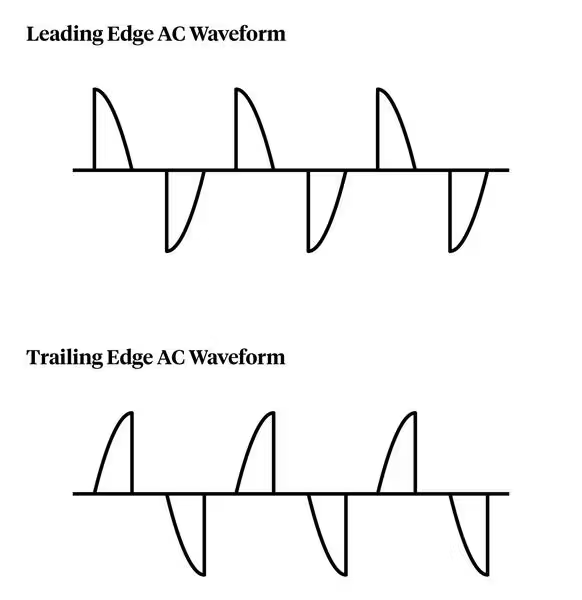
Key Differences Between Dimming Types
Leading-edge dimmers are cheaper and more common. They use TRIACs to cut the front of the AC wave. However, this can be harsh for LEDs unless the driver is well-designed.
Trailing-edge dimmers use MOSFETs to cut the end of the wave. They’re smoother and better for LEDs but more expensive.
| Comparison | Leading-edge | Trailing-edge |
|---|---|---|
| Cost | Lower | Higher |
| Compatibility | Traditional TRIAC dimmers | LED-specific dimmers |
| Noise | May cause buzz | Quieter |
| Flicker Risk | Higher with poor drivers | Lower |
What Does “Constant Current” Mean in LED Drivers?
Not all power is equal—especially for LEDs.
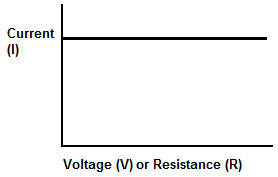
Constant current means the driver delivers a fixed output current to the LEDs, ensuring consistent brightness and longevity.
Why Constant Current Matters
LEDs don’t run on voltage like traditional bulbs—they run on current. Too much current overheats them. Too little, and they don’t shine properly. Constant current drivers solve this by delivering a stable current regardless of voltage fluctuations.
| Parameter | Constant Voltage Driver | Constant Current Driver |
|---|---|---|
| Output Control | Fixed Voltage | Fixed Current |
| Application | LED strips | High-power LEDs, COBs |
| Safety | Risk of overdriving LEDs | Safer for single LEDs |
How a Constant Current TRIAC Dimmable Driver Works
TRIAC dimming meets current regulation.
This driver converts AC power to a regulated DC current, interprets the dimming signal, and adjusts output accordingly to dim the LED smoothly.

Power Conversion
First, the AC input goes through rectification and filtering to become DC. Then, it passes through a switching converter (often a buck or flyback topology).
Phase-cut Signal Processing
The input dimming signal is a chopped AC waveform. A dedicated detection circuit senses the phase angle and converts it into a dimming control signal.
Current Regulation
The driver uses feedback loops to maintain constant current. It adjusts output voltage in real-time to keep current consistent, even as the dimming signal varies.
| Function Block | Role |
|---|---|
| EMI Filter | Reduces interference |
| Rectifier | Converts AC to DC |
| Dimming Detection | Reads phase angle for brightness control |
| PWM Control | Adjusts switching for voltage regulation |
| Constant Current Loop | Keeps output current stable |
The Role of a Constant Current TRIAC Dimmable LED Driver
It’s more than just a power supply.
This driver ensures LEDs get the right current and brightness, translating wall dimmer signals into precise light output.
Many lighting failures trace back to poor driver design. A well-designed TRIAC dimmable driver prevents flicker, buzz, or color shifting. It plays a critical role in system reliability and user satisfaction.
Key Features of TRIAC Dimmable Constant Current Drivers
The small things make a big difference.
Important features include wide dimming range, flicker-free output, high PF, low THD, and thermal/short-circuit protection.
| Feature | Description |
|---|---|
| Dimming Range | Typically 5% to 100% |
| Flicker-Free Output | ≤ 5% flicker index |
| Power Factor (PF) | > 0.9 for efficiency |
| Total Harmonic Distortion (THD) | < 20% to reduce interference |
| Safety Protections | OVP, SCP, OTP included |
Benefits for Modern LED Lighting Systems
Good dimming changes the whole experience.
TRIAC constant current drivers improve energy efficiency, lighting comfort, and lifespan, while keeping systems affordable and easy to install.
Here is a clean, professional table version of the benefits — perfect for boqi product pages, comparison sections, or datasheet-style presentations.
| Benefit | Description |
|---|---|
| Improved Energy Efficiency | Stable constant-current output minimizes power loss and maximizes LED efficiency at all brightness levels. |
| Enhanced Lighting Comfort | Provides smooth, flicker-free dimming with soft transitions, improving visual comfort and ambiance. |
| Extended LED Lifespan | Protects LEDs from over-current and thermal stress, resulting in longer operational life. |
| Cost-Effective System Design | Uses existing AC wiring and standard wall dimmers — no need for rewiring or complex control systems. |
| Easy Installation & Compatibility | Works with common TRIAC and trailing-edge dimmers, ideal for both new builds and retrofit projects. |
| Reduced Flicker & Noise | Advanced phase-cut processing minimizes buzzing, flicker, and instability, even with low-wattage LED loads. |
| Ideal for Retrofit Projects | Allows halogen/incandescent systems to be upgraded to LED without changing the dimmer or wiring. |
| Stable Performance Across Load Range | Supports low minimum loads and maintains consistent dimming performance from low to high brightness. |
| Better User Experience | Creates comfortable, stable lighting environments in residential, commercial, retail, and hospitality spaces. |
Whether it’s a residential or commercial setup, this driver type meets both performance and cost demands. In my projects, switching to TRIAC dimmable constant current drivers often reduced client complaints by over 80%.
Typical Applications
You’ve seen them more than you think.
These drivers are widely used in downlights, panel lights, track lights, and residential luminaires requiring dimming.

| Application | Why Use TRIAC CC Driver? |
|---|---|
| Residential Downlights | Smooth dimming, easy retrofit |
| Office Panels | Reduces glare, saves energy |
| Track Lights | Adjust brightness as needed |
| Hospitality Lighting | Set mood with smooth dimming |
Compatibility Considerations with LED Fixtures and Dimmers
Not everything plays nicely together.
Check for compatibility between your dimmer, fixture, and driver to avoid flicker, buzzing, or limited dimming range.
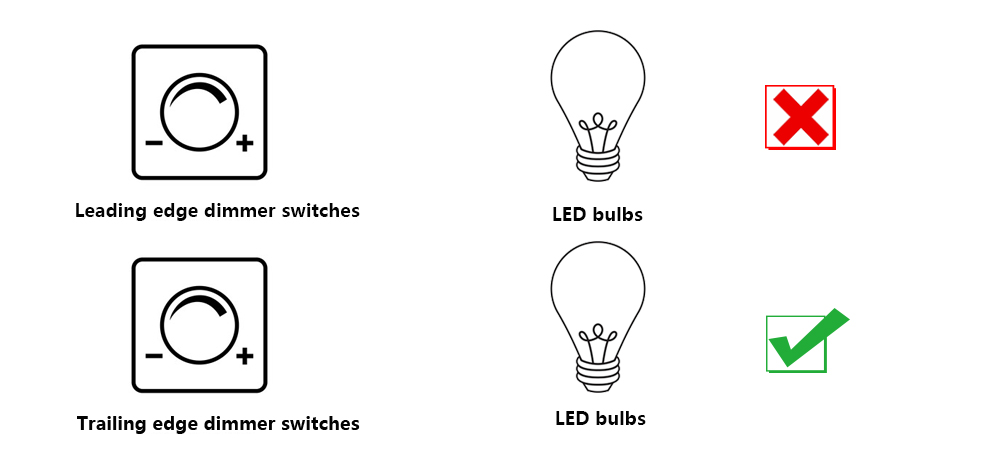
Always test dimmers with the actual LED setup. Some dimmers have a minimum load requirement. Others may work only with trailing-edge control. Choose a driver with wide compatibility certification.
Wiring & Installation Overview
Don’t overcomplicate the wiring.
TRIAC dimmable drivers install similarly to other constant current drivers, but the input must connect through the wall dimmer.
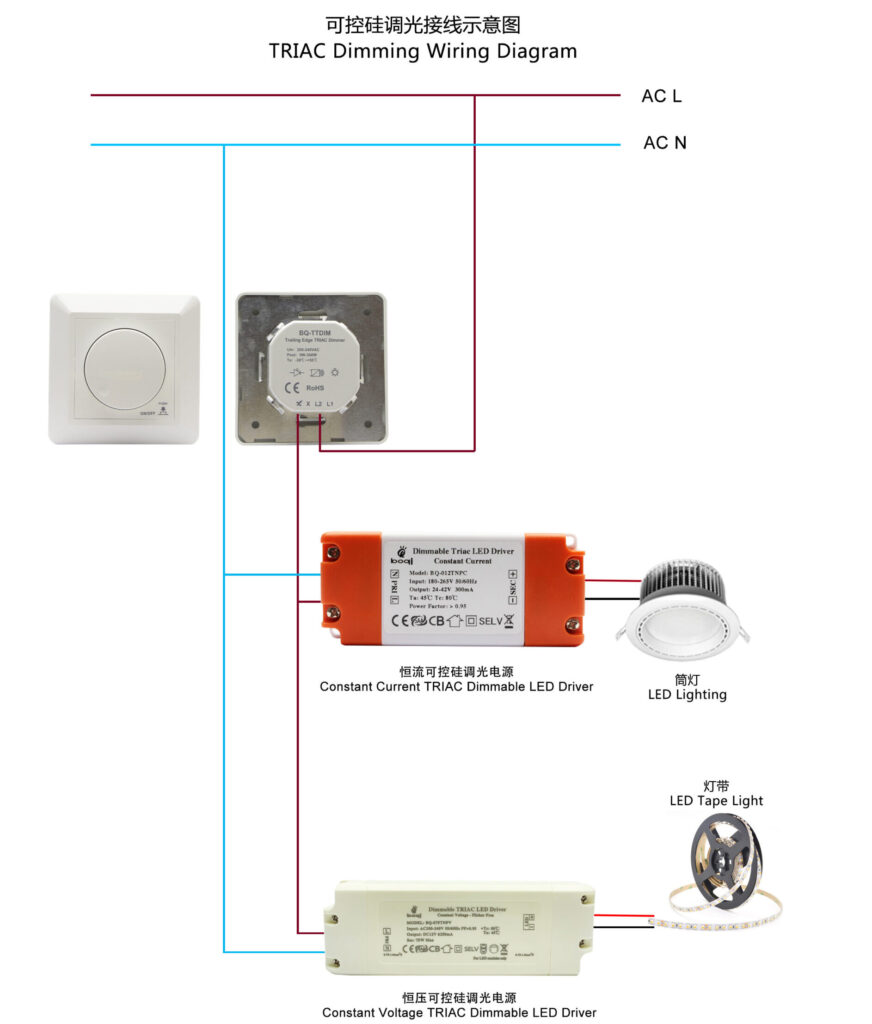
| Connection | Instruction |
|---|---|
| AC Input | Connect L/N through TRIAC wall dimmer |
| DC Output | Match output current with LED requirement |
| Ground | Always connect for safety |
Common Problems & Troubleshooting Guide
Things still can go wrong.
Common issues include flickering, no dimming, buzzing, or limited range—usually due to mismatched dimmer or wiring problems.
| Problem | Likely Cause | Solution |
|---|---|---|
| Flicker | Incompatible dimmer | Try another wall dimmer |
| No dimming | Phase detection circuit failure | Replace driver |
| Buzzing sound | Poor TRIAC dimmer quality | Use trailing-edge dimmer |
| Limited range | Driver not optimized for dimmer | Choose wide-range driver |
How to Choose the Right TRIAC Constant Current Driver
Don’t just go by the specs.
Select based on output current, voltage range, dimmer compatibility, power factor, certifications, and thermal performance.
What I Always Check Before Ordering
- Output Current: Match LED requirement (e.g., 350mA, 700mA, 1050mA)
- Voltage Range: LED forward voltage must fall within range
- Dimming Compatibility: Tested with common dimmers
- Certifications: TUV, CE, SAA, CB, RoHS
- Driver Size: Fits into housing
boqi Constant Current TRIAC Dimmable Driver Solutions
Real solutions, tested by pros.
At boqi, we offer a full line of TRIAC dimmable constant current drivers and high compatibility LED dimmer, optimized for reliability, dimming smoothness, and cost-efficiency.

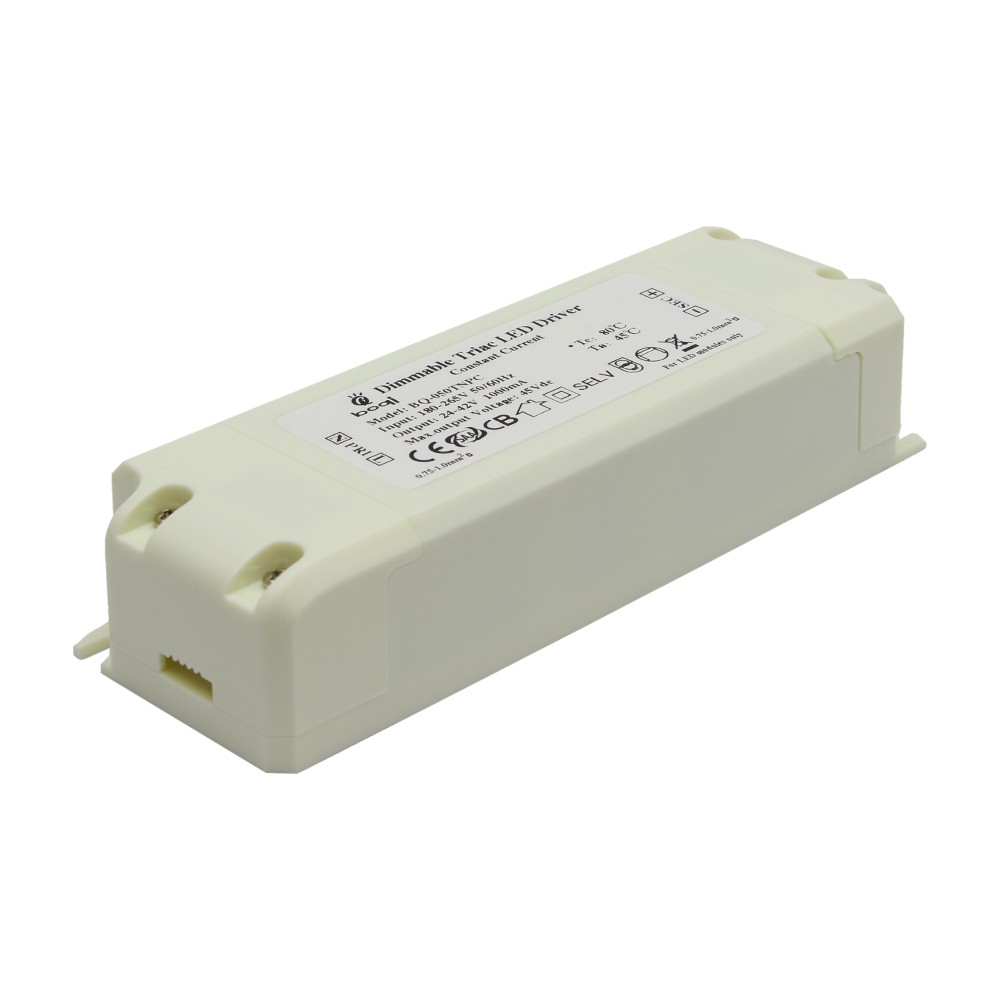

From 5W to 63W, our drivers cover most residential and commercial lighting needs. We design with compatibility, safety, and thermal protection in mind. I personally test our models with 10+ dimmers before release.
Conclusion
TRIAC constant current drivers are the key to smooth, flicker-free dimming. Need help choosing one? Let’s find the best solution together.