














تستمر مشغلات CC DALI في الظهور في مكالمات عملائي لسبب وجيه. على خط الإنتاج لدينا في شنتشن، رأيت مشاريع تجهيزات إضاءة تفشل ببساطة لأن المشغل الخاطئ تم تركيبه بالداخل. احترقت مصابيح LED مبكرًا، واهتز التعتيم، وخسر المشترون عقودهم. هذا الألم يمكن تجنبه، والحل يكمن داخل التركيب نفسه.
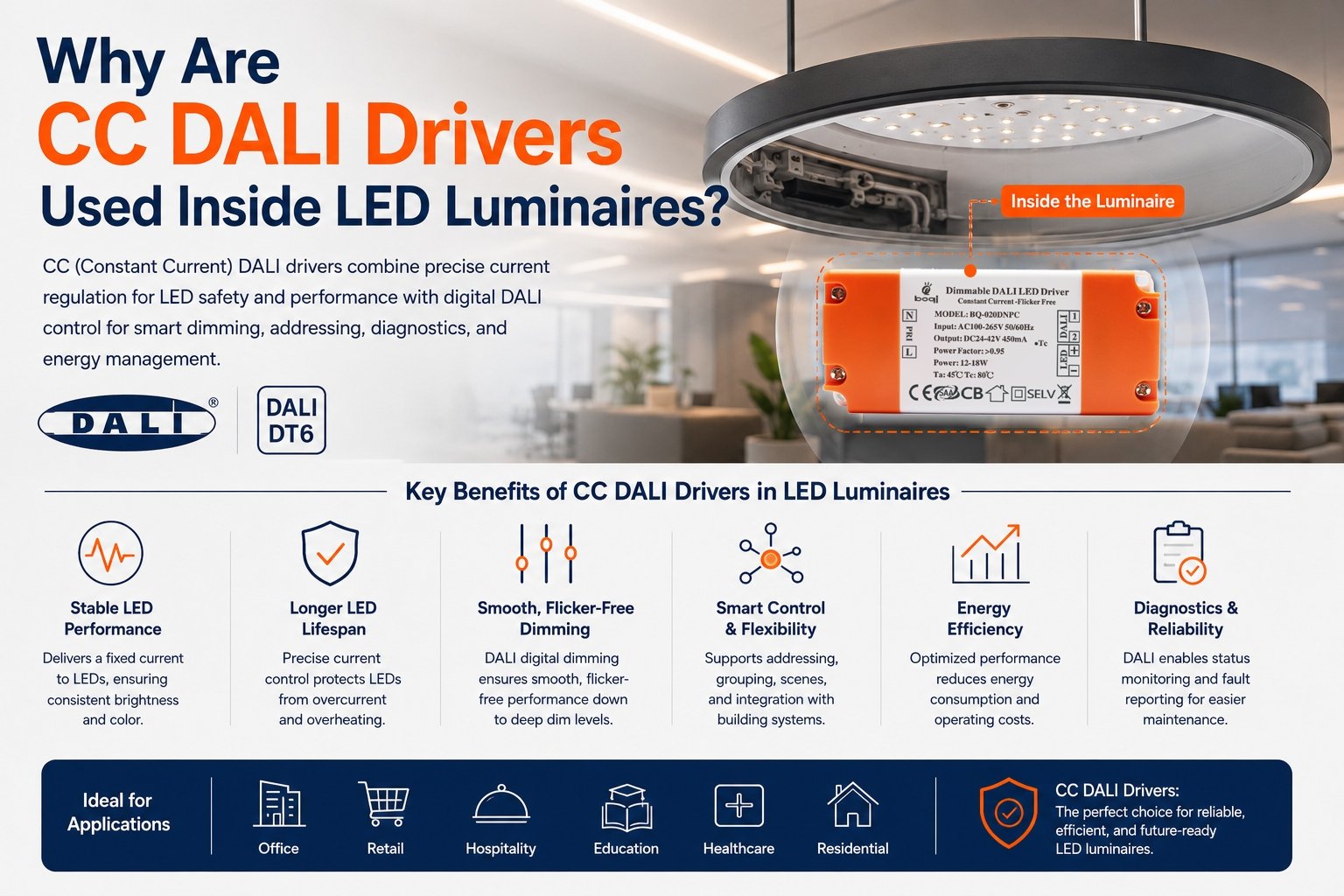
تُستخدم مشغلات CC DALI داخل تجهيزات الإضاءة LED لأنها توفر تيارًا ثابتًا ومنظمًا يحمي مصابيح LED ويثبت السطوع، بينما تضيف واجهة DALI تعتيمًا رقميًا قابلًا للعنونة، والتحكم في المشاهد، والتشخيص، والتكامل مع أتمتة المباني — مما يجمع بين الطاقة الآمنة والتحكم الذكي في مكوّن داخلي واحد مدمج.
هذه هي الإجابة المختصرة. لكن الصورة الكاملة تشمل السلوك الكهربائي، وتصميم النظام، ومواصفات التوريد، ومراقبة الجودة. دعني أوضح لك كل جزء خطوة بخطوة.
كيف تعمل مشغلات CC DALI على تحسين الأداء داخل تجهيزات الإضاءة LED الخاصة بي؟
في العام الماضي، فكك مهندسونا وحدة إضاءة سقفية معادة من عميل في إيطاليا. كانت لوحة LED سليمة. لكن مصدر الطاقة الرخيص المعتمد على الجهد بالداخل كان قد أتلفها. هذا التفكيك يقول كل شيء.
تعمل مشغلات CC DALI على تحسين أداء التجهيزات من خلال تثبيت تيار الخرج بغض النظر عن تقلبات الجهد، مما يمنع الانفلات الحراري والإفراط في التشغيل. هذا التنظيم للتيار الثابت يثبت السطوع واللون، ويطيل عمر LED، ويتيح تعتيمًا رقميًا سلسًا وخاليًا من الوميض عبر نطاق DALI الكامل.
مصابيح LED هي أجهزة تعمل بالتيارالمستمر 1يتغير جهدها الأمامي مع درجة الحرارة. إذا زودتها بجهد ثابت، يرتفع التيار مع تسخين الصمام الثنائي. المزيد من التيار يخلق المزيد من الحرارة. المزيد من الحرارة يسحب المزيد من التيار. هذه الحلقة هي الانفلات الحراري 2, ، وهي تقتل لوحات LED بسرعة.
تنظيم التيار الثابت 3 يكسر هذه الحلقة. يثبت المشغل الخرج عند قيمة محددة، مثل 350 مللي أمبير، أو 500 مللي أمبير، أو 700 مللي أمبير، أو 1050 مللي أمبير. ثم يتحرك الجهد تلقائيًا ليتوافق مع حمل LED. النتيجة هي خرج ضوئي مستقر، ولون ثابت، وعمر افتراضي قابل للتنبؤ.
لماذا يهم الموضع الداخلي
وضع المشغل داخل التجهيز ليس مجرد مسألة راحة. فأسلاك الخرج DC القصيرة تقلل التداخل الكهرومغناطيسي 4. في اختباراتنا الأولية للتوافق الكهرومغناطيسي، تجتاز التجهيزات ذات المشغلات الداخلية فحوصات الامتثال بسهولة أكبر من التركيبات ذات الكابلات الخارجية الطويلة. كما يتشارك المشغل ولوحة LED في تصميم حراري واحد، لذا تستجيب ميزات الحماية مثل التخفيض الحراري لظروف التركيب الفعلية.
ميزة التعتيم
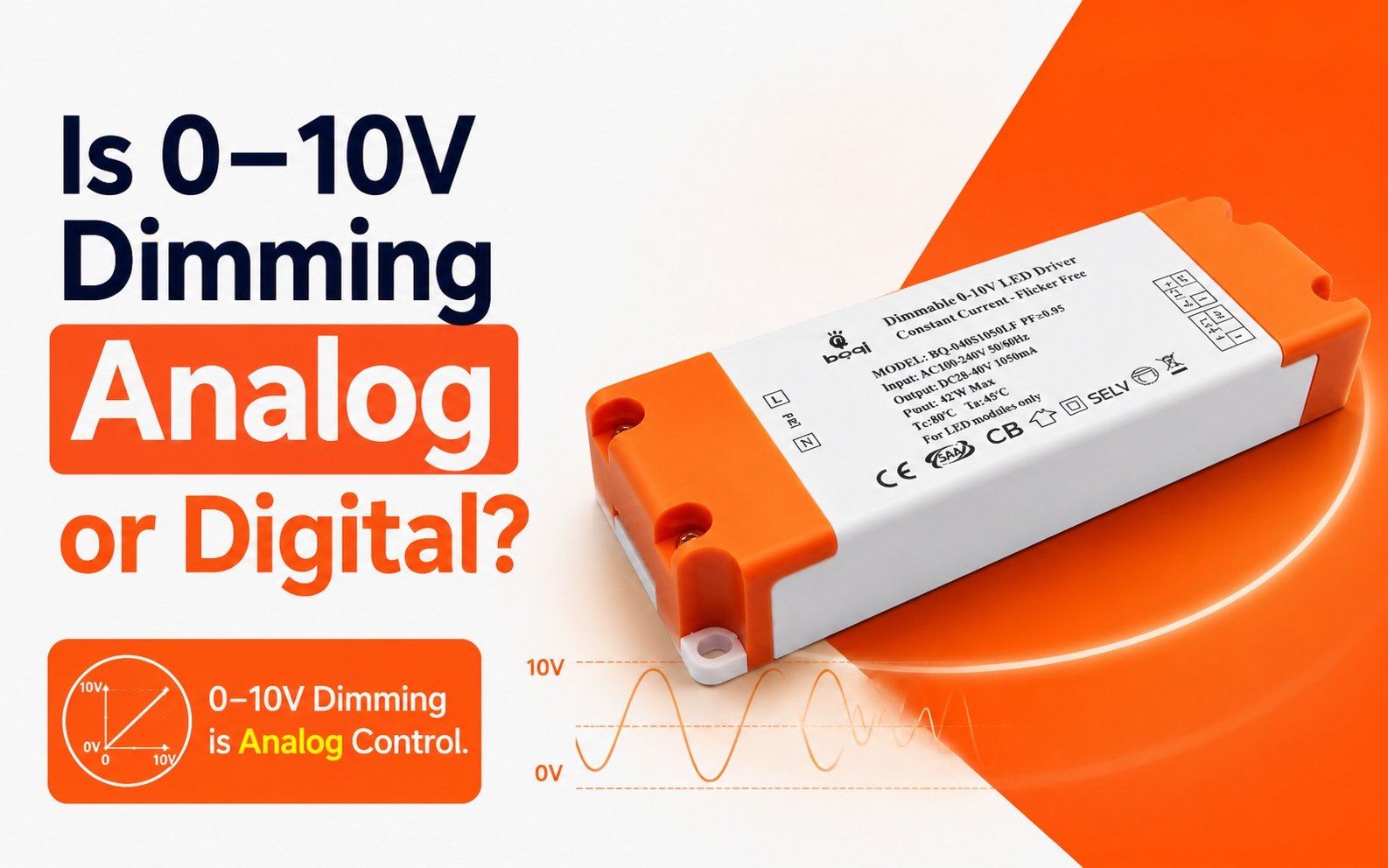
يضيف DALI تعتيمًا رقميًا مع 254 مستوى محددًا على منحنى موحد. مقارنةً بالتحكم التناظري 0-10V، يوفر هذا أداءً خاليًا من الوميض ونتائج قابلة للتكرار عبر كل تركيبات المشروع. إليك كيفية ترتيب عوامل الأداء:
| عامل الأداء | مصدر جهد أساسي | مشغل CC DALI داخل التجهيز |
|---|---|---|
| التحكم في التيار | لا يوجد (جهد فقط) | خرج ثابت ومنظم |
| خطر الانفلات الحراري | مرتفع | مُلغى بالتصميم |
| جودة التعتيم | غالبًا ما يومض | سلس، رقمي، خالٍ من الوميض |
| التداخل الكهرومغناطيسي على أسلاك الخرج | أعلى (مسافات طويلة) | مُقلل (أسلاك قصيرة) |
| اتساق السطوع | ينحرف مع الحرارة | مستقر طوال العمر الافتراضي |
| إشعار الأعطال | لا يوجد | اتصال ثنائي الاتجاه |
تدعم بعض الطرازات المتقدمة برمجة الإخراج الضوئي الثابت (Constant Light Output). يرفع المحرك التيار تدريجيًا على مر السنين لتعويض الانخفاض الطبيعي في التدفق الضوئي، بحيث يظل مظهر التركيب في اليوم 3000 كما كان في اليوم الأول.
ما الذي يجعل مشغلات CC DALI خيارًا أفضل من أنواع المشغلات الأخرى لتجهيزاتي؟
سألني مدير مشتريات من سنغافورة سؤالًا مباشرًا عبر واتساب: لماذا لا نستخدم محركات 0-10V الأرخص في خط الإضاءة السفلية بالكامل؟ كان جوابي جدول مقارنة واحدًا.
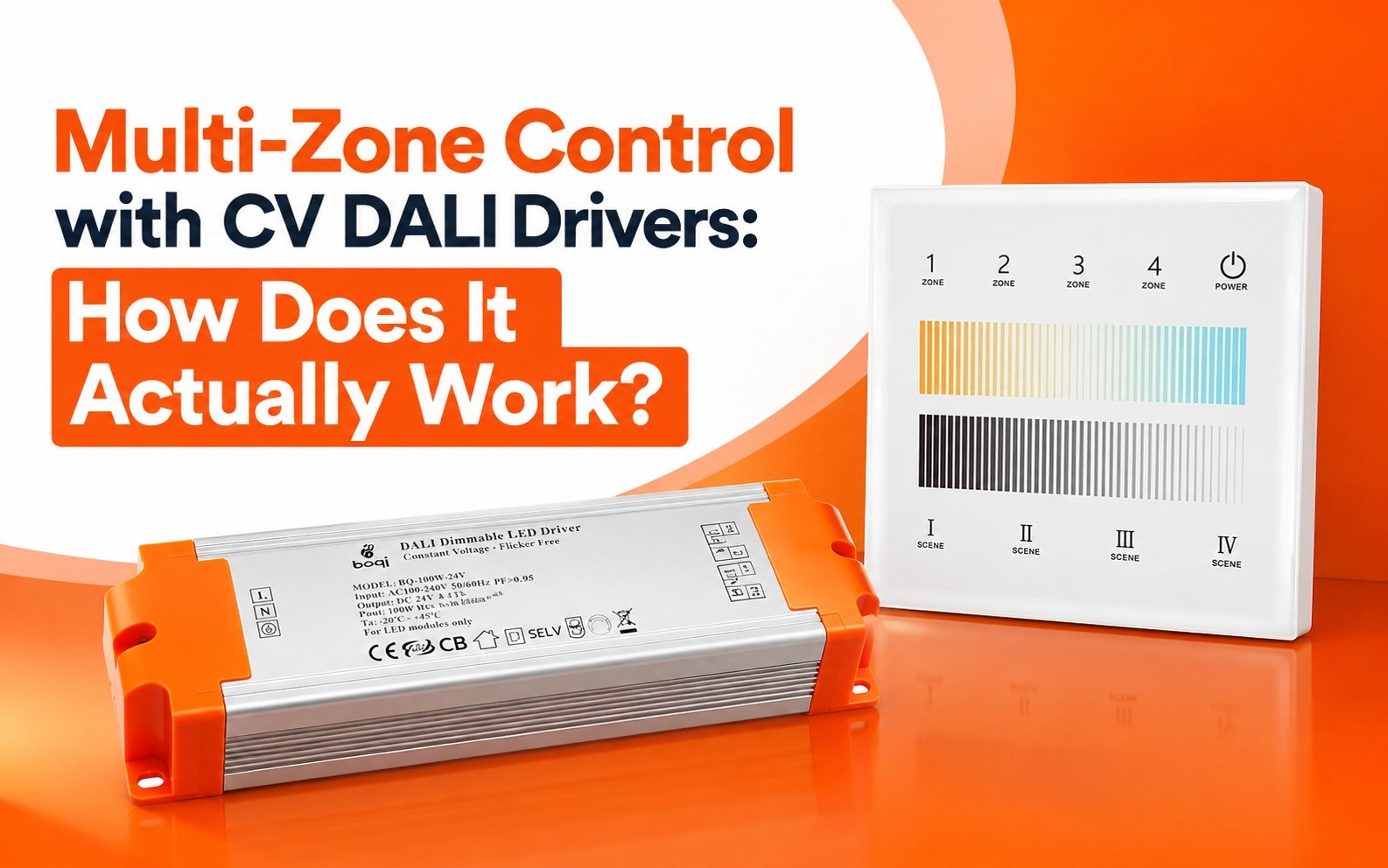
تتفوق محركات CC DALI على أنواع المحركات الأخرى من خلال الجمع بين تنظيم دقيق للتيار والتحكم في الإضاءة بعناوين محددة. على عكس محركات 0-10V أو TRIAC، يمكن توجيه عنوان فردي لكل وحدة DALI وتجميعها ومراقبتها، مما يجعل التركيبات جاهزة لأتمتة الإضاءة التجارية دون إعادة توصيل إضافية.
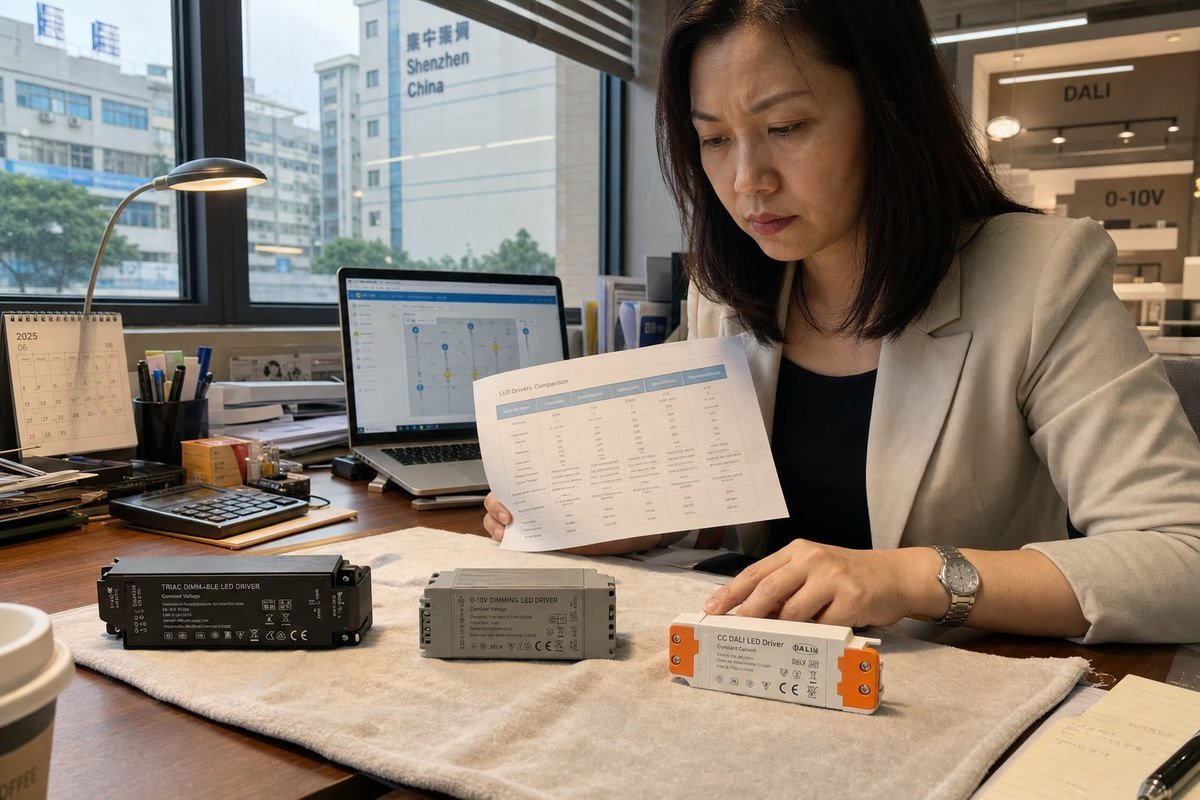
ابدأ بالمقارنة المباشرة. هذا ما أشاركه مع المشترين الذين يقيّمون أنواع المحركات لنطاق تركيبات جديد:
| ميزة | محرك ترياك | محرك 0-10 فولت | محرك CC DALI |
|---|---|---|---|
| نوع التحكم | تماثلي، قطع طور من التيار الرئيسي | إشارة جهد تماثلية | بروتوكول رقمي (معيار IEC 62386 6) |
| توجيه عنوان فردي | لا | لا | نعم، لكل تركيبة |
| إعادة تجميع التركيبات | إعادة توصيل مطلوبة | إعادة توصيل مطلوبة | برمجيًا فقط |
| تغذية راجعة لوحدة التحكم | لا يوجد | لا يوجد | اتصال ثنائي الاتجاه |
| دقة التعتيم | تختلف حسب المخفت | متوسطة | 254 مستوى موحدًا |
| الأسلاك الكهربائية | قائم على التيار الرئيسي | زوج منفصل حساس للقطبية | ناقل ثنائي الأسلاك بدون قطبية |
| تكامل المباني الذكية | ضعيف | محدود | أصلي (ناكس 7, ، BACnet، IoT) |
قصة الأسلاك
يستخدم DALI ناقلًا ثنائي الأسلاك مستقلًا عن القطبية. يمكن للقائمين بالتركيب تمريره في نفس القناة مع كابلات التيار الرئيسي. لا توجد قطبية يمكن الخطأ فيها ولا قناة تحكم منفصلة يجب تخصيص ميزانية لها. في المشاريع الكبيرة، هذا وحده يقلل تكلفة التركيب والأخطاء.
برمجيات بدلًا من المفكات
مع الأنظمة التماثلية، تغيير التركيبات التي تخفت معًا يعني إعادة توصيل فيزيائية. مع التحكم في الإضاءة بعناوين محددة، يعيد المكامل تجميع وحدات الإضاءة من جهاز كمبيوتر محمول. تُعاد تهيئة المكاتب. تتغير عروض البيع بالتجزئة موسميًا. تتكيف تركيبات DALI دون لمس سلك واحد.
سلوك تيار الاندفاع والتشغيل
هناك نقطة أخرى غالبًا ما يغفلها المشترون. تدعم محركات DALI عالية الجودة معدلات تلاشي قابلة للبرمجة وبدء تشغيل ناعم متدرج. عندما تُشغَّل أرضية مكتب كاملة في الساعة 8 صباحًا، يمكن أن يتسبب تشغيل مئات المحركات في وقت واحد في ارتفاع تيار الاندفاع وتعطل القواطع. سلوك البدء الناعم يوزع هذا الحمل. بالنسبة لشركات الهندسة التي تخصص مواصفات المباني الكبيرة، هذه نقطة بيع حقيقية، وليست حاشية.
بالنسبة للإضاءة السفلية، والإضاءة الموجهة، والتركيبات الخطية، ومنتجات الأبيض القابل للضبط، فإن تركيبة CC DALI هي ببساطة الأنسب على مستوى النظام.
ما المواصفات الفنية التي يجب أن أتحقق منها قبل اختيار مورد مشغلات CC DALI؟
يمكن لورقات المواصفات أن تخفي بقدر ما تكشف. يراجع فريقنا أوراق بيانات المنافسين أسبوعيًا، والفجوات التي نجدها بين الأداء المعلن والمختبر ما زالت تفاجئني بعد سنوات في هذه المهنة.
قبل اختيار المورد، تحقق من نطاق تيار الخرج ودقته، ونافذة جهد الخرج، والامتثال لمعيار DALI-2، وعمق التعتيم، وأداء الوميض، وميزات الحماية، والكفاءة، وتصنيف درجة حرارة الهيكل، وعلامات السلامة مثل CE وSELV، والأبعاد الفيزيائية للتركيب داخل وحدة الإضاءة.
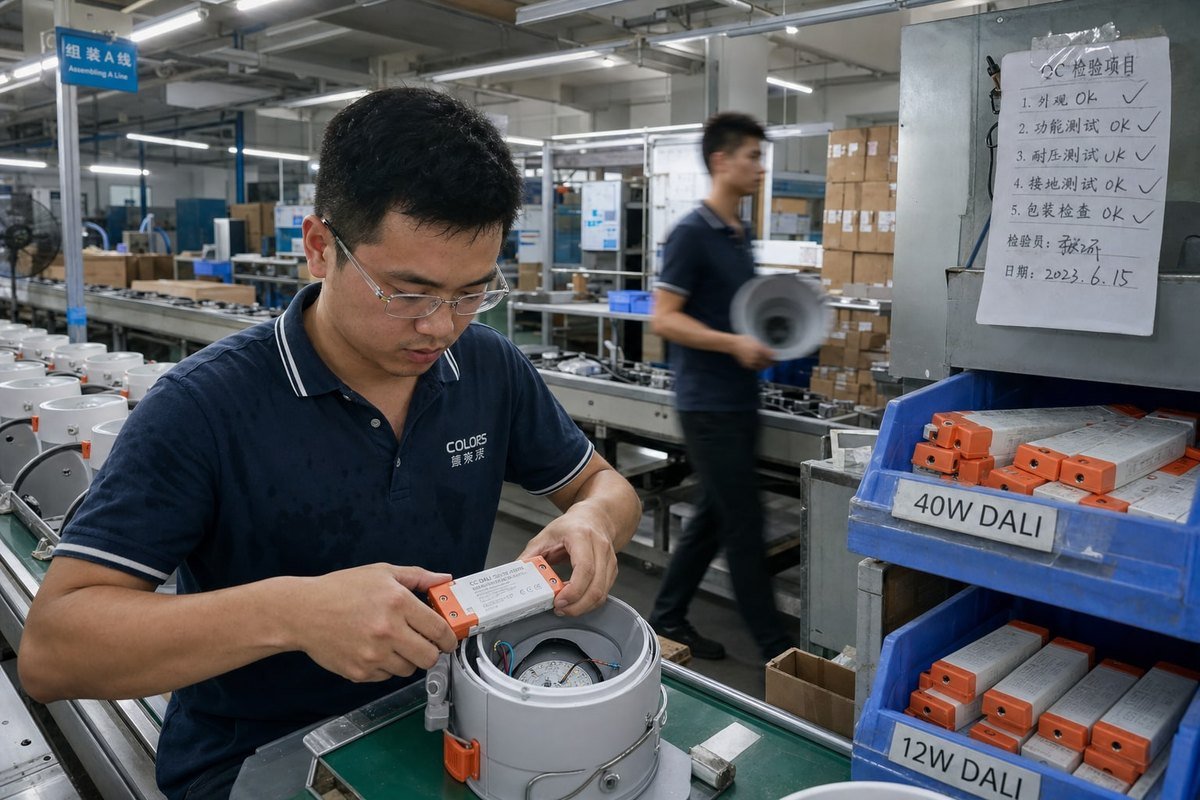
دعني أقسم القائمة إلى طبقات، لأن ليس كل المواصفات تحمل نفس الوزن.
الأساسيات الكهربائية
تحقق من خيارات تيار الخرج أولاً. القيم الشائعة هي 350 مللي أمبير، 500 مللي أمبير، 700 مللي أمبير، و1050 مللي أمبير. توفر المحركات الأفضل تيارًا قابلًا للتحديد أو قابلًا للبرمجة عبر NFC بخطوات دقيقة. تتيح هذه القابلية للبرمجة تغطية موديلات متعددة من التركيبات بمنتج واحد، مما يبسط مخزونك. ثم تأكد من أن نافذة جهد الخرج تتوافق مع سلسلة LED الخاصة بك. أي عدم تطابق هنا يعني أن التركيبة لن تغادر المختبر أبدًا.
جودة التحكم والتعتيم
DALI-2 غير قابل للتفاوض للمشاريع الجادة. إنه يثبت الامتثال لمعيار IEC 62386 ويضمن التوافق مع الحساسات ووحدات التحكم من علامات تجارية أخرى. ثم انظر إلى نطاق التعتيم الرقمي. المحركات المتميزة تخفت بسلاسة حتى 1 بالمائة أو حتى 0.1 بالمائة. اطلب بيانات الوميض، وليس مجرد كلمة “خالٍ من الوميض”.”
الحماية والامتثال
إليك جدول الأولويات الذي أشاركه مع عملاء B2B الجدد:
| تخصيص | ما الذي يجب التحقق منه | لماذا هذا مهم؟ |
|---|---|---|
| الامتثال لـ DALI-2 | التأكيد مع المورد | يضمن التوافق بين العلامات التجارية |
| عمق التعتيم | مُقاس، وليس مُدّعى | الراحة البصرية في الفنادق والمكاتب |
| مجموعة الحماية | OVP، SCP، OTP، الحماية من الحمل الزائد | التركيبة تتحمل الأعطال الميدانية |
| درجة حرارة العلبة (tc) | النقطة المقدرة والقيمة القصوى | تحدد العمر الافتراضي داخل الهياكل الساخنة |
| علامات السلامة | CE، CB، SAA، SELV حسب الحاجة | الوصول القانوني للسوق حسب المنطقة |
| الأبعاد | العرض، الطول، ألسنة التثبيت | يجب أن تناسب التركيبات المدمجة |
| الكفاءة | عند الحمل الكامل وعند التعتيم | يقود نتائج مراقبة الطاقة |
الحجم الفيزيائي مهم أكثر مما يتوقع الناس. يمكن أن تكون محركات التركيبات المدمجة نحيفة بعرض حوالي 30 مم. إذا كان هيكل الإضاءة السفلية ضحلًا، فهذا البعد يحدد التصميم بأكمله. اسأل أيضًا عن دعم D4i إذا كانت خارطة الطريق الخاصة بك تتضمن مراقبة الطاقة، أو الإبلاغ عن الأعطال، أو التركيبات الذكية الجاهزة للحساسات. تحمل المحركات القادرة على D4i طاقة ناقل مدمجة ونماذج بيانات تحول كل تركيبة إلى عقدة إبلاغ.
كيف يمكنني ضمان الجودة والامتثال عند توريد مشغلات CC DALI لخط تجهيزات الإضاءة الخاص بي؟
درس قاسٍ من أيام التصدير المبكرة لدينا: محرك يجتاز EMC وحده يمكن أن يفشل داخل تركيبة معدنية. تعلمنا اختبار التركيبة المكتملة المجمعة، وننصح الآن كل عميل بفعل الشيء نفسه.
ضمان الجودة من خلال تدقيق عملية مراقبة الجودة لدى المورد، والمطالبة بـ DALI-2 وعلامات السلامة الإقليمية، واختبار التركيبة الكاملة لـ EMC كتجميع واحد، وإجراء اختبارات حرارية عند نقطة tc للمحرك، والتحقق من التعتيم والإبلاغ عن الأعطال والتوافق قبل الإنتاج الضخم.
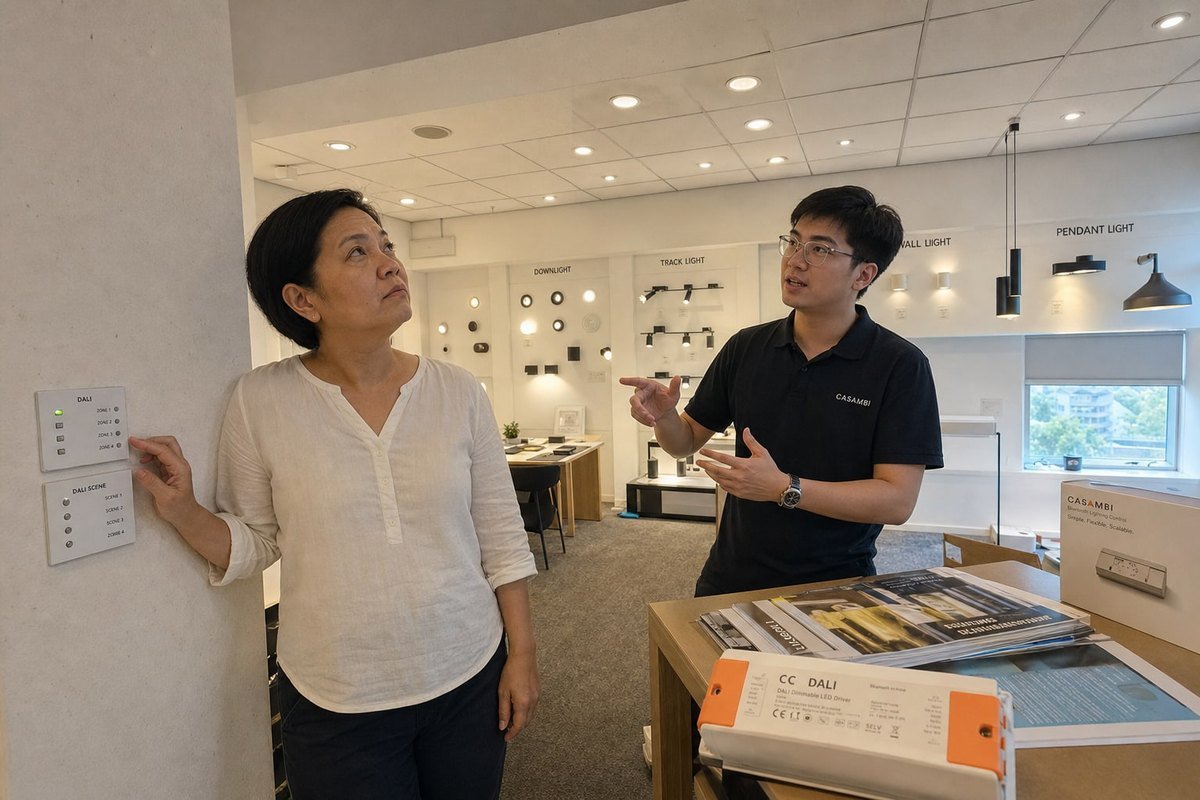
الامتثال عملية وليس شهادة. إليك التسلسل الذي نتبعه مع شركاء OEM، والذي أوصي به لأي مشترٍ يبني خط تركيبات إضاءة بعلامة خاصة.
عملية توريد عملية من خمس خطوات
- تحقق من الشهادات من المصدر. لا تقبل ملف PDF وحده. تحقق وتأكد من أن تقارير CE أو CB أو SAA صادرة عن مختبرات معترف بها. طابق رقم موديل التقرير مع المنتج الفعلي.
- اختبر التركيبة المجمعة، وليس المحرك فقط. عندما يُركب محرك داخل تركيبة، يجب اختبار EMC للضوء بالكامل كوحدة واحدة. الهياكل المعدنية وأطوال الأسلاك ولوحات LED كلها تغير النتيجة.
- قم بإجراء التحقق الحراري عند نقطة tc. قم بقياس درجة حرارة علبة المحرك داخل تركيبتك الفعلية عند الحمل الكامل في غرفة مُسخنة. كل عشر درجات فوق tc المقدر يمكن أن تقلل عمر المحرك بشكل كبير.
- تحقق من طبقة التحكم. قم بتوصيل المحرك بوحدتي تحكم DALI-2 مختلفتين على الأقل. تأكد من العنونة والتجميع واستدعاء المشاهد ومعدلات التلاشي والاتصال ثنائي الاتجاه. تحقق من أن الإبلاغ عن الأعطال وبيانات مراقبة الطاقة تُقرأ بشكل صحيح إذا كنت تستخدم ميزات D4i.
- ثبّت العينة الذهبية. اعتمد وحدة مرجعية مختبرة، ثم أمسك الإنتاج مقابلها بفحص وارد وفحوصات خطية واختبارات تشغيل قبل الشحن.
كيف يبدو فحص الجودة الجيد في المصنع
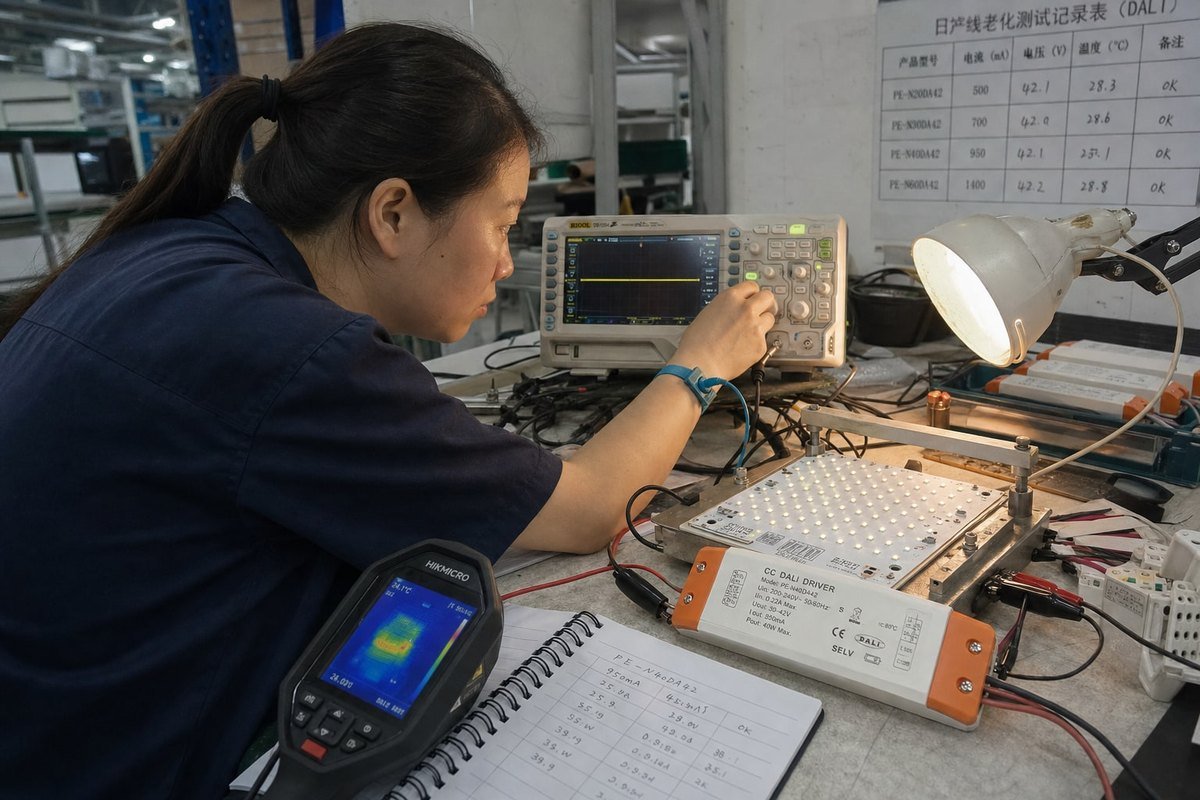
في منشأتنا في شنتشن، تخضع كل دفعة من محركات التعتيم لاختبارات التشغيل قبل التعبئة. نسجل منحنيات التعتيم ونتحقق من الوميض على وحدات العينة. للعملاء الذين لديهم مواعيد مشاريع ضيقة، هذا الانضباط مهم. حاوية فاشلة من المحركات لا تكلف المال فقط. إنها تكلف نافذة التركيب، ومشاريع أتمتة الإضاءة التجارية نادرًا ما تسامح التأخير. اطلب من موردك إظهار رفوف التشغيل وسجلات الاختبار. الشريك الجاد سيرحب بالسؤال. الضعيف سيغير الموضوع.
الخلاصة
محركات CC DALI تكسب مكانها داخل تركيبات LED بحل مشكلتين في وقت واحد: حماية LEDs من خلال تنظيم التيار الثابت وتمكين التحكم الذكي القابل للعنونة. اختر المواصفات بعناية، واختبر التجميع الكامل، وشارك مع مورد يمكنك التحقق من مراقبة الجودة لديه.
الحواشي السفلية
مصدر EU رسمي يشرح علامة السلامة CE التي يجب على المشترين التحقق منها على المحركات. ↩︎
مفهوم أساسي يشرح آلية فشل LED التي يشير إليها المقال مرارًا. ↩︎
يشرح المبدأ الكهربائي الكامن وراء تنظيم تيار محرك LED الذي نوقش في المقال. ↩︎
يوضح ظاهرة EMI ذات الصلة بالموضع الداخلي للمحرك واختبار EMC. ↩︎
مرجع أساسي حول سلوك جهد أشباه الموصلات الذي يؤثر على الأداء الحراري لـ LED. ↩︎
يشير إلى المعيار الدولي الذي يحكم بروتوكول التحكم الرقمي في الإضاءة DALI. ↩︎
الموقع الرسمي لجمعية KNX الذي يشرح المعيار العالمي لأتمتة المباني. ↩︎