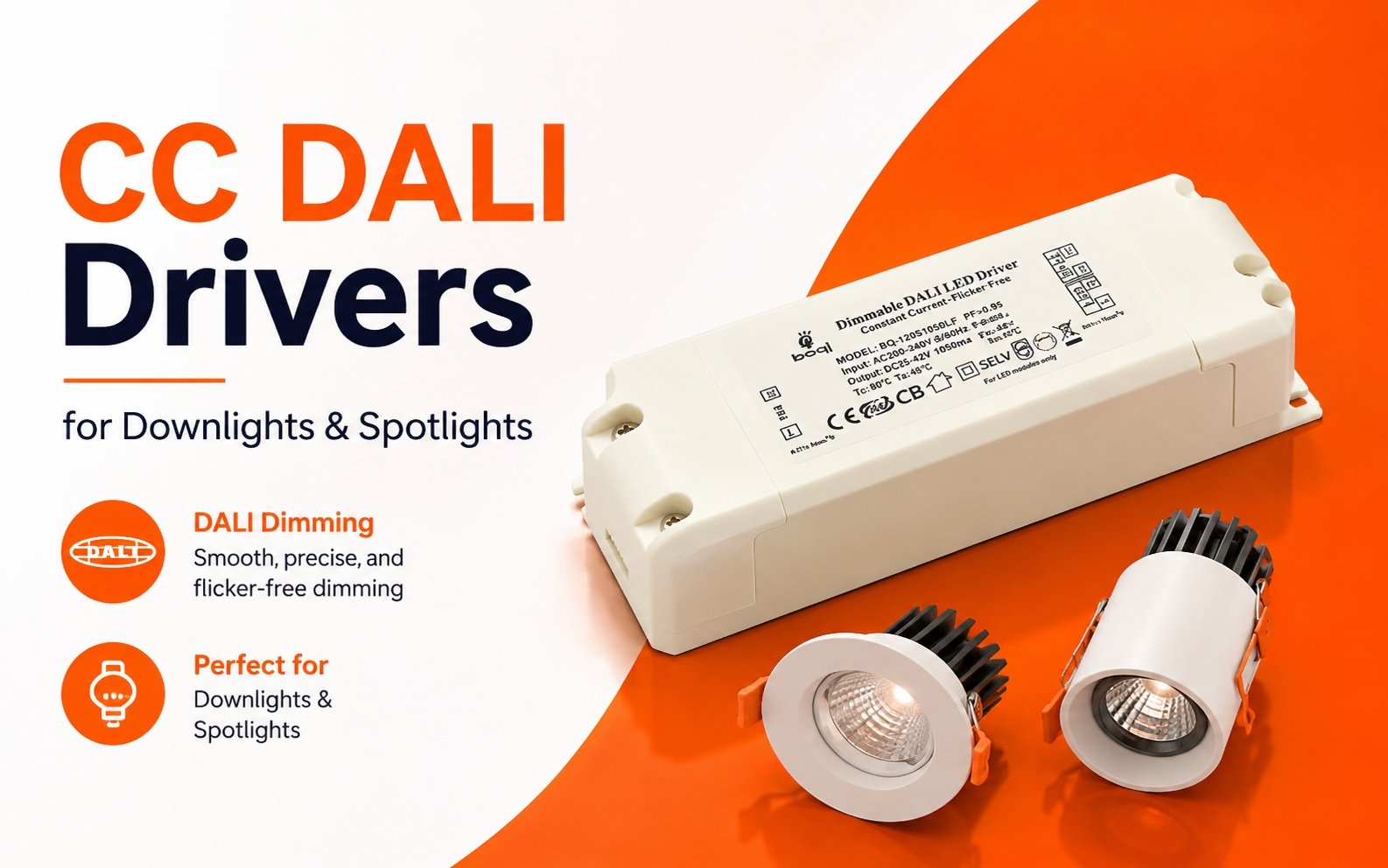















Os drivers DALI CC aparecem constantemente nas minhas chamadas com clientes por um motivo. Na nossa linha de produção em Shenzhen, vi projetos de luminárias falharem simplesmente porque o driver errado foi instalado. LEDs queimaram precocemente, o dimerização apresentou oscilações e compradores perderam contratos. Essa dor é evitável, e a solução está dentro do próprio equipamento.
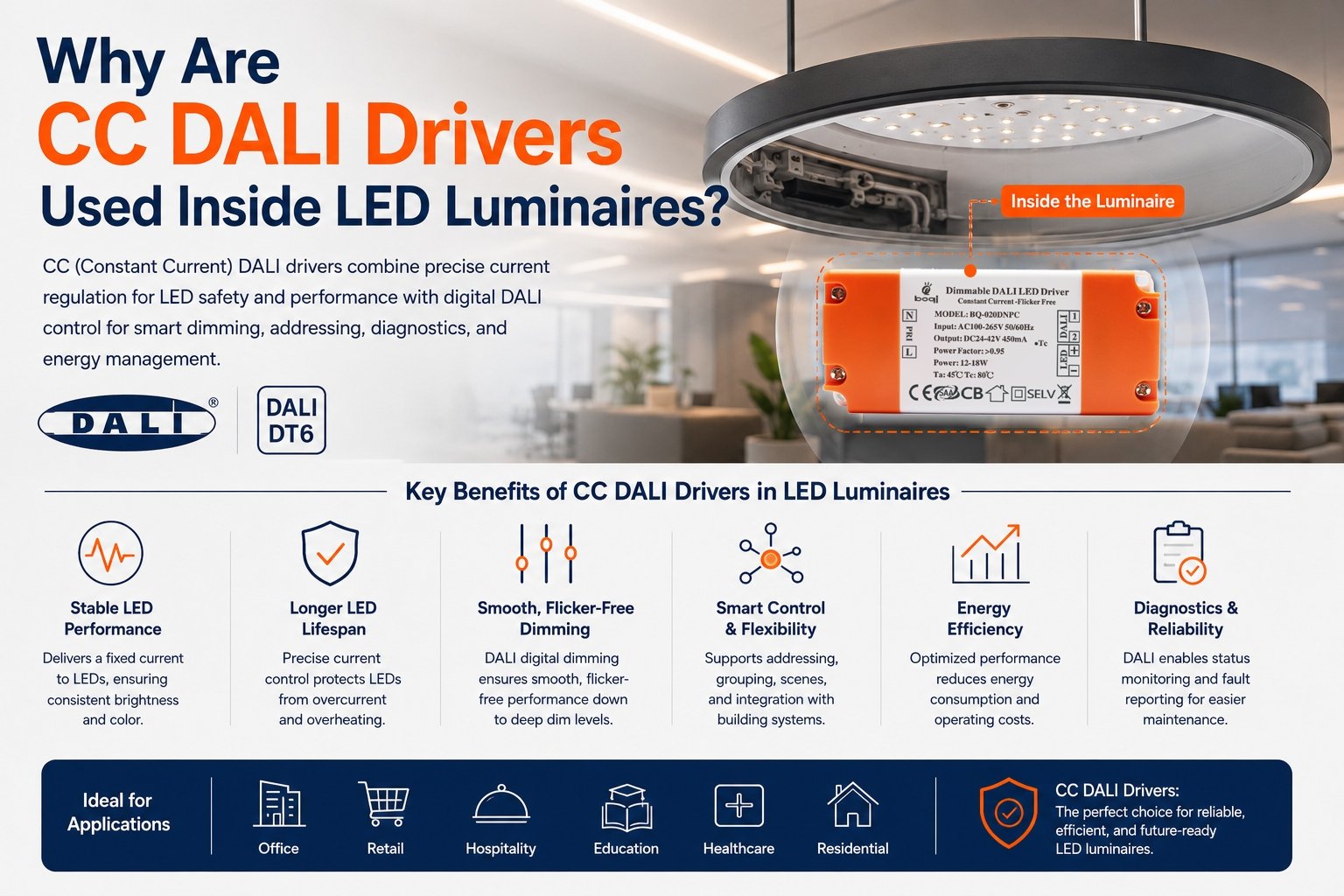
Os drivers DALI CC são usados dentro de luminárias LED porque fornecem uma corrente fixa e regulada que protege os LEDs e estabiliza o brilho, enquanto a interface DALI adiciona dimerização digital endereçável, controle de cenas, diagnósticos e integração com automação predial — combinando alimentação segura e controle inteligente em um único componente interno compacto.
Essa é a resposta curta. Mas o quadro completo abrange comportamento elétrico, design de sistema, especificações de fornecimento e controle de qualidade. Deixe-me explicar cada parte, passo a passo.
Como os drivers DALI CC melhoram o desempenho dentro das minhas luminárias LED?
No ano passado, nossos engenheiros desmontaram um downlight devolvido de um cliente na Itália. A placa de LED estava intacta. A fonte barata controlada por tensão dentro dele a havia queimado. Essa desmontagem diz tudo.
Os drivers DALI CC melhoram o desempenho das luminárias mantendo a corrente de saída estável, independentemente das flutuações de tensão, prevenindo fuga térmica e sobrecarga. Essa regulação de corrente constante estabiliza o brilho e a cor, prolonga a vida útil dos LEDs e permite dimerização digital suave e sem oscilações em toda a faixa DALI.
LEDs são dispositivos controlados por corrente. Sua tensão direta muda com a temperatura. Se você alimentá-los com uma tensão fixa, a corrente aumenta conforme o diodo aquece. Mais corrente gera mais calor. Mais calor atrai mais corrente. Esse ciclo é 1e mata placas de LED rapidamente. fuga térmica 2, A regulação de corrente constante.
quebra esse ciclo. O driver trava a saída em um valor fixo, como 350 mA, 500 mA, 700 mA ou 1050 mA. A tensão então flutua automaticamente para corresponder à carga dos LEDs. O resultado é saída de luz estável, cor estável e vida útil previsível. 3 Colocar o driver dentro da luminária não é apenas uma questão de conveniência. Cabos de saída DC curtos reduzem.
Por que a colocação interna é importante
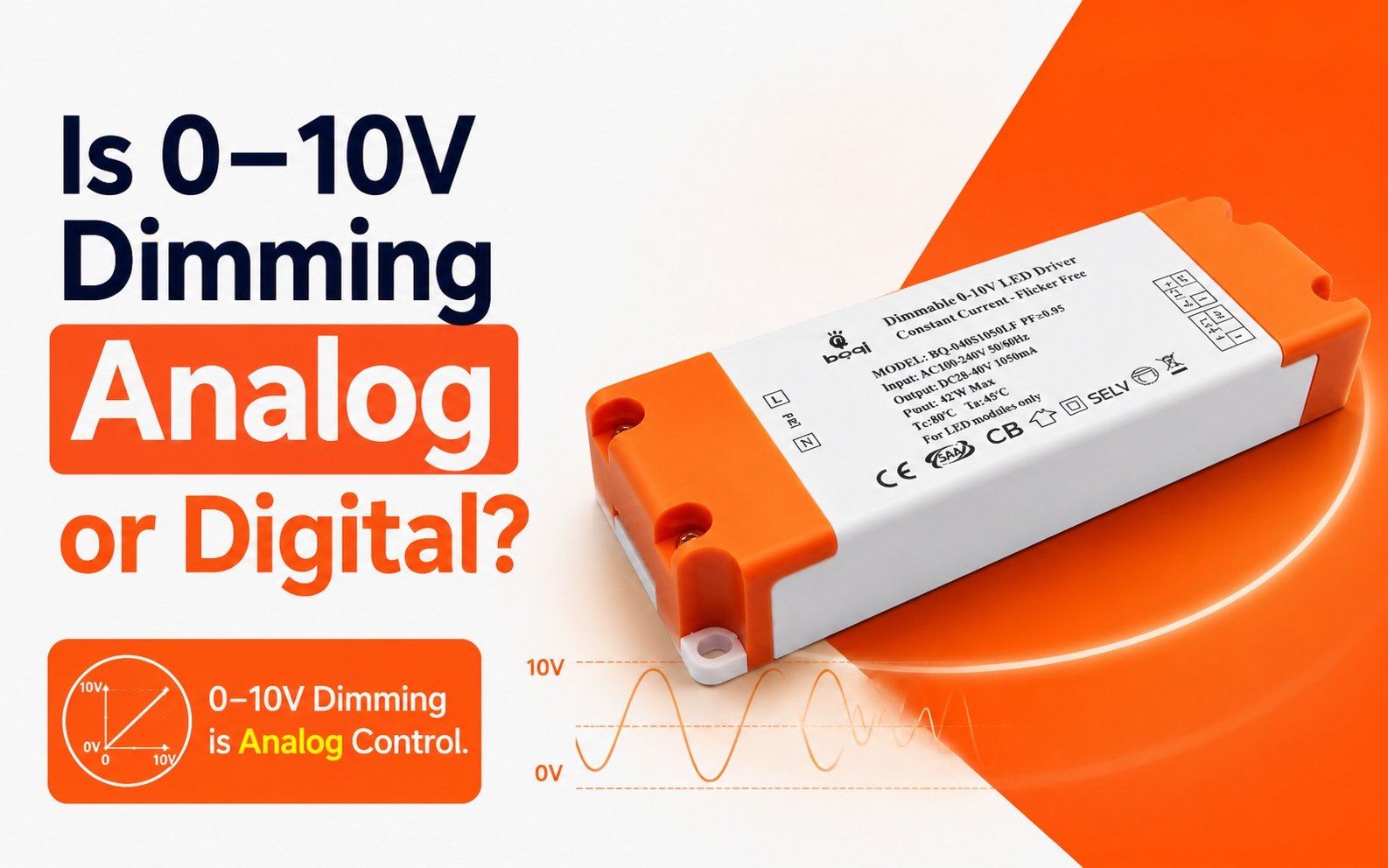
interferência eletromagnética . Em nossos pré-testes de EMC, luminárias com drivers internos passam nas verificações de conformidade mais facilmente do que equipamentos com longos cabos externos. O driver e a placa de LED também compartilham um único design térmico, então recursos de proteção como redução térmica respondem às condições reais do equipamento. 4. O DALI adiciona dimerização digital com 254 níveis definidos em uma curva padronizada. Comparado ao controle analógico 0-10V, isso oferece desempenho sem oscilações e resultados repetíveis em cada luminária de um projeto. Veja como os fatores de desempenho se comparam:.
A vantagem da dimerização
Fator de desempenho
| Fonte de tensão constante básica | Driver DALI CC dentro da luminária | Controle de corrente |
|---|---|---|
| Nenhum (apenas tensão) | Saída fixa e regulada | Risco de fuga térmica |
| Eliminado por design | Alta | Qualidade de dimerização |
| Frequentemente oscila | Suave, digital, sem oscilações | EMI nos cabos de saída |
| Maior (longas distâncias) | Minimizado (cabos curtos) | Consistência de brilho |
| Varia com o calor | Estável ao longo da vida útil | Feedback de falhas |
| Comunicação bidirecional | Nenhum | Comunicação bidirecional |
Alguns modelos avançados até suportam programação de Saída de Luz Constante. O driver aumenta lentamente a corrente ao longo dos anos para compensar a depreciação natural do lúmen, de modo que a luminária parece a mesma no dia 3.000 como no primeiro dia.
O que torna os drivers DALI CC uma escolha melhor do que outros tipos de drivers para os meus equipamentos?
Um gerente de compras de Singapura certa vez me fez uma pergunta direta pelo WhatsApp: por que não usar drivers 0-10V mais baratos em toda a sua linha de downlights? Minha resposta levou uma tabela de comparação.
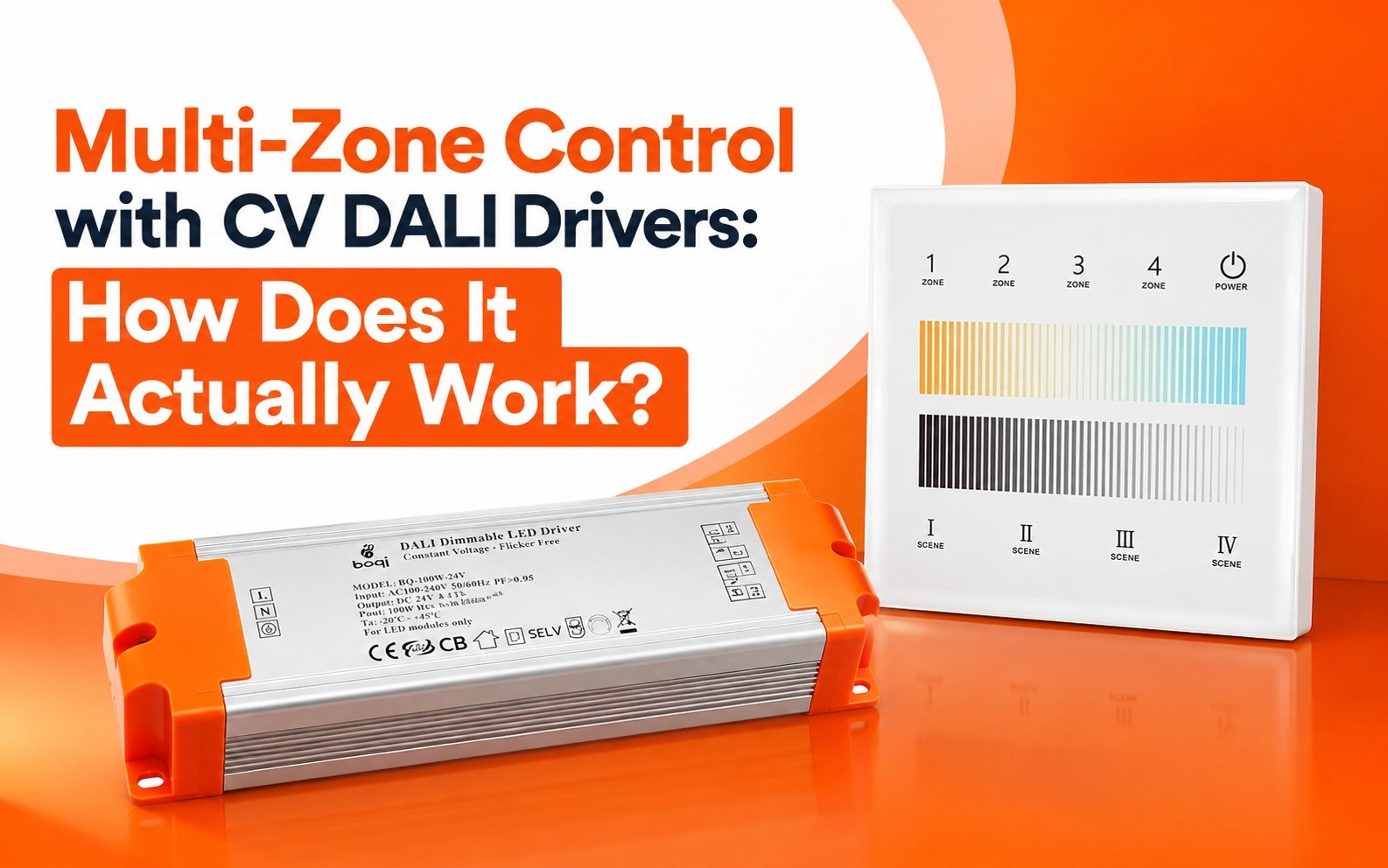
Drivers CC DALI superam outros tipos de driver ao combinar regulação precisa de corrente com controle de iluminação endereçável. Diferente de drivers 0-10V ou TRIAC, cada unidade DALI pode ser endereçada, agrupada e monitorada individualmente, tornando as luminárias prontas para automação de iluminação comercial sem religação adicional.
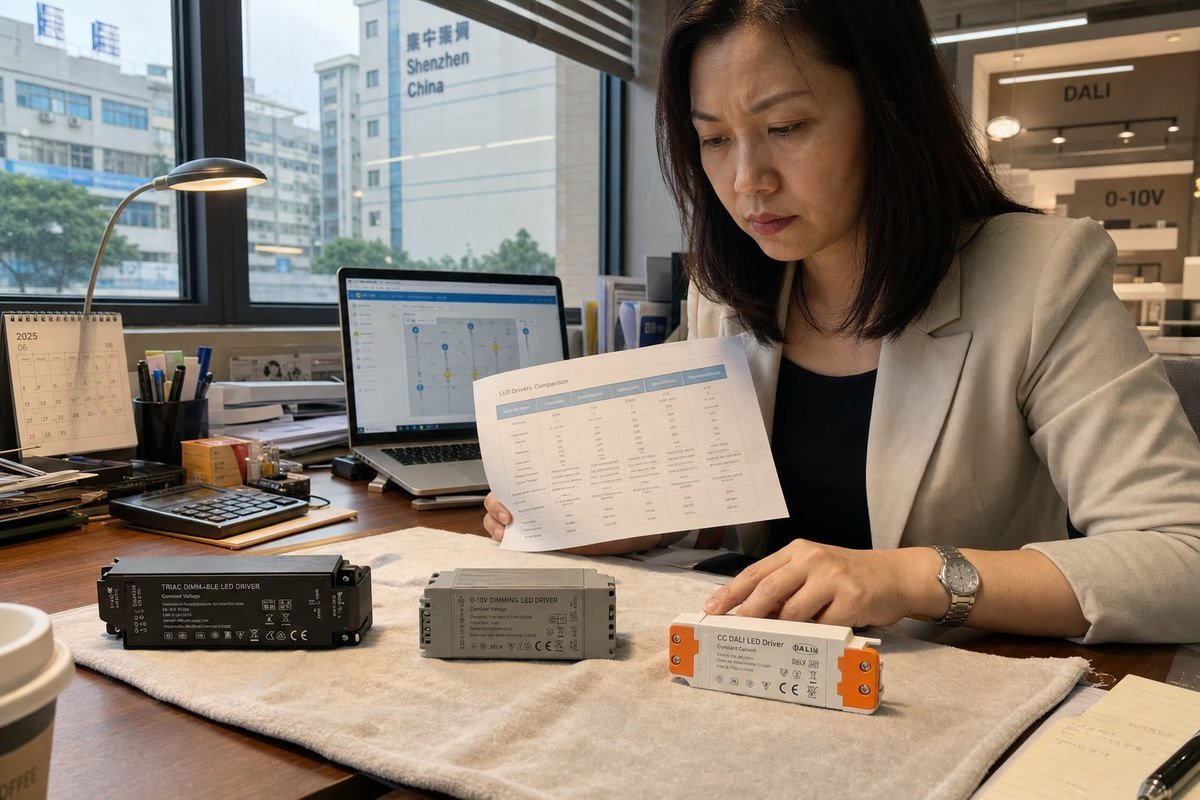
Comece com a comparação direta. Isto é o que compartilho com compradores avaliando tipos de driver para uma nova linha de luminárias:
| Característica | Driver TRIAC | Driver 0-10V | Driver CC DALI |
|---|---|---|---|
| Tipo de controle | Analógico, corte de fase na rede | Sinal de tensão analógico | Protocolo digital (padrão IEC 62386 6) |
| Endereçamento individual | Não | Não | Sim, por luminária |
| Reagrupamento de luminárias | Religação necessária | Religação necessária | Somente software |
| Feedback ao controlador | Nenhum | Nenhum | Comunicação bidirecional |
| Precisão de dimerização | Varia conforme o dimmer | Moderado | 254 níveis padronizados |
| Fiação | Baseado na rede | Par separado sensível à polaridade | Barramento de 2 fios sem polaridade |
| Integração com edifícios inteligentes | Ruim | Limitado | Nativo (KNX 7, BACnet, IoT) |
A questão da fiação
DALI usa um barramento de dois fios independente de polaridade. Instaladores podem roteá-lo no mesmo conduíte da energia principal. Não há polaridade para errar e nenhum conduíte de controle separado para orçar. Em projetos grandes, isso sozinho reduz custo de instalação e erros.
Software em vez de chaves de fenda
Com sistemas analógicos, mudar quais luminárias dimerizam juntas significa religação física. Com controle de iluminação endereçável, um integrador reagrupa luminárias a partir de um laptop. Escritórios são reconfigurados. Displays de varejo mudam sazonalmente. Luminárias DALI se adaptam sem tocar em um único fio.
Comportamento de inrush e inicialização
Há mais um ponto que compradores frequentemente perdem. Drivers DALI de qualidade suportam taxas de fade programáveis e partida suave escalonada. Quando um andar inteiro de escritório liga às 8h, centenas de drivers ligando ao mesmo tempo podem causar pico de corrente de inrush e desarmar disjuntores. O comportamento de partida suave distribui essa carga. Para empresas de engenharia especificando grandes edifícios, isso é um ponto de venda genuíno, não uma nota de rodapé.
Para downlights, spots, luminárias lineares e produtos de branco ajustável, a combinação CC DALI é simplesmente o melhor ajuste em nível de sistema.
Quais especificações técnicas devo verificar antes de escolher um fornecedor de drivers DALI CC?
Folhas de especificação podem esconder tanto quanto revelam. Nossa equipe revisa datasheets de concorrentes semanalmente, e as lacunas que encontramos entre desempenho declarado e testado ainda me surpreendem após anos neste ramo.
Antes de escolher um fornecedor, verifique faixa e precisão da corrente de saída, janela de tensão de saída, conformidade DALI-2, profundidade de dimerização, desempenho de flicker, recursos de proteção, eficiência, classificação de temperatura do invólucro, marcas de segurança como CE e SELV, e dimensões físicas para instalação interna na luminária.
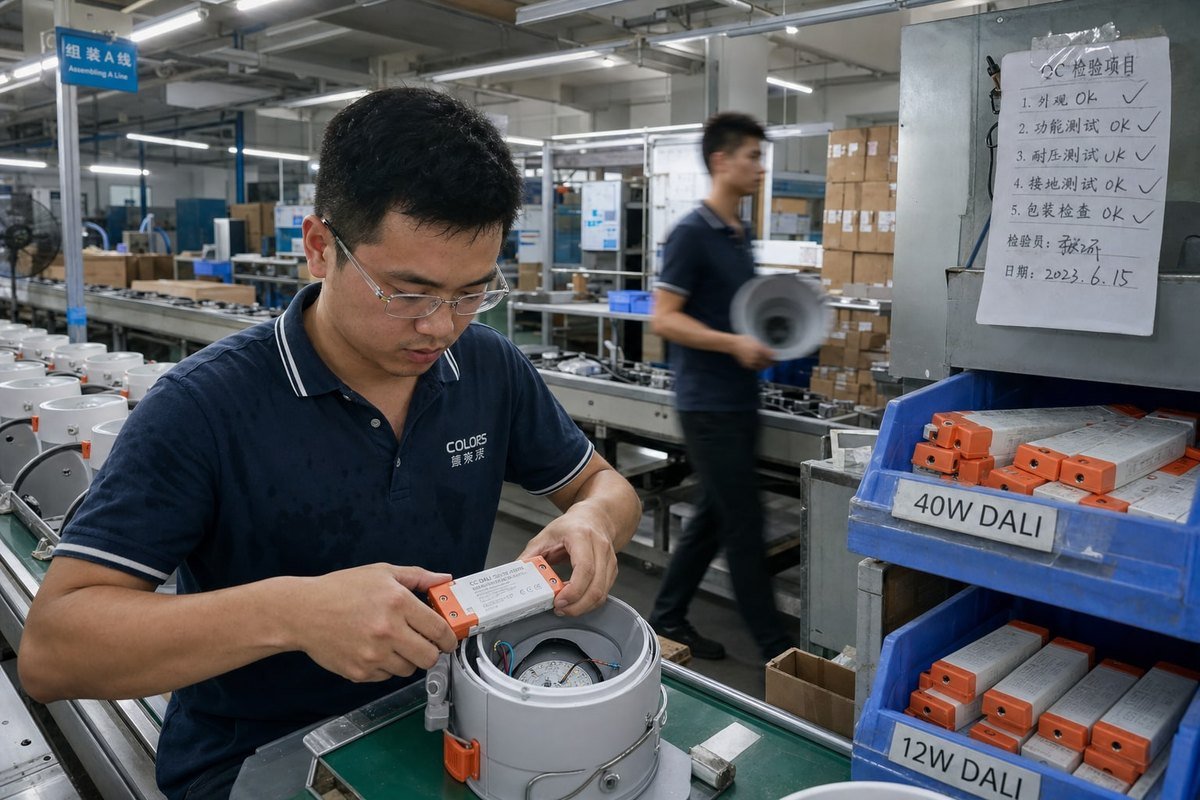
Deixe-me dividir a lista de verificação em camadas, porque nem todas as especificações têm o mesmo peso.
Fundamentos elétricos
Verifique as opções de corrente de saída primeiro. Valores comuns são 350 mA, 500 mA, 700 mA e 1050 mA. Drivers melhores oferecem corrente selecionável ou programável via NFC em passos finos. Essa programabilidade permite que um único SKU cubra múltiplos modelos de luminárias, o que simplifica seu inventário. Depois confirme se a janela de tensão de saída corresponde à sua cadeia de LEDs. Uma incompatibilidade aqui significa que a luminária nunca sai do laboratório.
Qualidade de controle e dimerização
DALI-2 é inegociável para projetos sérios. Isso comprova conformidade com o padrão IEC 62386 e garante interoperabilidade com sensores e controladores de outras marcas. Depois observe a faixa de dimerização digital. Drivers premium dimerizam suavemente até 1 por cento ou até 0,1 por cento. Peça dados de flicker, não apenas a palavra “sem flicker”.”
Proteção e conformidade
Aqui está a tabela de prioridades que compartilho com novos clientes B2B:
| Especificação | O que Verificar | Por Que Importa |
|---|---|---|
| Conformidade DALI-2 | Confirmar com o fornecedor | Garante interoperabilidade entre marcas |
| Profundidade de dimerização | Medido, não alegado | Conforto visual em hotéis, escritórios |
| Conjunto de proteção | OVP, SCP, OTP, sobrecarga | A luminária sobrevive a falhas de campo |
| Temperatura da carcaça (tc) | Ponto nominal e valor máximo | Determina a vida útil dentro de invólucros quentes |
| Marcas de segurança | CE, CB, SAA, SELV conforme necessário | Acesso legal ao mercado por região |
| Dimensões | Largura, comprimento, abas de montagem | Deve caber em luminárias compactas |
| Eficiência | Em carga total e com dimerização | Conduz resultados de monitoramento de energia |
O tamanho físico importa mais do que as pessoas esperam. Drivers compactos para luminárias podem ter apenas cerca de 30 mm de largura. Se o seu invólucro de downlight for raso, essa dimensão decide todo o design. Também pergunte sobre suporte a D4i se o seu roteiro incluir monitoramento de energia, relatórios de falhas ou luminárias inteligentes prontas para sensores. Drivers compatíveis com D4i possuem energia de barramento integrada e modelos de dados que transformam cada luminária em um nó de relatórios.
Como posso garantir qualidade e conformidade ao adquirir drivers DALI CC para minha linha de luminárias?
Uma lição difícil dos nossos primeiros dias de exportação: um driver que passa apenas na EMC ainda pode falhar dentro de uma luminária metálica. Aprendemos a testar a luminária completa montada e agora aconselhamos todos os clientes a fazer o mesmo.
Garanta a qualidade auditando o processo de controle de qualidade do fornecedor, exigindo marcas de segurança DALI-2 e regionais, testando a luminária completa para EMC como uma única montagem, realizando testes térmicos no ponto tc do driver e validando dimerização, relatórios de falhas e interoperabilidade antes da produção em massa.
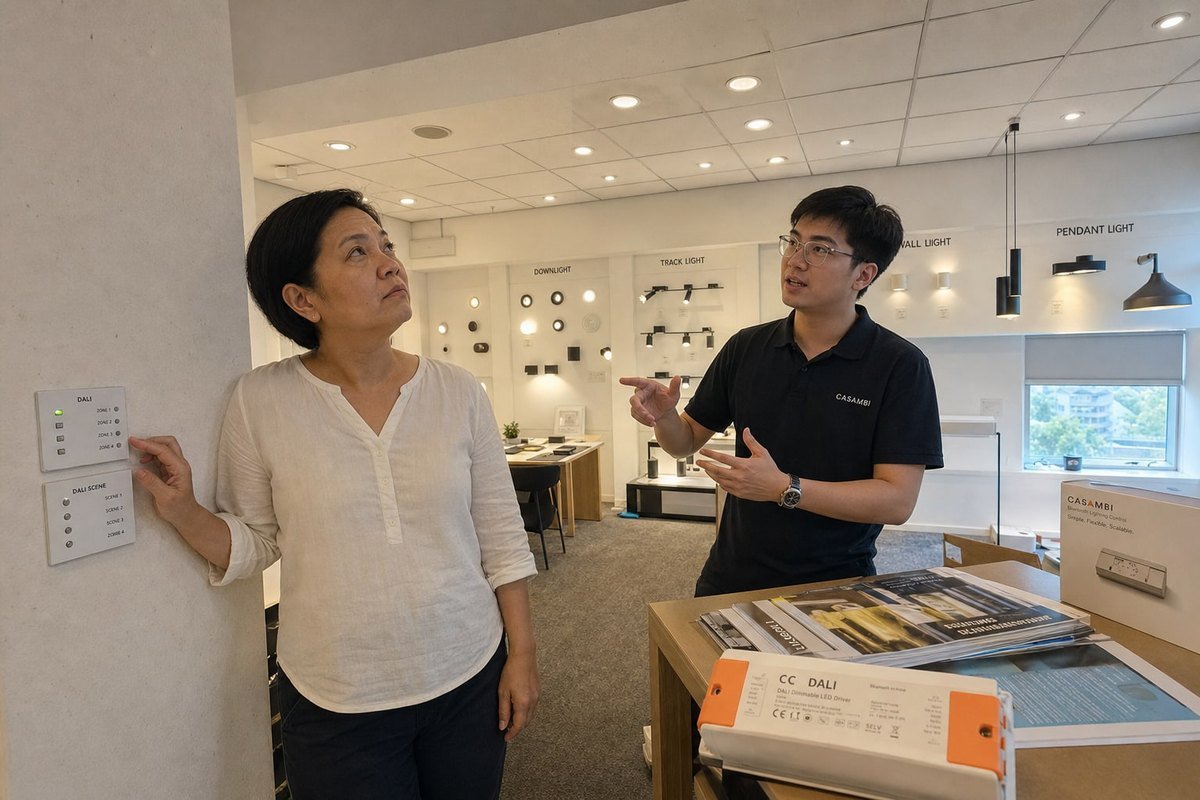
Conformidade é um processo, não um certificado. Esta é a sequência que seguimos com parceiros OEM e a que recomendo a qualquer comprador que esteja construindo uma linha de luminárias de marca própria.
Um processo prático de fornecimento em cinco etapas
- Verifique as certificações na fonte. Não aceite apenas um PDF. Verifique e confirme se os relatórios CE, CB ou SAA vêm de laboratórios reconhecidos. Compare o número do modelo do relatório com o produto real.
- Teste a luminária montada, não apenas o driver. Quando um driver é instalado dentro de uma luminária, a EMC de toda a luz deve ser testada como uma unidade. Invólucros metálicos, comprimentos de fiação e placas de LED alteram o resultado.
- Realize a validação térmica no ponto tc. Meça a temperatura da carcaça do driver dentro da sua luminária real em carga total em uma câmara aquecida. Cada dez graus acima do tc nominal pode reduzir drasticamente a vida útil do driver.
- Valide a camada de controle. Conecte o driver a pelo menos dois controladores DALI-2 diferentes. Confirme endereçamento, agrupamento, recall de cenas, taxas de fade e comunicação bidirecional. Verifique se os relatórios de falhas e os dados de monitoramento de energia são lidos corretamente se você usar recursos D4i.
- Bloqueie a amostra dourada. Aprove uma unidade de referência testada e, em seguida, mantenha a produção contra ela com inspeção de recebimento, verificações em linha e envelhecimento por burn-in antes do envio.
Como é um bom controle de qualidade na fábrica
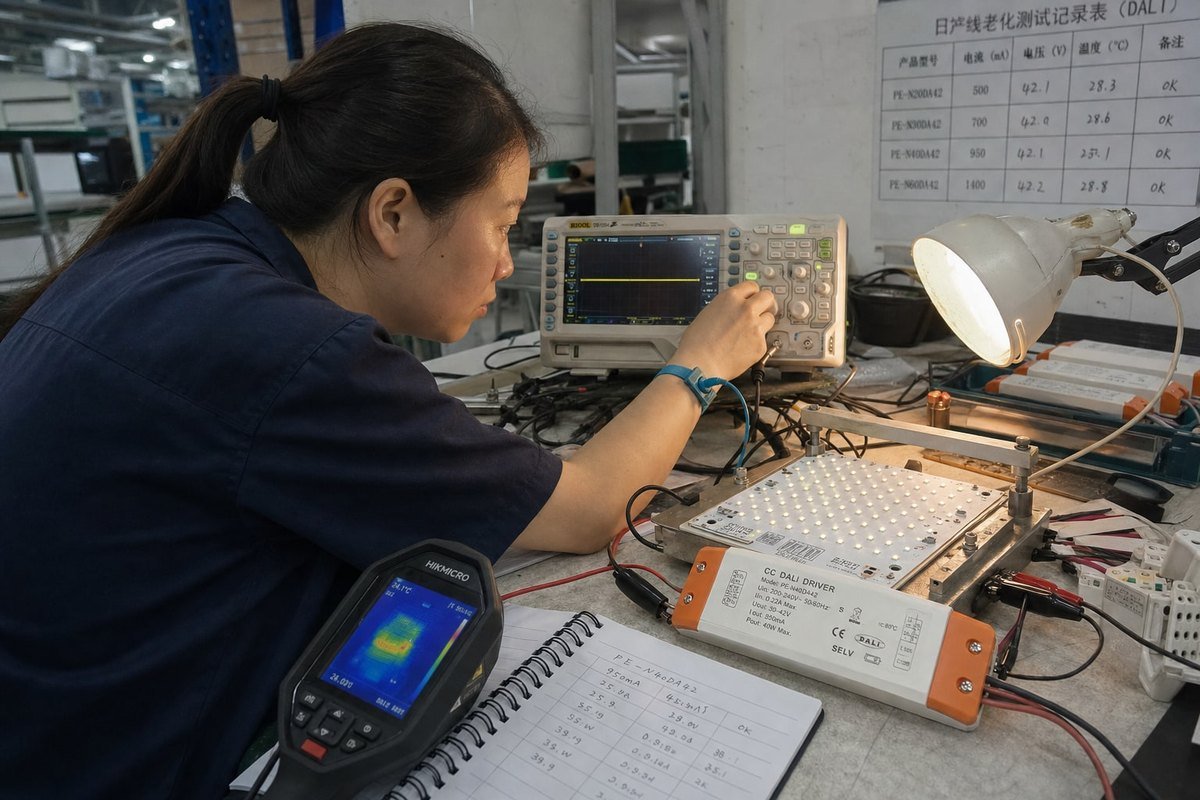
Em nossa instalação em Shenzhen, cada lote de drivers dimerizáveis passa por testes de envelhecimento antes da embalagem. Registramos curvas de dimerização e verificamos flicker em unidades de amostra. Para clientes com prazos de projeto apertados, essa disciplina importa. Um contêiner de drivers com falha não custa apenas dinheiro. Custa a janela de instalação, e projetos de automação de iluminação comercial raramente perdoam atrasos. Pergunte ao seu fornecedor sobre os racks de envelhecimento e registros de teste. Um parceiro sério receberá a pergunta de bom grado. Um fraco mudará de assunto.
Conclusão
Os drivers CC DALI conquistam seu lugar dentro de luminárias de LED resolvendo dois problemas ao mesmo tempo: protegendo LEDs através de regulação de corrente constante e permitindo controle inteligente e endereçável. Escolha as especificações com cuidado, teste a montagem completa e faça parceria com um fornecedor cujo controle de qualidade você possa verificar.
Notas de Rodapé
Fonte oficial da UE explicando a marca de segurança CE que os compradores devem verificar nos drivers. ↩︎
Conceito de fundo explicando o mecanismo de falha de LED referenciado repetidamente no artigo. ↩︎
Explica o princípio elétrico subjacente à regulação de corrente do driver de LED discutida no artigo. ↩︎
Esclarece o fenômeno de EMI relevante para a colocação interna do driver e testes de EMC. ↩︎
Referência de fundo sobre o comportamento de tensão de semicondutores que afeta o desempenho térmico de LEDs. ↩︎
Referencia o padrão internacional que rege o protocolo de controle de iluminação digital DALI. ↩︎
Site oficial da KNX Association explicando o padrão global para automação de edifícios. ↩︎