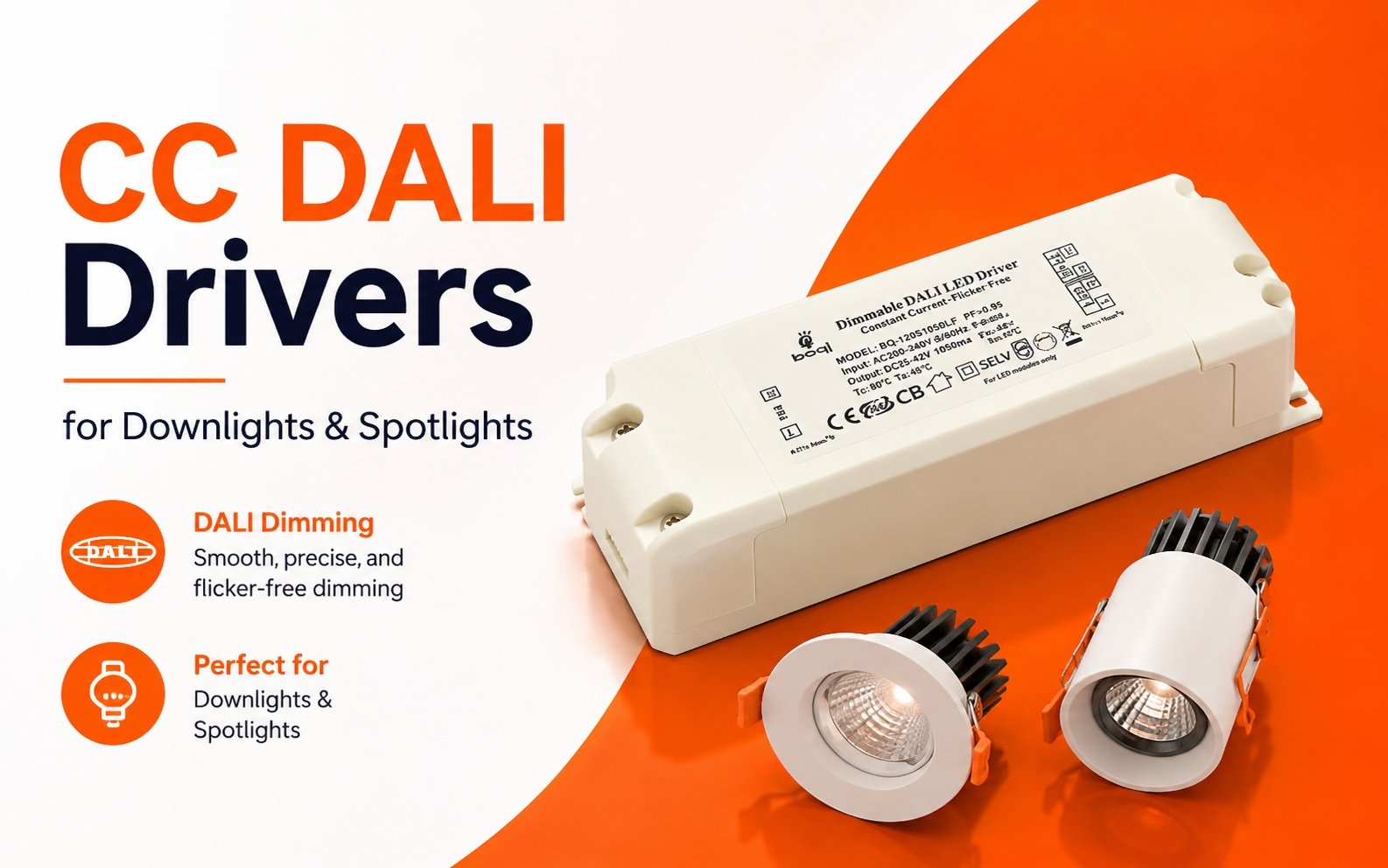















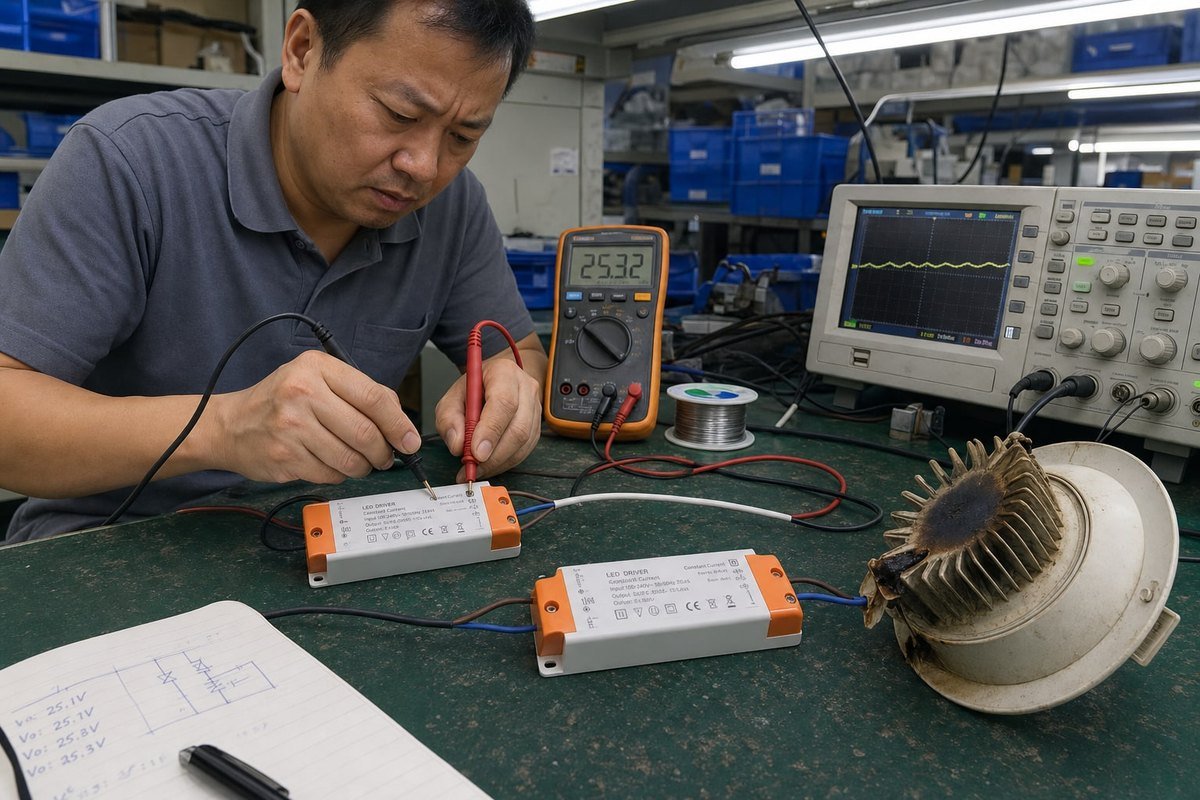
Escolher entre drivers TRIAC de corrente constante e tensão constante confunde muitos compradores. Já vi escolhas erradas queimarem luminárias de LED em nossa bancada de testes, custando lotes inteiros de produção aos clientes.
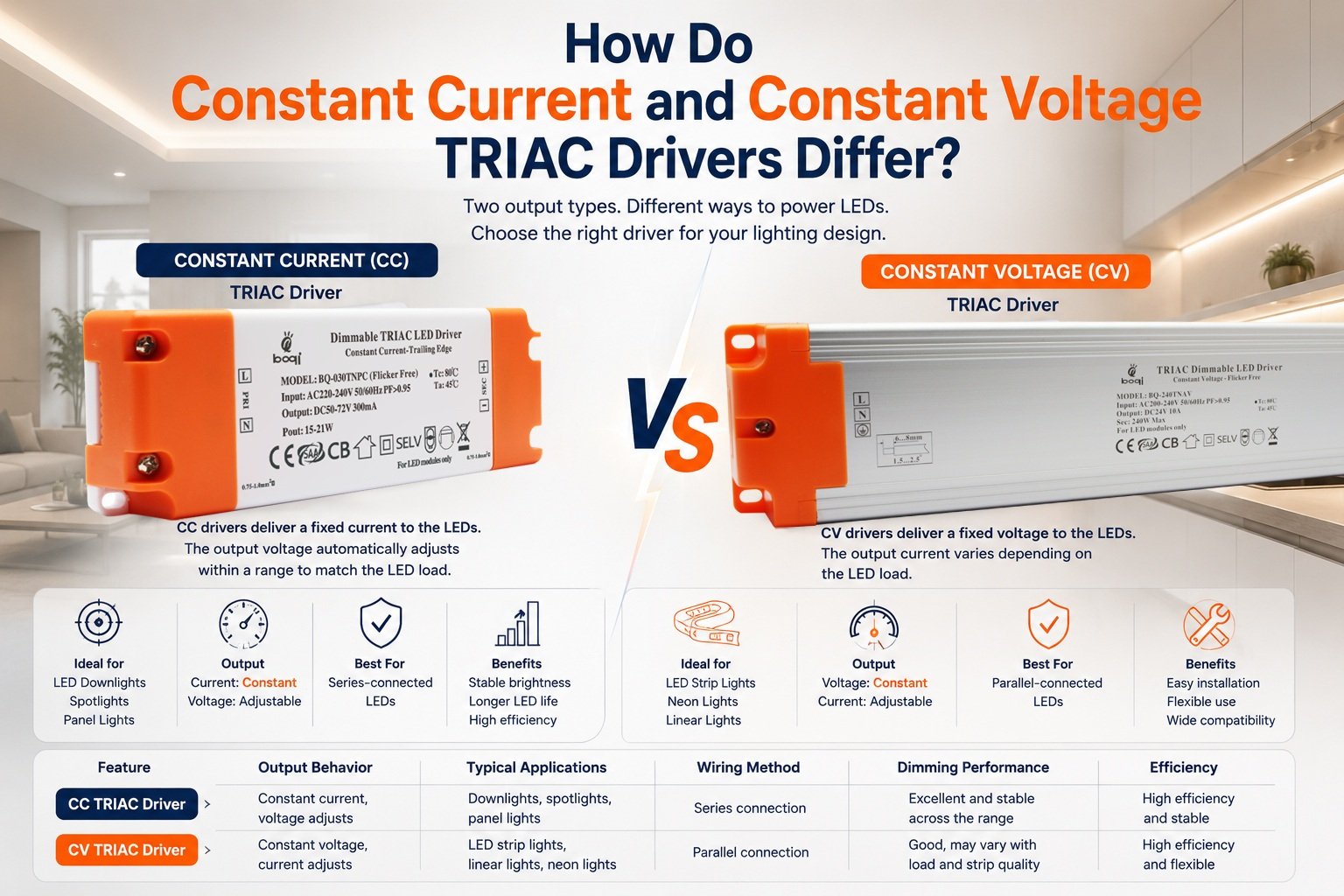
Drivers TRIAC de corrente constante fornecem uma corrente de saída fixa, como 350mA ou 700mA, enquanto a tensão varia com a carga de LED. Drivers TRIAC de tensão constante mantêm uma tensão fixa, geralmente 12V ou 24V, enquanto a corrente varia. Ambos aceitam sinais de dimerização por corte de fase de dimmers de parede.
Essa é a resposta curta. Mas as diferenças vão além de uma linha. Deixe-me explicar o design do circuito, a adequação da aplicação, o comportamento de dimerização e o custo, para que você possa especificar o driver certo na primeira vez.
Como os drivers TRIAC de corrente constante e tensão constante diferem no design do circuito e na regulação da saída?
No ano passado, nossos engenheiros redesenharam uma plataforma de driver TRIAC de 40W em versões CC e CV. Em um invólucro diferente, as duas placas internas pareciam surpreendentemente diferentes. Aqui está o porquê.
Um driver TRIAC de corrente constante usa um loop de feedback de detecção de corrente que ajusta a tensão de saída para manter a amperagem fixa. Um driver TRIAC de tensão constante usa um loop de regulação de tensão que mantém a saída estável, muitas vezes adicionando capacitores de filtro maiores, enquanto a carga conectada determina quanta corrente flui.
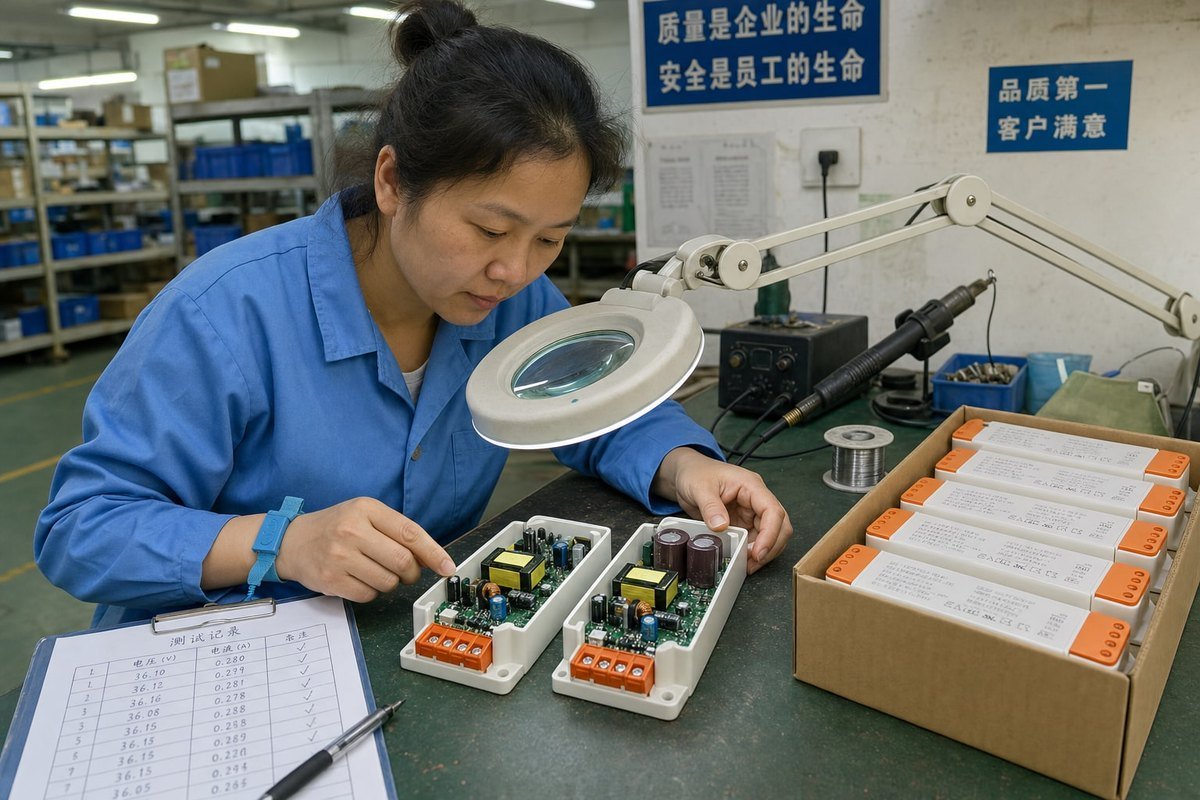
Ambos os tipos de driver começam com o mesmo front-end. Um dimmer TRIAC na parede corta a forma de onda CA usando controle de fase direta 1. O driver deve ler essa entrada cortada, manter o TRIAC em condução e ainda produzir energia DC limpa na saída. É isso que torna a compatibilidade com dimerização por corte de fase complicada. Dimmers de borda de subida precisam de uma corrente de manutenção mínima para permanecerem travados, então ambos os drivers TRIAC CC e CV incluem circuitos de sangria para atender a esse requisito de carga mínima.
A divisão real acontece no estágio de saída.
O loop de feedback conta a história
Um design de corrente constante mede a corrente que flui através dos LEDs, geralmente através de um resistor de detecção. Se a corrente aumentar porque os LEDs esquentam, o IC de controle reduz a tensão de saída. A corrente permanece travada. Por exemplo, um driver CC de 700mA pode variar de 15V a 42V dependendo de quantos LEDs estão na cadeia.
Um design de tensão constante faz o oposto. Ele monitora a tensão de saída e a mantém exatamente em 12V ou 24V. Qualquer carga que você conectar consome sua própria corrente, até o máximo nominal do driver. O ônus da regulação recai sobre o próprio produto de LED, que deve incluir resistores ou controle de corrente integrado.
Comparação elétrica lado a lado
| Aspecto | Corrente Constante (CC) | Tensão Constante (CV) |
|---|---|---|
| Parâmetro regulado | Corrente de saída (mA) | Tensão de saída (V) |
| Parâmetro variável | Tensão (dentro de uma faixa) | Corrente (até o máximo nominal) |
| Classificações típicas | 350mA, 500mA, 700mA | 12V, 24V |
| Método de feedback | Loop de resistor de detecção de corrente | Loop de divisor de tensão |
| Fiação da carga | Cadeia em série | Segmentos em paralelo |
| Capacitância de saída | Moderado | Maior, com corrente de inrush mais alta |
Uma nota prática da nossa linha de controle de qualidade: drivers CV com grandes capacitores de filtro podem produzir corrente de inrush mais alta na ligação. Com o tempo, esse inrush pode estressar os contatos dentro de um dimmer TRIAC. Bons designs adicionam circuitos de partida suave para controlar isso. Além disso, drivers acima de certos níveis de potência exigem correção do fator de potência 2 estágios, e esse requisito se aplica igualmente a ambas as topologias CC e CV.
Qual tipo de driver TRIAC devo escolher para minha aplicação específica de iluminação LED?
Um comprador de Lyon uma vez nos enviou uma especificação pedindo um “driver TRIAC de 24V, 700mA” para downlights. Essa contradição me disse que a etiqueta da luminária dele precisava de uma análise mais atenta primeiro.
Verifique a etiqueta da luminária. Se ela especificar uma corrente, como 350mA ou 700mA, escolha um driver TRIAC de corrente constante. Se ela especificar uma tensão, como 12V ou 24V, escolha um driver TRIAC de tensão constante. O projeto elétrico do produto de LED decide, não o dimerizador.
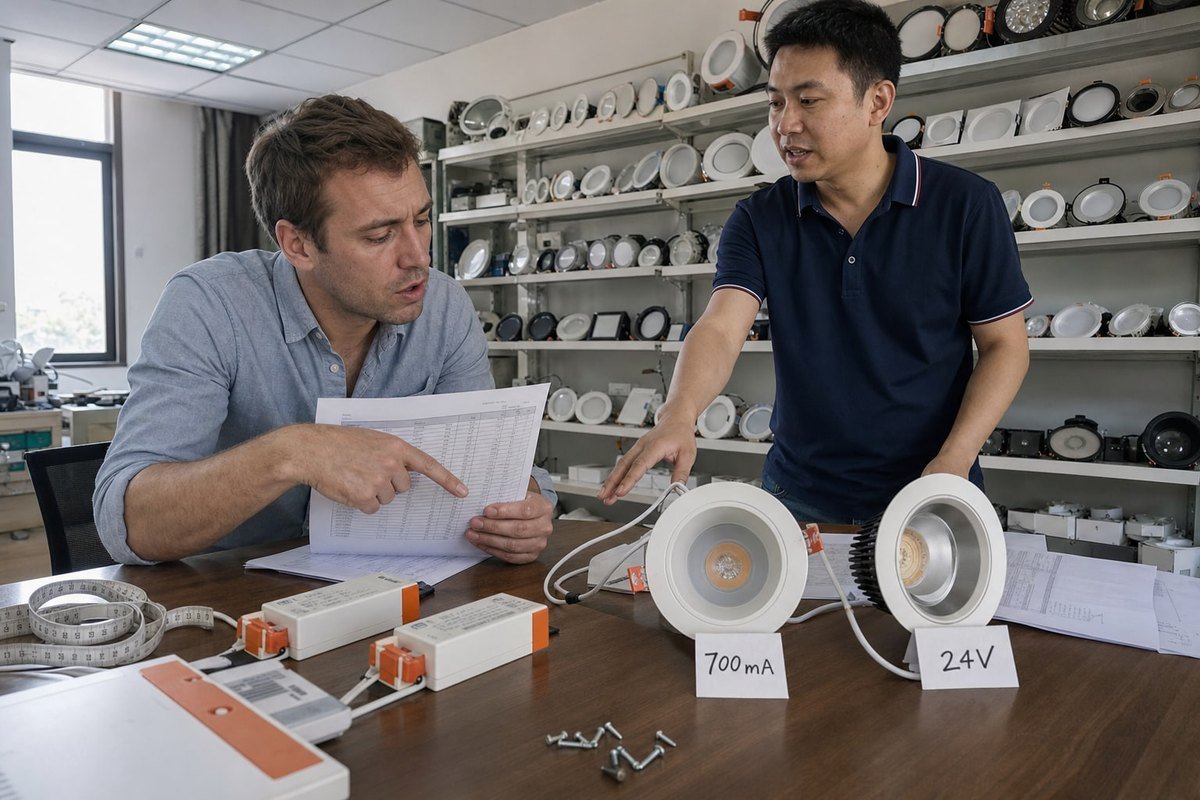
A regra da etiqueta resolve a maioria dos casos em segundos. Mas ajuda entender por que cada categoria de produto tende a um caminho.
Onde os drivers TRIAC de corrente constante se encaixam
Drivers de CC são adequados para luminárias construídas em torno de pacotes de LED nus ou módulos COB sem limitação interna de corrente. Estes incluem:
- Downlights embutidos e spots
- Cabeças de trilho de iluminação
- Luminárias pendentes com motores COB
- Painéis de luz e fontes pontuais arquitetônicas
LEDs são dispositivos acionados por corrente. Seu brilho e vida útil dependem da corrente, não da tensão. Alimentar um módulo COB nu com tensão fixa convida à fuga térmica 3: o LED aquece, consome mais corrente, aquece mais e falha. Um driver de CC bloqueia esse ciclo limitando a corrente, não importa o que a temperatura da junção faça.
Onde os drivers TRIAC de tensão constante se encaixam
Drivers de CV dominam fitas de LED e sistemas modulares:
- Fita flexível e barras lineares rígidas
- Sinalização e letras de canal
- Perfis de sanca e sob armários
- Sistemas magnéticos de baixa tensão retrofit que esperam uma fonte de 12V ou 24V
Esses produtos já contêm resistores de limitação de corrente ou reguladores integrados em cada segmento. Eles só precisam de uma tensão de trilho estável. Você também pode cortar, estender ou adicionar segmentos de fita sem trocar o driver, desde que a corrente total permaneça abaixo do teto do driver.
Tabela de decisão rápida
| Seu produto de LED | A etiqueta diz | Driver TRIAC correto |
|---|---|---|
| Módulo COB para downlight | 700mA, 27–42V | Corrente constante |
| Rolo de fita de LED de 5 metros | 24V CC, 60W | Tensão constante |
| Spot de trilho | 350mA | Corrente constante |
| Cadeia de módulos de sinalização | 12V CC | Tensão constante |
Um aviso da nossa experiência de exportação: nunca superdimensione a corrente de um driver de CC. Um driver de 700mA em um módulo de 500mA vai sobrecarregar e encurtar a vida do LED, mesmo que a janela de tensão corresponda.
Como o desempenho de dimerização e a compatibilidade se comparam entre drivers TRIAC de corrente constante e tensão constante?
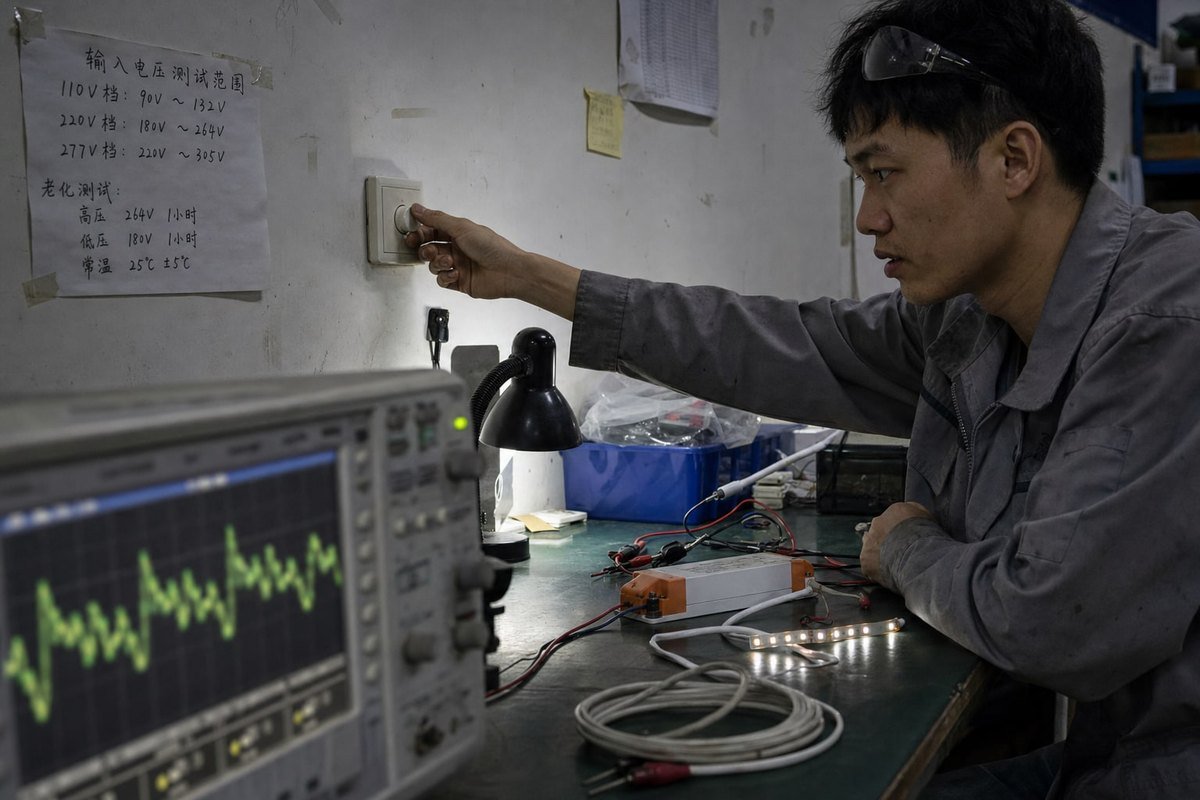
Curvas de dimerização são testadas obsessivamente em nossa instalação. Rodamos cada novo projeto de driver contra uma prateleira de dimerizadores de borda popular europeus e americanos, porque especificações em papel nunca contam a história completa de compatibilidade.
Drivers TRIAC de corrente constante geralmente dimerizam reduzindo a corrente de saída, oferecendo desempenho suave e sem cintilação até níveis baixos. Drivers TRIAC de tensão constante tipicamente traduzem o sinal de corte de fase em saída de Modulação por Largura de Pulso, o que funciona bem, mas é mais sensível à corrente de manutenção e à queda de tensão em longas distâncias.
O método de dimerização é onde as duas arquiteturas divergem mais visivelmente para o usuário final.
Como cada tipo interpreta o corte de fase
Um driver de CC mede o ângulo de condução do dimerizador de parede e o mapeia para um nível de corrente. Isso é chamado de Redução de Corrente Constante, ou CCR. Na posição de dimerizador de 50%, o driver pode emitir 350mA em vez de 700mA. Como as mudanças de corrente são suaves e contínuas, a CCR oferece desempenho genuinamente sem cintilação, sem artefatos de alta frequência. Projetos avançados de CC agora adicionam dimerização híbrida, misturando CCR com PWM no fundo da faixa, para eliminar o efeito “pop-on”, onde as luzes saltam de desligado para um brilho mínimo visível.
Um driver de CV não pode simplesmente reduzir sua tensão, porque uma fita de 24V dimerizada para 12V se comportaria de forma imprevisível e mudaria a cor. Em vez disso, a maioria dos drivers TRIAC de CV converte a entrada de corte de fase em uma Modulação por Largura de Pulso 4 saída em tensão total. A fita pisca e apaga mais rápido do que o olho pode ver. Bem feito, o PWM dimeriza profundamente e uniformemente. Mal feito, em baixas frequências, pode aparecer em câmeras como faixas.
Pontos problemáticos de compatibilidade
Sistemas de CV enfrentam dois desafios extras. Primeiro, o requisito de carga mínima pesa mais: dimerize um pequeno segmento de fita a 5%, e a potência total pode cair abaixo do que o dimerizador de borda precisa para manter seu TRIAC travado, causando cintilação ou queda. Segundo, a queda de tensão em longos cabos dimeriza a extremidade distante de uma fita. Drivers de CC contornam ambos os problemas; eles aumentam a tensão para superar a resistência do cabo, mantendo o brilho uniforme ao longo de uma cadeia em série.
A combinação com o dimerizador ainda importa para ambos. Sempre aconselhamos compradores a solicitar uma lista de compatibilidade de dimerizadores testados em vez de assumir que qualquer dimerizador TRIAC funcionará.
Quais fatores de custo e eficiência devo considerar ao selecionar entre esses dois tipos de drivers TRIAC para produção em massa?
Negociações de custo me ensinaram uma lição difícil no início da minha carreira comercial: o driver mais barato na folha de cotação raramente produz a luminária final mais barata. O custo do conjunto total é o que importa.
Os drivers TRIAC de corrente constante custam ligeiramente mais por unidade, mas alcançam maior eficiência, frequentemente 90% ou superior, e simplificam a luminária ao eliminar componentes limitadores de corrente. Os drivers TRIAC de tensão constante custam menos individualmente, mas transferem perdas por resistor e gerenciamento de corrente para o próprio produto de LED.

Para um comprador como você, planejando pedidos em volume e metas rígidas de BOM Iluminação LED 5, a decisão exige uma visão em nível de sistema, não apenas de driver.
Eficiência no nível do sistema
Um driver CC alimenta corrente diretamente na cadeia de LEDs. Quase nada é desperdiçado entre driver e diodo. Um sistema CV, por outro lado, queima energia nos resistores limitadores de corrente embutidos em cada segmento de fita. Essas perdas por resistor nunca aparecem na folha de dados do driver, mas aumentam o consumo real de energia e o calor. Ao calcular lúmens por watt 6 para o produto inteiro, arquiteturas CC geralmente vencem.
Comparação de custo do conjunto completo
| Fator de custo | Sistema TRIAC CC | Sistema TRIAC CV |
|---|---|---|
| Preço unitário do driver | Moderado a mais alto | Menor |
| Complexidade do módulo de LED | Mais simples, sem resistores necessários | Resistores ou reguladores na placa |
| Eficiência do sistema | Frequentemente 90%+ | Menor devido a perdas por resistor |
| Flexibilidade de estoque | Um driver por especificação de corrente | Um driver de 24V cobre muitas fitas |
| Mão de obra de fiação | Cadeia em série, correspondência cuidadosa | Paralelo, instalação mais rápida |
| Risco de falha em campo | Menor, corrente é protegida | Maior se a carga exceder a classificação |
Considerações de produção e fornecimento
Drivers CV oferecem uma vantagem real de estoque. Um único driver TRIAC de 24V, 100W pode atender dezenas de SKUs de fitas, reduzindo a complexidade de compra. Drivers CC exigem correspondência mais rigorosa: cada família de luminárias precisa de um driver com a janela correta de corrente e tensão, o que multiplica os números de peça.
No entanto, considere devoluções e exposição a garantia. Em nossa experiência com envios para clientes europeus, luminárias com driver CC geram menos reclamações em campo porque danos por sobrecorrente são projetados para fora. Também avalie as implicações de circuito em série vs paralelo na sua linha de montagem: cadeias CC em série devem ser totalmente conectadas antes da energização, enquanto segmentos CV em paralelo toleram carga parcial durante testes. Por fim, confirme que o nível de potência escolhido inclui correção de fator de potência adequada, já que regulamentações da UE 7 aplicam limites independentemente da topologia CC ou CV.
Conclusão
Corresponda ao rótulo: classificações de corrente precisam de drivers TRIAC de corrente constante, classificações de tensão precisam de tensão constante. TRIAC define a entrada de dimerização; o tipo de regulação define todo o resto. Verifique a compatibilidade antes da produção em massa.
Notas de Rodapé
Explica fundamentos de dimerização TRIAC referenciados na discussão de projeto de circuito. ↩︎
Esclarece conceito técnico mencionado sobre requisitos regulatórios de drivers. ↩︎
Contexto sobre fenômeno de fuga térmica que afeta a confiabilidade e falha de LEDs. ↩︎
Define técnica de dimerização PWM usada por drivers de tensão constante. ↩︎
Conceito de base sobre tecnologia de lâmpadas LED que sustenta todo o artigo. ↩︎
Fonte governamental autoritativa definindo eficácia de LED e métricas de lúmens por watt. ↩︎
Fonte oficial da UE sobre normas regulatórias que afetam regras de fator de potência de drivers. ↩︎