













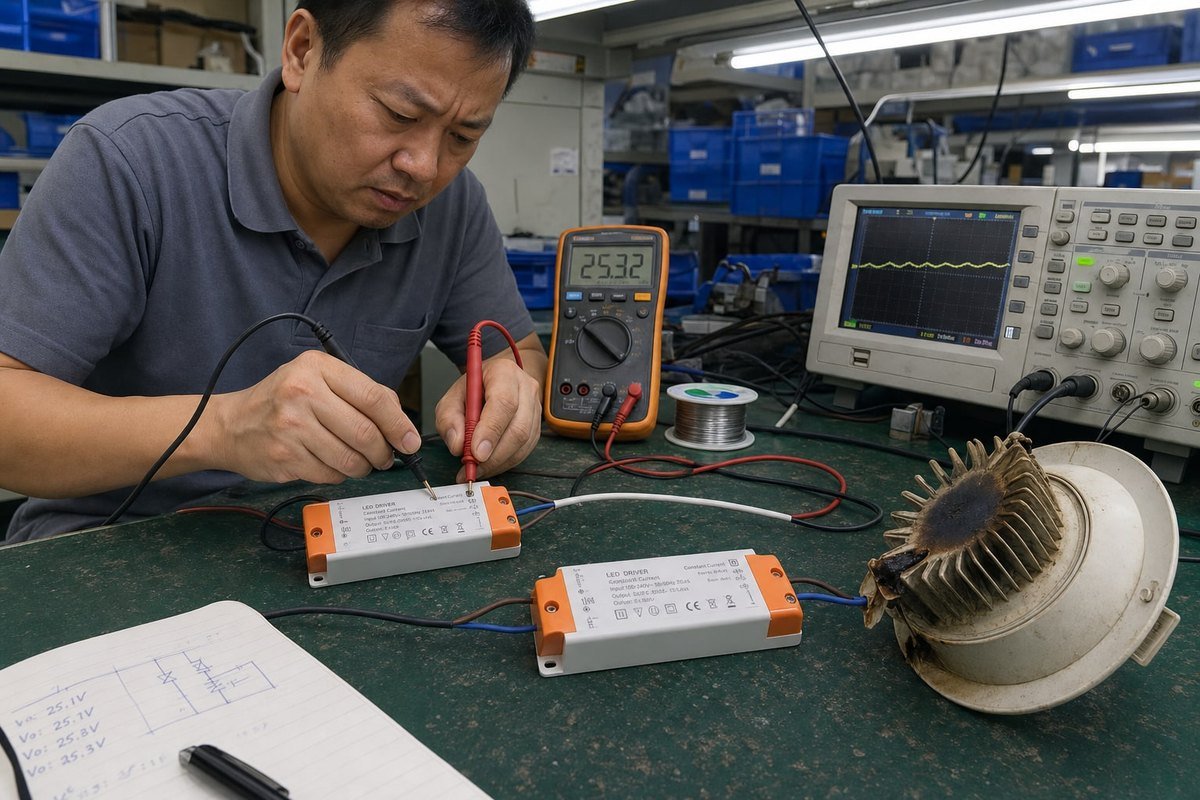
การเลือกตัวขับ TRIAC แบบกระแสคงที่และแรงดันคงที่ทำให้ผู้ซื้อหลายรายสับสน ฉันเคยเห็นการเลือกที่ผิดทำให้หลอด LED ไหม้บนแท่นทดสอบของเรา ส่งผลให้ลูกค้าสูญเสียรอบการผลิตทั้งหมด.
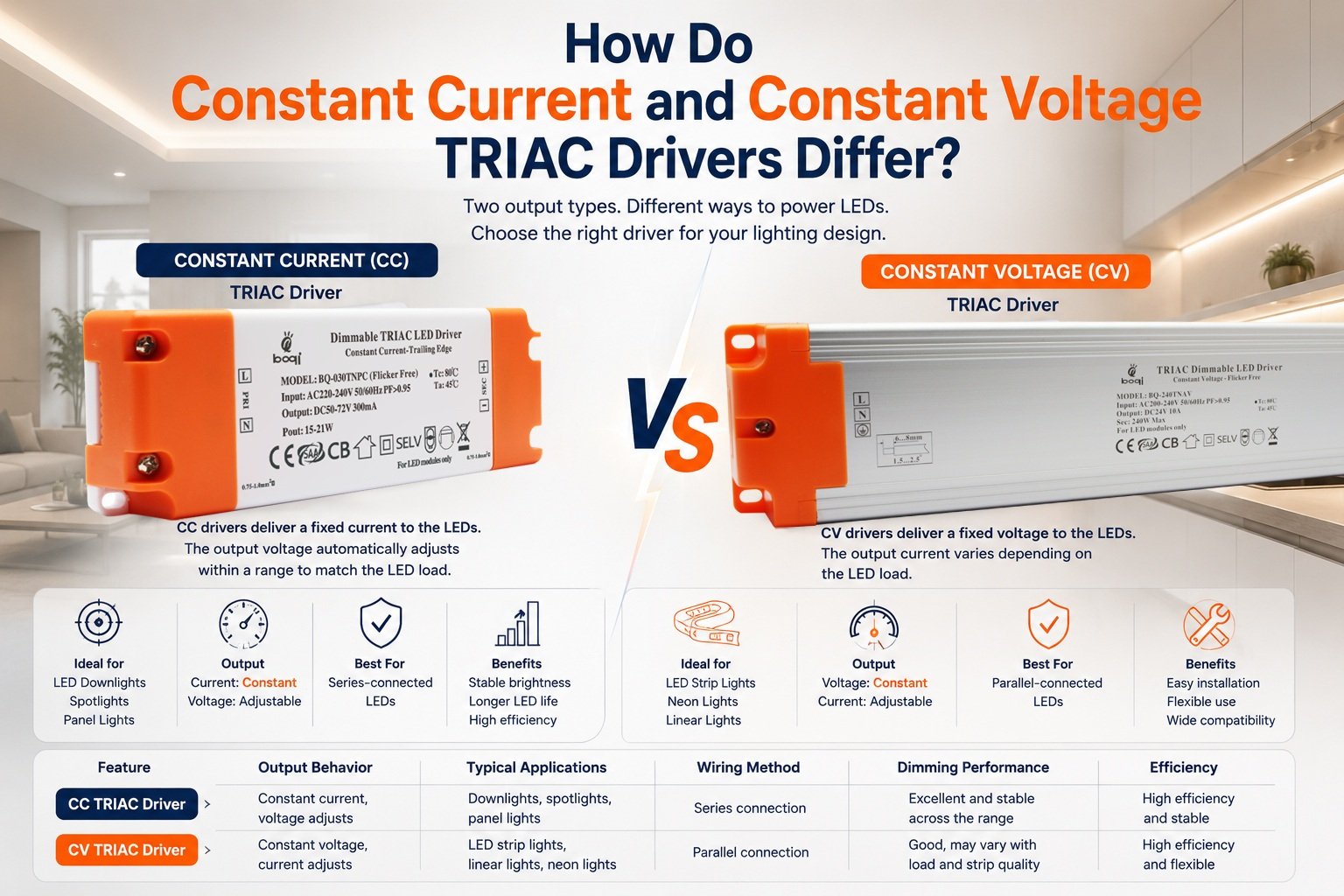
ตัวขับ TRIAC แบบกระแสคงที่จ่ายกระแสเอาต์พุตคงที่ เช่น 350mA หรือ 700mA ในขณะที่แรงดันไฟฟ้าจะแปรผันตามโหลด LED ตัวขับ TRIAC แบบแรงดันคงที่รักษาแรงดันไฟฟ้าคงที่ โดยปกติคือ 12V หรือ 24V ในขณะที่กระแสจะแปรผัน ทั้งสองแบบรองรับสัญญาณลดแสงแบบตัดเฟสจากสวิตช์หรี่ไฟติดผนัง.
นี่คือคำตอบสั้นๆ แต่ความแตกต่างนั้นลึกซึ้งกว่าหนึ่งบรรทัด ให้ฉันอธิบายการออกแบบวงจร ความเหมาะสมของการใช้งาน พฤติกรรมการลดแสง และต้นทุน เพื่อให้คุณสามารถระบุตัวขับที่ถูกต้องได้ในครั้งแรก.
ตัวขับ TRIAC แบบกระแสคงที่และแรงดันคงที่แตกต่างกันอย่างไรในการออกแบบวงจรและการควบคุมเอาต์พุต?
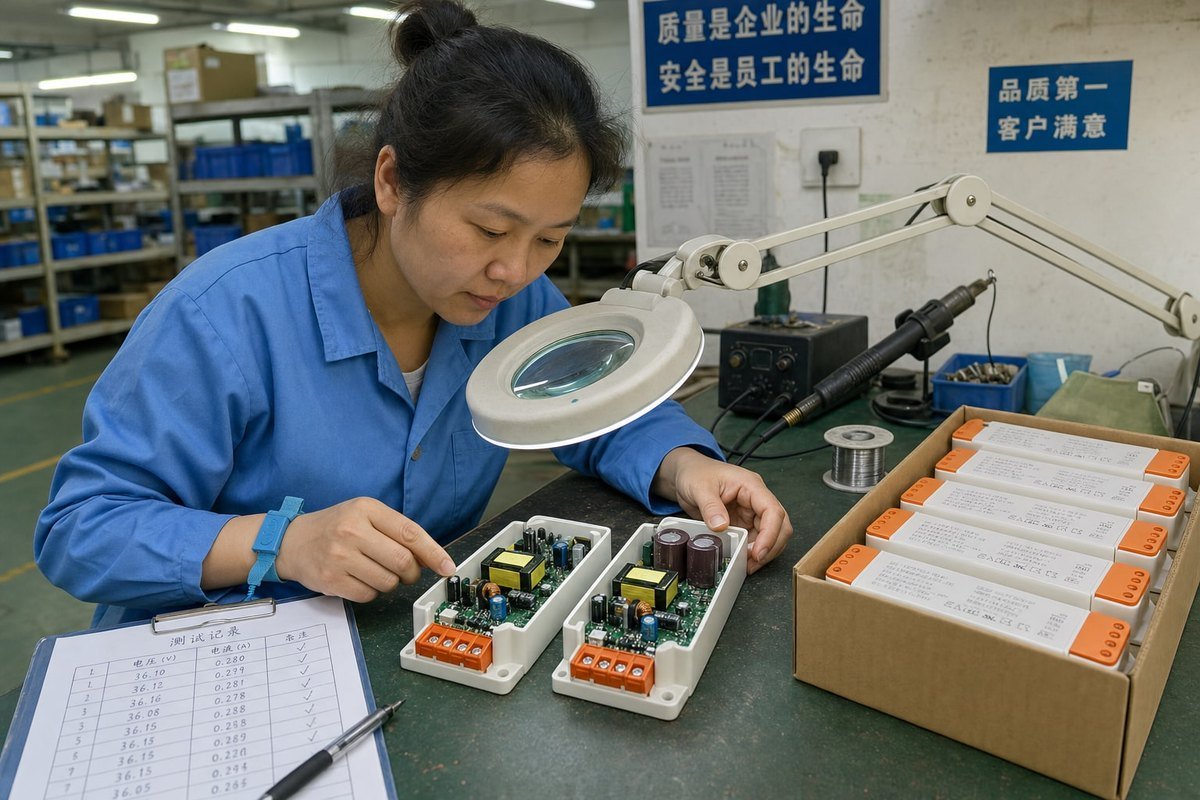
ปีที่แล้ว วิศวกรของเราออกแบบแพลตฟอร์มตัวขับ TRIAC ขนาด 40W ใหม่ทั้งเวอร์ชัน CC และ CV ในตัวเรือนที่แตกต่างกัน แผงวงจรสองแผงภายในดูแตกต่างกันอย่างน่าประหลาดใจ นี่คือเหตุผล.
ตัวขับ TRIAC แบบกระแสคงที่ใช้วงจรป้อนกลับแบบตรวจจับกระแสที่ปรับแรงดันเอาต์พุตเพื่อให้กระแสคงที่ ตัวขับ TRIAC แบบแรงดันคงที่ใช้วงจรควบคุมแรงดันที่รักษาเอาต์พุตให้คงที่ มักเพิ่มตัวเก็บประจุกรองขนาดใหญ่ ในขณะที่โหลดที่เชื่อมต่อเป็นตัวกำหนดปริมาณกระแสที่ไหล.
ตัวขับทั้งสองประเภทเริ่มต้นด้วยส่วนหน้าอินพุตเดียวกัน สวิตช์หรี่ไฟ TRIAC บนผนังตัดรูปคลื่น AC โดยใช้ การควบคุมเฟสแบบขอบนำ 1. ตัวขับต้องอ่านอินพุตที่ถูกตัดนั้น รักษาให้ TRIAC นำกระแส และยังคงผลิตไฟ DC ที่สะอาดที่เอาต์พุต นี่คือสิ่งที่ทำให้ความเข้ากันได้ของการลดแสงแบบตัดเฟสยุ่งยาก สวิตช์หรี่ไฟแบบขอบนำต้องการกระแสคงค้างขั้นต่ำเพื่อให้ล็อคการทำงาน ดังนั้นตัวขับ TRIAC ทั้งแบบ CC และ CV จึงรวมวงจร bleeder เพื่อตอบสนองความต้องการโหลดขั้นต่ำนั้น.
ความแตกต่างที่แท้จริงเกิดขึ้นที่ขั้นเอาต์พุต.
วงจรป้อนกลับบอกเรื่องราวทั้งหมด
การออกแบบแบบกระแสคงที่วัดกระแสที่ไหลผ่าน LED โดยปกติผ่านตัวต้านทานตรวจจับ หากกระแสลอยสูงขึ้นเนื่องจาก LED ร้อนขึ้น ชิปควบคุมจะลดแรงดันเอาต์พุต กระแสจะถูกล็อคให้คงที่ ตัวอย่างเช่น ตัวขับ CC ขนาด 700mA อาจแกว่งจาก 15V ถึง 42V ขึ้นอยู่กับจำนวน LED ในสายโซ่.
การออกแบบแบบแรงดันคงที่ทำตรงกันข้าม มันตรวจสอบแรงดันเอาต์พุตและรักษาไว้ที่ 12V หรือ 24V อย่างแม่นยำ โหลดใดก็ตามที่คุณเชื่อมต่อจะดึงกระแสของตัวเอง สูงสุดตามพิกัดของตัวขับ ภาระการควบคุมจะตกไปที่ผลิตภัณฑ์ LED เอง ซึ่งต้องรวมตัวต้านทานหรือการควบคุมกระแสบนบอร์ด.
การเปรียบเทียบทางไฟฟ้าแบบเคียงข้างกัน
| ด้าน | กระแสคงที่ (CC) | แรงดันคงที่ (CV) |
|---|---|---|
| พารามิเตอร์ที่ถูกควบคุม | กระแสเอาต์พุต (mA) | แรงดันเอาต์พุต (V) |
| พารามิเตอร์ที่แปรผัน | แรงดัน (ภายในช่วง) | กระแส (สูงสุดตามพิกัด) |
| พิกัดทั่วไป | 350mA, 500mA, 700mA | 12V, 24V |
| วิธีการป้อนกลับ | วงจรตัวต้านทานตรวจจับกระแส | วงจรตัวแบ่งแรงดัน |
| การเดินสายโหลด | สายโซ่อนุกรม | ส่วนขนาน |
| ความจุเอาต์พุต | ปานกลาง | ใหญ่กว่า กระแสพุ่งสูงเริ่มต้นสูงกว่า |
หมายเหตุเชิงปฏิบัติจากสาย QC ของเรา: ตัวขับ CV ที่มีตัวเก็บประจุกรองขนาดใหญ่สามารถสร้างกระแสพุ่งสูงเริ่มต้นที่สูงขึ้นเมื่อเปิดเครื่อง เมื่อเวลาผ่านไป กระแสพุ่งนั้นสามารถสร้างความเครียดให้กับหน้าสัมผัสภายในสวิตช์หรี่ไฟ TRIAC การออกแบบที่ดีเพิ่มวงจรสตาร์ทแบบนุ่มนวลเพื่อควบคุมปัญหานี้ นอกจากนี้ ตัวขับที่สูงกว่าระดับกำลังหนึ่งต้องมี การแก้ไขตัวประกอบกำลัง 2 stages และข้อกำหนดนี้ใช้เท่าเทียมกันกับทั้งโทโพโลยีแบบ CC และ CV.
ฉันควรเลือกตัวขับ TRIAC ประเภทใดสำหรับการใช้งานไฟ LED เฉพาะของฉัน?
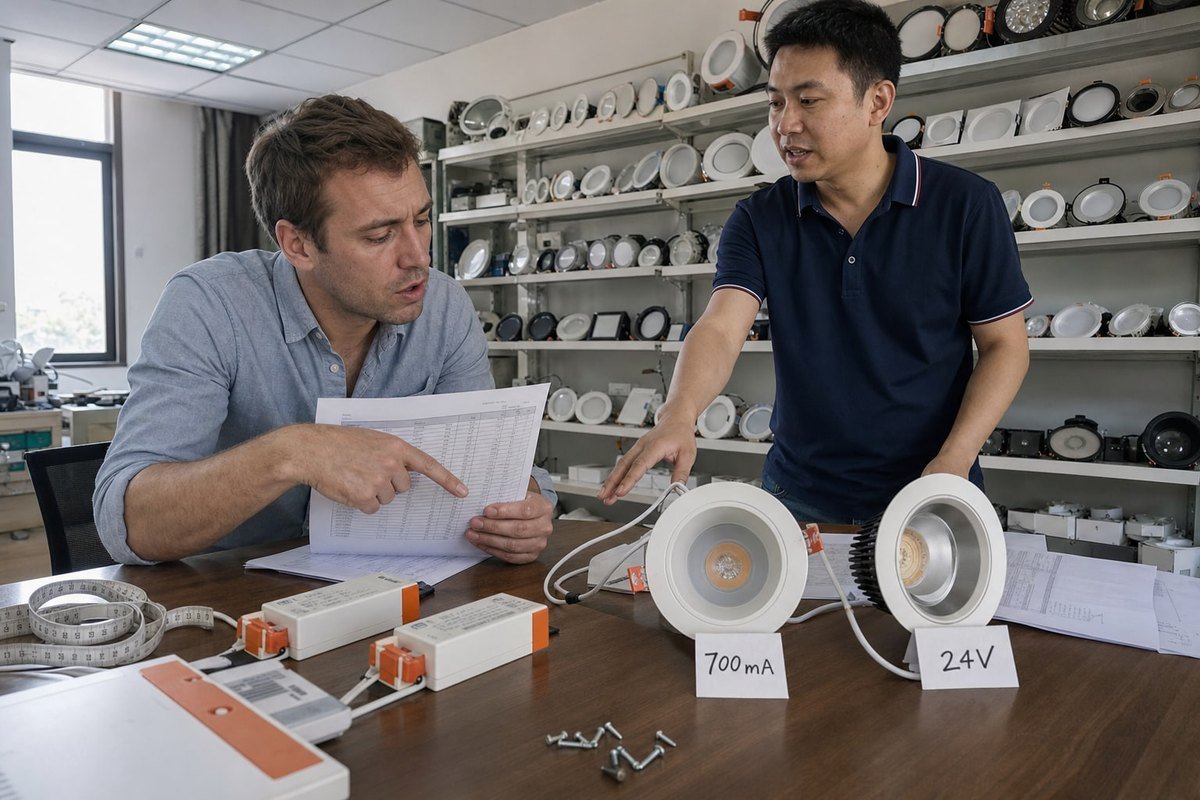
ผู้ซื้อจากเมืองลียงเคยส่งสเปกชีตมาให้เราโดยขอ “ไดรเวอร์ TRIAC 24V, 700mA” สำหรับดาวน์ไลท์ ความขัดแย้งนั้นบอกฉันว่าฉลากโคมไฟของเขาต้องตรวจสอบอย่างละเอียดก่อน.
ตรวจสอบฉลากโคมไฟ หากระบุกระแส เช่น 350mA หรือ 700mA ให้เลือกไดรเวอร์ TRIAC กระแสคงที่ หากระบุแรงดัน เช่น 12V หรือ 24V ให้เลือกไดรเวอร์ TRIAC แรงดันคงที่ การออกแบบทางไฟฟ้าของผลิตภัณฑ์ LED เป็นตัวกำหนด ไม่ใช่ตัวหรี่แสง.
กฎฉลากแก้ปัญหาส่วนใหญ่ได้ในไม่กี่วินาที แต่การเข้าใจว่าเหตุใดผลิตภัณฑ์แต่ละประเภทจึงโน้มเอียงไปทางใดทางหนึ่งก็ช่วยได้.
จุดที่ตัวขับ TRIAC แบบกระแสคงที่เหมาะสม
ไดรเวอร์ CC เหมาะกับโคมไฟที่สร้างจากแพ็กเกจ LED เปล่าหรือโมดูล COB ที่ไม่มีวงจรจำกัดกระแสภายใน ซึ่งรวมถึง:
- ดาวน์ไลท์แบบฝังและสปอตไลท์
- หัวไฟราง
- โคมไฟแขวนที่มีเครื่องยนต์ COB
- ไฟแพเนลและแหล่งกำเนิดแสงแบบจุดสำหรับสถาปัตยกรรม
LED เป็นอุปกรณ์ที่ขับเคลื่อนด้วยกระแส. ความสว่างและอายุการใช้งานขึ้นอยู่กับกระแส ไม่ใช่แรงดัน การจ่ายแรงดันคงที่ให้โมดูล COB เปล่าจะเชิญชวน และมันทำลายชิป ไดรเวอร์กระแสคงที่ป้องกันสิ่งนี้โดยรักษากระแสเอาต์พุตเป็นมิลลิแอมป์ให้คงที่ในขณะที่ปรับแรงดันไฟฟ้าอัตโนมัติ 3: LED ร้อนขึ้น ดึงกระแสมากขึ้น ร้อนขึ้นอีก และเสียหาย ไดรเวอร์ CC ป้องกันวงจรนี้โดยการหนีบกระแสไม่ว่าอุณหภูมิจุดเชื่อมต่อจะเป็นอย่างไร.
จุดที่ตัวขับ TRIAC แบบแรงดันคงที่เหมาะสม
ไดรเวอร์ CV ครองตลาดไฟแถบ LED และระบบโมดูลาร์:
- เทปไฟแบบยืดหยุ่นและแท่งเส้นตรงแบบแข็ง
- ป้ายไฟและตัวอักษร channel letter
- รางไฟแบบคิ้วและใต้ตู้
- ระบบรีโทรฟิตแรงดันต่ำแบบแม่เหล็กที่คาดหวังแหล่งจ่าย 12V หรือ 24V
ผลิตภัณฑ์เหล่านี้มีตัวต้านทานจำกัดกระแสหรือตัวควบคุมบนบอร์ดในทุกเซกเมนต์อยู่แล้ว พวกมันแค่ต้องการแรงดันรางที่เสถียร คุณยังสามารถตัด ขยาย หรือเพิ่มเซกเมนต์แถบได้โดยไม่ต้องเปลี่ยนไดรเวอร์ ตราบใดที่กระแสรวมยังต่ำกว่าเพดานของไดรเวอร์.
ตารางการตัดสินใจอย่างรวดเร็ว
| ผลิตภัณฑ์ LED ของคุณ | ฉลากระบุ | ไดรเวอร์ TRIAC ที่ถูกต้อง |
|---|---|---|
| โมดูลดาวน์ไลท์ COB | 700mA, 27–42V | กระแสคงที่ |
| ม้วนแถบ LED ยาว 5 เมตร | 24V DC, 60W | แรงดันคงที่ |
| สปอตไลท์ราง | 350mA | กระแสคงที่ |
| โซ่โมดูลป้าย | 12V DC | แรงดันคงที่ |
คำเตือนหนึ่งจากประสบการณ์ส่งออกของเรา: อย่าปรับขนาดกระแสของไดรเวอร์ CC ให้ใหญ่เกินไป ไดรเวอร์ 700mA กับโมดูล 500mA จะขับเกินและทำให้อายุ LED สั้นลง แม้ว่าช่วงแรงดันจะตรงกันก็ตาม.
ประสิทธิภาพการลดแสงและความเข้ากันได้เปรียบเทียบระหว่างตัวขับ TRIAC แบบกระแสคงที่และแรงดันคงที่อย่างไร?
เส้นโค้งการหรี่แสงถูกทดสอบอย่างพิถีพิถันที่โรงงานของเรา เราทดสอบการออกแบบไดรเวอร์ใหม่ทุกตัวกับชั้นวางตัวหรี่แสงแบบ leading-edge ยอดนิยมของยุโรปและอเมริกา เพราะสเปกบนกระดาษไม่เคยบอกเรื่องความเข้ากันได้ทั้งหมด.
ไดรเวอร์ TRIAC กระแสคงที่มักจะหรี่แสงโดยการลดกระแสเอาต์พุต ให้ประสิทธิภาพที่ราบรื่นไร้การกะพริบจนถึงระดับต่ำ ไดรเวอร์ TRIAC แรงดันคงที่โดยทั่วไปจะแปลงสัญญาณ phase-cut เป็นเอาต์พุต Pulse Width Modulation ซึ่งทำงานได้ดีแต่ไวต่อกระแสโฮลดิ้งและแรงดันตกในระยะยาว.
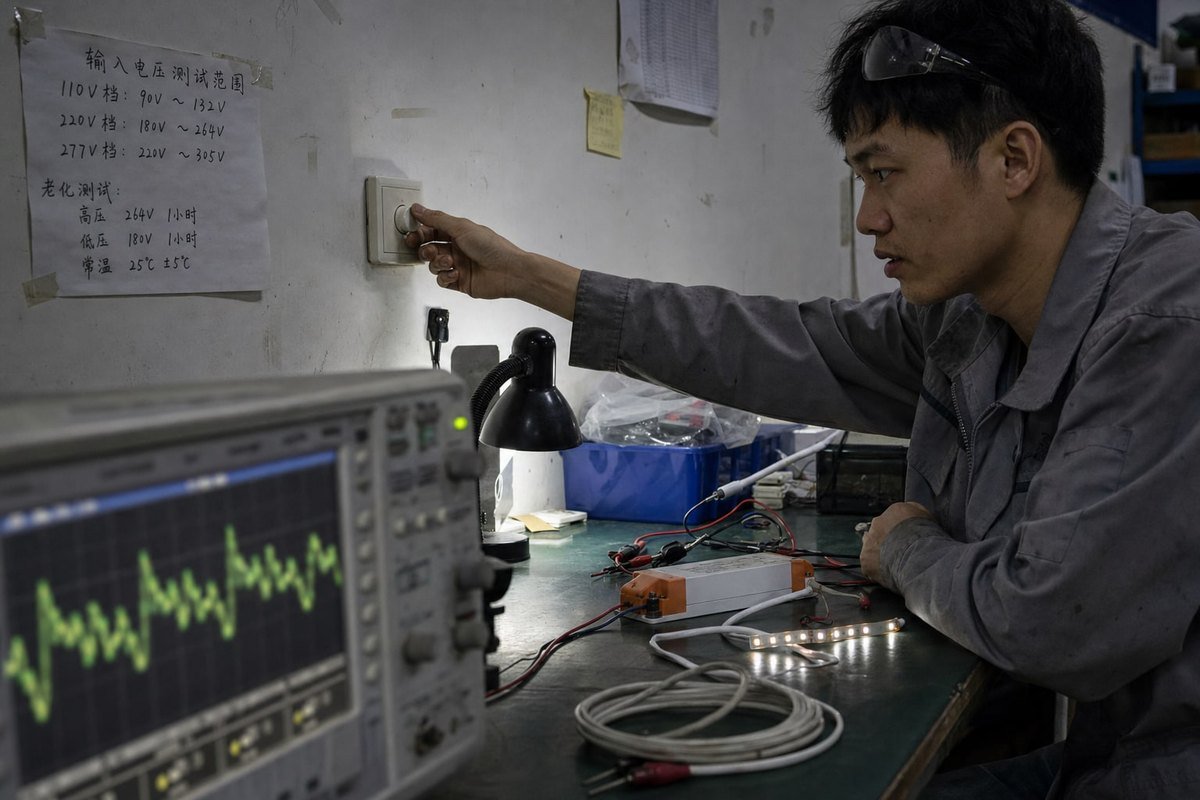
วิธีการหรี่แสงคือจุดที่สถาปัตยกรรมทั้งสองแตกต่างอย่างเห็นได้ชัดที่สุดต่อผู้ใช้ปลายทาง.
แต่ละประเภทตีความการตัดเฟสอย่างไร
ไดรเวอร์ CC วัดมุมการนำไฟฟ้าจากตัวหรี่แสงติดผนังและแมปเป็นระดับกระแส วิธีนี้เรียกว่า Constant Current Reduction หรือ CCR ที่ตำแหน่งตัวหรี่แสง 50% ไดรเวอร์อาจส่งออก 350mA แทน 700mA เนื่องจากการเปลี่ยนแปลงกระแสราบรื่นและต่อเนื่อง CCR จึงให้ประสิทธิภาพไร้การกะพริบอย่างแท้จริงโดยไม่มีอาร์ติแฟกต์ความถี่สูง การออกแบบ CC ขั้นสูงตอนนี้เพิ่มการหรี่แสงแบบไฮบริด ผสม CCR กับ PWM ที่ช่วงล่างสุด เพื่อกำจัดเอฟเฟกต์ “pop-on” ที่ไฟกระโดดจากปิดเป็นความสว่างขั้นต่ำที่มองเห็นได้.
ไดรเวอร์ CV ไม่สามารถลดแรงดันได้ง่ายๆ เพราะแถบ 24V ที่หรี่เป็น 12V จะทำงานไม่แน่นอนและเปลี่ยนสีได้ ดังนั้นไดรเวอร์ TRIAC CV ส่วนใหญ่จึงแปลงอินพุต phase-cut เป็น Pulse Width Modulation 4 เอาต์พุตที่แรงดันเต็ม แถบไฟกระพริบเปิดปิดเร็วกว่าที่ตาจะมองเห็น ทำได้ดี PWM จะหรี่ลึกและสม่ำเสมอ ทำได้ไม่ดี ที่ความถี่ต่ำ อาจปรากฏเป็นแถบบนกล้อง.
จุดเจ็บปวดด้านความเข้ากันได้
ระบบ CV เผชิญความท้าทายเพิ่มเติมสองประการ ประการแรก ข้อกำหนดโหลดขั้นต่ำส่งผลหนักกว่า: หรี่เซกเมนต์แถบเล็กๆ ถึง 50% และกำลังรวมอาจต่ำกว่าที่ตัวหรี่แสงแบบ leading-edge ต้องการเพื่อให้ TRIAC ล็อกอยู่ ทำให้เกิดการกะพริบหรือดับ ประการที่สอง แรงดันตกบนสายยาวทำให้ปลายไกลของแถบมืดลง ไดรเวอร์ CC หลีกเลี่ยงปัญหาทั้งสองนี้ พวกมันดันแรงดันขึ้นเพื่อเอาชนะความต้านทานสาย รักษาความสว่างให้สม่ำเสมอตามชุดอนุกรม.
การจับคู่ตัวหรี่แสงยังคงสำคัญสำหรับทั้งสองแบบ เรามักแนะนำให้ผู้ซื้อขอรายการความเข้ากันได้ของตัวหรี่แสงที่ทดสอบแล้ว แทนที่จะสมมติว่าตัวหรี่แสง TRIAC ใดๆ จะทำงานได้.
ปัจจัยด้านต้นทุนและประสิทธิภาพใดที่ฉันควรพิจารณาเมื่อเลือกระหว่างตัวขับ TRIAC ทั้งสองประเภทนี้สำหรับการผลิตจำนวนมาก?
การเจรจาต้นทุนสอนบทเรียนยากๆ ให้ฉันในช่วงต้นอาชีพการค้า: ไดรเวอร์ที่ถูกที่สุดในใบเสนอราคาแทบไม่เคยผลิตโคมไฟสำเร็จรูปที่ถูกที่สุด ต้นทุนทั้งชุดคือสิ่งที่สำคัญ.
ไดรเวอร์ TRIAC กระแสคงที่มีต้นทุนต่อหน่วยสูงกว่าเล็กน้อยแต่ให้ประสิทธิภาพสูงกว่า มักจะ 90% ขึ้นไป และทำให้โคมไฟง่ายขึ้นโดยการตัดชิ้นส่วนจำกัดกระแสออก ไดรเวอร์ TRIAC แรงดันคงที่มีต้นทุนต่อหน่วยต่ำกว่าแต่ผลักการสูญเสียตัวต้านทานและการจัดการกระแสไปที่ตัวผลิตภัณฑ์ LED เอง.

สำหรับผู้ซื้ออย่างคุณ ที่วางแผนสั่งซื้อปริมาณมากและเป้าหมาย BOM ที่เข้มงวด ระบบไฟ LED 5, การตัดสินใจต้องมองในระดับระบบ ไม่ใช่ระดับไดรเวอร์เพียงอย่างเดียว.
ประสิทธิภาพในระดับระบบ
ไดรเวอร์แบบ CC จ่ายกระแสตรงเข้าสู่ชุด LED แทบไม่มีการสูญเสียระหว่างไดรเวอร์และไดโอด ในทางตรงกันข้าม ระบบ CV จะสูญเสียพลังงานในตัวต้านทานจำกัดกระแสที่ติดตั้งในทุกส่วนของแถบไฟ การสูญเสียจากตัวต้านทานเหล่านี้ไม่ปรากฏในเอกสารข้อมูลของไดรเวอร์ แต่กลับเพิ่มการใช้พลังงานจริงและความร้อน เมื่อคุณคำนวณ ลูเมนต่อวัตต์ 6 สำหรับผลิตภัณฑ์ทั้งหมด สถาปัตยกรรมแบบ CC มักจะชนะ.
การเปรียบเทียบต้นทุนทั้งชุด
| ปัจจัยด้านต้นทุน | ระบบ TRIAC แบบ CC | ระบบ TRIAC แบบ CV |
|---|---|---|
| ราคาต่อหน่วยไดรเวอร์ | ปานกลางถึงสูงกว่า | ลดลง |
| ความซับซ้อนของโมดูล LED | ง่ายกว่า ไม่ต้องใช้ตัวต้านทาน | มีตัวต้านทานหรือตัวควบคุมบนบอร์ด |
| ประสิทธิภาพของระบบ | มักจะ 90%+ | ต่ำกว่าเนื่องจากการสูญเสียจากตัวต้านทาน |
| ความยืดหยุ่นของสต็อกสินค้า | หนึ่งไดรเวอร์ต่อหนึ่งสเปกกระแส | ไดรเวอร์ 24V หนึ่งตัวรองรับแถบไฟหลายรุ่น |
| แรงงานการเดินสาย | การต่ออนุกรม ต้องจับคู่อย่างระมัดระวัง | การต่อขนาน ติดตั้งเร็วกว่า |
| ความเสี่ยงต่อความเสียหายหน้างาน | ต่ำกว่า กระแสได้รับการป้องกัน | สูงกว่าหากโหลดเกินพิกัด |
ข้อพิจารณาด้านการผลิตและการจัดหา
ไดรเวอร์แบบ CV ให้ข้อได้เปรียบด้านสต็อกสินค้าอย่างแท้จริง ไดรเวอร์ TRIAC 24V 100W ตัวเดียวสามารถรองรับแถบไฟได้หลายสิบ SKU ลดความซับซ้อนในการจัดซื้อ ไดรเวอร์แบบ CC ต้องการการจับคู่ที่เข้มงวดกว่า: ผลิตภัณฑ์แต่ละตระกูลต้องใช้ไดรเวอร์ที่มีช่วงกระแสและแรงดันที่ถูกต้อง ซึ่งทำให้จำนวนพาร์ทเพิ่มขึ้น.
อย่างไรก็ตาม ต้องพิจารณาเรื่องการคืนสินค้าและการรับประกันด้วย จากประสบการณ์ของเราในการจัดส่งให้ลูกค้าในยุโรป, ผลิตภัณฑ์ที่ใช้ไดรเวอร์แบบ CC มีข้อร้องเรียนหน้างานน้อยกว่าเพราะความเสียหายจากกระแสเกินถูกออกแบบให้ป้องกันไว้แล้ว นอกจากนี้ ควรพิจารณาผลกระทบของวงจรอนุกรมเทียบกับขนานในสายการประกอบของคุณ: สายไฟแบบ CC ต้องเดินสายให้ครบก่อนจ่ายไฟ ขณะที่ส่วนแบบ CV ขนานสามารถรองรับการโหลดบางส่วนระหว่างการทดสอบ สุดท้าย ตรวจสอบว่าระดับกำลังที่เลือกมีการแก้ไขตัวประกอบกำลังที่เหมาะสม เนื่องจาก ข้อบังคับของสหภาพยุโรป 7 กำหนดเกณฑ์บังคับไม่ว่าเป็นโครงสร้างแบบ CC หรือ CV.
บทสรุป
จับคู่ฉลากให้ถูกต้อง: พิกัดกระแสต้องใช้ไดรเวอร์ TRIAC แบบกระแสคงที่ พิกัดแรงดันต้องใช้แบบแรงดันคงที่ TRIAC กำหนดอินพุตการหรี่แสง ประเภทการควบคุมกำหนดสิ่งอื่นทั้งหมด ตรวจสอบความเข้ากันได้ก่อนการผลิตจำนวนมาก.
เชิงอรรถ
อธิบายพื้นฐานการหรี่แสงแบบ TRIAC ที่อ้างอิงในการอภิปรายการออกแบบวงจร. ↩︎
ชี้แจงแนวคิดทางเทคนิคที่กล่าวถึงเกี่ยวกับข้อกำหนดด้านกฎระเบียบของไดรเวอร์. ↩︎
ข้อมูลพื้นฐานเกี่ยวกับปรากฏการณ์ Thermal Runaway ที่ส่งผลต่อความน่าเชื่อถือและความเสียหายของ LED. ↩︎
นิยามเทคนิคการหรี่แสงแบบ PWM ที่ใช้โดยไดรเวอร์แรงดันคงที่. ↩︎
แนวคิดพื้นฐานเกี่ยวกับเทคโนโลยีหลอดไฟ LED ที่รองรับบทความทั้งหมด. ↩︎
แหล่งข้อมูลจากหน่วยงานรัฐบาลที่เชื่อถือได้ซึ่งนิยามประสิทธิภาพของ LED และตัวชี้วัดลูเมนต่อวัตต์. ↩︎
แหล่งข้อมูลอย่างเป็นทางการของสหภาพยุโรปเกี่ยวกับมาตรฐานกฎระเบียบที่ส่งผลต่อกฎตัวประกอบกำลังของไดรเวอร์. ↩︎