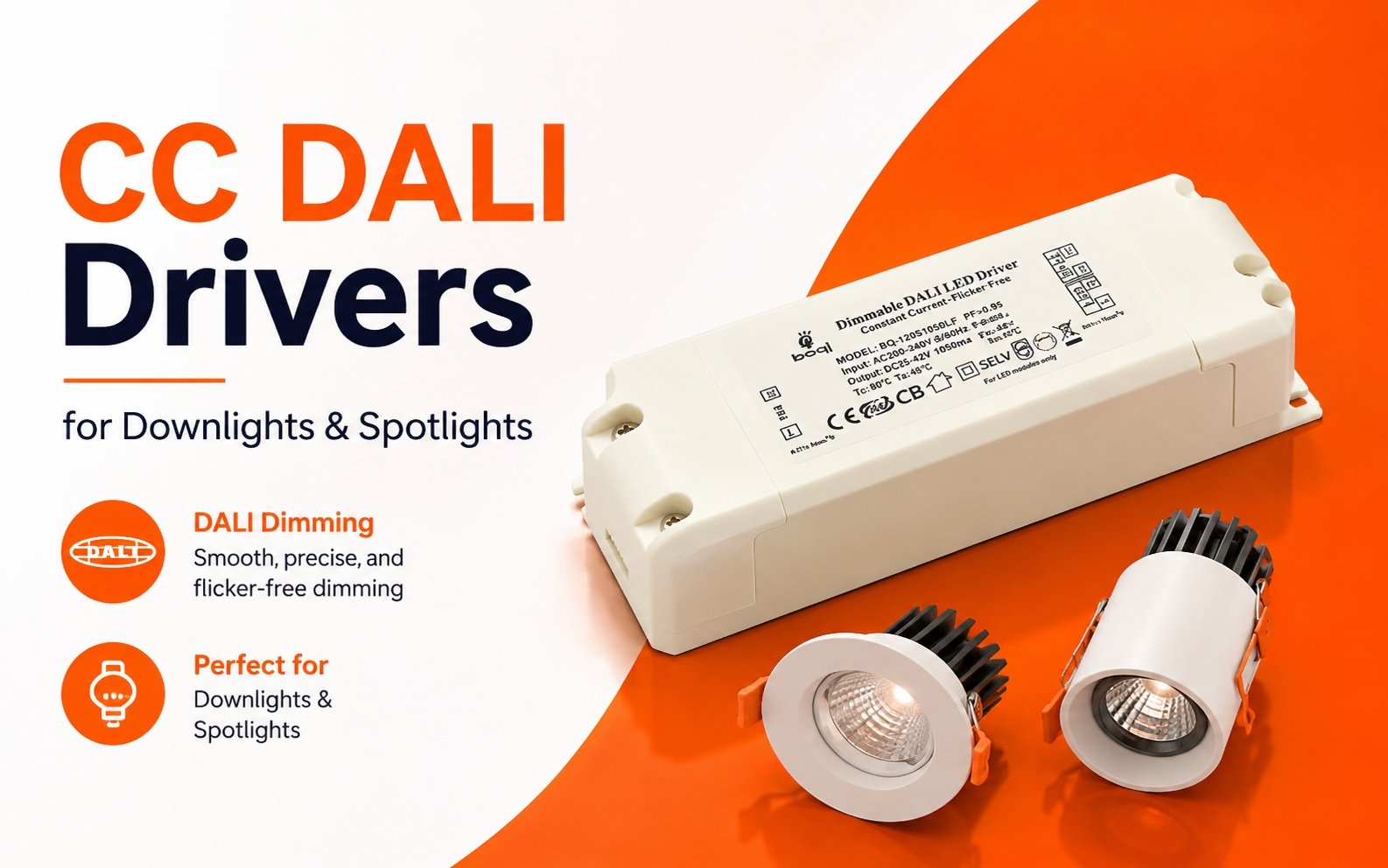















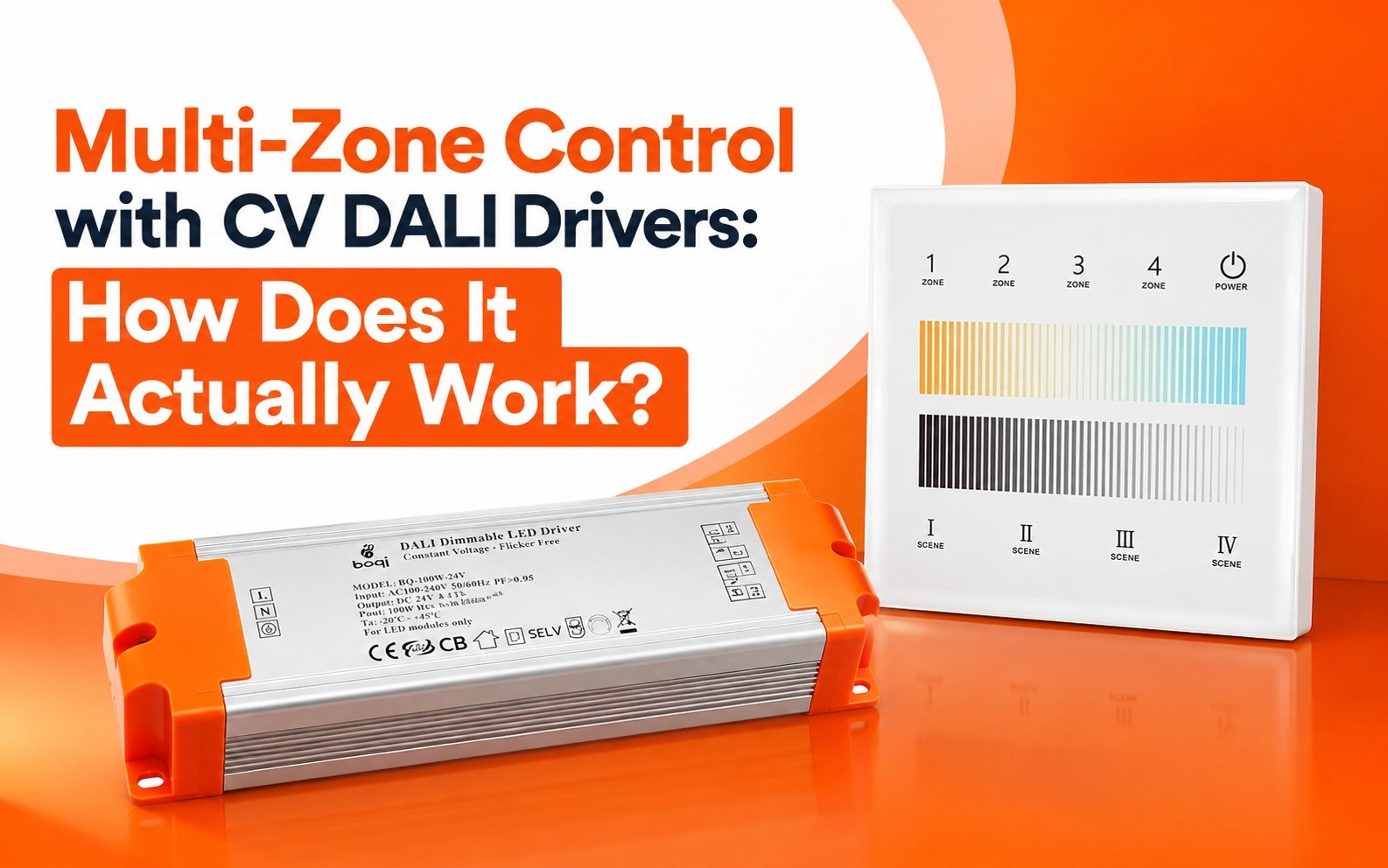
การควบคุมหลายโซนด้วย [ไดรเวอร์ CV DALI](https://boqiled.com/?p=17832) ฟังดูเรียบง่าย—จนกระทั่งการคอมมิชชันนิ่งติดขัดหน้างาน บนสายการผลิตของเราในเซินเจิ้น เราสืบย้อนโครงการที่ล้มเหลวส่วนใหญ่กลับไปสู่ความผิดพลาดในการวางแผนหนึ่งอย่างที่หลีกเลี่ยงได้.
การควบคุมหลายโซนด้วยไดรเวอร์ CV DALI ช่วยให้แต่ละโซนไฟ LED ได้รับคำสั่งความสว่างหรือสีที่เป็นอิสระผ่านที่อยู่ กลุ่ม และฉากของ DALI ไดรเวอร์ DT6 จัดการการหรี่แสงแบบช่องสัญญาณเดียว ในขณะที่ไดรเวอร์ DT8 ประสานงานช่องสัญญาณ tunable-white หรือ RGBW ภายใต้ที่อยู่เดียว ช่วยลดความซับซ้อนในการ commissioning ในงานติดตั้งขนาดใหญ่.
คำตอบสั้นๆ นั้นซ่อนกับดักไว้หลายอย่าง ในบทความนี้ ผมจะพาคุณไปดูว่าระบบทำงานอย่างไร ต้องตรวจสอบอะไรก่อนจัดหา แหล่งที่มาของการประหยัดต้นทุนที่แท้จริงอยู่ตรงไหน และวิธีปรับแต่งไดรเวอร์โดยไม่ต้องปวดหัวเรื่องการรับรองมาตรฐาน.
ไดรเวอร์ CV DALI ช่วยให้สามารถควบคุมหลายโซนได้อย่างราบรื่นในโครงการไฟส่องสว่างขนาดใหญ่ได้อย่างไร?
ผู้จัดจำหน่ายรายหนึ่งในเยอรมนีเคยสั่งไดรเวอร์ RGBW 4 ช่องสัญญาณของเรา โดยคาดหวังว่าจะได้สี่โซนห้องที่เป็นอิสระต่อกัน ความเข้าใจผิดนั้นสอนให้เราอธิบายสถาปัตยกรรมก่อนเสนอราคาโครงการใดๆ.
ไดรเวอร์ CV DALI ช่วยให้สามารถควบคุมหลายโซนได้โดยการรวมกำลังไฟ LED แบบแรงดันคงที่เข้ากับการกำหนดแอดเดรสดิจิทัลบนบัสสองสาย ไดรเวอร์แต่ละตัวมีแอดเดรส DALI ของตัวเอง เข้าร่วมได้สูงสุด 16 กลุ่ม และตอบสนองต่อคำสั่งฉาก ดังนั้นแต่ละโซนจึงหรี่แสงได้อย่างอิสระโดยไม่ต้องใช้วงจรหรี่แสงแยกต่างหาก.

แนวคิดหลักคือการแยกส่วน DALI คือ เครือข่ายควบคุมดิจิทัล 1 ที่กำหนดภายใต้ IEC 62386 ฝั่งโหลดยังคงเป็น แรงดันคงที่ 2—โดยทั่วไป 12V, 24V, 36V หรือ 48V DC—จ่ายไฟให้เทป LED หรือโมดูลที่ต่อขนานกัน การควบคุมแสงแบบกำหนดแอดเดรสมาจากบัสทั้งหมด ไม่ได้มาจากสายไฟเลี้ยง การควบคุมแสงแบบกำหนดแอดเดรสมาจากบัสทั้งหมด ไม่ได้มาจากสายไฟเลี้ยง สาย DALI หนึ่งเส้นรองรับแอดเดรสได้สูงสุด 64 แอดเดรส ซึ่งคุณสามารถจัดเป็น 16 กลุ่มสำหรับการหรี่แสงแบบซิงโครไนซ์และการเรียกคืนฉากทั่วมโซนและกลุ่มแสงสว่าง.
DT6 vs DT8: Device Type ใดเหมาะกับโซนของคุณ?
| ลักษณะเฉพาะ | ไดรเวอร์ DT6 | ไดรเวอร์ DT8 |
|---|---|---|
| ช่องสัญญาณ | การหรี่แสงช่องสัญญาณเดียว | หลายช่องสัญญาณ: DT8 tunable white, RGB, RGBW |
| การใช้แอดเดรส | หนึ่งแอดเดรสต่อช่องสัญญาณ | หนึ่งแอดเดรสสำหรับหน่วยสีทั้งหมด |
| การใช้งานที่เหมาะสมที่สุด | โซนสีเดียวที่เป็นอิสระต่อกัน | การควบคุมสีหรือ CCT แบบประสานกัน |
| ความพยายามในการคอมมิชชันนิ่ง | ง่าย หนึ่งโซนต่อหนึ่งแอดเดรส | แอดเดรสน้อยลง ช่องสัญญาณประสานกัน |
ไดรเวอร์หลายช่องสัญญาณไม่ใช่ระบบหลายโซน
นี่คือความเข้าใจผิดที่ใหญ่ที่สุดที่ผมพบเห็น ไดรเวอร์ LED หลายช่องสัญญาณ เช่น หน่วย RGBW DT8 แบบ 4 ช่องสัญญาณ มีเอาต์พุตทางกายภาพสี่ช่อง แต่ช่องสัญญาณเหล่านั้นถูกออกแบบให้ทำงานร่วมกันเป็นหนึ่งโซนควบคุมสี หากโครงการของคุณต้องการโซน A สำหรับแผนกต้อนรับ โซน B สำหรับทางเดิน โซน C สำหรับชั้นวางสินค้า และโซน D สำหรับไฟเพดาน คุณต้องใช้ไดรเวอร์ที่กำหนดแอดเดรสได้อย่างอิสระ—ไม่ใช่หน่วย RGBW หนึ่งตัว.
ลำดับการออกแบบที่ถูกต้องคือ: โซนแสงสว่าง → ความต้องการควบคุม → กลยุทธ์การกำหนดแอดเดรส DALI → DT6 หรือ DT8 การเลือก → ช่องสัญญาณไดรเวอร์ → การคำนวณกำลังไฟ หลายทีมทำตรงกันข้าม พวกเขาเลือกไดรเวอร์ก่อน แล้วบังคับให้โซนต่างๆ ตามเอาต์พุตของมัน จำไว้ด้วยว่า: DT8 ประหยัดแอดเดรส ไม่ใช่ไดรเวอร์ โคม tunable-white หนึ่งตัวทำงานภายใต้แอดเดรส DT8 หนึ่งแอดเดรส แต่สี่ห้องที่แยกจากกันยังต้องใช้ไดรเวอร์หรือแอดเดรสแยกกัน.
ฉันควรตรวจสอบอะไรบ้างก่อนจัดหาไดรเวอร์ CV DALI สำหรับการติดตั้งเชิงพาณิชย์แบบหลายโซน?
ปีที่แล้ว ผู้จัดการฝ่ายจัดซื้อในสิงคโปร์ส่งสเปกมาให้เราบรรทัดเดียว: ไดรเวอร์ DALI CV, 24V, สี่โซน วิศวกรของเราตอบกลับด้วยคำถามสิบสองข้อก่อนที่เราจะเสนอราคาอะไรก็ตาม.
ก่อนการจัดหา ตรวจสอบความสอดคล้องกับ IEC 62386 และการรับรอง DALI-2 ยืนยันความเป็นอิสระของช่องสัญญาณที่แท้จริง จับคู่แรงดันเอาต์พุตกับโหลด LED ของคุณ ตรวจสอบคุณภาพการหรี่แสง PWM และประสิทธิภาพในช่วงต่ำ ตรวจสอบข้อกำหนดด้านพลังงานบัส และเรียกร้องบันทึก QC ที่เป็นเอกสารพร้อมการรับรอง CE, CB และ SELV.

คำถามสิบสองข้อนั้นมีอยู่เพราะสเปกชีตแทบไม่เคยบอกเรื่องราวทั้งหมด นี่คือเช็กลิสต์ที่เราใช้พาผู้ซื้อไปก่อนเริ่มการผลิต.
ตารางตรวจสอบก่อนจัดหา
| จุดตรวจสอบ | สิ่งที่ต้องตรวจสอบ | เหตุใดจึงสำคัญ |
|---|---|---|
| การปฏิบัติตามมาตรฐาน IEC 62386 | Real DALI-2 test reports, not just “DALI compatible” claims | รับประกันการทำงานร่วมกันกับเซ็นเซอร์ สวิตช์ และคอนโทรลเลอร์ |
| แรงดันเอาต์พุต | 12V, 24V, 36V หรือ 48V ให้ตรงกับแถบ LED ของคุณ; 24V DC constant voltage เป็นแบบที่พบมากที่สุด | แรงดันไฟฟ้าที่ผิดทำลาย LED หรือจ่ายไฟให้ไม่เพียงพอ |
| ความเป็นอิสระของช่องสัญญาณ | ช่องสัญญาณอิสระจริงเทียบกับเอาต์พุตขนานแบบง่าย | เอาต์พุตขนานไม่สามารถสร้างโซนแยกกันได้ |
| คุณภาพการหรี่แสง | ความถี่การหรี่แสงแบบ Pulse Width Modulation, เส้นโค้งการหรี่แสงแบบลอการิทึม, ความลึกที่ปลายล่าง—บางดีไซน์ไปถึงประมาณ 0.1% | ป้องกันการกะพริบที่มองเห็นได้ในพื้นที่โรงแรมและสถาปัตยกรรม |
| กำลังไฟบัส | Whether the system needs an external DALI bus power supply and each driver’s bus current draw | บัสที่โอเวอร์โหลดทำให้คำสั่งหล่นหายและโซนตาย |
| ใบรับรอง | เครื่องหมาย CE, CB และ SELV ที่พิมพ์บนตัวเครื่อง | จำเป็นสำหรับการเข้าสู่ตลาดใน EU และเอเชียแปซิฟิก |
Two of these points deserve extra attention. First, channel independence. Some “multi-output” products simply split one dimming channel across several terminals. They look like multi-channel LED drivers on paper, but every output dims together. Ask the supplier directly: can each channel receive its own DALI command? Second, dimming behavior. Logarithmic dimming curves match how human eyes perceive brightness, so a curve mismatch between drivers from different batches becomes instantly visible in a hotel lobby. We also recommend asking whether the driver supports TouchDIM or 0/1-10V fallback inputs, because retrofit projects often need that flexibility. Finally, check the physical labeling. On our own units, the wiring diagram, input/output ratings, and certification icons are printed directly on the aluminum body, which saves installers real time on site.
ระบบ CV DALI แบบหลายโซนสามารถช่วยฉันลดต้นทุนการเดินสายไฟและทำให้การจัดการโครงการง่ายขึ้นได้หรือไม่?
Every quotation we prepare weighs the same trade-off: DALI hardware costs more per driver than 0-10V, yet the total installed cost often lands lower. Here is why.
ใช่ บัส DALI แบบสองสายเส้นเดียวแทนที่การเดินสายแบบโฮมรันไปยังทุกโซน การจัดกลุ่มด้วยซอฟต์แวร์ขจัดความจำเป็นในการเดินสายใหม่หลังการเปลี่ยนแปลงเลย์เอาต์ และการรวมไดรเวอร์จากซัพพลายเออร์รายเดียวลดความซับซ้อนในการจัดส่ง เมื่อรวมกันแล้วสิ่งเหล่านี้ช่วยลดต้นทุนด้านสายเคเบิล แรงงาน และโลจิสติกส์ในโครงการเชิงพาณิชย์แบบหลายโซน.

Start with the honest comparison, because buyers ask me for it constantly:
| ปัจจัย | DALI CV Drivers | 0-10V / 1-10V | RF / PWM-only Controllers |
|---|---|---|---|
| Zone addressing | Individual addresses, groups, scenes | Mostly zone-level, one control pair per zone | Depends on brand ecosystem |
| Feedback and status | Supported in DALI-2 systems | ไม่มี | Usually none |
| การเดินสายแบบอนุกรม | One shared two-wire bus | Separate control run to each zone | Wireless, but proprietary |
| Rezoning later | Software-based grouping, no rewiring | Physical rewiring required | App-based, brand-locked |
| Best fit | Multi-zone, integration-heavy projects | Basic dimming, legacy upgrades | Small or single-brand systems |
ที่มาของการประหยัดที่แท้จริง
With analog control, every zone needs its own control run back to a dimmer. With the DALI-2 protocol 3, one two-wire bus daisy-chains through all 64 addresses. On a retail floor with a dozen zones, that difference alone removes a significant amount of copper and labor. Then comes flexibility: when a tenant changes the floor layout, software-based grouping reconfigures the lighting zones without touching a single cable. For very long strip runs, a decentralized approach works well—compact DC-to-DC DALI dimmers placed near the strips, fed by a high-capacity central power supply—which minimizes voltage drop across large installations.
Now the objection I hear from smaller buyers: DALI is overkill for a two-zone shop, and a simple RF kit installs faster. For that scale, I agree. But once a project crosses several zones, needs scene recall, or may connect to a building system later, the cost curve flips toward DALI. And hybrid paths exist: DALI-to-wireless bridges can extend a wired backbone into app-controlled or Matter-based mesh zones. On the logistics side, our export clients in Singapore, Vietnam, and across Europe consolidate drivers, dimmers, and accessories into one shipment with one QC report, which shortens tight project timelines.
ฉันจะมั่นใจในคุณภาพและความสอดคล้องได้อย่างไรเมื่อปรับแต่งไดรเวอร์ CV DALI สำหรับการใช้งานหลายโซน?
Before any customized batch leaves our Shenzhen facility, it spends time in a burn-in room running at full load. That habit came from one painful early lesson with a rushed OEM order.
รับประกันคุณภาพโดยการกำหนดข้อกำหนดของโซนก่อนการปรับแต่ง ขอข้อมูลการทดสอบ DALI-2 ตามมาตรฐาน IEC 62386 ตรวจสอบตัวอย่างบนระบบควบคุมจริงของคุณ ยืนยันการรับรอง CE, CB และ SELV และตกลงเรื่องการทดสอบ aging การตรวจสอบเส้นโค้งการหรี่แสง และการตรวจสอบก่อนการจัดส่งกับซัพพลายเออร์ของคุณ.

Customization goes wrong when the electrical spec gets locked before the control design. So we run every OEM/ODM project through the same sequence, and I recommend buyers demand something similar from any supplier.
เส้นทางการปรับแต่งและ QC เจ็ดขั้นตอน
- Lock the zone map first. Follow the sequence: zones → control requirements → addressing strategy → DT6 or DT8 → channels → power calculation. Never reverse it.
- Define the electrical spec. Output voltage, channel count, wattage per zone, and load headroom so no driver runs at its ceiling.
- Request protocol evidence. Ask for DALI-2 test data against IEC 62386, not a vague “DALI supported” line on a datasheet.
- Validate golden samples on your real system. Connect the sample to the actual controllers, sensors, and wall panels your project uses. Test scenes, groups, fade times, and the logarithmic dimming curve at low levels, where flicker hides.
- Agree on QC gates in writing. Incoming component inspection, in-line electrical testing, 100% burn-in at full load, and third-party or client pre-shipment inspection.
- Confirm labeling and certification. CE, CB, and SELV icons plus wiring diagrams should be printed on the housing itself, alongside your custom logo if the project is private-label.
- Plan for diagnostics. ไดรเวอร์ DALI-2 CV ขั้นสูงรายงานข้อมูลแยกตามโซน เช่น การใช้พลังงาน 4 และสถานะหลอดไฟขัดข้อง ซึ่งรองรับการบำรุงรักษาเชิงคาดการณ์และการเชื่อมต่อระบบบริหารอาคารในภายหลัง.
การออกแบบระบายความร้อนก็สำคัญเช่นกัน ตัวเครื่องอะลูมิเนียมแบบบางของเราใช้ร่องระบายความร้อนแบบมีสันตลอดพื้นผิวด้านบน เพราะไดรเวอร์ที่ทำงานเย็นในช่องฝ้าเพดานแคบจะหรี่แสงได้อย่างสม่ำเสมอเป็นเวลาหลายปี เมื่อเราพัฒนาเครื่องแบบกำหนดเองกับลูกค้า ระยะเผื่อทางความร้อนเป็นหนึ่งในค่าคลาดเคลื่อนแรกที่เราตกลงร่วมกัน—ก่อนการทำแม่พิมพ์ ไม่ใช่หลังการร้องเรียน.
บทสรุป
การควบคุมหลายโซนด้วยไดรเวอร์ CV DALI ให้ผลตอบแทนจากการวางแผน: กำหนดโซนก่อน ตรวจสอบการรับรอง DALI-2 ยืนยันความเป็นอิสระของแต่ละช่องสัญญาณ และร่วมมือกับซัพพลายเออร์ที่ทดสอบก่อนจัดส่ง ทำได้ถูกต้อง การเดินระบบก็จะราบรื่น.
สนใจจัดหาผลิตภัณฑ์ที่กล่าวถึงในบทความนี้? ดูรายละเอียดและขอใบเสนอราคาที่นี่:
เชิงอรรถ
เว็บไซต์อย่างเป็นทางการของ IEC ซึ่งพัฒนามาตรฐานสากลสำหรับเทคโนโลยีไฟฟ้าและอิเล็กทรอนิกส์ทั้งหมด. ↩︎
เอกสารอ้างอิงทางเทคนิคสำหรับไดรเวอร์ LED ครอบคลุมโหมดจ่ายไฟแบบแรงดันคงที่และกระแสคงที่. ↩︎
DALI Alliance เป็นองค์กรอุตสาหกรรมระดับโลกที่กำหนดโปรโตคอล DALI-2 สำหรับการควบคุมแสงสว่าง. ↩︎
ให้ภาพรวมของการใช้พลังงานไฟฟ้า ซึ่งเป็นตัวชี้วัดการวินิจฉัยที่จัดหาโดยคอนโทรลเลอร์แสงสว่าง DALI-2 ขั้นสูง. ↩︎