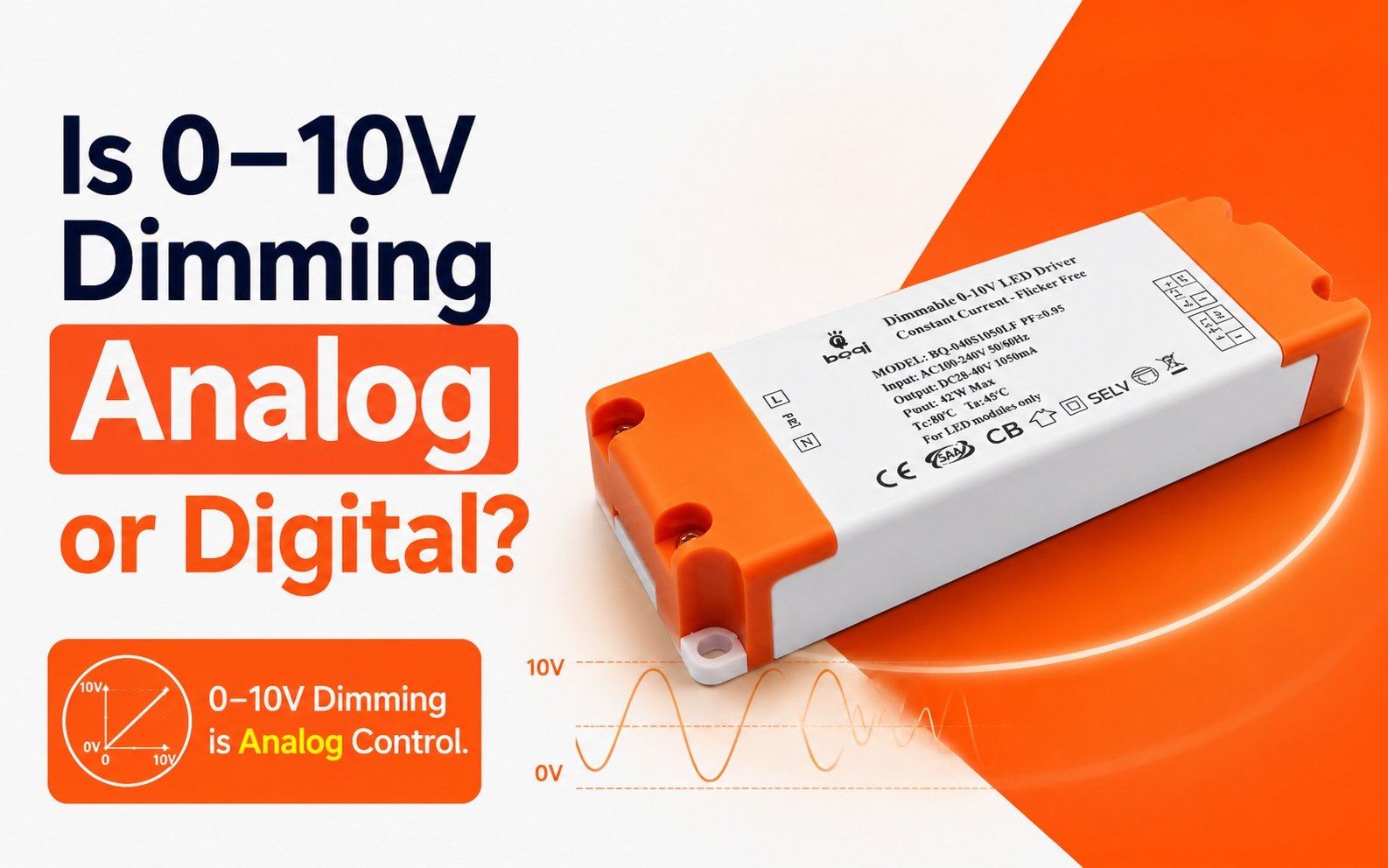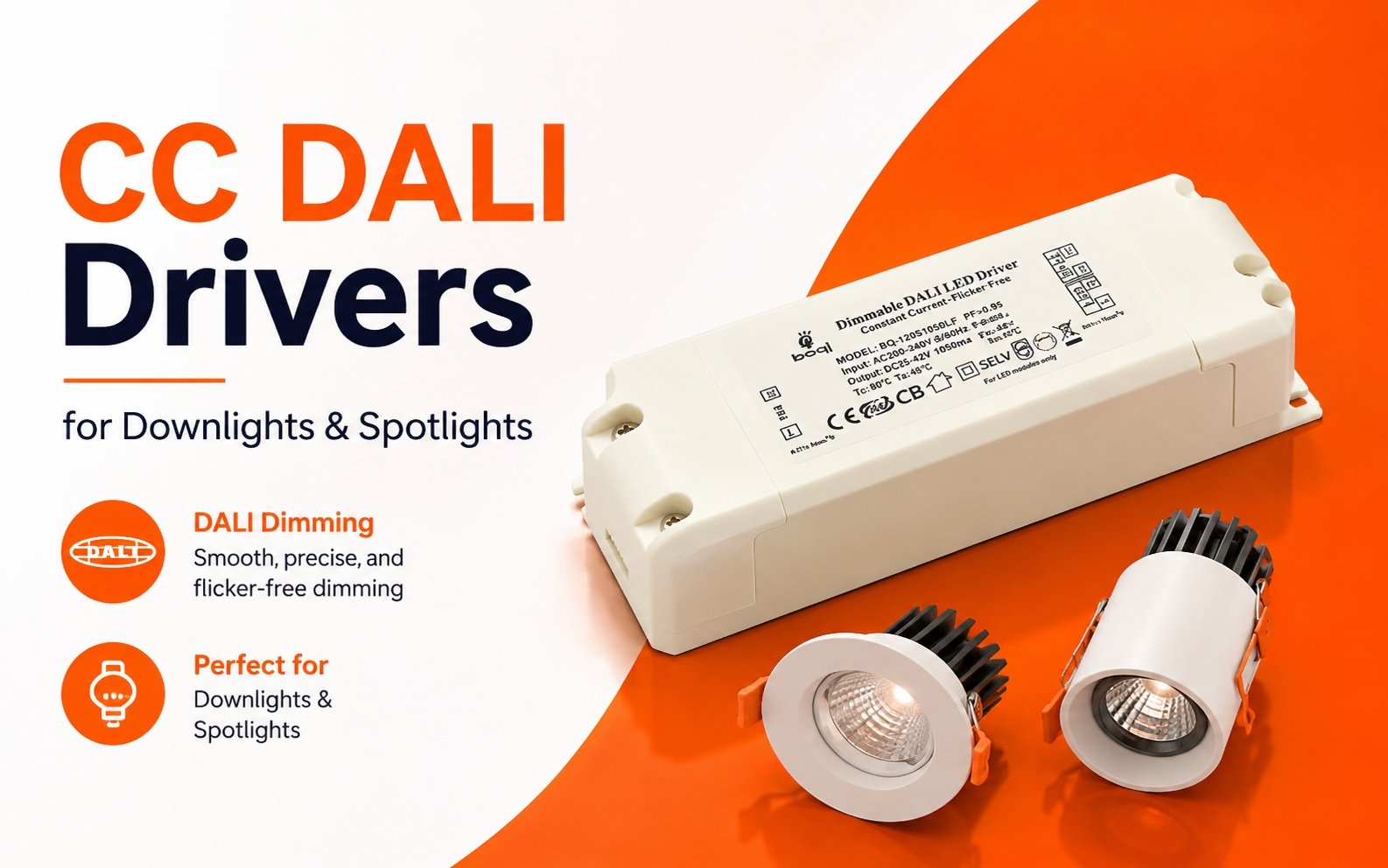














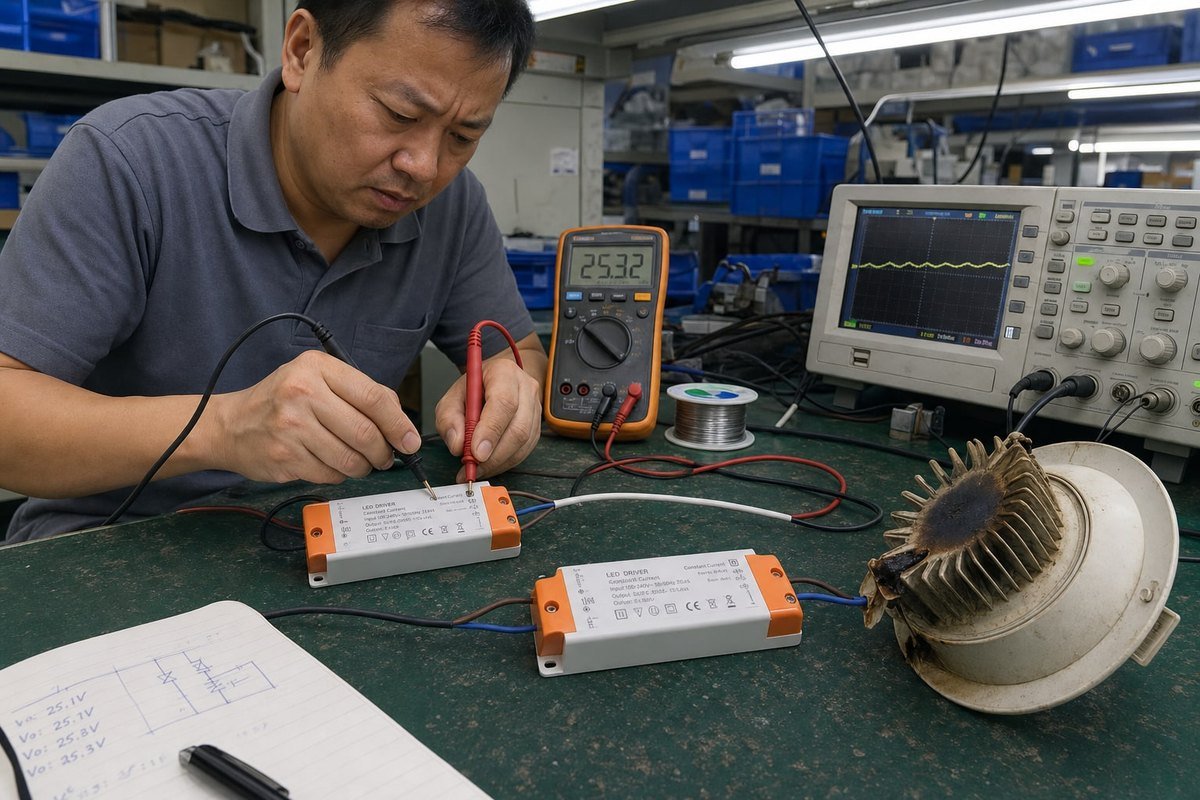
Выбор между драйверами TRIAC с постоянным током и постоянным напряжением сбивает с толку многих покупателей. Я видел, как неправильный выбор сжигал светодиодные светильники на нашем испытательном стенде, обходясь клиентам в целые производственные партии.
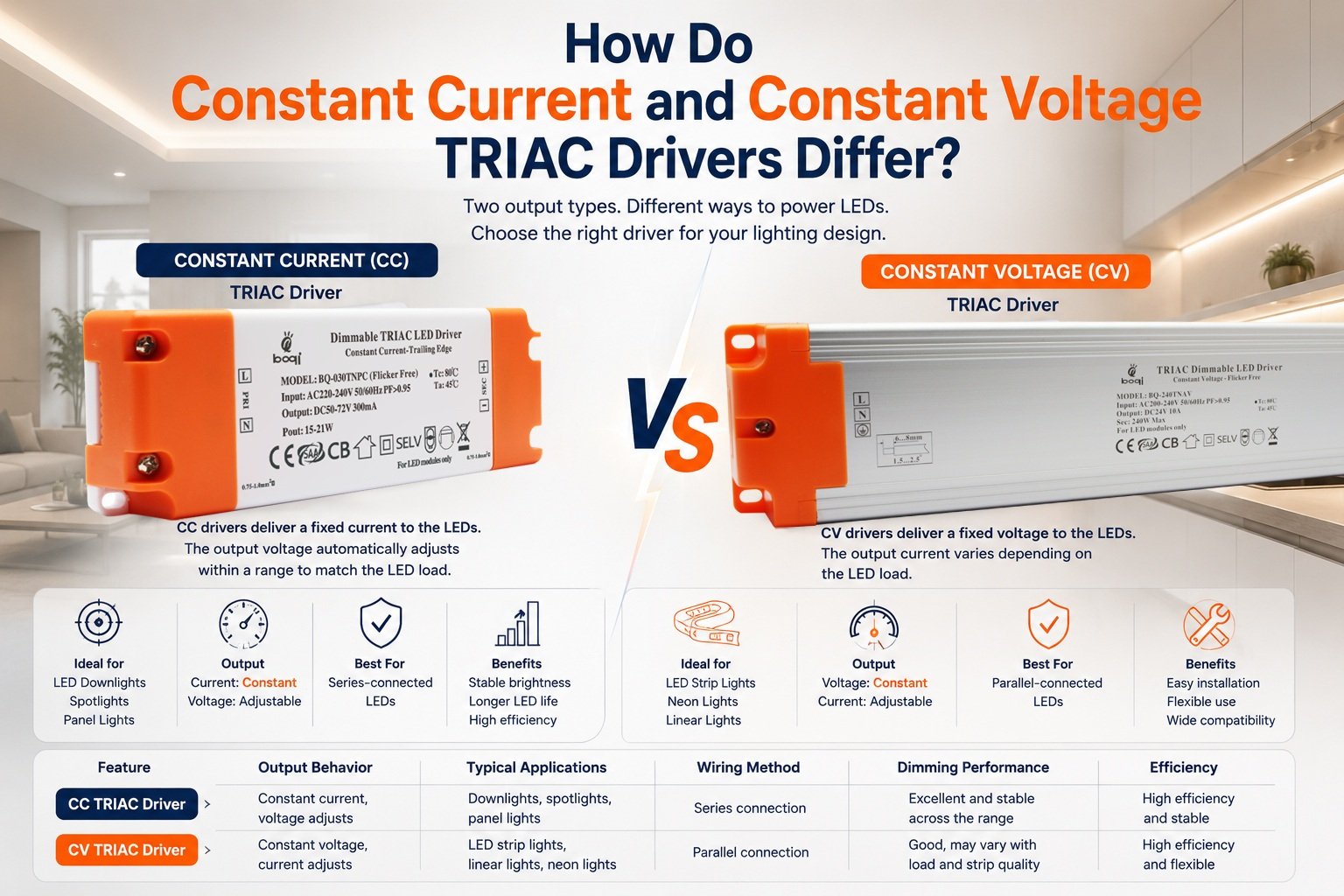
Драйверы TRIAC с постоянным током обеспечивают фиксированный выходной ток, например 350 мА или 700 мА, при этом напряжение меняется в зависимости от нагрузки светодиодов. Драйверы TRIAC с постоянным напряжением удерживают фиксированное напряжение, обычно 12 В или 24 В, при этом ток меняется. Оба типа принимают сигналы фазового диммирования от настенных диммеров.
Это краткий ответ. Но различия глубже, чем одна строка. Позвольте мне провести вас через схемотехнику, соответствие применению, поведение при диммировании и стоимость, чтобы вы могли точно указать правильный драйвер с первого раза.
Чем отличаются драйверы TRIAC с постоянным током и постоянным напряжением в схемотехнике и регулировке выходных параметров?
В прошлом году наши инженеры перепроектировали платформу драйвера TRIAC мощностью 40 Вт в версиях CC и CV. В разных корпусах две платы внутри выглядели на удивление по-разному. Вот почему.
Драйвер TRIAC с постоянным током использует цепь обратной связи по току, которая регулирует выходное напряжение для поддержания фиксированного тока. Драйвер TRIAC с постоянным напряжением использует цепь регулировки напряжения, которая удерживает выходное напряжение стабильным, часто добавляя более крупные фильтрующие конденсаторы, при этом подключенная нагрузка определяет, сколько тока протекает.
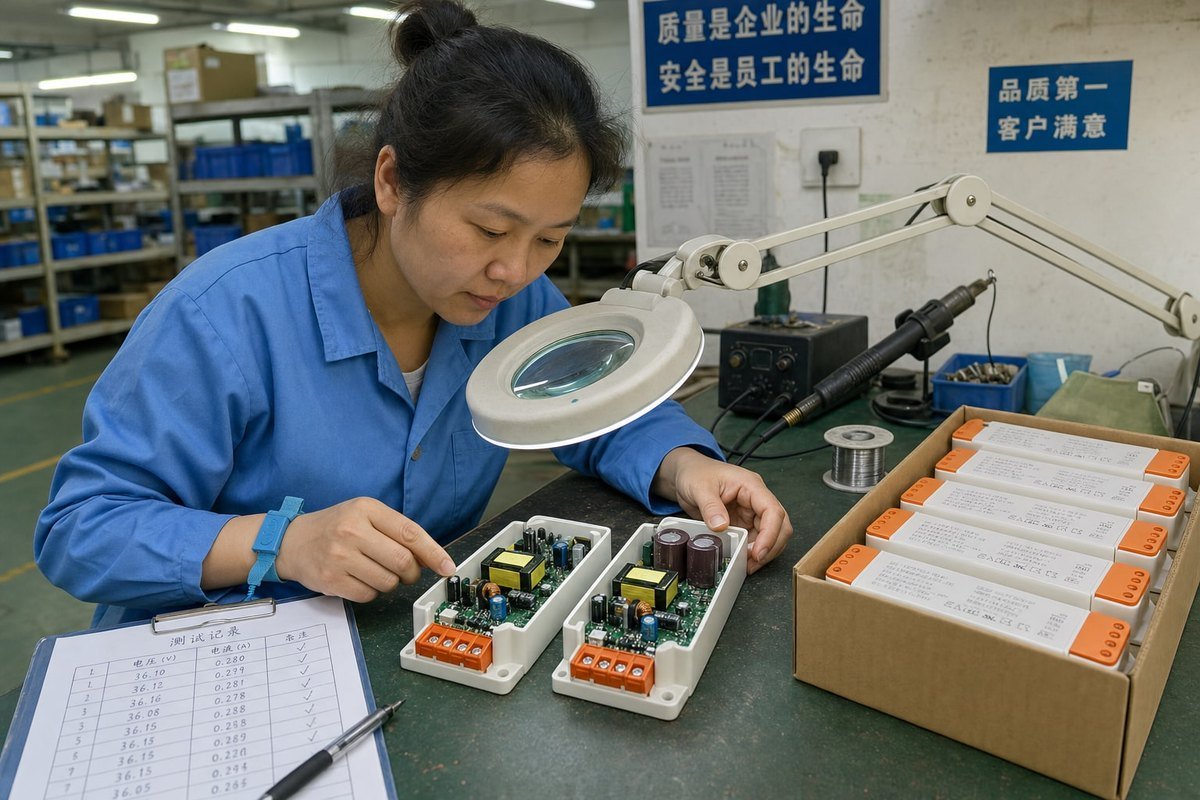
Оба типа драйверов начинаются с одного и того же входного каскада. Диммер TRIAC на стене обрезает форму волны переменного тока с помощью фазового управления по переднему фронту 1. Драйвер должен считывать этот обрезанный вход, поддерживать проводимость TRIAC и при этом выдавать чистый постоянный ток на выходе. Именно это делает совместимость с фазовым диммированием сложной. Диммерам с передним фронтом требуется минимальный удерживающий ток для поддержания включенного состояния, поэтому оба типа драйверов TRIAC — CC и CV — включают схемы балласта для удовлетворения этого минимального требования к нагрузке.
Реальное расхождение происходит на выходном каскаде.
Цепь обратной связи рассказывает всю историю
Конструкция с постоянным током измеряет ток, протекающий через светодиоды, обычно через измерительный резистор. Если ток дрейфует вверх из-за нагрева светодиодов, управляющая микросхема снижает выходное напряжение. Ток остается зафиксированным. Например, драйвер CC на 700 мА может колебаться от 15 В до 42 В в зависимости от количества светодиодов в цепочке.
Конструкция с постоянным напряжением делает обратное. Она контролирует выходное напряжение и удерживает его ровно на уровне 12 В или 24 В. Любая подключенная нагрузка потребляет свой собственный ток, вплоть до номинального максимума драйвера. Бремя регулировки перекладывается на само светодиодное изделие, которое должно включать резисторы или встроенный контроль тока.
Сравнение электрических параметров бок о бок
| Параметр | Постоянный ток (CC) | Постоянное напряжение (CV) |
|---|---|---|
| Регулируемый параметр | Выходной ток (мА) | Выходное напряжение (В) |
| Переменный параметр | Напряжение (в диапазоне) | Ток (до номинального максимума) |
| Типичные номиналы | 350 мА, 500 мА, 700 мА | 12 В, 24 В |
| Метод обратной связи | Контур с измерительным резистором тока | Контур с делителем напряжения |
| Подключение нагрузки | Последовательная цепочка | Параллельные сегменты |
| Выходная емкость | Умеренный | Больше, выше пусковой ток |
Одно практическое замечание с нашей линии контроля качества: драйверы CV с большими фильтрующими конденсаторами могут создавать более высокий пусковой ток при включении. Со временем этот пусковой ток может создавать нагрузку на контакты внутри диммера TRIAC. Хорошие конструкции добавляют схемы плавного пуска, чтобы сгладить это. Кроме того, драйверы выше определенных уровней мощности требуют коррекции коэффициента мощности 2 , и это требование в равной степени применяется к топологиям CC и CV.
Какой тип драйвера TRIAC мне выбрать для моего конкретного применения светодиодного освещения?
Покупатель из Лиона однажды прислал нам спецификацию с запросом на “TRIAC-драйвер 24 В, 700 мА” для встраиваемых светильников. Это противоречие подсказало мне, что сначала нужно внимательнее изучить маркировку его светильника.
Проверьте маркировку светильника. Если в ней указан ток, например 350 мА или 700 мА, выбирайте TRIAC-драйвер с постоянным током. Если указано напряжение, например 12 В или 24 В, выбирайте TRIAC-драйвер с постоянным напряжением. Электрическая конструкция светодиодного изделия определяет выбор, а не диммер.

Правило маркировки решает большинство случаев за секунды. Но полезно понять, почему каждая категория продуктов тяготеет к определенному типу.
Где подходят драйверы TRIAC с постоянным током
Драйверы CC подходят для светильников, построенных на голых светодиодных кристаллах или COB-модулях без внутреннего ограничения тока. К ним относятся:
- Встраиваемые downlight и споты
- Трековые светильники
- Подвесные светильники с COB-двигателями
- Панельные светильники и архитектурные точечные источники
Светодиоды — это устройства, управляемые током. Их яркость и срок службы зависят от тока, а не напряжения. Подача фиксированного напряжения на голый COB-модуль провоцирует тепловой разгон 3: светодиод нагревается, потребляет больше тока, нагревается еще сильнее и выходит из строя. Драйвер CC блокирует этот цикл, ограничивая ток независимо от температуры перехода.
Где подходят драйверы TRIAC с постоянным напряжением
Драйверы CV доминируют в светодиодных лентах и модульных системах:
- Гибкая лента и жесткие линейные профили
- Вывески и объемные буквы
- Ниши и подсветка под шкафами
- Магнитные низковольтные ретрофит-системы, рассчитанные на источник 12 В или 24 В
Эти изделия уже содержат токоограничивающие резисторы или встроенные регуляторы в каждом сегменте. Им просто нужно стабильное напряжение питания. Вы также можете резать, удлинять или добавлять сегменты ленты без замены драйвера, пока общий ток остается ниже предела драйвера.
Краткая таблица решений
| Ваше светодиодное изделие | Маркировка указывает | Правильный TRIAC-драйвер |
|---|---|---|
| COB-модуль для downlight | 700 мА, 27–42 В | Постоянный ток |
| Катушка светодиодной ленты 5 м | 24 В DC, 60 Вт | Постоянное напряжение |
| Трековый спот | 350 мА | Постоянный ток |
| Цепочка модулей для вывески | 12 В DC | Постоянное напряжение |
Одно предупреждение из нашего экспортного опыта: никогда не завышайте ток драйвера CC. Драйвер на 700 мА на модуле 500 мА будет перегружать и сокращать срок службы светодиодов, даже если окно напряжения совпадает.
Как сравниваются характеристики диммирования и совместимость между драйверами TRIAC с постоянным током и постоянным напряжением?
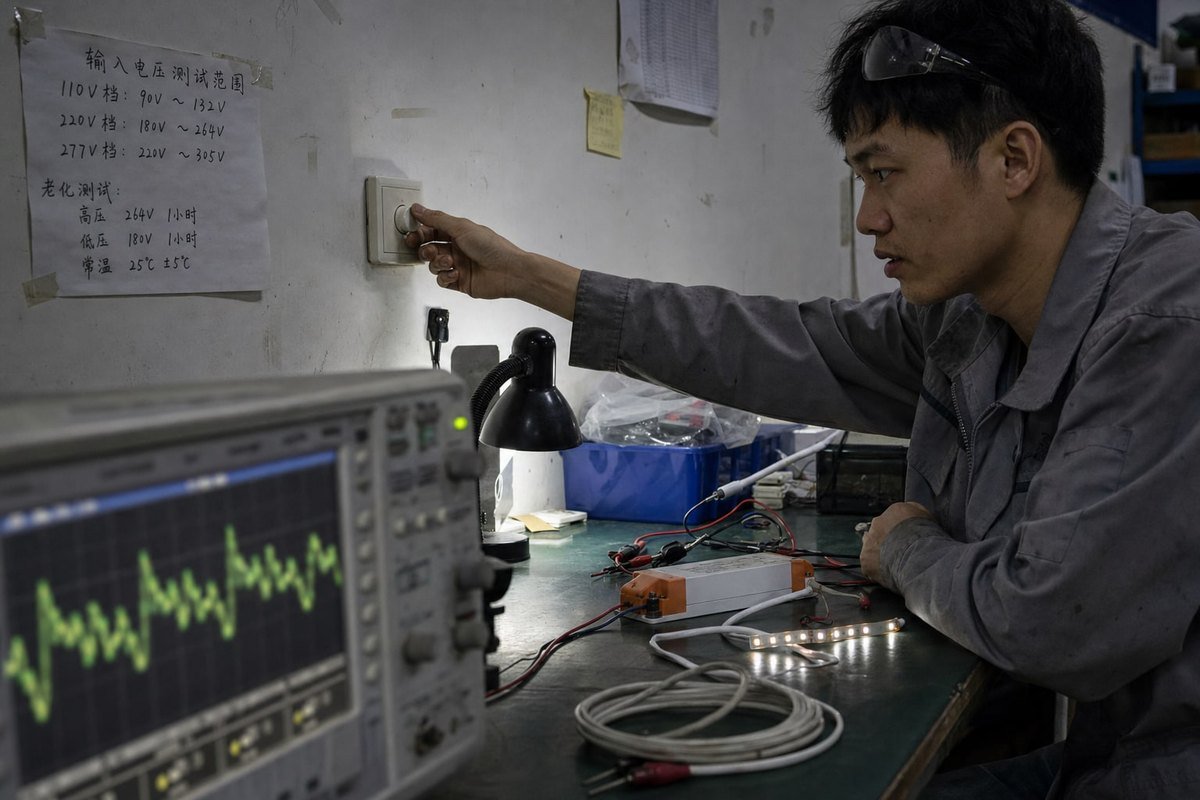
Кривые диммирования тестируются одержимо на нашем предприятии. Мы прогоняем каждую новую конструкцию драйвера против полки популярных европейских и американских диммеров с передним фронтом, потому что бумажные спецификации никогда не рассказывают полную историю совместимости.
TRIAC-драйверы с постоянным током обычно диммируют за счет снижения выходного тока, обеспечивая плавную работу без мерцания вплоть до низких уровней. TRIAC-драйверы с постоянным напряжением обычно преобразуют фазовый сигнал в широтно-импульсную модуляцию на выходе, что работает хорошо, но более чувствительно к току удержания и падению напряжения на длинных линиях.
Метод диммирования — это то, где две архитектуры наиболее заметно расходятся для конечного пользователя.
Как каждый тип интерпретирует фазовый срез
Драйвер CC измеряет угол проводимости от настенного диммера и сопоставляет его с уровнем тока. Это называется снижением постоянного тока, или CCR. При положении диммера 50% драйвер может выдавать 350 мА вместо 700 мА. Поскольку изменения тока плавные и непрерывные, CCR обеспечивает действительно безмерцательную работу без высокочастотных артефактов. Передовые конструкции CC теперь добавляют гибридное диммирование, смешивая CCR с ШИМ в самом нижнем диапазоне, чтобы устранить эффект “поп-он”, когда свет прыгает от выключенного состояния до видимой минимальной яркости.
Драйвер CV не может просто снизить напряжение, потому что лента 24 В, затемненная до 12 В, будет вести себя непредсказуемо и смещать цвет. Вместо этого большинство TRIAC-драйверов CV преобразуют фазовый вход в широтно-импульсную модуляцию 4 на полном напряжении. Лента мигает быстрее, чем глаз может заметить. При качественном исполнении ШИМ диммирует глубоко и равномерно. При плохом исполнении, на низких частотах, это может проявляться на камере как полосы.
Болевые точки совместимости
Системы CV сталкиваются с двумя дополнительными проблемами. Во-первых, требование минимальной нагрузки действует сильнее: затемните небольшой сегмент ленты до 50%, и общая мощность может упасть ниже того, что нужно диммеру с передним фронтом для удержания TRIAC в открытом состоянии, вызывая мерцание или сбой. Во-вторых, падение напряжения на длинных кабельных линиях затемняет дальний конец ленты. Драйверы CC обходят обе проблемы; они повышают напряжение для преодоления сопротивления кабеля, сохраняя равномерную яркость вдоль последовательной цепочки.
Согласование диммера по-прежнему важно для обоих типов. Мы всегда советуем покупателям запрашивать протестированный список совместимости диммеров, а не предполагать, что любой TRIAC-диммер будет работать.
Какие факторы стоимости и эффективности мне следует учитывать при выборе между этими двумя типами драйверов TRIAC для массового производства?
Переговоры о цене преподали мне жесткий урок в начале моей торговой карьеры: самый дешевый драйвер в коммерческом предложении редко дает самый дешевый готовый светильник. Важна совокупная стоимость всей системы.
Драйверы TRIAC с постоянным током стоят немного дороже за единицу, но достигают более высокой эффективности, часто 90% или выше, и упрощают светильник за счет удаления токоограничивающих компонентов. Драйверы TRIAC с постоянным напряжением стоят дешевле по отдельности, но переносят потери на резисторах и управление током на сам светодиодный продукт.

Для такого покупателя, как вы, планирующего объемные заказы и жесткие целевые показатели BOM Светодиодное освещение 5, решение требует системного подхода, а не подхода на уровне драйвера.
Эффективность на уровне системы
Драйвер CC подает ток напрямую в цепочку светодиодов. Между драйвером и диодом почти ничего не теряется. Система CV, напротив, расходует мощность на токоограничивающих резисторах, встроенных в каждый сегмент ленты. Эти потери на резисторах никогда не отображаются в спецификации драйвера, но они повышают реальное потребление энергии и тепловыделение. Когда вы рассчитываете люмен на ватт 6 для всего продукта, архитектуры CC обычно выигрывают.
Сравнение стоимости полного комплекта
| Фактор стоимости | Система CC TRIAC | Система CV TRIAC |
|---|---|---|
| Цена за единицу драйвера | От умеренной до более высокой | Ниже |
| Сложность светодиодного модуля | Проще, резисторы не требуются | Резисторы или регуляторы на плате |
| Эффективность системы | Часто 90%+ | Ниже из-за потерь на резисторах |
| Гибкость складских запасов | Один драйвер на спецификацию тока | Один драйвер 24V покрывает множество лент |
| Трудозатраты на монтаж | Последовательная цепочка, тщательное согласование | Параллельное подключение, более быстрый монтаж |
| Риск отказов в полевых условиях | Ниже, ток защищен | Выше, если нагрузка превышает номинал |
Производственные и закупочные соображения
Драйверы CV дают реальное преимущество в складских запасах. Один драйвер TRIAC 24V, 100W может обслуживать десятки SKU лент, снижая сложность закупок. Драйверы CC требуют более точного согласования: каждое семейство светильников нуждается в драйвере с правильным окном тока и напряжения, что умножает количество позиций.
Однако учтите возвраты и гарантийные риски. По нашему опыту поставок европейским клиентам, светильники с драйверами CC вызывают меньше полевых жалоб, поскольку повреждение от перегрузки по току исключено конструктивно. Также взвесьте последствия последовательной и параллельной схем для вашей сборочной линии: последовательные цепочки CC должны быть полностью смонтированы до подачи питания, тогда как параллельные сегменты CV допускают частичную нагрузку при тестировании. Наконец, убедитесь, что выбранный уровень мощности включает надлежащую коррекцию коэффициента мощности, поскольку нормативы ЕС 7 применяют пороговые значения независимо от топологии CC или CV.
Заключение
Согласуйте маркировку: номиналы тока требуют драйверов TRIAC с постоянным током, номиналы напряжения — с постоянным напряжением. TRIAC определяет вход диммирования; тип регулирования определяет все остальное. Проверьте совместимость перед массовым производством.
Сноски
Объясняет основы диммирования TRIAC, упомянутые в обсуждении проектирования схем. ↩︎
Разъясняет техническое понятие, упомянутое в отношении нормативных требований к драйверам. ↩︎
Справочная информация о явлении теплового разгона, влияющем на надежность и отказы светодиодов. ↩︎
Определяет технику ШИМ-диммирования, используемую драйверами с постоянным напряжением. ↩︎
Базовое понятие о технологии светодиодных ламп, лежащее в основе всей статьи. ↩︎
Авторитетный государственный источник, определяющий эффективность светодиодов и показатели люмен на ватт. ↩︎
Официальный источник ЕС о нормативных стандартах, влияющих на правила коэффициента мощности драйверов. ↩︎