













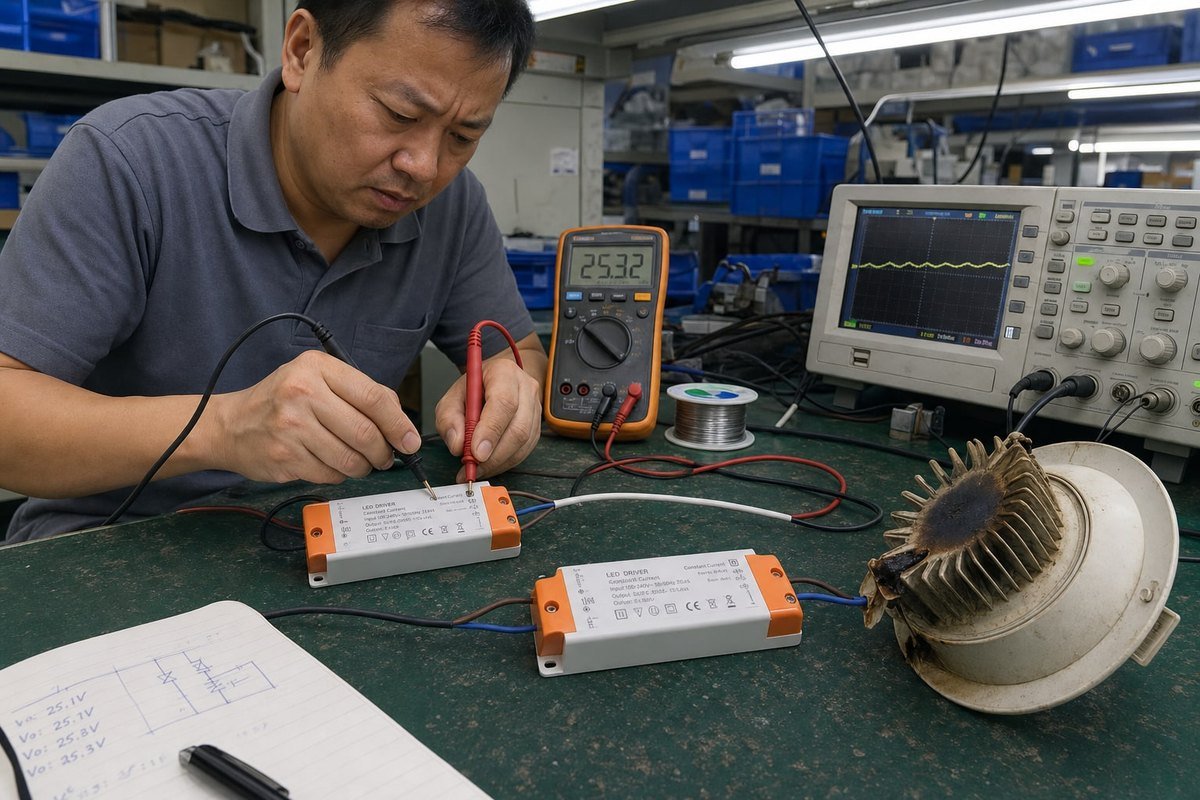
Memilih antara driver TRIAC arus konstan dan tegangan konstan membingungkan banyak pembeli. Saya pernah melihat pilihan yang salah membakar perlengkapan LED di meja uji kami, merugikan klien seluruh rangkaian produksi.
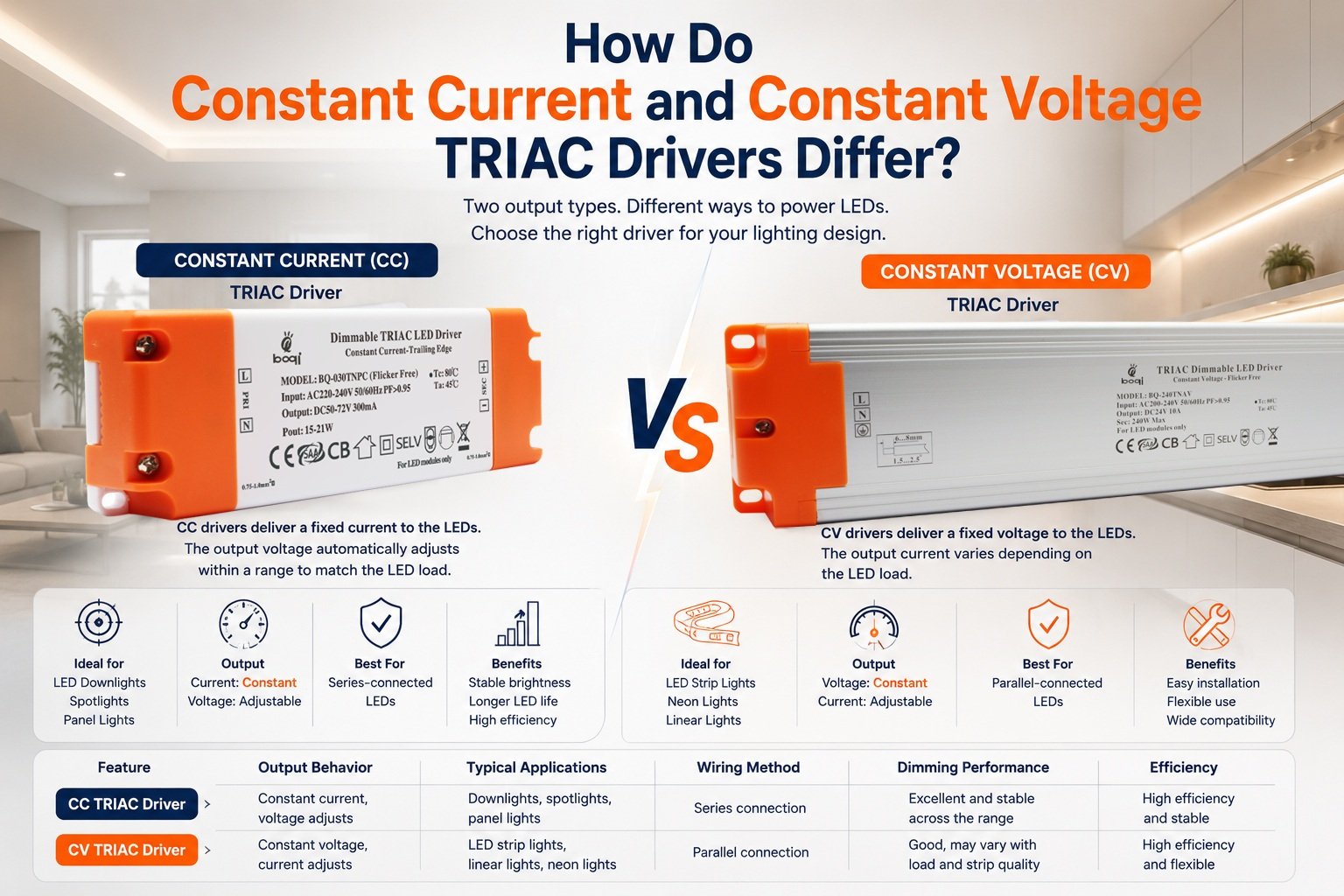
Driver TRIAC arus konstan memberikan arus keluaran tetap, seperti 350mA atau 700mA, sementara tegangan bervariasi sesuai beban LED. Driver TRIAC tegangan konstan mempertahankan tegangan tetap, biasanya 12V atau 24V, sementara arus bervariasi. Keduanya menerima sinyal peredupan phase-cut dari dimmer dinding.
Itulah jawaban singkatnya. Tetapi perbedaannya lebih dalam dari satu baris. Mari saya jelaskan tentang desain sirkuit, kesesuaian aplikasi, perilaku peredupan, dan biaya, sehingga Anda dapat menentukan driver yang tepat sejak awal.
Bagaimana perbedaan driver TRIAC arus konstan dan tegangan konstan dalam desain sirkuit dan regulasi keluaran?
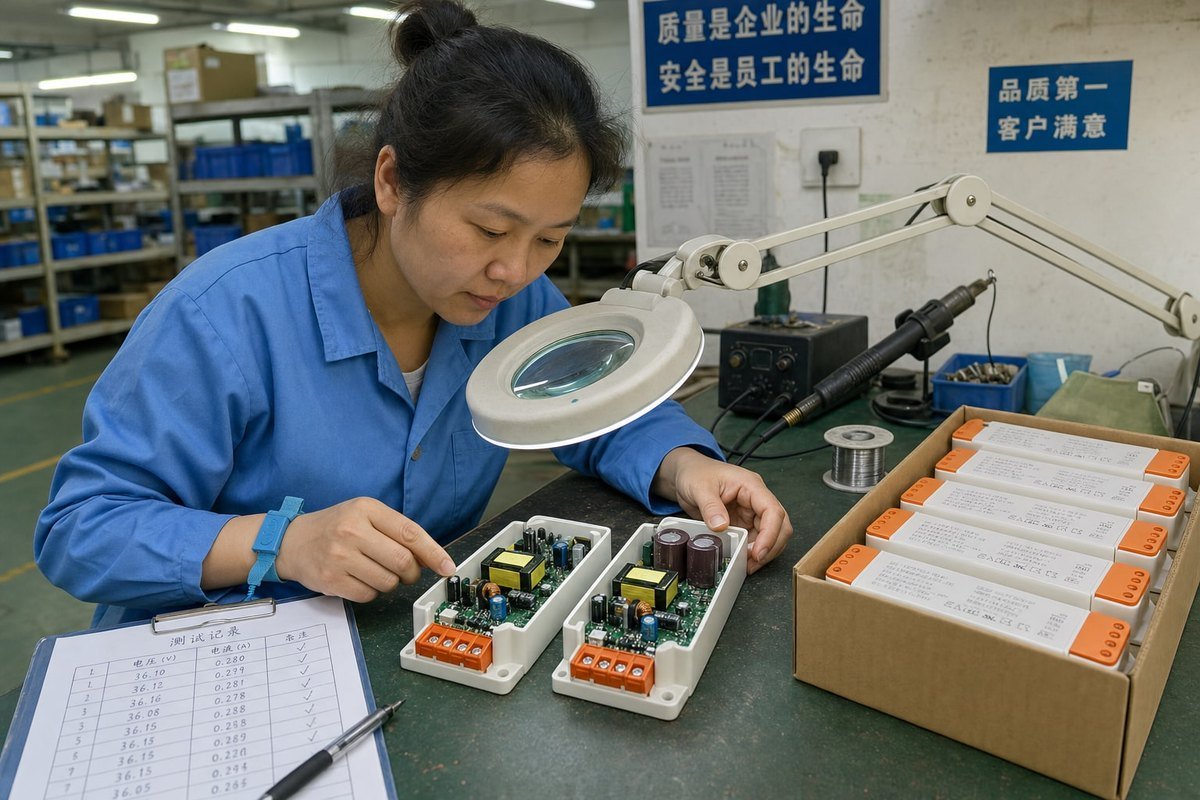
Tahun lalu, para insinyur kami mendesain ulang platform driver TRIAC 40W dalam versi CC dan CV. Dalam wadah yang berbeda, dua papan di dalamnya terlihat sangat berbeda. Inilah alasannya.
Driver TRIAC arus konstan menggunakan loop umpan balik penginderaan arus yang menyesuaikan tegangan keluaran untuk menjaga ampere tetap. Driver TRIAC tegangan konstan menggunakan loop regulasi tegangan yang menjaga keluaran stabil, sering kali menambahkan kapasitor filter yang lebih besar, sementara beban yang terhubung menentukan berapa banyak arus yang mengalir.
Kedua jenis driver dimulai dengan ujung depan yang sama. Dimmer TRIAC di dinding memotong bentuk gelombang AC menggunakan kontrol fase maju 1. Driver harus membaca input yang terpotong itu, menjaga TRIAC tetap konduksi, dan tetap menghasilkan daya DC yang bersih di keluaran. Inilah yang membuat kompatibilitas peredupan phase-cut menjadi rumit. Dimmer leading-edge membutuhkan arus penahan minimum untuk tetap terkunci, jadi driver TRIAC CC dan CV menyertakan sirkuit bleeder untuk memenuhi persyaratan beban minimum tersebut.
Perbedaan sebenarnya terjadi di tahap keluaran.
Loop umpan balik menjelaskan semuanya
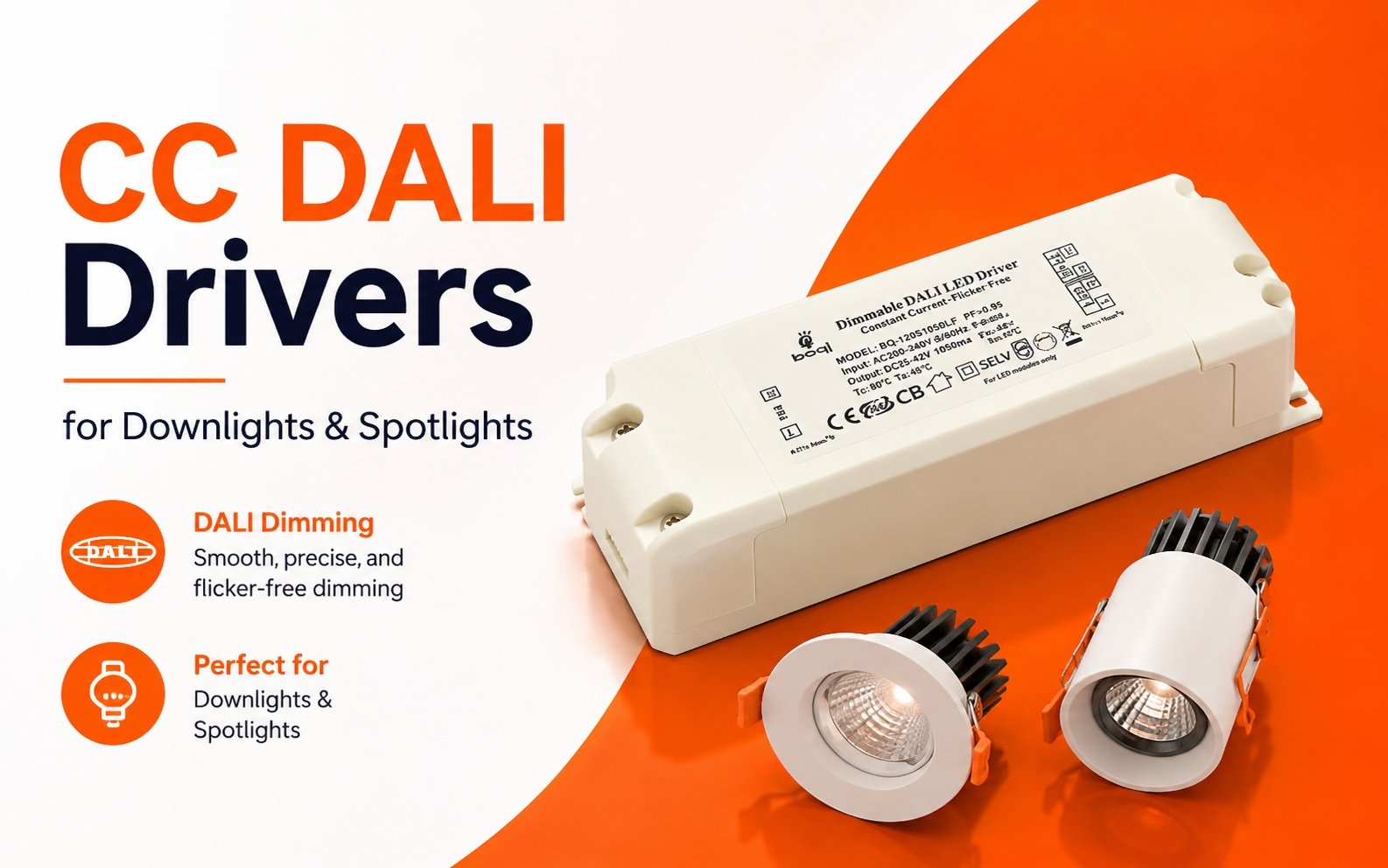
Desain arus konstan mengukur arus yang mengalir melalui LED, biasanya melalui resistor penginderaan. Jika arus melonjak naik karena LED memanas, IC kontrol menurunkan tegangan keluaran. Arus tetap terkunci. Misalnya, driver CC 700mA dapat berayun di mana saja dari 15V hingga 42V tergantung pada berapa banyak LED dalam rangkaian seri.
Desain tegangan konstan melakukan yang sebaliknya. Ia memantau tegangan keluaran dan menahannya tepat di 12V atau 24V. Beban apa pun yang Anda hubungkan menarik arusnya sendiri, hingga maksimum terukur driver. Beban regulasi bergeser ke produk LED itu sendiri, yang harus menyertakan resistor atau kontrol arus onboard.
Perbandingan kelistrikan berdampingan
| Aspek | Arus Konstan (CC) | Tegangan Konstan (CV) |
|---|---|---|
| Parameter yang diatur | Arus keluaran (mA) | Tegangan keluaran (V) |
| Parameter variabel | Tegangan (dalam rentang) | Arus (hingga maksimum terukur) |
| Peringkat tipikal | 350mA, 500mA, 700mA | 12V, 24V |
| Metode umpan balik | Loop resistor penginderaan arus | Loop pembagi tegangan |
| Pengkabelan beban | Rangkaian seri | Segmen paralel |
| Kapasitansi keluaran | Sedang | Lebih besar, arus masuk lebih tinggi |
Satu catatan praktis dari lini QC kami: driver CV dengan kapasitor filter besar dapat menghasilkan arus masuk yang lebih tinggi saat dinyalakan. Seiring waktu, arus masuk itu dapat memberi tekanan pada kontak di dalam dimmer TRIAC. Desain yang baik menambahkan sirkuit soft-start untuk menjinakkannya. Juga, driver di atas tingkat daya tertentu memerlukan koreksi faktor daya 2 tahapan, dan persyaratan itu berlaku sama untuk topologi CC dan CV.
Jenis driver TRIAC mana yang harus saya pilih untuk aplikasi pencahayaan LED spesifik saya?
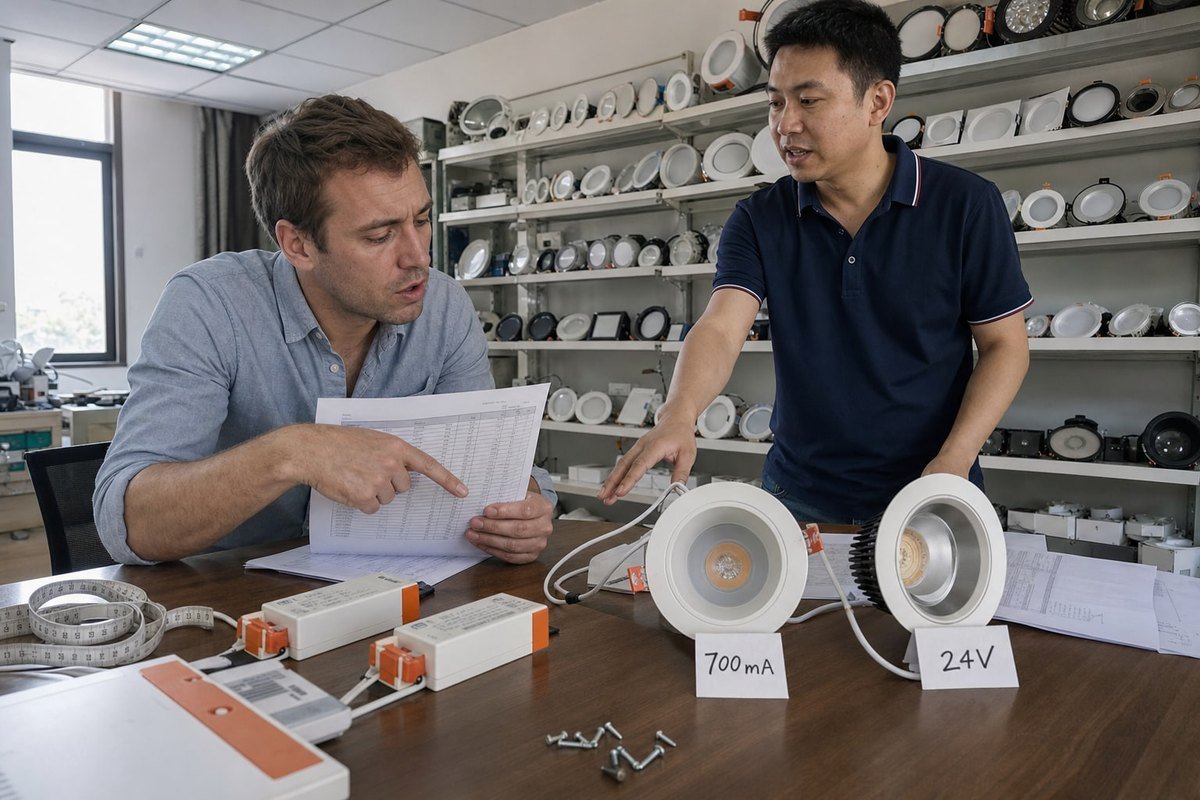
Seorang pembeli dari Lyon pernah mengirimkan lembar spesifikasi meminta “driver TRIAC 24V, 700mA” untuk downlight. Kontradiksi itu memberi tahu saya bahwa label perlengkapan mereka perlu diperiksa lebih dekat terlebih dahulu.
Periksa label perlengkapan. Jika label menentukan arus, seperti 350mA atau 700mA, pilih driver TRIAC arus konstan. Jika label menentukan tegangan, seperti 12V atau 24V, pilih driver TRIAC tegangan konstan. Desain kelistrikan produk LED yang menentukan, bukan dimmer-nya.
Aturan label menyelesaikan sebagian besar kasus dalam hitungan detik. Namun, memahami mengapa setiap kategori produk cenderung ke salah satu arah akan membantu.
Di mana driver TRIAC arus konstan cocok
Driver CC cocok untuk perlengkapan yang dibangun di sekitar paket LED telanjang atau modul COB tanpa pembatas arus internal. Ini termasuk:
- Downlight dan spotlight tersembunyi
- Kepala lampu track
- Luminaire gantung dengan mesin COB
- Lampu panel dan sumber titik arsitektural
LED adalah perangkat yang digerakkan oleh arus. Kecerahan dan masa pakainya bergantung pada arus, bukan tegangan. Memberi tegangan tetap pada modul COB telanjang akan mengundang pelarian termal 3: LED memanas, menarik lebih banyak arus, memanas lagi, dan gagal. Driver CC memblokir siklus itu dengan menjepit arus apa pun yang terjadi pada suhu sambungan.
Di mana driver TRIAC tegangan konstan cocok
Driver CV mendominasi pencahayaan strip LED dan sistem modular:
- Lampu pita fleksibel dan batang linier kaku
- Papan tanda dan huruf saluran
- Jalur cove dan di bawah kabinet
- Sistem retrofit tegangan rendah magnetik yang mengharapkan sumber 12V atau 24V
Produk-produk ini sudah mengandung resistor pembatas arus atau regulator onboard di setiap segmen. Mereka hanya membutuhkan tegangan rel yang stabil. Anda juga dapat memotong, memperpanjang, atau menambahkan segmen strip tanpa mengubah driver, selama total arus tetap di bawah batas driver.
Tabel keputusan cepat
| Produk LED Anda | Label menyatakan | Driver TRIAC yang benar |
|---|---|---|
| Modul downlight COB | 700mA, 27–42V | Arus konstan |
| Gulungan strip LED 5 meter | 24V DC, 60W | Tegangan konstan |
| Spotlight track | 350mA | Arus konstan |
| Rantai modul signage | 12V DC | Tegangan konstan |
Satu peringatan dari pengalaman ekspor kami: jangan pernah memperbesar arus driver CC. Driver 700mA pada modul 500mA akan memaksa dan memperpendek umur LED, bahkan jika jendela tegangan cocok.
Bagaimana perbandingan kinerja peredupan dan kompatibilitas antara driver TRIAC arus konstan dan tegangan konstan?
Kurva peredupan diuji secara obsesif di fasilitas kami. Kami menjalankan setiap desain driver baru terhadap rak dimmer leading-edge populer Eropa dan Amerika, karena spesifikasi kertas tidak pernah menceritakan kisah kompatibilitas yang lengkap.
Driver TRIAC arus konstan biasanya meredup dengan mengurangi arus keluaran, memberikan kinerja mulus dan bebas kedip hingga level rendah. Driver TRIAC tegangan konstan biasanya menerjemahkan sinyal phase-cut menjadi keluaran Pulse Width Modulation, yang bekerja dengan baik tetapi lebih sensitif terhadap holding current dan penurunan tegangan jarak jauh.
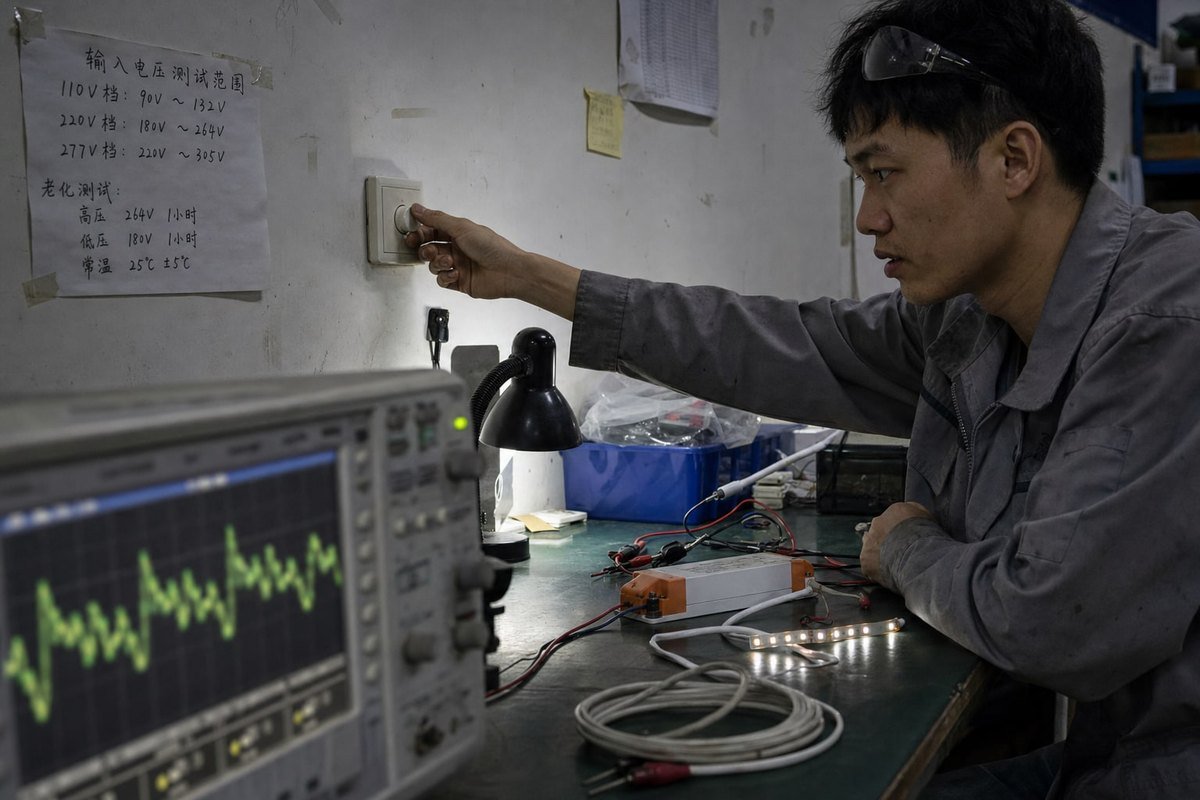
Metode peredupan adalah tempat kedua arsitektur paling terlihat berbeda bagi pengguna akhir.
Bagaimana masing-masing jenis menafsirkan phase cut
Driver CC mengukur sudut konduksi dari dimmer dinding dan memetakannya ke level arus. Ini disebut Constant Current Reduction, atau CCR. Pada posisi dimmer 50%, driver mungkin mengeluarkan 350mA alih-alih 700mA. Karena perubahan arus mulus dan kontinu, CCR memberikan kinerja bebas kedip yang sesungguhnya tanpa artefak frekuensi tinggi. Desain CC canggih sekarang menambahkan peredupan hibrida, mencampur CCR dengan PWM di bagian paling bawah rentang, untuk menghilangkan efek “pop-on” di mana lampu melompat dari mati ke kecerahan minimum yang terlihat.
Driver CV tidak bisa begitu saja menurunkan tegangannya, karena strip 24V yang diredupkan ke 12V akan berperilaku tidak terduga dan menggeser warna. Sebagai gantinya, sebagian besar driver TRIAC CV mengubah input phase-cut menjadi Modulasi Lebar Pulsa 4 keluaran pada tegangan penuh. Strip berkedip hidup-mati lebih cepat daripada yang bisa dilihat mata. Jika dilakukan dengan baik, PWM meredup dalam dan merata. Jika dilakukan dengan buruk, pada frekuensi rendah, dapat terlihat sebagai pita di kamera.
Titik masalah kompatibilitas
Sistem CV menghadapi dua tantangan tambahan. Pertama, persyaratan beban minimum lebih terasa: meredupkan segmen strip kecil ke 5%, dan total daya mungkin turun di bawah yang dibutuhkan dimmer leading-edge untuk menjaga TRIAC tetap terkunci, menyebabkan kedip atau putus. Kedua, penurunan tegangan pada kabel panjang meredupkan ujung jauh strip. Driver CC menghindari kedua masalah ini; mereka mendorong tegangan naik untuk mengatasi resistansi kabel, menjaga kecerahan seragam di sepanjang rangkaian seri.
Pemasangan dimmer tetap penting untuk keduanya. Kami selalu menyarankan pembeli untuk meminta daftar kompatibilitas dimmer yang diuji daripada berasumsi bahwa dimmer TRIAC apa pun akan berfungsi.
Faktor biaya dan efisiensi apa yang harus saya pertimbangkan saat memilih antara dua jenis driver TRIAC ini untuk produksi massal?
Negosiasi biaya mengajari saya pelajaran sulit di awal karier perdagangan saya: driver termurah di lembar penawaran jarang menghasilkan luminaire jadi termurah. Biaya keseluruhan yang penting.
Driver TRIAC arus konstan sedikit lebih mahal per unit tetapi mencapai efisiensi lebih tinggi, sering kali 90% atau di atasnya, dan menyederhanakan perlengkapan dengan menghilangkan komponen pembatas arus. Driver TRIAC tegangan konstan lebih murah secara individual tetapi mendorong kerugian resistor dan manajemen arus ke dalam produk LED itu sendiri.

Untuk pembeli seperti Anda, yang merencanakan pesanan volume dan target BOM yang ketat pencahayaan LED 5, keputusan membutuhkan pandangan tingkat sistem, bukan tingkat driver.
Efisiensi pada tingkat sistem
Driver CC mengalirkan arus langsung ke string LED. Hampir tidak ada yang terbuang antara driver dan dioda. Sistem CV, sebaliknya, membakar daya di resistor pembatas arus yang dibangun di setiap segmen strip. Kerugian resistor itu tidak pernah muncul di lembar data driver, namun meningkatkan konsumsi energi dan panas di dunia nyata. Saat Anda menghitung lumen per watt 6 untuk seluruh produk, arsitektur CC biasanya menang.
Perbandingan biaya keseluruhan
| Faktor biaya | Sistem TRIAC CC | Sistem TRIAC CV |
|---|---|---|
| Harga satuan driver | Sedang hingga lebih tinggi | Lebih rendah |
| Kompleksitas modul LED | Lebih sederhana, tidak perlu resistor | Resistor atau regulator di papan |
| Efisiensi sistem | Sering 90%+ | Lebih rendah karena rugi-rugi resistor |
| Fleksibilitas inventaris | Satu driver per spesifikasi arus | Satu driver 24V mencakup banyak strip |
| Tenaga kerja pengkabelan | Rangkaian seri, pencocokan hati-hati | Paralel, pemasangan lebih cepat |
| Risiko kegagalan lapangan | Lebih rendah, arus terlindungi | Lebih tinggi jika beban melebihi rating |
Pertimbangan produksi dan pengadaan
Driver CV menawarkan keunggulan inventaris yang nyata. Satu driver TRIAC 24V, 100W dapat melayani puluhan SKU strip, mengurangi kompleksitas pembelian. Driver CC menuntut pencocokan yang lebih ketat: setiap keluarga perlengkapan membutuhkan driver dengan jendela arus dan tegangan yang benar, yang melipatgandakan nomor bagian.
Namun, pertimbangkan pengembalian dan eksposur garansi. Dalam pengalaman kami mengirim ke klien Eropa, perlengkapan yang digerakkan CC menghasilkan lebih sedikit keluhan lapangan karena kerusakan akibat arus berlebih telah dirancang untuk dihindari. Juga pertimbangkan implikasi rangkaian seri vs paralel pada lini perakitan Anda: string CC seri harus dihubungkan sepenuhnya sebelum dinyalakan, sementara segmen CV paralel mentolerir pembebanan parsial selama pengujian. Terakhir, pastikan tingkat daya yang Anda pilih mencakup koreksi faktor daya yang tepat, karena peraturan UE 7 menerapkan ambang batas terlepas dari topologi CC atau CV.
Kesimpulan
Cocokkan labelnya: rating arus membutuhkan driver TRIAC arus konstan, rating tegangan membutuhkan tegangan konstan. TRIAC mendefinisikan input peredupan; jenis regulasi mendefinisikan yang lainnya. Verifikasi kompatibilitas sebelum produksi massal.
Catatan kaki
Menjelaskan dasar-dasar peredupan TRIAC yang direferensikan dalam diskusi desain rangkaian. ↩︎
Mengklarifikasi konsep teknis yang disebutkan mengenai persyaratan regulasi driver. ↩︎
Latar belakang fenomena thermal runaway yang mempengaruhi keandalan dan kegagalan LED. ↩︎
Mendefinisikan teknik peredupan PWM yang digunakan oleh driver tegangan konstan. ↩︎
Konsep latar belakang teknologi lampu LED yang mendasari seluruh artikel. ↩︎
Sumber pemerintah yang otoritatif mendefinisikan kemanjuran LED dan metrik lumen per watt. ↩︎
Sumber resmi UE tentang standar regulasi yang mempengaruhi aturan faktor daya driver. ↩︎