














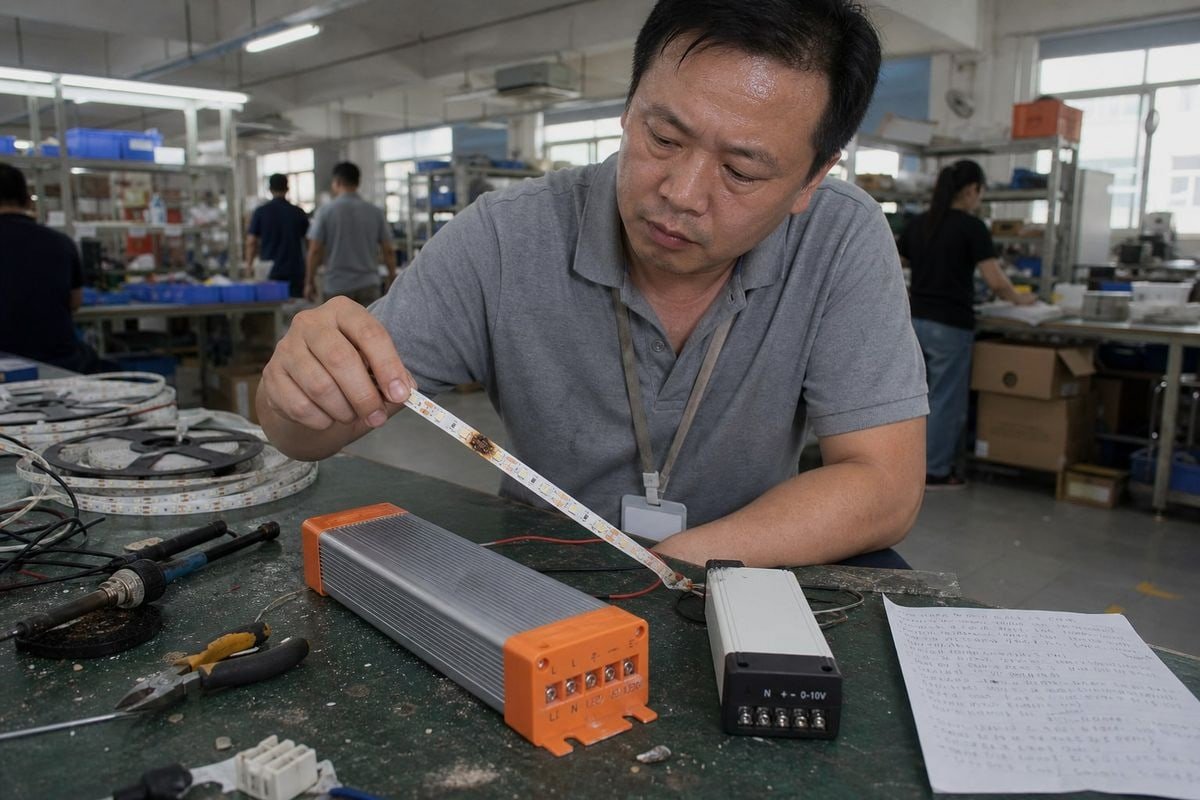
Escolher tensão constante em vez de CC confunde muitos compradores. Na nossa linha de produção em Shenzhen, vemos escolhas erradas de driver queimarem fitas de LED, atrasarem projetos e desperdiçarem orçamentos de compras todos os meses.
Use um driver de LED de tensão constante em vez de um driver de corrente constante quando a carga de LED exigir uma tensão fixa—normalmente 12V ou 24V—e tiver seu próprio circuito de limitação ou regulação de corrente. O driver mantém a tensão de saída estável, enquanto a carga conectada determina quanta corrente ela consome.
Essa é a resposta curta. Mas a questão real não é CV versus CC como rivais. É qual variável sua fonte de alimentação deve regular para sua carga específica. Deixe-me explicar como ajudamos compradores a decidir.
Como sei se meu projeto de LED precisa de tensão constante em vez de corrente constante?
Um distribuidor em Singapura nos enviou uma folha de especificações pedindo um “driver de 350mA para fita de luz de 24V.” Esse descasamento é exatamente o motivo pelo qual essa questão importa. O rótulo no seu produto de LED diz quase tudo.
Seu projeto precisa de tensão constante se o produto de LED especificar uma entrada de tensão, como 12V ou 24V DC, e incluir resistores de limitação de corrente integrados ou reguladores onboard. Se o produto especificar uma corrente fixa em miliamperes, como 350mA ou 700mA, ele precisa de um driver de corrente constante.
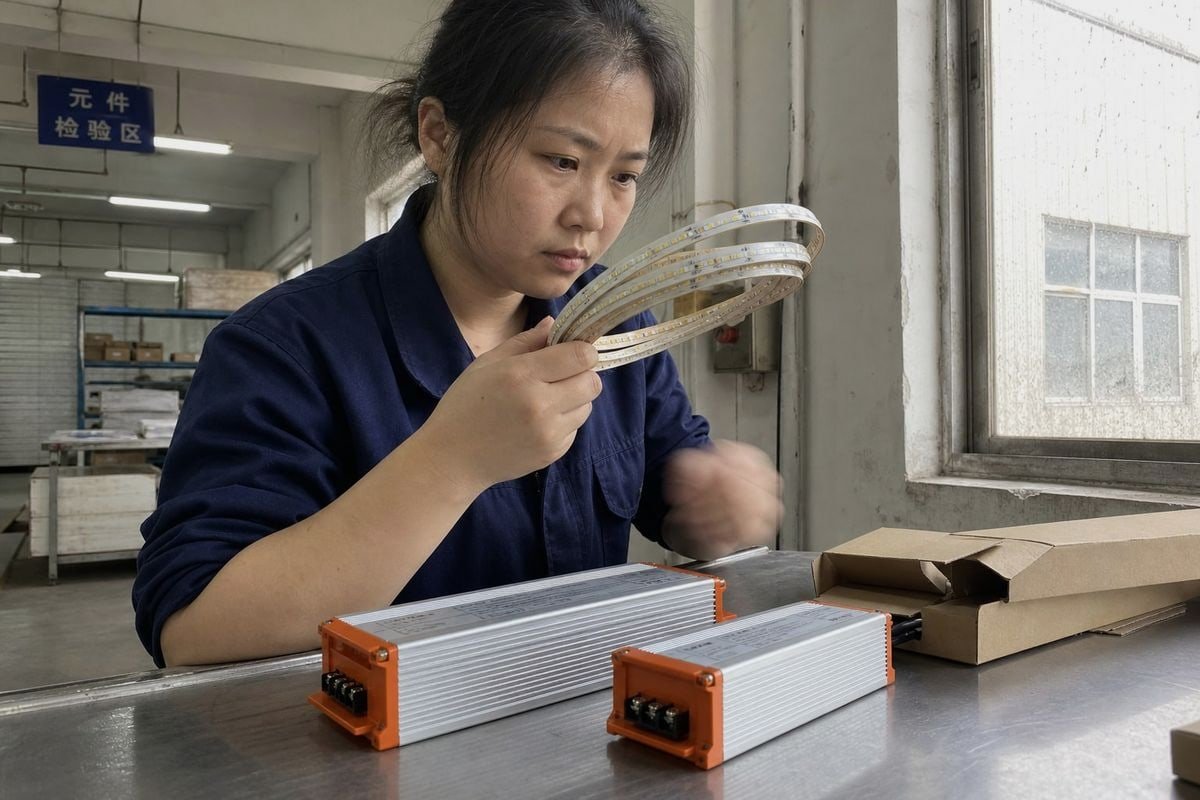
A verificação mais rápida é ler as especificações do driver de LED 1 impressas na própria carga. Produtos acionados por tensão indicam uma faixa, como “Entrada: 24V DC.” Produtos acionados por corrente indicam uma corrente de acionamento e uma faixa de tensão, como “700mA, 27–42V.” Nossos engenheiros aplicam essa regra diariamente ao combinar nossos drivers dimerizáveis com luminárias de clientes durante o desenvolvimento OEM.
Por que a carga decide, não o driver
Um LED é um dispositivo acionado por corrente no nível do chip. Sua corrente aumenta bruscamente uma vez que o limiar de tensão direta é ultrapassado. Então, algo deve regular a corrente. A única questão é onde essa regulação reside. Em fitas de LED, cada segmento cortado carrega seu próprio resistor de limitação de corrente 2, então a regulação está na fita. É por isso que uma faixa de tensão estável é tudo o que a fita precisa do driver. Em um COB nu ou string de LED de alta potência, nada na carga regula a corrente, então o driver deve fazê-lo diretamente.
Uma lista de verificação rápida para decisão
- Leia o rótulo do produto. Classificação de tensão sem classificação fixa de mA significa tensão constante.
- Procure por resistores onboard ou ICs de driver na placa de LED. Se presentes, tensão constante provavelmente está correta.
- Verifique o plano de fiação. Cargas projetadas para configuração de circuito paralelo em uma faixa compartilhada quase sempre esperam tensão constante.
- Verifique por controladores externos. Se um controlador de dimerização PWM ou sequenciador RGB estiver entre o driver e a carga, você precisa de tensão constante.
- Em caso de dúvida, peça a ficha técnica ao seu fornecedor. Respondemos essas perguntas para compradores antes de cada pedido de amostra, porque uma suposição errada nesta etapa é o erro mais caro de todo o projeto.
Quais são as principais diferenças que devo avaliar entre drivers CV e CC antes de fazer a aquisição?
As compensações são onde passamos a maior parte das nossas conversas de pré-venda. Quando um gerente de compras compara nossas duas famílias de drivers, o preço é sua primeira pergunta, mas o risco de falha deveria ser a segunda.
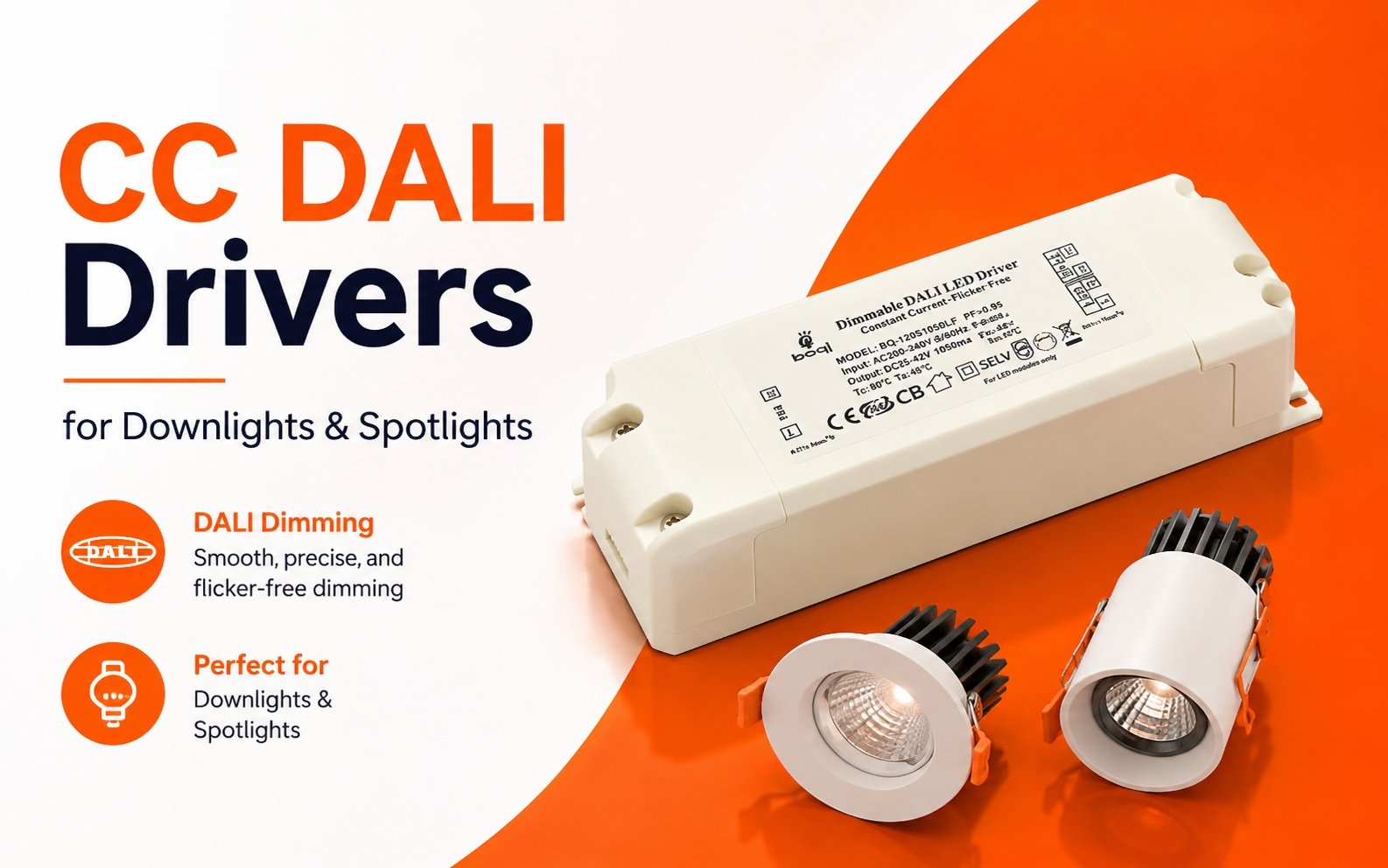
Avalie cinco diferenças antes da aquisição: o que o driver regula (tensão vs. corrente), o tipo de carga que ele atende, a topologia de fiação (paralela vs. série), custo e flexibilidade de reconfiguração, e comportamento de proteção. Drivers CC protegem LEDs sensíveis à corrente diretamente; drivers CV dependem da regulação de corrente da própria carga.
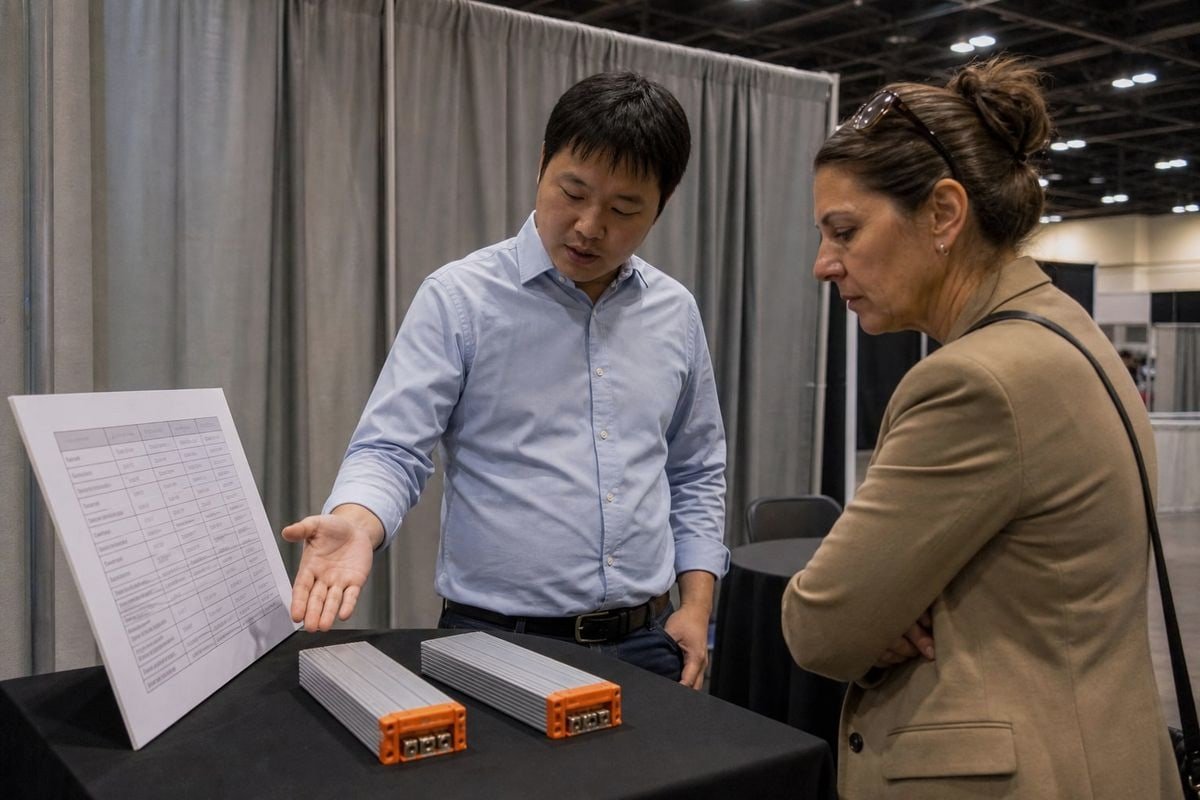
Aqui está a tabela de comparação que compartilhamos com compradores em feiras comerciais:
| Fator | Tensão Constante (CV) | Corrente Constante (CC) |
|---|---|---|
| Variável regulada | Tensão de saída fixa; corrente varia com a carga | Corrente de saída fixa; tensão varia com a carga |
| Saídas típicas | 12V, 24V, 48V DC | 350mA, 700mA, 1050mA em uma faixa de tensão |
| Melhor tipo de carga | Fitas de LED, módulos, sinalização com regulação onboard | Strings de LED nuas, LEDs de alta potência, downlights |
| Fiação | Configuração de circuito paralelo | Strings em série (série vs. paralelo de LEDs importa aqui) |
| Custo e flexibilidade | Mais barato, fácil de reconfigurar e cortar no comprimento | Mais preciso, menos flexível, deve corresponder à string |
| Risco de falha | Seguro se a carga for autolimitante; arriscado caso contrário | Menor risco de sobrecorrente em LEDs e fuga térmica |
A variável que importa: o que é mantido constante
No modo CV, a tensão é fixa e a corrente varia com a resistência da carga. No modo CC, a corrente é fixa e a tensão oscila conforme necessário para mantê-la. Curiosamente, muitas fontes reguladas fazem a transição automática entre os dois: uma fonte de bancada configurada em CV comporta-se como CV até a carga exceder o limite de corrente, então muda para o comportamento CC. É por isso que ambos os rótulos aparecem em um único instrumento.
Eficiência e risco de falha
Drivers CC são tipicamente mais eficientes e menos propensos a danificar LEDs, pois impõem disciplina de corrente na origem. Drivers CV são mais baratos e mais fáceis de reconfigurar, mas exigem que os LEDs tenham proteção de corrente integrada. Em nossa própria plataforma modular de fonte de alimentação chaveada 3 , ambos os tipos compartilham o mesmo invólucro de alumínio e projeto térmico, mas o laço de realimentação interno é completamente diferente. A eficiência da fonte de alimentação também depende da carga: um driver CV operando a 20% de carga desperdiça mais energia proporcionalmente, portanto dimensione seu driver em aproximadamente 80% da capacidade.
Não presuma que CV é sempre a escolha “segura”
Uma objeção que ouvimos de compradores: “CV parece mais simples, então deve ser mais seguro.” Não exatamente. Uma fonte CV pode empurrar corrente excessiva para uma carga de baixa resistência sem nada para detê-la. Simplicidade só equivale a segurança quando a carga se autorregula.
Posso mudar de corrente constante para tensão constante sem redesenhar minhas luminárias?
Uma lição que aprendemos cedo em nosso negócio de exportação: um cliente italiano tentou trocar drivers CC de downlights por unidades CV mais baratas sem tocar na luminária. Metade das amostras falhou no teste térmico em poucos dias.
Geralmente não sem modificação. Uma luminária acionada por CC não possui regulação de corrente interna, portanto conectá-la a um driver de tensão constante exige adicionar resistores limitadores de corrente ou um regulador integrado à placa de LED. Somente cargas já projetadas para entrada de tensão fixa podem ser conectadas diretamente.
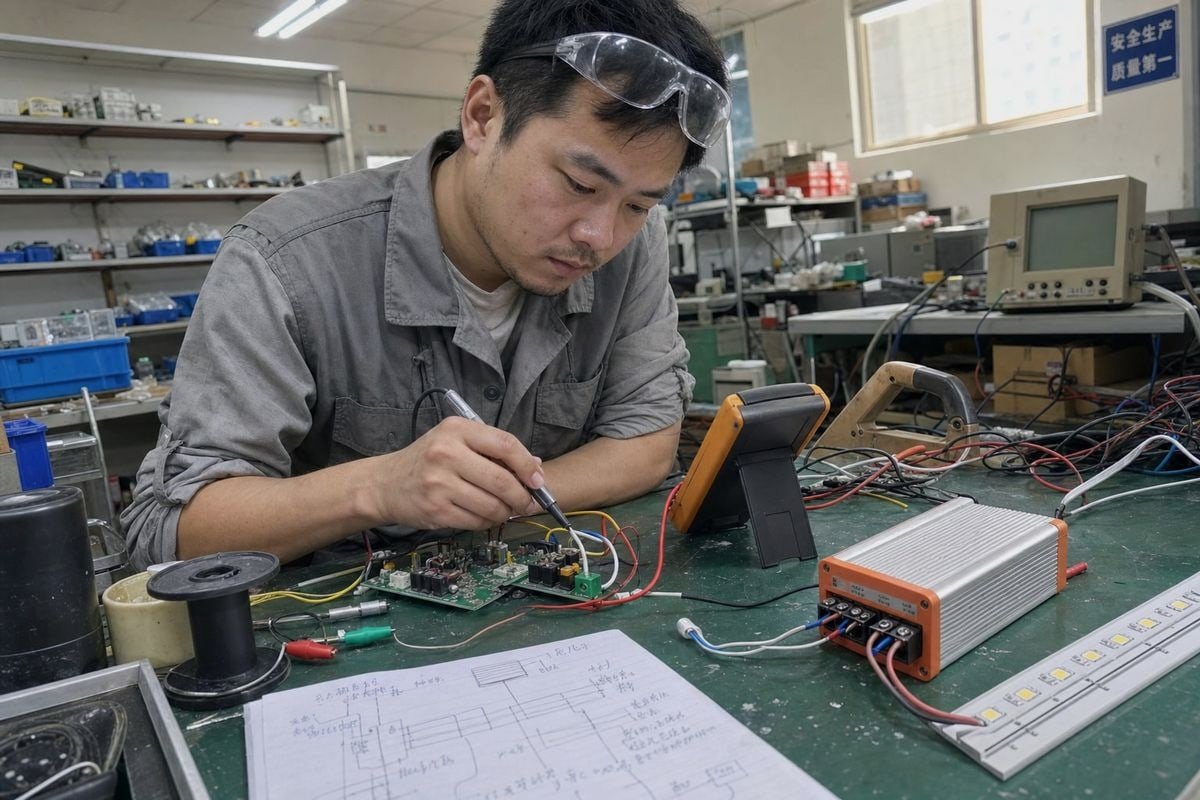
A boa notícia é que um redesenho nem sempre é profundo. Depende do que sua luminária já contém. Aqui está o caminho realista, passo a passo.
A avaliação de conversão em quatro etapas
- Audite a placa de LED. Se a placa for uma cadeia série nua de LEDs sem resistores ou ICs de driver, ela não pode aceitar um trilho de tensão fixa diretamente. A conexão direta arrisca fuga térmica, onde o aumento da temperatura de junção reduz a tensão direta, puxa mais corrente e aquece ainda mais o LED em um loop destrutivo.
- Escolha o método de regulação. Adicionar um resistor de limitação de corrente por cadeia é barato, mas desperdiça energia como calor e prejudica a eficiência da fonte de alimentação. Adicionar um pequeno IC regulador linear ou chaveado na placa é mais eficiente e mantém o brilho estável conforme a queda de tensão varia ao longo da fiação.
- Replaneje a topologia da fiação. Sistemas CC conectam LEDs em série; sistemas CV favorecem ramos paralelos. LEDs em série vs. paralelo não é uma escolha cosmética—muda como uma única falha se comporta. Em um arranjo CV paralelo bem projetado, um ramo com falha não empurra corrente extra e estresse térmico para os ramos sobreviventes, o que previne falhas em cascata em grandes instalações.
- Reverify a térmica e o dimerização. Resistores adicionam calor dentro da luminária. E seu esquema de dimerização também muda: drivers CC frequentemente dimerizam ajustando a corrente, enquanto sistemas CV tipicamente usam dimerização PWM no lado da carga.
Para clientes com prazos de projeto apertados, frequentemente co-desenvolvemos um pequeno módulo de LED regulado durante a amostragem OEM para que o invólucro da luminária permaneça inalterado. Isso protege o investimento em ferramentas enquanto torna a conversão elétrica limpa.
Quais aplicações na minha linha de produtos se beneficiam mais de drivers de LED de tensão constante?
Todos os meses revisamos quais SKUs de drivers nossos distribuidores europeus e do sudeste asiático reencomendam mais. O padrão é consistente: tensão constante domina onde flexibilidade, corte em campo e controle multizona importam.
Drivers de LED de tensão constante beneficiam fitas de LED, sinalização, módulos de LED, iluminação de sanca arquitetural e sistemas inteligentes multizona. Eles se adequam a qualquer produto com entrada DC padronizada de 12V, 24V ou 48V, fiação paralela, comprimentos cortáveis em campo, ou dimerização PWM externa e controladores RGB.
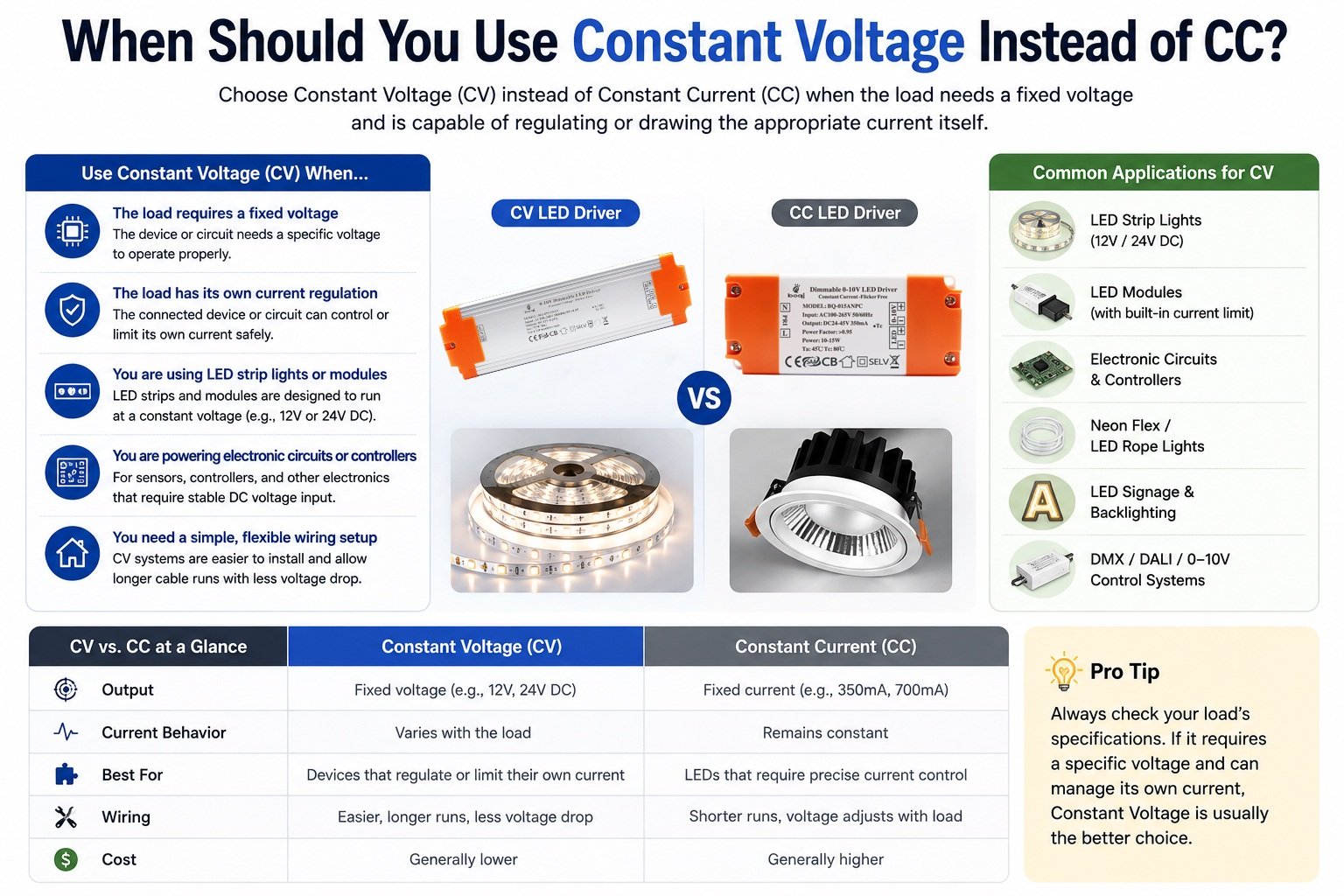
Se você vende para iluminação residencial, de varejo ou hospitalidade, tensão constante provavelmente cobrirá a maior parte do seu catálogo. Aqui está como as principais aplicações se dividem, com base no que construímos para clientes de marca própria:
| Inscrição | Por que CV se adequa | Trilho típico |
|---|---|---|
| Fita e tira de LED | Corte em campo sem recalcular potência; resistores integrados lidam com a corrente | 12V / 24V |
| Sinalização e letras de canal | Muitos módulos paralelos em um trilho compartilhado; instalação simples | 12V |
| Sistemas RGB / branco ajustável | Controladores de dimerização PWM externos e sequenciadores de cor ficam entre driver e carga | 24V |
| Execuções arquiteturais de alta densidade | Sistemas de 48V minimizam queda de tensão e reduzem a bitola do fio de cobre em longas distâncias | 48V |
| Infraestrutura de iluminação PoE | Compatibilidade nativa com um trilho DC fixo entregue na borda | Classe 48V |
| Iluminação inteligente multizona | Estabilidade da tensão de saída mantém o brilho consistente conforme zonas alternam independentemente | 12V / 24V |
Onde 48V está mudando o cenário
A mudança para tensão constante de 48V merece atenção se você fornece projetos arquiteturais. Na mesma potência, 48V carrega um quarto da corrente de 12V. Corrente menor significa drasticamente menos queda de tensão ao longo de cabos longos e cobre mais fino e barato. Também se alinha com Iluminação Power over Ethernet 4, onde um barramento DC fixo alcança cada dispositivo de borda. Vários de nossos clientes de empresas de engenharia na Austrália e na Alemanha padronizaram 48V exatamente por essas razões.
Posicionamento de custo em todo o seu catálogo
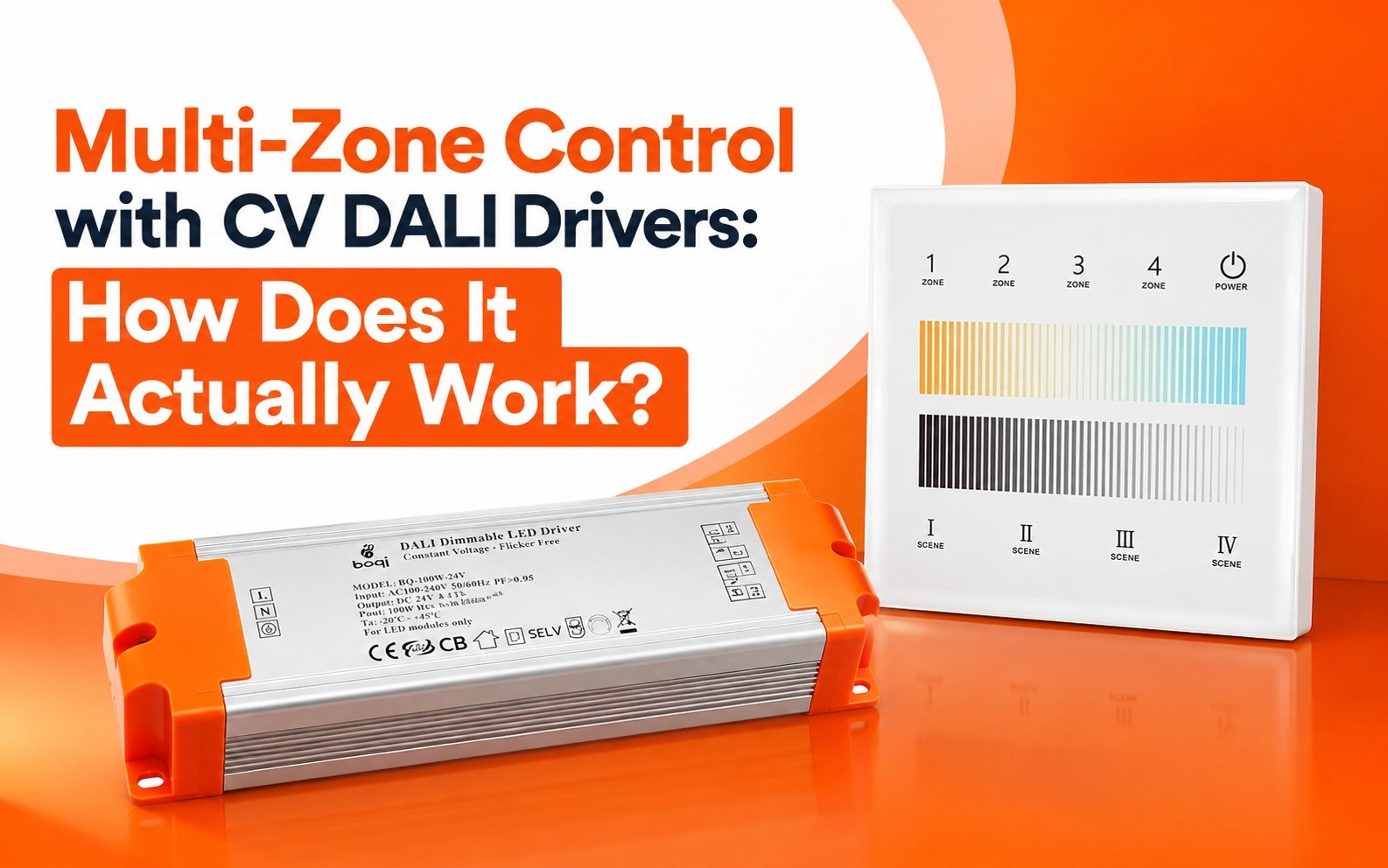
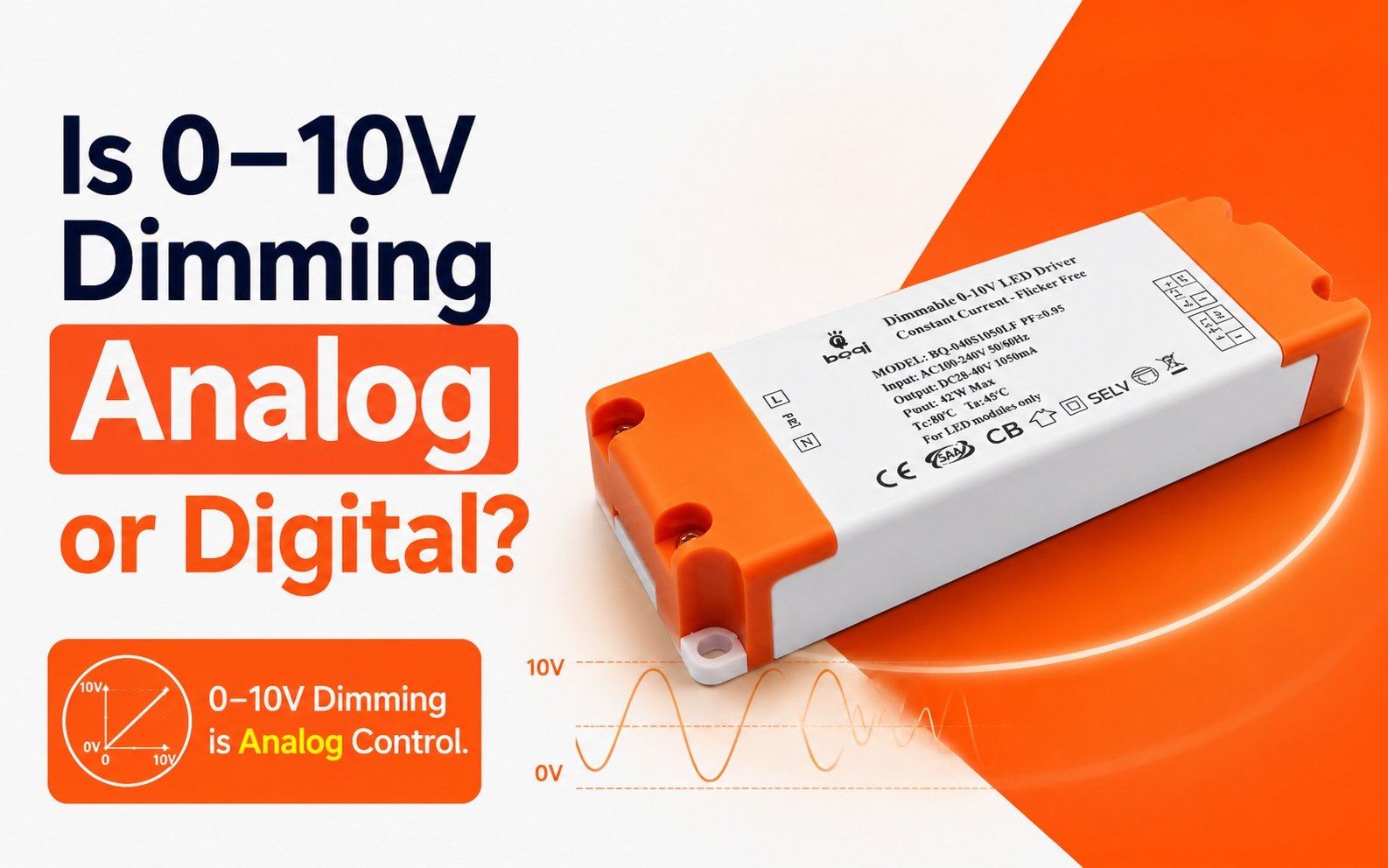
Drivers CV são geralmente mais acessíveis e mais amplamente disponíveis, o que reduz o custo total do sistema em projetos residenciais. Para uma linha de marca própria, isso significa que CV cobre suas linhas de volume, enquanto drivers CC com tolerâncias mais rígidas ancoram suas séries premium de downlights e trilhos de iluminação. Nossas unidades CV dimerizáveis—os invólucros finos de alumínio com certificação SELV, CE e SAA e terminais 0-10V—normalmente são enviadas como o cavalo de batalha de volume da linha de um cliente.
Conclusão
Escolhas erradas de drivers destroem luminárias e prazos. A solução é simples: alinhe o driver ao que sua carga regula e deixe a tensão constante alimentar toda linha de produto de tensão fixa e autolimitada.
Notas de Rodapé
A IEC define padrões internacionais para segurança e desempenho de drivers LED e controladores. ↩︎
Explica a configuração elétrica e o papel dos resistores na proteção de LEDs contra sobrecorrente. ↩︎
O DOE fornece dados técnicos sobre eficiência de fontes chaveadas e padrões para adaptadores de energia externos. ↩︎
Os padrões IEEE definem os requisitos técnicos para fornecer energia e dados à iluminação LED via Ethernet. ↩︎