













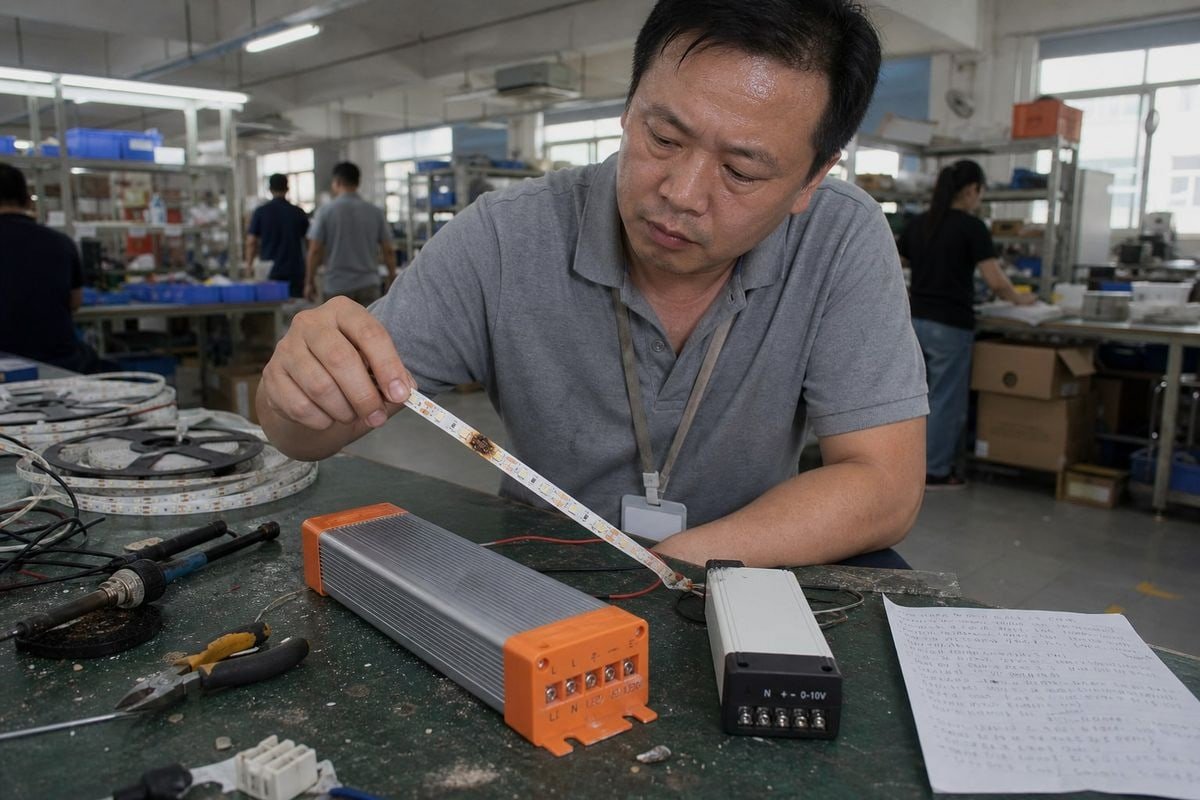
Việc chọn nguồn điện áp không đổi thay vì dòng điện không đổi khiến nhiều người mua bối rối. Trên dây chuyền sản xuất tại Thâm Quyến của chúng tôi, chúng tôi thấy việc chọn sai driver làm cháy dải đèn LED, trì hoãn dự án và lãng phí ngân sách mua hàng mỗi tháng.
Sử dụng driver LED điện áp không đổi thay vì driver dòng điện không đổi khi tải LED yêu cầu điện áp cố định—thường là 12V hoặc 24V—và có mạch giới hạn dòng hoặc điều chỉnh dòng riêng. Driver giữ điện áp đầu ra ổn định, trong khi tải kết nối quyết định dòng điện mà nó tiêu thụ.
Đó là câu trả lời ngắn gọn. Nhưng câu hỏi thực sự không phải là CV so với CC như những đối thủ cạnh tranh. Đó là biến số nào mà nguồn điện của bạn nên điều chỉnh cho tải cụ thể của bạn. Hãy để tôi hướng dẫn bạn cách chúng tôi giúp người mua quyết định.
Làm thế nào để tôi biết dự án LED của mình cần điện áp không đổi thay vì dòng điện không đổi?
Một nhà phân phối tại Singapore từng gửi cho chúng tôi bảng thông số kỹ thuật yêu cầu “driver 350mA cho đèn dây 24V.” Sự không khớp đó chính xác là lý do tại sao câu hỏi này quan trọng. Nhãn trên sản phẩm LED của bạn cho bạn biết gần như mọi thứ.
Dự án của bạn cần điện áp không đổi nếu sản phẩm LED chỉ định điện áp đầu vào, chẳng hạn như 12V hoặc 24V DC, và bao gồm điện trở giới hạn dòng tích hợp hoặc bộ điều chỉnh trên bo mạch. Nếu sản phẩm chỉ định dòng điện cố định tính bằng milliampe, chẳng hạn như 350mA hoặc 700mA, thì nó cần driver dòng điện không đổi thay thế.
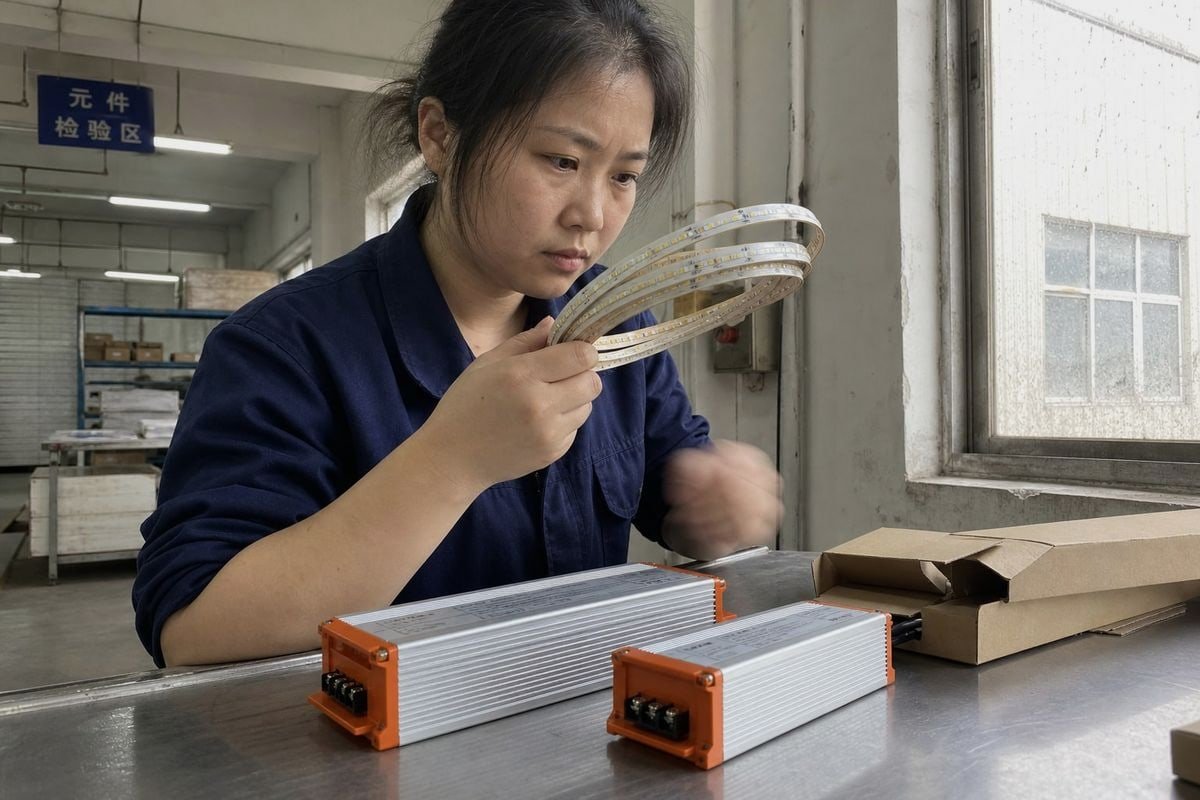
Cách kiểm tra nhanh nhất là đọc thông số kỹ thuật driver LED 1 được in trên chính tải. Sản phẩm điều khiển bằng điện áp ghi rõ mức điện áp, như “Đầu vào: 24V DC.” Sản phẩm điều khiển bằng dòng điện ghi dòng điện dẫn và dải điện áp, như “700mA, 27–42V.” Các kỹ sư của chúng tôi áp dụng quy tắc này hàng ngày khi kết hợp driver có thể điều chỉnh độ sáng của chúng tôi với đèn chiếu sáng của khách hàng trong quá trình phát triển OEM.
Tại sao tải quyết định, không phải driver
LED là thiết bị điều khiển bằng dòng điện ở cấp độ chip. Dòng điện của nó tăng mạnh khi vượt qua ngưỡng điện áp thuận. Vì vậy, phải có thứ gì đó điều chỉnh dòng điện. Câu hỏi duy nhất là sự điều chỉnh đó nằm ở đâu. Trong đèn dây LED, mỗi đoạn cắt mang điện trở giới hạn dòng riêng 2, vì vậy sự điều chỉnh nằm trên dây. Đó là lý do tại sao một mức điện áp ổn định là tất cả những gì dây cần từ driver. Trong chuỗi LED COB trần hoặc LED công suất cao, không có gì trên tải điều chỉnh dòng điện, vì vậy driver phải làm điều đó trực tiếp.
Danh sách kiểm tra quyết định nhanh
- Đọc nhãn sản phẩm. Điện áp định mức không có định mức mA cố định có nghĩa là điện áp không đổi.
- Tìm điện trở trên bo mạch hoặc IC driver trên bo mạch LED. Nếu có, điện áp không đổi có khả năng là đúng.
- Kiểm tra sơ đồ đấu dây. Tải được thiết kế cho cấu hình mạch song song trên một mức điện áp chung gần như luôn mong đợi điện áp không đổi.
- Kiểm tra bộ điều khiển bên ngoài. Nếu bộ điều khiển làm mờ PWM hoặc bộ tuần tự RGB nằm giữa driver và tải, bạn cần điện áp không đổi.
- Khi nghi ngờ, hãy hỏi nhà cung cấp của bạn để có bảng dữ liệu. Chúng tôi trả lời những câu hỏi này cho người mua trước mỗi đơn hàng mẫu, vì giả định sai ở giai đoạn này là sai lầm tốn kém nhất trong toàn bộ dự án.
Sự khác biệt chính nào tôi nên đánh giá giữa driver CV và CC trước khi tìm nguồn cung cấp?
Sự đánh đổi là nơi chúng tôi dành phần lớn thời gian trong các cuộc trò chuyện trước bán hàng. Khi một quản lý mua hàng so sánh hai dòng driver của chúng tôi, giá cả là câu hỏi đầu tiên của cô ấy, nhưng rủi ro hỏng hóc nên là câu hỏi thứ hai.
Đánh giá năm điểm khác biệt trước khi tìm nguồn cung cấp: driver điều chỉnh điều gì (điện áp so với dòng điện), loại tải mà nó phù hợp, cấu trúc đấu dây (song song so với nối tiếp), chi phí và tính linh hoạt cấu hình lại, và hành vi bảo vệ. Driver CC bảo vệ trực tiếp các LED nhạy cảm với dòng điện; driver CV dựa vào sự điều chỉnh dòng điện của chính tải.
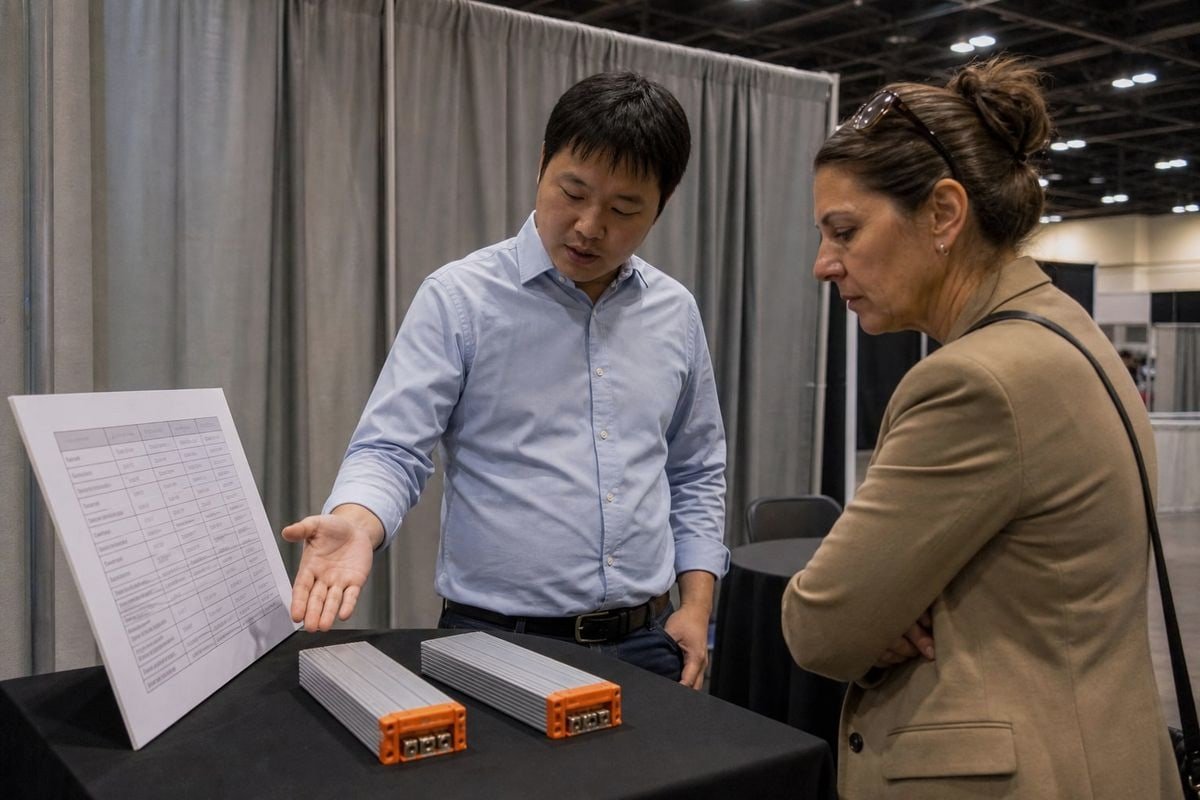
Đây là bảng so sánh chúng tôi chia sẻ với người mua tại các triển lãm thương mại:
| Yếu tố | Điện áp không đổi (CV) | Dòng điện không đổi (CC) |
|---|---|---|
| Biến số được điều chỉnh | Điện áp đầu ra cố định; dòng điện thay đổi theo tải | Dòng điện đầu ra cố định; điện áp thay đổi theo tải |
| Đầu ra điển hình | 12V, 24V, 48V DC | 350mA, 700mA, 1050mA trên một dải điện áp |
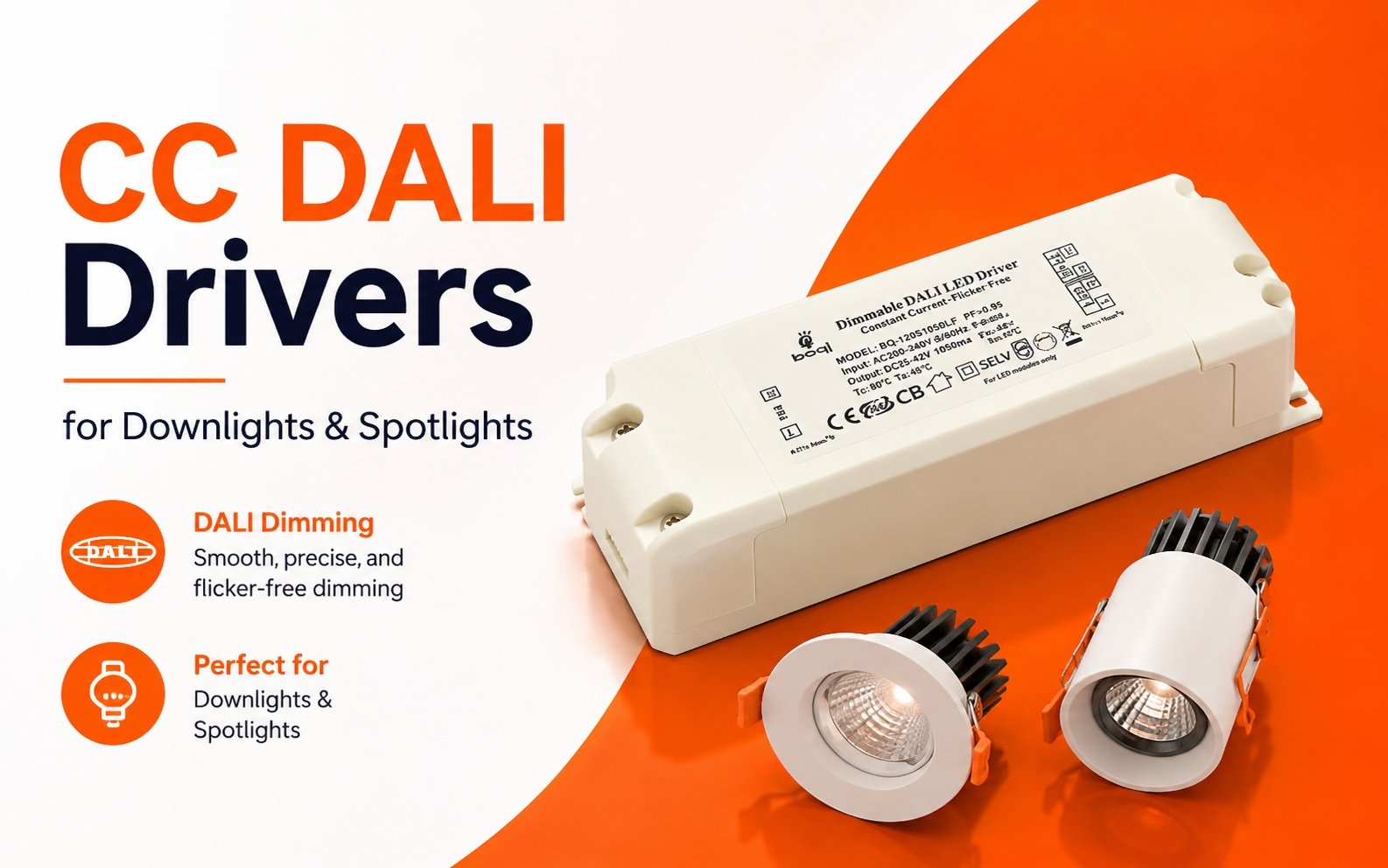
| Loại tải tốt nhất | Dải đèn LED, mô-đun, biển hiệu có điều chỉnh trên bo mạch | Chuỗi LED trần, LED công suất cao, đèn downlight |
| Wiring | Cấu hình mạch song song | Chuỗi nối tiếp (chuỗi so với song song LED quan trọng ở đây) |
| Chi phí và tính linh hoạt | Rẻ hơn, dễ cấu hình lại và cắt theo chiều dài | Chính xác hơn, ít linh hoạt hơn, phải khớp với chuỗi |
| Rủi ro hỏng hóc | An toàn nếu tải tự giới hạn; rủi ro nếu không | Giảm rủi ro quá tải LED và chạy nhiệt không kiểm soát |
Biến số quan trọng: điều gì được giữ không đổi
Ở chế độ CV, điện áp cố định và dòng điện thay đổi theo điện trở tải. Ở chế độ CC, dòng điện cố định và điện áp dao động để duy trì dòng đó. Điều thú vị là nhiều bộ nguồn ổn định tự động chuyển đổi giữa hai chế độ: bộ nguồn bàn thí nghiệm đặt ở chế độ CV hoạt động như CV cho đến khi tải vượt quá giới hạn dòng, sau đó chuyển sang hành vi CC. Đó là lý do cả hai nhãn xuất hiện trên một thiết bị.
Hiệu suất và rủi ro hỏng hóc
Bộ điều khiển CC thường hiệu quả hơn và ít có khả năng làm hỏng LED, vì chúng thực thi kỷ luật dòng điện tại nguồn. Bộ điều khiển CV rẻ hơn và dễ cấu hình lại hơn, nhưng chúng yêu cầu LED phải có bảo vệ dòng tích hợp. Trong nền tảng bộ nguồn chuyển mạch 3 mô-đun của chúng tôi, cả hai loại dùng chung vỏ nhôm và thiết kế tản nhiệt, nhưng vòng phản hồi bên trong hoàn toàn khác nhau. Hiệu suất bộ nguồn cũng phụ thuộc vào tải: bộ điều khiển CV chạy ở mức tải 20% lãng phí năng lượng theo tỷ lệ lớn hơn, vì vậy hãy chọn kích thước bộ điều khiển ở khoảng 80% công suất.
Đừng giả định CV luôn là lựa chọn “an toàn”
Một phản đối chúng tôi nghe từ người mua: “CV có vẻ đơn giản hơn, nên chắc chắn an toàn hơn.” Không hẳn. Bộ nguồn CV có thể đẩy dòng điện quá mức vào tải điện trở thấp mà không có gì ngăn lại. Sự đơn giản chỉ bằng với an toàn khi tải tự điều chỉnh được.
Tôi có thể chuyển từ dòng điện không đổi sang điện áp không đổi mà không cần thiết kế lại đèn chiếu sáng của mình không?
Một bài học chúng tôi học được sớm trong kinh doanh xuất khẩu: một khách hàng Ý cố gắng thay bộ điều khiển đèn downlight CC bằng bộ CV rẻ hơn mà không đụng đến bộ đèn. Một nửa số mẫu thất bại trong kiểm tra nhiệt trong vòng vài ngày.
Thường là không nếu không có sửa đổi. Bộ đèn chạy CC không có điều chỉnh dòng nội bộ, vì vậy kết nối nó với bộ điều khiển điện áp không đổi yêu cầu thêm điện trở giới hạn dòng hoặc bộ điều chỉnh trên bo mạch LED. Chỉ những tải đã được thiết kế cho đầu vào điện áp cố định mới có thể chuyển đổi trực tiếp.
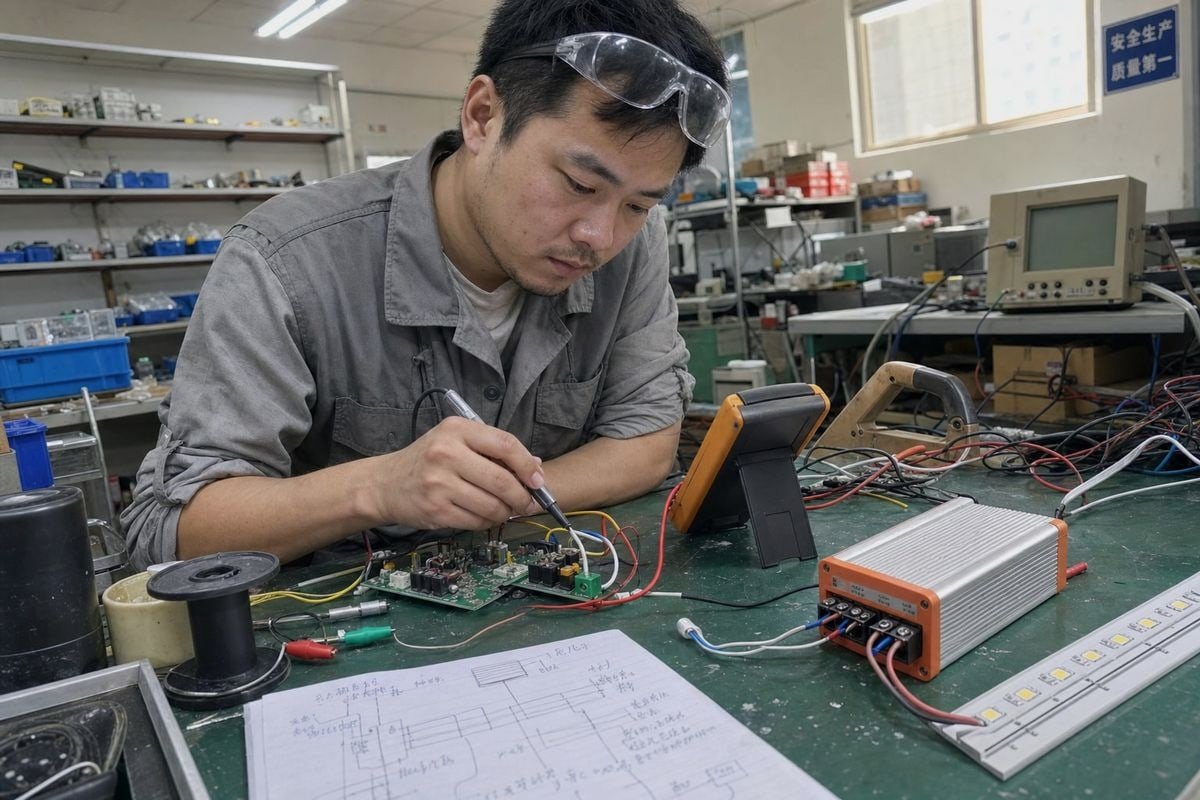
Tin tốt là việc thiết kế lại không phải lúc nào cũng sâu. Nó phụ thuộc vào những gì bộ đèn của bạn đã có sẵn. Đây là lộ trình thực tế, từng bước một.
Đánh giá chuyển đổi bốn bước
- Kiểm tra bo mạch LED. Nếu bo mạch là chuỗi LED nối tiếp trần không có điện trở hoặc IC điều khiển, nó không thể chấp nhận trực tiếp điện áp cố định. Kết nối trực tiếp có nguy cơ chạy nhiệt không kiểm soát, nơi nhiệt độ mối nối tăng làm giảm điện áp thuận, kéo thêm dòng điện, và làm nóng LED thêm trong một vòng lặp phá hủy.
- Chọn phương pháp điều chỉnh. Thêm một điện trở giới hạn dòng riêng trên mỗi chuỗi rẻ nhưng lãng phí năng lượng dưới dạng nhiệt và làm giảm hiệu suất bộ nguồn. Thêm một IC điều chỉnh tuyến tính hoặc chuyển mạch nhỏ trên bo mạch hiệu quả hơn và giữ độ sáng ổn định khi điện áp rơi thay đổi dọc theo dây dẫn.
- Lên kế hoạch lại cấu trúc dây. Hệ thống CC nối LED theo chuỗi; hệ thống CV ưu tiên nhánh song song. LED nối tiếp so với song song không phải là lựa chọn thẩm mỹ—nó thay đổi cách một lỗi đơn lẻ hoạt động. Trong một mảng CV song song được thiết kế tốt, một nhánh hỏng không đẩy thêm dòng điện và ứng suất nhiệt lên các nhánh còn sống, ngăn ngừa lỗi dây chuyền trong các hệ thống lắp đặt lớn.
- Kiểm tra lại nhiệt và điều chỉnh độ sáng. Điện trở thêm nhiệt bên trong bộ đèn. Và sơ đồ điều chỉnh độ sáng của bạn cũng thay đổi: bộ điều khiển CC thường điều chỉnh độ sáng bằng cách thay đổi dòng điện, trong khi hệ thống CV thường sử dụng điều chế PWM ở phía tải.
Đối với khách hàng có tiến độ dự án gấp, chúng tôi thường cùng phát triển một mô-đun LED điều chỉnh nhỏ trong giai đoạn lấy mẫu OEM để vỏ bộ đèn giữ nguyên. Điều đó bảo vệ đầu tư khuôn mẫu trong khi làm cho việc chuyển đổi điện sạch sẽ.
Ứng dụng nào trong dòng sản phẩm của tôi được hưởng lợi nhiều nhất từ driver LED điện áp không đổi?
Mỗi tháng chúng tôi xem xét SKU bộ điều khiển nào mà các nhà phân phối châu Âu và Đông Nam Á đặt lại nhiều nhất. Mô hình nhất quán: điện áp không đổi chiếm ưu thế ở bất cứ nơi nào tính linh hoạt, cắt tại hiện trường, và điều khiển đa vùng quan trọng.
Bộ điều khiển LED điện áp không đổi mang lại lợi ích lớn nhất cho đèn LED dạng dải, biển hiệu, mô-đun LED, đèn kiến trúc âm trần, và hệ thống thông minh đa vùng. Chúng phù hợp với bất kỳ sản phẩm nào có đầu vào DC tiêu chuẩn 12V, 24V, hoặc 48V, dây song song, chiều dài cắt tại hiện trường, hoặc điều khiển PWM ngoài và bộ điều khiển RGB.
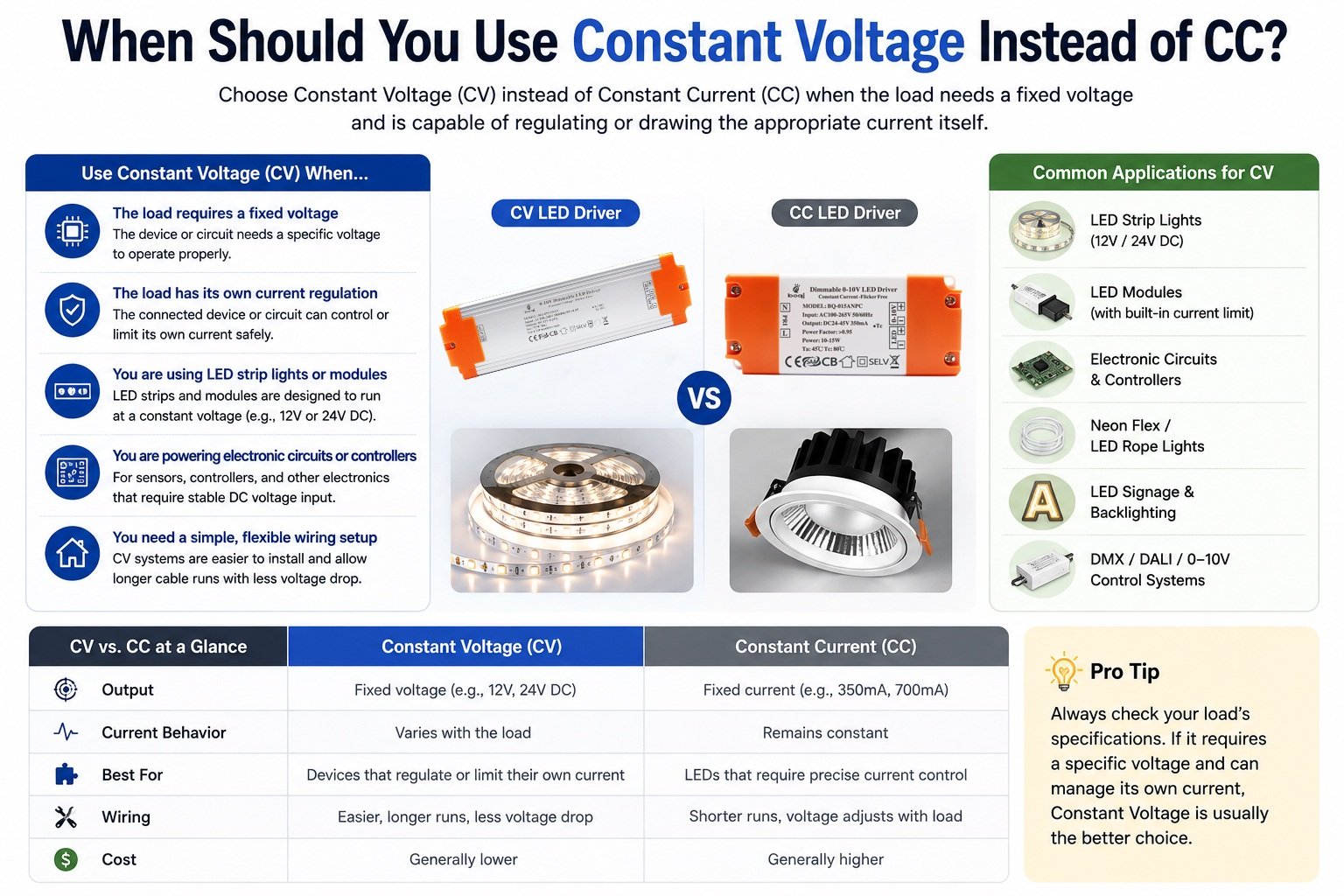
Nếu bạn bán vào thị trường chiếu sáng dân dụng, bán lẻ, hoặc khách sạn, điện áp không đổi có khả năng bao phủ phần lớn danh mục sản phẩm của bạn. Đây là cách các ứng dụng chính phân chia, dựa trên những gì chúng tôi sản xuất cho khách hàng nhãn riêng:
| Đăng kí | Tại sao CV phù hợp | Điện áp điển hình |
|---|---|---|
| Đèn LED dạng dải và dải chiếu sáng | Cắt theo chiều dài tại hiện trường mà không cần tính lại công suất; điện trở trên bo mạch xử lý dòng điện | 12V / 24V |
| Biển hiệu và chữ nổi kênh | Nhiều mô-đun song song trên một đường ray dùng chung; lắp đặt đơn giản | 12V |
| Hệ thống RGB / trắng điều chỉnh được | Bộ điều khiển điều chế PWM ngoài và bộ tuần tự màu nằm giữa bộ điều khiển và tải | 24V |
| Đường chạy kiến trúc mật độ cao | Hệ thống 48V giảm thiểu sụt áp và giảm kích thước dây đồng trên các đường chạy dài | 48V |
| Cơ sở hạ tầng chiếu sáng PoE | Tương thích tự nhiên với đường ray DC cố định phân phối đến điểm cuối | Lớp 48V |
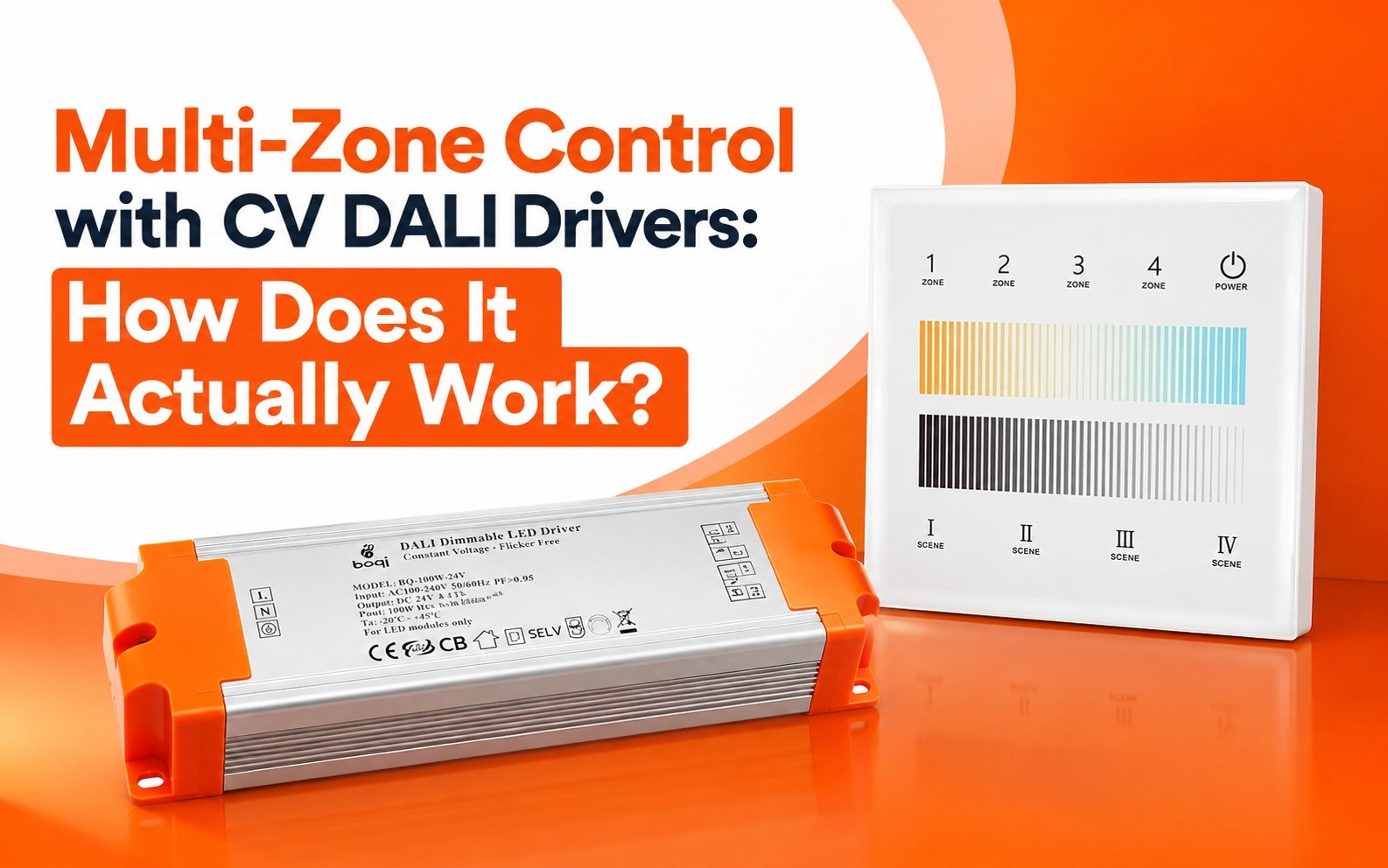
| Chiếu sáng thông minh đa vùng | Ổn định điện áp đầu ra giữ độ sáng nhất quán khi các vùng bật tắt độc lập | 12V / 24V |
Nơi 48V đang thay đổi bức tranh
Xu hướng chuyển sang điện áp không đổi 48V đáng được chú ý nếu bạn cung cấp cho các dự án kiến trúc. Ở cùng công suất, 48V mang một phần tư dòng điện so với 12V. Dòng điện thấp hơn có nghĩa là sụt áp giảm đáng kể dọc theo đường cáp dài và dây đồng mỏng hơn, rẻ hơn. Nó cũng phù hợp với Chiếu sáng qua Power over Ethernet 4, nơi một đường ray DC cố định đến được mọi thiết bị biên. Một số khách hàng là công ty kỹ thuật của chúng tôi tại Úc và Đức đã chuẩn hóa trên 48V chính vì những lý do này.
Định vị chi phí trên toàn bộ danh mục sản phẩm của bạn
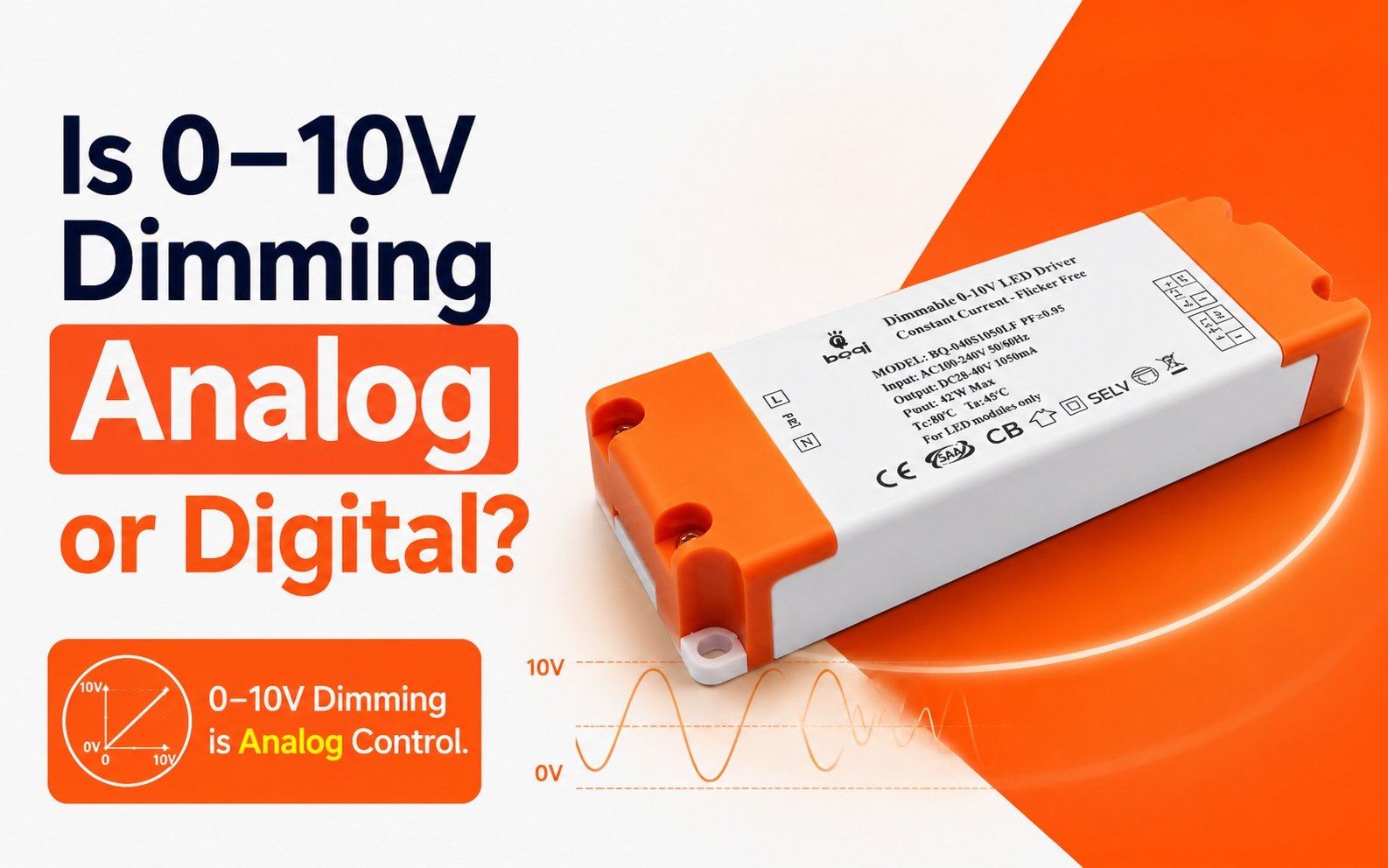
Bộ điều khiển CV thường có giá phải chăng hơn và phổ biến rộng rãi hơn, giúp giảm chi phí tổng thể của hệ thống trong các dự án dân dụng. Đối với dòng sản phẩm nhãn riêng, điều đó có nghĩa là CV bao phủ các dòng sản phẩm số lượng lớn của bạn trong khi bộ điều khiển CC với dung sai chặt chẽ hơn neo giữ dòng đèn downlight và đèn track cao cấp của bạn. Các bộ điều khiển CV có thể điều chỉnh độ sáng của chúng tôi—vỏ nhôm mỏng với chứng nhận SELV, CE và SAA cùng đầu nối 0-10V—thường được xuất xưởng như là sản phẩm chủ lực về số lượng trong dòng sản phẩm của khách hàng.
Sự kết luận
Lựa chọn bộ điều khiển sai sẽ phá hủy thiết bị và làm hỏng tiến độ. Giải pháp rất đơn giản: khớp bộ điều khiển với những gì tải của bạn điều chỉnh, và để điện áp không đổi cấp nguồn cho mọi dòng sản phẩm tự giới hạn có điện áp cố định.
Chú thích
IEC đặt ra các tiêu chuẩn quốc tế về an toàn và hiệu suất của bộ điều khiển LED và thiết bị điều khiển. ↩︎
Giải thích cấu hình điện và vai trò của điện trở trong việc bảo vệ LED khỏi quá dòng. ↩︎
DOE cung cấp dữ liệu kỹ thuật về hiệu suất của nguồn chuyển mạch và tiêu chuẩn cho bộ chuyển đổi nguồn ngoài. ↩︎
Tiêu chuẩn IEEE xác định các yêu cầu kỹ thuật để truyền tải điện và dữ liệu đến đèn LED qua Ethernet. ↩︎