













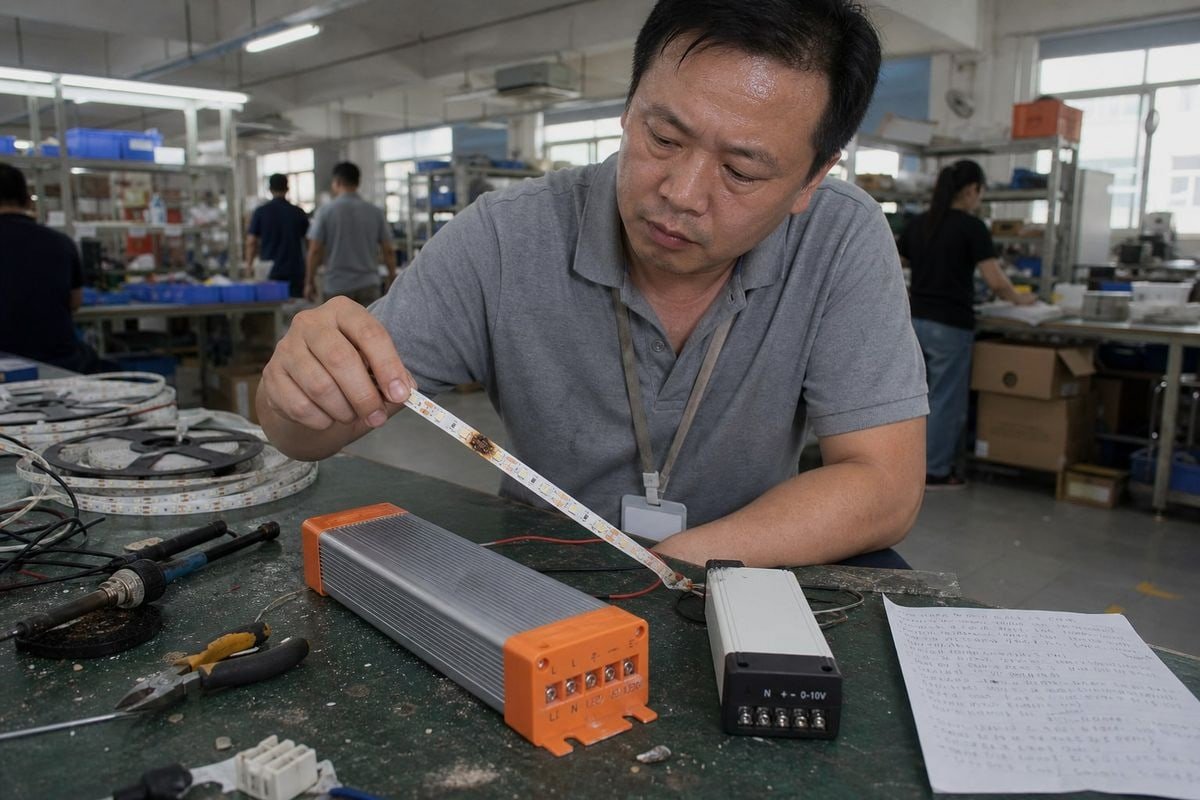
Die Wahl von Konstantspannung anstelle von Konstantstrom verwirrt viele Käufer. Auf unserer Produktionslinie in Shenzhen sehen wir jeden Monat, wie falsche Treiberauswahlen LED-Streifen durchbrennen lassen, Projekte verzögern und Einkaufsbudgets verschwenden.
Verwenden Sie einen LED-Treiber mit Konstantspannung anstelle eines Konstantstrom-Treibers, wenn die LED-Last eine feste Spannung benötigt – typischerweise 12V oder 24V – und über eine eigene Strombegrenzungs- oder Stromregelungsschaltung verfügt. Der Treiber hält die Ausgangsspannung stabil, während die angeschlossene Last bestimmt, wie viel Strom sie aufnimmt.
Das ist die kurze Antwort. Aber die eigentliche Frage ist nicht CV gegen CC als Rivalen. Es geht darum, welche Variable Ihre Stromquelle für Ihre spezifische Last regeln sollte. Lassen Sie mich Ihnen erläutern, wie wir Käufern bei der Entscheidung helfen.
Woher weiß ich, ob mein LED-Projekt Konstantspannung anstelle von Konstantstrom benötigt?
Ein Distributor aus Singapur schickte uns einmal ein Datenblatt mit der Anfrage nach einem “350mA-Treiber für 24V-Bandlicht.” Genau diese Diskrepanz zeigt, warum diese Frage wichtig ist. Das Etikett auf Ihrem LED-Produkt sagt Ihnen fast alles.
Ihr Projekt benötigt Konstantspannung, wenn das LED-Produkt eine Spannungseingabe wie 12V oder 24V DC spezifiziert und eingebaute Strombegrenzungswiderstände oder Onboard-Regler enthält. Wenn das Produkt einen festen Strom in Milliampere wie 350mA oder 700mA spezifiziert, benötigt es stattdessen einen Konstantstrom-Treiber.

Der schnellste Check ist das Lesen der LED-Treiber-Spezifikationen 1 auf der Last selbst. Spannungsgetriebene Produkte geben eine Versorgungsspannung an, wie “Eingang: 24V DC.” Stromgetriebene Produkte geben einen Treiberstrom und einen Spannungsbereich an, wie “700mA, 27–42V.” Unsere Ingenieure wenden diese Regel täglich an, wenn sie unsere dimmbaren Treiber während der OEM-Entwicklung auf Kundenleuchten abstimmen.
Warum die Last entscheidet, nicht der Treiber
Eine LED ist auf Chipebene ein stromgetriebenes Bauelement. Ihr Strom steigt stark an, sobald die Durchlassspannungsschwelle überschritten wird. Also muss etwas den Strom regeln. Die einzige Frage ist, wo diese Regelung stattfindet. Bei LED-Streifenbeleuchtung trägt jedes Schnittsegment seinen eigenen Strombegrenzungswiderstand 2, sodass die Regelung auf dem Band liegt. Deshalb benötigt der Streifen vom Treiber nur eine stabile Spannungsschiene. Bei einem nackten COB oder einer Hochleistungs-LED-Kette reguliert nichts auf der Last den Strom, daher muss der Treiber dies direkt übernehmen.
Eine schnelle Entscheidungs-Checkliste
- Lesen Sie das Produktetikett. Eine Spannungsangabe ohne feste mA-Angabe bedeutet Konstantspannung.
- Achten Sie auf Onboard-Widerstände oder Treiber-ICs auf der LED-Platine. Wenn vorhanden, ist Konstantspannung wahrscheinlich richtig.
- Prüfen Sie den Verdrahtungsplan. Lasten, die für eine parallele Schaltungskonfiguration über eine gemeinsame Schiene ausgelegt sind, erwarten fast immer Konstantspannung.
- Prüfen Sie auf externe Controller. Wenn ein PWM-Dimmcontroller oder RGB-Sequenzer zwischen Treiber und Last sitzt, benötigen Sie Konstantspannung.
- Im Zweifel fragen Sie Ihren Lieferanten nach dem Datenblatt. Wir beantworten diese Fragen für Käufer vor jeder Musterbestellung, denn eine falsche Annahme in dieser Phase ist der teuerste Fehler im gesamten Projekt.
Was sind die wichtigsten Unterschiede, die ich zwischen CV- und CC-Treibern bewerten sollte, bevor ich beschaffe?
Kompromisse sind der Punkt, an dem wir den Großteil unserer Pre-Sales-Gespräche verbringen. Wenn ein Einkaufsleiter unsere beiden Treiberfamilien vergleicht, ist der Preis ihre erste Frage, aber das Ausfallrisiko sollte ihre zweite sein.
Bewerten Sie fünf Unterschiede vor der Beschaffung: was der Treiber regelt (Spannung vs. Strom), den geeigneten Lasttyp, die Verdrahtungstopologie (parallel vs. Serie), Kosten und Rekonfigurationsflexibilität sowie das Schutzverhalten. CC-Treiber schützen stromempfindliche LEDs direkt; CV-Treiber verlassen sich auf die eigene Stromregelung der Last.
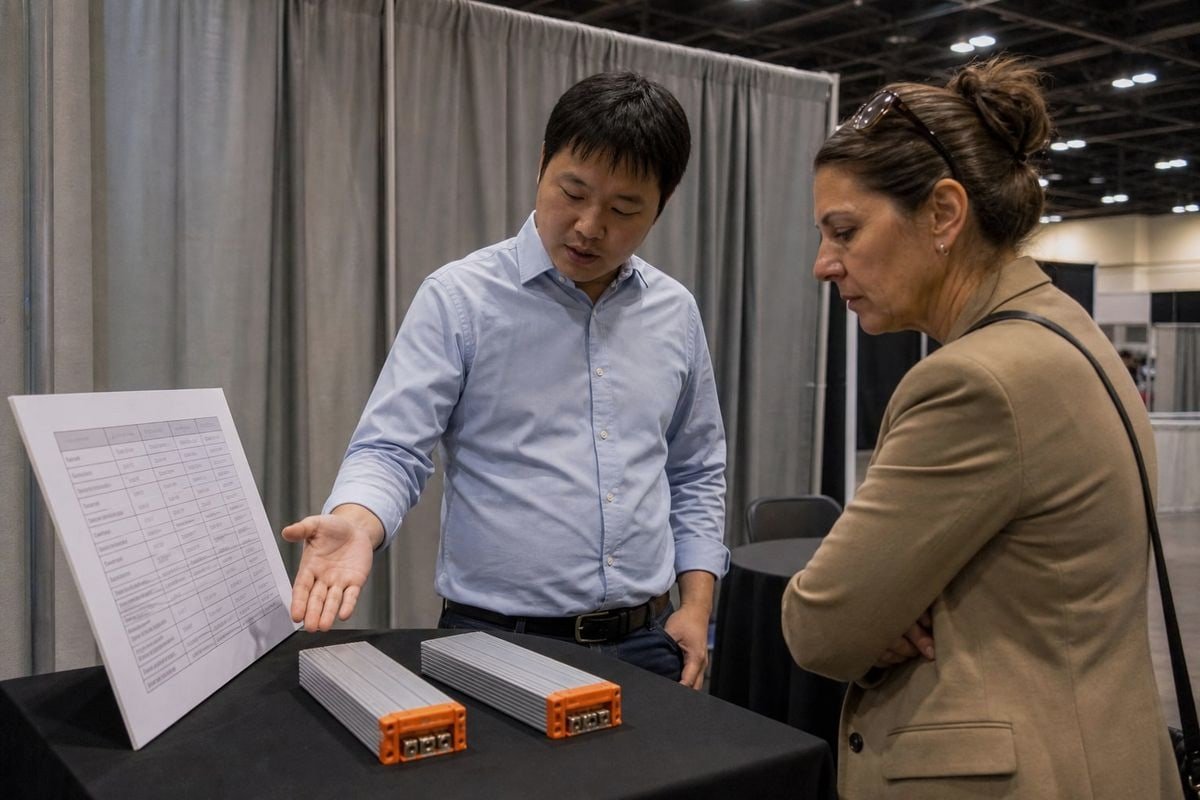
Hier ist die Vergleichstabelle, die wir Käufern auf Messen zeigen:
| Faktor | Konstante Spannung (CV) | Konstantstrom (CC) |
|---|---|---|
| Geregelte Variable | Feste Ausgangsspannung; Strom variiert mit der Last | Fester Ausgangsstrom; Spannung variiert mit der Last |
| Typische Ausgänge | 12V, 24V, 48V Gleichstrom | 350mA, 700mA, 1050mA über einen Spannungsbereich |
| Bester Lasttyp | LED-Streifen, Module, Beschilderung mit Onboard-Regelung | Nackte LED-Ketten, Hochleistungs-LEDs, Downlights |
| Verdrahtung | Parallele Schaltungskonfiguration | Serienketten (Serie vs. Parallel bei LEDs ist hier entscheidend) |
| Kosten und Flexibilität | Günstiger, einfach zu rekonfigurieren und auf Länge zu schneiden | Präziser, weniger flexibel, muss zur Kette passen |
| Ausfallrisiko | Sicher, wenn die Last selbstbegrenzend ist; andernfalls riskant | Geringeres Risiko von LED-Übersteuerung und thermischem Durchgehen |
Die entscheidende Variable: Was konstant gehalten wird
Im CV-Modus ist die Spannung fest und der Strom ändert sich mit dem Lastwiderstand. Im CC-Modus ist der Strom fest und die Spannung schwankt, um ihn aufrechtzuerhalten. Interessanterweise wechseln viele geregelte Netzteile automatisch zwischen den beiden Modi: Ein Labornetzteil, das auf CV eingestellt ist, verhält sich wie CV, bis die Last das Stromlimit überschreitet, und wechselt dann in das CC-Verhalten. Deshalb erscheinen beide Bezeichnungen auf einem Gerät.
Effizienz und Ausfallrisiko
CC-Treiber sind in der Regel effizienter und weniger anfällig, LEDs zu beschädigen, da sie die Stromdisziplin an der Quelle durchsetzen. CV-Treiber sind günstiger und leichter umzukonfigurieren, erfordern jedoch, dass die LEDs einen eingebauten Stromschutz mitbringen. In unserer eigenen modularen Schaltnetzteil 3 -Plattform teilen sich beide Typen dasselbe Aluminiumgehäuse und thermische Design, aber die Rückkopplungsschleife im Inneren ist völlig unterschiedlich. Die Effizienz des Netzteils hängt auch von der Last ab: Ein CV-Treiber, der bei 20 % Last läuft, verschwendet proportional mehr Energie, also dimensionieren Sie Ihren Treiber auf etwa 80 % der Kapazität.
Gehen Sie nicht davon aus, dass CV immer die “sichere” Wahl ist
Ein Einwand, den wir von Käufern hören: “CV scheint einfacher, also muss es sicherer sein.” Nicht ganz. Ein CV-Netzteil kann übermäßigen Strom in eine Last mit niedrigem Widerstand treiben, ohne dass etwas es stoppt. Einfachheit ist nur dann gleich Sicherheit, wenn die Last sich selbst reguliert.
Kann ich von Konstantstrom auf Konstantspannung umstellen, ohne meine Leuchten neu zu konstruieren?
Eine Lektion, die wir früh in unserem Exportgeschäft gelernt haben: Ein italienischer Kunde versuchte, CC-Downlight-Treiber gegen günstigere CV-Einheiten auszutauschen, ohne die Leuchte zu verändern. Die Hälfte der Muster scheiterte innerhalb von Tagen an den Thermotests.
Normalerweise nicht ohne Modifikation. Eine CC-betriebene Leuchte hat keine interne Stromregelung, daher erfordert der Anschluss an einen Konstantspannungstreiber das Hinzufügen von Strombegrenzungswiderständen oder eines Onboard-Reglers zur LED-Platine. Nur Lasten, die bereits für einen Festspannungseingang ausgelegt sind, können direkt umgestellt werden.

Die gute Nachricht ist, dass ein Redesign nicht immer tiefgreifend ist. Es hängt davon ab, was Ihre Leuchte bereits enthält. Hier ist der realistische Weg, Schritt für Schritt.
Die vierstufige Umstellungsbewertung
- Prüfen Sie die LED-Platine. Wenn die Platine eine nackte Serienschaltung von LEDs ohne Widerstände oder Treiber-ICs ist, kann sie keine feste Spannungsschiene direkt akzeptieren. Eine direkte Verbindung riskiert thermisches Durchgehen, bei dem eine steigende Sperrschichttemperatur die Durchlassspannung senkt, mehr Strom zieht und die LED in einer destruktiven Schleife weiter erhitzt.
- Wählen Sie die Regelungsmethode. Das Hinzufügen eines Strombegrenzungswiderstand pro Kette ist günstig, verschwendet aber Energie als Wärme und beeinträchtigt die Effizienz des Netzteils. Das Hinzufügen eines kleinen linearen oder Schaltregler-ICs auf der Platine ist effizienter und hält die Helligkeit stabil, wenn der Spannungsabfall entlang der Verkabelung variiert.
- Planen Sie die Verdrahtungstopologie neu. CC-Systeme verdrahten LEDs in Serie; CV-Systeme bevorzugen parallele Zweige. Serielle vs. parallele LEDs ist keine kosmetische Wahl – sie ändert, wie sich ein einzelner Fehler verhält. In einem gut gestalteten parallelen CV-Array drückt ein fehlerhafter Zweig keinen zusätzlichen Strom und keine thermische Belastung auf die überlebenden Zweige, was kaskadierende Ausfälle in großen Installationen verhindert.
- Überprüfen Sie Thermik und Dimmen erneut. Widerstände erzeugen Wärme im Inneren der Leuchte. Und Ihr Dimmschema ändert sich ebenfalls: CC-Treiber dimmen oft durch Anpassen des Stroms, während CV-Systeme typischerweise PWM-Dimmen auf der Lastseite verwenden.
Für Kunden mit engen Projektfristen entwickeln wir oft gemeinsam ein kleines geregeltes LED-Modul während der OEM-Bemusterung, sodass das Leuchtengehäuse unverändert bleibt. Das schützt die Werkzeuginvestition und macht die elektrische Umstellung sauber.
Welche Anwendungen in meiner Produktlinie profitieren am meisten von LED-Treibern mit Konstantspannung?
Jeden Monat überprüfen wir, welche Treiber-SKUs unsere europäischen und südostasiatischen Distributoren am häufigsten nachbestellen. Das Muster ist konsistent: Konstantspannung dominiert überall dort, wo Flexibilität, Feldzuschnitt und Mehrzonensteuerung wichtig sind.
Konstantspannung-LED-Treiber kommen LED-Streifenbeleuchtung, Beschilderung, LED-Modulen, architektonischer Wannenbeleuchtung und Mehrzonen-Smartsystemen am meisten zugute. Sie passen zu jedem Produkt mit standardisiertem 12V-, 24V- oder 48V-Gleichspannungseingang, paralleler Verdrahtung, im Feld zuschneidbaren Längen oder externem PWM-Dimmen und RGB-Controllern.
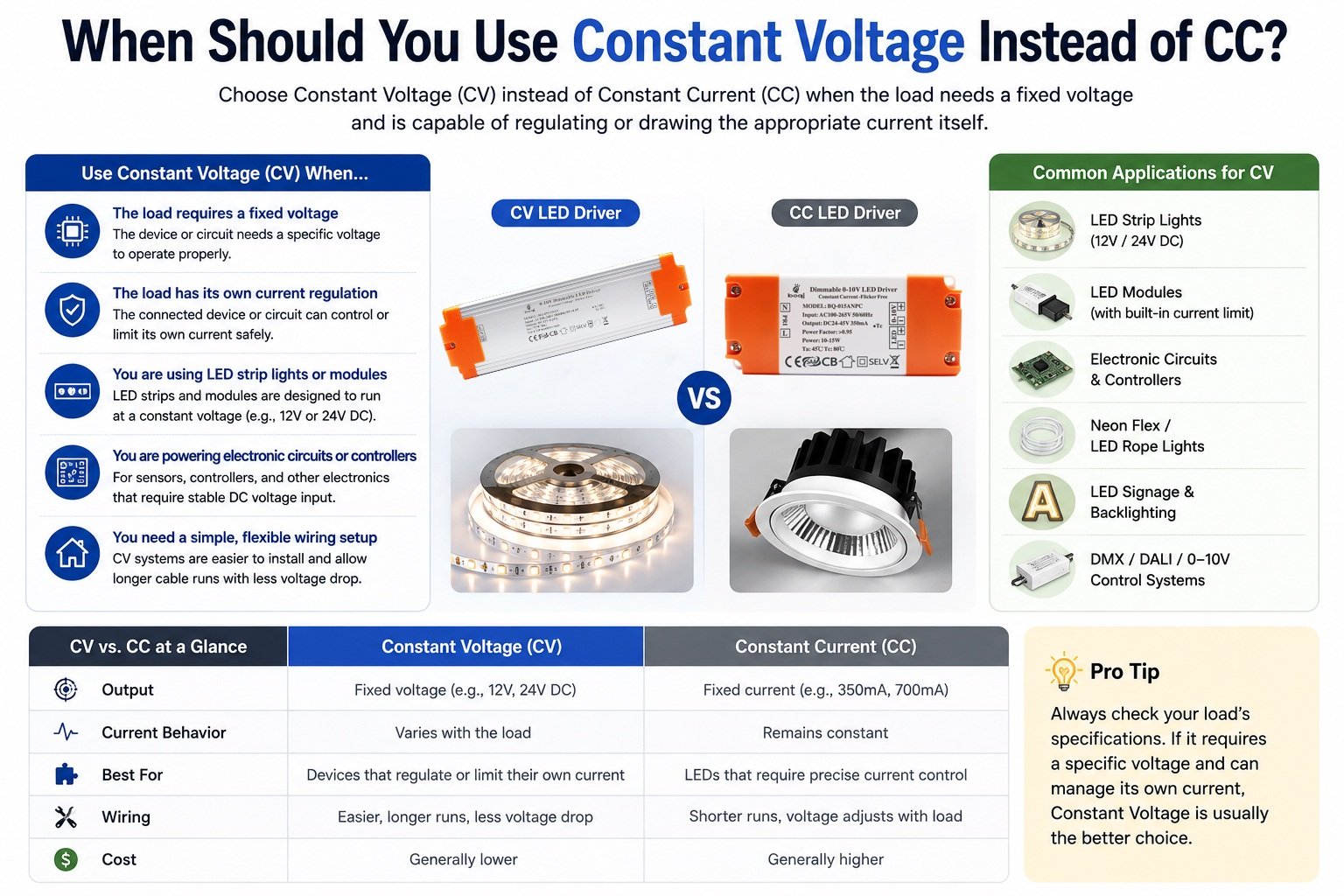
Wenn Sie in die Wohn-, Einzelhandels- oder Gastgewerbebeleuchtung verkaufen, wird Konstantspannung wahrscheinlich den größeren Teil Ihres Katalogs abdecken. Hier ist die Aufschlüsselung der Hauptanwendungen, basierend auf dem, was wir für Private-Label-Kunden bauen:
| Anwendung | Warum CV passt | Typische Schiene |
|---|---|---|
| LED-Band und Streifenbeleuchtung | Im Feld auf Länge zuschneidbar, ohne Leistung neu zu berechnen; Onboard-Widerstände übernehmen den Strom | 12V / 24V |
| Beschilderung und Profilbuchstaben | Viele parallele Module über eine gemeinsame Schiene; einfache Installation | 12V |
| RGB-/Tunable-White-Systeme | Externe PWM-Dimmcontroller und Farbsequenzer sitzen zwischen Treiber und Last | 24V |
| Hochdichte architektonische Verläufe | 48V-Systeme minimieren Spannungsabfall und reduzieren den Kupferdrahtquerschnitt über lange Strecken | 48V |
| PoE-Beleuchtungsinfrastruktur | Native Kompatibilität mit einer festen Gleichspannungsschiene, die bis zum Rand geliefert wird | 48V-Klasse |
| Mehrzonen-Smart-Beleuchtung | Ausgangsspannungsstabilität hält die Helligkeit konsistent, wenn Zonen unabhängig umschalten | 12V / 24V |
Wo 48V das Bild verändert
Der Trend zu 48V-Konstantspannung verdient Aufmerksamkeit, wenn Sie Architekturprojekte beliefern. Bei gleicher Wattzahl trägt 48V ein Viertel des Stroms von 12V. Niedrigerer Strom bedeutet deutlich weniger Spannungsabfall über lange Kabelstrecken und dünneres, günstigeres Kupfer. Es passt auch zu Power-over-Ethernet-Beleuchtung 4, wobei eine feste DC-Sammelschiene jedes Endgerät erreicht. Mehrere unserer Engineering-Kunden in Australien und Deutschland haben aus genau diesen Gründen auf 48V standardisiert.
Kostenpositionierung über Ihren Katalog hinweg
CV-Treiber sind in der Regel kostengünstiger und breiter verfügbar, was die Gesamtsystemkosten bei Wohnprojekten senkt. Für eine Eigenmarken-Palette bedeutet das, dass CV Ihre Volumenlinien abdeckt, während CC-Treiber mit engeren Toleranzen Ihre Premium-Downlight- und Schienenbeleuchtungsserien verankern. Unsere dimmbaren CV-Einheiten – die schlanken Aluminiumgehäuse mit SELV-, CE- und SAA-Zertifizierung sowie 0-10V-Klemmen – sind typischerweise der Volumen-Arbeitspferd im Sortiment eines Kunden.
Schlussfolgerung
Falsche Treiberwahl zerstört Leuchten und Termine. Die Lösung ist einfach: Passen Sie den Treiber an das an, was Ihre Last regelt, und lassen Sie Konstantspannung jede festspannungs-, selbstbegrenzende Produktlinie versorgen.
Fußnoten
Die IEC legt internationale Standards für Sicherheit und Leistung von LED-Treibern und Betriebsgeräten fest. ↩︎
Erläutert die elektrische Konfiguration und Rolle von Widerständen beim Schutz von LEDs vor Überstrom. ↩︎
Das DOE liefert technische Daten zur Effizienz von Schaltnetzteilen und Standards für externe Netzadapter. ↩︎
IEEE-Standards definieren die technischen Anforderungen für die Übertragung von Strom und Daten an LED-Beleuchtung über Ethernet. ↩︎