













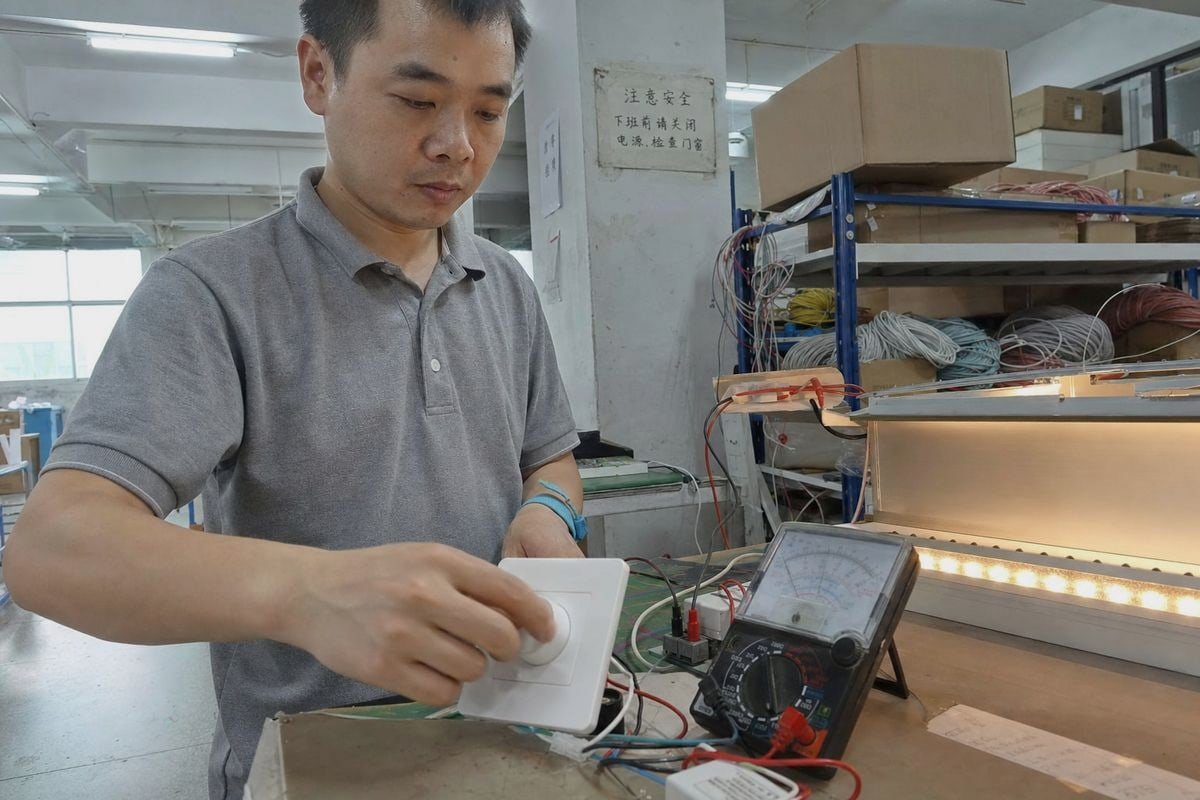
0–10V-dimning fortsätter att vinna kommersiella belysningsprojekt, och på vår produktionslinje i Shenzhen skickar vi fortfarande fler 0–10V-dimbbara LED-drivdon än någon annan styrtyp. Köpare frågar mig ofta varför.
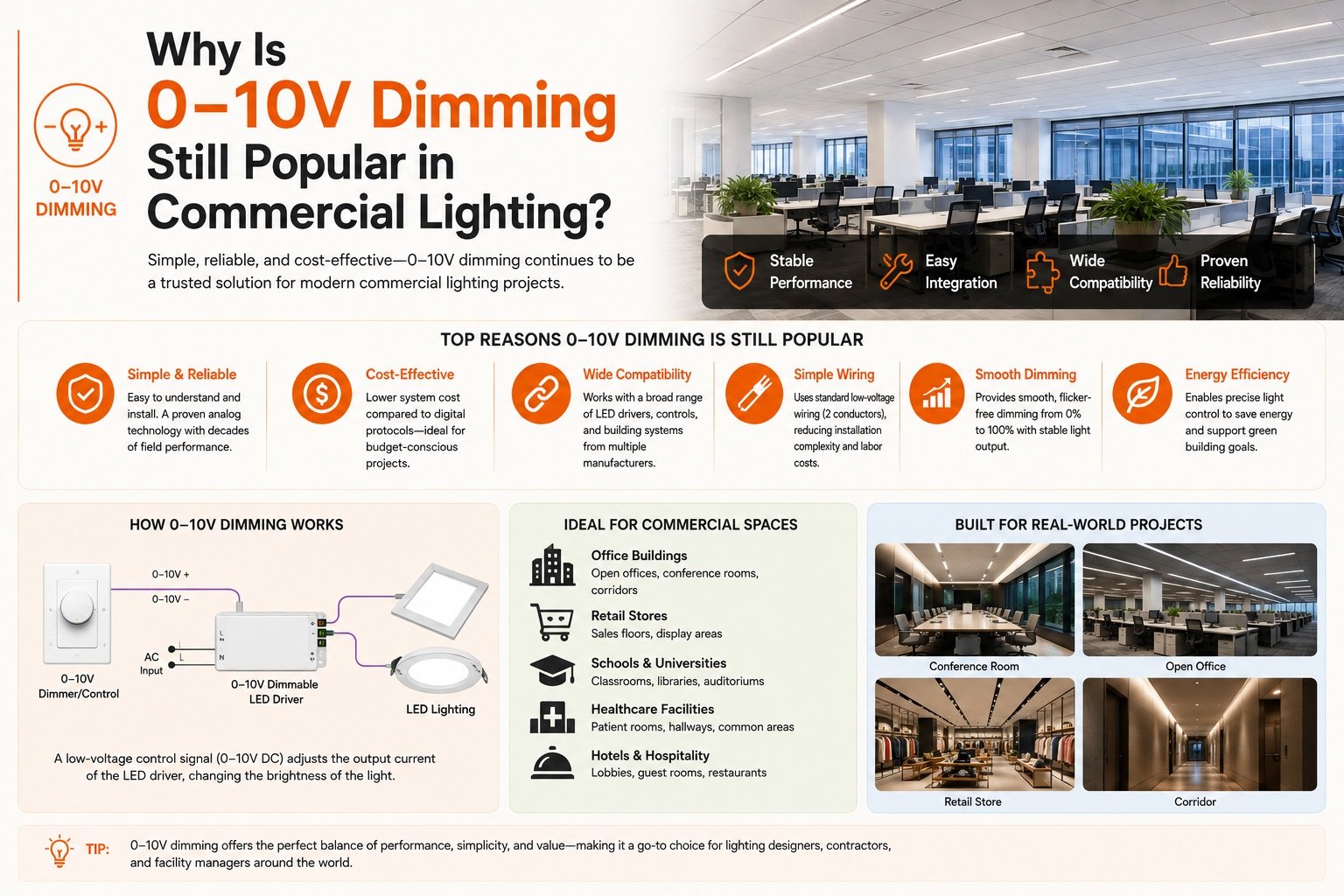
0–10V-dimning förblir populär inom kommersiell belysning eftersom den är enkel, kostnadseffektiv, tillförlitlig och universellt stödd av LED-drivdon och styrsystem. Den använder en separat lågspänningsanalog signal för att dimma armaturer, vilket gör den lätt att installera, felsöka och eftermontera på kontor, lager och butiksytor.
Det korta svaret döljer mycket praktisk detalj. Nedan går jag igenom när 0–10V är rätt val, hur det jämförs med [DALI](https://boqiled.com/?p=17779), hur du garanterar kompatibilitet och hur du anskaffar pålitliga drivdon.
Hur vet jag om 0–10V-dimning är rätt val för mitt kommersiella belysningsprojekt?
Förra månaden ställde en inköpschef från Singapore exakt denna fråga om en lagerbyggnadsrenovering. Vi kartlade hennes projektbehov mot styrningsalternativ, och 0–10V vann på nästan varje praktisk punkt.
Välj 0–10V-dimning när ditt projekt behöver pålitlig dimning, sensorintegration och energikodsefterlevnad utan per-armaturdata eller komplex idrifttagning. Det passar kontor, skolor, lager, butiker och höglagerinstallationer, särskilt eftermonteringar där lågspänningsstyrkablar redan finns.

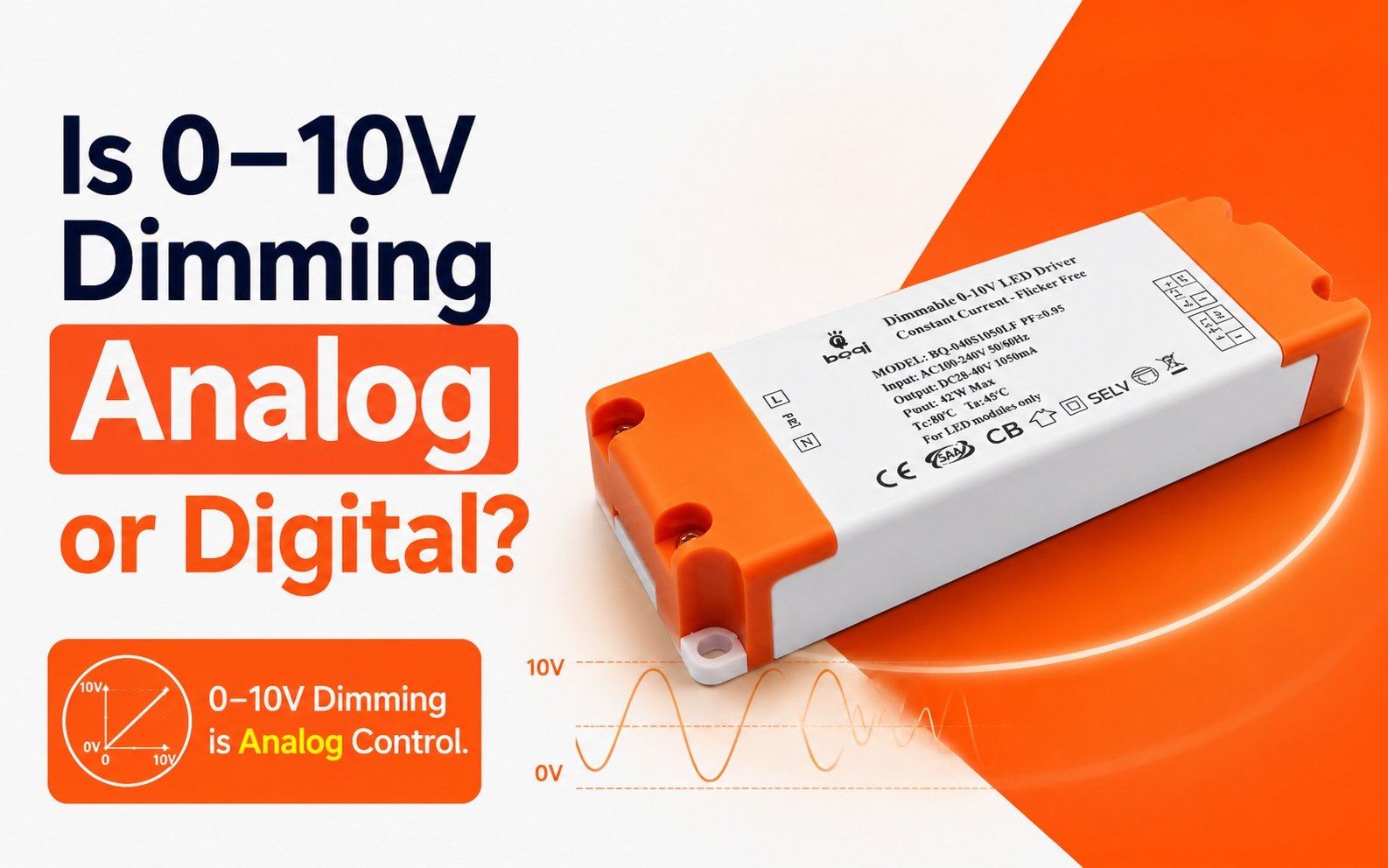
Beslutet handlar vanligtvis om vad utrymmet faktiskt behöver, inte vad det mest avancerade protokollet kan göra. I min erfarenhet av att stödja ingenjörsfirmor i Sydostasien och Europa behöver de flesta kommersiella projekt tre saker: mjuk dimning, sensorkompatibilitet och en styrningsmetod som den lokala elektrikern redan förstår. 0–10V levererar alla tre eftersom det separerar den analoga styrsignalen 1 från strömkretsen. Dimmern eller sensorn skickar en DC-spänning mellan 0 och 10 volt längs två lågspänningsledningar, och drivdonet justerar ljusutbytet därefter.
En snabb checklista för projektpassning
Ställ dig själv dessa frågor innan du förbinder dig:
- Har byggnaden redan 0–10V- eller Class 2-ledningar på plats?
- Behöver du zonnivådimning snarare än per-armaturadressering?
- Är budgeten snäv både på hårdvara och idrifttagningsarbete?
- Kommer närvarosensorer eller dagsljusinsamling att uppfylla din energikod?
- Vet lokala entreprenörer hur de servar systemet?
Om du svarade ja på tre eller fler, är 0–10V mycket troligt ditt bästa val.
| Projektförhållande | 0–10V-passform | Bättre alternativ |
|---|---|---|
| Eftermontering med befintlig lågspänningsledning | Utmärkt | — |
| Öppet kontor som behöver zondimning | Utmärkt | — |
| Lagerhöglager med närvarosensorer | Utmärkt | — |
| Per-armaturovervakning och analys krävs | Dålig | DALI eller nätverksstyrda system |
| Frekventa scenbyten, färgtuning | Begränsad | DMX eller trådlösa smarta system |
En punkt till som är värd att betona: 0–10V har en slags regulatorisk säker hamn-status. Det är en erkänd preskriptiv väg för att uppfylla energikoder som Kaliforniens Title 24, eftersom en 0–10V-armatur i kombination med närvarosensorer eller en dagsljusinsamlingsfotocell uppfyller vanliga krav på flernivå- och kontinuerlig dimning. Den kodanpassningen, inte bara kostnaden, är varför så många specifierare fortsätter att välja det.
Vilka fördelar kan jag förvänta mig av 0–10V-dimning jämfört med nyare protokoll som DALI?
En avvägning jag ständigt väger när jag offererar projekt: DALI ger rikare funktioner, men 0–10V-drivdon kostar mindre och tas i drift snabbare. För många av våra grossistkunder avgör den matematiken debatten omedelbart.
Jämfört med DALI-styrprotokollet erbjuder 0–10V lägre hårdvarukostnad, enklare installation utan mjukvaru-idrifttagning, enklare felsökning och inneboende motståndskraft eftersom det inte finns något digitalt nätverk att misslyckas eller hacka. DALI vinner bara när du behöver adresserbarhet, återkoppling eller per-armaturananalys.
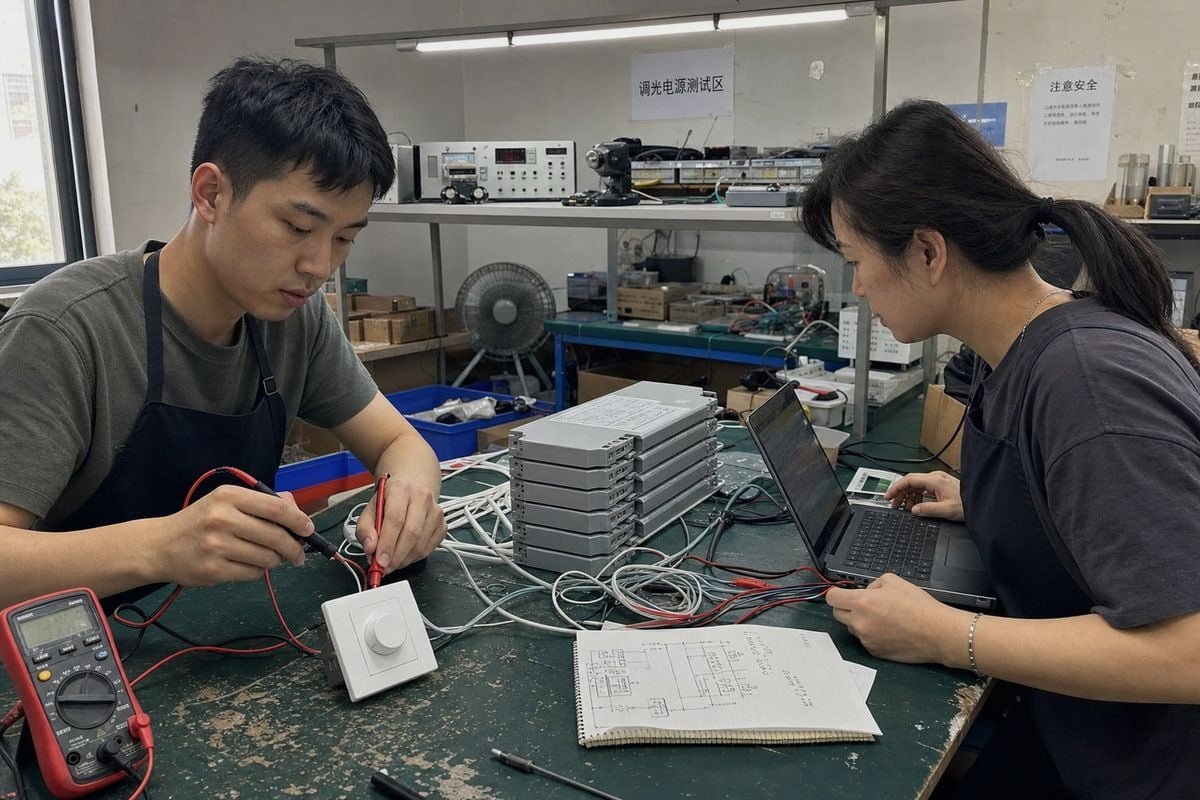
Här är den ärliga jämförelsen, presenterad på det sätt jag lägger fram den för köpare på mässor:
| Konstant ström (CC) | 0–10V-dimning | DALI-styrprotokoll |
|---|---|---|
| Initial kostnad | Låg | Märkbart högre |
| Idrifttagning | Ingen; koppla in och kör | Programvaruadressering krävs |
| Adresserbarhet | Endast zonnivå | Individuell armaturstyrning |
| Återkoppling och diagnostik | Ingen | Statusrapportering per drivdon |
| Felsökning | Multimeter och grundläggande kunskaper | Utbildad tekniker eller programvara |
| Cybersäkerhetsexponering | Ingen; isolerad analog slinga | Beror på nätverksintegration |
| Skalbarhet per styrenhet | Tusentals watt på en 277V-krets | Begränsad av antalet enheter på bussen |
Där 0–10V verkligen överträffar
De starkaste fördelarna är praktiska, inte tekniska. Det finns inget programvarulager, så det finns inget att felkonfigurera. En installatör kan verifiera den analoga styrsignalen med en vanlig multimeter. Den isolerade lågspänningsslingan är immun mot nätverksbaserade attacker, vilket några av våra företagskunder nu listar som ett formellt krav. Och eftersom en enda dimmer kan hantera mycket stora laster, skalas höglager- och industrianläggningar kostnadseffektivt.
Det finns också ett livslängdsargument. Dimning minskar drivdonets uteffekt och värme direkt, vilket förlänger armaturens livslängd. Färre mikroprocessorer i styrkedjan innebär också mindre elektroniskt avfall under systemets livstid.
Där du ärligt bör ge vika för DALI
Jag säger aldrig till köpare att 0–10V är överlägset i alla avseenden, för det är det inte. Det kan inte rapportera ett trasigt drivdon. Det kan inte ge energidata per armatur. Om en kund behöver byggnadsövergripande analys eller flexibel omzonindelning utan omkoppling, rekommenderar jag DALI eller ett nätverkssystem 2, ibland med 0–10V trådlösa noder som bryggteknik för att integrera äldre armaturer i IoT-nätverk. 0–10V är det mest pragmatiska valet, inte det mest funktionsrika. Dess beständighet återspeglar totala projektekonomier: installerad kostnad, förtrogenhet och tillförlitlighet, snarare än ren teknisk överlägsenhet.
Hur säkerställer jag kompatibilitet mellan mina 0–10V-drivdon och befintliga byggnadsstyrsystem?
En läxa jag lärde mig den hårda vägen: tidigt i vår exportverksamhet dimmade en sats drivdon vackert i vårt labb men flimrade på låga nivåer på en kunds äldre styrpanel. Sinking kontra sourcing av ström var boven.
Verifiera tre saker: om styrsystemet sourcar eller sinkar ström, om drivdonets dimkurva matchar styrenhetens utsignal, och om minsta dimnivå uppfyller din specifikation. Bekräfta också Class 2-ledningsseparering, polaritet och maximal styrslingelängd före installation.
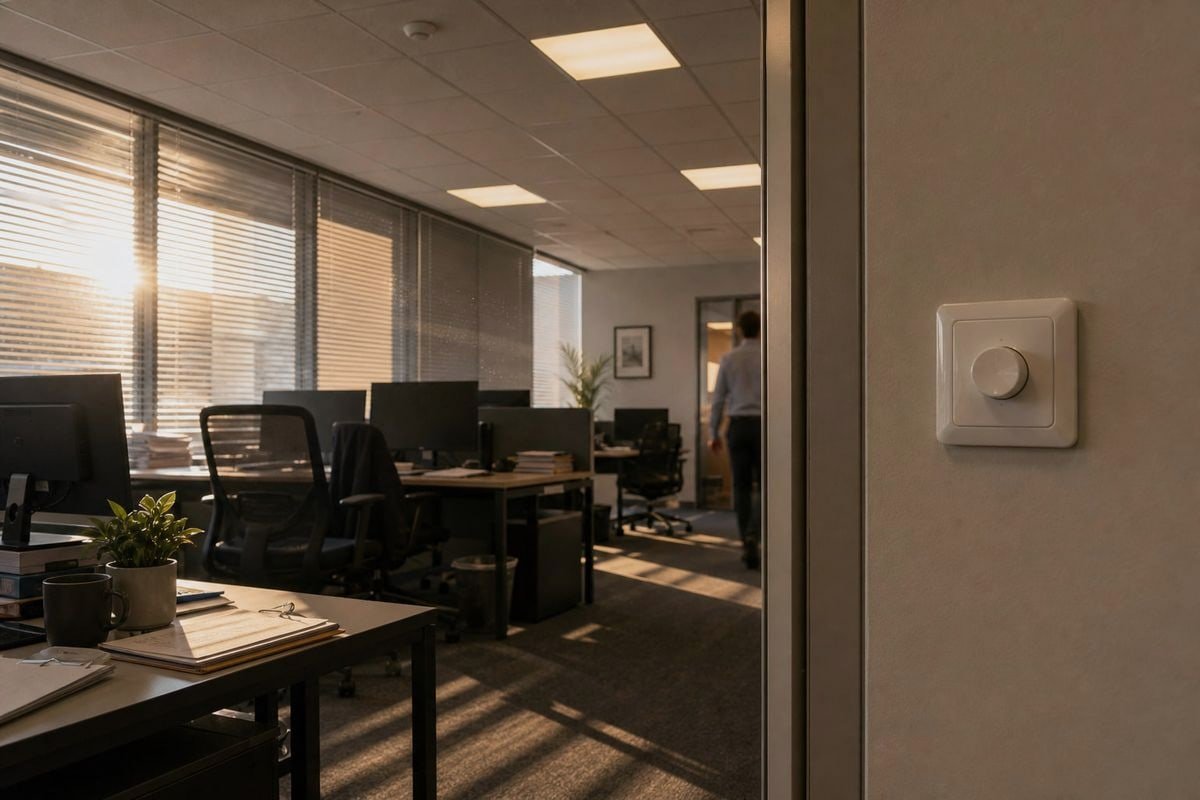
Kompatibilitetsproblem är den vanligaste supportärendetypen vi hanterar, och nästan alla är förebyggbara. 0–10V är standardiserat i princip, med långvarigt erkännande i IEC 60929 Annex E, och NEMA-standarder styr hur LED-drivdon ska svara över styrområdet. Men verkliga implementationer varierar mellan varumärken. Därför måste LED-drivdonets kompatibilitet kontrolleras, inte antas.
De fem kontroller jag kör för varje kund
- Strömsourcing eller -sinking. De flesta 0–10V LED-drivdon sourcar styrströmmen, och dimmern sinkar den. Äldre lysrörsstyrenheter från fluorepoken fungerar ibland tvärtom. Felaktig matchning ger ingen dimning alls eller oregelbundet beteende.
- Dimkurva. Linjära kontra logaritmiska kurvor påverkar hur ljusstyrkan följer vredet eller sensorn. Om din byggnadsautomationssystem 3 förväntar linjär respons, specificera ett drivdon med linjär kurva.
- Minsta dimnivå. Vissa drivdon dimmar till 10 procent, andra till 1 procent eller 0,1 procent. Bekräfta specen innan du lovar en kund jämn lågnivåprestanda.
- Ledningsklass och polaritet. Styrparet är vanligtvis Class 2-ledning. Håll det åtskilt från nätledare enligt lokala regler, och vänd aldrig på de violetta och grå ledarna.
- Slinglängd och armaturantal. Långa styrledningar och stora armaturgrupper skapar spänningsfall på den analoga signalen. Beräkna total sinkström mot styrenhetens märkvärde.
Integration med sensorer och automation
Moderna närvarosensorer och dagsljusavkännande fotoceller ger 0–10V-utgång direkt, så integration är vanligtvis plug-and-wire. För centraliserade byggnadsautomationssystem kan en 0–10V-utgångsmodul låta BAS dimma hela zoner utan protokollöversättning. Vissa drivdon accepterar Pulse Width Modulation-ingång på samma terminaler; bekräfta vilken signaltyp din styrenhet faktiskt skickar. När våra ingenjörer utvecklar kundspecifika drivdon för OEM-kunder testar vi mot kundens faktiska styrhårdvara före massproduktion, eftersom en databladsträff inte är samma sak som en bänkverifierad träff.
Vad bör jag överväga när jag anskaffar pålitliga 0–10V-dimbbara LED-drivdon för mitt nästa projekt?
En inköpschef från en av våra europeiska distributörskunder berättade en gång att hennes verkliga rädsla inte var pris; det var en flimrande sats som anlände två veckor före en projekttidsfrist. Inköpskriterier bör byggas kring att förhindra just det.
Prioritera leverantörer som publicerar dimningsprestandadata, erbjuder provtestning mot dina styrenheter, innehar relevanta säkerhetscertifieringar för din marknad, tillhandahåller flimmerfri djupdimning och backar produkterna med teknisk support. Verifiera att konstantströmsdrivdon matchar dina armatur specifikationer innan du beställer volym.
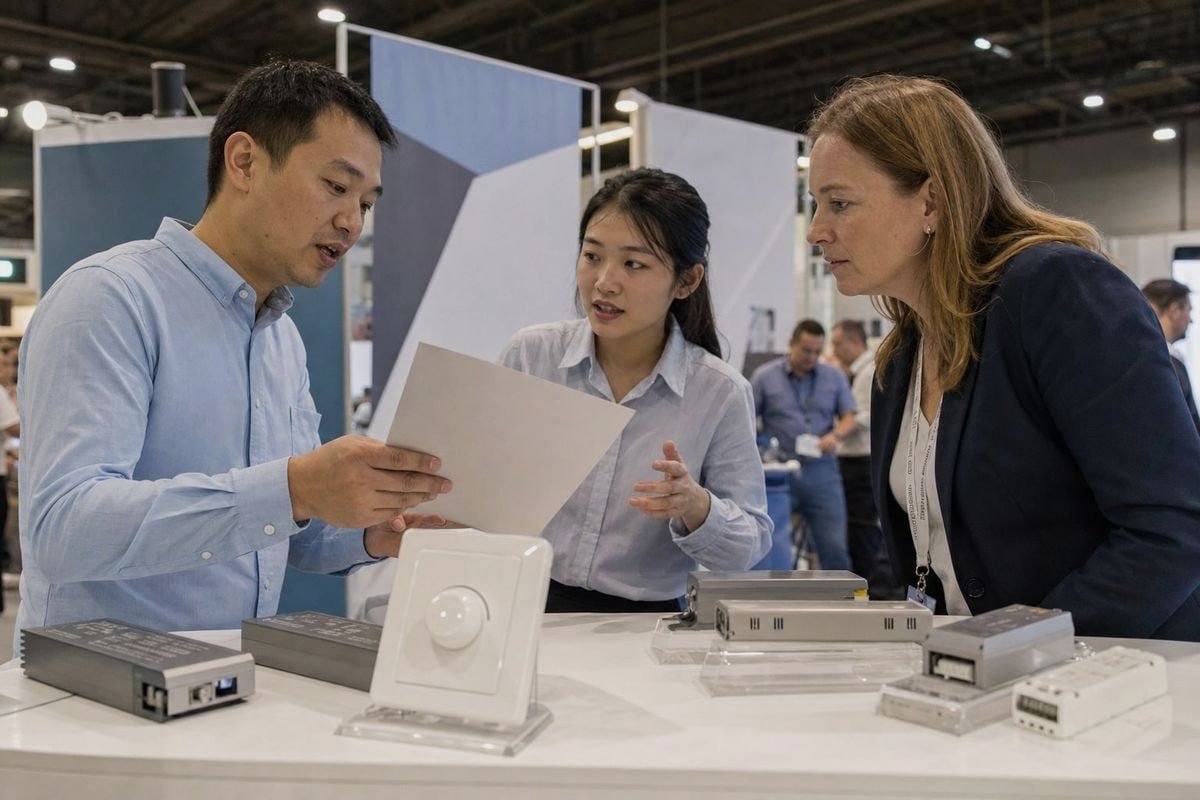
Inköp av 0–10V-drivdon ser enkelt ut eftersom protokollet är enkelt. I verkligheten varierar drivdonets kvalitet enormt, och det är på den lågspända styrsidan som billiga produkter skär hörn. Under år av leveranser till belysningsdistributörer och ingenjörsfirmor i Asien, Europa och Australien har jag förfinat en checklista som skiljer pålitliga leverantörer från riskfyllda.
Vad du ska kräva av en leverantör
| Inköpskriterium | Varför det är viktigt | Vad du ska fråga efter |
|---|---|---|
| Dimområde och jämnhet | Dålig lågnivådimning orsakar synligt flimmer och steg | Testvideo eller rapport som visar 1%-dimning utan flimmer |
| Konstantströmsdrivdonens noggrannhet | Utgångstoleransen påverkar ljusstyrkans konsistens mellan armaturer | Strömtoleransspecifikation, vanligtvis inom ett snävt intervall |
| Säkerhetscertifieringar | Krävs för din importmarknad | Certifikat som matchar ditt destinationsland |
| Överspännings- och termiskt skydd | Kommersiella anläggningar upplever spänningsspikar och värme | Överspänningsklassning och driftstemperaturområde |
| Provvalidering | Datablad fångar inte integrationsproblem | Förserieprover testade med dina faktiska dimmers |
| OEM/ODM-flexibilitet | Private-label-köpare behöver anpassad branding och specifikationer | Logotypanpassning och samarbetsvillkor för utveckling |
Tänk i total projektkostnad, inte enhetspris
Det billigaste drivdonet vinner sällan när du räknar in fel, försenade överlämningar och garantireklamationer. För energikodsefterlevnad behöver du också drivdon vars dimningsbeteende 4 är dokumenterat, eftersom inspektörer allt oftare kontrollerar kontinuerlig dimningsprestanda, inte bara närvaron av en dimmer. Fråga leverantörer hur de bränner in och kvalitetskontrollerar varje batch. I vår anläggning genomgår varje dimbart drivdon ett åldringstest och en dimkurvekontroll före packning, eftersom en enda dålig batch skadar en distributörs varumärke långt mer än vårt. Slutligen, bekräfta ledtider skriftligen. Tighta projektdeadlines är den vanligaste smärtpunkten jag hör från köpare, och en leverantör som kommunicerar ärligt om kapacitet är värd en måttlig premie.
Slutsats
0–10V-dimning består eftersom kommersiella projekt belönar enkelhet, tillförlitlighet och låg totalkostnad. Matcha den till dina projektbehov, verifiera kompatibilitet och käll drivdon från leverantörer som bevisar sin kvalitet.
Fotnoter
Officiell webbplats för kommissionen som standardiserar analoga och digitala styrsnitt för elektriska teknologier. ↩︎
Omfattande översikt av Digital Addressable Lighting Interface-protokollet som används för avancerad kommersiell ljusstyrning. ↩︎
Ledande branschorganisation för den elektriska tillverkningsindustrin, som tillhandahåller tekniska standarder för ljusstyrning och system. ↩︎
Kaliforniens officiella energikommissionswebbplats som detaljerar byggnadseffektivitetsstandarder och kommersiella belysningskrav. ↩︎