













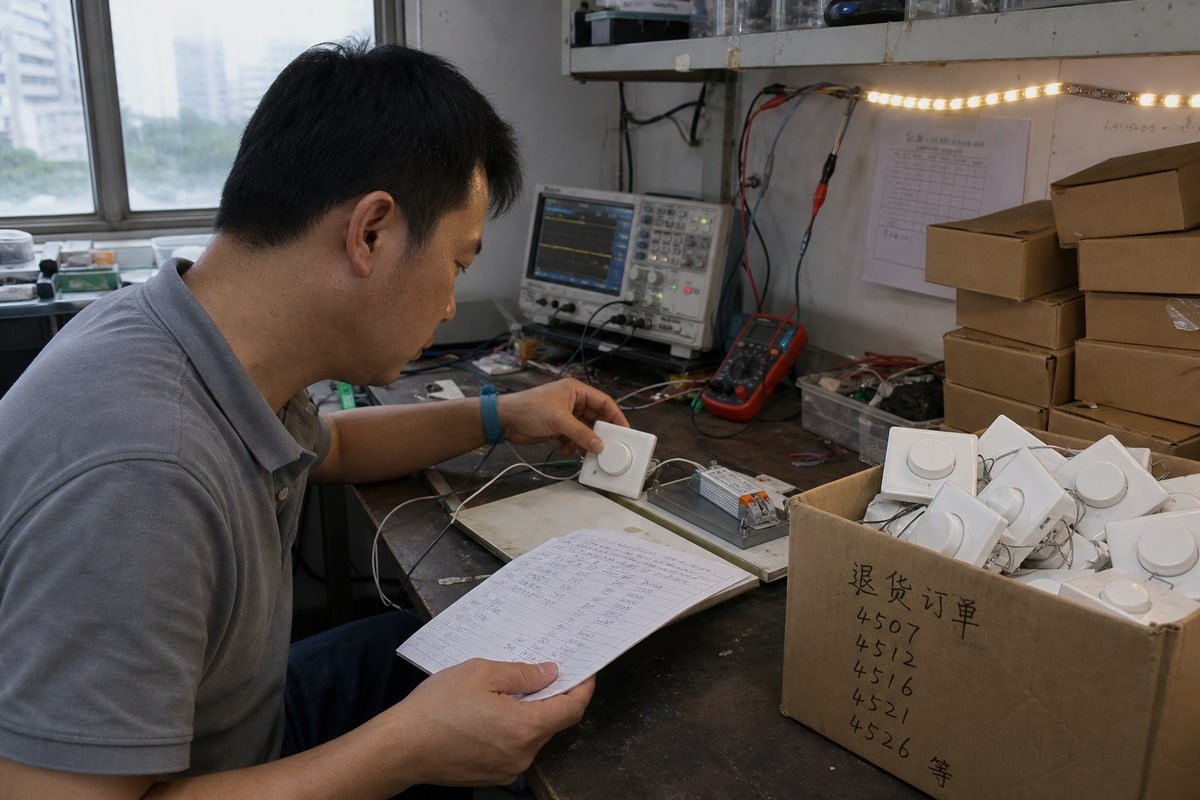
Ein falscher [0–10V-Dimmer](https://boqiled.com/?p=17845) für LED-Leuchten kann flackern, sich nicht auf niedrige Werte dimmen lassen oder nie ausgehen – unser Labor in Shenzhen erhält fast jeden Monat Retouren, die das belegen.
Um den richtigen 0–10V-Dimmer für LED-Leuchten zu wählen, gleichen Sie den Dimmer an den Steuerungstyp des LED-Treibers an – Stromsenke oder Stromquelle – und prüfen Sie dann Dimmbereich, Steuerstromkapazität, angeschlossene Last, Verkabelungsmethode und Ein-/Ausschaltung. Wählen Sie einen Dimmer niemals allein nach LED-Wattzahl; der Treiber bestimmt die Kompatibilität.
Diese Antwort klingt einfach. Aber jede dieser Prüfungen verbirgt echte technische Details. Lassen Sie mich Sie Schritt für Schritt durch die Spezifikationen, den Beschaffungsprozess, die Qualitätsstandards und die Kostenabwägungen führen.
Welche technischen Spezifikationen sollte ich prüfen, bevor ich einen 0–10V-Dimmer für meine LED-Beleuchtungsprodukte auswähle?
Wenn wir unsere Drehdimmer 1 vor dem Versand kalibrieren, testen wir sie immer gegen mehrere dimmbare LED-Treibermarken. Eine einzige Fehlangabe im Datenblatt kann eine gesamte kommerzielle Installation ruinieren.
Prüfen Sie vor dem Kauf eines 0–10V-Dimmers die Steuerarchitektur des LED-Treibers (Sinking oder Sourcing), den maximalen Steuerstrom in Milliampere, die minimale Dimmstufe, das Dim-to-off-Verhalten, die Lastbewertung, die Dimmerkurve und die Verkabelungsanforderungen. Das Datenblatt des Treibers – nicht die Wattzahl der Leuchte – bestimmt die tatsächliche Kompatibilität.
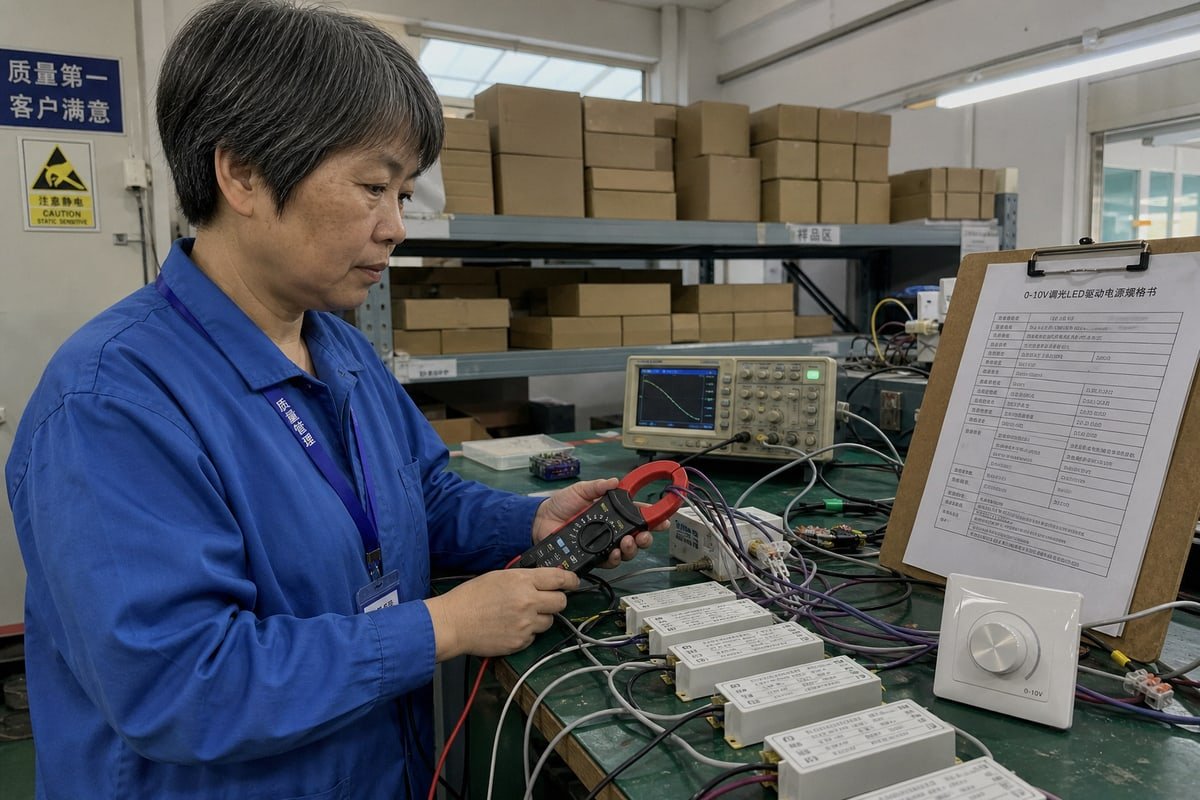
Der häufigste Fehler ist, 0–10V als universellen Dimmstandard zu behandeln. In der Praxis sind die elektrische Schnittstelle und die Steuerstromanforderungen des Treibers genauso wichtig wie das 0–10V-Label des Dimmers. Zwei Produkte können beide "0–10V" angeben und trotzdem zusammen versagen.
Zuerst Sinking und Sourcing abgleichen
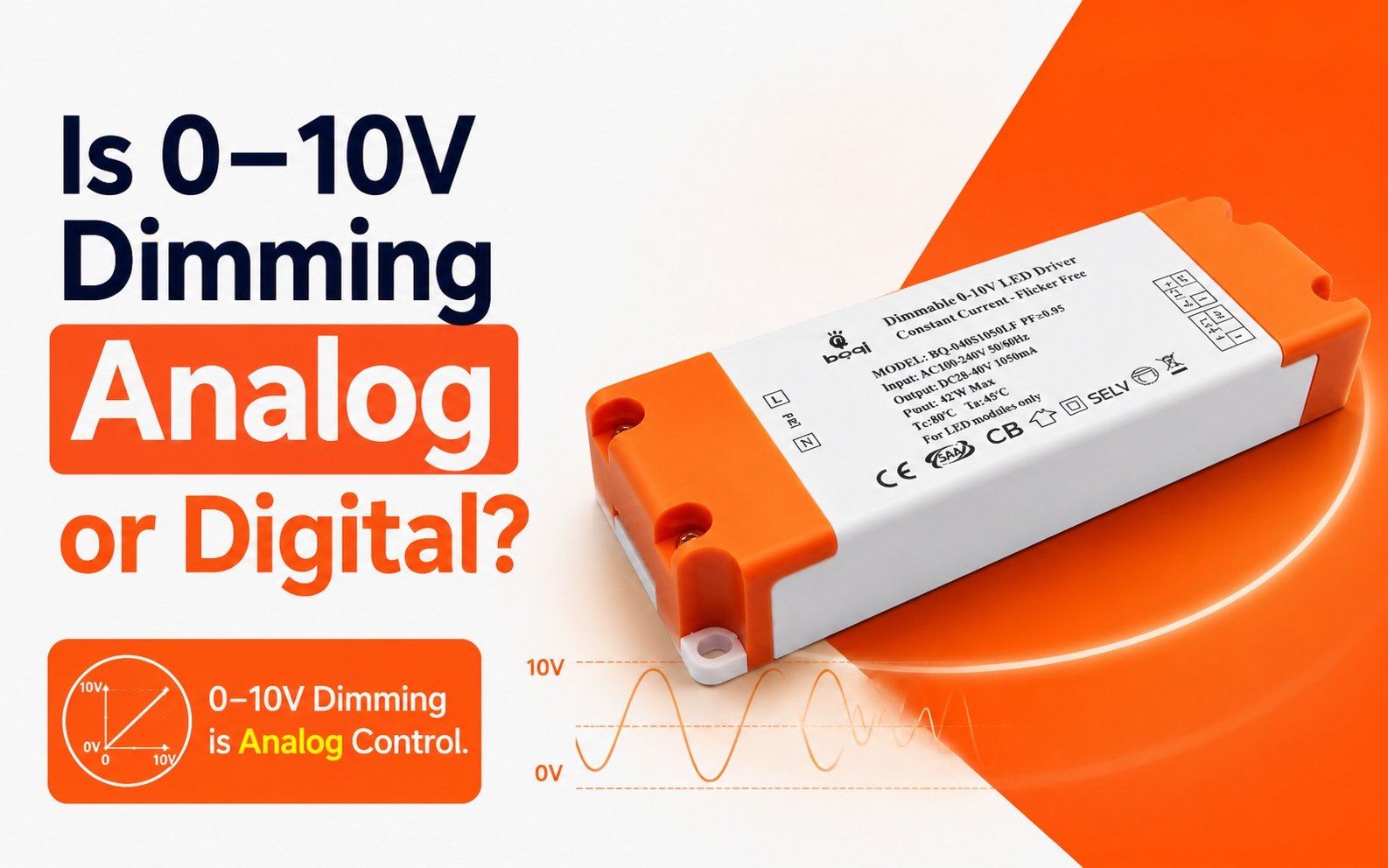
Sinking und Sourcing beschreiben, welches Gerät Strom durch die analoge Dimmsignalschleife treibt. Die meisten dimmbare LED-Treiber 2 liefern Strom; der Dimmer senkt ihn. Wenn Ihr Dimmer Strom in einen Sourcing-Treiber einspeist, erhalten Sie schlechtes Dimmen, kein Dimmen oder sogar Hardwareschäden. Bestätigen Sie dies immer zuerst.
Steuerstrom summiert sich
Jeder Treiber zieht Steuerstrom, typischerweise einen Bruchteil eines Milliampere bis zu einigen Milliampere. Schließen Sie dreißig Treiber an einen Dimmer an, und der gesamte mA-Abzug kann die Kapazität des Dimmers überschreiten – selbst wenn die Gesamtwattzahl sicher aussieht. Überlastete Steuerleitungen verursachen Signalverschlechterung und ungleichmäßige Helligkeit in einer Zone.
Jede Spezifikation auf dem Datenblatt prüfen
| Spezifikation | Was zu verifizieren ist | Warum es wichtig ist |
|---|---|---|
| Steuerungstyp | Stromsenke oder Stromquelle | Fehlanpassung bedeutet kein Dimmen oder Schäden |
| Steuerstrom | Gesamt-mA aller angeschlossenen Treiber | Begrenzt die Anzahl der Leuchten pro Dimmer |
| Minimale Dimmstufe | 1%, 5% oder 10% unteres Ende | "0–10V" garantiert keine 0%-Ausgabe |
| Dunkel-zu-aus | Integriertes Relais oder separater Schalter | 0V kann nur Minimum bedeuten, nicht AUS |
| Protokoll | 0–10V vs. 1–10V | 1–10V benötigt normalerweise ein Relais für vollständiges Ausschalten |
| Dimmerkurve | Logarithmisch oder linear | Beeinflusst, wie sanft das Dimmen für das Auge wirkt |
| Verdrahtung | 4-Draht-Dimmung, violette (+) und graue (−) Leitungen | Steuerleitungen getrennt von AC-Strom verlegen |
Zwei weitere Punkte sind vor Ort wichtig. Halten Sie Steuerleitungen unter etwa 300 Fuß und verwenden Sie verdrillte Paare 3 um Spannungsabfall und elektrisches Rauschen zu begrenzen. Und führen Sie das Niederspannungspaar weg von rauschbehafteten Stromleitern, gemäß Class-2-Verkabelungsregeln, wo sie gelten.
Wie finde ich einen zuverlässigen 0–10V-Dimmer-Hersteller, der Private-Label-Anpassungen unterstützt?
Ein Einkaufsleiter aus Singapur hat mich einmal über WhatsApp mit einer Frage kontaktiert: "Können Sie mein Logo auf die Frontplatte setzen, ohne meinen Start zu verzögern?" Diese Frage zeigt, was wirklich zählt.
Um einen zuverlässigen 0–10V-Dimmer-Hersteller für Private-Label-Arbeiten zu finden, verifizieren Sie die Werksinhaberschaft, fordern Sie technische Dokumentation und Muster an, bestätigen Sie den OEM/ODM-Umfang (Logo, Frontplatte, Firmware, Verpackung), prüfen Sie die Exporterfahrung in Ihrem Markt und führen Sie einen kleinen Pilotauftrag durch, bevor Sie sich auf größere Mengen festlegen.

Viele "Hersteller" auf Beschaffungsplattformen sind Handelsunternehmen. Das ist nicht immer schlecht, aber es ändert, welche Individualisierung realistisch ist und wie schnell Probleme behoben werden. Hier ist der Prozess, den ich jedem Käufer empfehle, der uns über unsere Website oder auf Messen kontaktiert.
- Fragen Sie nach Nachweisen der technischen Kompetenz. Fordern Sie die Treiberkompatibilitätsliste an, die der Lieferant für interne Tests verwendet. Eine echte Fabrik testet ihre Dimmer gegen viele dimmbare LED-Treibermodelle, nicht nur gegen eigene.
- Definieren Sie den Individualisierungsumfang schriftlich. Logodruck ist einfach. Eine kundenspezifische Frontplattenfarbe, ein anderes Drehgefühl oder eine angepasste Dimmerkurve erfordern Werkzeug- oder Firmware-Arbeit. Holen Sie Vorlaufzeiten für jede Stufe ein.
- Fragen Sie nach zukunftsorientierten Optionen. Käufer wünschen zunehmend Zweikanal-Controller für tunable White (Helligkeit plus CCT) und Dimmer mit drahtlosen Brücken wie Zigbee oder Bluetooth Mesh für die Gebäudemanagement-Integration. Ein Lieferant, der diese fließend diskutieren kann, denkt mit Ihnen voraus.
- Testen Sie Muster mit Ihren eigenen Treibern und Leuchten. Prüfstandsergebnisse mit einem Treiber sagen nicht das Verhalten bei Dutzenden angeschlossener Geräte voraus. Testen Sie das gesamte System: Treiber, Dimmer, Leuchte, Verkabelung und Mindestlastbedingung gemeinsam.
- Beginnen Sie mit einer Pilotbestellung. Eine kleine erste Charge offenbart Verpackungsqualität, Kennzeichnungsgenauigkeit und Dokumentationsgewohnheiten, bevor Sie einen Container riskieren.
Unser eigenes Team in Shenzhen ist klein – zehn Personen –, aber genau deshalb bearbeiten wir OEM-Projekte 4 kollaborativ. Käufer in Japan, Deutschland und Australien haben sehr unterschiedliche regulatorische und ästhetische Erwartungen, und die Exporthistorie eines Lieferanten in Ihrem spezifischen Markt zeigt, ob er Ihre bereits versteht.
Welche Qualitätskontrollstandards sollte ich verlangen, wenn ich 0–10V-Dimmer in großen Mengen aus China beziehe?
Vor Jahren haben wir eine komplette Produktionscharge verschrottet, weil die Potentiometer nach dem Burn-in drifteten. Schmerzhaft, ja. Aber dieser Fehler prägte die QC-Checkliste, die wir heute offen mit Kunden teilen.
100% Funktionstest erforderlich, Einbrennen bei erhöhter Temperatur, Flimmer- und Dimmbereichsprüfung mit echten Treibern, Eingangsmaterialprüfung, AQL-basierte Stichprobenprüfung bei ausgehenden Chargen sowie vollständige Rückverfolgbarkeitsdokumentation. Verlangen Sie Prüfberichte, die mit Ihrer Bestellung verknüpft sind, nicht generische Zertifikate.
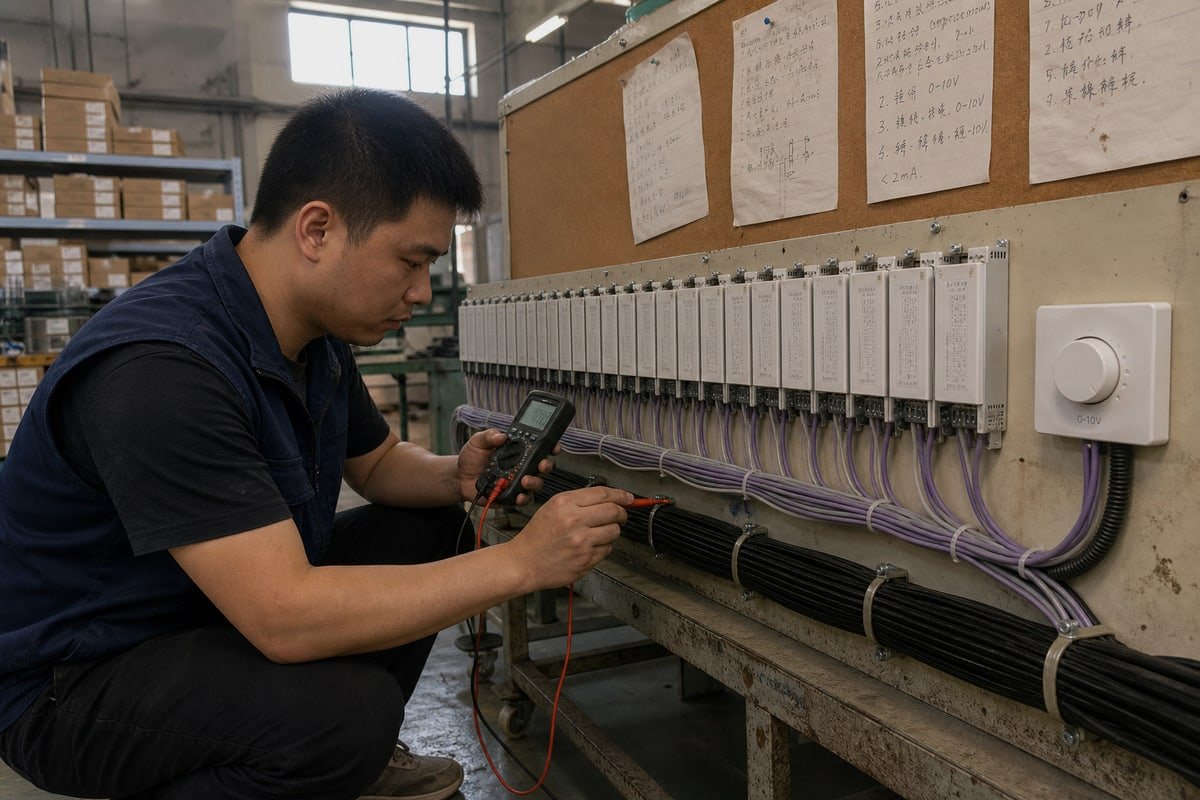
Großeinkauf steht und fällt mit Prozessen, nicht mit Versprechen. Ein schönes Muster bedeutet wenig, wenn sich Einheit 4.000 anders verhält. Strukturieren Sie Ihre QC-Anforderungen daher um drei Stufen: Wareneingang, In-Line-Produktion und Endkontrolle.
Die QC-Anforderungen, die ich in jeden Vertrag aufnehmen würde
| QC-Stufe | Was zu fordern ist | Akzeptanzkriterien |
|---|---|---|
| Wareneingang | Komponentenprüfung (Potentiometer, Leiterplatte, Gehäusekunststoffe) | Abgeglichen mit freigegebener Stückliste |
| In-Line | 100% Funktionstest des Ausgangsspannungsbereichs | Vollständiger 0–10V-Sweep, stabiles Signal |
| In-Line | Burn-in bei erhöhter Temperatur | Keine Drift, kein Ausfall nach Alterung |
| Endkontrolle | Flackerfreier Leistungscheck mit Referenztreibern | Kein sichtbares Flackern über den gesamten Dimmbereich |
| Endkontrolle | Verifizierung des Mindestdimmniveaus | Erfüllt die vereinbarte Untergrenzenspezifikation |
| Endkontrolle | AQL-Stichprobenprüfung | Vereinbartes AQL-Niveau pro Charge |
| Dokumentation | Rückverfolgbarkeitsaufzeichnungen pro Bestellung | Chargencodes verknüpft mit Testdaten |
Warum Systemtests zur QC gehören
Bei B2B-Projekten bestehen Sie darauf, dass die Fabrik Treiber + Dimmer + Leuchte + Verkabelung gemeinsam unter der Mindestlastbedingung testet. Ein Dimmer, der mit einem Treiber auf dem Prüfstand einwandfrei funktioniert, kann sich anders verhalten, wenn Dutzende Treiber die Steuerleitung belasten. Wir reproduzieren Mehrfach-Treiberlasten in unserem Labor genau aus diesem Grund.
Eine weitere übersehene Spezifikation: thermische Derating. Wenn mehrere Dimmer eine gemeinsame Unterputzdose teilen, verkürzt Wärmestau die Lebensdauer der internen Elektronik. Fragen Sie Ihren Lieferanten nach Derating-Daten, nicht nur nach einem maximalen Lastwert.
Wie kann ich Kosten, Lieferzeit und Designflexibilität in Einklang bringen, wenn ich einen 0–10V-Dimmer-Lieferanten auswähle?
Der Kompromiss, den wir am häufigsten mit Kunden besprechen, ist das Werkzeug. Eine kundenspezifische Frontplatte sieht im Katalog großartig aus, aber die Form addiert Wochen – und jemand muss entscheiden, ob der Termin das absorbieren kann.
Gleichen Sie Kosten, Lieferzeit und Flexibilität aus, indem Sie zuerst Ihre nicht verhandelbaren Punkte festlegen—Kompatibilität und Qualitätskontrolle—und dann über den Rest verhandeln. Standarddesigns werden am schnellsten und günstigsten geliefert; kundenspezifische Frontplatten erhöhen die Werkzeugbauzeit; vollständiges ODM kostet am meisten, schützt aber Ihre Marke. Passen Sie die Option an Ihren Projekttermin an.

Jeder Käufer, mit dem ich arbeite, jongliert mit denselben drei Drücken: Gesamtprojektkosten, enge Fristen und Zugang zu aktueller Designtechnologie. Sie optimieren selten alle drei gleichzeitig. Denken Sie also in Stufen.
| Option | Relative Kosten | Typische Vorlaufzeit | Designflexibilität |
|---|---|---|---|
| Standardprodukt, Ihr Logo | Niedrigste | Kürzeste | Nur Logo und Verpackung |
| Modifiziertes Design (Frontplatte, Drehknopf, Dimmkurve) | Mittel | Mittel; Werkzeug oder Firmware addiert Zeit | Moderat; bestehende Plattform angepasst |
| Vollständige ODM-Entwicklung | Höchste Anfangskosten | Längste | Vollständig; Ihr exklusives Design |
Einige praktische Regeln helfen Ihnen, Ihr Projekt in dieser Tabelle einzuordnen. Erstens: Geben Sie niemals Kompatibilitätstests oder Qualitätskontrolle auf, um Zeit zu sparen – diese Kosten kehren als Feldausfälle in gewerblichen Beleuchtungssteuerungsprojekten vervielfacht zurück. Zweitens: Fragen Sie, ob die Standardplattform des Lieferanten bereits das enthält, was Sie benötigen. Funktionen wie wählbare Dimmkurven, Dim-to-off-Relais oder ein klares, minimalistisches weißes Drehdesign können bereits vorhanden sein, was ein "ODM-Projekt" in einen schnellen modifizierten Auftrag verwandelt. Drittens: Fragen Sie ehrlich nach der Produktionsplanung. Eine mittlere bis gehobene Fabrik mit einer kompatibilitätsgetesteten Plattform liefert oft ein besseres Endprodukt als ein günstigeres Angebot, das bei der Installationstests scheitert und eine Nachbestellung erzwingt.
Denken Sie auch an die Marktrichtung. Intelligente Integration und Tunable White werden in Europa und Südostasien zunehmend zur Grundanforderung. Die Wahl eines Lieferanten, der bereits Dual-Channel- und Wireless-Bridge-Optionen entwickelt, bedeutet, dass Ihr Produkt der nächsten Generation keinen Lieferantenwechsel erfordert – genau dort verbergen sich die wahren langfristigen Kosteneinsparungen.
Schlussfolgerung
Wählen Sie einen 0–10V-Dimmer nach dem Treiber, nicht nach der Wattzahl: Gleichen Sie Sinking und Sourcing ab, prüfen Sie Steuerstrom und Dimmbereich, fordern Sie echte Qualitätskontrolle und wählen Sie die Individualisierungsstufe, die Ihr Zeitplan erlaubt.
Fußnoten
US-Regierungsprogramm, das Standards und Zertifizierungen für energieeffiziente Beleuchtung und Dimmsteuerungen bereitstellt. ↩︎
Maßgebliche internationale Organisation für elektrische Normen, einschließlich Dimm-Schnittstellen für LED-Treiber. ↩︎
Führender Fachverband für Technologiestandards, einschließlich Verkabelung und Signalintegrität für Steuerungssysteme. ↩︎
Globale Organisation, die Handelsregeln zwischen Nationen behandelt, relevant für internationale OEM-Fertigung. ↩︎