













Das Dimmen von LEDs ist nicht immer Plug-and-Play – insbesondere wenn alte und neue Technologien aufeinandertreffen.
Ein TRIAC-Dimmer steuert die Helligkeit, indem er die AC-Leistungswelle mithilfe eines Halbleiterschalters zerhackt und bietet eine einfache und kostengünstige Lösung für viele Beleuchtungsnachrüstungen.
Viele Haushalte und ältere Gebäude verlassen sich weiterhin auf TRIAC-basiertes Dimmen. Wenn Sie es mit LEDs verwenden möchten, gibt es einige Dinge, die Sie wirklich wissen müssen, um Flackern, Brummen oder defekte Treiber zu vermeiden.
Einführung in das TRIAC-Dimmen: Was ist ein TRIAC-Dimmer?
Wenn Sie jemals einen Wanddimmer zu Hause installiert haben, haben Sie wahrscheinlich TRIAC-Technologie verwendet – auch wenn Sie es nicht wussten.
Ein TRIAC-Dimmer ist ein AC-Phasenanschnittgerät, das einen TRIAC-Halbleiter verwendet, um die an eine Leuchte gelieferte Spannung zu reduzieren und sie effektiv zu dimmen.
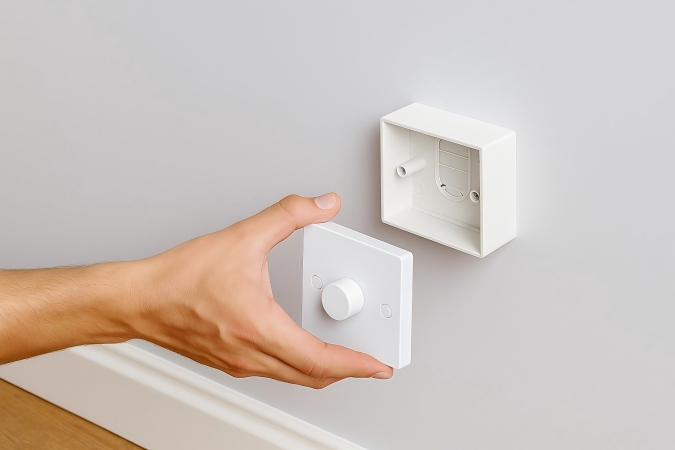
Was ist TRIAC?
- TRIAC steht für Triode für Wechselstrom.
- Es ist ein Halbleiterschalter, der während des AC-Leistungszyklus ein- und ausgeschaltet wird.
- Er “schneidet” einen Teil der Sinuswelle ab, um die an die Leuchte gelieferte Leistung zu reduzieren.
Das macht ihn einfach, kostengünstig und effektiv – insbesondere für ältere Glühlampen oder Halogenlampen.
Wie ein TRIAC-Dimmer funktioniert: Das Phasenanschnittprinzip erklärt
Sie müssen die Spannung nicht ändern, um eine Leuchte zu dimmen – formen Sie sie nur um. Das macht TRIAC.
Ein TRIAC-Dimmer funktioniert, indem er in jedem Zyklus einen Teil der AC-Wellenform abschneidet und so die durchschnittliche Leistung reduziert, die an die Leuchte gesendet wird.
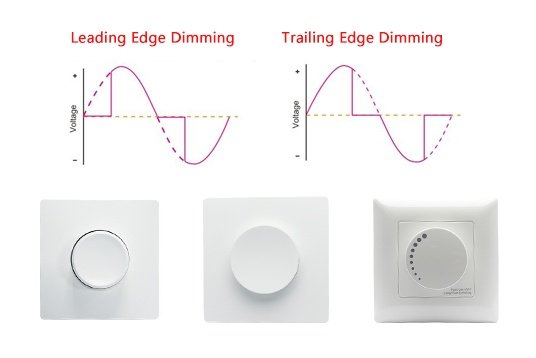
Wie er die AC-Welle umformt
- In einem 50-Hz-System führt AC 100 Halbzyklen pro Sekunde aus.
- Der TRIAC verzögert den Start jedes Halbzyklus.
- Je länger er wartet, desto weniger Energie erreicht die Leuchte.
- Diese Verzögerung wird als Phasenwinkel.
| Phasenwinkel | Lichtleistung |
|---|---|
| 0° | 100% |
| 90° | 50% |
| 135° | ~25% |
| 180° | 0% |
Diese Methode ist bekannt als Leading-Edge-Dimmen, und es ist die ursprüngliche Art des Dimmens mit AC-Leistung.
Hauptmerkmale und elektrische Anforderungen von TRIAC-Dimmern
TRIAC-Dimmen sieht einfach aus, stellt aber spezifische Anforderungen an Ihre Schaltung.
TRIAC-Dimmer benötigen eine Mindestlast, funktionieren am besten mit ohmschen Lasten und benötigen kompatible Treiber, wenn sie mit LEDs verwendet werden.
Elektrisches Verhalten, das Sie kennen müssen
Mindestlast
- Die meisten TRIAC-Dimmer funktionieren unterhalb einer bestimmten Wattzahl (oft ~5 W) nicht.
- Darunter kann Flackern oder kein Dimmen auftreten.
Einschaltstrom
- LED-Treiber können hohen Einschaltstrom erzeugen, der TRIAC-Dimmer beschädigt.
- Wählen Sie Dimmer, die für elektronische Lasten ausgelegt sind.
Wärmeableitung
- TRIACs erzeugen während des Betriebs Wärme.
- Stellen Sie sicher, dass der Dimmer ordnungsgemäß für geschlossene Räume ausgelegt ist.
| Parameter | Typische Anforderung |
|---|---|
| Lasttyp | Ohmsch/Glühlampen |
| Mindestlast | 15–25W |
| Maximale Last | Abhängig vom Modell |
| Kompatible Treiber | Phasenanschnitt erforderlich |
Arten des Phasenanschnitt-Dimmens: Leading Edge vs. Trailing Edge
TRIAC ist nicht die einzige Möglichkeit, eine Wellenform zu zerhacken. Und die Wahl des falschen Typs kann Ihre LED-Leistung ruinieren.
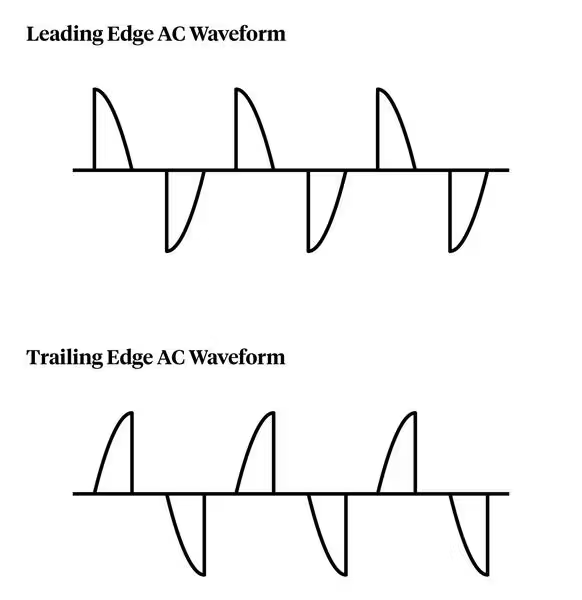
Phasenabschnittsdimmung gibt es in zwei Varianten: Phasenanschnitt (verwendet von TRIACs) und Phasenabschnitt (oft verwendet von MOSFETs), jeweils mit einzigartigem elektrischem Verhalten.
Hauptunterschiede
Leading Edge (TRIAC)
- Schneidet die Vorderseite der AC-Wellenform ab.
- Hoher Einschaltstrom, mehr elektromagnetische Interferenzen.
- Funktioniert mit älteren Glühlampen und vielen LED-Treibern.
Trailing Edge (ELV)
- Schneidet das Ende der Wellenform ab.
- Glatter, weniger rauschend.
- Besser für niedrigwattige LEDs und elektronische Treiber.
| Feature | Leading Edge (TRIAC) | Trailing Edge (ELV) |
|---|---|---|
| Schnittposition | Anfang der Wellenform | Ende der Wellenform |
| Lastkompatibilität | Ohmsch, einige LEDs | Elektronisch, die meisten LEDs |
| Kosten | Nach unten | Höher |
| Flimmerpotenzial | Mittel-Hoch | Gering |
Anwendungen: Wo TRIAC-Dimmer üblicherweise eingesetzt werden
TRIAC-Dimmer mögen veraltet erscheinen – aber sie sind immer noch überall zu finden.
TRIAC-Dimmer sind am häufigsten in der Wohnbeleuchtung, in kleinen Gewerberäumen und bei Nachrüstprojekten mit vorhandener AC-Verkabelung anzutreffen.

Wo sie am besten passen
- Wohnhäuser mit Glühlampen oder Halogenlampen
- LED-Nachrüstungen mit TRIAC-kompatiblen Treibern
- Hotelzimmer und kleine Büros
- Restaurants mit Bedarf an Stimmungsbeleuchtung
Warum sie verwendet werden:
- Einfache Installation mit vorhandener Verkabelung
- Kompatibel mit Standard-Wandplatten
- Geringe Kosten im Vergleich zu digitalen Systemen
Vorteile der Verwendung von TRIAC-Dimmern in der LED-Beleuchtung
TRIAC-Dimmer bleiben aus gutem Grund beliebt. Bei richtiger Verwendung sind sie einfach und effektiv.
TRIAC-Dimmer bieten eine kosteneffiziente Plug-and-Play-Dimmlösung für viele LED-Nachrüst- und Neubauanwendungen.
Was sie attraktiv macht
- Kosteneffizient: Keine zusätzlichen Steuerleitungen erforderlich.
- Weit verbreitet: Einfach zu beschaffen und zu ersetzen.
- Einfache Integration: Funktioniert mit Standard-Wandverkabelung (200–240V).
- Benutzerfreundlich: Vertraute Benutzeroberfläche mit Drehknöpfen oder Schiebern.
Sie sind ideal, wenn das Budget knapp ist oder die Verkabelung bereits vorhanden ist.
Kompatibilitätsüberlegungen: LED-Treiber und Lasttypen
Hier gehen viele TRIAC-Dimmer-Installationen schief.
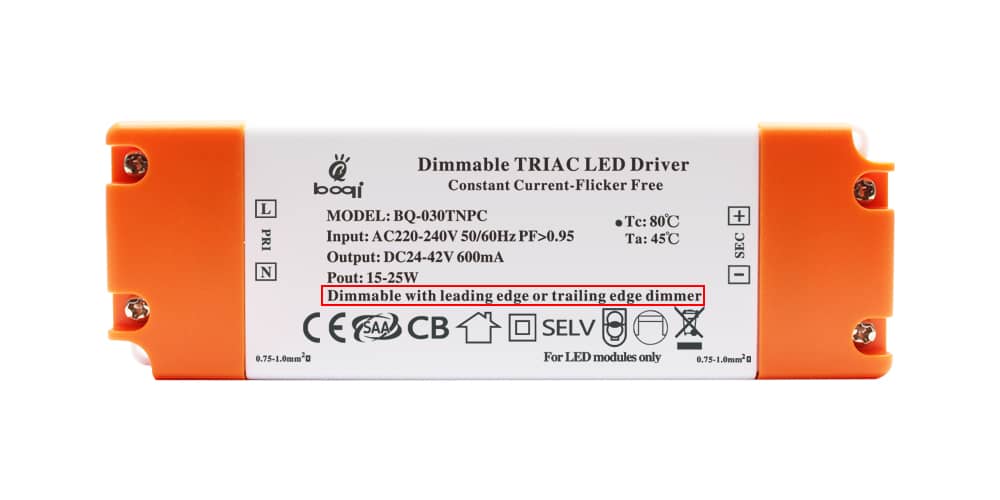
TRIAC-Dimmer erfordern LED-Treiber, die speziell für die Annahme von Phasenabschnittssignalen ausgelegt sind, andernfalls dimmen sie nicht richtig – oder überhaupt nicht.
Wichtige Punkte für die Kompatibilität
- Verwenden Sie phasendimmbare Treiber: Prüfen Sie in den Spezifikationen auf “TRIAC dimmbar” oder “phasenanschnittkompatibel”.
- Vermeiden Sie Fehlanpassungen bei Konstantspannung: Treiber müssen den Anforderungen der Leuchte entsprechen (CV vs. CC).
- Mindestlast: Bleiben Sie über der Mindestnennleistung des Dimmers.
- Vermeiden Sie Smart-Bulbs: Viele Smart-LEDs reagieren schlecht auf Phasendimmung.
Prüfen Sie immer die Datenblätter – sowohl für den Dimmer als auch für den Treiber.
Installationsrichtlinien für TRIAC-Dimmer
Die Installation eines TRIAC-Dimmers ist einfach, aber kleine Details können leicht übersehen werden.
Um einen TRIAC-Dimmer sicher zu installieren, schalten Sie die Stromversorgung aus, überprüfen Sie die Verdrahtungskonfiguration und stellen Sie sicher, dass Lasttyp und Leistung den Spezifikationen des Dimmers entsprechen.

Grundlegende Schritte
- Schalten Sie den Schutzschalter aus.
- Entfernen Sie den vorhandenen Wandschalter.
- Identifizieren Sie Phase (Außenleiter), Last und Neutralleiter.
- Verbinden Sie die Kabel gemäß den Dimmer-Anweisungen.
- Montieren Sie den Dimmer und befestigen Sie die Abdeckplatte.
- Stellen Sie die Stromversorgung wieder her und testen Sie den Betrieb.
Vermeiden Sie die Kombination mit einem Ventilator oder einer induktiven Last, sofern nicht anders angegeben.
Häufige Probleme und Tipps zur Fehlerbehebung
Selbst ein funktionierender TRIAC-Dimmer kann Probleme verursachen, wenn das System nicht korrekt abgestimmt ist.
Flackern, Brummen oder keine Reaktion deuten häufig auf eine Inkompatibilität zwischen dem Dimmer und dem LED-Treiber hin.
| Problem | Wahrscheinliche Ursache |
|---|---|
| Flackern | Dimmer unter Mindestlast oder schlechte Abstimmung |
| Brummen | EMV-Störungen vom Treiber, Dimmer zu klein dimensioniert |
| Licht lässt sich nicht einschalten | Treiber nicht phasendimmbar |
| Ungleichmäßige Dimmung | Inkompatibler Treiber oder minderwertiger Dimmer |
Testen Sie das System immer mit einer einzelnen Leuchte, bevor Sie auf mehrere Leuchten skalieren.
TRIAC vs. 0–10V vs. DALI: Ein schneller Vergleich
Nicht alle Dimmsysteme sind gleich. TRIAC ist nur eine Option unter vielen.
TRIAC eignet sich am besten für einfache Wohnanwendungen, während 0–10V und DALI bessere Leistung und Steuerung für moderne Gewerberäume bieten.
| Feature | TRIAC | 0–10V | DALI |
|---|---|---|---|
| Steuerungstyp | AC-Phasenanschnitt | Analoge Spannung | Digitales Signal |
| Benötigte Kabel | 2 (Phase/Last) | 2 zusätzliche Niederspannung | Busbasiertes Netzwerk |
| Kosten | Gering | Mittel | Hoch |
| Flimmerrisiko | Mittel-Hoch | Gering | Sehr niedrig |
| Steuerungsflexibilität | Gering | Mittel | Hoch (Szenen, Gruppen) |
Wählen Sie TRIAC bei der Nachrüstung alter Systeme oder bei kleinen Projekten.
Warum BOQI TRIAC-Dimmer wählen: Leistung, Support und Flexibilität
Nicht alle TRIAC-Dimmer sind gleich – und wir haben unsere so entwickelt, dass sie die Erwartungen übertreffen.
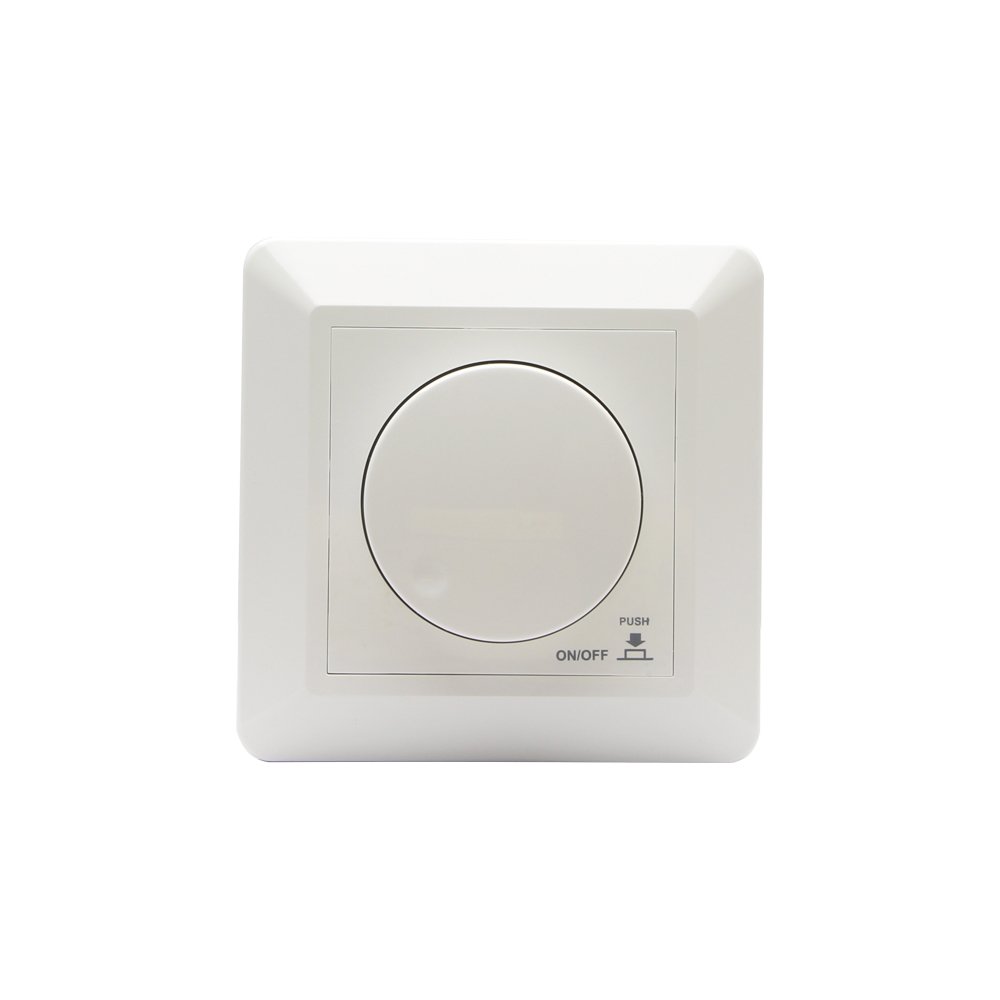
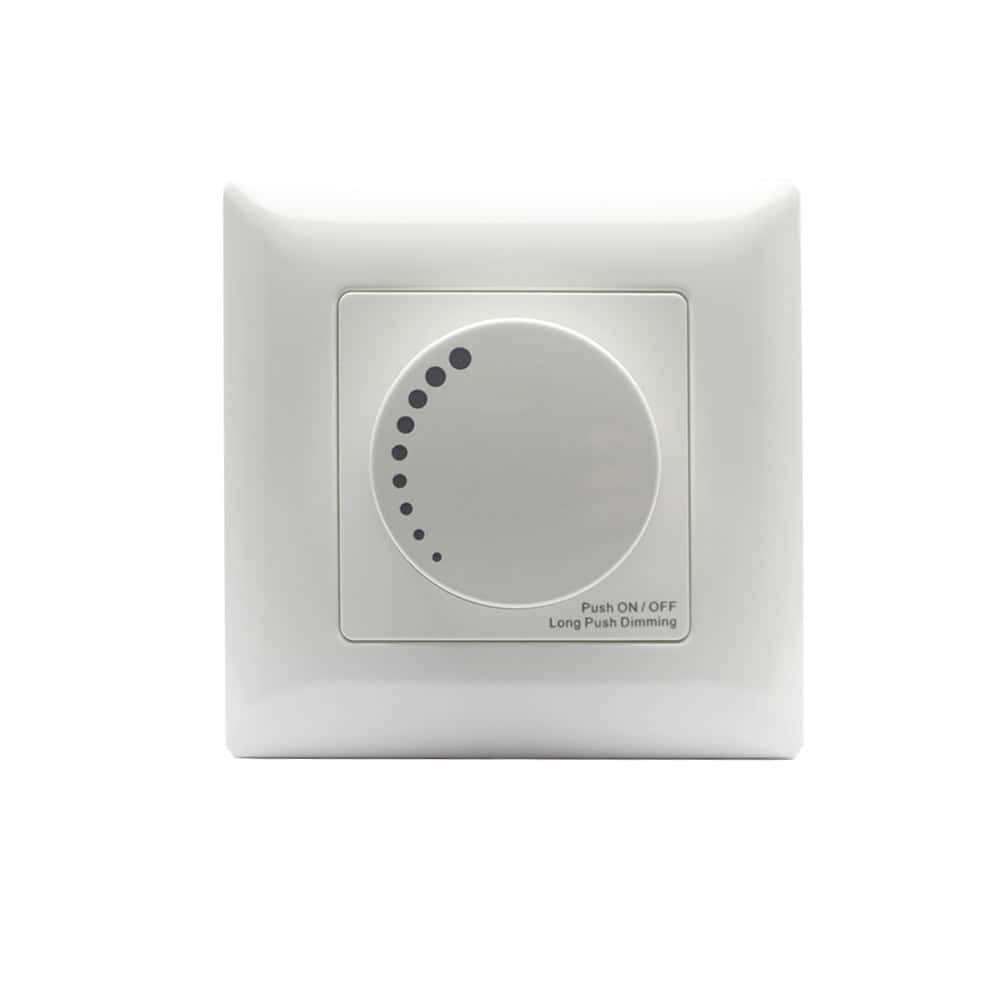
boqi's TRIAC-Dimmer sind für moderne LED-Kompatibilität gebaut, mit sanfter Dimmung, hoher Stoßspannungstoleranz und breiter Treiberunterstützung.



Was BOQI auszeichnet:
- Zertifiziert für globale Märkte (CE, EMC, LVD, RoHS etc.)
- Tiefe Dimmung bis auf 1% oder niedriger
- Erhältlich für sowohl Phasenanschnitt als auch Phasenabschnitt
- OEM/ODM-Anpassung verfügbar
- Hervorragendes Wärmemanagement für lange Lebensdauer
Wir haben Hunderte von Beleuchtungsprojekten mit Dimmern unterstützt, die einfach funktionieren – direkt out of the box.
Häufig gestellte Fragen zur TRIAC-Dimmertechnologie
Können TRIAC-Dimmer mit LEDs verwendet werden?
Ja, aber nur mit LED-Treibern, die als “TRIAC dimmbar” oder “phasenanschnittkompatibel” gekennzeichnet sind.”
Warum flackert meine LED mit einem TRIAC-Dimmer?
Es könnte unter der Mindestlast liegen, oder der Dimmer und der Treiber sind inkompatibel.
Was ist der Unterschied zwischen TRIAC- und ELV-Dimmern?
TRIAC ist Phasenanschnitt (schneidet den Anfang der Welle ab); ELV ist Phasenabschnitt (schneidet das Ende ab), besser für LEDs.
Benötige ich einen Neutralleiter?
Einige TRIAC-Dimmer erfordern einen Neutralleiter – siehe Installationsanleitung.
Schlussfolgerung
TRIAC-Dimmer bleiben ein wertvolles Werkzeug für kostengünstiges, AC-basiertes Dimmen – insbesondere in Kombination mit den richtigen LED-Treibern und bei Nachrüst- oder Wohnanwendungen.