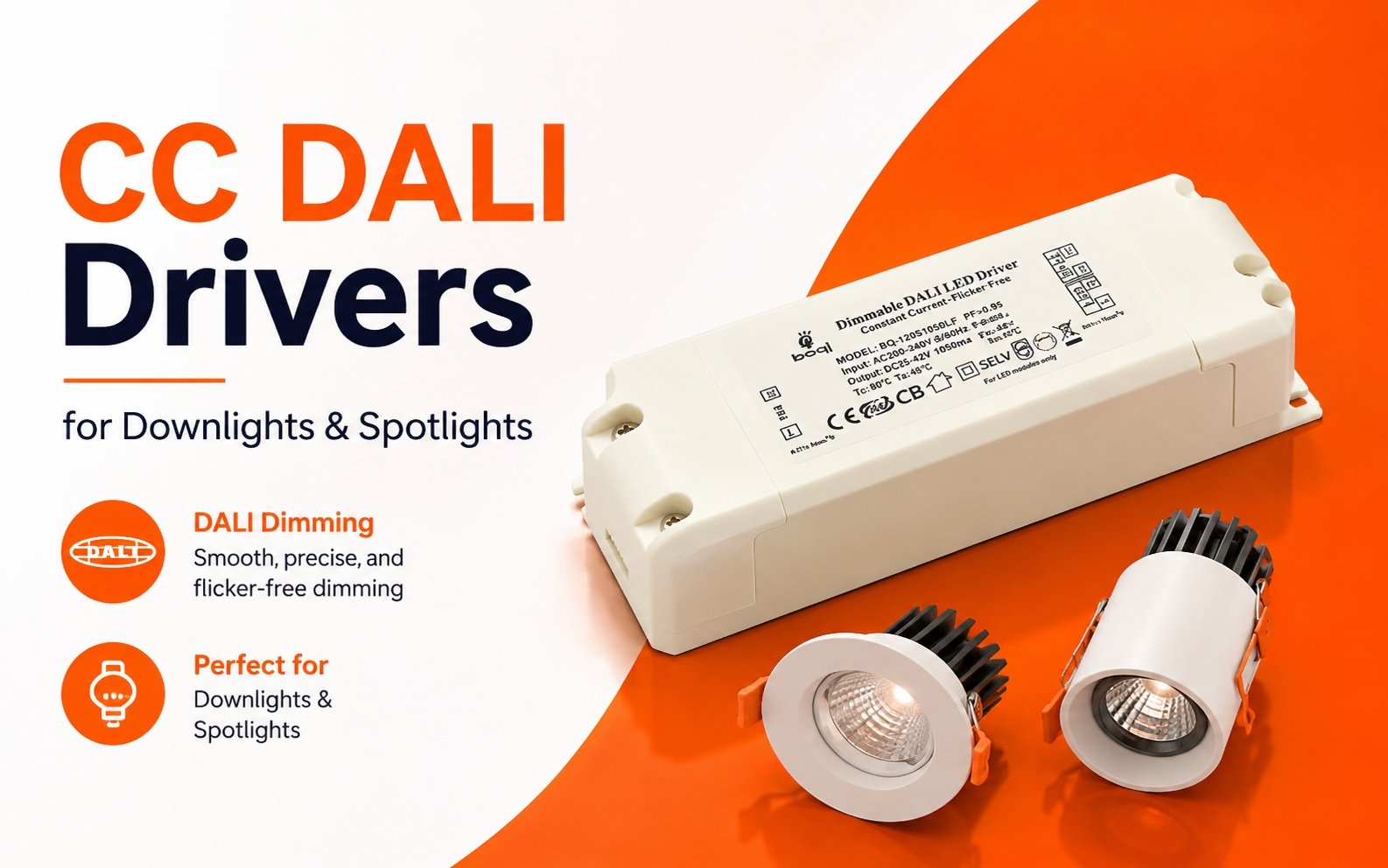















Los controladores CV DALI aparecen cada vez con más frecuencia en las especificaciones de los proyectos que recibe nuestro equipo de Shenzhen, y muchos compradores siguen preguntando por qué una simple fuente de alimentación no es suficiente para las tiras LED.
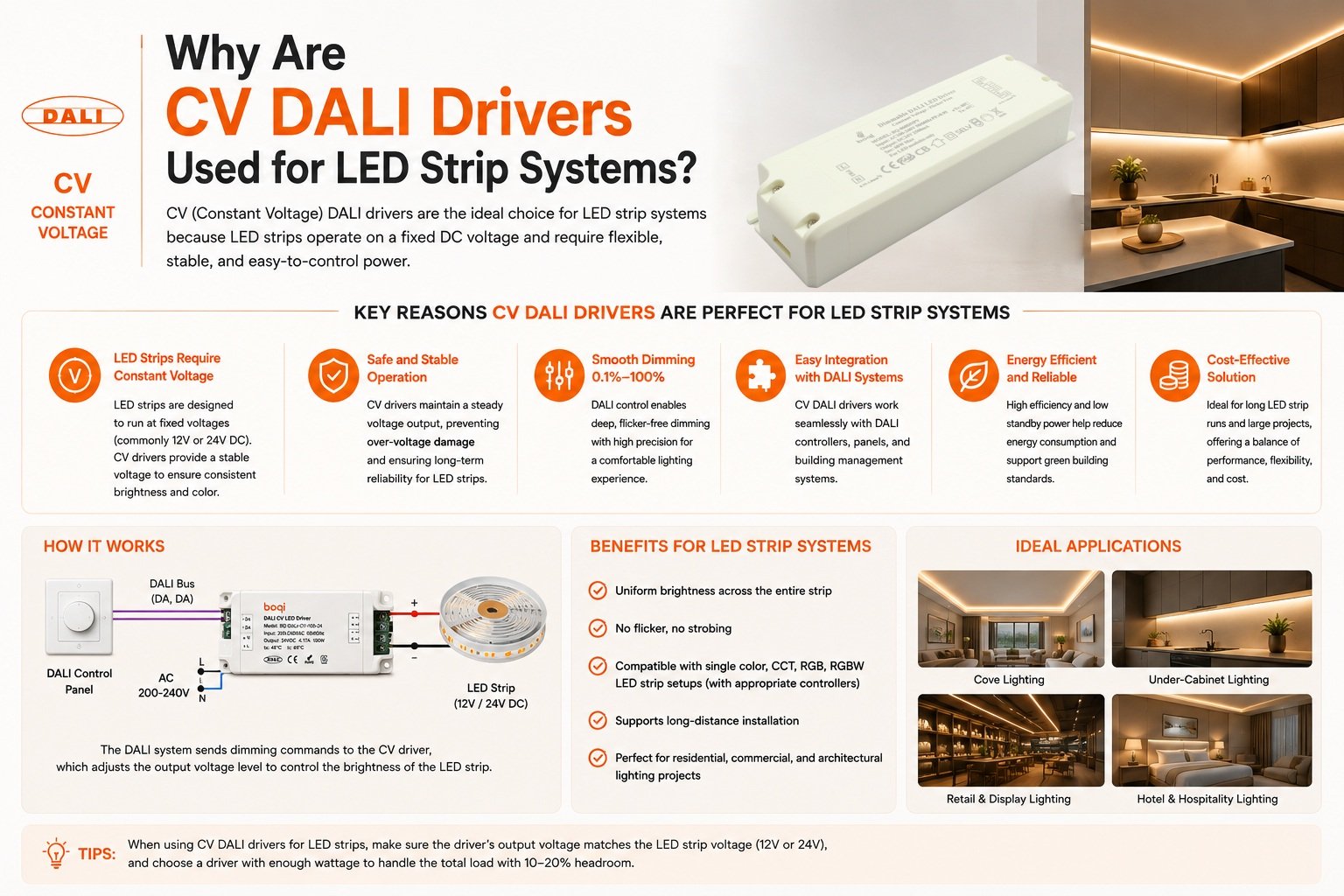
Los controladores CV DALI se utilizan en sistemas de tiras LED porque convierten la corriente alterna de la red eléctrica en una salida de corriente continua de tensión constante y estable, al tiempo que aceptan comandos digitales de regulación DALI. Esto permite una regulación suave y repetible, un control por zonas direccionable y una integración perfecta con los sistemas de automatización de edificios, todo ello desde un único dispositivo.
Esa breve respuesta aborda el “qué”. El resto de este artículo explica el “por qué” en términos prácticos. Repasaré paso a paso la selección, el rendimiento de la regulación de la intensidad luminosa y las comprobaciones de los proveedores.
¿Por qué los controladores CV DALI son ideales para aplicaciones con tiras LED?
Un distribuidor de Singapur nos envió una vez una muestra defectuosa de iluminación de cenefa. La regleta funcionaba correctamente. El problema era un regulador de intensidad de la red eléctrica que alteraba la forma de onda que alimentaba una fuente de alimentación básica. Ese trabajo nos enseñó mucho a nuestro equipo.
Los controladores CV DALI son compatibles con las tiras LED, ya que estas necesitan una alimentación de bajo voltaje y voltaje constante, normalmente de 12 V o 24 V, y no pueden conectarse directamente a la red eléctrica. El controlador suministra un voltaje estable y recibe órdenes de regulación digital, por lo que una sola unidad alimenta y controla la tira de forma óptima.
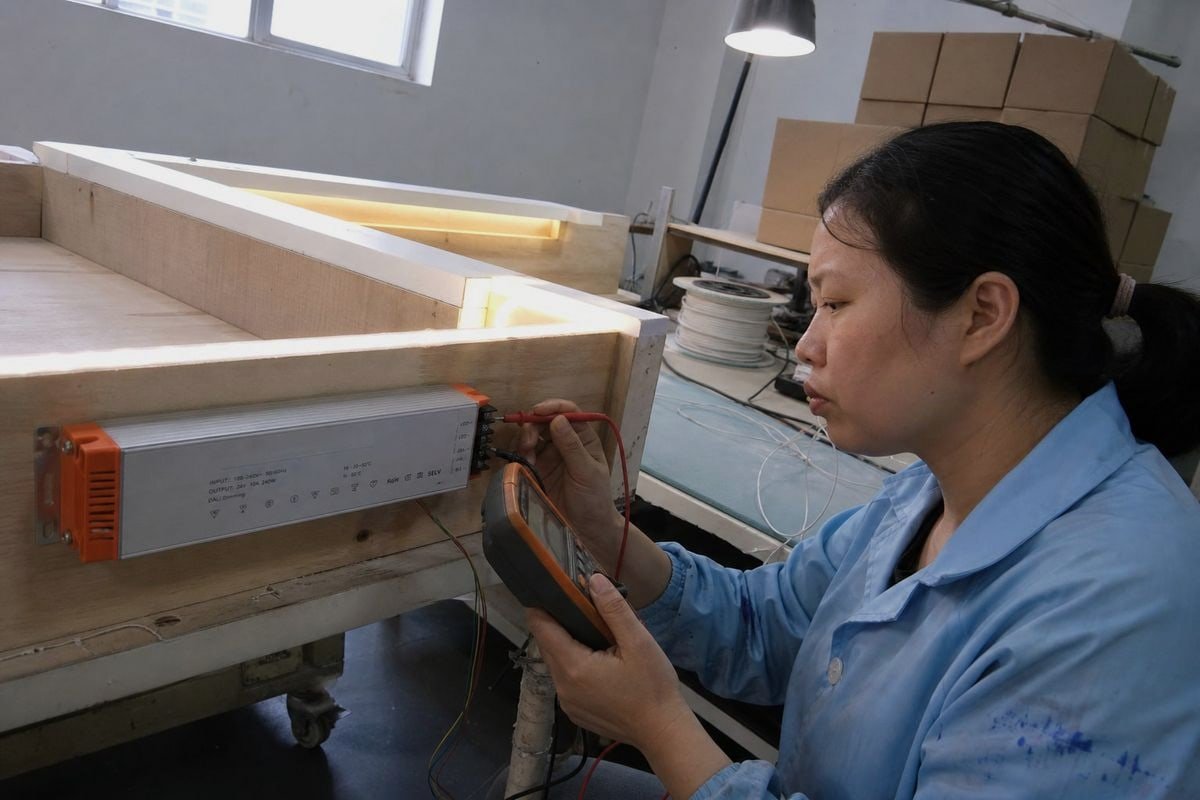
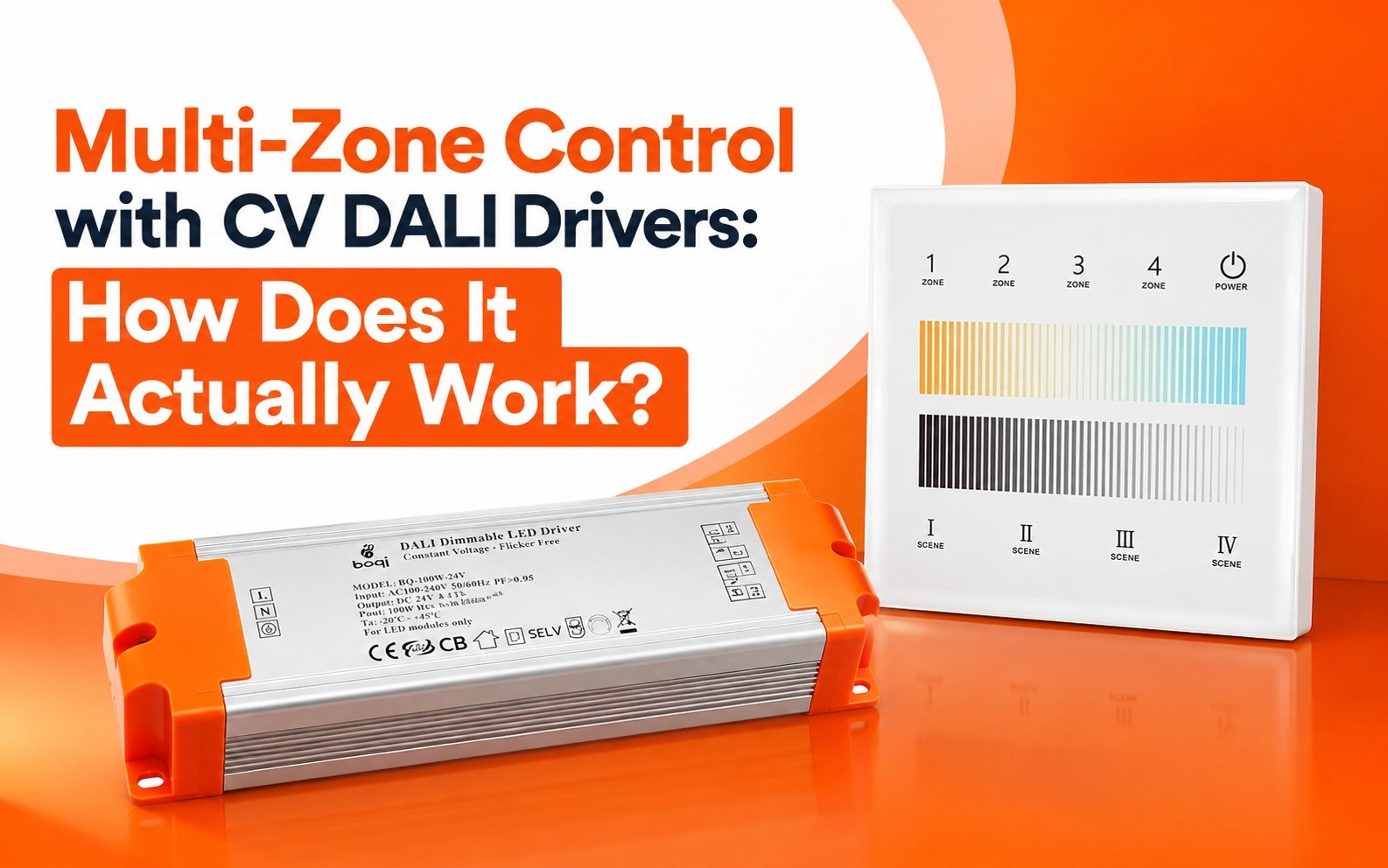
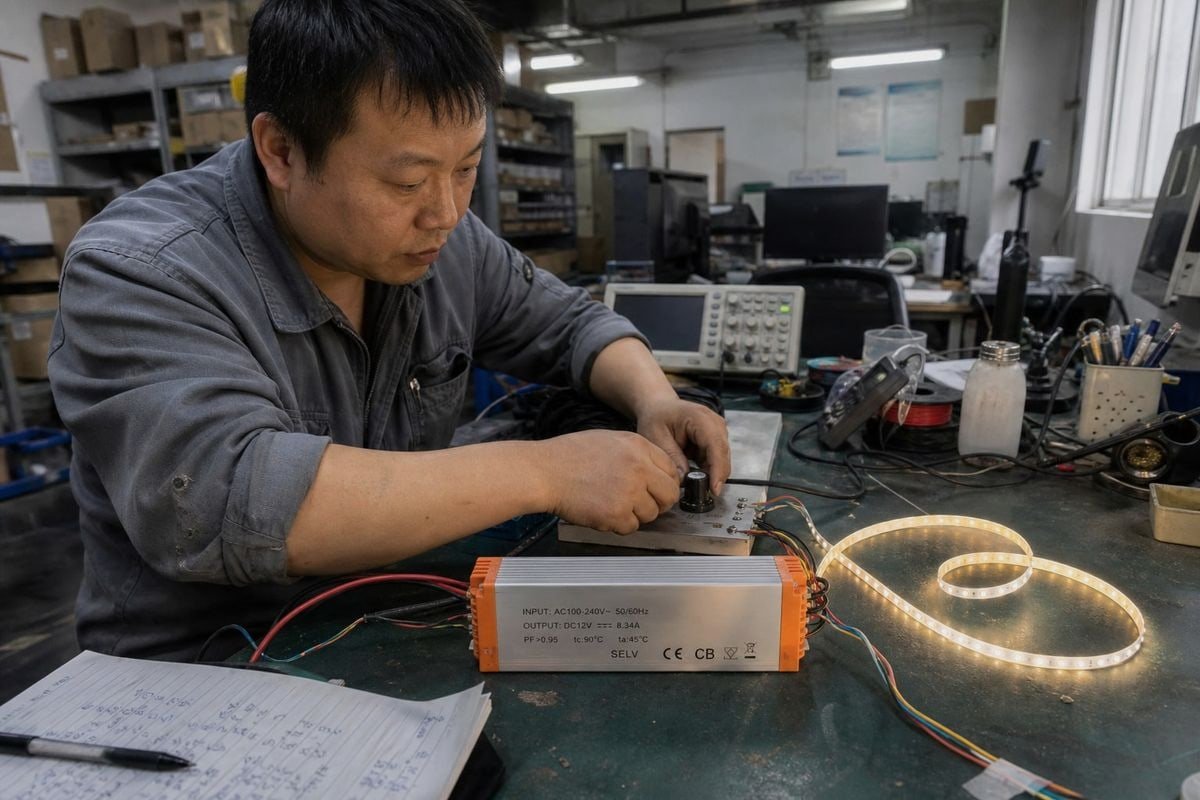
Las tiras de LED están diseñadas para funcionar a baja tensión. A Tira de tensión constante de 24 V Es precisamente eso lo que espera: una tensión constante de 24 V. Si se le suministra una tensión inestable, se producirán cambios de color, un brillo desigual a lo largo de la línea o un fallo prematuro. Por lo tanto, la primera función de un controlador CV DALI es eléctrica: recibir una tensión de entrada de CA de 100-240 V y proporcionar una salida de CC limpia. Nuestras propias unidades, como el modelo de 12 V CC y 8,34 A con las marcas SELV, CE y CB impresas en la carcasa, están diseñadas precisamente para esa tarea.
La segunda función es el control. Aquí es donde DALI se diferencia de un regulador de intensidad convencional. Un regulador convencional corta directamente la forma de onda de la red eléctrica. En cambio, un controlador DALI recibe órdenes de regulación digitales a través de una bus de dos hilos 1 y regula con precisión la potencia suministrada a la tira. La regulación de intensidad se realiza en el lado de baja tensión, normalmente mediante PWM, de modo que la tira recibe siempre la tensión correcta.
Por qué esta combinación funciona tan bien
| Requisitos de las tiras LED | Cómo lo resuelve un controlador CV DALI |
|---|---|
| Fuente de alimentación estable de 12 V o 24 V | Salida de corriente continua de tensión constante regulada |
| Regulación suave de la intensidad sin alteración del color | Salida PWM en el lado de corriente continua, sin modulación de la red eléctrica |
| Control por zonas y por escenas | Control de iluminación direccionable a través del bus DALI |
| Instalación segura | Salida SELV, protección integrada contra cortocircuitos y sobrecargas |
| Cableado sencillo | Un único dispositivo se encarga de la alimentación y la regulación de la intensidad luminosa; bus independiente de la polaridad |
Se trata de una categoría de productos bien definida, no de una solución provisional. Estos productos se fabrican y certifican expresamente como controladores DALI de tensión constante para aplicaciones lineales, como la iluminación de cornisas, el bañado de paredes, los pasamanos y los techos luminosos. Según nuestra experiencia en la exportación a toda Europa y el sudeste asiático, es precisamente en este tipo de proyectos arquitectónicos lineales donde se concentra la demanda.
¿Cómo elijo el controlador CV DALI adecuado para mi proyecto de tiras LED?
La disyuntiva que sopesamos con mayor frecuencia con los compradores es la capacidad frente al número de canales. Una sola unidad de alta potencia sale más barata por vatio, pero los controladores multicanal permiten controlar el RGBW y el blanco regulable desde una única dirección.
Elige un controlador CV DALI teniendo en cuenta la tensión de la tira (12 V o 24 V), calculando la potencia necesaria con un margen de 20% por encima de la carga total de la tira, comprobando que cumpla con el protocolo DALI-2 y seleccionando el modelo DT6 para tiras monocromáticas o el DT8 para tiras de luz blanca regulable y RGBW.
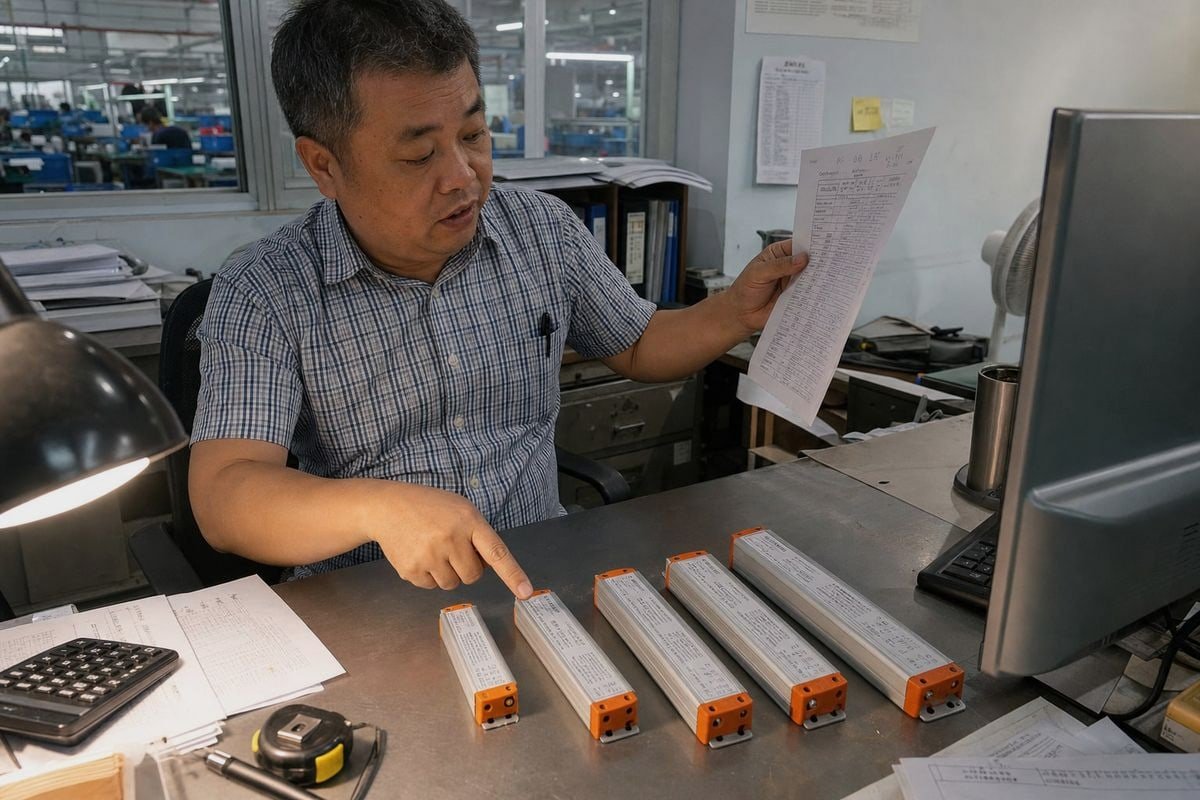
La selección comienza con tres valores concretos: tensión, corriente y carga total. Si alguno de ellos es incorrecto, el sistema no rendirá como debería o fallará. Cuando nuestros ingenieros revisan la lista de materiales de un cliente, seguimos esta secuencia:
- Ajusta la tensión. Un controlador de 24 V conectado a una regleta de 12 V la estropea. Un controlador de 12 V conectado a una regleta de 24 V apenas la ilumina.
- Calcula la potencia total. Multiplica los vatios por metro de la tira por la longitud total y, a continuación, añade un margen de aproximadamente 20%. Los amplificadores disponibles en el mercado van desde pequeñas unidades de 12 W hasta unidades de 90 W, 100 W, 160 W, 200 W y unidades multicanal de mayor potencia, por lo que hay una potencia adecuada para casi cualquier instalación.
- Comprueba la intensidad nominal. Nuestra unidad de 12 V CC y 8,34 A, por ejemplo, soporta sin problemas unos 100 W de tiras de 12 V dentro de ese margen de seguridad.
- Comprueba la versión del protocolo. La compatibilidad con el protocolo DALI-2, basado en la norma IEC 62386, es ahora el estándar de referencia del mercado. Garantiza la interoperabilidad entre controladores, sensores y reguladores de distintos fabricantes.
- Elige el tipo de dispositivo adecuado. Esto es más importante de lo que la mayoría de los compradores creen.
DT6 frente a DT8: ¿qué tipo de dispositivo necesitas?
| Factor | DT6 | DT8 |
|---|---|---|
| Ideal para | Tiras blancas de un solo color | Control de luz blanca regulable, RGBW |
| Direcciones DALI utilizadas | Uno por canal | Uno por accesorio |
| Control del color | No es nativo; requiere varias direcciones | Nativo, a través del estándar DALI DT8 |
| Repercusión en la capacidad del sistema | Consume direcciones rápidamente en el entorno multicanal | Mantiene la capacidad de los autobuses |
Merece la pena especificar la compatibilidad con DT8 siempre que la temperatura de color o el RGBW estén previstos en el plan de desarrollo, ya que el estándar DALI DT8 gestiona todos los canales bajo una única dirección. En un bus limitado a 64 direcciones, ese ahorro de capacidad se traduce en un ahorro real de dinero en proyectos de gran envergadura.
Por último, hay que tener en cuenta la arquitectura. Algunos proyectos utilizan un controlador PWM DALI independiente junto con una fuente de alimentación de corriente continua, en lugar de un controlador CV DALI integrado. Esa solución modular puede ser adecuada para reformas en las que ya existen fuentes de alimentación. Sin embargo, en las nuevas instalaciones, el controlador integrado reduce el cableado, el espacio necesario en la caja y los puntos de fallo; por eso, la mayoría de nuestros clientes OEM lo especifican.
¿Pueden los controladores CV DALI mejorar el rendimiento de la regulación de intensidad en mis sistemas de tiras LED?
Durante una de nuestras sesiones de calibración en Shenzhen, grabamos la salida de la tira con la cámara de un móvil en cada paso de atenuación. Las bandas que se aprecian en el vídeo son la forma más rápida de detectar un nivel bajo de Frecuencia de regulación PWM 2.
Sí. Los controladores CV DALI mejoran la regulación de la intensidad luminosa mediante PWM de alta frecuencia para ofrecer un funcionamiento sin parpadeos, una curva de regulación logarítmica que se adapta a la respuesta del ojo humano y amplios rangos de regulación, desde 0,11 TP3T hasta 1001 TP3T. Además, los comandos digitales permiten que los niveles de regulación sean repetibles y estén sincronizados en todas las zonas.
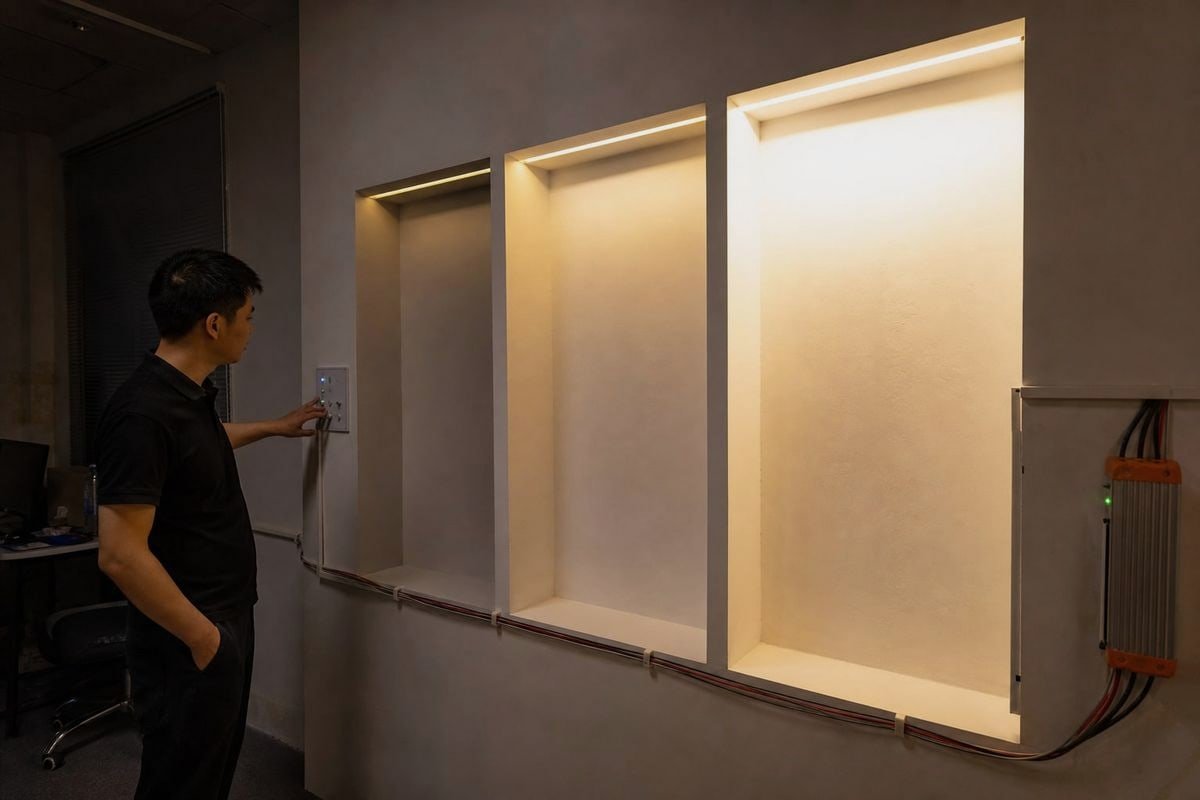
La calidad de la regulación es el aspecto por el que los controladores CV DALI se distinguen del resto, y se basa en tres mecanismos.
PWM de alta frecuencia y parpadeo
Los controladores PWM económicos conmutan a unos pocos cientos de hercios. Esto se percibe como un efecto estroboscópico y se aprecia de forma muy evidente ante la cámara en forma de bandas de «rolling shutter». Los controladores DALI de calidad elevan la frecuencia de regulación PWM por encima de los 2 kHz, y los modelos de gama alta alcanzan los 20 kHz o más, lo que elimina las bandas durante la grabación de vídeo en alta definición. Para nuestros clientes que suministran a hoteles, estudios de televisión y locales comerciales, un funcionamiento sin parpadeos no es un lujo, sino un requisito técnico incluido en la licitación.
La curva de atenuación logarítmica
El ojo humano percibe la luminosidad de forma logarítmica, no lineal. La regulación DALI utiliza un curva de atenuación logarítmica 3 Por su diseño, un cambio de 1% a 2% se percibe como de magnitud similar a un cambio de 50% a 100%. El resultado práctico: atenuaciones suaves y naturales en el extremo inferior, donde los reguladores lineales resultan irregulares. En combinación con rangos de atenuación de 0,1% a 100%, esto permite conseguir los sutiles niveles de iluminación nocturna que demandan los diseñadores arquitectónicos.
Repetibilidad y retroalimentación
La regulación analógica presenta desviaciones. Los comandos digitales no. Cuando una escena requiere 37%, todos los controladores del bus ajustan el valor a 37%, siempre, en todas las zonas. DALI-2 también ofrece comunicación bidireccional, por lo que el controlador puede enviar información sobre el consumo energético y los fallos al sistema de automatización del edificio en tiempo real. sistemas de automatización de edificios 4 diagnóstico. De este modo, la regulación de la intensidad luminosa deja de ser una cuestión de conjeturas para convertirse en una función medida y supervisada.
¿Qué debo tener en cuenta a la hora de adquirir controladores CV DALI para pedidos al por mayor de tiras LED?
Una responsable de compras me contó una vez por WhatsApp que los conductores de su anterior proveedor superaron la fase de prueba, pero luego no superaron la evaluación por lotes tras tres meses en las instalaciones. La lección que ella aprendió se convirtió en nuestra lista de comprobación de control de calidad.
En el caso de los pedidos al por mayor, comprueba que cuenten con las certificaciones DALI-2 e IEC 62386, las marcas de seguridad SELV y CE/CB, las funciones de protección integradas, las especificaciones de frecuencia PWM, las pruebas de control de calidad a nivel de lote, la capacidad de personalización OEM/ODM y unos plazos de entrega realistas. Prueba siempre muestras de producción, no solo muestras de referencia.
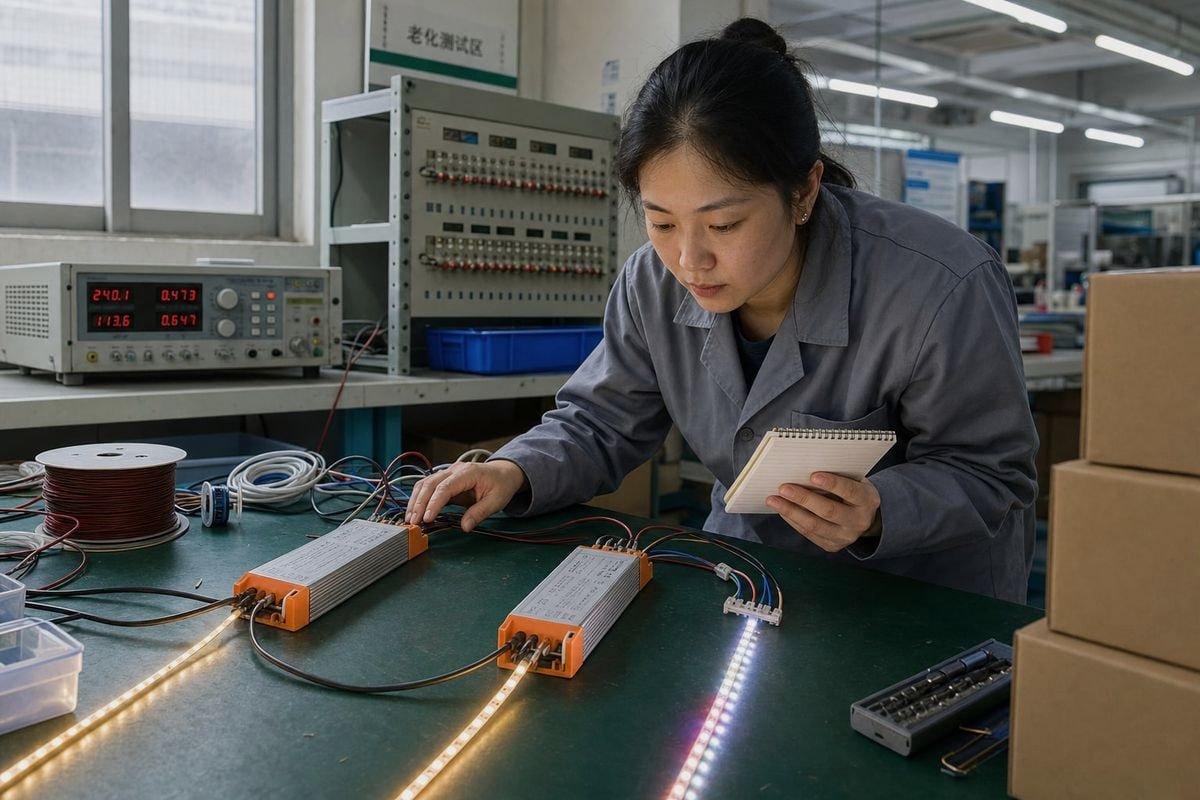
El abastecimiento a gran escala es algo muy distinto a comprar diez unidades. El precio unitario es importante, pero el coste total del proyecto —incluidos los fallos, los retrasos y los problemas de puesta en marcha— lo es aún más. A continuación te ofrecemos la lista de comprobación que recomendamos, basada en diez años de experiencia prestando servicio a distribuidores y marcas de iluminación en toda Europa, Japón y el Sudeste Asiático.
Lista de comprobación para la adquisición a granel
| Punto de control | Qué hay que comprobar | Por qué es importante |
|---|---|---|
| Cumplimiento normativo | Protocolo DALI-2, IEC 62386, CE, CB, SELV | Interoperabilidad y acceso legal al mercado |
| Funciones de protección | Sobretensión, sobrecarga, sobrecalentamiento, cortocircuito, recuperación automática | Fiabilidad en el uso y menores índices de devoluciones |
| Especificaciones de PWM | Frecuencia indicada por escrito, preferiblemente superior a 2 kHz | El funcionamiento sin parpadeos no está garantizado únicamente por “DALI” |
| Formato | Carcasas delgadas para luminarias de cornisa y lineales | La integración física es tan importante como las funciones de control |
| Personalización | Impresión de logotipos, etiquetas, ajustes predeterminados del firmware, embalaje | Imprescindible para los programas de reventa de marca propia |
| Control de calidad por lotes | Pruebas de envejecimiento, comprobaciones de tolerancia de rendimiento, informes documentados | Las muestras «doradas» no demuestran la homogeneidad del lote |
| Asistencia | Orientación sobre el cableado, asesoramiento sobre la topología del cableado del bus, tiempo de respuesta del servicio posventa | La puesta en servicio es la fase en la que los proyectos se retrasan respecto a los plazos previstos |
Hay dos aspectos que merecen especial atención. En primer lugar, pregunta por el comportamiento del controlador en situaciones extremas: ¿qué ocurre en caso de cortocircuito? ¿Se recupera automáticamente? Los equipos de confianza incorporan de serie protecciones contra sobretensión, sobrecarga, sobrecalentamiento y cortocircuito. En segundo lugar, comprueba la facilidad de instalación. El bus DALI es un cableado de dos hilos independiente de la polaridad que puede discurrir por el mismo conducto que la red eléctrica, y la agrupación basada en software permite a los integradores reconfigurar las zonas sin necesidad de volver a cablear. No obstante, su proveedor debería asesorarle sobre la topología del cableado del bus y el proceso de direccionamiento, ya que el apoyo durante la puesta en marcha es lo que garantiza que se respete un plazo de ejecución ajustado.
Una advertencia sincera por nuestra parte: no todos los proyectos necesitan DALI. Para un trabajo pequeño de una sola zona, una fuente de alimentación sencilla de tensión constante con un regulador PWM básico resulta más barata y rápida de instalar. Se lo decimos abiertamente a los compradores. DALI resulta rentable cuando se necesita un control de iluminación direccionable, varias zonas, configuración de escenas, luz blanca regulable o integración con un sistema de automatización de edificios —lo que describe la mayoría de los proyectos comerciales y hoteleros, pero no todas las tiras de iluminación decorativas residenciales—.
Conclusión
Los controladores CV DALI resuelven dos problemas a la vez: una alimentación estable de baja tensión y un control digital estandarizado. Adapta la tensión y la potencia al margen de potencia disponible, exige el cumplimiento de la norma DALI-2 y comprueba el control de calidad del lote antes de realizar el pedido.
Notas al pie
1. Documento oficial de la Alianza DALI en el que se describe la interfaz física de bus de dos hilos. ↩︎
2. Explicación técnica de cómo la frecuencia del PWM influye en la intensidad luminosa y el parpadeo. ↩︎
3. Principio científico que explica por qué DALI utiliza una curva logarítmica para la percepción del brillo. ↩︎
4. Fuente oficial (.gov) del Ministerio de Energía en la que se definen los sistemas de control y automatización de edificios. ↩︎