













I driver CV DALI compaiono sempre più spesso nelle specifiche dei progetti che il nostro team di Shenzhen riceve, e molti acquirenti continuano a chiedere perché un semplice alimentatore non sia sufficiente per le strisce LED.
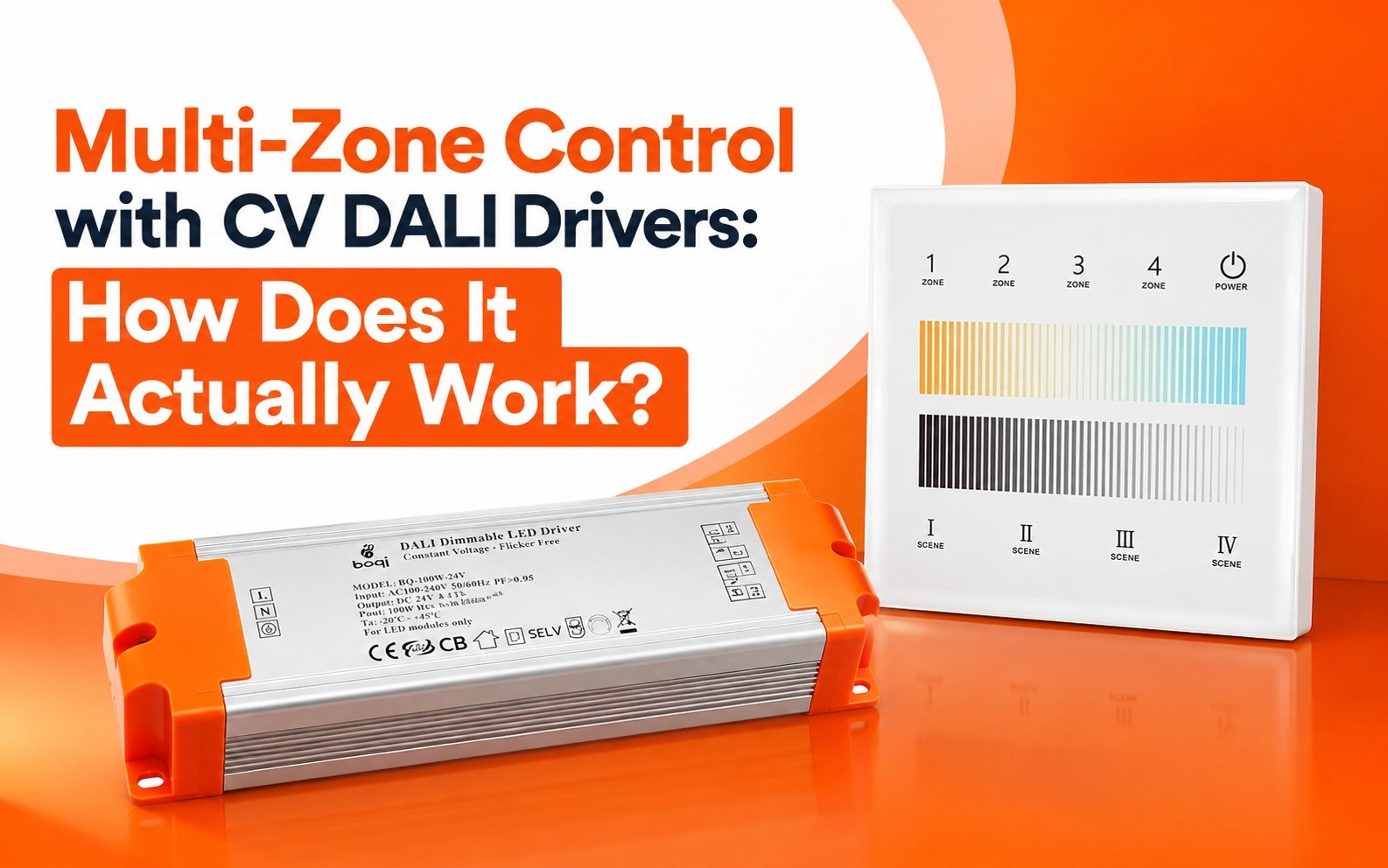
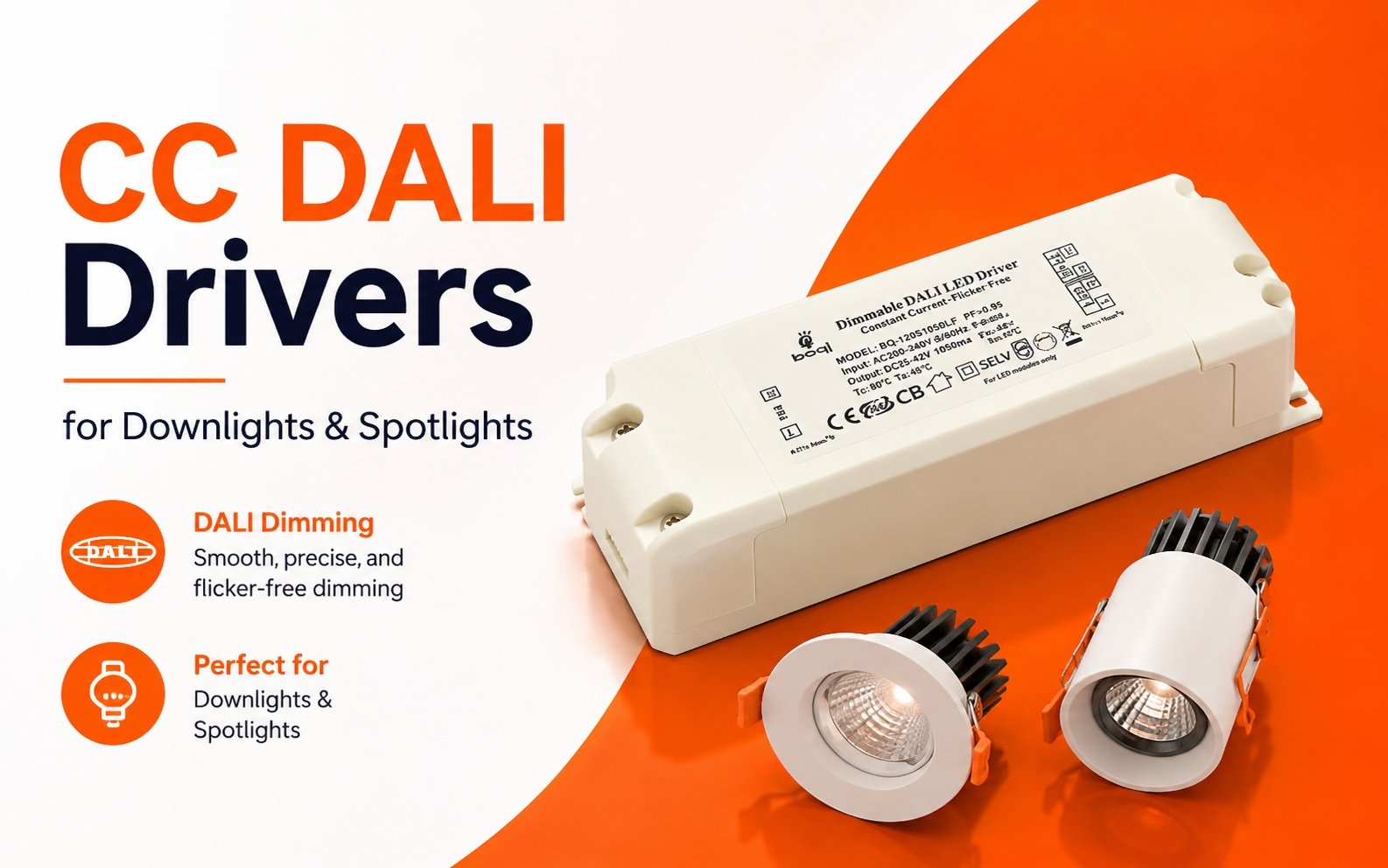
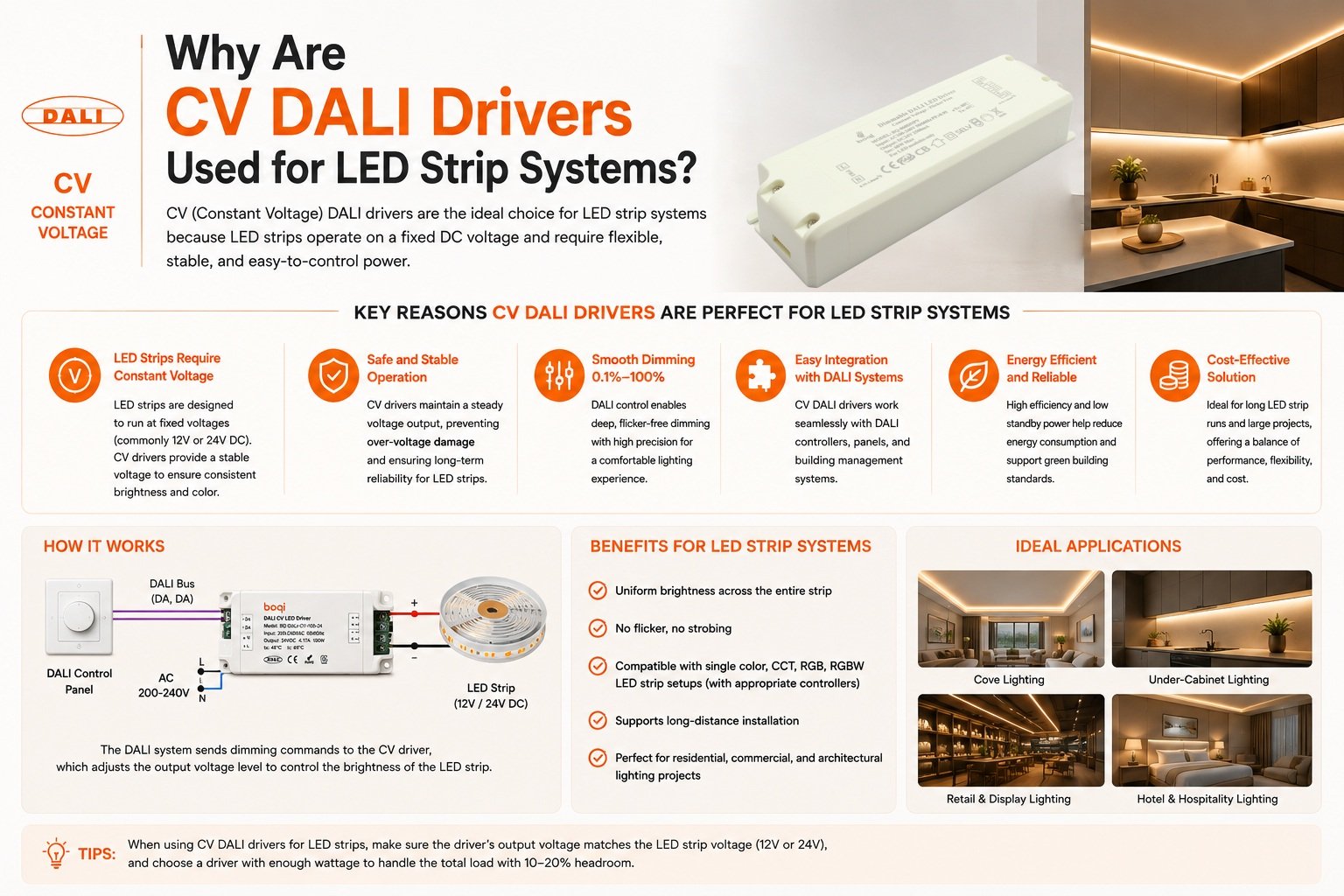
I driver CV DALI vengono utilizzati nei sistemi a strisce LED poiché convertono la corrente alternata di rete in una tensione continua stabile e costante, accettando al contempo i comandi di regolazione digitale DALI. Ciò garantisce una regolazione fluida e ripetibile, un controllo per zone indirizzabile e una perfetta integrazione con i sistemi di automazione degli edifici, il tutto tramite un unico dispositivo.
Questa breve risposta chiarisce il “cosa”. Il resto dell’articolo spiega il “perché” in termini pratici. Illustrerò passo dopo passo la selezione, le prestazioni di regolazione dell’intensità luminosa e i controlli sulla provenienza dei prodotti.
Cosa rende i driver CV DALI ideali per le applicazioni con strisce LED?
Un distributore di Singapore una volta ci ha inviato un campione difettoso di illuminazione per nicchie. La striscia era a posto. Il problema era un dimmer di rete che alterava la forma d'onda che alimentava un alimentatore di base. Quell'incarico è stato molto istruttivo per il nostro team.
I driver CV DALI sono compatibili con le strisce LED perché queste ultime richiedono un'alimentazione a tensione costante e bassa, in genere a 12 V o 24 V, e non possono essere collegate direttamente alla rete elettrica. Il driver fornisce una tensione stabile e riceve comandi di regolazione digitale dell'intensità luminosa, quindi un'unica unità alimenta e controlla la striscia in modo ottimale.
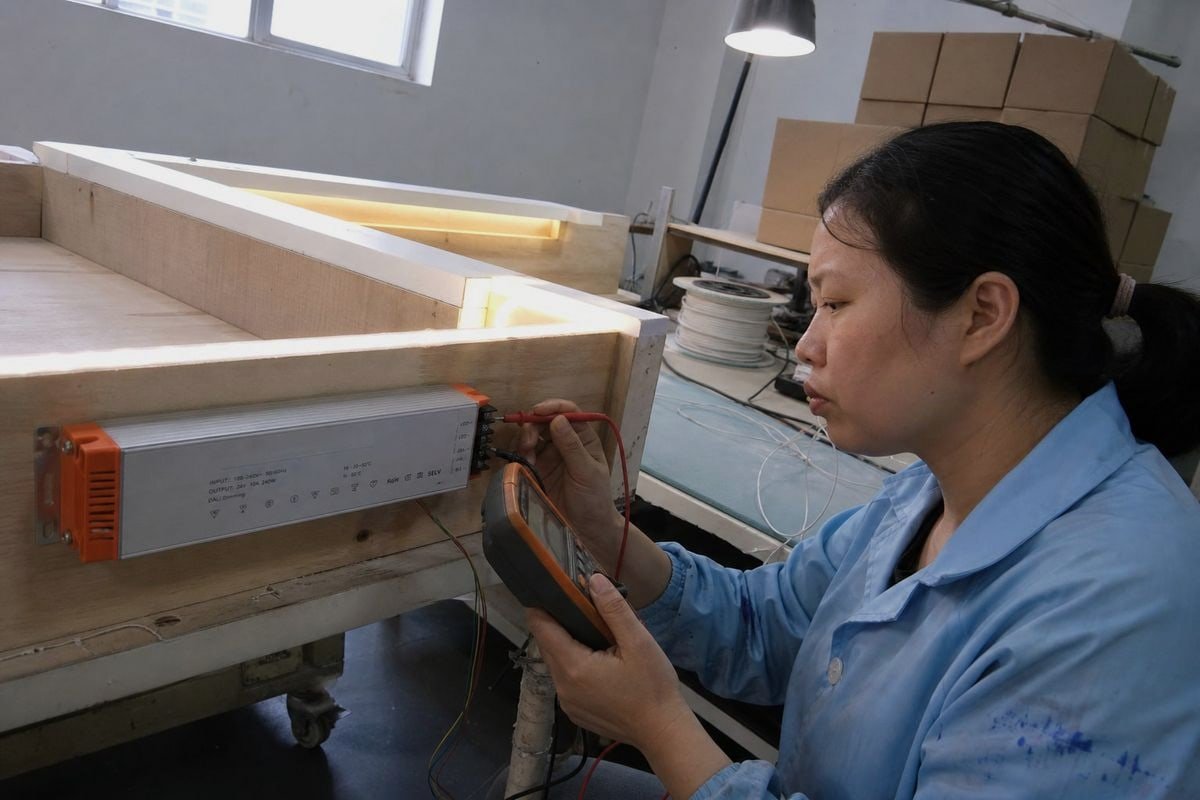
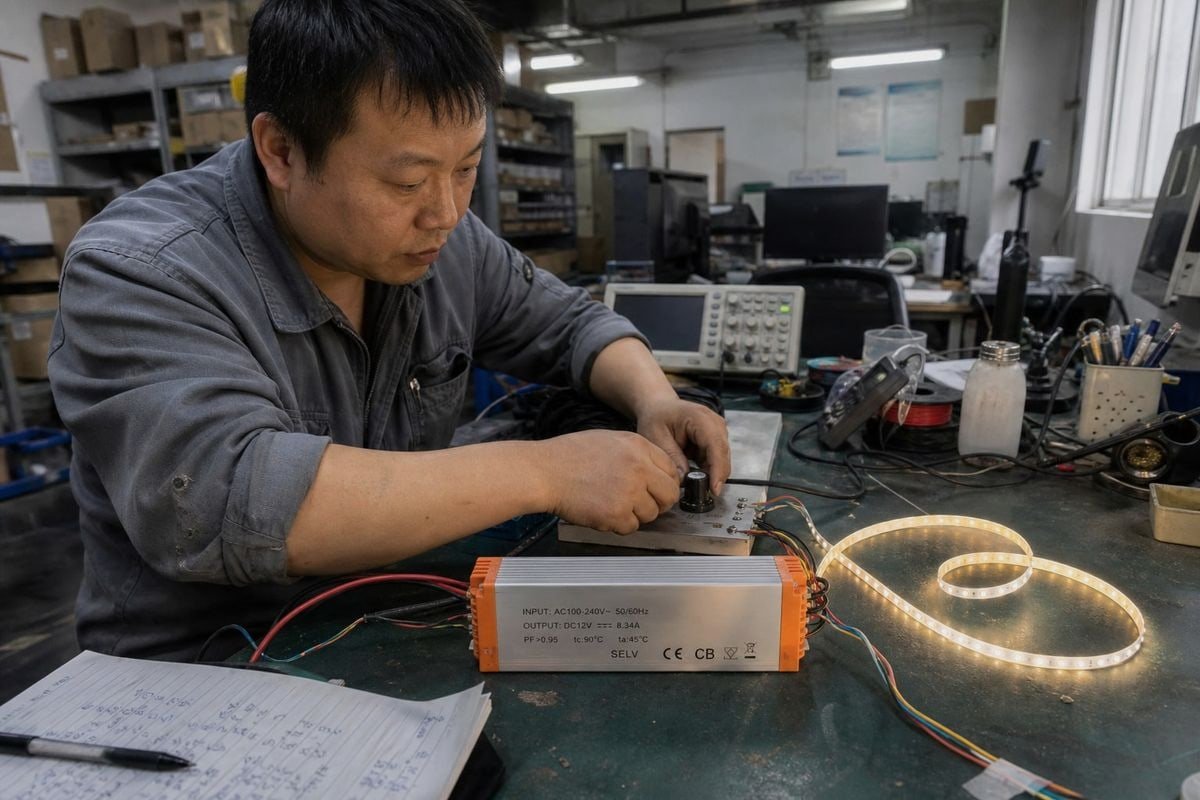
Le strisce LED sono progettate per funzionare a bassa tensione. A striscia a tensione costante da 24 V Si aspetta proprio questo: una tensione di alimentazione stabile a 24 V. Se gli si fornisce una tensione instabile, si ottengono variazioni di colore, luminosità non uniforme lungo la linea o guasti prematuri. Pertanto, il primo compito di un driver CV DALI è di natura elettrica: ricevere una tensione in ingresso di 100-240 V CA e fornire in uscita una tensione continua pulita. Le nostre unità, come il modello a 12 V CC 8,34 A con i marchi SELV, CE e CB stampati sull’involucro, sono progettate proprio per svolgere questo compito specifico.
Il secondo compito è il controllo. È proprio qui che DALI si distingue da un dimmer tradizionale. Un dimmer convenzionale taglia direttamente la forma d'onda della rete elettrica. Un driver DALI, invece, riceve comandi di regolazione dell'intensità luminosa in formato digitale tramite una bus a due fili 1 e regola con precisione la potenza erogata alla striscia. La regolazione dell'intensità luminosa avviene sul lato a bassa tensione, solitamente tramite PWM, in modo che la striscia riceva sempre la tensione corretta.
Perché questo abbinamento funziona così bene
| Requisiti delle strisce LED | Come risponde un driver CV DALI |
|---|---|
| Alimentazione stabile a 12 V o 24 V | Uscita CC a tensione costante regolata |
| Regolazione graduale dell'intensità luminosa senza variazioni di colore | Uscita PWM sul lato CC, senza modulazione della tensione di rete |
| Controllo per zona e per scena | Controllo dell'illuminazione indirizzabile tramite il bus DALI |
| Installazione sicura | Uscita SELV, protezione integrata da cortocircuito e sovraccarico |
| Cablaggio semplice | Un unico dispositivo gestisce l'alimentazione e la regolazione dell'intensità luminosa; bus indipendente dalla polarità |
Si tratta di una categoria di prodotti ben definita, non di una soluzione di ripiego. Questi prodotti sono espressamente progettati e certificati come alimentatori DALI a tensione costante per applicazioni lineari quali l’illuminazione di cornici, il wall washing, i corrimano e i soffitti luminosi. In base alla nostra esperienza nell’esportazione in Europa e nel Sud-Est asiatico, è proprio in questi progetti architettonici lineari che si concentra la domanda.
Come faccio a scegliere il driver CV DALI più adatto al mio progetto con strisce LED?
Il compromesso che valutiamo più spesso con gli acquirenti è quello tra capacità e numero di canali. Una singola unità ad alta potenza è più economica per watt, ma i driver multicanale consentono di gestire l’RGBW e il bianco regolabile da un unico indirizzo.
Scegliere un driver CV DALI in base alla tensione della striscia (12 V o 24 V), dimensionando la potenza in modo da garantire un margine di 20% rispetto al carico totale della striscia, verificando la conformità al protocollo DALI-2 e selezionando il modello DT6 per le strisce monocolore o il modello DT8 per quelle con luce bianca regolabile e RGBW.
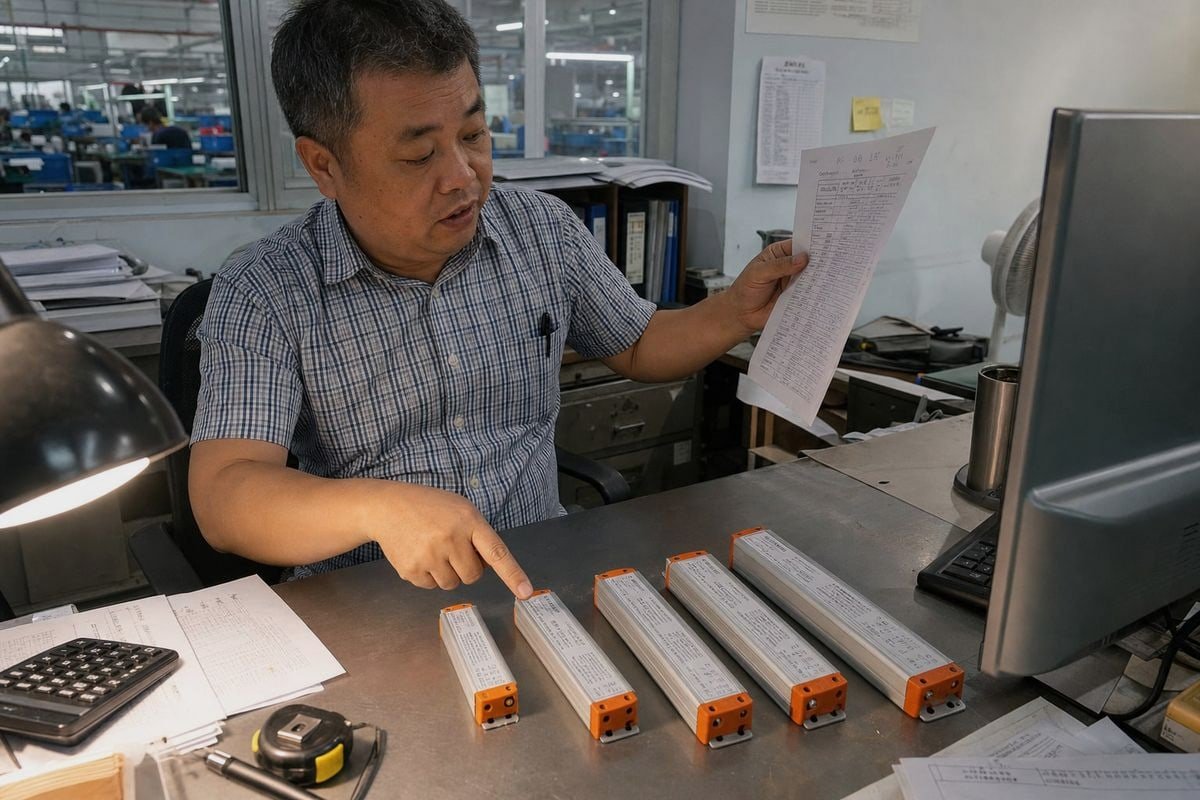
La selezione parte da tre parametri fondamentali: tensione, corrente e carico totale. Se uno qualsiasi di questi valori è errato, il sistema non funziona correttamente o smette di funzionare. Quando i nostri ingegneri esaminano la distinta base di un cliente, seguiamo questa sequenza:
- Regolare la tensione. Un driver da 24 V collegato a una striscia da 12 V la danneggia irreparabilmente. Un driver da 12 V collegato a una striscia da 24 V la illumina a malapena.
- Calcolare la potenza totale. Moltiplicare i watt per metro della striscia per la lunghezza totale, quindi aggiungere un margine di circa 20%. Gli amplificatori disponibili sul mercato vanno da piccole unità da 12 W fino a modelli da 90 W, 100 W, 160 W, 200 W e unità multicanale di potenza ancora maggiore, quindi esiste una potenza nominale adatta praticamente a qualsiasi installazione.
- Controlla l'intensità di corrente. La nostra unità da 12 V CC e 8,34 A, ad esempio, è in grado di gestire senza problemi circa 100 W di strisce a 12 V, rispettando tale margine di sicurezza.
- Verificare la versione del protocollo. La conformità al protocollo DALI-2, basata sullo standard IEC 62386, è ormai lo standard di riferimento del mercato. Garantisce l'interoperabilità tra driver, sensori e controller di diversi produttori.
- Scegli il tipo di dispositivo giusto. Questo aspetto è più importante di quanto la maggior parte degli acquirenti creda.
DT6 vs DT8: quale tipo di dispositivo ti serve?
| Fattore | DT6 | DT8 |
|---|---|---|
| Ideale per | Strisce monocolore bianche | Controllo del bianco regolabile, RGBW |
| Indirizzi DALI utilizzati | Uno per canale | Uno per ogni apparecchio |
| Controllo del colore | Non nativo; richiede più indirizzi | Native, tramite lo standard DALI DT8 |
| Impatto sulla capacità del sistema | Consuma rapidamente gli indirizzi in modalità multicanale | Mantiene la capacità degli autobus |
Vale la pena specificare il supporto DT8 ogni volta che la temperatura di colore o l’RGBW rientrano nei piani di sviluppo, poiché lo standard DALI DT8 gestisce tutti i canali tramite un unico indirizzo. Su un bus limitato a 64 indirizzi, questo risparmio in termini di capacità si traduce in un risparmio concreto in termini economici nei progetti di grandi dimensioni.
Infine, consideriamo l’architettura. Alcuni progetti utilizzano un controller PWM DALI separato, abbinato a un alimentatore CC, anziché un driver CV DALI integrato. Questa soluzione modulare può essere adatta agli interventi di retrofit in presenza di alimentatori già esistenti. Tuttavia, per le nuove installazioni, il driver integrato riduce il cablaggio, lo spazio occupato nell’involucro e i punti di guasto: ecco perché la maggior parte dei nostri clienti OEM lo richiede espressamente.
I driver CV DALI possono migliorare le prestazioni di regolazione dell'intensità luminosa nei miei sistemi a strisce LED?
Durante una delle nostre sessioni di calibrazione a Shenzhen, abbiamo filmato l'output della striscia con la fotocamera di un telefono a ogni livello di regolazione della luminosità. L'effetto "banding" nel video è il modo più veloce per evidenziare un basso Frequenza di modulazione PWM 2.
Sì. I driver CV DALI ottimizzano la regolazione dell'intensità luminosa grazie al PWM ad alta frequenza, che garantisce un funzionamento privo di sfarfallio, a una curva di regolazione logaritmica che si adatta alla risposta dell'occhio umano e a ampi intervalli di regolazione compresi tra 0,1% e 100%. I comandi digitali assicurano inoltre che i livelli di regolazione siano ripetibili e sincronizzati in ogni zona.
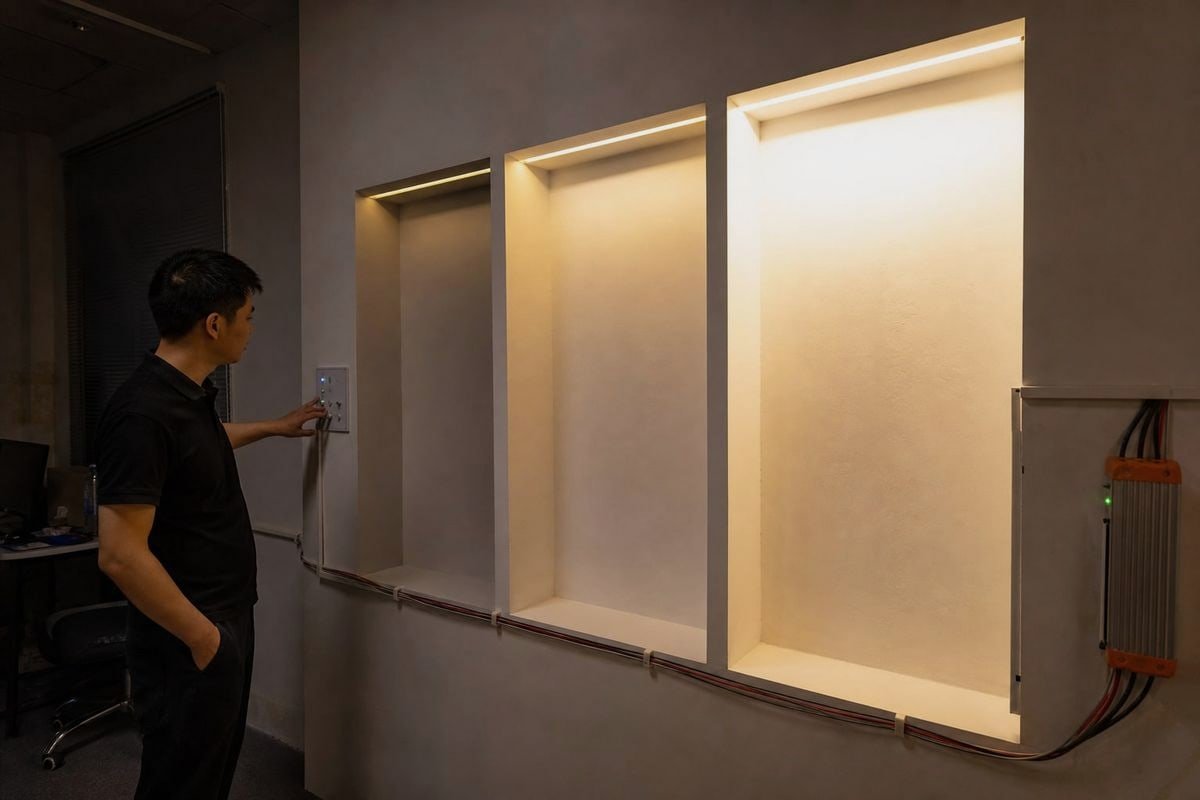
È proprio nella qualità della regolazione dell'intensità luminosa che i driver CV DALI dimostrano il loro valore aggiunto, grazie a tre meccanismi fondamentali.
PWM ad alta frequenza e sfarfallio
I controller PWM economici commutano a poche centinaia di hertz. Ciò si manifesta con un effetto stroboscopico e risulta particolarmente evidente nelle riprese video sotto forma di bande da rolling shutter. I driver DALI di qualità portano la frequenza di regolazione PWM oltre i 2 kHz, mentre i modelli di fascia alta raggiungono i 20 kHz o più, eliminando così le strisce durante la registrazione video ad alta definizione. Per i nostri clienti che riforniscono hotel, studi televisivi e spazi commerciali, l’assenza di sfarfallio non è un lusso, ma un requisito tecnico previsto dal bando di gara.
La curva di regolazione logaritmica
L'occhio umano percepisce la luminosità in modo logaritmico, non lineare. La regolazione dell'intensità luminosa DALI utilizza un curva di regolazione della luminosità logaritmica 3 per come è stato progettato, quindi un passaggio da 1% a 2% risulta simile, in termini di entità, a un passaggio da 50% a 100%. Il risultato pratico: dissolvenze fluide e naturali nella fascia bassa, dove i dimmer lineari risultano a scatti. In combinazione con intervalli di regolazione da 0,1% a 100%, ciò consente di ottenere i livelli di illuminazione notturna delicati richiesti dai progettisti architettonici.
Ripetibilità e feedback
La regolazione analogica presenta delle derive. I comandi digitali no. Quando una scena richiede 37%, ogni driver sul bus imposta 37%, ogni volta, in ogni zona. DALI-2 offre inoltre una comunicazione bidirezionale, consentendo al driver di segnalare il consumo energetico e gli errori al sistema di automazione dell'edificio in tempo reale sistemi di automazione degli edifici 4 diagnostica. In questo modo, la regolazione dell'intensità luminosa non è più una questione di approssimazione, ma diventa una funzione misurata e monitorata.
Cosa devo verificare quando acquisto driver CV DALI per ordini all’ingrosso di strisce LED?
Una responsabile degli acquisti mi ha raccontato una volta su WhatsApp che gli autisti del suo precedente fornitore avevano superato la fase di selezione iniziale, ma poi, dopo tre mesi di lavoro in loco, non avevano superato i controlli a campione. La lezione che ne ha tratto è diventata la nostra lista di controllo per il controllo qualità.
Per gli ordini all'ingrosso, verificare la certificazione DALI-2 e IEC 62386, i marchi di sicurezza SELV e CE/CB, le funzioni di protezione integrate, le specifiche relative alla frequenza PWM, i test di controllo qualità a livello di lotto, la capacità di personalizzazione OEM/ODM e i tempi di consegna realistici. Testare sempre i campioni di produzione, non solo i campioni di riferimento.
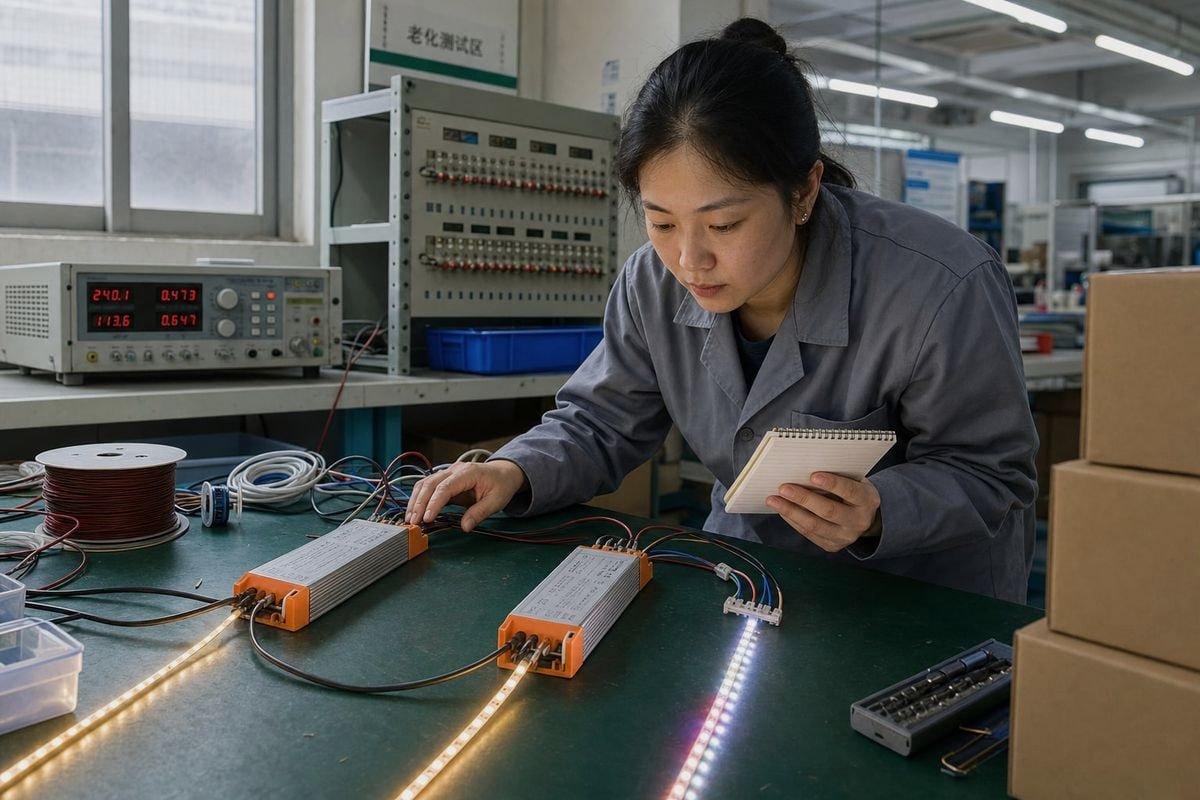
L'approvvigionamento su larga scala è tutta un'altra storia rispetto all'acquisto di dieci unità. Il prezzo unitario è importante, ma il costo totale del progetto — compresi guasti, ritardi e problemi di messa in servizio — lo è ancora di più. Ecco la lista di controllo che consigliamo, basata su dieci anni di esperienza al servizio di distributori e marchi di illuminazione in Europa, Giappone e Sud-Est asiatico.
Lista di controllo per l'approvvigionamento all'ingrosso
| Punto di controllo | Cosa verificare | Perché è importante |
|---|---|---|
| Conformità | Protocollo DALI-2, IEC 62386, CE, CB, SELV | Interoperabilità e accesso legale al mercato |
| Funzioni di protezione | Sovratensione, sovraccarico, sovratemperatura, cortocircuito, ripristino automatico | Affidabilità sul campo e tassi di RMA più bassi |
| Specifiche PWM | Frequenza indicata per iscritto, preferibilmente superiore a 2 kHz | Il funzionamento senza sfarfallio non è garantito dal solo “DALI” |
| Fattore di forma | Corpi snelli per apparecchi da incasso e lineari | L'integrazione fisica è fondamentale quanto le funzionalità di controllo |
| Personalizzazione | Stampa del logo, etichette, impostazioni predefinite del firmware, imballaggio | Indispensabile per i programmi di rivendita a marchio proprio |
| Controllo qualità in lotti | Prove di invecchiamento, controlli di tolleranza in uscita, rapporti documentati | I campioni "Golden" non dimostrano l'uniformità del lotto |
| Assistenza | Linee guida sul cablaggio, consigli sulla topologia del cablaggio del bus, tempi di risposta del servizio post-vendita | È proprio durante la fase di messa in servizio che i progetti non rispettano le scadenze |
Due punti meritano di essere sottolineati. Innanzitutto, informatevi sul comportamento del driver in condizioni estreme: cosa succede in caso di cortocircuito e si ripristina automaticamente? I dispositivi affidabili integrano di serie protezioni contro sovratensione, sovraccarico, sovratemperatura e cortocircuito. In secondo luogo, verificate la praticità di installazione. Il bus DALI è un sistema di cablaggio a due fili indipendente dalla polarità che può essere posato nello stesso condotto dell’alimentazione di rete, mentre il raggruppamento basato su software consente agli integratori di riconfigurare le zone senza dover ricablare. Tuttavia, il fornitore dovrebbe comunque fornire consulenza sulla topologia del cablaggio del bus e sul flusso di lavoro di indirizzamento, poiché il supporto alla messa in servizio è ciò che garantisce il rispetto delle scadenze serrate del progetto.
Un avvertimento sincero da parte nostra: non tutti i progetti richiedono il DALI. Per un piccolo intervento su una singola zona, un semplice alimentatore a tensione costante con un semplice dimmer PWM è più economico e veloce da installare. Lo diciamo apertamente ai nostri clienti. Il DALI si rivela vantaggioso quando servono un controllo illuminotecnico indirizzabile, più zone, la creazione di scenari, il «tunable white» o l’integrazione con un sistema di automazione degli edifici — caratteristiche che descrivono la maggior parte dei progetti commerciali e nel settore alberghiero, ma non ogni striscia luminosa decorativa in ambito residenziale.
Conclusione
I driver CV DALI risolvono due problemi contemporaneamente: alimentazione stabile a bassa tensione e controllo digitale standardizzato. Verificate la compatibilità di tensione e potenza nominale con il margine di potenza disponibile, richiedete la conformità allo standard DALI-2 e verificate il controllo qualità del lotto prima di effettuare l'ordine.
Note a piè di pagina
1. Documento ufficiale della DALI Alliance che descrive l'interfaccia fisica a due fili del bus. ↩︎
2. Spiegazione tecnica di come la frequenza PWM influisca sull'emissione luminosa e sullo sfarfallio. ↩︎
3. Principio scientifico che spiega perché DALI utilizza una curva logaritmica per la percezione della luminosità. ↩︎
4. Fonte ufficiale .gov del Dipartimento dell'Energia che definisce i sistemi di controllo e automazione degli edifici. ↩︎