













Bộ điều khiển CV DALI liên tục xuất hiện trong các thông số kỹ thuật dự án mà đội ngũ tại Thâm Quyến của chúng tôi nhận được, và nhiều khách hàng vẫn thắc mắc tại sao một bộ nguồn đơn giản lại không đủ cho dải đèn LED.
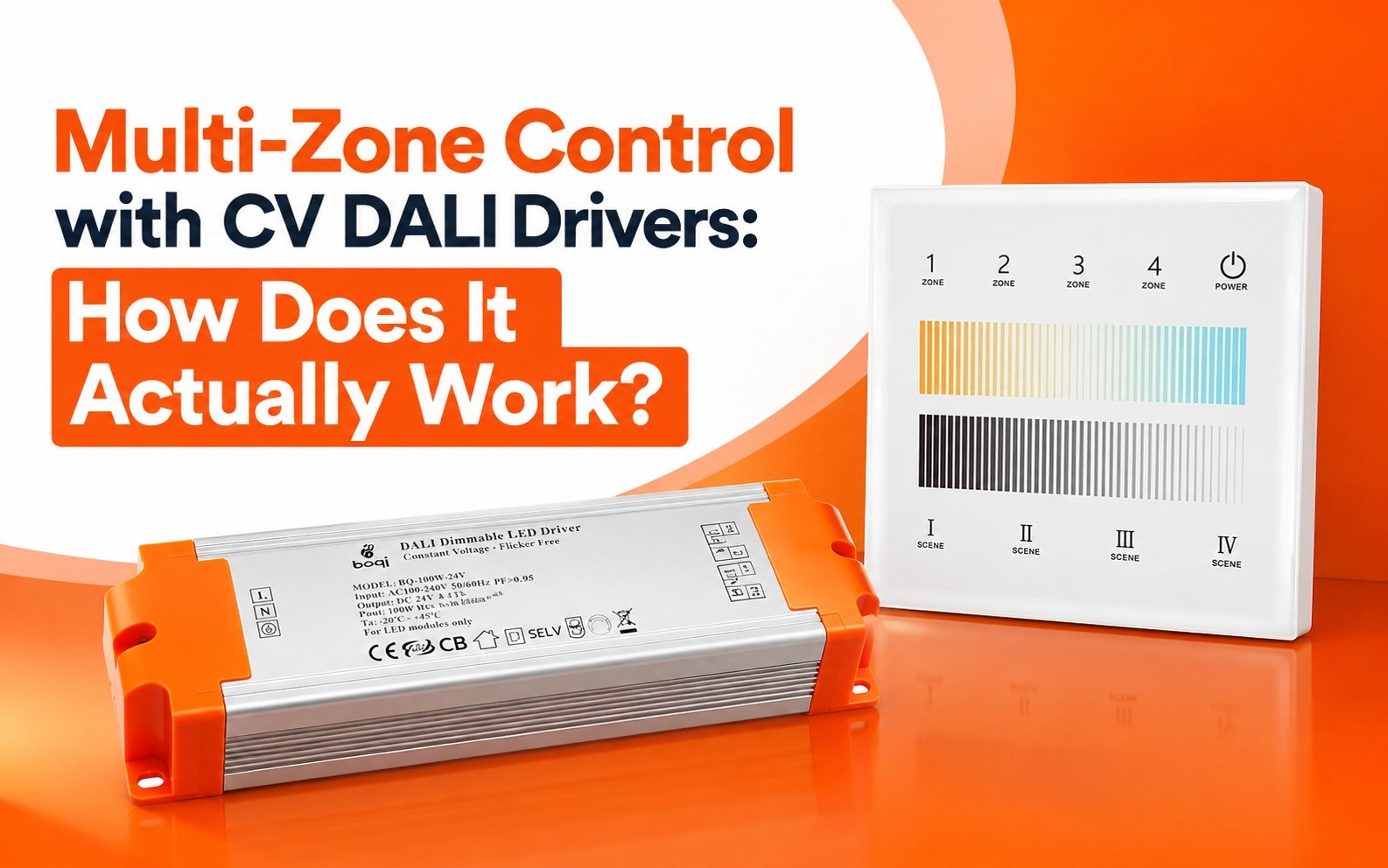
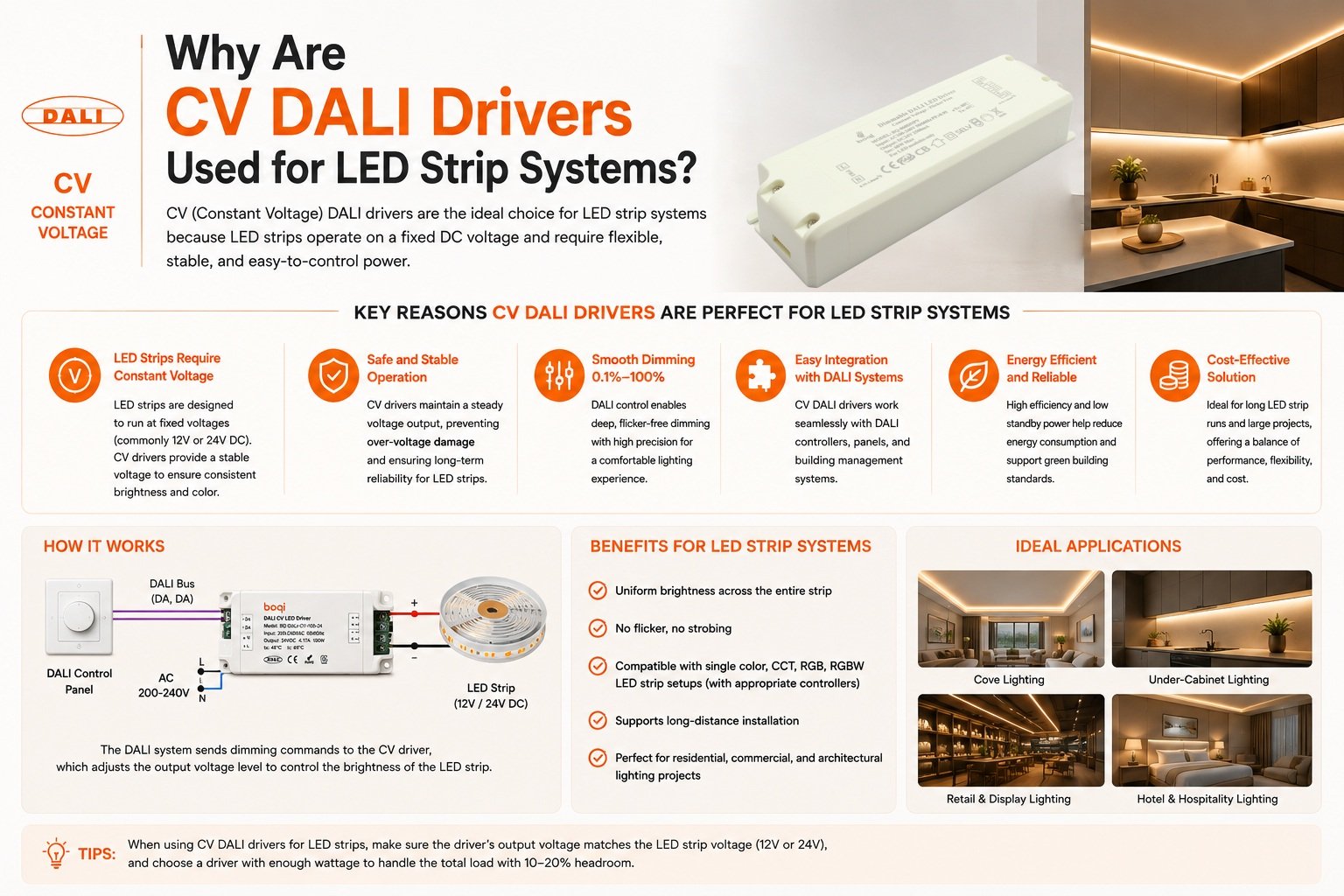
Bộ điều khiển CV DALI được sử dụng cho hệ thống dải đèn LED vì chúng chuyển đổi điện áp xoay chiều (AC mains) thành đầu ra điện áp một chiều (DC) ổn định, đồng thời tiếp nhận lệnh điều khiển làm mờ kỹ thuật số DALI. Điều này mang lại khả năng làm mờ mượt mà, lặp lại chính xác, điều khiển vùng theo địa chỉ, và tích hợp sạch sẽ với hệ thống tự động hóa tòa nhà, tất cả từ một thiết bị duy nhất.
Câu trả lời ngắn gọn đó đề cập đến phần “cái gì”. Phần còn lại của bài viết này giải thích “tại sao” theo các thuật ngữ thực tế. Tôi sẽ hướng dẫn từng bước về lựa chọn, hiệu suất làm mờ, và kiểm tra nguồn cung ứng.
Điều gì khiến Bộ điều khiển CV DALI trở nên lý tưởng cho các ứng dụng dải đèn LED?
Một nhà phân phối tại Singapore từng gửi cho chúng tôi một mẫu đèn chiếu sáng hốc tường bị lỗi. Dải đèn thì tốt. Vấn đề nằm ở bộ điều chỉnh độ sáng nguồn điện xoay chiều (mains dimmer) cắt xén dạng sóng cấp cho một bộ nguồn cơ bản. Công việc đó đã dạy cho đội ngũ của chúng tôi rất nhiều điều.
Bộ điều khiển CV DALI phù hợp với dải đèn LED vì dải đèn cần nguồn điện áp thấp, điện áp không đổi, thường là 12V hoặc 24V, và không thể kết nối trực tiếp với nguồn điện xoay chiều. Bộ điều khiển cung cấp điện áp ổn định và tiếp nhận lệnh điều khiển làm mờ kỹ thuật số, do đó một thiết bị vừa cấp nguồn vừa điều khiển dải đèn một cách sạch sẽ.
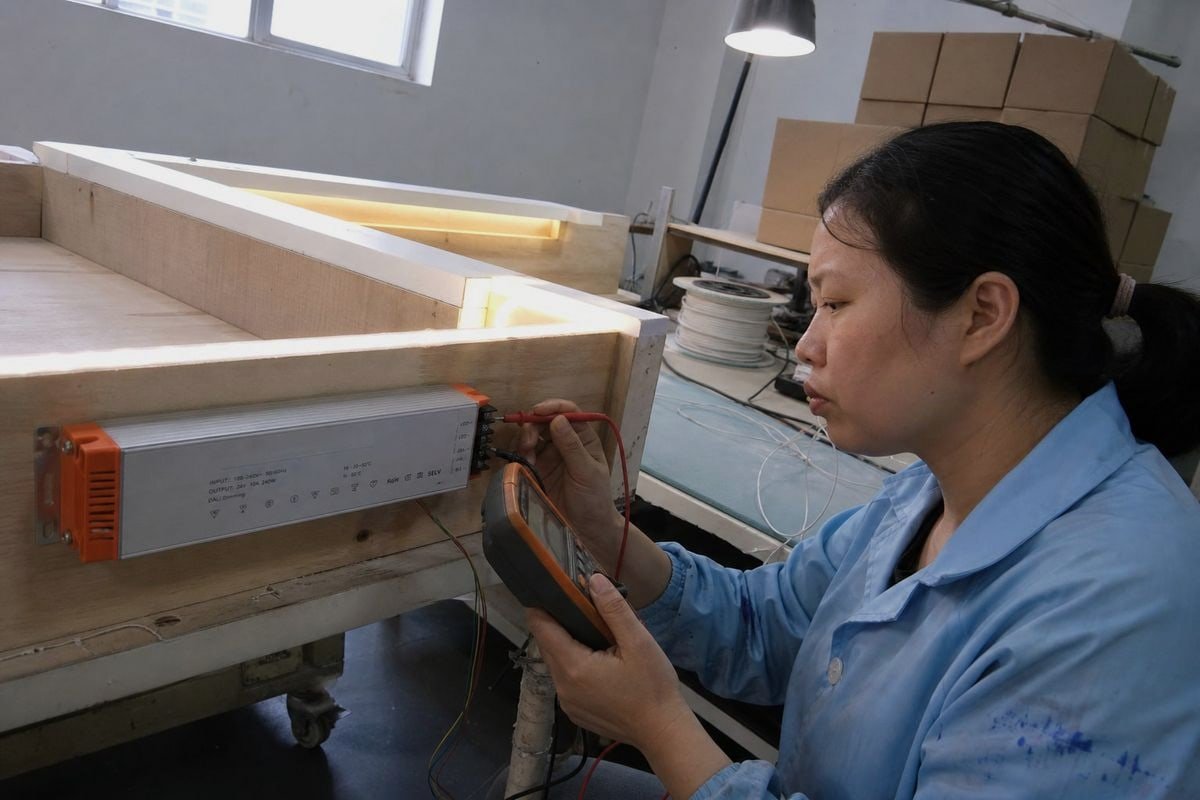
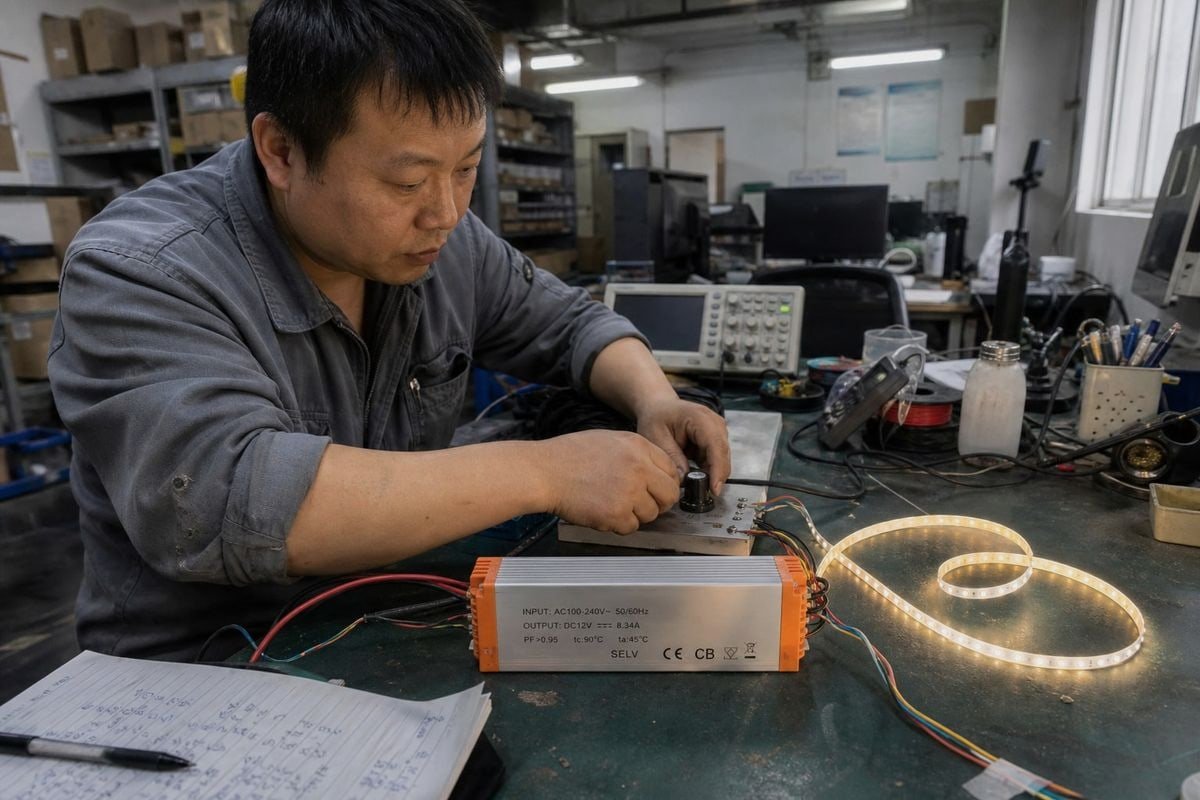
Dải đèn LED được thiết kế cho hoạt động điện áp thấp. Một dải đèn điện áp không đổi 24V mong đợi chính xác điều đó: một đường ray 24V ổn định. Cấp bất cứ thứ gì không ổn định, bạn sẽ gặp hiện tượng lệch màu, độ sáng không đồng đều dọc theo dải, hoặc hỏng hóc sớm. Vì vậy, công việc đầu tiên của bộ điều khiển CV DALI là về điện: nhận AC100-240V đầu vào, cung cấp DC sạch đầu ra. Các thiết bị của chúng tôi, như model DC12V 8.34A với chứng nhận SELV, CE và CB in trên vỏ, được thiết kế cho chính xác nhiệm vụ đó.
Công việc thứ hai là điều khiển. Đây là nơi DALI tách biệt khỏi một bộ điều chỉnh độ sáng thông thường. Bộ điều chỉnh độ sáng thông thường trực tiếp cắt xén dạng sóng nguồn điện xoay chiều. Ngược lại, bộ điều khiển DALI tiếp nhận lệnh điều khiển làm mờ kỹ thuật số qua bus hai dây 1 và điều chỉnh chính xác đầu ra cho dải đèn. Việc làm mờ xảy ra ở phía điện áp thấp, thường thông qua PWM, do đó dải đèn luôn nhận được điện áp chính xác.
Tại sao sự kết hợp này hoạt động hiệu quả đến vậy
| Yêu cầu của dải đèn LED | Bộ điều khiển CV DALI đáp ứng như thế nào |
|---|---|
| Nguồn cung cấp 12V hoặc 24V ổn định | Đầu ra DC điện áp không đổi được điều chỉnh |
| Làm mờ mượt mà không bị lệch màu | Đầu ra PWM ở phía DC, không cắt xén nguồn điện xoay chiều |
| Điều khiển vùng và cảnh | Điều khiển chiếu sáng theo địa chỉ qua bus DALI |
| Lắp đặt an toàn | Đầu ra SELV, bảo vệ ngắn mạch và quá tải tích hợp |
| Đấu dây đơn giản | Một thiết bị vừa cấp nguồn vừa làm mờ; bus không phân cực |
Đây là một danh mục sản phẩm được xác định rõ ràng, không phải là giải pháp tạm thời. Các sản phẩm được xây dựng và chứng nhận rõ ràng như bộ điều khiển DALI điện áp không đổi cho các ứng dụng tuyến tính như chiếu sáng hốc tường, rửa tường, tay vịn, và trần phát sáng. Theo kinh nghiệm xuất khẩu của chúng tôi sang Châu Âu và Đông Nam Á, các công trình kiến trúc tuyến tính này chính là nơi tập trung nhu cầu.
Làm thế nào để chọn đúng Bộ điều khiển CV DALI cho dự án dải đèn LED của tôi?
Sự đánh đổi mà chúng tôi thường cân nhắc nhất với khách hàng là công suất so với số kênh. Một thiết bị công suất cao đơn lẻ rẻ hơn trên mỗi watt, nhưng bộ điều khiển đa kênh mở khóa điều khiển RGBW và trắng điều chỉnh được từ một địa chỉ.
Chọn bộ điều khiển CV DALI bằng cách khớp điện áp của dải đèn (12V hoặc 24V), tính toán công suất với biên độ an toàn 20% trên tổng tải của dải đèn, xác nhận tuân thủ giao thức DALI-2, và chọn DT6 cho dải đèn một màu hoặc DT8 cho dải đèn trắng điều chỉnh được và RGBW.
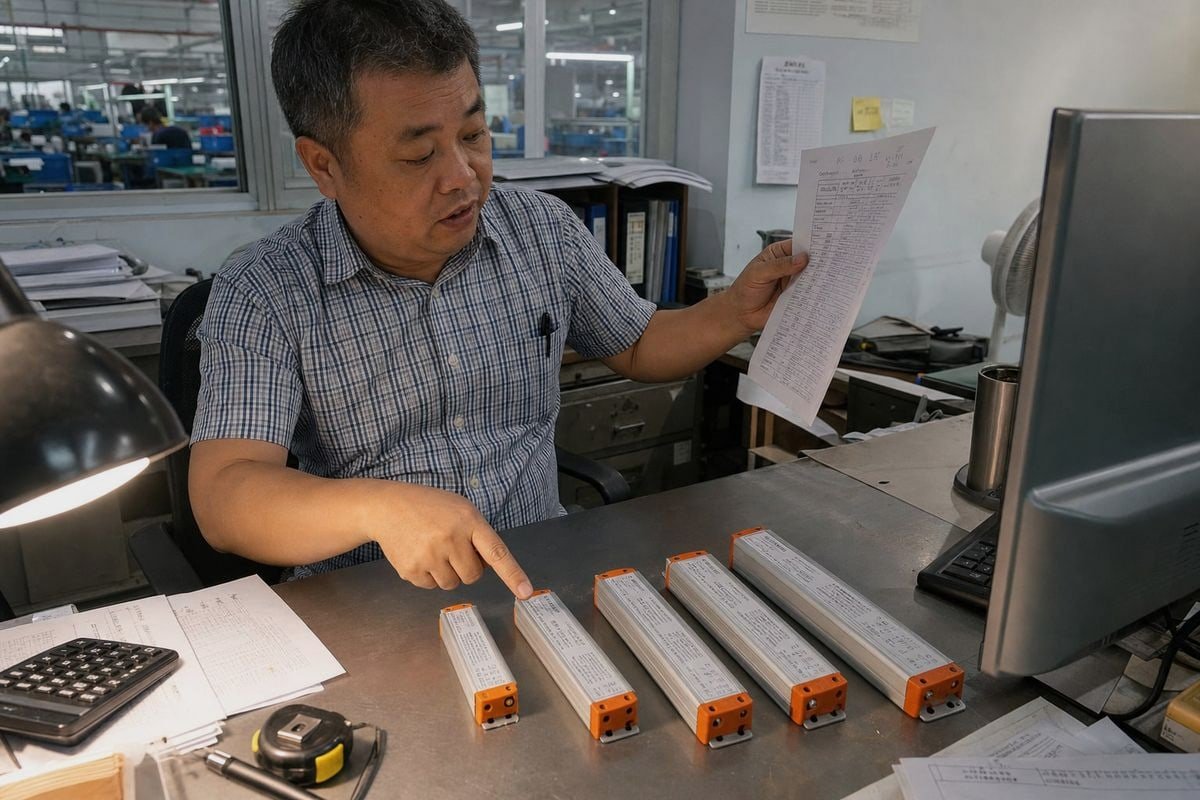
Việc lựa chọn bắt đầu với ba con số quan trọng: điện áp, dòng điện, và tổng tải. Sai bất kỳ điều nào trong số này, hệ thống sẽ hoạt động kém hiệu quả hoặc hỏng hóc. Khi các kỹ sư của chúng tôi xem xét danh mục vật tư của khách hàng, chúng tôi thực hiện theo trình tự này:
- Khớp điện áp. Bộ điều khiển 24V trên dải đèn 12V sẽ phá hủy nó. Bộ điều khiển 12V trên dải đèn 24V gần như không làm nó sáng.
- Tính tổng công suất. Nhân watt-mỗi-mét của dải đèn với tổng chiều dài, sau đó cộng thêm khoảng 20% biên độ an toàn. Các bộ điều khiển trên thị trường có công suất từ các đơn vị nhỏ 12W lên đến 90W, 100W, 160W, 200W, và các đơn vị đa kênh lớn hơn, do đó có một định mức cho hầu hết mọi chiều dài dải đèn.
- Kiểm tra định mức dòng điện. Ví dụ, bộ nguồn DC12V 8.34A của chúng tôi xử lý khoảng 100W dải đèn 12V một cách thoải mái trong quy tắc biên độ dự phòng đó.
- Xác nhận phiên bản giao thức. Tuân thủ giao thức DALI-2, được xây dựng trên tiêu chuẩn IEC 62386, hiện là chuẩn mực thị trường. Nó đảm bảo khả năng tương tác giữa bộ điều khiển, cảm biến và bộ điều khiển từ các nhà sản xuất khác nhau.
- Chọn đúng loại thiết bị. Điều này quan trọng hơn hầu hết người mua nhận ra.
DT6 so với DT8: Bạn cần loại thiết bị nào?
| Yếu tố | DT6 | DT8 |
|---|---|---|
| Tốt nhất cho | Dải đèn trắng một màu | Điều khiển trắng điều chỉnh được, RGBW |
| Địa chỉ DALI được sử dụng | Một địa chỉ mỗi kênh | Một địa chỉ mỗi bộ đèn |
| Điều khiển màu sắc | Không tự nhiên; cần nhiều địa chỉ | Tự nhiên, thông qua tiêu chuẩn DALI DT8 |
| Tác động đến dung lượng hệ thống | Tiêu thụ địa chỉ nhanh trên hệ thống đa kênh | Bảo toàn dung lượng bus |
Hỗ trợ DT8 đáng được chỉ định bất cứ khi nào nhiệt độ màu hoặc RGBW nằm trong lộ trình phát triển, vì tiêu chuẩn DALI DT8 quản lý tất cả các kênh dưới một địa chỉ duy nhất. Trên bus giới hạn 64 địa chỉ, việc tiết kiệm dung lượng đó là chi phí thực tế cho các dự án lớn.
Cuối cùng, hãy xem xét kiến trúc. Một số dự án sử dụng bộ điều khiển DALI PWM riêng biệt cộng với nguồn DC thay vì bộ điều khiển CV DALI tích hợp. Cách tiếp cận mô-đun đó có thể phù hợp cho việc nâng cấp với nguồn điện hiện có. Nhưng đối với lắp đặt mới, bộ điều khiển tích hợp giảm dây điện, không gian vỏ và điểm hỏng hóc — đó là lý do tại sao hầu hết khách hàng OEM của chúng tôi chỉ định nó.
Bộ điều khiển CV DALI có thể cải thiện hiệu suất làm mờ trong hệ thống dải đèn LED của tôi không?
Trong một buổi hiệu chuẩn tại Thâm Quyến, chúng tôi đã quay video đầu ra dải đèn qua camera điện thoại ở mỗi bước điều chỉnh độ sáng. Hiện tượng vệt sọc trên video là cách nhanh nhất để phát hiện tần số PWM điều chế độ sáng thấp. 2.
Có. Bộ điều khiển CV DALI cải thiện độ mờ thông qua PWM tần số cao để hoạt động không nhấp nháy, đường cong điều chỉnh độ sáng logarit phù hợp với phản ứng của mắt người và dải điều chỉnh sâu từ 0,1% đến 100%. Lệnh kỹ thuật số cũng làm cho mức độ mờ lặp lại và đồng bộ trên mọi khu vực.
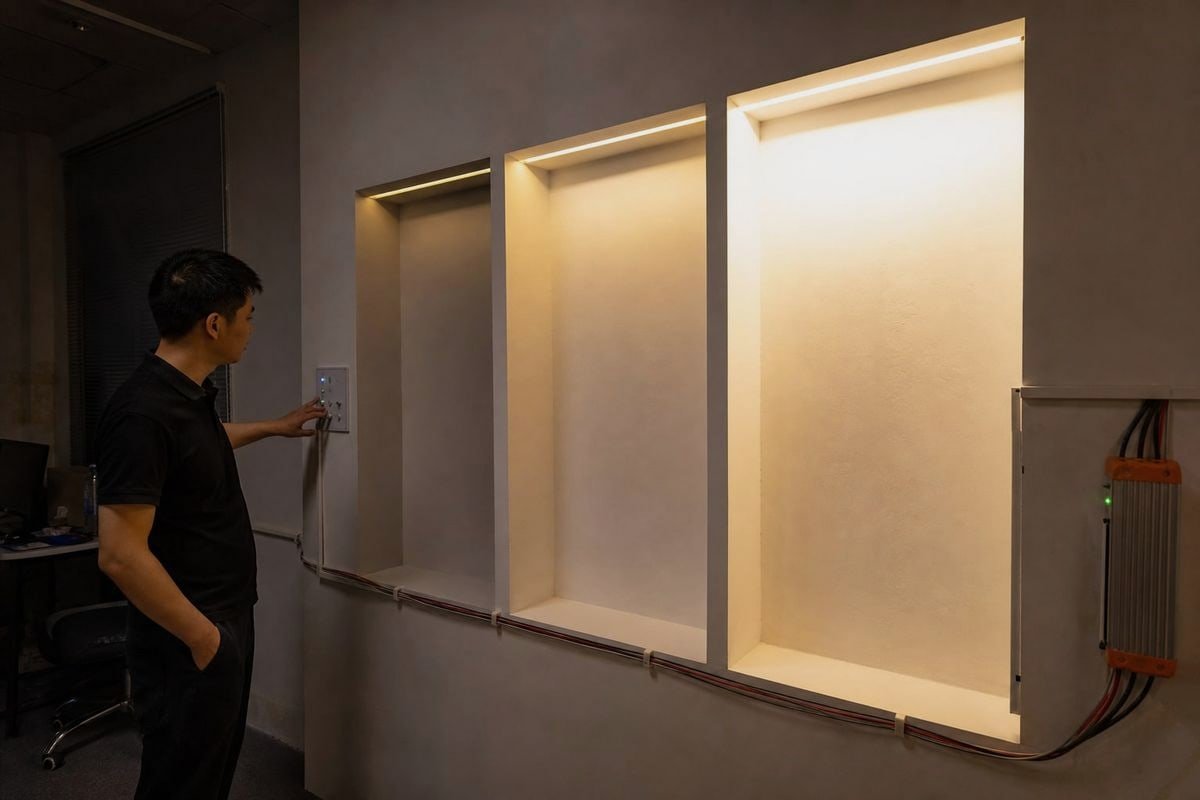
Chất lượng điều chỉnh độ sáng là nơi bộ điều khiển CV DALI tạo ra giá trị cao cấp của chúng, và nó phụ thuộc vào ba cơ chế.
PWM tần số cao và hiện tượng nhấp nháy
Bộ điều khiển PWM giá rẻ chuyển mạch ở vài trăm hertz. Điều đó hiển thị như hiệu ứng nhấp nháy và hiện rõ trên camera dưới dạng vệt sọc do màn trập quay. Bộ điều khiển DALI chất lượng đẩy tần số điều chế PWM lên trên 2kHz, và các đơn vị cao cấp đạt 20kHz hoặc cao hơn, loại bỏ vệt sọc trong quá trình ghi video độ nét cao. Đối với khách hàng của chúng tôi cung cấp cho khách sạn, phòng phát sóng và không gian bán lẻ, hoạt động không nhấp nháy không phải là xa xỉ — đó là yêu cầu kỹ thuật được ghi trong hồ sơ thầu.
Đường cong làm mờ logarit
Mắt người cảm nhận độ sáng theo logarit, không phải tuyến tính. Điều chỉnh độ sáng DALI sử dụng đường cong điều chỉnh độ sáng logarit 3 theo thiết kế, vì vậy sự thay đổi từ 1% đến 2% cảm thấy tương tự về độ lớn với sự thay đổi từ 50% đến 100%. Kết quả thực tế: chuyển mờ mượt mà, tự nhiên ở mức thấp, nơi bộ điều chỉnh tuyến tính cảm thấy giật cục. Kết hợp với dải điều chỉnh từ 0,1% đến 100%, điều này cho phép mức cảnh đêm tinh tế mà các nhà thiết kế kiến trúc yêu cầu.
Khả năng lặp lại và phản hồi
Điều chỉnh analog trôi dạt. Lệnh kỹ thuật số thì không. Khi một cảnh yêu cầu 37%, mọi bộ điều khiển trên bus đạt 37%, mọi lúc, trên mọi khu vực. DALI-2 cũng mang lại giao tiếp hai chiều, vì vậy bộ điều khiển có thể báo cáo mức tiêu thụ điện và lỗi trở lại hệ thống quản lý tòa nhà để tự động hóa tòa nhà 4 chẩn đoán theo thời gian thực. Điều đó biến việc điều chỉnh độ sáng từ phỏng đoán thành chức năng đo lường và giám sát.
Tôi nên kiểm tra những gì khi tìm nguồn cung ứng Bộ điều khiển CV DALI cho các đơn hàng dải đèn LED số lượng lớn?
Một quản lý mua hàng từng nói với tôi qua WhatsApp rằng bộ điều khiển từ nhà cung cấp trước của cô ấy đã vượt qua giai đoạn mẫu, sau đó thất bại hàng loạt sau ba tháng tại hiện trường. Bài học của cô ấy đã trở thành danh sách kiểm tra QC của chúng tôi.
Đối với đơn hàng số lượng lớn, hãy xác minh chứng nhận DALI-2 và IEC 62386, dấu an toàn SELV và CE/CB, tính năng bảo vệ tích hợp, thông số tần số PWM, kiểm tra QC theo lô, khả năng tùy chỉnh OEM/ODM và thời gian giao hàng thực tế. Luôn kiểm tra mẫu sản xuất, không chỉ mẫu vàng.
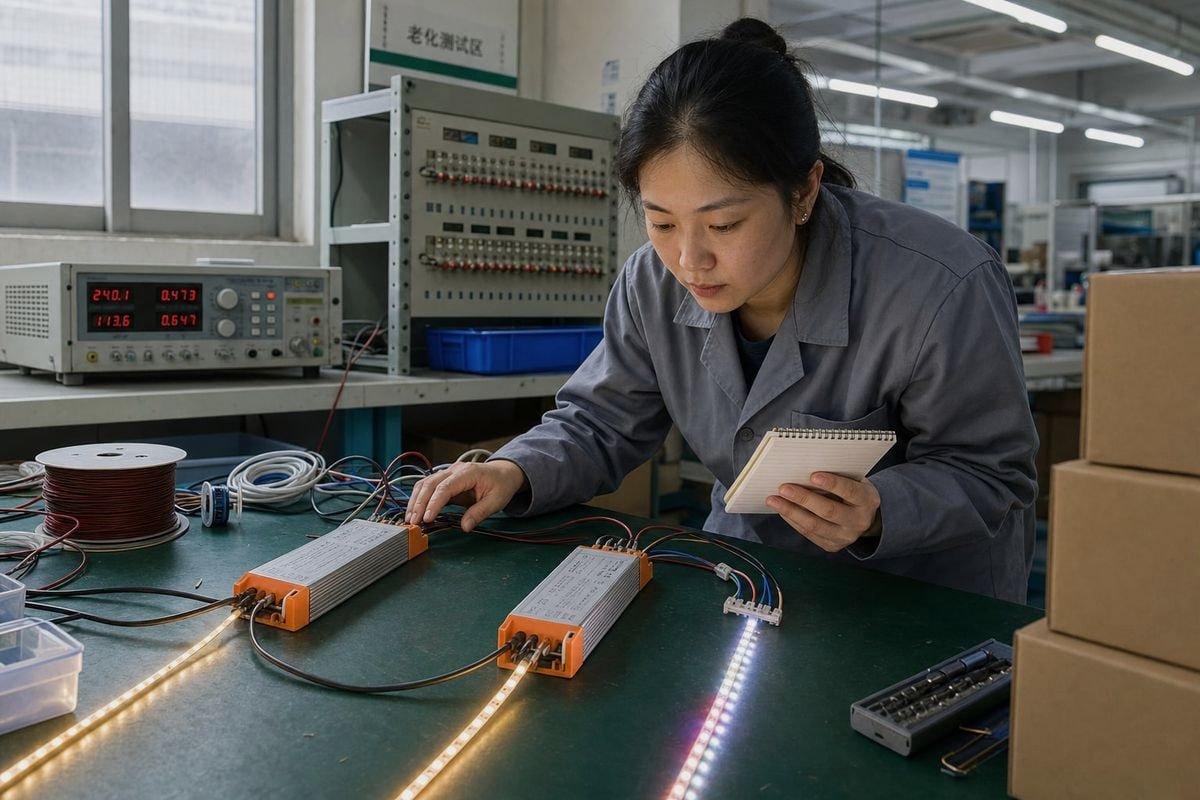
Tìm nguồn cung ở quy mô lớn là một trò chơi khác so với mua mười đơn vị. Giá đơn vị quan trọng, nhưng tổng chi phí dự án — bao gồm lỗi, trễ và đau đầu khi vận hành — quan trọng hơn. Đây là danh sách kiểm tra chúng tôi khuyến nghị, dựa trên mười năm phục vụ nhà phân phối và thương hiệu chiếu sáng trên khắp Châu Âu, Nhật Bản và Đông Nam Á.
Danh sách kiểm tra tìm nguồn cung ứng số lượng lớn
| Điểm kiểm tra | Những gì cần xác minh | Tại sao điều này quan trọng |
|---|---|---|
| Tuân thủ | Giao thức DALI-2, IEC 62386, CE, CB, SELV | Khả năng tương tác và tiếp cận thị trường hợp pháp |
| Tính năng bảo vệ | Quá áp, quá tải, quá nhiệt, ngắn mạch, tự phục hồi | Độ tin cậy hiện trường và tỷ lệ RMA thấp hơn |
| Thông số PWM | Tần số được ghi rõ bằng văn bản, lý tưởng trên 2kHz | Hoạt động không nhấp nháy không được đảm bảo chỉ bằng “DALI” |
| Hình dạng | Vỏ mỏng cho đèn hắt và đèn tuyến tính | Tích hợp vật lý quan trọng không kém tính năng điều khiển |
| Tùy biến | In logo, nhãn mác, cài đặt mặc định firmware, bao bì | Cần thiết cho chương trình bán lại theo nhãn riêng |
| Kiểm soát chất lượng theo lô | Kiểm tra già hóa, kiểm tra dung sai đầu ra, báo cáo tài liệu | Mẫu chuẩn không chứng minh được tính đồng nhất của lô hàng |
| Hỗ trợ | Hướng dẫn đấu dây, tư vấn cấu trúc bus, thời gian phản hồi sau bán hàng | Giai đoạn vận hành thử là nơi dự án thường trễ tiến độ |
Hai điểm cần nhấn mạnh. Thứ nhất, hãy hỏi về hành vi của driver ở các điều kiện biên: điều gì xảy ra khi ngắn mạch, và nó có tự phục hồi không? Các thiết bị uy tín tích hợp bảo vệ quá áp, quá tải, quá nhiệt và ngắn mạch làm tiêu chuẩn. Thứ hai, kiểm tra tính khả thi khi lắp đặt. Bus DALI là cáp hai dây không phân cực, có thể chạy chung ống luồn với nguồn điện chính, và việc nhóm theo phần mềm cho phép nhà tích hợp cấu hình lại các khu vực mà không cần đấu lại dây. Nhưng nhà cung cấp của bạn vẫn nên tư vấn về cấu trúc bus và quy trình địa chỉ hóa, vì hỗ trợ vận hành thử là yếu tố giữ tiến độ dự án không bị trễ.
Một lưu ý thẳng thắn từ phía chúng tôi: không phải dự án nào cũng cần DALI. Đối với công việc nhỏ, một khu vực đơn lẻ, nguồn điện áp không đổi (CV) thông thường với bộ điều khiển PWM đơn giản sẽ rẻ hơn và lắp đặt nhanh hơn. Chúng tôi nói thẳng với người mua điều này. DALI phát huy giá trị khi bạn cần điều khiển chiếu sáng theo địa chỉ, nhiều khu vực, cài đặt cảnh, trắng điều chỉnh được, hoặc tích hợp với hệ thống tự động hóa tòa nhà — điều này mô tả hầu hết công trình thương mại và khách sạn, nhưng không phải mọi dải đèn LED trang trí dân dụng.
Sự kết luận
Driver CV DALI giải quyết hai vấn đề cùng lúc: nguồn điện áp thấp ổn định và điều khiển kỹ thuật số chuẩn hóa. Khớp điện áp, chọn công suất có dự phòng, yêu cầu tuân thủ DALI-2, và xác minh kiểm soát chất lượng theo lô trước khi đặt hàng.
Chú thích
Tài nguyên chính thức của DALI Alliance mô tả giao diện bus vật lý hai dây. ↩︎
Giải thích kỹ thuật về cách tần số PWM ảnh hưởng đến đầu ra ánh sáng và hiện tượng nhấp nháy. ↩︎
Nguyên lý khoa học giải thích vì sao DALI sử dụng đường cong logarit cho nhận thức độ sáng. ↩︎
Nguồn .gov có thẩm quyền từ Bộ Năng lượng định nghĩa về điều khiển và tự động hóa tòa nhà. ↩︎