













Pembeli menanyakan satu pertanyaan setiap minggu kepada para insinyur Shenzhen kami: apa arti arus konstan pada LED driver? Jika salah memilih tipe, perlengkapan jadi akan gagal dalam hitungan bulan. Panduan ini menjelaskannya.
Arus konstan berarti LED driver menjaga arus keluaran tetap pada tingkat yang ditetapkan—seperti 350 mA atau 700 mA—sambil secara otomatis menyesuaikan tegangan keluarannya agar sesuai dengan beban LED. Driver mengendalikan arus; rangkaian LED menentukan tegangan yang dibutuhkan dalam rentang nilai yang ditetapkan driver.
Kalimat tunggal itu menyembunyikan beberapa detail yang penting dalam proyek nyata. Bagian-bagian di bawah ini menguraikannya satu per satu. Kami akan membahas cara mengenali driver arus konstan, mengapa driver tersebut melindungi LED Anda, cara memilihnya, dan spesifikasi apa yang perlu diperiksa sebelum pemesanan dalam jumlah besar.
Bagaimana cara membedakan antara driver LED arus konstan dan tegangan konstan?
Minggu lalu, seorang manajer pengadaan di Singapura mengirim pesan WhatsApp kepada saya dengan foto label driver, bertanya jenis apa yang sedang dia lihat. Itulah pertanyaan yang paling sering kami dengar.
Periksa label output. Driver arus konstan mencantumkan arus tetap dengan rentang tegangan, seperti 700 mA, 18–42 V. Driver tegangan konstan mencantumkan tegangan tetap dengan arus maksimum, seperti 24 V, 2,5 A. Satu baris itu memberi tahu Anda segalanya.
Untuk perbandingan cepat dengan tegangan konstan, tabel ini merangkum apa yang saya jelaskan kepada pembeli baru setiap minggu:
| Fitur | Driver Arus Konstan (CC) | Driver Tegangan Konstan (CV) |
|---|---|---|
| Parameter yang diatur | Arus (mA) | Tegangan (V) |
| Yang bervariasi | Tegangan output | Arus keluaran |
| Label khas | 700 mA, 18–42 V | 24 V, maks 2,5 A |
| Pengkabelan khas | Rangkaian seri | Cabang paralel |
| Penggunaan umum | Downlight, LED daya tinggi, modul COB | Strip LED, pita fleksibel, modul signage |
Baca Label Keluaran Terlebih Dahulu
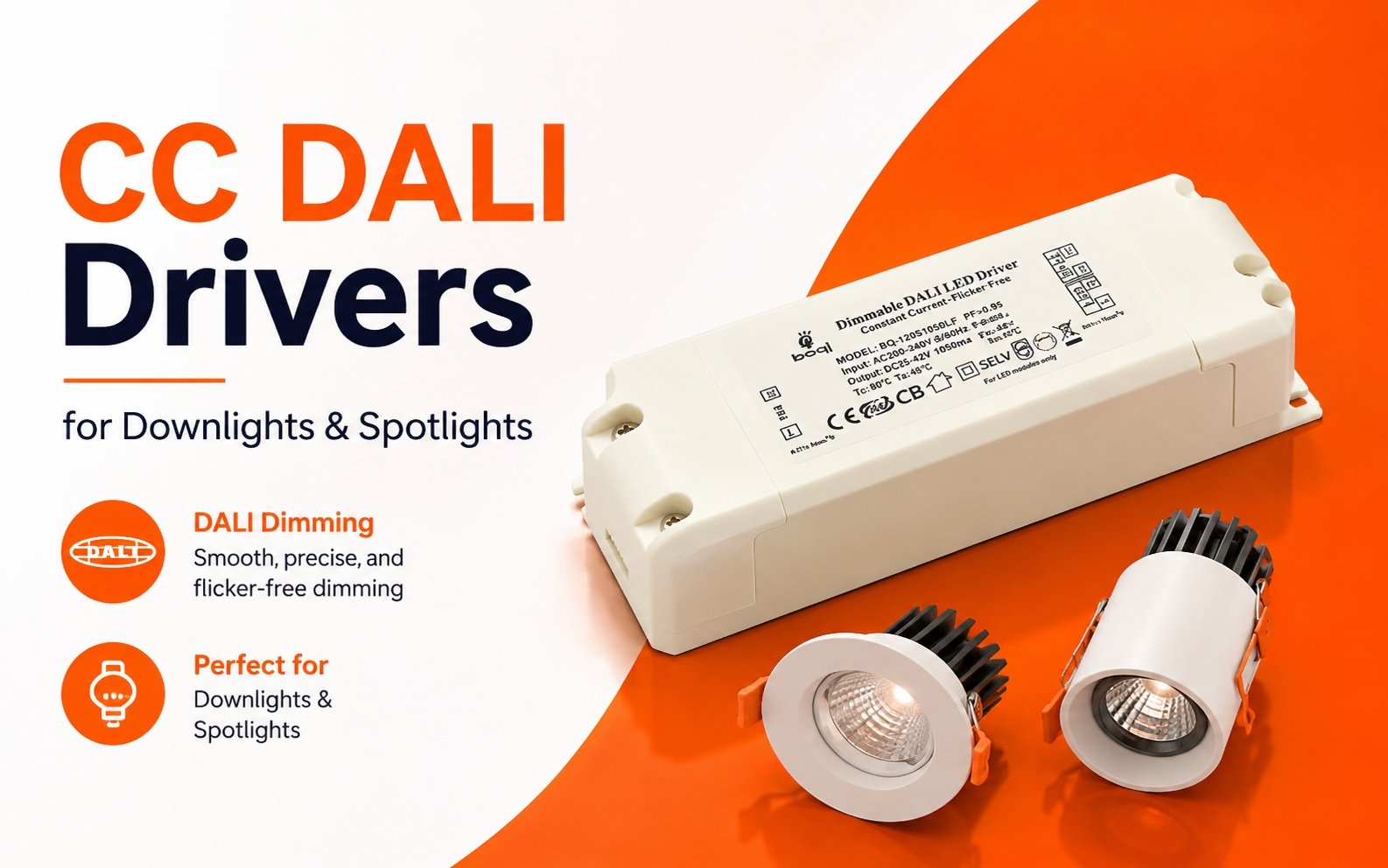
Label selalu mengungkapkan jenis driver. Driver CC mencantumkan peringkat miliampere terlebih dahulu, lalu jendela tegangan. Driver CV mencantumkan satu tegangan tetap terlebih dahulu, lalu arus maksimum. Pada modul driver peredup kami sendiri, kami mencetak baris ini pada label spesifikasi putih sehingga pemasang tidak perlu menebak.
Mengapa Gaya Pengkabelan Menjadi Petunjuk
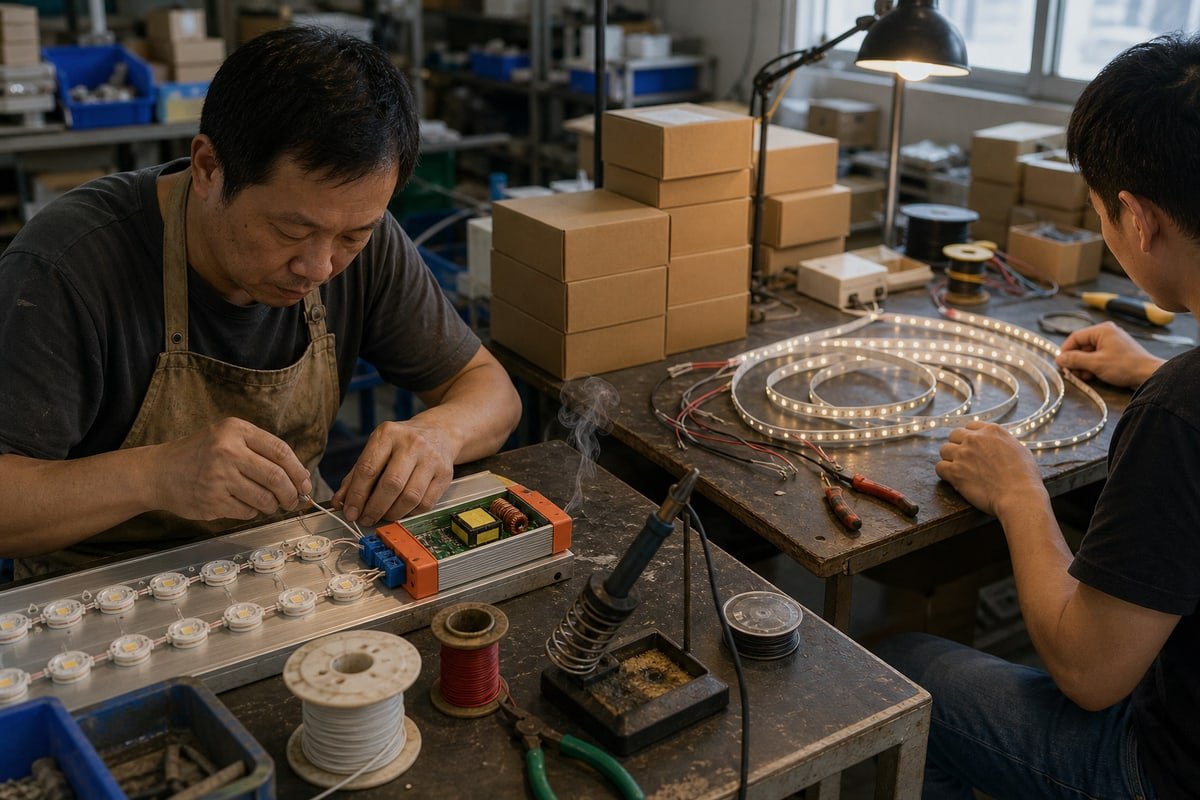
Pengkabelan rangkaian seri adalah petunjuk kedua. Ketika LED berada dalam rangkaian seri, arus yang sama mengalir melalui setiap dioda, sehingga driver CC menjamin kecerahan yang identik di seluruh rangkaian. Total tegangan maju 1 dari rangkaian hanya dijumlahkan, dan rentang tegangan keluaran 2 driver menyerap jumlah tersebut. Sebaliknya, catu daya CV memberi makan cabang paralel—seperti strip LED—di mana setiap segmen memiliki resistor sendiri untuk membatasi arus. Jika produk yang Anda dayakan memiliki resistor di papan, hampir pasti produk tersebut membutuhkan tegangan konstan. Jika itu adalah modul LED telanjang atau rangkaian seri, produk tersebut membutuhkan arus konstan.
Mengapa arus konstan penting untuk umur pakai dan kinerja produk LED saya?
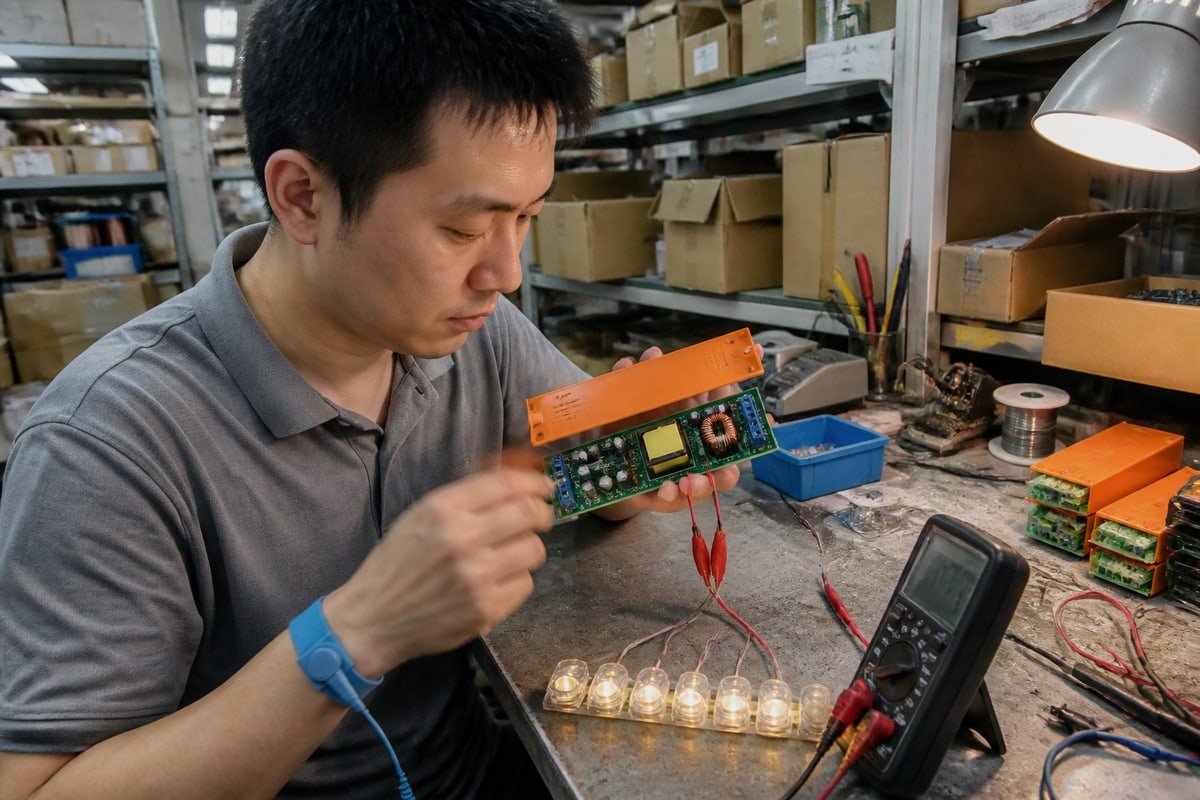
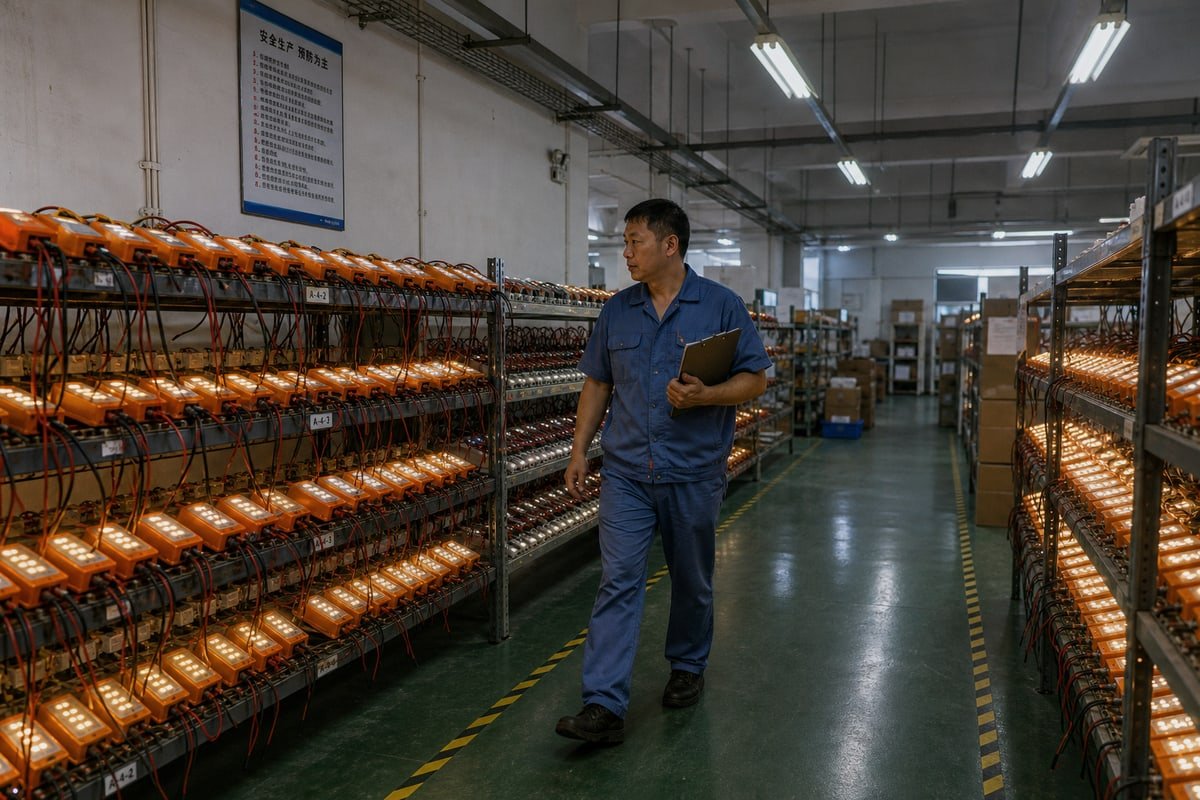
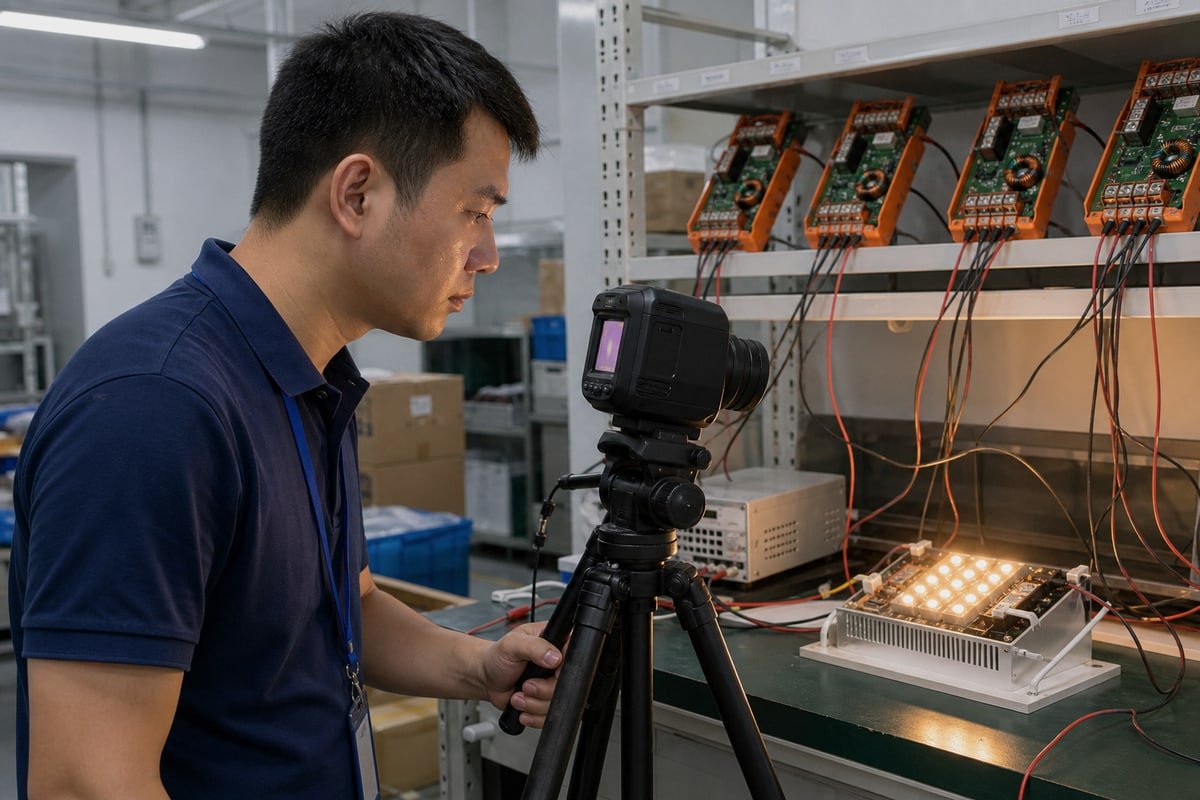
Selama pengujian burn-in di fasilitas Shenzhen kami, kami menjalankan setiap batch driver peredup selama berjam-jam sebelum pengiriman. Rutinitas itu ada karena satu alasan: penyalahgunaan arus secara diam-diam membunuh LED.
Arus konstan melindungi LED karena kecerahan, warna, panas, dan masa pakai semuanya bergantung pada arus. Arus tetap mencegah pelarian termal, menjaga keluaran cahaya seragam di setiap dioda, dan menghentikan kelebihan ampere dari overheating pada sambungan—secara langsung memperpanjang masa kerja luminer jadi.
LED bukan beban resistif. Tegangan majunya tidak tetap; tegangan tersebut bergeser dengan suhu dan toleransi manufaktur. Satu fakta itu menjelaskan hampir semua hal di bawah ini.
Thermal Runaway: Pembunuh Senyap
Inilah siklus yang merusak. Saat LED memanas, tegangan majunya turun. Pada sumber tegangan biasa, tegangan maju yang lebih rendah berarti dioda menarik lebih banyak arus. Lebih banyak arus menciptakan lebih banyak panas, yang menurunkan tegangan lebih jauh, yang menarik lebih banyak arus lagi. Lingkaran itu adalah thermal runaway, dan berakhir dengan dioda yang mati. Driver arus konstan memutus lingkaran itu sepenuhnya. Regulasi arus menjaga ampere pada tingkat target tidak peduli bagaimana tegangan maju menyimpang, sehingga panas tidak akan pernah bisa di luar kendali.
Kecerahan Seragam dan Desain yang Lebih Bersih
Luminositas LED berbanding lurus dengan aliran elektron. Tetapkan arus, dan setiap dioda dalam rangkaian seri menyala pada intensitas yang sama. Ada juga bonus untuk desain OEM: driver CC menghilangkan kebutuhan akan resistor pembatas arus yang tidak efisien pada papan LED. Itu mengurangi energi yang terbuang dan menyederhanakan manajemen termal 3 LED di dalam perlengkapan.
Flicker, Ripple, dan Thermal Foldback
Dua detail kinerja memisahkan driver premium dari yang murah. Pertama, arus ripple rendah menghilangkan flicker stroboskopik 4—penting untuk pencahayaan yang berpusat pada manusia dan untuk ruangan yang direkam oleh kamera digital berkecepatan tinggi. Kedua, driver canggih menggunakan thermal foldback melalui termistor NTC, meredupkan output secara cerdas untuk membuang panas alih-alih mematikan sistem secara tiba-tiba. Kami membangun kedua perilaku ini ke dalam lini driver kelas menengah hingga kelas atas karena pembeli Eropa dan Jepang mengujinya secara khusus.
Bagaimana cara saya memilih driver LED arus konstan yang tepat untuk proyek pencahayaan OEM saya?
Setiap proyek ODM memaksa adanya trade-off antara biaya, efisiensi, dan ruang tegangan. Insinyur kami mempertimbangkan ketiga variabel ini sebelum merekomendasikan driver apa pun kepada merek pencahayaan.
Pilih driver LED arus konstan dengan mencocokkan tiga spesifikasi: arus drive yang dibutuhkan rangkaian LED, total tegangan maju yang berada dalam rentang tegangan output driver, dan protokol peredupan Anda. Kemudian konfirmasikan efisiensi, sertifikasi, dan kesesuaian fisik sebelum memesan volume produksi.
Ikuti urutan ini, dan Anda akan menghindari kegagalan pemilihan yang paling umum saya lihat dalam proyek OEM.
- Tetapkan arusnya. Lembar data modul LED Anda mendefinisikan arus drive-nya. Peringkat miliampere driver harus cocok persis dengannya.
- Periksa tegangan kepatuhan. Di sinilah pemilihan yang tampak benar gagal. Driver 700 mA tidak berarti dapat memasok 700 mA ke beban apa pun. Jika driver diberi peringkat 700 mA, 18–42 V, rangkaian LED yang membutuhkan 50 V tidak dapat digerakkan dengan benar—meskipun kebutuhan arusnya 700 mA. Total tegangan maju rangkaian harus berada di dalam jendela tersebut.
- Bidik mendekati bagian atas jendela. Efisiensi driver puncak terjadi ketika total tegangan maju beban berada dekat dengan tegangan maksimum terukur driver. Beroperasi di bagian bawah rentang tegangan sering kali menurunkan faktor daya.
- Pilih metode peredupan Anda. Peredupan PWM memicu arus penuh secara cepat untuk kedalaman yang presisi; peredupan analog menurunkan level arus itu sendiri. Mengurangi arus drive mengurangi intensitas, jadi kedua pendekatan berfungsi—tetapi keduanya berperilaku berbeda dengan kontrol Anda.
- Konfirmasikan faktor bentuk. Modul PCB rangka terbuka cocok untuk integrasi di dalam perlengkapan; driver berwadah tertutup cocok untuk pengkabelan lapangan.
Peringkat Miliampere Umum dan Tempat Penerapannya
| Peringkat Miliampere | Aplikasi Umum |
|---|---|
| 350 mA | Lampu sorot kecil, modul daya rendah |
| 500 mA | Downlight kompak |
| 700 mA | Downlight dan lampu track arus utama |
| 1050 mA | Perlengkapan komersial output tinggi |
| 1400 mA | Luminer industri dan luar ruangan daya tinggi |
Spesifikasi apa yang harus saya verifikasi saat memesan driver LED arus konstan dalam jumlah besar?
Sebuah pengiriman yang kami siapkan untuk distributor Jerman pernah mengajari saya pelajaran berharga: lembar data yang menyembunyikan detail toleransi menciptakan masalah yang tidak dapat diperbaiki oleh inspeksi pabrik mana pun di kemudian hari.
Verifikasi toleransi arus output, jendela tegangan output, arus riak, efisiensi driver, faktor daya, kompatibilitas peredupan, perlindungan termal, dan sertifikasi pasar. Minta lembar data lengkap, laporan pengujian sampel, dan prosedur burn-in pabrik sebelum berkomitmen pada pembelian massal driver LED arus konstan.
Berikut ini peringatan praktis terlebih dahulu: arus konstan tidak berarti arus yang sepenuhnya konstan dalam setiap kondisi pengoperasian. Driver nyata memiliki toleransi regulasi arus, perilaku start-up, efek termal, persyaratan beban minimum, dan keterbatasan terkait peredupan. Detail ini sangat penting dalam aplikasi OEM, dan lembar data yang tidak jelas adalah sinyal kegagalan. Ketika pemasok menulis "kurang lebih" di samping peringkat arus tanpa menyatakan pita toleransi, minta angka pastinya secara tertulis.
Daftar Periksa Pengadaan dalam Jumlah Besar yang Kami Berikan kepada Pembeli
| Spesifikasi | Hal-hal yang Perlu Diperiksa | Mengapa Hal Ini Penting |
|---|---|---|
| Toleransi arus output | Pita regulasi yang tepat, dinyatakan secara tertulis | Konsistensi kecerahan antar-batch |
| Rentang tegangan output | Jendela penuh, plus perilaku start-up | Kompatibilitas dengan rangkaian LED Anda |
| Arus riak | Angka riak rendah pada beban terukur | Cahaya bebas kedip, output aman untuk kamera |
| Efisiensi driver | Efisiensi pada titik operasi aktual Anda | Panas di dalam perlengkapan, klaim energi |
| Faktor daya | Nilai pada titik operasi tegangan Anda | Kepatuhan utilitas di pasar target |
| Kompatibilitas peredupan | Protokol, tingkat redup minimum, kedipan pada redup rendah | Kinerja halus dengan kontrol Anda |
| Perlindungan termal | Foldback melalui termistor NTC vs. pematian paksa | Perilaku yang baik selama lonjakan panas |
| Sertifikasi | Tanda yang diperlukan di wilayah penjualan Anda | Akses pasar legal, bea cukai |
Tanyakan tentang Pengujian, Bukan Hanya Spesifikasi
Angka di atas kertas hanyalah setengah cerita. Tanyakan bagaimana pabrik menjalankan burn-in, bagaimana mereka mengambil sampel untuk QC, dan bagaimana mereka menangani kasus tepi beban minimum dan start-up. Dalam pekerjaan ekspor kami sendiri di Eropa, Jepang, dan Asia Tenggara, kami berbagi prosedur pengujian secara terbuka karena pembeli label pribadi menanggung risiko garansi di bawah merek mereka sendiri. Satu poin berwawasan ke depan yang layak diangkat dengan pemasok: driver arus konstan modern berkembang menjadi simpul data IoT yang melaporkan penggunaan energi, kesehatan komponen, dan waktu aktif kumulatif untuk pemeliharaan prediktif. Jika peta jalan produk Anda mencakup pencahayaan terhubung, pastikan sekarang apakah platform driver dapat mendukung telemetri tersebut nanti.
Kesimpulan
Arus konstan berarti ampere tetap, volt fleksibel. Dapatkan arus, jendela tegangan, dan peredupan dengan benar, dan produk LED Anda akan bertahan lama. Jika salah, pengembalian akan menumpuk dengan cepat.
Catatan kaki
Bagian Wikipedia yang otoritatif menjelaskan karakteristik listrik LED dan tegangan maju. ↩︎
Badan standar nasional yang menyediakan definisi resmi dan protokol pengukuran untuk parameter listrik. ↩︎
Tinjauan terperinci tentang teknik pembuangan panas yang penting untuk menjaga umur panjang komponen elektronik. ↩︎
Otoritas teknis terkemuka untuk standar listrik, termasuk mitigasi kedipan dalam sistem pencahayaan. ↩︎