












买家每周都会向我们的深圳工程师提出一个问题:LED驱动器中恒流是什么意思?选错类型,成品灯具会在数月内失效。本指南将为您解答。.
恒流是指LED驱动器将输出电流保持在设定水平(如350 mA或700 mA),同时自动调整输出电压以匹配LED负载。驱动器控制电流;LED灯串在驱动器额定范围内决定所需电压。.
这一句话背后隐藏着实际项目中至关重要的多个细节。以下章节将逐一解析。我们将涵盖如何识别恒流驱动器、为何它能保护您的LED、如何选型,以及批量订购前需检查哪些规格。.
如何区分恒流LED驱动器和恒压LED驱动器?
上周,一位新加坡的采购经理通过WhatsApp给我发了一张驱动器标签照片,询问她看到的是哪种类型。这是我们听到最多的问题。.
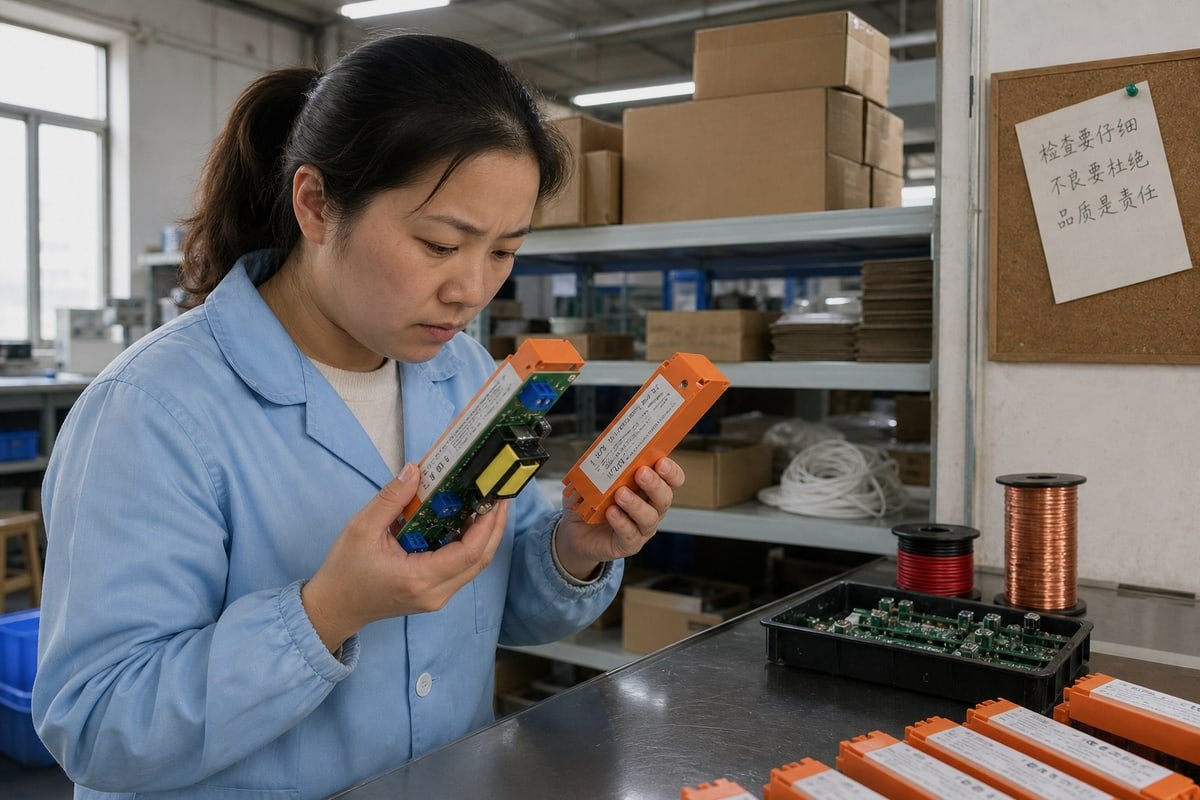
检查输出标签。恒流驱动器会列出固定电流及电压范围,例如700 mA,18–42 V。恒压驱动器则列出固定电压及最大电流,例如24 V,2.5 A。这一行信息即可说明一切。.
为了快速对比恒压,下表总结了我每周向新买家解释的内容:
| 功能 | 恒流(CC)驱动器 | 恒压(CV)驱动器 |
|---|---|---|
| 调节参数 | 电流(mA) | 电压(V) |
| 变化量 | 输出电压 | 输出电流 |
| 典型标签 | 700 mA,18–42 V | 24 V,最大2.5 A |
| 典型接线 | 串联电路接线 | 并联分支 |
| 常见用途 | 筒灯、大功率LED、COB模组 | LED灯带、柔性灯带、标识模组 |
先看输出标签
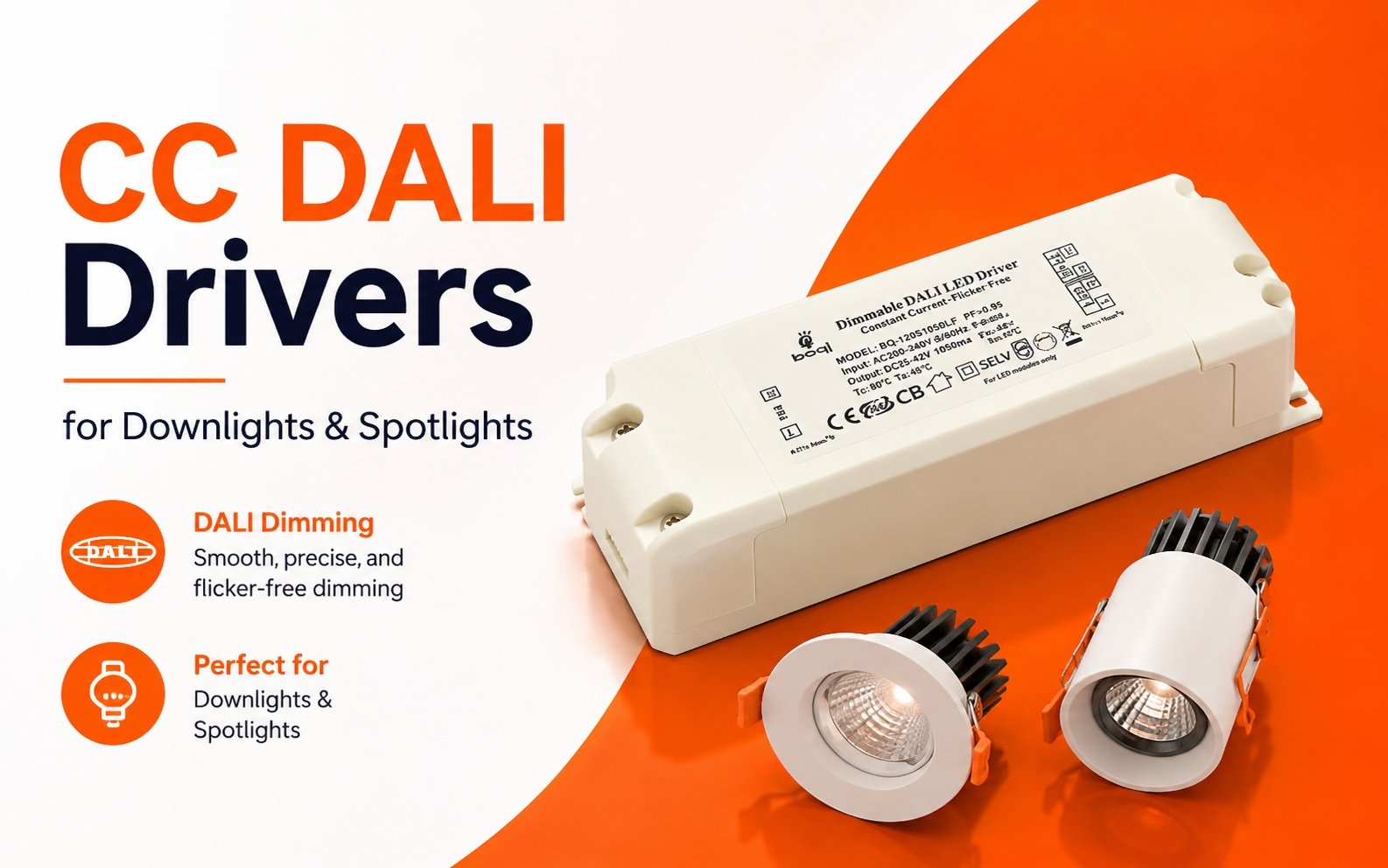
标签总能揭示驱动器类型。CC驱动器先标注毫安额定值,再标注电压范围。而 CV驱动器 先标注一个固定电压,再标注最大电流。在我们自己的可调光驱动器模组上,我们会在白色规格标签上打印此行,让安装人员无需猜测。.
为何接线方式能揭示类型
串联电路接线是第二个线索。当LED串联成串时,相同电流流过每个二极管,因此CC驱动器保证整串亮度一致。灯串的总 正向电压 1 电压只需相加,驱动器的 输出电压范围 2 即可吸收该总和。相比之下,CV电源为并联分支供电——如LED灯带——每个分段自带电阻以限制电流。如果您供电的产品带有板载电阻,它几乎肯定需要恒压。如果是裸LED模组或串联灯串,则需要恒流。.
恒流对我的LED产品寿命和性能为何重要?
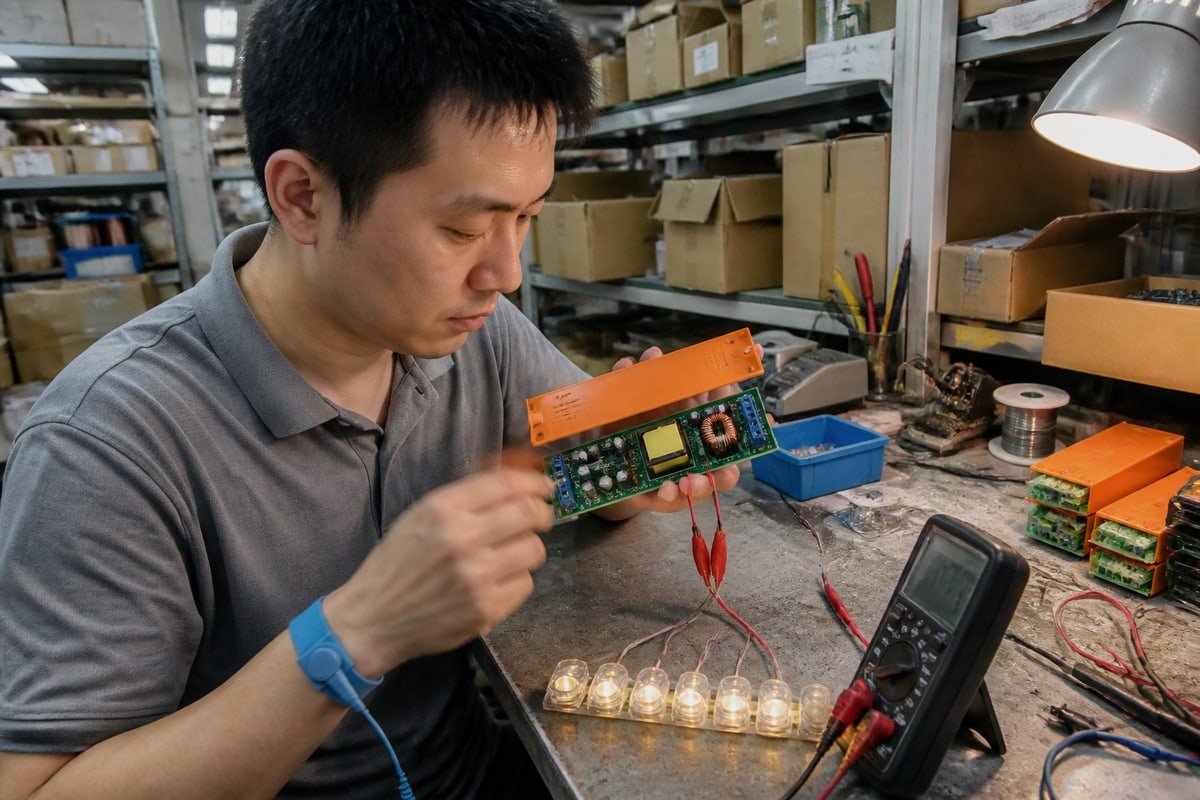
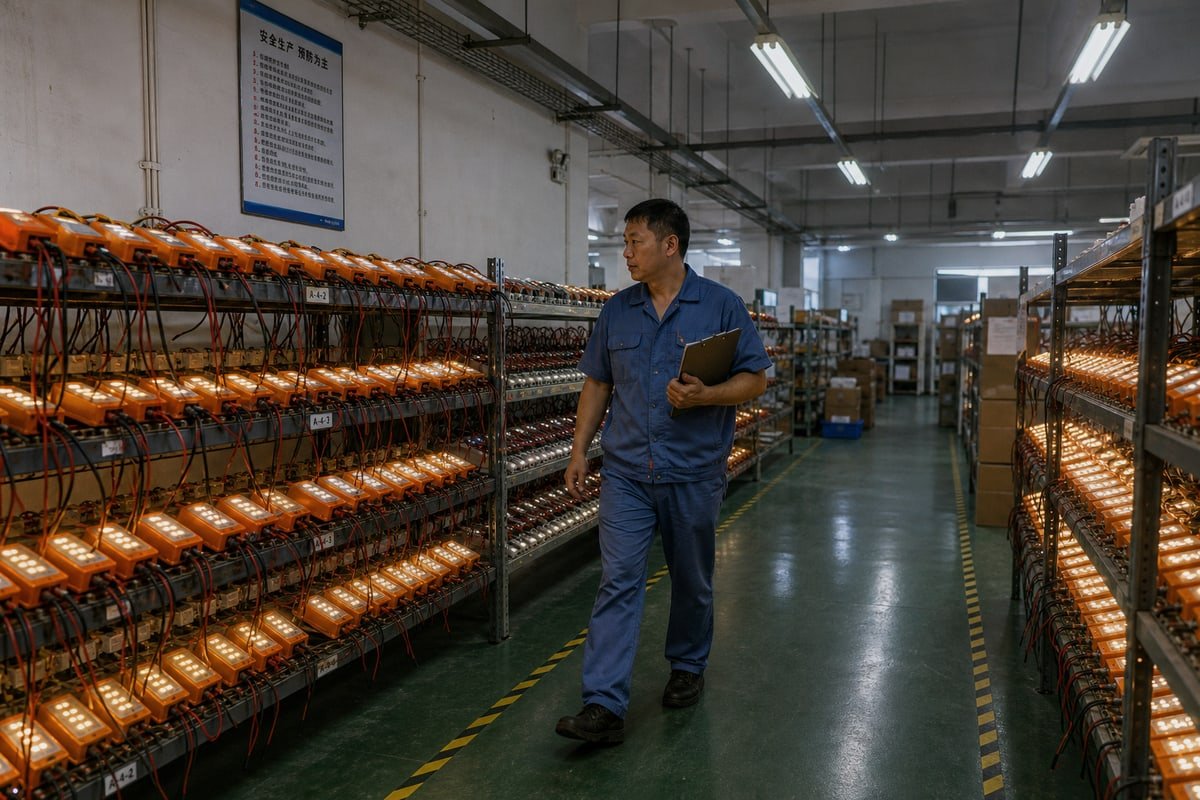
在我们深圳工厂的烧机测试中,我们每批可调光驱动器在发货前都会运行数小时。这一流程存在只有一个原因:电流滥用会悄悄杀死LED。.
恒流保护LED,因为亮度、色温、热量和寿命都取决于电流。固定电流可防止热失控,保持每个二极管的光输出一致,并阻止过量电流导致结温过热——直接延长成品灯具的工作寿命。.
LED并非阻性负载。其正向电压并非固定;它会随温度和制造公差而变化。这一事实几乎解释了以下所有内容。.
热失控:无声的杀手
这是破坏性循环。随着LED升温,其正向电压下降。在普通电压源下,较低的正向电压意味着二极管吸取更多电流。更多电流产生更多热量,进一步降低电压,从而吸引更多电流。这个循环就是热失控,最终导致二极管失效。恒流驱动器完全打破了这个循环。无论正向电压如何漂移,电流调节都将安培数保持在目标水平,因此热量永远不会失控。.
均匀亮度与更简洁的设计
LED亮度与电子流动成正比。固定电流后,串联灯串中的每个二极管以相同强度发光。OEM设计还有一个额外好处:CC驱动器消除了LED板上低效限流电阻的需求。这减少了能量浪费,并简化了灯具内部的 热管理 3 。.
频闪、纹波与热折返
两个性能细节区分了高端驱动器和廉价驱动器。首先,低纹波电流消除了 频闪效应 4——这对以人为本的照明以及高速数字摄像机拍摄的空间至关重要。其次,先进驱动器通过NTC热敏电阻实现热折返,智能调暗输出以散热,而非突然关闭系统。我们将这两种行为融入中高端驱动器产品线,因为欧洲和日本买家会专门测试这些功能。.
如何为我的OEM照明项目选择合适的恒流LED驱动电源?
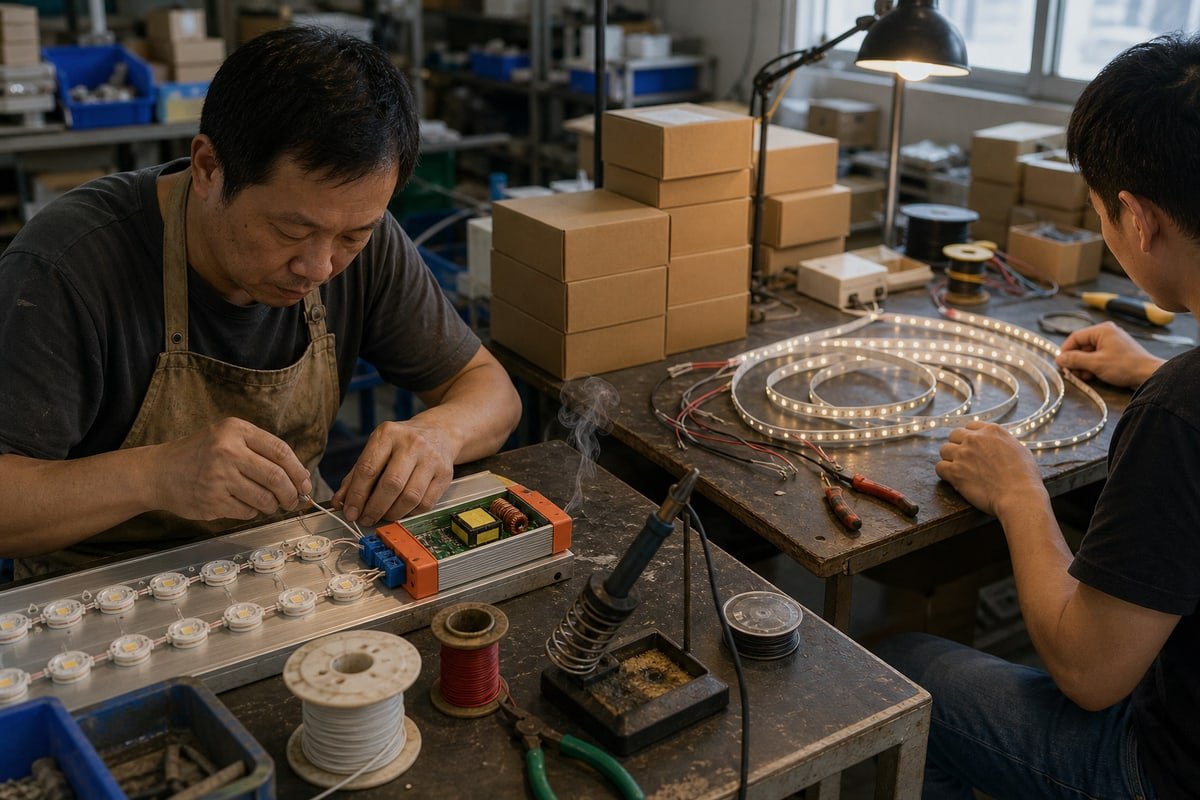
每个ODM项目都需在成本、效率和电压余量之间进行权衡。我们的工程师在向照明品牌推荐任何驱动器之前,会先评估这三个变量。.
选择恒流LED驱动器需匹配三项规格:LED灯串所需的驱动电流、总正向电压落在驱动器输出电压范围内,以及您的调光协议。然后,在订购量产前确认效率、认证和物理尺寸。.
遵循此顺序,您将避免我在OEM项目中最常见的选型失误。.
- 固定电流。. 您的LED模块数据手册定义了其驱动电流。驱动器的毫安额定值必须与之完全匹配。.
- 检查合规电压。. 这是看似正确的选型失败之处。700 mA的驱动器并不意味着它能向任何负载提供700 mA电流。如果驱动器额定为700 mA、18–42 V,而LED灯串需要50 V,则无法正确驱动——即使其电流需求为700 mA。灯串的总正向电压必须位于窗口内。.
- 目标接近窗口顶部。. 当负载的总正向电压接近驱动器最大额定电压时,驱动器效率达到峰值。在电压范围底部运行通常会降低功率因数。.
- 选择您的调光方式。. PWM 调光 脉冲全电流可快速实现精确深度;模拟调光则降低电流水平本身。降低驱动电流会降低强度,因此两种方法均有效——但它们与您的控制系统配合时表现不同。.
- 确认外形尺寸。. 开放式PCB模块适合集成到灯具内部;封闭式外壳驱动器适合现场布线。.
常见毫安额定值及其适用场景
| 毫安额定值 | 典型应用 |
|---|---|
| 350 毫安 | 小型射灯、低功率模块 |
| 500 毫安 | 紧凑型筒灯 |
| 700 毫安 | 主流筒灯和轨道灯 |
| 1050 毫安 | 高输出商业灯具 |
| 1400 毫安 | 高功率工业和户外灯具 |
批量采购恒流LED驱动电源时,应核实哪些规格参数?
我们为一家德国分销商准备的一批货物曾给我一个深刻的教训:隐藏公差细节的数据手册会造成工厂检验无法事后修复的问题。.
验证输出电流公差、输出电压窗口、纹波电流、驱动器效率、功率因数、调光兼容性、热保护和市场认证。在承诺批量采购恒流LED驱动器之前,要求提供完整数据手册、样品测试报告和工厂老化程序。.
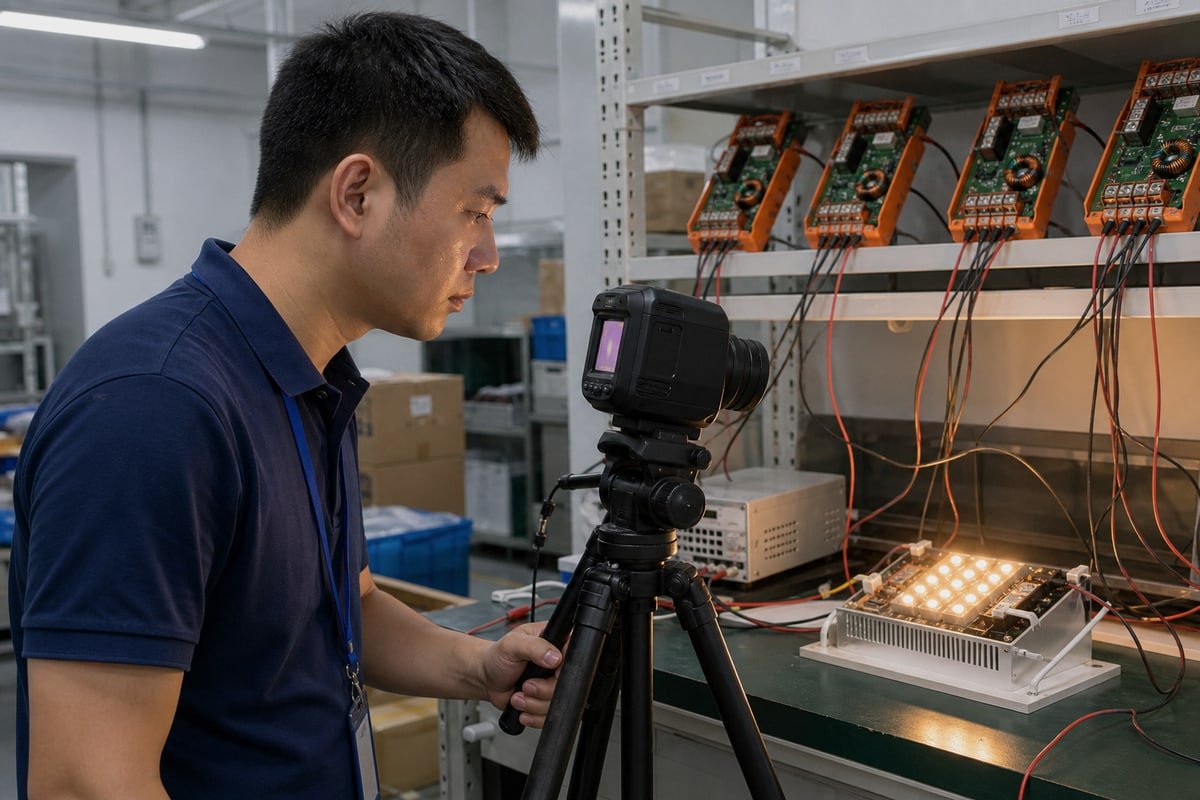
首先有一个实际注意事项:恒流并不意味着在每种工作条件下都完美恒定。实际驱动器具有电流调节公差、启动行为、热效应、最小负载要求和调光相关限制。这些细节在OEM应用中极为重要,而模糊的数据手册是故障信号。当供应商在电流额定值旁写"大约"而未说明公差范围时,请要求书面确认确切数值。.
我们提供给买家的批量采购检查清单
| 规格 | 需要核实的内容 | 为何这很重要 |
|---|---|---|
| 输出电流公差 | 精确调节范围,书面说明 | 批次间亮度一致性 |
| 输出电压范围 | 完整窗口,加上启动行为 | 与您的LED灯串兼容性 |
| 纹波电流 | 额定负载下的低纹波数值 | 无闪烁光、摄像机安全输出 |
| 驱动器效率 | 实际工作点下的效率 | 灯具内部热量、能源声明 |
| 功率因数 | 电压工作点下的数值 | 目标市场的合规要求 |
| 调光兼容性 | 协议、最低调光水平、低亮度下的闪烁 | 与您的控制系统实现平滑性能 |
| 热保护 | 通过NTC热敏电阻的折返保护与硬关断 | 热尖峰期间的优雅行为 |
| 认证 | 销售区域所需的标志 | 合法市场准入、海关清关 |
询问测试,而非仅看规格
纸面上的数字只是故事的一半。询问工厂如何进行老化测试、如何抽样进行质量控制,以及如何处理最小负载和启动边缘情况。在我们面向欧洲、日本和东南亚的出口工作中,我们公开分享测试程序,因为自有品牌买家需承担自有品牌下的保修风险。值得与供应商提出的一个前瞻性观点:现代恒流驱动器正在演变为物联网数据节点,可报告能耗、组件健康状况和累计运行时间,以进行预测性维护。如果您的产品路线图包括智能照明,请现在确认驱动器平台是否能在未来支持该遥测功能。.
结论
恒流意味着固定安培、灵活电压。正确设置电流、电压窗口和调光,您的LED产品将持久耐用。设置错误,退货将迅速堆积。.
脚注
权威维基百科章节,解释LED电气特性和正向电压。. ↩︎
国家标准机构,提供电气参数的官方定义和测量协议。. ↩︎
散热技术详细概述,对维持电子元件寿命至关重要。. ↩︎
电气标准领先技术权威,包括照明系统中的闪烁缓解。. ↩︎