









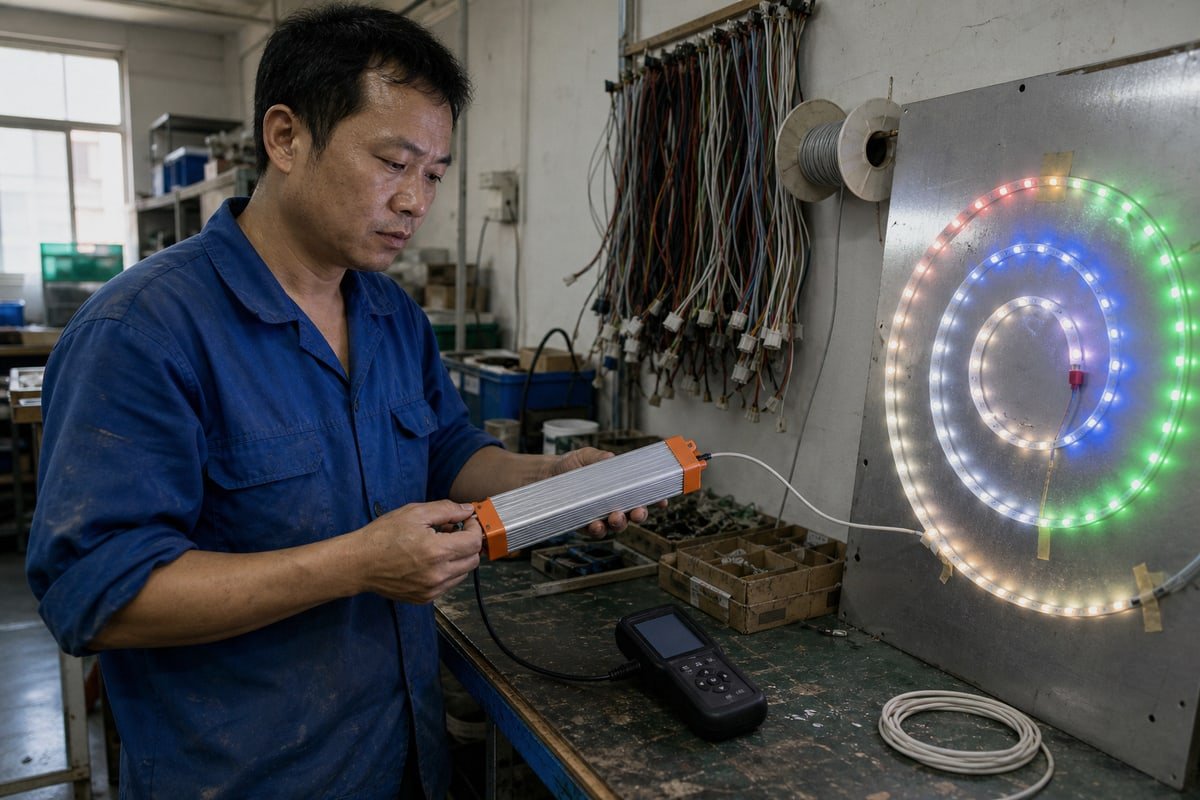
What Are the DT8 Advantages in RGB & Tunable White CV Systems?

使用DT8驱动器,在RGB/可调白光CV系统中削减布线、地址和成本,该系统通过一个DALI地址实现全彩控制,并采用标准化命令。.

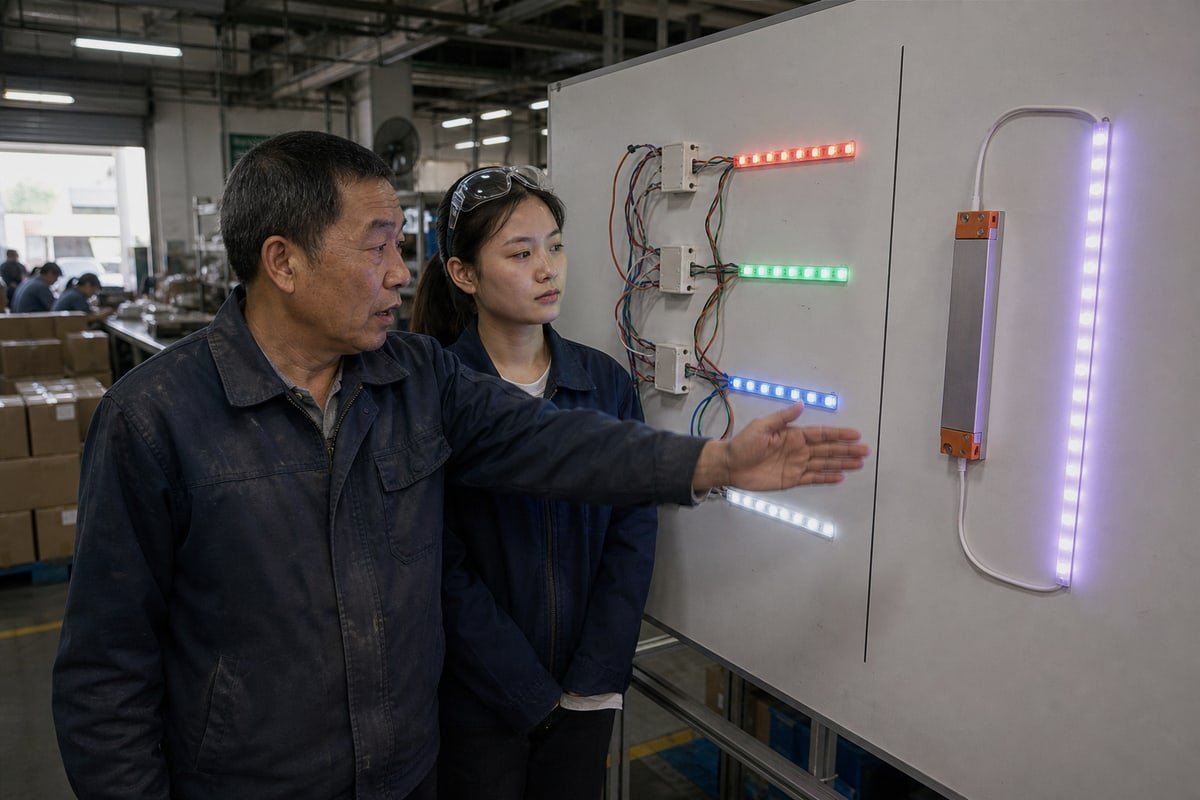
DT8 driver advantages for RGB and tunable white constant voltage lighting systems (ID#1)

Every RGBW quote our Shenzhen team prepares starts with the same complaint: too many addresses, too much wiring. DT8 advantages in RGB and tunable white CV systems solve exactly that.

DT8在RGB和可调白光CV系统中的优势包括:多色通道的单地址控制、驱动器端混色、更简单的布线和调试、DALI-2下标准化的Tc和xy颜色命令、总线上更好的可扩展性,以及更低的总硬件和人工成本。.

That is the short answer. But the real value only becomes clear when you look at how DT8 changes design work, quality control 1, project budgets, and customization speed. Let me walk through each one.

在设计RGB和可调白光CV照明系统时,DT8为我带来了哪些技术优势?

One trade-off shapes every driver spec our team finalizes: protocol simplicity versus control depth. For multi-channel Constant Voltage LED drivers, we almost always land on DT8.

DT8让一个DALI短地址控制整个RGB、RGBW或可调白光灯具。驱动器在内部处理通道混色,因此您获得更少的地址、更低的布线复杂度、标准化的相关色温和xy命令,以及协调的场景,而非独立的通道。.
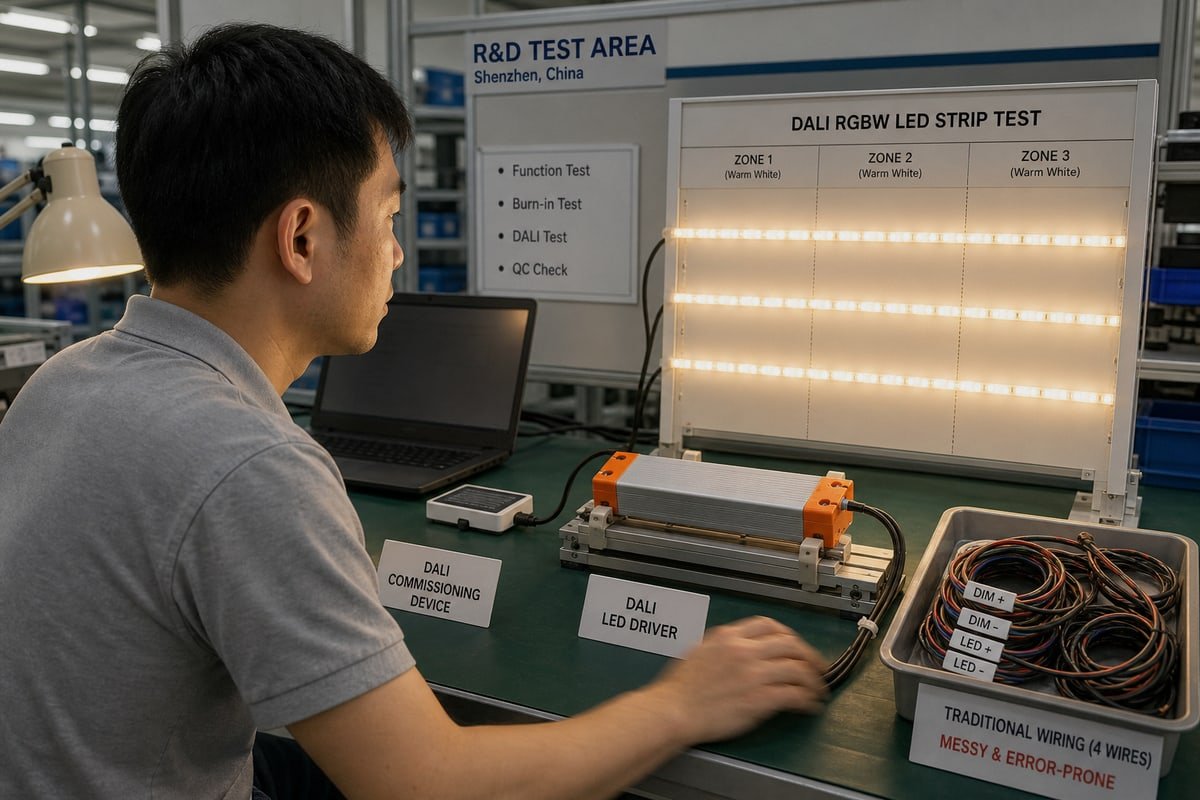
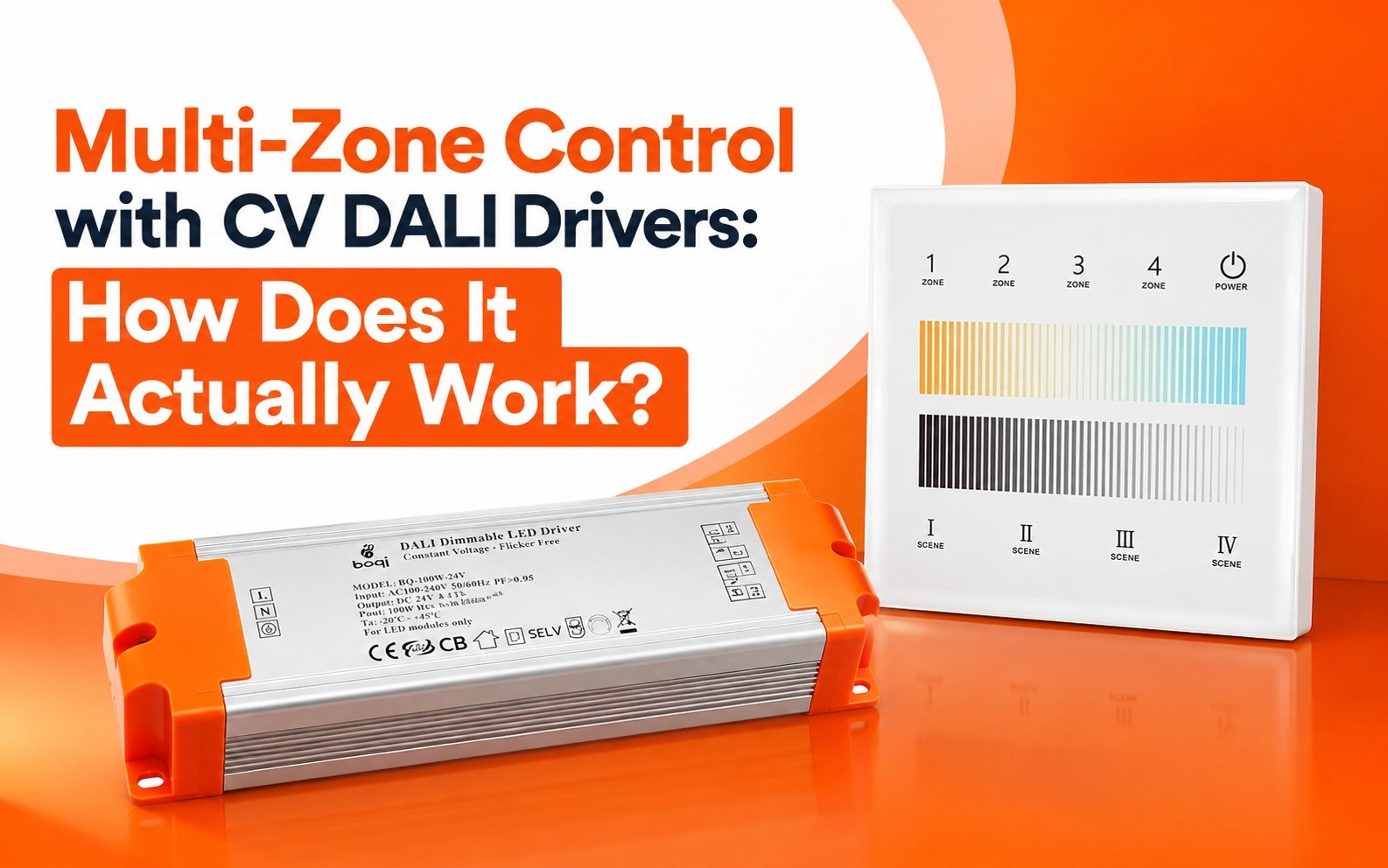
DT8 enables single-address control of RGBW and tunable white fixtures with standardized CCT and xy commands (ID#2)

The core idea is simple. Under DT8, which is Device Type 8 in the DALI-2 standard (IEC 62386-209 2), the color logic moves out of the central controller and into the driver itself. In our own DT8 CV drivers, the decoder manages the mixing for brightness, RGB or RGBW color 3, and tunable-white CCT. The controller no longer juggles three or four separate channels. It talks to one lighting device.

That framing matters more than the address math. The biggest benefit is not simply "fewer addresses." It is that the DALI controller 4 can treat an RGBW strip as one coordinated color system rather than several independent channels. Scenes, fades, and color moves stay synchronized because one device executes them.

DALI DT6 Comparison at a Glance

Here is the practical DALI DT6 comparison for address consumption:

Fixture typeDT6-style addressingDT8 addressingAddress savings
RGB strip3 short addresses1 single short addressUp to 66%
RGBW strip4 short addresses1 single short addressUp to 75%
Tunable white2 short addresses1 single short address50%

Since a DALI bus offers a finite pool of 64 short addresses, saving up to 75% of address space per RGBW fixture directly increases how many fixtures one bus can carry.

Advanced Driver-Side Features

Modern DT8 CV drivers go further. Some apply dynamic power allocation, shifting power between channels within a fixed budget so you avoid over-dimensioning the driver. Others use internal feedback to compensate for voltage drop on long RGBW tape runs, protecting color accuracy. Native Tc commands also make Human Centric Lighting possible without external logic.

DT8 can control an RGBW fixture with one DALI short address instead of up to four True
DT8 moves multi-channel mixing into the driver, so one address commands all channels as a coordinated color system, saving up to 75% of address space versus DT6-style setups.
DT8 expands the DALI bus beyond its standard 64-address limit 错误
DT8 does not change the physical bus limits at all; it simply uses the existing 64 short addresses far more efficiently by consuming one address per multi-channel fixture.

DT8如何帮助我在自有品牌产品中保持一致的色彩质量和更严格的QC?

A Singapore procurement manager once asked me over WhatsApp: can your DT8 drivers hold color consistency across three private-label batches? That question shaped how we run QC today.

DT8 有助于质量控制,因为它支持绝对颜色目标:以开尔文为单位的相关色温和CIE xy色度坐标。您可以命令每个批次达到相同的设定点,用光谱仪进行验证,并将通过/失败的颜色容差直接写入您的自有品牌质量控制检查表中。.
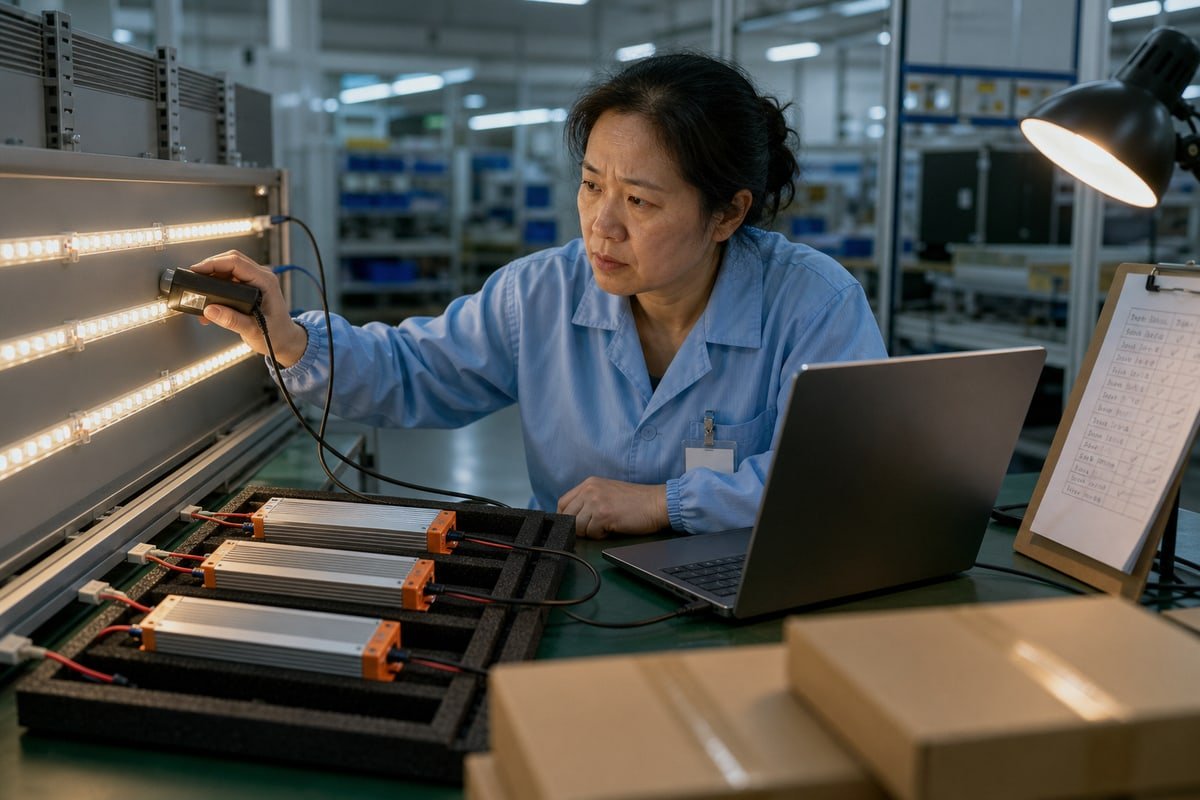
DT8 supports absolute CCT and xy color targets for consistent private-label QC across production batches (ID#3)

Relative channel dimming is hard to audit. If batch one runs red at 80% and batch two runs it at 78%, your customers see the difference before your QC team does. Absolute setpoints change that. With DT8, the order "go to 4000K" or "go to this xy point" means the same thing on every driver, in every batch, from every compliant vendor.

The Three DT8 Color Control Modes

控制类型What it setsQC value
Tc (color temperature)CCT in Kelvin, steplessVerify each batch against an exact Kelvin target
xy-chromaticityCIE 1931 color coordinatesMatch mixed-vendor luminaires to one defined color point
RGBWAFDirect per-channel levelsUseful for calibration checks and channel diagnostics

This standardization is also why DT8 improves interoperability. Luminaires from different vendors can share one network and still respond to identical color commands, which keeps multi-brand projects visually coherent.

What DT8 Cannot Fix

I want to be honest here, because this is where marketing often overreaches. DT8 improves the control architecture, but it does not by itself guarantee perfect color uniformity. LED binning, driver calibration, and thermal design still decide the final result. That is why our drivers use a ribbed brushed-aluminum housing for heat dissipation, and why every unit carries CE, CB, and SELV markings and passes aging tests before shipment. Protocol capability plus disciplined production is what actually protects your private label.

One more QC bonus: DALI-2 DT8 drivers can report per-channel diagnostic data. On long CV LED strips, that lets you detect a partial channel failure before the whole run goes dark.

DT8’s Tc and xy-chromaticity commands let luminaires from different vendors target identical color points True
Because DT8 defines absolute color setpoints under the DALI-2 standard, compliant devices interpret the same command the same way, which supports measurable, auditable color QC.
Specifying DT8 alone guarantees perfect color consistency across all batches and brands 错误
DT8 standardizes the commands, not the light itself; LED binning, driver calibration, and thermal management still determine the final color uniformity you see on the wall.

采用DT8驱动器真的能降低我的项目总成本并简化系统集成吗?

We learned this lesson on a hotel project in Vietnam: the drivers were only a fraction of the budget. Addressing, gateways, and commissioning labor consumed far more money.

Usually, yes. DT8 cuts costs by reducing address consumption, gateway counts, wiring runs, and commissioning hours. One vendor reports 15–20% project savings, though real numbers depend on scale. The biggest integration win is treating each multi-channel fixture as one device on the DALI-2 bus.

DT8 drivers reduce addresses, wiring, and commissioning time for lower total lighting project costs (ID#4)

Let me break the savings down honestly, because a fair buyer should push back on vendor claims. A DT8 CV driver often costs more per unit than a basic DT6 dimming driver. The savings appear at the system level, not on the unit price line.

Where the Savings Actually Come From

Cost itemMulti-address DT6 setupSingle-address DT8 setup
Addresses per RGBW fixture3–41
RGBW fixtures per 64-address busRoughly 16Up to 64
Gateways and sub-controllersMore buses, more gatewaysSignificantly fewer
Commissioning workAddress, group, and sync each channelProgram one device per fixture
Scene and mixing logicExternal controller handles the mathBuilt into the driver

Higher address density per bus means fewer DALI sub-controllers and gateways. Fewer control channels mean less wiring complexity between the controller and the driver. And because RGBW color mixing runs inside the driver, commissioning engineers stop writing channel-synchronization logic and start simply assigning scenes. On tight-deadline projects, those saved commissioning days are often worth more than the hardware delta.

Dynamic power allocation adds another quiet saving. When the driver can shift power between channels within a fixed budget, you can size the driver for real usage instead of worst-case totals on every channel.

When DT8 Is Overkill

DT8 is not automatically better for every job. If a corridor only needs simple on-off or single-channel dimming, DT8's color capability is unnecessary overhead. Our advice to procurement teams: specify DT8 wherever coordinated color or tunable white is required, and keep simpler device types elsewhere. Treat any fixed percentage-savings figure as a vendor claim to verify against your own bill of materials.

Higher address density per bus reduces the number of DALI gateways and sub-controllers a project needs True
When one address covers a whole RGBW fixture instead of four, a single 64-address bus carries far more fixtures, so large projects need fewer buses and less supporting hardware.
DT8 drivers always cost less upfront than basic DT6 drivers 错误
DT8 units often carry a higher unit price; the savings come from system-level reductions in addresses, gateways, wiring, and commissioning labor, not from the driver’s price tag.

How does DT8 support faster customization and shorter lead times for my lighting projects?

Last quarter, our Shenzhen line switched an OEM client's tunable white driver from a 2700–5700K range to a wider range in one firmware revision. No new tooling, no new PCB.

DT8 shortens customization cycles because color logic lives in driver firmware, not custom controller hardware. OEM changes such as CCT range, mixing curves, dimming behavior, and branding become firmware and labeling tasks. Standardized DALI-2 color commands also make DT8 the most bridge-ready base for Matter integrations.

DT8 firmware-based color logic enables faster OEM customization and shorter lighting project lead times (ID#5)

This is the part of DT8 that rarely appears in datasheets but matters most to buyers with tight project deadlines. Because DT8 concentrates the intelligence in the driver, one hardware platform can serve many private-label variants. Here is how a typical ODM cycle runs on our side:

  1. Spec confirmation. We agree on output type (RGB, RGBW, or tunable white), voltage, power, and target markets such as the EU, Japan, or Australia.
  2. Firmware configuration. Our engineers set the Tc range, fade curves, and mixing behavior in software. No board redesign is needed for most changes.
  3. Branded sampling. Your logo and label go onto the standard housing — in our case, the brushed-aluminum body with orange end caps — and samples ship for approval.
  4. QC and aging tests. Each batch is verified against the agreed color setpoints and safety requirements, including CE, CB, and SELV compliance.
  5. Mass production. Because steps 1–4 reuse a proven platform, lead times stay short and repeat orders stay consistent.

Two market trends amplify this speed advantage. First, demand for Human Centric Lighting keeps growing in offices, hotels, and homes, and DT8's native stepless CCT control lets the same fixture serve warm-to-cool circadian scenes without hardware changes. Second, DT8's standardized color types make professional architectural CV systems unusually easy to bridge into consumer ecosystems like Matter. If your product roadmap points toward smart-home integration, building on DT8 today protects that roadmap tomorrow.

结论

RGB and tunable white CV projects punish complexity. DT8 removes it: one address, driver-side mixing, absolute color targets, and lower system costs. Specify it where coordinated color matters.

脚注


1. A process by which entities review the quality of all factors involved in production. ↩︎


2. The international standard that specifies the technical requirements for DALI Device Type 8 color control. ↩︎


3. An additive color model in which red, green, blue, and white light are added together. ↩︎


4. Official industry body for the DALI protocol, providing standards and certification for lighting controllers. ↩︎

立即索取报价!

7×24小时服务,我们将始终尽快回复您,并在收到您的消息后12小时内给予答复。如有任何疑问,请随时联系我们。. 

了解更多专业指导课程——这些是你犯错之前很少有人会告诉你的。.

立即获取报价

我们将在1个工作日内与您联系,请留意后缀为 “@boqiled.com”