













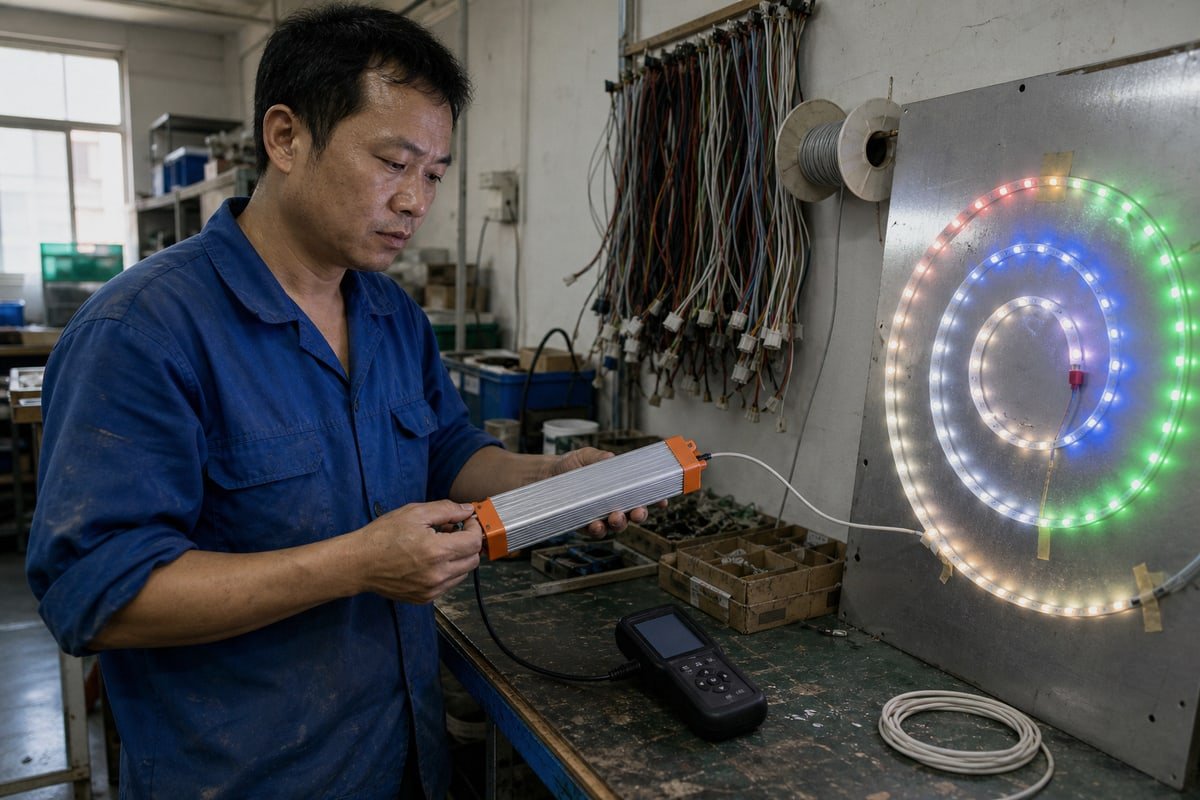
Varje RGBW-offert som vårt Shenzhen-team förbereder börjar med samma klagomål: för många adresser, för mycket kabeldragning. DT8-fördelarna i RGB- och dimbar-vit CV-system löser exakt det.
DT8-fördelar i RGB- och justerbara vita CV-system inkluderar styrning av flera färgkanaler via en enda adress, färgblandning på drivsidan, enklare kabeldragning och idrifttagning, standardiserade Tc- och xy-färgkommandon enligt DALI-2, bättre skalbarhet på bussen samt lägre totala hårdvaru- och arbetskostnader.
Det är det korta svaret. Men det verkliga värdet blir tydligt först när du ser hur DT8 förändrar designarbetet, kvalitetskontroll 1, projektbudgetar och anpassningshastighet. Låt mig gå igenom varje del.
Vilka tekniska fördelar ger DT8 mig när jag designar RGB- och justerbart vitt CV-belysningssystem?
En avvägning formar varje drivrutinsspecifikation som vårt team slutför: protokollenkelhet kontrollera kontroll-djup. För flerkanaliga Constant Voltage LED-drivrutiner, landar vi nästan alltid på DT8.
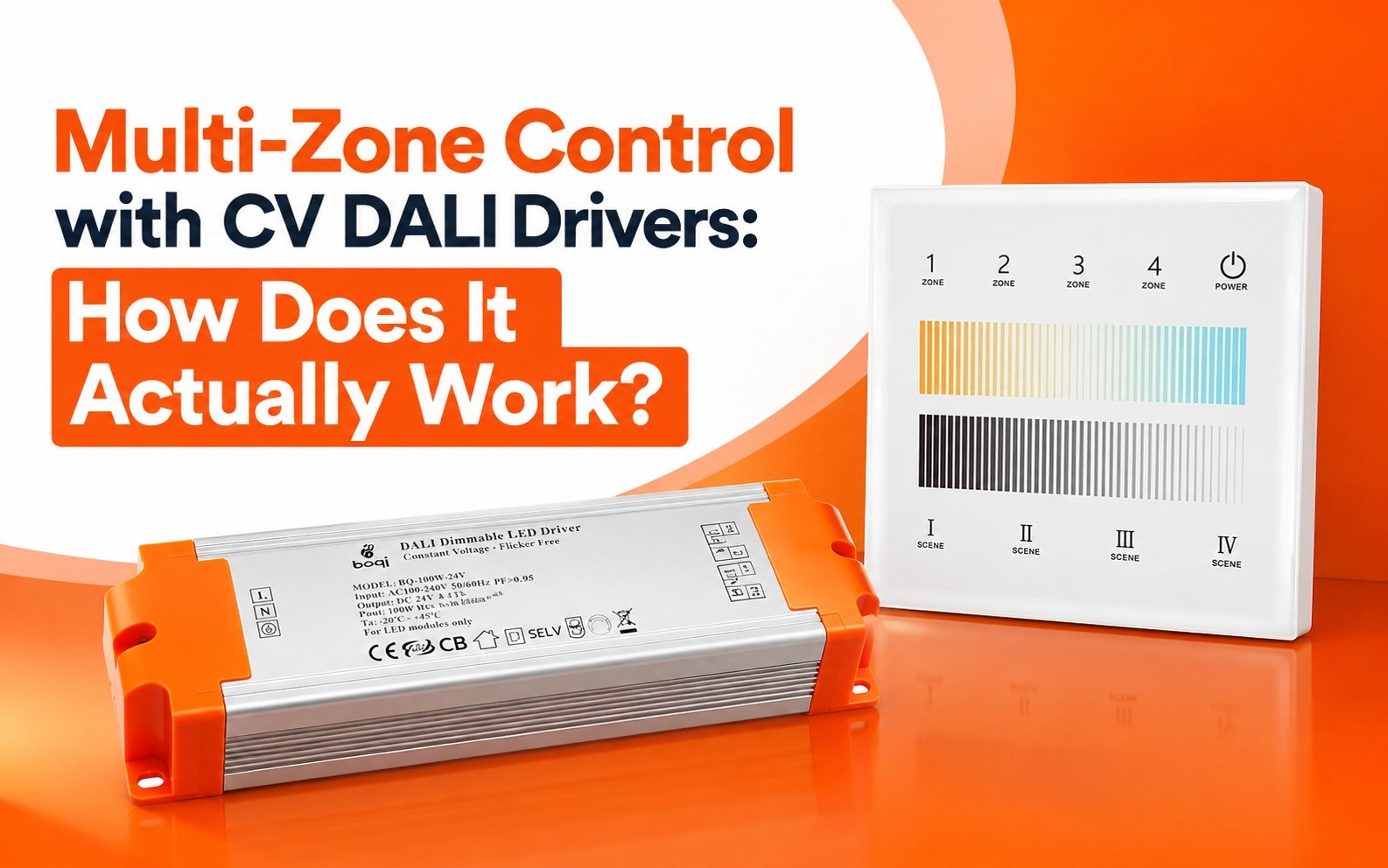
DT8 gör att en enda DALI-kortadress kan styra en hel RGB-, RGBW- eller justerbar vit armatur. Drivdonet hanterar kanalmixning internt, så du får färre adresser, mindre kabelkomplexitet, standardiserade Correlated Color Temperature- och xy-kommandon samt koordinerade scener istället för separata kanaler.
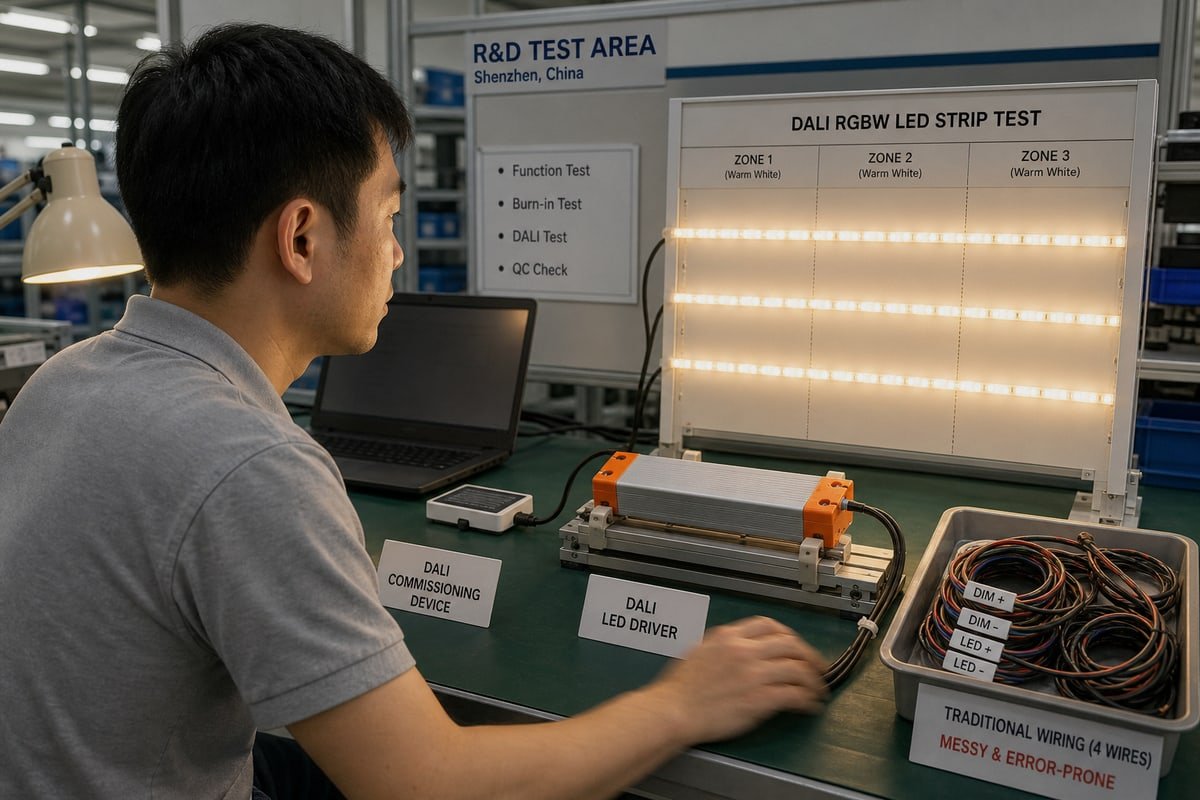
Kärnidén är enkel. Under DT8, som är Device Type 8 i DALI-2-standarden (IEC 62386-209 2), flyttas färglogiken ut från den centrala styrenheten och in i själva drivrutinen. I våra egna DT8 CV-drivrutiner hanterar avkodaren blandningen för ljusstyrka, RGB eller RGBW-färg 3, och dimbar-vit CCT. Styrenheten behöver inte längre hantera tre eller fyra separata kanaler. Den kommunicerar med en ljusanordning.
Den ramen betyder mer än adressmatematiken. Den största fördelen är inte bara "färre adresser." Det är att DALI-styrenheten 4 kan behandla en RGBW-remsa som ett koordinerat färgsystem snarare än flera oberoende kanaler. Scener, toningar och färgrörelser förblir synkroniserade eftersom en enhet utför dem.
DALI DT6-jämförelse i korthet
Här är den praktiska DALI DT6-jämförelsen för adressförbrukning:
| Fixturtyp | DT6-stiladressering | DT8-adressering | Adressbesparingar |
|---|---|---|---|
| RGB-remsa | 3 korta adresser | 1 enda kort adress | Upp till 66% |
| RGBW-remsa | 4 korta adresser | 1 enda kort adress | Upp till 75% |
| Dimbar vit | 2 korta adresser | 1 enda kort adress | 50% |
Eftersom en DALI-buss erbjuder en begränsad pool på 64 korta adresser, ökar en besparing på upp till 75% av adressutrymmet per RGBW-fixtur direkt hur många fixturer en buss kan bära.
Avancerade drivrutinsfunktioner
Moderna DT8 CV-drivrutiner går längre. Vissa tillämpar dynamisk effektallokering, som flyttar effekt mellan kanaler inom en fast budget så att du undviker överdimensionering av drivrutinen. Andra använder intern återkoppling för att kompensera för spänningsfall på långa RGBW-remsor, vilket skyddar färgnoggrannheten. Inbyggda Tc-kommandon gör också Human Centric Lighting möjligt utan extern logik.
Hur kan DT8 hjälpa mig att upprätthålla konsekvent färgkvalitet och strängare kvalitetskontroll över mina private-label-produkter?
En inköpschef från Singapore frågade mig en gång via WhatsApp: kan era DT8-drivrutiner hålla färgkonsistens över tre private-label-batcher? Den frågan formade hur vi driver QC idag.
DT8 hjälper QC eftersom det stödjer absoluta färgmål: Korrelerad färgtemperatur i Kelvin och CIE xy-kromaticitetskoordinater. Du kan styra varje batch till samma börvärde, verifiera det med en spektrometer och skriva in godkänd/underkänd färgtoleranser direkt i din private-label QC-checklista.
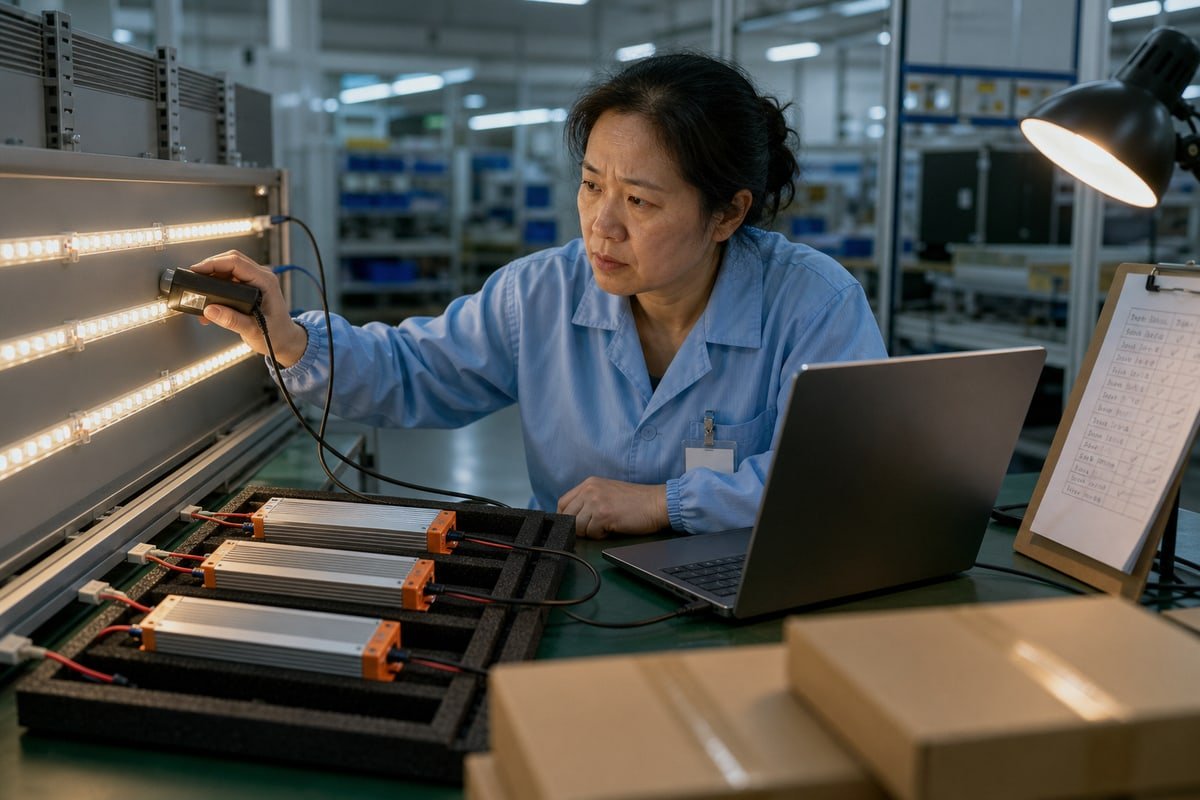
Relativ kanaldimning är svår att granska. Om batch ett kör rött vid 80% och batch två kör det vid 78%, ser dina kunder skillnaden innan ditt QC-team gör det. Absoluta börvärden ändrar det. Med DT8 betyder ordern "gå till 4000K" eller "gå till denna xy-punkt" samma sak på varje drivrutin, i varje batch, från varje kompatibel leverantör.
De tre DT8-färgkontrolllägena
| Kontrolltyp | Vad den ställer in | QC-värde |
|---|---|---|
| Tc (färgtemperatur) | CCT i Kelvin, steglöst | Verifiera varje batch mot ett exakt Kelvin-mål |
| xy-kromaticitet | CIE 1931-färgkoordinater | Matcha luminaires från blandade tillverkare till en definierad färgpunkt |
| RGBWAF | Direkta per-kanalnivåer | Användbart för kalibreringskontroller och kanaldiagnostik |
Denna standardisering är också anledningen till att DT8 förbättrar interoperabiliteten. Luminaires från olika tillverkare kan dela ett nätverk och ändå svara på identiska färgkommandon, vilket håller multi-brand-projekt visuellt sammanhållna.
Vad DT8 inte kan åtgärda
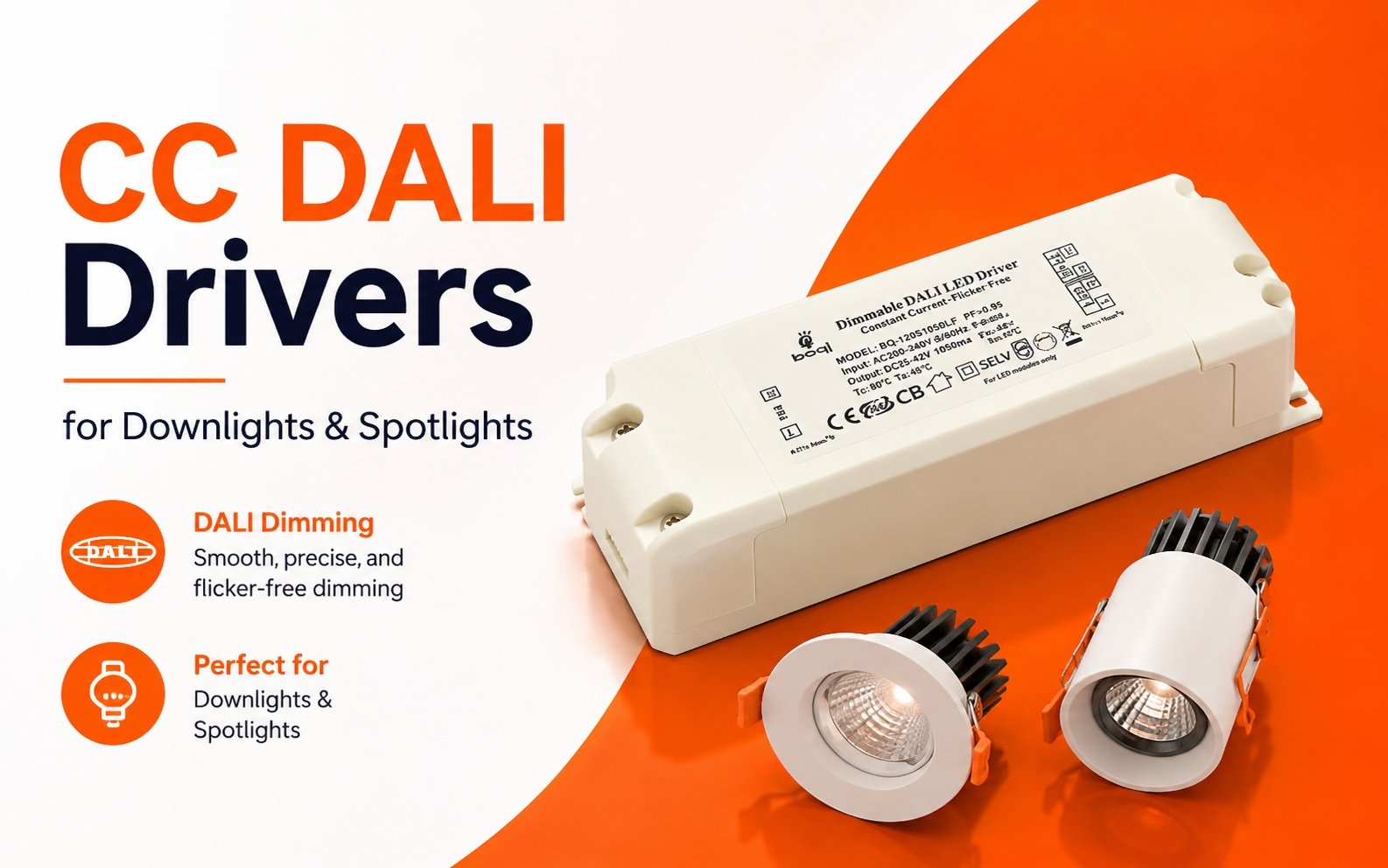
Jag vill vara ärlig här, för det är här marknadsföring ofta överdriver. DT8 förbättrar styrarkitekturen, men det garanterar inte i sig perfekt färgenhetlighet. LED-binning, drivrutinskalibrering och termisk design avgör fortfarande slutresultatet. Det är därför våra drivrutiner använder ett ribbat borstat aluminiumhölje för värmeavledning, och varje enhet bär CE-, CB- och SELV-märkningar samt genomgår åldringstester före leverans. Protokollkapacitet plus disciplinerad produktion är vad som faktiskt skyddar din private label.
En extra QC-bonus: DALI-2 DT8-drivrutiner kan rapportera per-kanal diagnostikdata. På långa CV LED-remsor kan du upptäcka ett partiellt kanalfel innan hela slingan slocknar.
Kommer antagandet av DT8-drivdon faktiskt sänka mina totala projektkostnader och förenkla systemintegrationen?
Vi lärde oss den läxan i ett hotellprojekt i Vietnam: drivrutinerna var bara en bråkdel av budgeten. Adressering, gateways och idrifttagningsarbete kostade betydligt mer.
Vanligtvis ja. DT8 sänker kostnaderna genom att minska adressförbrukning, antal gatewayer, kabeldragningar och driftsättningstimmar. En leverantör rapporterar 15–20% projektbesparingar, även om verkliga siffror beror på skala. Den största integrationsvinsten är att behandla varje flerkanalig armatur som en enhet på DALI-2-bussen.
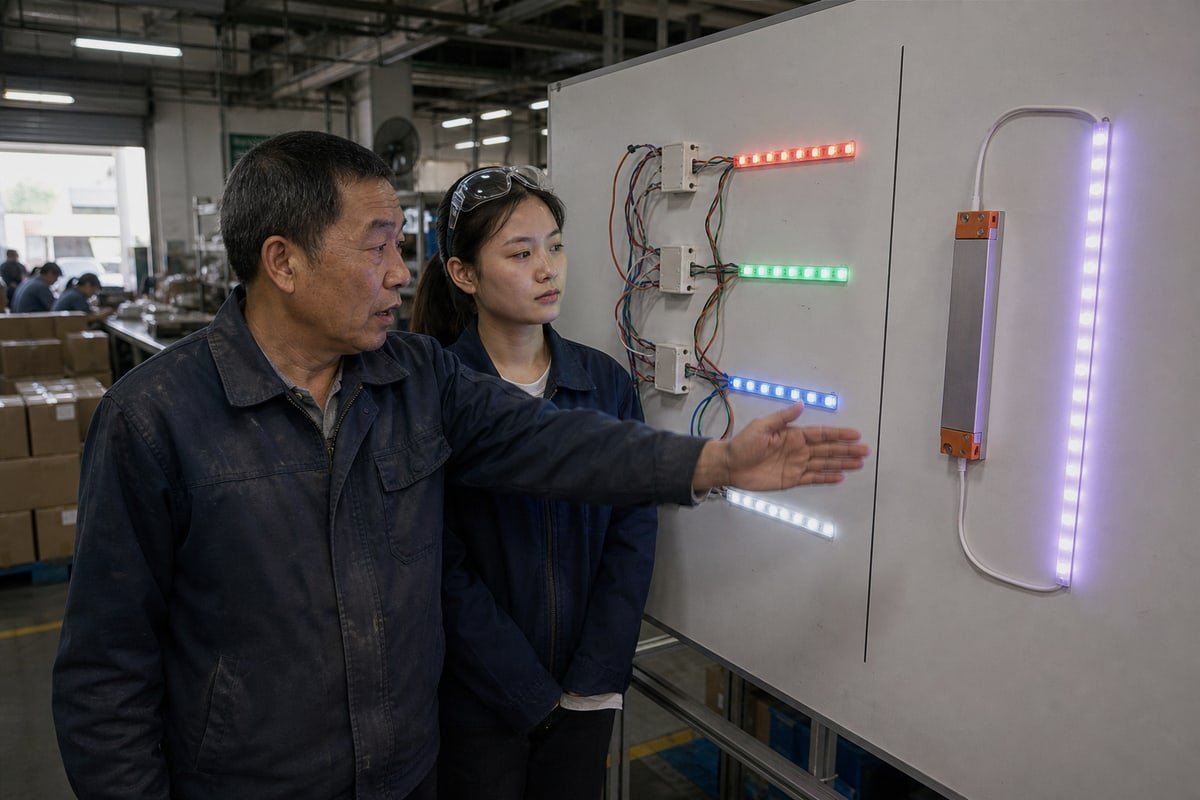
Låt mig bryta ner besparingarna ärligt, för en rättvis köpare bör ifrågasätta leverantörspåståenden. En DT8 CV-drivrutin kostar ofta mer per enhet än en grundläggande DT6-dimsningsdrivrutin. Besparingarna uppstår på systemnivå, inte på enhetsprisraden.
Var besparingarna faktiskt kommer ifrån
| Kostnadspost | Multi-adress DT6-installation | Enkeladress DT8-installation |
|---|---|---|
| Adresser per RGBW-armatur | 3–4 | 1 |
| RGBW-armaturer per 64-adressbuss | Cirka 16 | Upp till 64 |
| Gateways och sub-styrenheter | Fler bussar, fler gateways | Betydligt färre |
| Idrifttagningsarbete | Adressera, gruppera och synkronisera varje kanal | Programmera en enhet per armatur |
| Scen- och mixningslogik | Extern styrenhet hanterar beräkningen | Inbyggt i drivrutinen |
Högre adressdensitet per buss innebär färre DALI-sub-styrenheter och gateways. Färre styrkanaler innebär mindre kabelkomplexitet mellan styrenheten och drivrutinen. Och eftersom RGBW-färgblandning körs inuti drivrutinen, slutar idrifttagningsingenjörer att skriva kanalsynkroniseringslogik och börjar helt enkelt tilldela scener. På projekt med snäva deadlines är de sparade idrifttagningsdagarna ofta värda mer än hårdvaruskillnaden.
Dynamisk effektallokering ger ytterligare en tyst besparing. När drivrutinen kan flytta effekt mellan kanaler inom en fast budget, kan du dimensionera drivrutinen för verklig användning istället för worst-case-totaler på varje kanal.
När DT8 är överdimensionerat
DT8 är inte automatiskt bättre för varje jobb. Om en korridor bara behöver enkel på/av eller enkanalsdimsning, är DT8:s färgkapacitet onödig overhead. Vår rådgivning till inköpsteam: specificera DT8 där koordinerad färg eller justerbar vit krävs, och behåll enklare enhetstyper på andra ställen. Behandla alla fasta procentsatser för besparingar som ett leverantörspåstående att verifiera mot din egen materialförteckning.
Hur stödjer DT8 snabbare anpassning och kortare ledtider för mina belysningsprojekt?
Förra kvartalet bytte vår Shenzhen-linje en OEM-kunds justerbara vita drivrutin från ett 2700–5700K-intervall till ett bredare intervall i en enda firmware-revision. Ingen ny verktygstillverkning, inget nytt PCB.
DT8 förkortar anpassningscykler eftersom färglogiken ligger i drivrutinens firmware, inte i anpassad kontrollhårdvara. OEM-ändringar som CCT-intervall, blandningskurvor, dimningsbeteende och varumärkning blir firmware- och märkningsuppgifter. Standardiserade DALI-2-färgkommandon gör också DT8 till den mest bryggklara basen för Matter-integrationer.

Detta är den del av DT8 som sällan syns i datablad men som betyder mest för köpare med tighta projektdeadlines. Eftersom DT8 koncentrerar intelligensen i drivrutinen, kan en hårdvaruplattform tjäna många private-label-varianter. Så här går en typisk ODM-cykel hos oss:
- Specifikationsbekräftelse. Vi kommer överens om utmatningstyp (RGB, RGBW eller justerbar vit), spänning, effekt och målmarknader som EU, Japan eller Australien.
- Firmware-konfiguration. Våra ingenjörer ställer in Tc-intervall, fadekurvor och blandningsbeteende i mjukvara. Ingen kretskortsomdesign behövs för de flesta ändringar.
- Märkt provtagning. Din logotyp och etikett går på standardhöljet — i vårt fall aluminiumkroppen med orange ändkåpor — och prover skickas för godkännande.
- QC- och åldringstester. Varje batch verifieras mot överenskomna färgbörvärden och säkerhetskrav, inklusive CE-, CB- och SELV-efterlevnad.
- Massproduktion. Eftersom steg 1–4 återanvänder en beprövad plattform förblir ledtiderna korta och återkommande order konsekventa.
Två marknadstrender förstärker denna hastighetsfördel. För det första växer efterfrågan på Human Centric Lighting på kontor, hotell och i hem, och DT8:s inbyggda steglösa CCT-styrning låter samma armatur hantera varma till kalla cirkadiska scener utan hårdvaruändringar. För det andra gör DT8:s standardiserade färgtyper professionella arkitektoniska CV-system ovanligt lätta att koppla till konsumentekosystem som Matter. Om din produktplan pekar mot smarta hem-integration skyddar en satsning på DT8 idag den planen imorgon.
Slutsats
RGB- och tunable white CV-projekt straffar komplexitet. DT8 eliminerar den: en adress, drivsidesmixning, absoluta färgmål och lägre systemkostnader. Specificera det där koordinerad färg är viktigt.
Fotnoter
En process genom vilken enheter granskar kvaliteten på alla faktorer som är involverade i produktionen. ↩︎
Den internationella standard som specificerar de tekniska kraven för DALI Device Type 8-färgstyrning. ↩︎
En additiv färgmodell där rött, grönt, blått och vitt ljus läggs samman. ↩︎
Officiellt industriorgan för DALI-protokollet, som tillhandahåller standarder och certifiering för ljusstyrenheter. ↩︎