











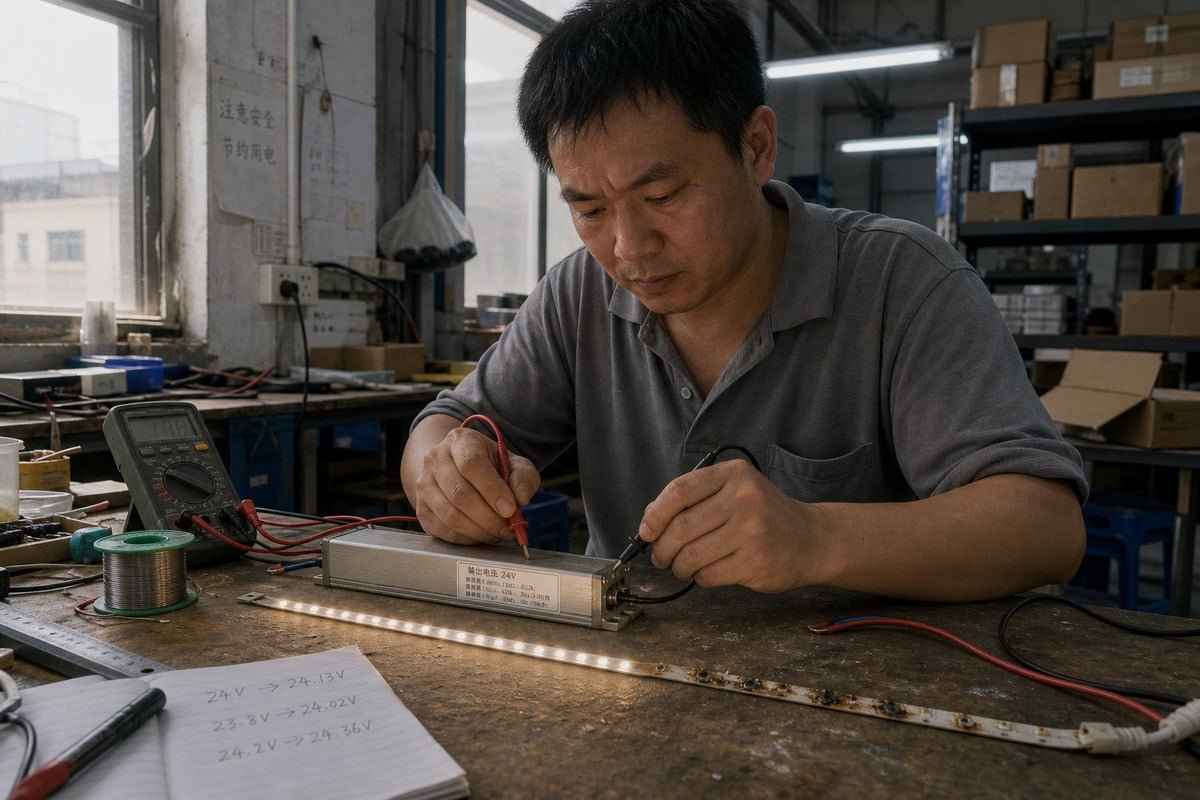
Elke maand sturen kopers ons Shenzhen-team berichten over doorgebrande LED-strips vaste DC-uitgangsspanning 1. De oorzaak is bijna altijd hetzelfde: iemand heeft verkeerd begrepen wat constante spanning betekent in een LED-driver.
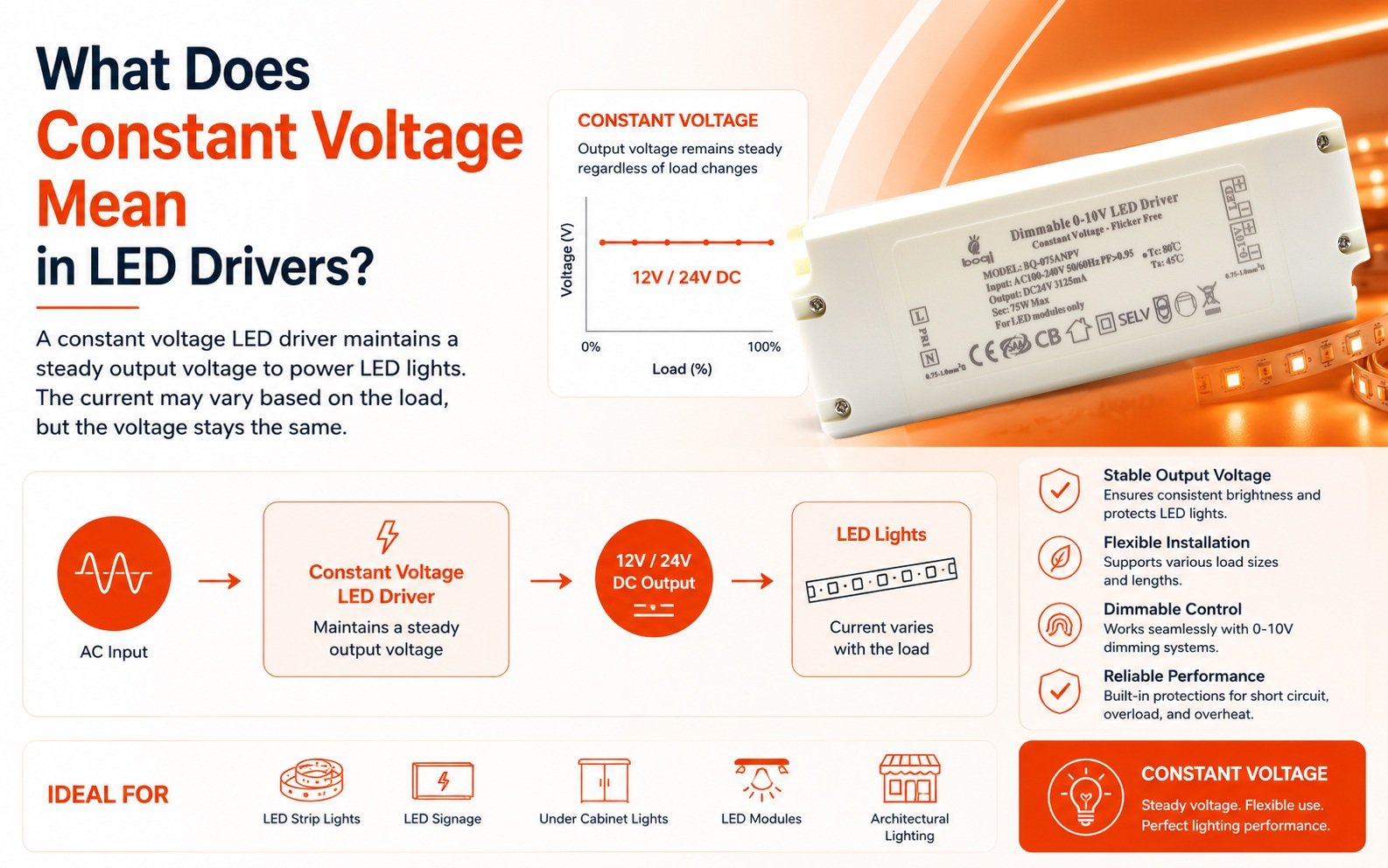
Constante spanning (CV) betekent dat een LED-driver een vaste DC-uitgangsspanning handhaaft, doorgaans 12V of 24V, terwijl de aangesloten LED-belasting bepaalt hoeveel stroom deze trekt via de ingebouwde stroombegrenzingscircuits. CV-drivers voeden LED-strips, neonflex, RGB/RGBW-producten en andere belastingen met vaste spanning.
Die definitie klinkt eenvoudig. Maar de details bepalen of uw project tien jaar meegaat of binnen tien weken faalt. Laat me u meenemen door wat er echt toe doet, van het lezen van het etiket tot inkoopcontroles.
Hoe onderscheid ik constante spanning en constante stroom LED-drivers?
Vorige maand stuurde een distributeur uit Singapore ons een WhatsApp-foto van twee driver-etiketten, met de vraag welke geschikt was voor haar stripproject. Het antwoord stond op het typeplaatje.
Een constante spanning LED-driver houdt de uitgangsspanning vast op 12V of 24V terwijl de stroom varieert met de belasting. Een constante stroom driver doet het tegenovergestelde: het vergrendelt de stroom en laat de spanning variëren om de LED-string te matchen. Controleer het etiket op uitgang XXV versus uitgang XXmA.
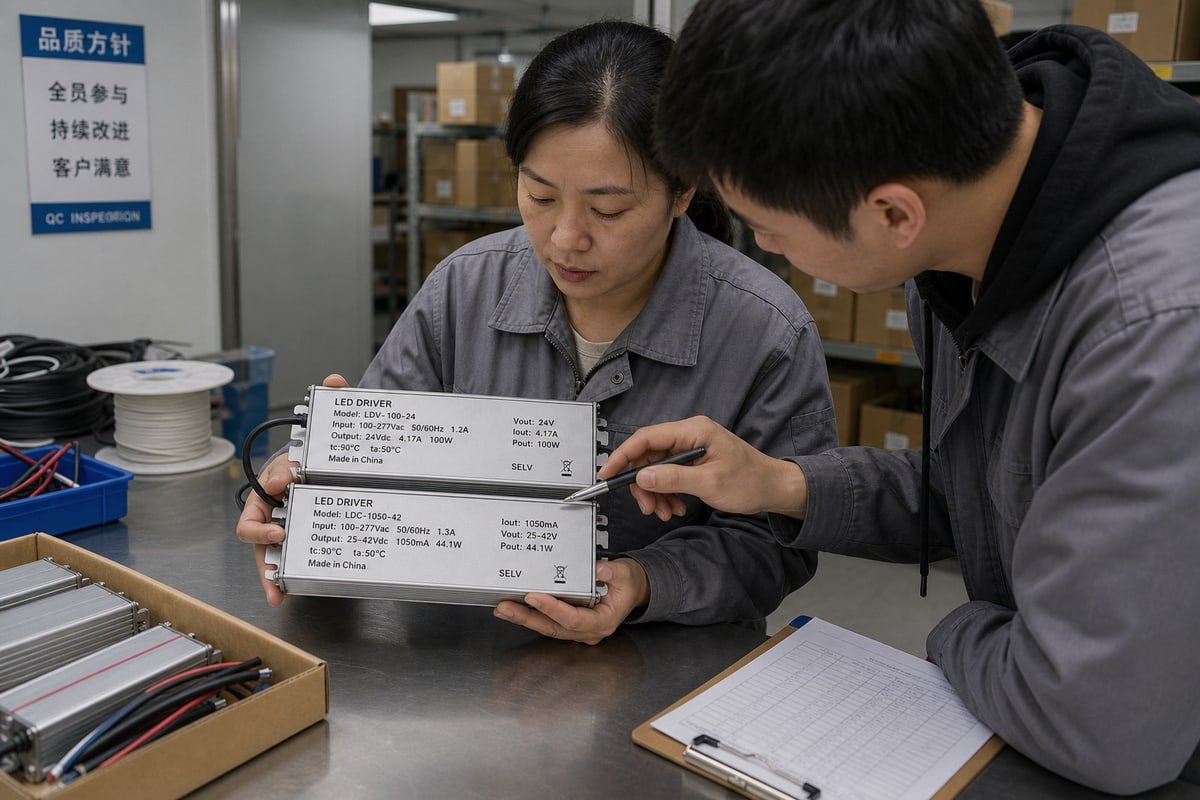
De snelste manier om de twee te onderscheiden is een zij-aan-zij weergave. Hier is de vergelijkingstabel die we naar nieuwe distributiepartners sturen:
| Voorzien zijn van | Constante Spanning (CV) | Constante Stroom (CC) |
|---|---|---|
| Wat wordt geregeld | Spanning (bijv. 12V en 24V DC) | Stroom (bijv. 350mA, 700mA) |
| Etiket vermeldt | Uitgang: 24V DC, max 8.3A | Uitgang: 700mA, 20–42V |
| Typische belastingen | LED-strips, neonflex, signage-modules | Naakte LED-arrays, downlights, paneelverlichting |
| Bedradingsstijl | Parallelle takken op één spanningsrail | Serieschakeling van LED-strings |
| Veelvoorkomend dimmen | Pulse width modulation dimmen aan de DC-zijde | Analoog of PWM op de driver zelf |
Lees eerst het etiket
Beide typen zijn intern schakelende voedingen. Beide zetten AC-netspanning om in DC. Het verschil is waar de feedbacklus op let. Een CV-driver bewaakt de spanning en corrigeert deze. Constante stroom drivers bewaken de stroom en laten de spanning zweven binnen een aangegeven bereik. Als het typeplaatje één vaste spanning vermeldt, is het CV. Als het één vaste stroom en een spanningsvenster vermeldt, is het CC.
Het onderscheid voor insiders uit de industrie
Hier is de framing die ik gebruik in elke technische training: CV-drivers regelen de spanning; de eigen circuits van de LED-belasting regelen de stroom. Daarom kunt u over het algemeen geen naakte high-power LED direct op een 24V CV-driver aansluiten en veilige werking verwachten. Een naakte LED regelt zijn eigen stroom niet. Een 24V-strip is daarentegen ontworpen voor die voeding en bevat stroombegrenzende componenten aan boord. Een nieuwere trend om op te merken: constante vermogen drivers regelen nu zowel spanning als stroom, maar voor belastingen met vaste spanning blijft CV de standaard.
Welke LED-producten moet ik combineren met een constante spanning driver?
Tijdens een recente burn-in run in onze Shenzhen-faciliteit hebben we voorbeelddrivers gekoppeld aan 24V-tape, neonflex en signage-modules om real-world compatibiliteit te bevestigen vóór een OEM-zending.
Combineer constante spanning drivers met LED-producten die zijn ontworpen voor een vaste DC-ingang: LED-strips, neonflex, RGB/RGBW-tape, signage-modules en lineaire verlichting onder kasten. Deze producten bevatten stroombegrenzende weerstanden of IC's aan boord, dus ze hebben alleen een stabiele 12V- of 24V-voeding nodig.
De regel is architectuur, niet helderheid. Een product komt in aanmerking voor een CV-driver wanneer het stroombeheer al in het product zelf zit. Hier is hoe de gangbare categorieën uiteenvallen:
| LED-product | Nominale spanning | Stroomregeling aan boord | CV-driver geschikt |
|---|---|---|---|
| Flexibele LED-strip | 12V of 24V | Stroombegrenzende weerstanden per segment | Uitstekend |
| Neon flex | 24V typisch | Weerstanden in de extrusie | Uitstekend |
| RGB/RGBW-tape | 12V of 24V | Weerstanden plus controller-IC's | Uitstekend |
| Beletteringmodules | 12V typisch | Weerstanden of kleine regelaar-IC's | Uitstekend |
| Lineaire verlichting onder kasten | 24V typisch | Regeling aan boord | Uitstekend |
| Kale COB of hoogvermogen-LED | Varieert per chip | Geen | Niet geschikt |
Waarom parallelle bedrading CV zo populair maakt
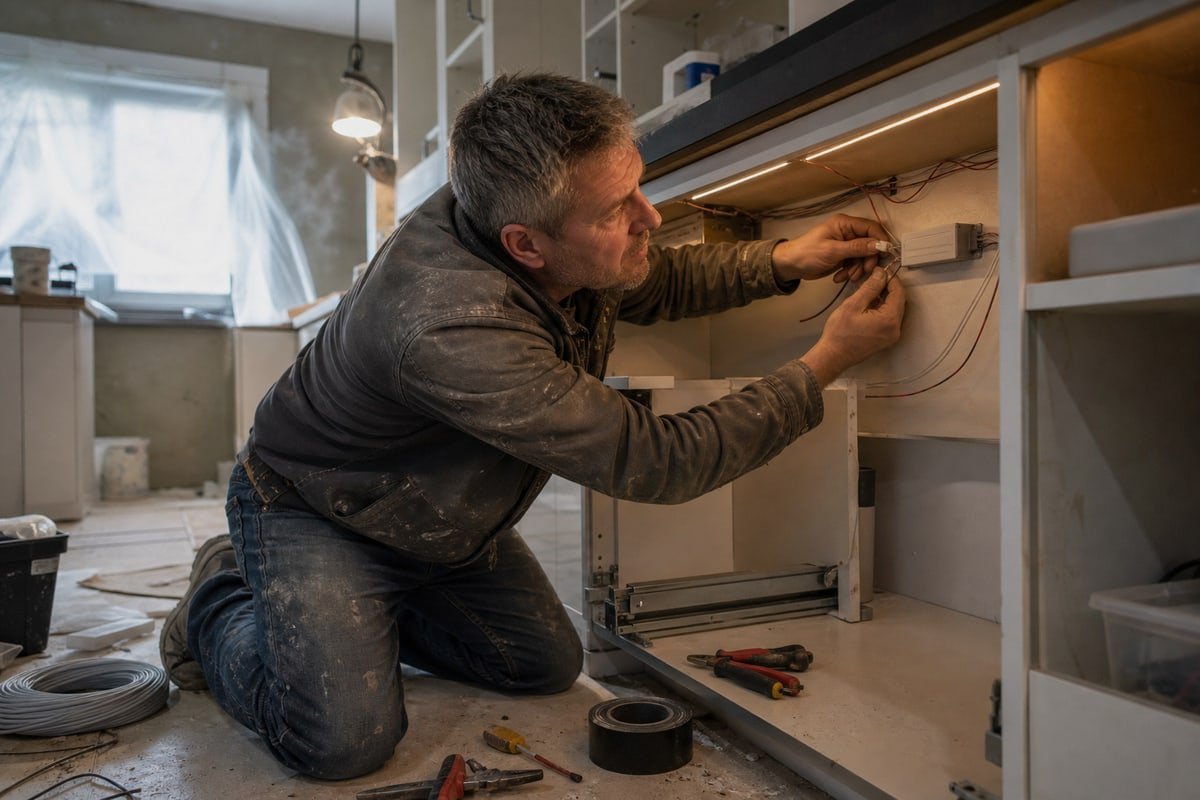
Een parallelle bedradingsconfiguratie is de natuurlijke partner van een vaste spanningsrail. Elke tak ziet dezelfde 24V en elke tak trekt zijn eigen stroom. Daarom kan een LED-stripvoeding meerdere runs tegelijk voeden en kunnen installateurs secties vrij toevoegen of verwijderen, zolang de totale belasting binnen de stroomlimiet van de driver blijft. Deze schaalbaarheid maakt CV precies de standaard voor lineaire verlichtingstoepassingen 2 en belettering.
Waar dimmen in past
De meeste CV-systemen dimmen via pulsbreedtemodulatie-dimmen. De driver handhaaft zijn stabiele spanningsrail en een PWM-dimmer schakelt de uitgang duizenden keren per seconde aan en uit. Daarom werken CV-voedingen zo naadloos samen met stripdimmers. In onze ODM-projecten testen we altijd de driver en de door de klant gekozen dimmer samen, omdat spanningsregeling en lichtregeling twee afzonderlijke taken zijn die moeten samenwerken.
Hoe kies ik de juiste uitgangsspanning voor mijn private-label verlichtingsproject?
Elke driverspecificatie die we offerten, omvat een afweging tussen headroom en kosten. Overdimensioneer de unit en de BOM stijgt; onderdimensioneer en veldstoringen volgen binnen enkele maanden.
Stem de drivervoltage exact af op de nominale spanning van het LED-product en dimensioneer de capaciteit op basis van het totale wattage. Kies 24V voor langere runs om spanningsval te verminderen, 12V voor korte accentruns en voeg ten minste 20 procent vermogensmarge toe boven de berekende continue belasting.
Begin met de rekenkunde en stel die vervolgens ter discussie. Stel dat uw private-label strip 24V is bij 10 W/m en het project 20 meter nodig heeft. De totale wattagebelasting is 10 × 20 = 200W. De stroomvereiste is 200 ÷ 24 ≈ 8,33A. Maar ik zou een klant nooit een 200W-driver laten kopen alleen omdat de rekenkunde klopt. Continue belastingsmarge, omgevingstemperatuur, behuizingsventilatie, kabelverliezen en inschakelgedrag tasten allemaal de nominale capaciteit aan. We vragen ook of het vermogensvermogen van de strip is gemeten onder reële bedrijfsomstandigheden of op een open testbank.
12V of 24V: welke rail wint?
| Factor | 12V DC | 24V DC |
|---|---|---|
| Spanningsval over afstand | Hoger relatief verlies | Halve stroom, veel minder val |
| Maximale praktische runlengte | Korter | Langer |
| Typisch gebruik | Korte accentruns, automotive-achtige projecten | Architecturale runs, lineaire verlichtingstoepassingen |
| Kabelkosten voor hetzelfde wattage | Dikkere koper nodig | Dunnere kabel acceptabel |
Het verborgen probleem: spanningsval
Hier is het punt dat de meeste datasheets overslaan. Correcte spanning betekent niet automatisch correcte dimensionering. Bij lange runs is een juiste spanningsvalberekening belangrijker dan het nominale wattage van de driver. Een correct gedimensioneerde 24V-driver kan nog steeds zichtbaar ongelijke helderheid produceren als de distributiebedrading te dun is of de strip slechts vanaf één uiteinde wordt gevoed. Voed lange strips waar mogelijk vanaf beide uiteinden. Veel professionele CV-drivers hebben ook een instelbare uitgangsschroef, vaak gemarkeerd als Vadj, waarmee een installateur de uitgang licht kan verhogen om draadverliezen te compenseren. We specificeren die functie op de meeste van onze dimbare driverlijnen om precies deze reden.
Welke kwaliteitscontroles moet ik aanvragen bij het inkopen van constante spanning drivers van een Chinese fabrikant?
Een harde les uit onze vroege exportjaren: een datasheet is een belofte, geen bewijs. We bouwen nu elke QC-vereiste in de inkooporder zelf in.
Vraag om vollast-burn-in-testen, tolerantierapporten voor uitgangsspanningsregeling, inschakelstroomgegevens, temperatuurderatingcurves, kopieën van veiligheidscertificeringen zoals UL Class 2 of CE/ENEC, rimpelmetingen en een overeengekomen AQL-inspectienorm vóór verzending. Controleer of elk rapport overeenkomt met uw daadwerkelijke productiebatch.
Na een decennium van het verzenden van dimbare drivers naar kopers in Singapore, Japan, Duitsland en Australië, is dit de zevenstaps-verificatiereeks die we inkoopmanagers aanraden in elke order op te nemen:
- Bevestig het veiligheidsdossier voor uw markt. Vraag welke norm van toepassing is: UL Class 2-certificering voor laagspanningsinstallaties in Noord-Amerika, CE- en ENEC-documentatie voor Europa, of de relevante keurmerken voor Zuidoost-Azië en Oceanië. Vraag om het certificaatnummer, niet alleen een logo op een datasheet.
- Controleer de uitgangsspanningsregeling. Vraag naar de tolerantie over het volledige belastingsbereik, van minimale tot maximale belasting. Een kwaliteits-CV-driver houdt zijn rail strak; een slechte zakt onder belasting en veroorzaakt kleurverschuiving op RGB-tape.
- Eis vollast-burn-in. We voeren uitgebreide burn-in uit bij nominale belasting en verhoogde omgevingstemperatuur vóór het verpakken. Vraag uw leverancier naar de burn-in-duur, temperatuur en storingslogboek.
- Beoordeel inschakelstroomgegevens. CV-systemen kunnen inschakelpieken vertonen tot 50 keer de nominale stroom terwijl de bulkcondensatoren opladen. Bevestig dat het ontwerp NTC-thermistorbeveiliging of een equivalent omvat, anders zullen de stroomonderbrekers en relais van uw klant lijden.
- Vraag de temperatuurderatingcurve op. Een 200W-label bij 25°C kan veel minder betekenen in een hete plafondholte. De curve toont de werkelijke capaciteit.
- Test de dimcompatibiliteit. Als het project gebruikmaakt van PWM-dimmen 3, vraag dan de fabriek om uw exacte dimmermodel met de driver te testen. Wij doen dit standaard in ons OEM-ontwikkelingsproces, omdat papieren compatibiliteit in de praktijk vaak faalt.
- Spreek een pre-shipment inspectie af. Stel een AQL-steekproefniveau schriftelijk vast en bevestig dat de rimpel- en hi-pot-testrecords met de partij meegaan. Voeg voor private-label bestellingen label-, logo- en verpakkingscontroles toe aan dezelfde inspectie.
Nog een tip uit onze gezamenlijke ontwikkelingswerkzaamheden: stuur de fabriek uw daadwerkelijke LED-product, niet alleen het datasheet. Testen met een echte belasting brengt afwijkingen aan het licht die documenten nooit onthullen.
Conclusie
Constante spanning betekent dat de driver 12V of 24V stabiel houdt terwijl uw LED-product de stroom regelt. Match de spanning, dimensionneer het vermogen met marge en verifieer de kwaliteit vóór verzending.
Voetnoten
Gezaghebbend overzicht van voedingseenheden en hun functie bij het handhaven van vaste uitgangsspanningen voor elektronische belastingen. ↩︎
Officiële DOE-bron voor LED-technologie en toepassingen, ter vervanging van de defecte EERE-link. ↩︎
Technische uitleg van Pulse Width Modulation voor het regelen van vermogen en dimmen in LED-verlichtingssystemen. ↩︎