













Ogni mese, gli acquirenti contattano il nostro team di Shenzhen per strisce LED bruciate tensione di uscita DC fissa 1. La causa è quasi sempre la stessa: qualcuno ha frainteso cosa significa tensione costante in un driver LED.
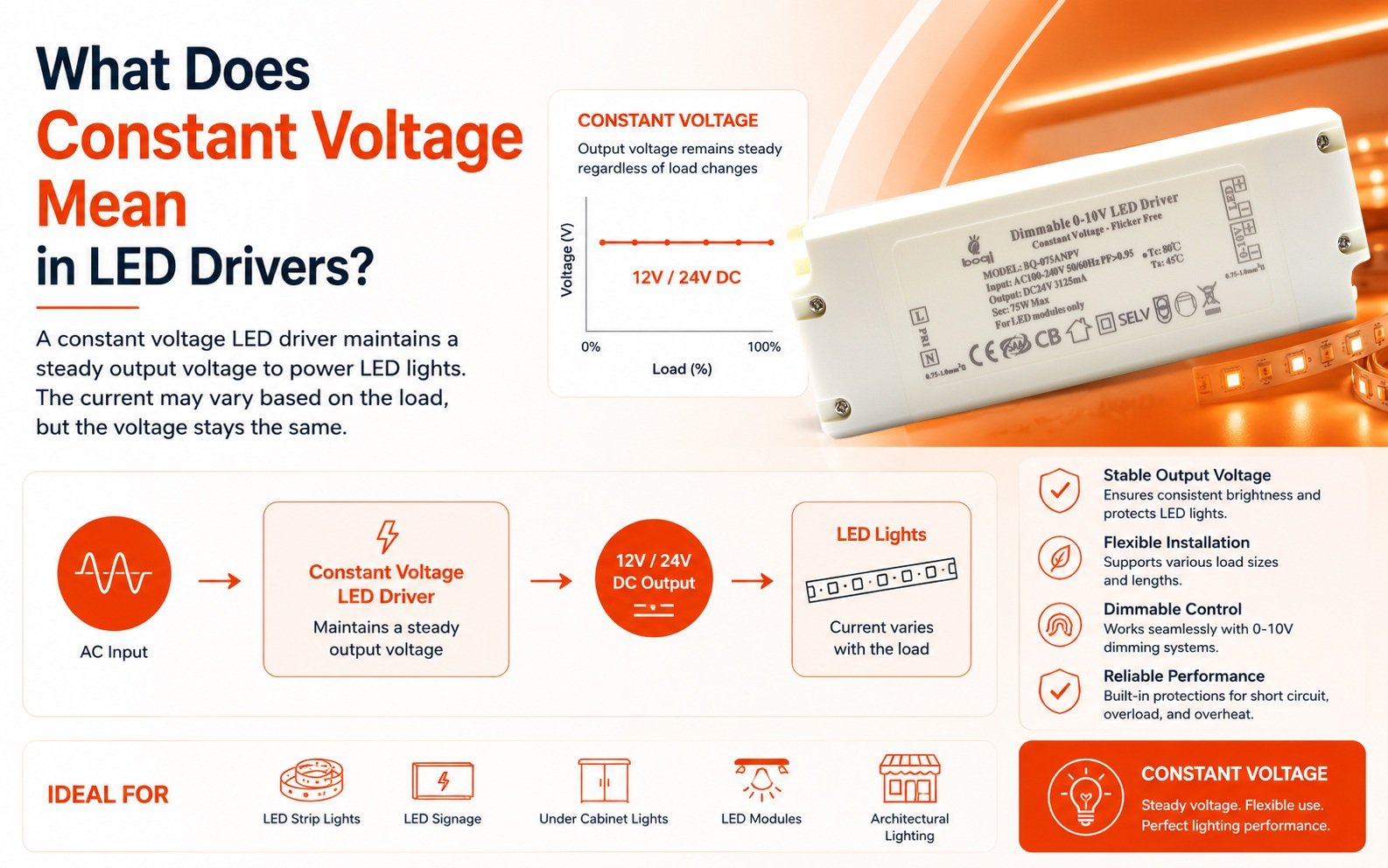
Tensione costante (CV) significa che un driver LED mantiene una tensione di uscita DC fissa, tipicamente 12V o 24V, mentre il carico LED collegato determina quanta corrente assorbe attraverso il suo circuito di limitazione della corrente integrato. I driver CV alimentano strisce LED, neon flex, prodotti RGB/RGBW e altri carichi a tensione fissa.
Questa definizione sembra semplice. Ma i dettagli decidono se il tuo progetto funziona per dieci anni o fallisce in dieci settimane. Lascia che ti spieghi cosa conta davvero, dalla lettura dell'etichetta ai controlli di approvvigionamento.
Come posso distinguere tra driver LED a tensione costante e corrente costante?
Il mese scorso, un distributore di Singapore ci ha inviato una foto WhatsApp di due etichette di driver, chiedendo quale si adattasse al suo progetto di strisce. La risposta era stampata sulla targhetta.
Un driver LED a tensione costante mantiene la tensione di uscita fissa a 12V o 24V mentre la corrente varia con il carico. Un driver a corrente costante fa l'opposto: blocca la corrente e lascia che la tensione cambi per adattarsi alla stringa LED. Controlla l'etichetta per uscita XXV rispetto a uscita XXmA.
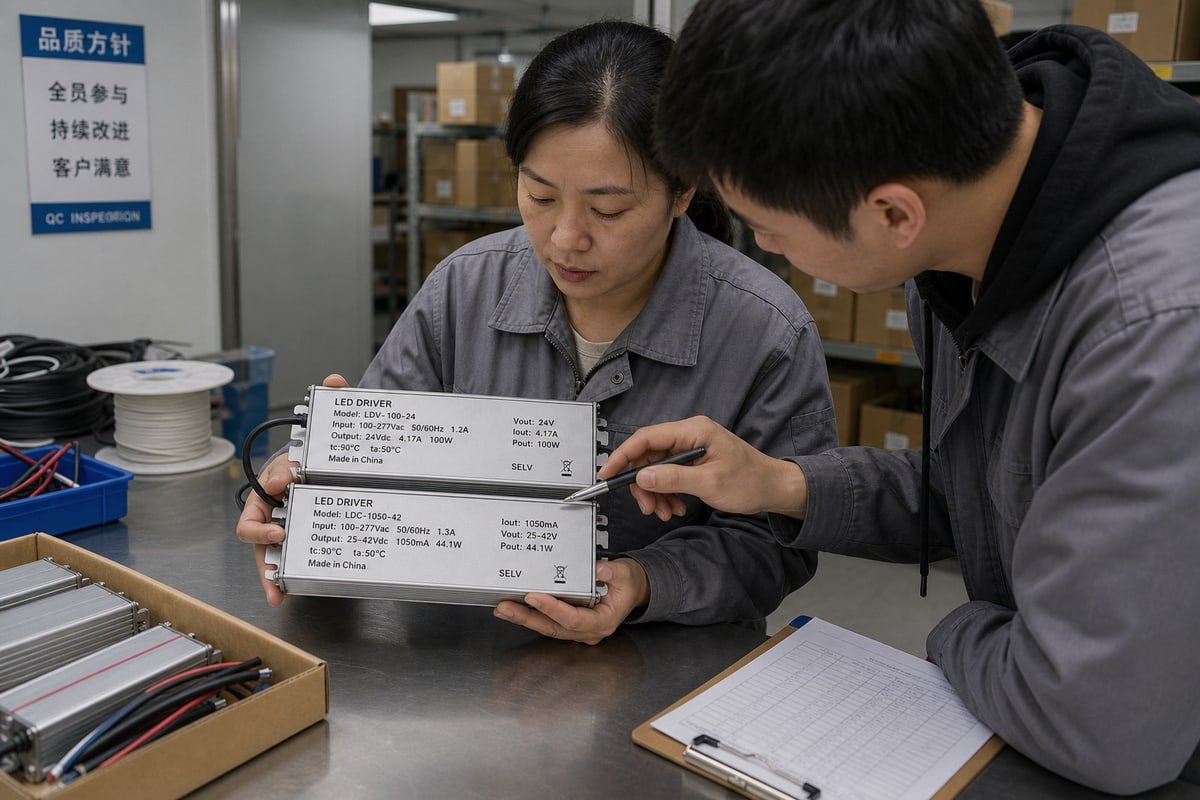
Il modo più rapido per distinguerli è una vista affiancata. Ecco la tabella comparativa che inviamo ai nuovi partner di distribuzione:
| Caratteristica | Tensione costante (CV) | Corrente costante (CC) |
|---|---|---|
| Cosa viene regolato | Tensione (es., 12V e 24V DC) | Corrente (es., 350mA, 700mA) |
| L'etichetta riporta | Uscita: 24V DC, max 8.3A | Uscita: 700mA, 20–42V |
| Carichi tipici | Strisce LED, neon flex, moduli per insegne | Array LED nudi, downlight, pannelli luminosi |
| Stile di cablaggio | Rami in parallelo su una linea di tensione | Stringhe LED in serie |
| Regolazione comune | Regolazione PWM sul lato DC | Analogico o PWM sul driver stesso |
Leggi prima l'etichetta
Entrambi i tipi sono internamente progetti di alimentatori a commutazione. Entrambi convertono la corrente alternata di rete in DC. La differenza è ciò che il circuito di feedback monitora. Un driver CV monitora la tensione e la corregge. Driver a corrente costantemonitorano la corrente e lasciano fluttuare la tensione in un intervallo dichiarato. Se la targhetta elenca una tensione fissa, è CV. Se elenca una corrente fissa e una finestra di tensione, è CC.
La distinzione da addetto ai lavori
Ecco la struttura che uso in ogni formazione tecnica: i driver CV controllano la tensione; il circuito del carico LED controlla la corrente. Ecco perché generalmente non puoi collegare un LED ad alta potenza nudo direttamente a un driver CV da 24V e aspettarti un funzionamento sicuro. Un LED nudo non regola la propria corrente. Una striscia da 24V, al contrario, è progettata per quella alimentazione e porta componenti di limitazione della corrente a bordo. Una tendenza più recente degna di nota: i driver a potenza costante ora regolano sia tensione che corrente, ma per carichi a tensione fissa, il CV rimane lo standard.
Quali prodotti LED dovrei abbinare a un driver a tensione costante?
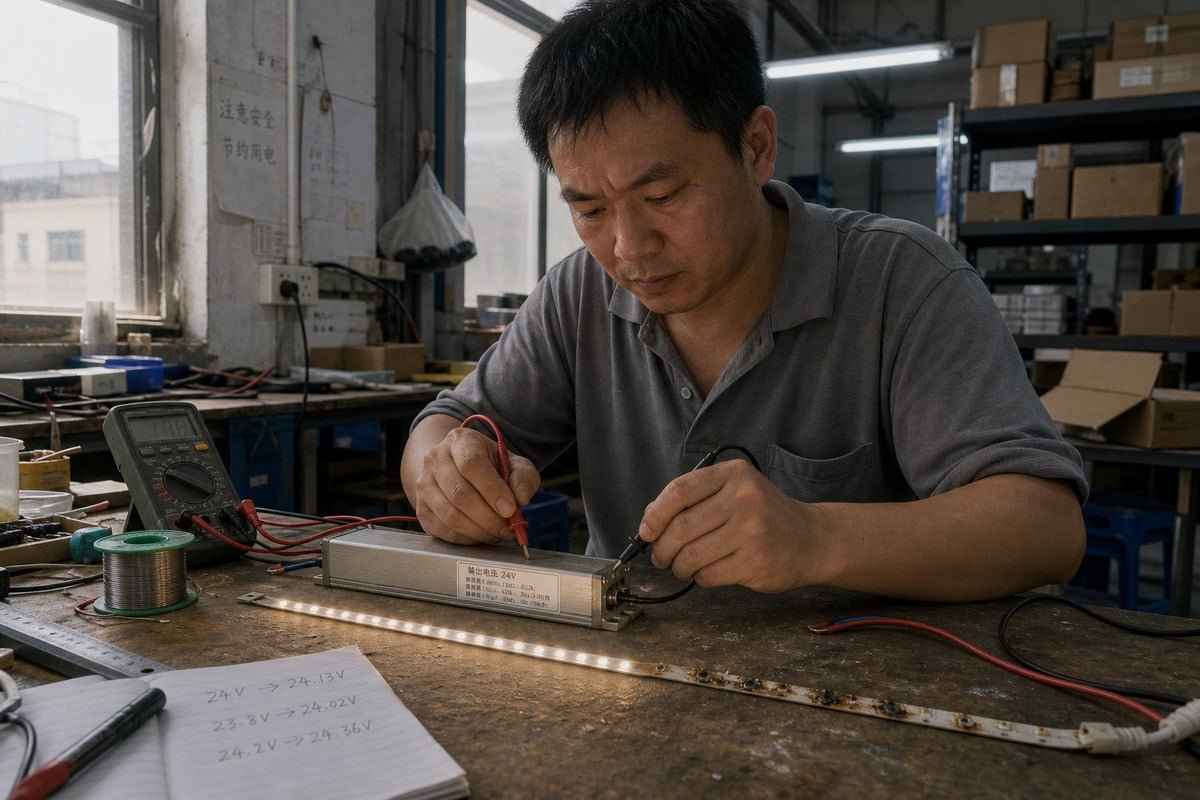
Durante un recente test di burn-in presso la nostra struttura di Shenzhen, abbiamo abbinato driver campione con nastro da 24V, neon flex e moduli per insegne per confermare la compatibilità nel mondo reale prima di una spedizione OEM.
Abbina driver a tensione costante con prodotti LED progettati per un ingresso DC fisso: strisce LED, neon flex, nastro RGB/RGBW, moduli per insegne e illuminazione lineare sotto mobile. Questi prodotti contengono resistori di limitazione della corrente o IC a bordo, quindi necessitano solo di un'alimentazione stabile a 12V o 24V.
La regola è l'architettura, non la luminosità. Un prodotto è idoneo per un driver CV quando la gestione della corrente risiede già all'interno del prodotto stesso. Ecco come si suddividono le categorie comuni:
| Prodotto LED | Tensione nominale | Controllo corrente a bordo | Adatto a driver CV |
|---|---|---|---|
| Striscia LED flessibile | 12V o 24V | Resistori di limitazione della corrente per segmento | Eccellente |
| Neon flex | 24V tipico | Resistori all'interno dell'estrusione | Eccellente |
| Nastro RGB/RGBW | 12V o 24V | Resistori più IC di controllo | Eccellente |
| Moduli per insegne | 12V tipico | Resistori o piccoli IC regolatori | Eccellente |
| Illuminazione lineare sotto pensile | 24V tipico | Regolazione integrata | Eccellente |
| COB nudo o LED ad alta potenza | Varia in base al chip | Nessuno | Non adatto |
Perché il cablaggio in parallelo rende il CV così popolare
Una configurazione di cablaggio in parallelo è il partner naturale di una tensione fissa. Ogni ramo vede la stessa 24V e ogni ramo assorbe la propria corrente. Ecco perché un alimentatore per strisce LED può alimentare più tratti contemporaneamente e perché gli installatori possono aggiungere o rimuovere sezioni liberamente, purché il carico totale rimanga entro il limite di corrente del driver. Questa scalabilità è esattamente ciò che rende la CV il default per applicazioni di illuminazione lineare 2 e insegne.
Dove si inserisce la regolazione della luminosità
La maggior parte dei sistemi CV dimmerizza tramite modulazione a larghezza di impulso (PWM). Il driver mantiene la sua tensione stabile e un dimmer PWM commuta l'uscita on e off migliaia di volte al secondo. Questo è il motivo per cui gli alimentatori CV si abbinano così bene ai dimmer per strisce. Nei nostri progetti ODM, testiamo sempre il driver e il dimmer scelto dal cliente insieme, perché la regolazione di potenza e il controllo della luce sono due lavori separati che devono cooperare.
Come scelgo la tensione di uscita giusta per il mio progetto di illuminazione a marchio privato?
Ogni specifica di driver che quotiamo comporta un compromesso tra margine e costo. Sovradimensionare l'unità fa salire la BOM; sottodimensionarla porta a guasti sul campo entro mesi.
Abbina la tensione del driver esattamente alla tensione nominale del prodotto LED, poi dimensiona la capacità in base alla potenza totale. Scegli 24V per tratti più lunghi per ridurre la caduta di tensione, 12V per brevi tratti d'accento, e aggiungi almeno il 20 percento di margine di potenza sopra il carico continuo calcolato.
Inizia con l'aritmetica, poi mettila in discussione. Supponiamo che la tua striscia a marchio privato sia 24V a 10 W/m e il progetto richieda 20 metri. Il carico di potenza totale è 10 × 20 = 200W. Il requisito di corrente è 200 ÷ 24 ≈ 8,33A. Ma non lascerei mai che un cliente acquisti un driver da 200W solo perché l'aritmetica corrisponde. Il margine di carico continuo, la temperatura ambiente, la ventilazione dell'involucro, le perdite dei cavi e il comportamento di inrush consumano tutti la capacità nominale. Chiediamo anche se la potenza nominale della striscia è stata misurata in condizioni operative reali o su un banco aperto.
12V o 24V: quale linea vince?
| Fattore | 12V DC | 24V DC |
|---|---|---|
| Caduta di tensione sulla distanza | Perdita relativa più alta | Metà della corrente, molto meno caduta |
| Lunghezza massima pratica del tratto | Più corta | Più lunga |
| Uso tipico | Brevi tratti d'accento, progetti stile automotive | Tratti architetturali, applicazioni di illuminazione lineare |
| Costo del cavo per la stessa potenza | Rame più spesso necessario | Cavo più sottile accettabile |
Il problema nascosto: la caduta di tensione
Ecco il punto che la maggior parte dei fogli tecnici salta. La tensione corretta non significa automaticamente dimensionamento corretto. Su tratti lunghi, un calcolo corretto della caduta di tensione conta più della potenza nominale del driver. Un driver 24V correttamente dimensionato può comunque produrre luminosità visibilmente irregolare se il cablaggio di distribuzione è sottodimensionato o se la striscia è alimentata da una sola estremità. Alimenta le strisce lunghe da entrambe le estremità dove possibile. Molti driver CV di livello professionale includono anche una vite di regolazione dell'uscita, spesso marcata Vadj, che consente all'installatore di aumentare leggermente l'uscita per compensare le perdite dei cavi. Specifichiamo questa funzione sulla maggior parte delle nostre linee di driver dimmerabili proprio per questo motivo.
Quali controlli di qualità dovrei richiedere quando acquisto driver a tensione costante da un produttore cinese?
Una lezione dura dai nostri primi anni di export: un foglio tecnico è una promessa, non una prova. Ora costruiamo ogni requisito di controllo qualità direttamente nell'ordine di acquisto.
Richiedi test di burn-in a pieno carico, report di tolleranza della regolazione della tensione di uscita, dati di corrente di inrush, curve di derating della temperatura, copie delle certificazioni di sicurezza come UL Class 2 o CE/ENEC, misurazioni del ripple e uno standard di ispezione AQL concordato prima della spedizione. Verifica che ogni report corrisponda al tuo lotto di produzione effettivo.

Dopo un decennio di spedizione di driver dimmerabili a acquirenti a Singapore, Giappone, Germania e Australia, questa è la sequenza di verifica in sette passi che raccomandiamo ai responsabili acquisti di scrivere in ogni ordine:
- Conferma il file di sicurezza per il tuo mercato. Chiedi quale standard si applica: certificazione UL Class 2 per installazioni a bassa tensione in Nord America, documentazione CE e ENEC per l'Europa, o i marchi pertinenti per il Sud-est asiatico e l'Oceania. Richiedi il numero di certificato, non solo un logo su un datasheet.
- Controlla la regolazione della tensione di uscita. Chiedi la tolleranza su tutta la gamma di carico, dal carico minimo al massimo. Un driver CV di qualità mantiene la sua tensione stabile; uno scadente cede sotto carico e causa spostamento del colore sul nastro RGB.
- Esigi burn-in a pieno carico. Eseguiamo burn-in prolungato a carico nominale e temperatura ambiente elevata prima dell'imballaggio. Chiedi al tuo fornitore la durata del burn-in, la temperatura e il registro dei guasti.
- Rivedi i dati di corrente di inrush. I sistemi a tensione costante possono presentare picchi di accensione segnalati fino a 50 volte la corrente nominale durante la carica dei condensatori di filtro. Verificare che il progetto includa una protezione con termistore NTC o equivalente, altrimenti gli interruttori e i relè del vostro cliente subiranno danni.
- Richiedere la curva di derating termico. Un'etichetta da 200W a 25°C può significare molto meno all'interno di un controsoffitto caldo. La curva indica la capacità reale.
- Testare la compatibilità di dimmerizzazione. Se il progetto utilizza Dimmerazione PWM 3, chiedere alla fabbrica di testare il vostro esatto modello di dimmer con il driver. Lo facciamo di serie nel nostro processo di sviluppo OEM perché la compatibilità sulla carta spesso fallisce nella pratica.
- Concordare l'ispezione pre-spedizione. Impostare per iscritto un livello di campionamento AQL e confermare che i registri di ripple e hi-pot test viaggino con il lotto. Per ordini a marchio privato, aggiungere alla stessa ispezione i controlli su etichette, logo e imballaggio.
Un altro suggerimento dal nostro lavoro di sviluppo collaborativo: inviate alla fabbrica il vostro prodotto LED reale, non solo il suo datasheet. Il test con carico reale rileva discrepanze che i documenti non rivelano mai.
Conclusione
Tensione costante significa che il driver mantiene stabili 12V o 24V mentre il vostro prodotto LED gestisce la corrente. Abbinate la tensione, dimensionate la potenza con margine e verificate la qualità prima della spedizione.
Note a piè di pagina
Panoramica autorevole delle unità di alimentazione e della loro funzione nel mantenere tensioni di uscita fisse per carichi elettronici. ↩︎
Risorsa ufficiale DOE per la tecnologia e le applicazioni LED, che sostituisce il link EERE non più funzionante. ↩︎
Spiegazione tecnica della modulazione di larghezza di impulso (PWM) utilizzata per il controllo della potenza e della dimmerizzazione nei sistemi di illuminazione LED. ↩︎