










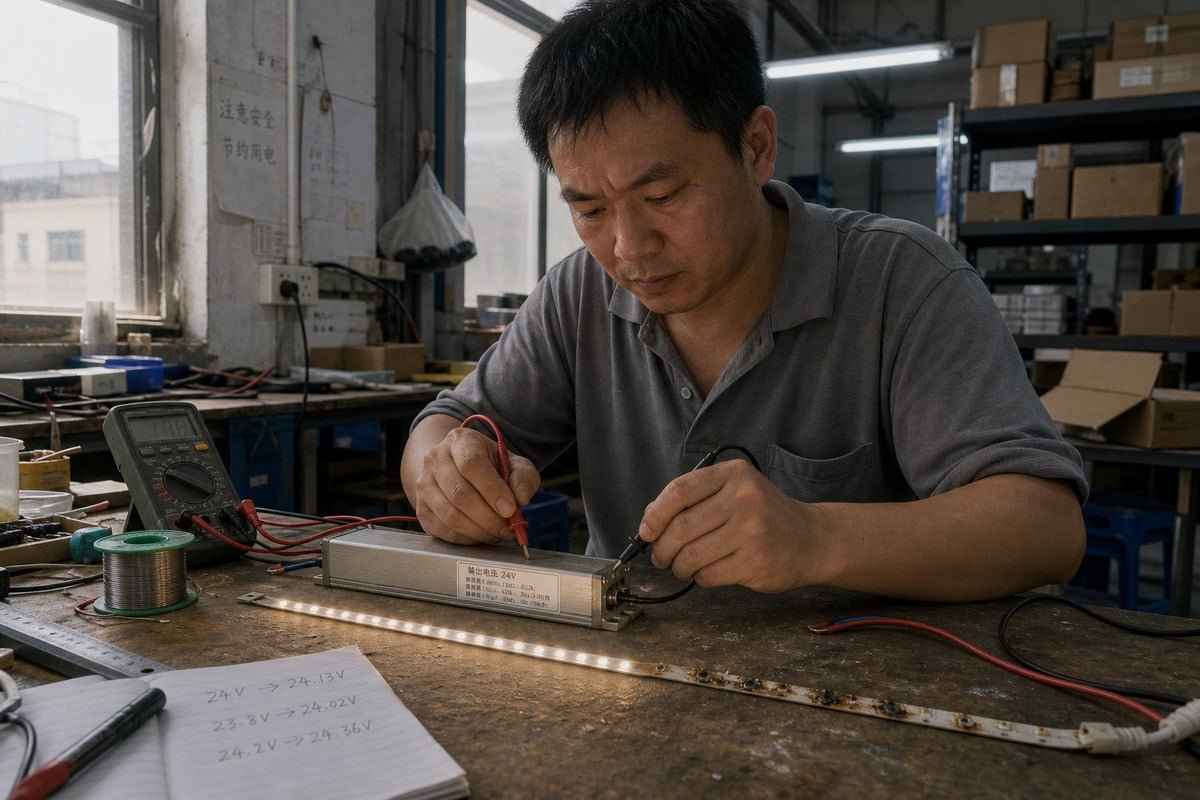
ทุกเดือน ผู้ซื้อจะส่งข้อความถึงทีมงานเซินเจิ้นของเราเกี่ยวกับแถบ LED ที่ไหม้เสียหาย แรงดันไฟฟ้ากระแสตรงคงที่ 1. สาเหตุมักจะเหมือนเดิมเสมอ: มีคนเข้าใจผิดว่าค่าคงที่ของแรงดันไฟฟ้าหมายถึงอะไรในไดรเวอร์ LED.
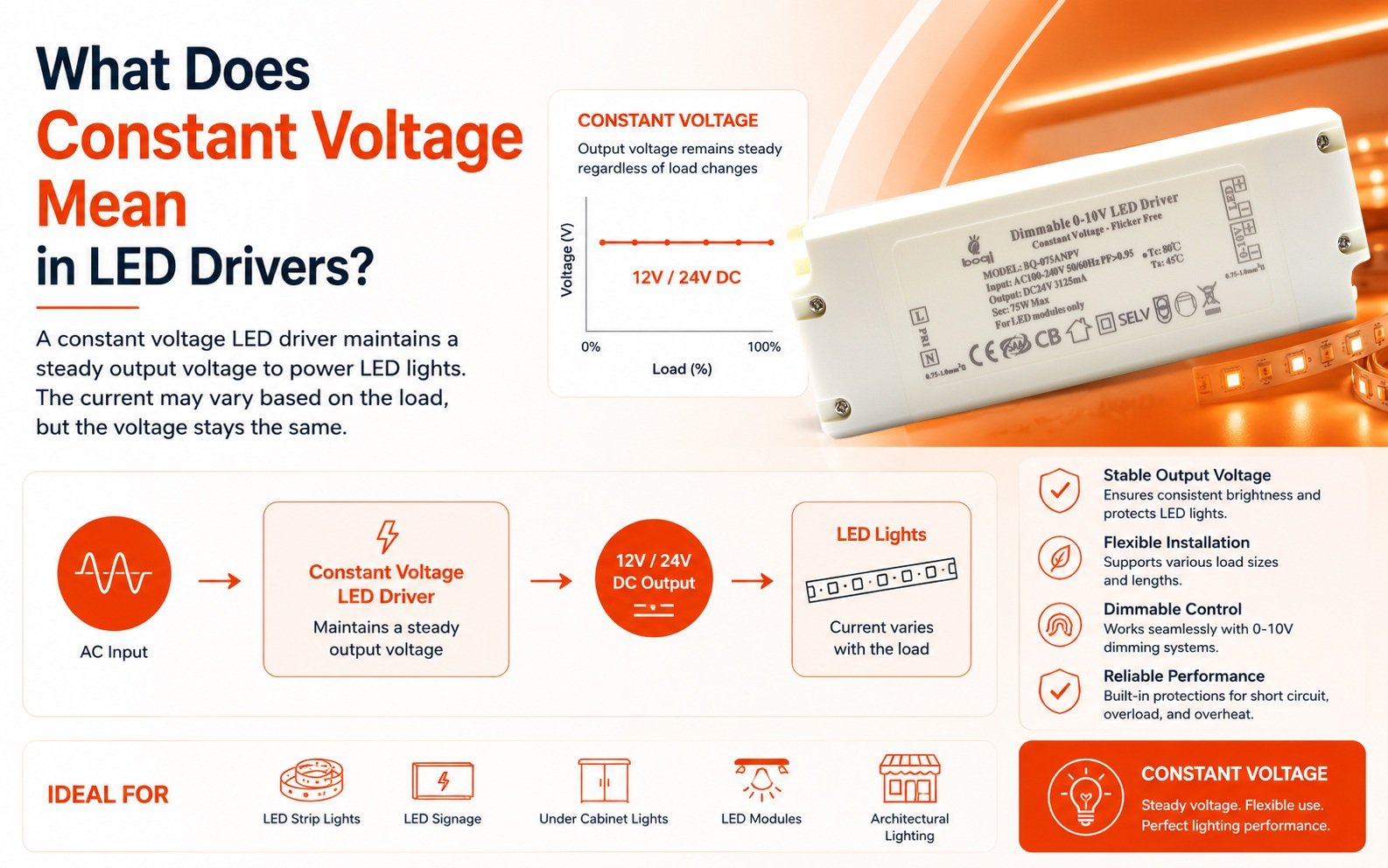
แรงดันคงที่ (CV) หมายถึงไดรเวอร์ LED รักษาแรงดันไฟฟ้ากระแสตรงคงที่ โดยทั่วไปคือ 12V หรือ 24V ในขณะที่โหลด LED ที่เชื่อมต่อเป็นตัวกำหนดว่ากระแสจะถูกดึงเท่าใดผ่านวงจรจำกัดกระแสในตัว CV ไดรเวอร์จ่ายไฟให้กับแถบ LED, นีออนเฟลกซ์, ผลิตภัณฑ์ RGB/RGBW และโหลดแรงดันคงที่อื่นๆ.
คำนิยามนั้นฟังดูง่าย แต่รายละเอียดเป็นตัวตัดสินว่าโปรเจกต์ของคุณจะทำงานได้สิบปีหรือล้มเหลวในสิบสัปดาห์ ให้ฉันอธิบายสิ่งที่สำคัญจริงๆ ตั้งแต่การอ่านฉลากไปจนถึงการตรวจสอบแหล่งจัดหา.
ฉันจะแยกความแตกต่างระหว่างไดรเวอร์ LED แรงดันคงที่และกระแสคงที่ได้อย่างไร?
เดือนที่แล้ว ตัวแทนจำหน่ายจากสิงคโปร์ส่งรูปถ่ายฉลากไดรเวอร์สองตัวผ่าน WhatsApp มาให้เรา ถามว่าแบบไหนเหมาะกับโปรเจกต์แถบไฟของเธอ คำตอบถูกพิมพ์อยู่บนแผ่นป้ายชื่อแล้ว.
ไดรเวอร์ LED แรงดันคงที่รักษาแรงดันไฟฟ้าขาออกให้คงที่ที่ 12V หรือ 24V ในขณะที่กระแสแปรผันตามโหลด ไดรเวอร์กระแสคงที่ทำตรงกันข้าม: มันล็อกกระแสและปล่อยให้แรงดันเปลี่ยนแปลงเพื่อให้ตรงกับชุด LED ตรวจสอบฉลากเพื่อดูเอาต์พุต XXV เทียบกับเอาต์พุต XXmA.
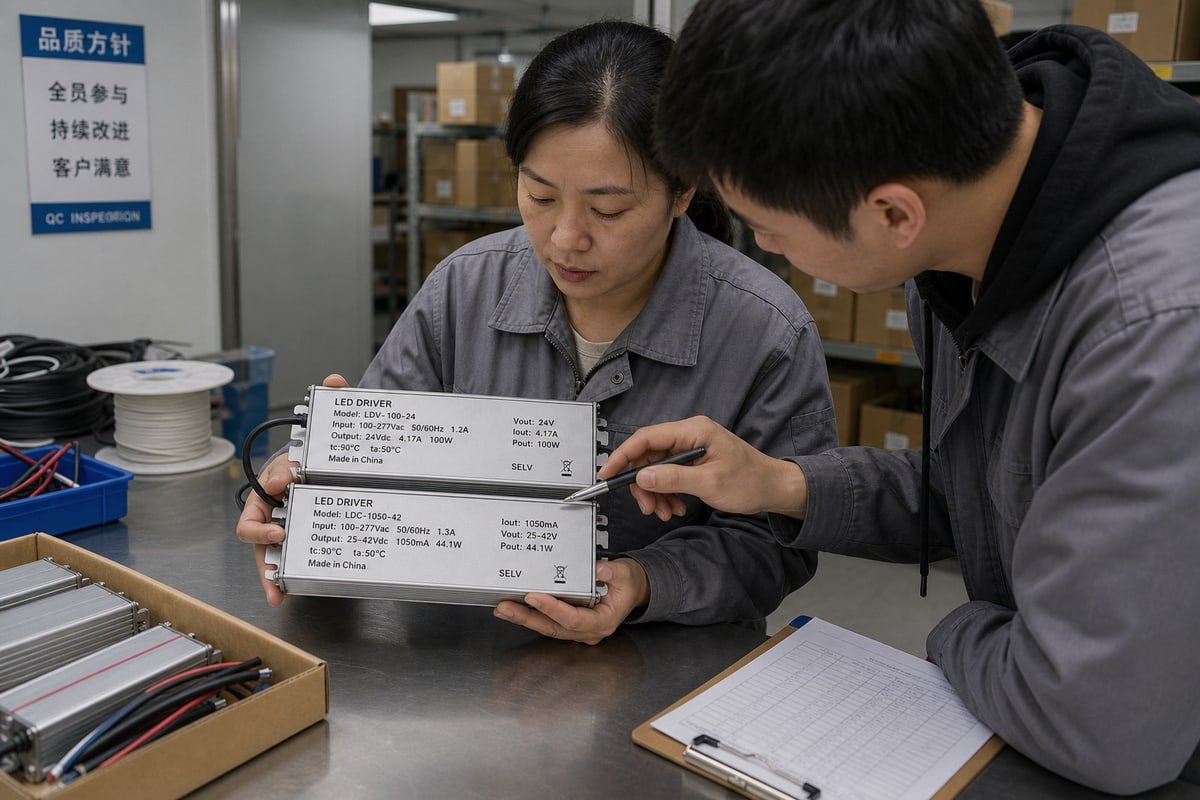
วิธีที่เร็วที่สุดในการแยกทั้งสองแบบคือการดูเทียบเคียงกัน นี่คือตารางเปรียบเทียบที่เราส่งให้พันธมิตรจัดจำหน่ายรายใหม่:
| ลักษณะเฉพาะ | แรงดันคงที่ (CV) | กระแสคงที่ (CC) |
|---|---|---|
| สิ่งที่ถูกควบคุม | แรงดันไฟฟ้า (เช่น 12V และ 24V DC) | กระแสไฟฟ้า (เช่น 350mA, 700mA) |
| ฉลากระบุ | เอาต์พุต: 24V DC, สูงสุด 8.3A | เอาต์พุต: 700mA, 20–42V |
| โหลดทั่วไป | แถบ LED, นีออนเฟลกซ์, โมดูลป้าย | ชุด LED เปล่า, ดาวน์ไลท์, โคมไฟแผง |
| รูปแบบการเดินสาย | สาขาแบบขนานบนรางแรงดันเดียว | ชุด LED แบบอนุกรม |
| การหรี่แสงทั่วไป | การหรี่แสงแบบ PWM ฝั่ง DC | อนาล็อกหรือ PWM ที่ตัวไดรเวอร์เอง |
อ่านฉลากก่อน
ทั้งสองประเภทเป็นสวิตชิ่งเพาเวอร์ซัพพลายภายในเหมือนกัน ทั้งคู่แปลงไฟ AC หลักเป็น DC ความแตกต่างคือสิ่งที่วงจรป้อนกลับเฝ้าดู ไดรเวอร์ CV เฝ้าดูแรงดันและแก้ไขให้ถูกต้อง. ไดรเวอร์กระแสคงที่เฝ้าดูกระแสและปล่อยให้แรงดันลอยอยู่ในช่วงที่กำหนด หากแผ่นป้ายชื่อระบุแรงดันคงที่ค่าเดียว แสดงว่าเป็น CV หากระบุกระแสคงที่ค่าเดียวและช่วงแรงดัน แสดงว่าเป็น CC.
ความแตกต่างแบบคนในวงการ
นี่คือกรอบที่ฉันใช้ในการฝึกอบรมทางเทคนิคทุกครั้ง: ไดรเวอร์ CV ควบคุมแรงดันไฟฟ้า วงจรของโหลด LED เองเป็นตัวควบคุมกระแส นั่นคือเหตุผลที่โดยทั่วไปคุณไม่สามารถเชื่อมต่อ LED กำลังสูงเปล่าเข้ากับไดรเวอร์ CV 24V โดยตรงแล้วคาดหวังการทำงานที่ปลอดภัย LED เปล่าไม่สามารถควบคุมกระแสของตัวเองได้ ในทางตรงกันข้าม แถบไฟ 24V ถูกออกแบบมาสำหรับแหล่งจ่ายนั้นและมีส่วนประกอบจำกัดกระแสติดตั้งอยู่บนบอร์ด แนวโน้มใหม่ที่น่าสนใจ: ไดรเวอร์กำลังคงที่ตอนนี้ควบคุมทั้งแรงดันและกระแส แต่สำหรับโหลดแรงดันคงที่ CV ยังคงเป็นมาตรฐาน.
ผลิตภัณฑ์ LED ใดที่ควรจับคู่กับไดรเวอร์แรงดันคงที่?
ในระหว่างการทดสอบเบิร์นอินเมื่อเร็วๆ นี้ที่โรงงานเซินเจิ้นของเรา เราได้จับคู่ไดรเวอร์ตัวอย่างกับเทป 24V, นีออนเฟลกซ์ และโมดูลป้ายเพื่อยืนยันความเข้ากันได้ในโลกจริงก่อนการจัดส่งแบบ OEM.
จับคู่ไดรเวอร์แรงดันคงที่กับผลิตภัณฑ์ LED ที่ออกแบบมาสำหรับอินพุต DC คงที่: แถบ LED, นีออนเฟลกซ์, เทป RGB/RGBW, โมดูลป้าย และไฟเส้นใต้ตู้ ผลิตภัณฑ์เหล่านี้มีตัวต้านทานหรือ IC จำกัดกระแสอยู่บนบอร์ด ดังนั้นจึงต้องการเพียงแหล่งจ่าย 12V หรือ 24V ที่เสถียร.
กฎคือสถาปัตยกรรม ไม่ใช่ความสว่าง ผลิตภัณฑ์มีคุณสมบัติสำหรับไดรเวอร์ CV เมื่อการจัดการกระแสอยู่ภายในตัวผลิตภัณฑ์แล้ว นี่คือการแบ่งหมวดหมู่ทั่วไป:
| ผลิตภัณฑ์ LED | แรงดันไฟฟ้าที่กำหนด | การควบคุมกระแสบนบอร์ด | ความเหมาะสมกับไดรเวอร์ CV |
|---|---|---|---|
| แถบ LED แบบยืดหยุ่น | 12V หรือ 24V | ตัวต้านทานจำกัดกระแสต่อเซกเมนต์ | ดีเยี่ยม |
| นีออนเฟลกซ์ | 24V ทั่วไป | ตัวต้านทานภายในรางอัดรีด | ดีเยี่ยม |
| เทป RGB/RGBW | 12V หรือ 24V | ตัวต้านทานร่วมกับไอซีคอนโทรลเลอร์ | ดีเยี่ยม |
| โมดูลป้ายโฆษณา | 12V ทั่วไป | ตัวต้านทานหรือไอซีเรกูเลเตอร์ขนาดเล็ก | ดีเยี่ยม |
| ไฟเชิงเส้นใต้ตู้ | 24V ทั่วไป | การควบคุมในตัว | ดีเยี่ยม |
| COB เปลือยหรือ LED กำลังสูง | แตกต่างตามชิป | ไม่มี | ไม่เหมาะสม |
ทำไมการเดินสายแบบขนานทำให้ CV เป็นที่นิยม
การเดินสายแบบขนานเป็นคู่หูธรรมชาติของระบบแรงดันคงที่ ทุกสาขาเห็นแรงดัน 24V เท่ากัน และแต่ละสาขาดึงกระแสของตัวเอง นี่คือเหตุผลที่แหล่งจ่ายไฟสำหรับแถบ LED สามารถจ่ายไฟให้หลายเส้นพร้อมกัน และเหตุผลที่ผู้ติดตั้งสามารถเพิ่มหรือถอดส่วนต่างๆ ได้อย่างอิสระ ตราบใดที่โหลดรวมยังอยู่ภายในขีดจำกัดกระแสของไดรเวอร์ ความสามารถในการขยายขนาดนี้คือสิ่งที่ทำให้ CV เป็นค่าเริ่มต้นสำหรับ การใช้งานไฟเชิงเส้น 2 และป้ายโฆษณา.
การหรี่แสงอยู่ตรงไหน
ระบบ CV ส่วนใหญ่หรี่แสงผ่าน การหรี่แสงแบบ PWM. ไดรเวอร์รักษาระดับแรงดันไฟฟ้าที่เสถียร และตัวหรี่แสงแบบ PWM จะสลับเอาต์พุตเปิด-ปิดหลายพันครั้งต่อวินาที นี่คือเหตุผลที่แหล่งจ่ายไฟ CV เข้ากันได้อย่างลงตัวกับตัวหรี่แสงแบบแถบ ในโครงการ ODM ของเรา เรามักจะทดสอบไดรเวอร์ร่วมกับตัวหรี่แสงที่ลูกค้าเลือกเสมอ เนื่องจากการควบคุมกำลังไฟและการควบคุมแสงเป็นสองงานที่แยกจากกันซึ่งต้องทำงานร่วมกัน.
ฉันจะเลือกแรงดันไฟฟ้าขาออกที่เหมาะสมสำหรับโปรเจกต์ไฟแบรนด์ส่วนตัวได้อย่างไร?
ทุกสเปกไดรเวอร์ที่เราเสนอมีการแลกเปลี่ยนระหว่างความเผื่อและต้นทุน หากขนาดใหญ่เกินไปต้นทุน BOM จะสูงขึ้น หากขนาดเล็กเกินไปจะเกิดความล้มเหลวในภาคสนามภายในไม่กี่เดือน.
จับคู่แรงดันไดรเวอร์ให้ตรงกับแรงดันที่กำหนดของผลิตภัณฑ์ LED จากนั้นกำหนดขนาดความจุจากกำลังไฟรวม เลือก 24V สำหรับระยะทางยาวเพื่อลดแรงดันตก เลือก 12V สำหรับการใช้งานเน้นแสงระยะสั้น และเพิ่มระยะเผื่อกำลังไฟอย่างน้อย 20 เปอร์เซ็นต์เหนือโหลดต่อเนื่องที่คำนวณได้.
เริ่มจากเลขคณิต แล้วตั้งคำถามกับมัน สมมติว่าแถบแบรนด์ของคุณเป็น 24V ที่ 10 W/m และโครงการต้องการ 20 เมตร โหลดกำลังไฟรวมคือ 10 × 20 = 200W ความต้องการกระแสคือ 200 ÷ 24 ≈ 8.33A แต่ฉันจะไม่ให้ลูกค้าซื้อไดรเวอร์ 200W เพียงเพราะเลขคณิตตรงกัน ระยะเผื่อโหลดต่อเนื่อง อุณหภูมิแวดล้อม การระบายอากาศของตู้ enclosures การสูญเสียสายไฟ และพฤติกรรมกระแสไฟกระชาก ล้วนลดทอนความจุที่กำหนด เรายังถามด้วยว่าค่ากำลังของแถบถูกวัดภายใต้สภาพการทำงานจริงหรือบนโต๊ะทดสอบแบบเปิด.
12V หรือ 24V: แบบไหนดีกว่ากัน?
| ปัจจัย | 12V DC | 24V DC |
|---|---|---|
| แรงดันตกตามระยะทาง | การสูญเสียสัมพัทธ์สูงกว่า | กระแสครึ่งหนึ่ง แรงดันตกน้อยกว่ามาก |
| ความยาวการใช้งานสูงสุดที่ทำได้ | สั้นกว่า | ยาวกว่า |
| การใช้งานทั่วไป | การเน้นแสงระยะสั้น โครงการสไตล์ยานยนต์ | การใช้งานสถาปัตยกรรม การใช้งานไฟเชิงเส้น |
| ต้นทุนสายไฟสำหรับกำลังไฟเท่ากัน | ต้องใช้ทองแดงหนากว่า | สายไฟที่บางกว่ายอมรับได้ |
ปัญหาที่ซ่อนอยู่: แรงดันตกคร่อม
นี่คือจุดที่สเปกชีตส่วนใหญ่ข้ามไป แรงดันไฟฟ้าที่ถูกต้องไม่ได้หมายถึงการกำหนดขนาดที่ถูกต้องโดยอัตโนมัติ บนระยะทางยาว การคำนวณแรงดันตกที่ถูกต้องสำคัญกว่ากำลังไฟที่กำหนดของไดรเวอร์ ไดรเวอร์ 24V ที่กำหนดขนาดถูกต้องยังสามารถให้ความสว่างไม่สม่ำเสมออย่างเห็นได้ชัดหากสายไฟกระจายมีขนาดเล็กเกินไปหรือแถบถูกจ่ายไฟจากปลายเดียวเท่านั้น จ่ายไฟให้แถบยาวจากทั้งสองปลายหากเป็นไปได้ ไดรเวอร์ CV ระดับมืออาชีพหลายรุ่นยังมีสกรูปรับเอาต์พุต ซึ่งมักระบุเป็น Vadj ซึ่งช่วยให้ผู้ติดตั้งปรับเอาต์พุตขึ้นเล็กน้อยเพื่อชดเชยการสูญเสียสายไฟ เราระบุคุณสมบัตินี้ในไดรเวอร์แบบหรี่แสงได้ส่วนใหญ่ของเราด้วยเหตุผลนี้โดยเฉพาะ.
ควรขอตรวจสอบคุณภาพอะไรบ้างเมื่อจัดซื้อไดรเวอร์แรงดันคงที่จากผู้ผลิตจีน?
บทเรียนที่ยากจากช่วงปีแรกๆ ของการส่งออก: สเปกชีตคือคำสัญญา ไม่ใช่หลักฐาน ตอนนี้เราสร้างข้อกำหนด QC ทุกข้อลงในใบสั่งซื้อโดยตรง.
ขอการทดสอบเบิร์นอินที่โหลดเต็ม รายงานความคลาดเคลื่อนของการควบคุมแรงดันเอาต์พุต ข้อมูลกระแสไฟกระชาก กราฟการลดพิกัดอุณหภูมิ สำเนาใบรับรองความปลอดภัย เช่น UL Class 2 หรือ CE/ENEC การวัดริปเปิล และมาตรฐานการตรวจสอบ AQL ที่ตกลงร่วมกันก่อนจัดส่ง ตรวจสอบว่ารายงานแต่ละฉบับตรงกับชุดการผลิตจริงของคุณ.

หลังจากส่งไดรเวอร์แบบหรี่แสงได้ให้ผู้ซื้อในสิงคโปร์ ญี่ปุ่น เยอรมนี และออสเตรเลียมานานกว่าทศวรรษ นี่คือลำดับการตรวจสอบเจ็ดขั้นตอนที่เราแนะนำให้ผู้จัดการฝ่ายจัดซื้อเขียนลงในทุกคำสั่งซื้อ:
- ยืนยันไฟล์ความปลอดภัยสำหรับตลาดของคุณ. ถามว่ามาตรฐานใดที่เกี่ยวข้อง: การรับรอง UL Class 2 สำหรับการติดตั้งแรงดันต่ำในอเมริกาเหนือ เอกสาร CE และ ENEC สำหรับยุโรป หรือเครื่องหมายที่เกี่ยวข้องสำหรับเอเชียตะวันออกเฉียงใต้และโอเชียเนีย ขอหมายเลขใบรับรอง ไม่ใช่แค่โลโก้บนแผ่นข้อมูล.
- ตรวจสอบการควบคุมแรงดันไฟฟ้าขาออก. ถามค่าความคลาดเคลื่อนตลอดช่วงโหลดทั้งหมด ตั้งแต่โหลดต่ำสุดถึงสูงสุด ไดรเวอร์ CV คุณภาพดีจะรักษาระดับแรงดันให้คงที่ ส่วนไดรเวอร์คุณภาพต่ำจะทรุดตัวเมื่อรับโหลดและทำให้แถบ RGB เปลี่ยนสี.
- กำหนดให้มีการเบิร์นอินที่โหลดเต็มพิกัด. เราทำการเบิร์นอินเป็นเวลานานที่โหลดตามพิกัดและอุณหภูมิแวดล้อมสูงก่อนบรรจุภัณฑ์ ถามซัพพลายเออร์เกี่ยวกับระยะเวลาเบิร์นอิน อุณหภูมิ และบันทึกความผิดพลาด.
- ตรวจสอบข้อมูลกระแสไฟกระชากตอนเปิดเครื่อง. ระบบ CV อาจพบสไปก์ตอนสวิตช์เปิดที่รายงานสูงถึง 50 เท่าของกระแสพิกัดขณะที่ตัวเก็บประจุขนาดใหญ่ชาร์จ ยืนยันว่าการออกแบบมี NTC thermistor protection หรือเทียบเท่า มิฉะนั้นเบรกเกอร์และรีเลย์ของลูกค้าจะเสียหาย.
- ขอกราฟการลดพิกัดตามอุณหภูมิ. ป้าย 200W ที่ 25°C อาจหมายถึงค่าที่น้อยกว่ามากภายในช่องเพดานที่ร้อน กราฟจะบอกความสามารถที่แท้จริง.
- ทดสอบความเข้ากันได้ของการหรี่แสง. หากโปรเจกต์ใช้ การหรี่แสงแบบ PWM 3, ให้โรงงานทดสอบรุ่นดิimmerที่แน่นอนของคุณกับไดรเวอร์ เราทำสิ่งนี้เป็นมาตรฐานในกระบวนการพัฒนา OEM ของเรา เพราะความเข้ากันได้บนกระดาษมักล้มเหลวในทางปฏิบัติ.
- ตกลงเรื่องการตรวจสอบก่อนจัดส่ง. กำหนดระดับการสุ่มตัวอย่าง AQL เป็นลายลักษณ์อักษร และยืนยันว่าบันทึกการทดสอบริปเปิลและไฮพอตเดินทางไปพร้อมกับล็อต สำหรับคำสั่งซื้อแบรนด์ส่วนตัว เพิ่มการตรวจสอบฉลาก โลโก้ และบรรจุภัณฑ์ในการตรวจสอบเดียวกัน.
เคล็ดลับเพิ่มเติมจากงานพัฒนาร่วมกันของเรา: ส่งผลิตภัณฑ์ LED จริงของคุณไปให้โรงงาน ไม่ใช่แค่แผ่นข้อมูล การทดสอบโหลดจริงจะจับความไม่ตรงกันที่เอกสารไม่เคยเปิดเผย.
บทสรุป
แรงดันคงที่หมายความว่าไดรเวอร์รักษา 12V หรือ 24V ให้คงที่ในขณะที่ผลิตภัณฑ์ LED ของคุณจัดการกระแส จับคู่แรงดัน คำนวณวัตต์ด้วยระยะเผื่อ และตรวจสอบคุณภาพก่อนจัดส่ง.
เชิงอรรถ
ภาพรวมเชิง authoritative ของหน่วยจ่ายไฟและหน้าที่ในการรักษาแรงดันขาออกคงที่สำหรับโหลดอิเล็กทรอนิกส์. ↩︎
แหล่งข้อมูล DOE อย่างเป็นทางการสำหรับเทคโนโลยี LED และการประยุกต์ใช้ แทนที่ลิงก์ EERE ที่เสีย. ↩︎
คำอธิบายทางเทคนิคของ Pulse Width Modulation ที่ใช้ควบคุมกำลังและหรี่แสงในระบบไฟ LED. ↩︎