













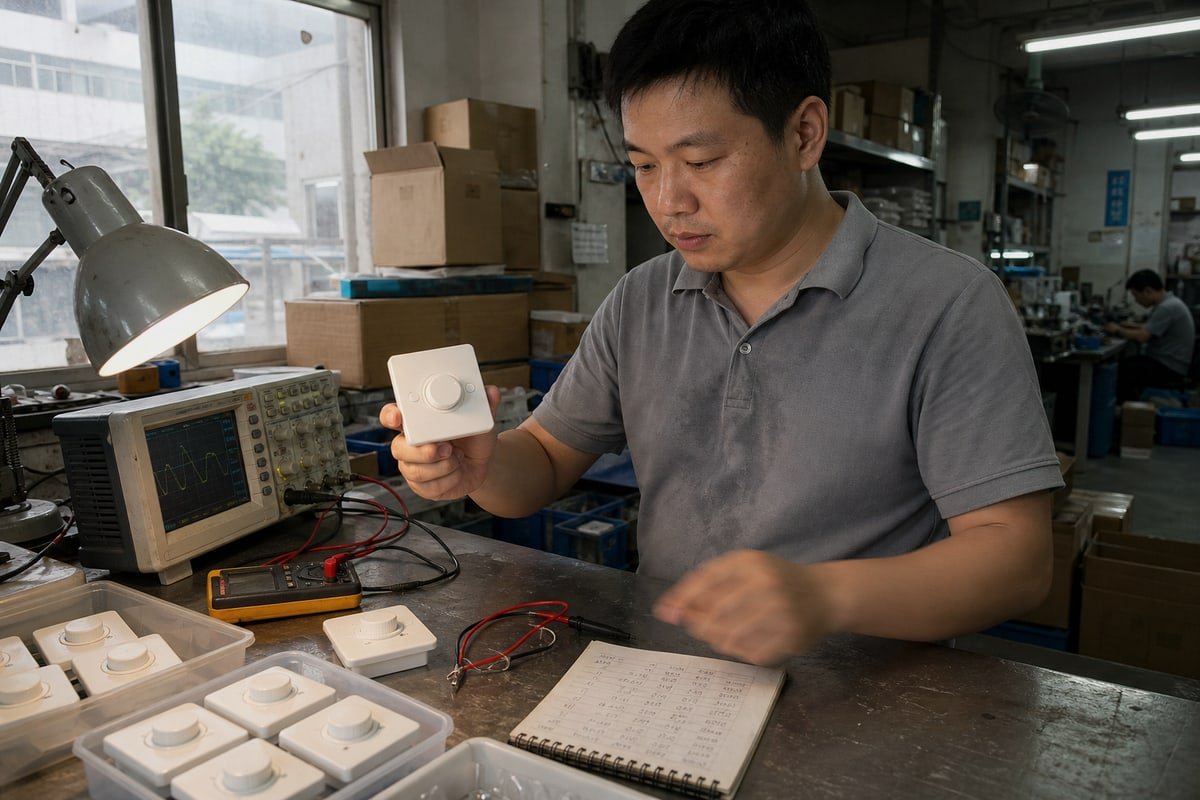
Bộ điều chỉnh độ sáng trailing edge hứa hẹn khả năng điều khiển LED mượt mà, nhưng nhấp nháy và tiếng ù vẫn làm hỏng dự án khi thiết bị không tương thích. Trên dây chuyền sản xuất tại Thâm Quyến của chúng tôi, chúng tôi kiểm tra chính xác lỗi đó hàng ngày.
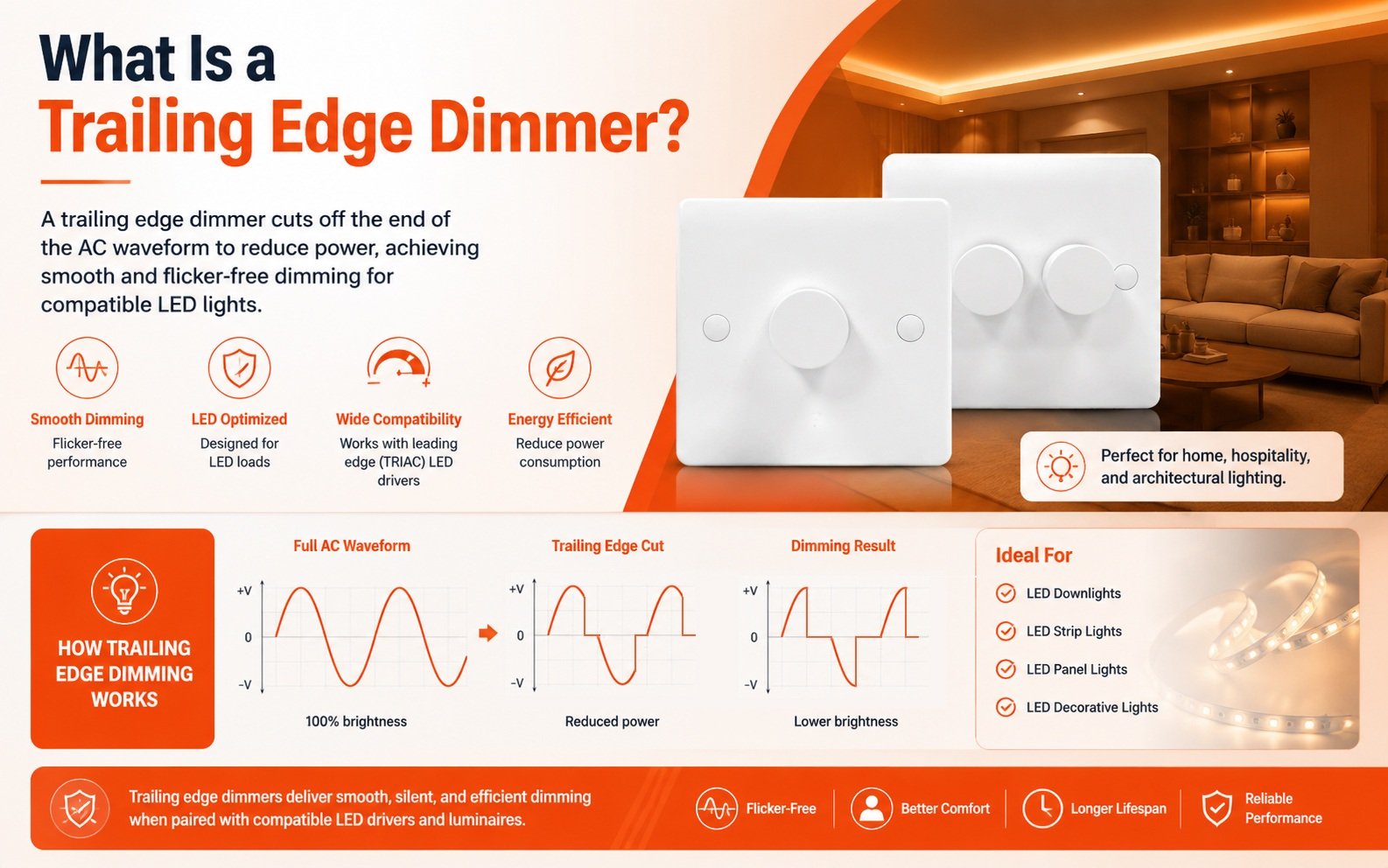
Bộ điều chỉnh độ sáng trailing edge là một bộ điều chỉnh độ sáng AC điện tử giúp giảm công suất ánh sáng bằng cách ngắt dòng điện gần cuối mỗi nửa chu kỳ của dạng sóng AC. Còn được gọi là điều chỉnh độ sáng đảo pha, thiết bị này sử dụng công tắc MOSFET và phù hợp với các driver LED hiện đại được thiết kế cho phương pháp cắt pha này.
Định nghĩa đó chỉ là điểm khởi đầu. Câu chuyện thực sự nằm ở cách dạng sóng bị cắt, cách nó khác biệt so với các thiết kế cũ, và tại sao driver LED quyết định kết quả có chuyên nghiệp hay không. Hãy để tôi hướng dẫn bạn qua từng phần.
Bộ điều chỉnh độ sáng trailing edge thực sự hoạt động như thế nào?
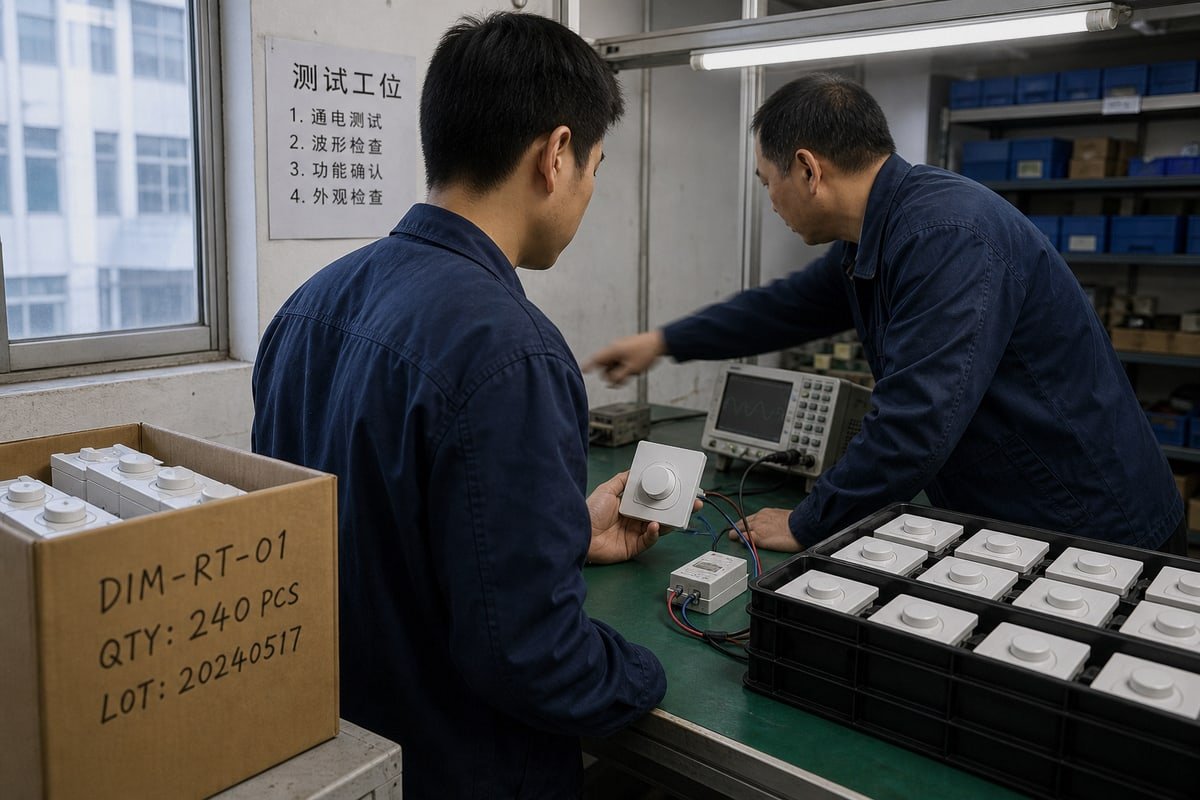
Tháng trước, các kỹ sư của chúng tôi đã kiểm tra một lô bộ điều chỉnh độ sáng xoay trước khi xuất khẩu sang Ý. Quan sát dạng sóng sụp đổ nhẹ nhàng ở cuối mỗi chu kỳ giải thích công nghệ này rõ hơn bất kỳ bảng dữ liệu nào.
Bộ điều chỉnh độ sáng trailing edge cho phép mỗi nửa chu kỳ AC bắt đầu bình thường, sau đó một MOSFET ngắt dòng điện trước điểm zero crossing. Cắt nhiều phần đuôi của dạng sóng sẽ giảm công suất ánh sáng; cắt ít hơn sẽ tăng công suất. Driver LED chuyển đổi dạng sóng bị cắt này thành đầu ra độ sáng đã được điều chỉnh.
Điện lưới đến dưới dạng sóng hình sin lặp lại. Mỗi sóng có hai nửa chu kỳ, và mỗi nửa chu kỳ bắt đầu và kết thúc tại điểm zero crossing. Bộ điều chỉnh độ sáng trailing edge hoạt động trên cấu trúc đó. Nó cho phép dòng điện chạy từ thời điểm nửa chu kỳ bắt đầu. Sau đó, tại một điểm được định thời chính xác, nó ngắt dòng điện trước khi nửa chu kỳ kết thúc. Đây là lý do kỹ thuật này được gọi là điều chỉnh độ sáng đảo pha. Chuỗi tín hiệu rất đơn giản: Dạng sóng AC → cắt pha trailing-edge → driver LED → đầu ra ánh sáng được kiểm soát.
Tại sao công nghệ MOSFET lại quan trọng ở đây
Các thiết kế cắt pha cũ hơn dựa vào TRIAC, loại linh kiện khóa và ngắt đột ngột. Các thiết bị trailing edge sử dụng công nghệ MOSFET 1 hoặc IGBT thay thế. Các công tắc bán dẫn này cho phép quá trình tắt có kiểm soát và dần dần. Dòng điện suy giảm tự nhiên về không thay vì bị cắt mạnh. Sự suy giảm nhẹ nhàng đó ngăn ngừa hư hỏng back-EMF trong các mạch biến áp điện tử nhạy cảm và giảm xung điện áp trên đường dây.
Trình tự cắt pha, từng bước một
| Giai đoạn | Điều gì xảy ra | Ảnh hưởng đến ánh sáng |
|---|---|---|
| Điểm zero crossing | Nửa chu kỳ bắt đầu, dòng điện chạy bình thường | Bắt đầu cấp nguồn |
| Giai đoạn dẫn điện | Dạng sóng đi qua không bị thay đổi | Năng lượng đến driver |
| Ngắt theo thời gian định sẵn | MOSFET ngắt dòng điện trước khi chu kỳ kết thúc | Độ sáng được thiết lập bằng thời gian |
| Suy giảm về không | Dòng điện giảm nhẹ nhàng đến điểm giao cắt không tiếp theo | Ứng suất thấp, tiếng ồn thấp |
Nhiều bộ điều chỉnh độ sáng trailing edge cũng bao gồm tính năng khởi động mềm. Thay vì cấp toàn bộ công suất cho đèn khi bật, chúng tăng dần dần. Trong thử nghiệm của chúng tôi, điều này bảo vệ các linh kiện LED khỏi sốc nhiệt và kéo dài tuổi thọ đèn qua nhiều chu kỳ bật tắt lặp lại.
Sự khác biệt giữa bộ điều chỉnh độ sáng trailing edge và leading edge là gì?
Một giám đốc thu mua ở Singapore từng hỏi tôi tại sao kho bộ điều chỉnh độ sáng leading edge của cô ấy kêu ù khi lắp đèn LED retrofit. Câu trả lời nằm ở nửa dạng sóng mà mỗi thiết kế cắt.
Bộ điều chỉnh độ sáng leading edge cắt phần đầu của mỗi nửa chu kỳ AC bằng TRIAC, phù hợp với tải điện trở như đèn sợi đốt và halogen. Bộ điều chỉnh độ sáng trailing edge cắt phần cuối bằng MOSFET, phù hợp với tải điện dung LED và tải điện tử. Không loại nào tốt hơn tuyệt đối; giai đoạn đầu vào của bộ điều khiển kết nối quyết định lựa chọn đúng.
Đây là bảng so sánh tổng quan:
| Tính năng | Bộ điều chỉnh độ sáng leading edge | Bộ điều chỉnh độ sáng trailing edge |
|---|---|---|
| Vị trí cắt | Đầu mỗi nửa chu kỳ | Cuối mỗi nửa chu kỳ |
| Còn được gọi là | Pha thuận, điều chỉnh độ sáng triac | Điều chỉnh độ sáng pha đảo |
| Linh kiện chuyển mạch | TRIAC | MOSFET hoặc IGBT |
| Hành vi bật/tắt | Đột ngột, bước điện áp sắc nét | Suy giảm dần, mềm mại về không |
| Tải phù hợp nhất | Điện trở, đèn sợi đốt, halogen | Loại tải điện dung, bộ điều khiển LED, ELV |
| Yêu cầu tải tối thiểu | Cao hơn | Thấp hơn đáng kể |
| Tiếng ồn âm thanh | Dễ kêu ù do xung điện áp | Thường im lặng |
| Nhiễu đường dây | Méo hài bậc cao hơn | Giảm THD và nhiễu điện |
Việc bật đột ngột của TRIAC tạo ra xung điện áp dốc ở mỗi nửa chu kỳ. Trên máy biến áp từ 2 và đèn dây tóc, xung đó vô hại. Trên tải điện dung như bộ lọc đầu vào của bộ điều khiển LED, nó tạo ra dòng điện xung lớn. Dòng xung đó là nguồn gốc của tiếng ù, hiện tượng nhấp nháy và tuổi thọ linh kiện ngắn lại mà khách hàng Singapore của tôi đang gặp phải. Thiết kế trailing edge tránh hoàn toàn xung điện áp, điều này cũng giảm méo hài tổng 3 trên mạch cục bộ.
Có một khác biệt thực tế thứ hai mà chúng tôi nhấn mạnh với mọi nhà phân phối: tải tối thiểu. Bộ điều chỉnh độ sáng leading edge cần tải điện trở đáng kể để giữ TRIAC dẫn điện ổn định. Bộ điều chỉnh độ sáng trailing edge duy trì dải điều chỉnh độ sáng ổn định với công suất thấp hơn nhiều, điều này quan trọng khi một phòng sử dụng một số ít đèn LED âm trần công suất thấp.
Một lưu ý từ bàn thiết kế: đây không đơn giản là công nghệ cũ so với công nghệ mới. Một số hệ thống lắp đặt với biến áp từ tính cũ thực sự yêu cầu điều khiển leading-edge. Lựa chọn đúng phụ thuộc vào đặc tính điện của driver được kết nối, bao gồm hành vi dòng điện đầu vào và yêu cầu tải tối thiểu.
Driver LED nào tương thích với bộ điều chỉnh độ sáng trailing edge?
Đầu những năm kinh doanh xuất khẩu, chúng tôi đã học được một bài học đắt giá: một bộ điều chỉnh độ sáng vượt qua mọi bài kiểm tra trên bàn thử lại nhấp nháy với đèn downlight nhãn riêng của khách hàng. Tầng đầu vào của driver chính là người gác cổng.
Driver LED tương thích với bộ điều chỉnh độ sáng trailing edge là driver điều chỉnh cắt pha (phase-cut) được đánh giá rõ ràng cho điều khiển trailing-edge hoặc reverse-phase. Kiểm tra phương pháp điều chỉnh, tải tối thiểu, tải tối đa và dải điều chỉnh được ghi trong thông số driver, đồng thời xác nhận cặp ghép trên danh sách tương thích đã kiểm tra của nhà sản xuất trước khi mua.

Sai lầm lớn nhất của người mua là chọn bộ điều chỉnh độ sáng chỉ dựa trên thông số kỹ thuật của bộ điều chỉnh. Trong kinh nghiệm phát triển driver LED có thể điều chỉnh độ sáng cùng với chính các bộ điều chỉnh, tầng đầu vào của driver LED là người gác cổng tương thích thực sự. Một driver chứa bộ chỉnh lưu, một Bộ lọc EMI 4, tụ lưu trữ và mạch chuyển mạch. Khi cạnh sau của dạng sóng AC bị ngắt, các thành phần đó quyết định cách driver phản ứng. Hai driver có cùng công suất định mức có thể hoạt động hoàn toàn khác nhau trên cùng một bộ điều khiển treo tường.
Một tổ hợp không tương thích vẫn có thể gây ra lỗi thực tế, ngay cả khi cả hai sản phẩm đều xuất sắc riêng lẻ:
- Nhấp nháy ở độ sáng thấp
- Dải điều chỉnh bị hạn chế
- Mất tín hiệu (dropout) trước khi bộ điều chỉnh đạt mức tối thiểu
- Nhấp nháy khi bật nguồn
- Tiếng ồn âm thanh
- Hành vi không đồng đều giữa các tải LED khác nhau
Danh sách kiểm tra tương thích LED thực tế
| Kiểm tra | Điều cần xác minh | Lý do quan trọng |
|---|---|---|
| Phương pháp điều chỉnh độ sáng | Bảng dữ liệu driver ghi rõ hỗ trợ trailing-edge / reverse-phase | Một số driver chỉ chấp nhận điều chỉnh triac hoặc tín hiệu 0–10V |
| Tải tối thiểu | Tổng công suất đèn vượt quá mức tối thiểu của bộ điều chỉnh | Dưới mức tối thiểu, mạch hoạt động sai và nhấp nháy |
| Tải tối đa | Tổng công suất nằm dưới trần định mức | Quá tải làm giảm tuổi thọ của MOSFET |
| Phạm vi làm mờ | Phần trăm mức thấp công bố phù hợp với nhu cầu dự án | Xác định độ sâu điều chỉnh trước khi mất tín hiệu |
| Danh sách tương thích | Cặp ghép dimmer–driver chính xác được xác minh | Các cặp đã kiểm tra trên bàn thử là bằng chứng đáng tin cậy duy nhất |
Khi chúng tôi chạy các dự án OEM cho các thương hiệu chiếu sáng, chúng tôi kiểm tra mẫu driver chính xác với bộ điều chỉnh chính xác trước khi sản xuất hàng loạt. Điều này chậm hơn so với việc tin tưởng vào bảng dữ liệu. Đây cũng là cách duy nhất để đảm bảo tương thích LED trên toàn bộ dòng sản phẩm, đó là lý do chúng tôi xây dựng danh sách cặp ghép đã kiểm tra vào mọi dự án phát triển hợp tác.
Tại sao tôi nên chọn bộ điều chỉnh độ sáng trailing edge cho các dự án chiếu sáng của mình?
Mỗi báo giá chúng tôi chuẩn bị đều cân nhắc chi phí so với hiệu suất. Thiết bị trailing edge có giá cao hơn các mẫu điều chỉnh triac cơ bản, nhưng ít khiếu nại hơn thường biện minh cho sự khác biệt này trong các dự án LED.
Chọn bộ điều chỉnh trailing edge cho các dự án LED vì nó mang lại hoạt động êm hơn, điều chỉnh mức thấp mượt mà hơn, yêu cầu tải tối thiểu thấp hơn, bảo vệ khởi động mềm và giảm nhiễu điện. Luôn xác minh tương thích driver trước tiên, vì những lợi ích này chỉ xuất hiện khi bộ điều chỉnh và driver được ghép đúng.

Đối với nhà phân phối và công ty kỹ thuật, trường hợp cho điều khiển trailing edge dựa trên hành vi đo lường được thay vì nhãn tiếp thị. Khi bộ điều chỉnh và driver được ghép đúng, các lợi ích tích lũy nhanh chóng. Điều chỉnh mức thấp trở nên mượt mà thay vì từng bậc. Tiếng ù nghe được biến mất vì không có xung điện áp TRIAC để làm rung các thành phần. Tải điện tử công suất thấp giữ ổn định, điều này quan trọng khi các bộ đèn ngày càng giảm công suất. Và tính năng khởi động mềm tăng công suất từ từ, bảo vệ bóng đèn khỏi sốc nhiệt ở mỗi lần bật.
Hiện tượng ghosting và phát sáng ở trạng thái tắt
Một vấn đề chúng tôi liên tục giải quyết trong các dự án ODM là hiện tượng ghosting, ánh sáng mờ của LED ở trạng thái tắt. Các thiết kế trailing edge chất lượng giải quyết điều này thông qua tích hợp tụ điện shunt, giúp xả dòng rò còn lại khiến các driver nhạy cảm vẫn được cấp điện yếu. Nếu hàng tồn kho hiện tại của bạn phát sáng khi tắt, đây là giải pháp cần chỉ định.
Lập kế hoạch lắp đặt: giảm tải cho nhiều bộ điều chỉnh
Có một thông số khiến ngay cả thợ lắp đặt giàu kinh nghiệm cũng bị bất ngờ. Khi nhiều mô-đun điều chỉnh dùng chung một hộp tường nhiều vị trí, nhiệt tích tụ và mỗi thiết bị phải được giảm định mức. Chúng tôi thiết kế cả mặt trước xoay một núm và hai núm, và chúng tôi in hướng dẫn giảm định mức chính vì lý do này.
| Lắp đặt | Công suất định mức điển hình | Ghi chú lập kế hoạch |
|---|---|---|
| Thiết bị đơn, hộp đơn | Tải định mức đầy đủ | Thông số tiêu chuẩn áp dụng |
| Hai thiết bị, hộp dùng chung | Giảm tải trên mỗi đơn vị | Giảm công suất là bắt buộc, không phải tùy chọn |
| Ba đơn vị trở lên | Giảm thêm trên mỗi đơn vị | Xác nhận đường cong giảm công suất cụ thể |
Để có hiệu suất không nhấp nháy trên toàn bộ dự án, quan điểm B2B của tôi rất đơn giản. Đừng chọn bộ điều chỉnh độ sáng cắt cạnh sau chỉ vì nó được tiếp thị là tương thích LED. Hãy kiểm tra phương pháp điều chỉnh độ sáng được chỉ định của driver, tải tối thiểu, tải tối đa, phạm vi điều chỉnh độ sáng và khả năng tương thích đã được xác minh với bộ điều chỉnh độ sáng cụ thể. Đó là nơi khác biệt giữa bộ điều chỉnh độ sáng hoạt động và hệ thống điều chỉnh độ sáng hoạt động chuyên nghiệp thường xuất hiện.
Sự kết luận
Bộ điều chỉnh độ sáng cắt cạnh sau cắt phần cuối của mỗi nửa chu kỳ AC để điều chỉnh độ sáng LED êm ái, không nhiễu. Kết hợp với driver đã được xác minh, mọi dự án đều hoạt động chuyên nghiệp.
Chú thích
Tổng quan kỹ thuật về công nghệ bán dẫn được sử dụng để tắt có kiểm soát trong bộ điều chỉnh độ sáng cắt cạnh sau. ↩︎
Hiệp hội chuyên nghiệp hàng đầu về các tiêu chuẩn kỹ thuật điện liên quan đến máy biến áp và mạch điện. ↩︎
Nguồn tài nguyên chính phủ có thẩm quyền về tiêu chuẩn kỹ thuật và số liệu đo lường như méo hài. ↩︎
Giải thích kỹ thuật về bộ lọc nhiễu được sử dụng để ổn định nguồn điện trong mạch driver LED. ↩︎