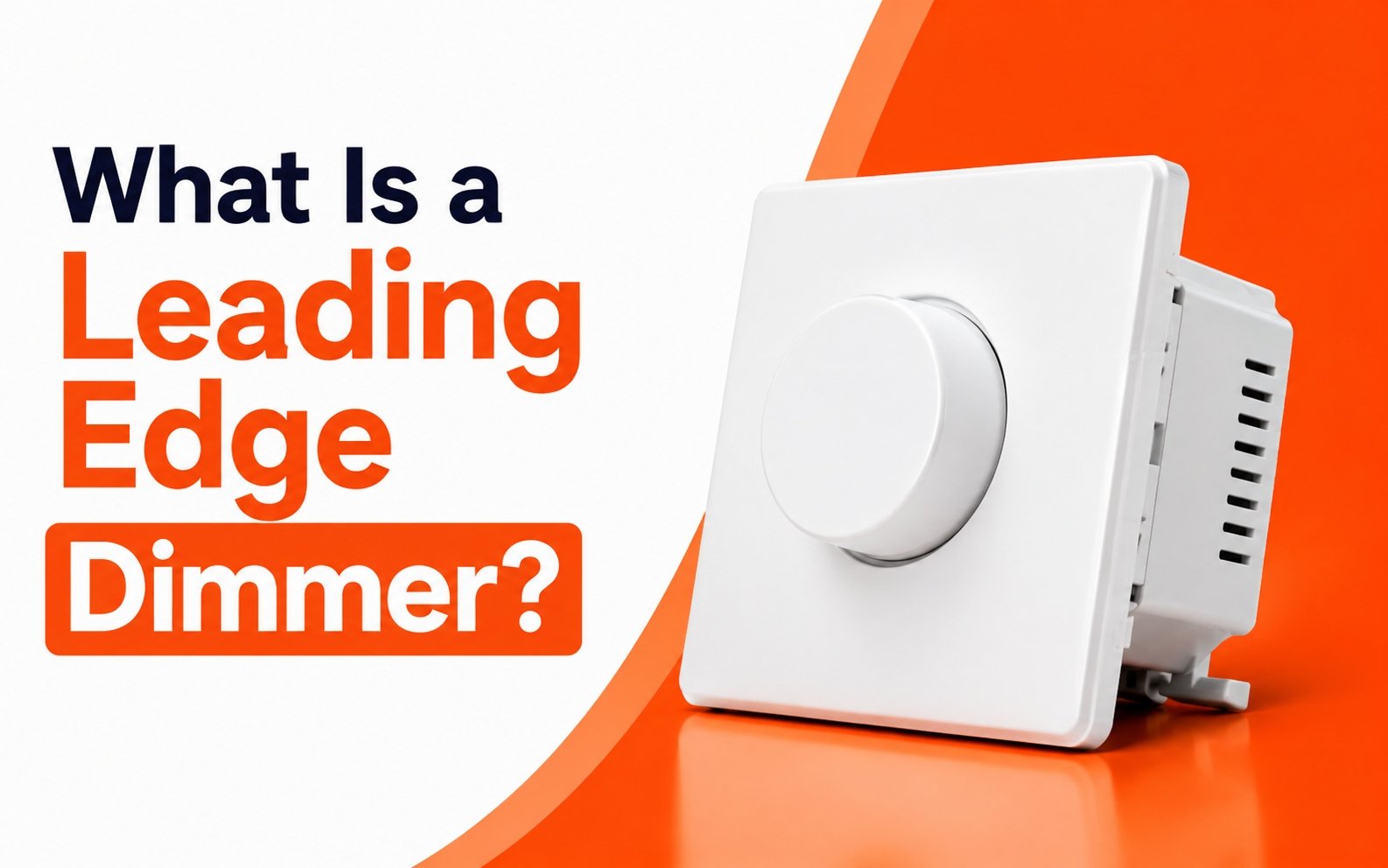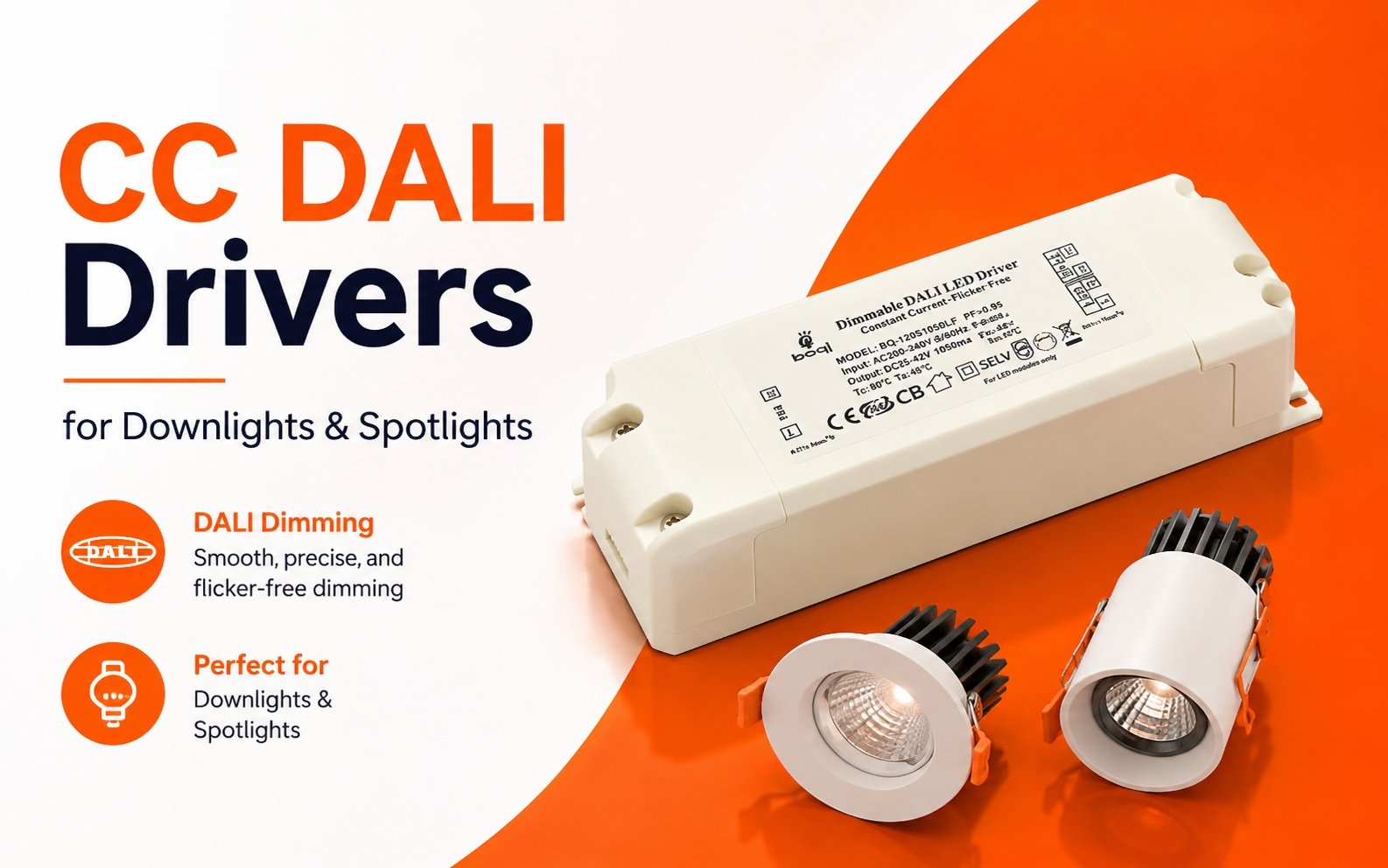














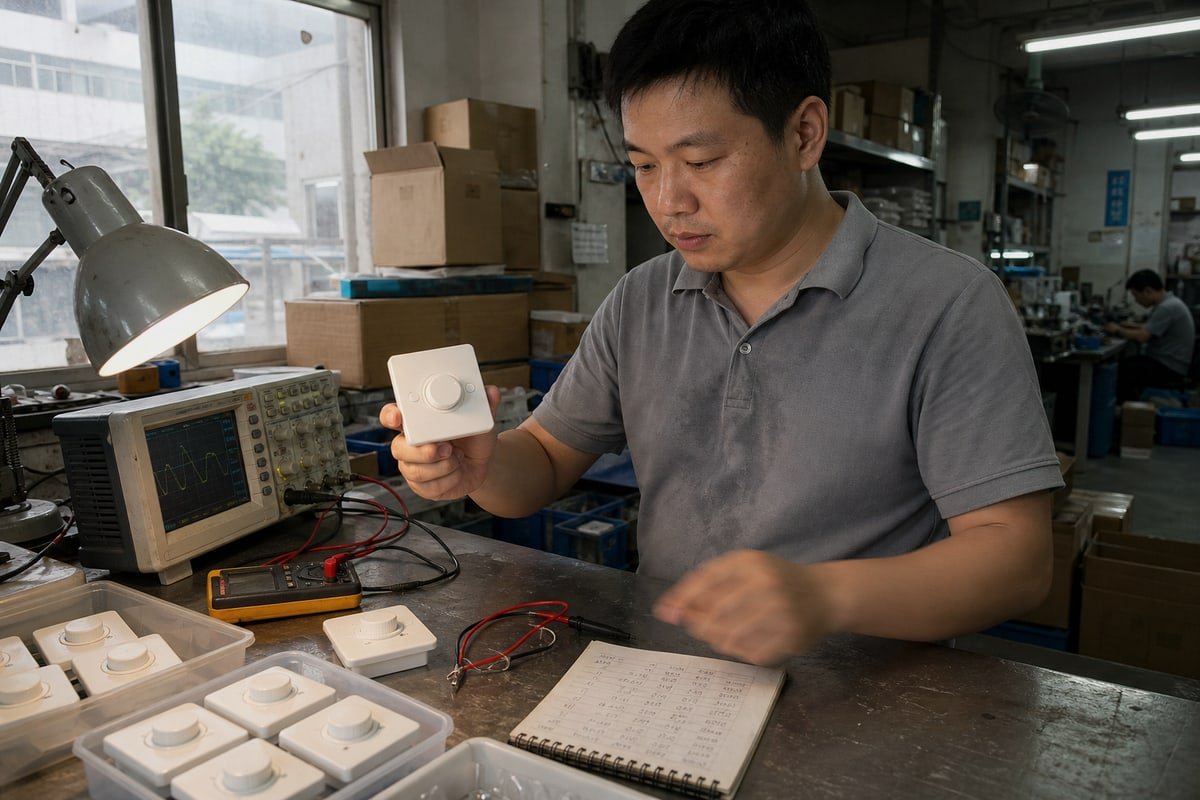
Trailing edge dimmer menjanjikan kontrol LED yang halus, namun kedipan dan dengung masih merusak proyek ketika tidak cocok. Di lini produksi Shenzhen kami, kami menguji tepat terhadap kegagalan tersebut setiap hari.
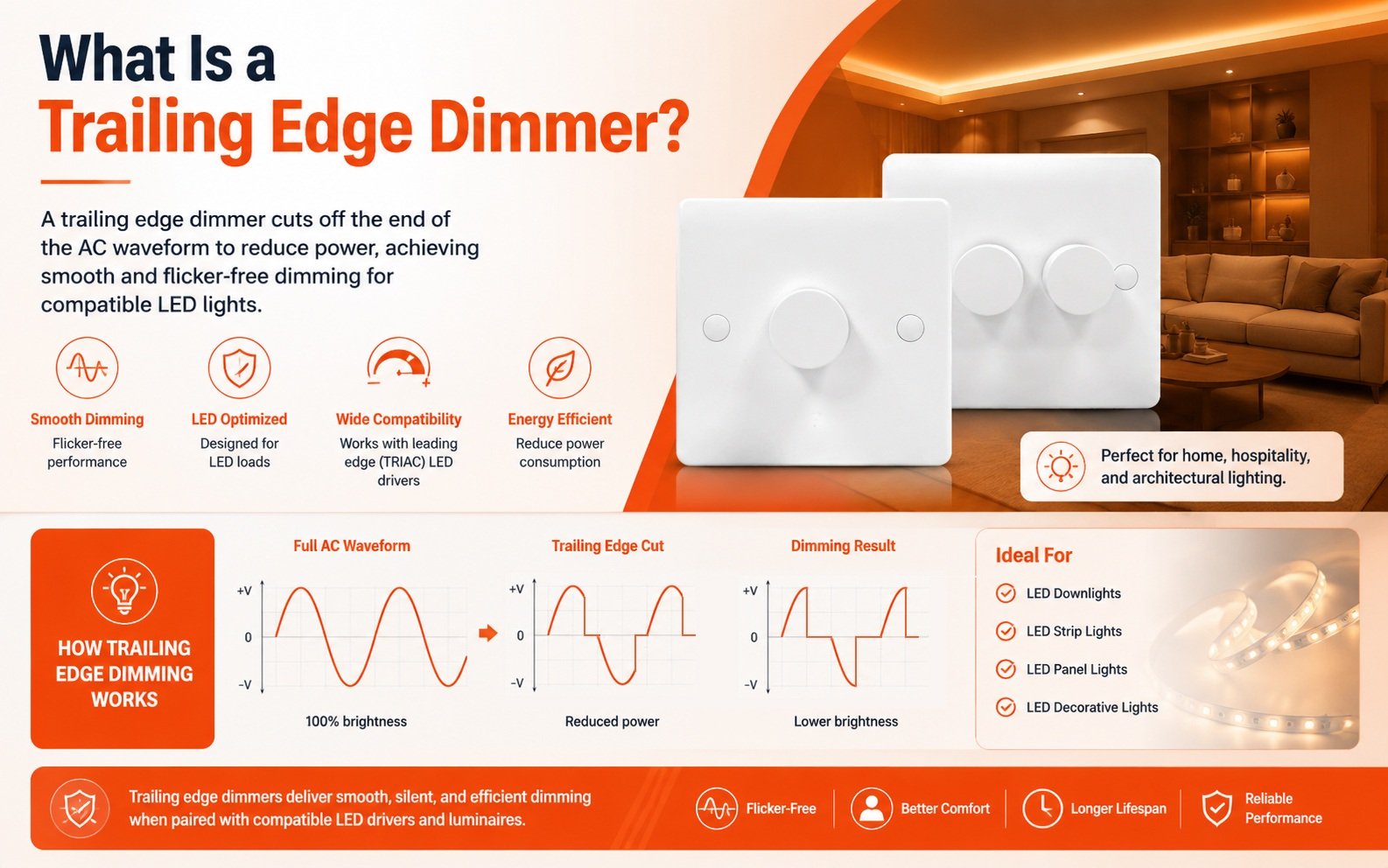
Trailing edge dimmer adalah dimmer AC elektronik yang mengurangi keluaran cahaya dengan mematikan arus mendekati akhir setiap setengah siklus gelombang AC. Juga disebut peredupan fase terbalik, perangkat ini menggunakan sakelar MOSFET dan cocok untuk driver LED modern yang dirancang untuk metode pemotongan fase ini.
Definisi itu hanyalah titik awal. Kisah sebenarnya adalah bagaimana gelombang dipotong, bagaimana ini berbeda dari desain lama, dan mengapa driver LED menentukan apakah hasilnya terlihat profesional. Mari saya jelaskan setiap bagiannya.
Bagaimana sebenarnya cara kerja trailing edge dimmer?
Bulan lalu para insinyur kami menguji sejumlah rotary dimmer sebelum pengiriman ke Italia. Menyaksikan gelombang runtuh dengan lembut di akhir setiap siklus menjelaskan teknologi ini lebih baik daripada lembar data mana pun.
Trailing edge dimmer membiarkan setiap setengah siklus AC dimulai secara normal, kemudian MOSFET mematikan arus sebelum zero crossing. Memotong lebih banyak ekor gelombang menurunkan keluaran cahaya; memotong lebih sedikit menaikkannya. Driver LED mengubah gelombang yang dipotong ini menjadi keluaran yang diredupkan.
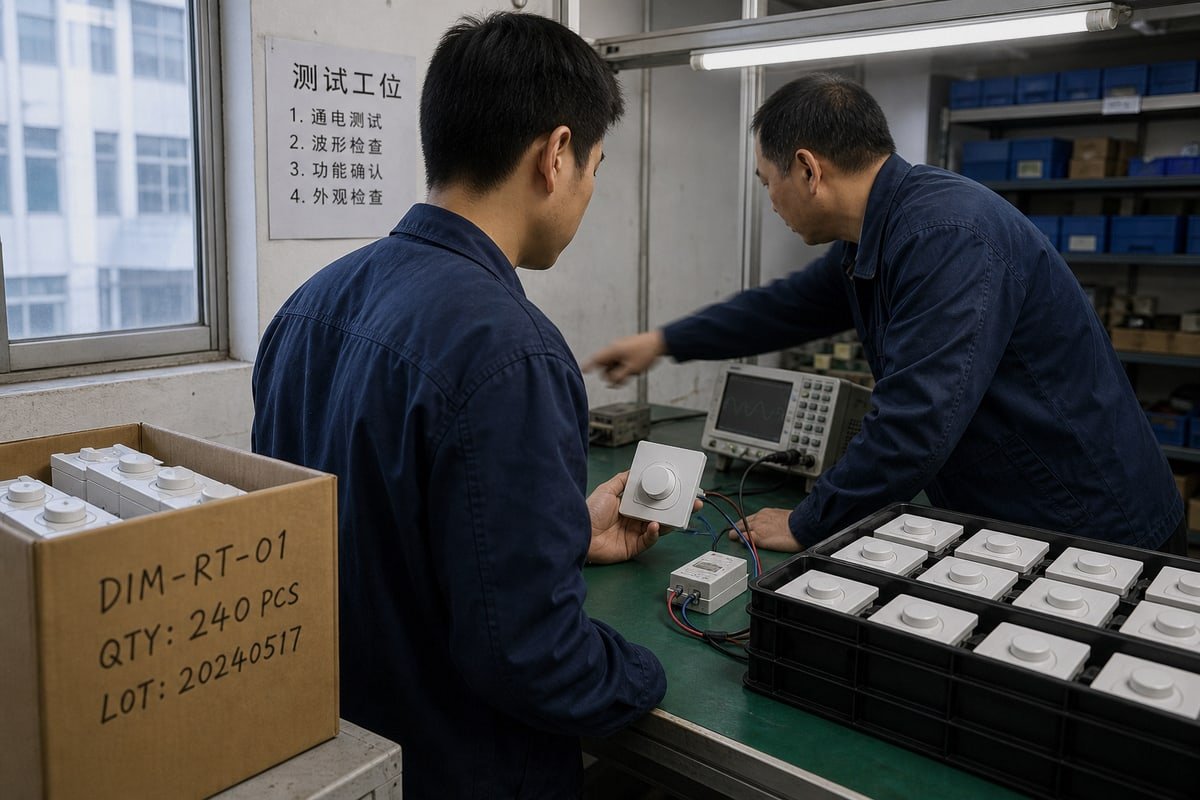
Listrik utama tiba sebagai gelombang sinus berulang. Setiap gelombang memiliki dua setengah siklus, dan setiap setengah siklus dimulai dan berakhir pada zero crossing. Trailing edge dimmer bekerja pada struktur tersebut. Ini memungkinkan arus mengalir sejak setengah siklus dimulai. Kemudian, pada titik yang diatur waktunya secara presisi, arus dimatikan sebelum setengah siklus selesai. Inilah sebabnya teknik ini disebut peredupan fase terbalik. Rantai sinyalnya sederhana: gelombang AC → pemotongan fase trailing-edge → driver LED → keluaran cahaya yang terkontrol.
Mengapa teknologi MOSFET penting di sini
Desain pemotongan fase yang lebih lama mengandalkan TRIAC, yang mengunci dan mati secara tiba-tiba. Unit trailing edge menggunakan teknologi MOSFET 1 atau IGBT sebagai gantinya. Sakelar semikonduktor ini memungkinkan pemadaman yang terkontrol dan bertahap. Arus meluruh secara alami menuju nol daripada dipotong secara kasar. Peluruhan yang lembut ini mencegah kerusakan back-EMF pada rangkaian transformator elektronik yang sensitif dan mengurangi lonjakan tegangan pada saluran.
Urutan pemotongan fase, langkah demi langkah
| Tahap | Apa yang terjadi | Efek pada cahaya |
|---|---|---|
| Zero crossing | Setengah siklus dimulai, arus mengalir secara normal | Pengiriman daya dimulai |
| Periode konduksi | Gelombang melewati tanpa modifikasi | Energi mencapai driver |
| Pemadaman terjadwal | MOSFET menginterupsi arus sebelum siklus berakhir | Kecerahan diatur oleh waktu |
| Peluruhan ke nol | Arus turun dengan lembut ke zero crossing berikutnya | Tekanan rendah, kebisingan rendah |
Banyak trailing edge dimmer juga menyertakan fitur soft start. Alih-alih memberikan daya penuh ke lampu saat dinyalakan, mereka menaikkan daya secara bertahap. Dalam pengujian kami sendiri, ini melindungi komponen LED dari kejutan termal dan memperpanjang umur lampu melalui siklus peralihan yang berulang.
Apa perbedaan antara trailing edge dan leading edge dimmer?
Seorang manajer pengadaan di Singapura pernah bertanya kepada saya mengapa stok leading edge dimmer miliknya berdengung pada retrofit LED. Jawabannya terletak pada bagian mana dari gelombang yang dipotong oleh masing-masing desain.
Leading edge dimmer memotong bagian depan setiap setengah siklus AC menggunakan TRIAC, cocok untuk beban resistif pijar dan halogen. Trailing edge dimmer memotong bagian belakang menggunakan MOSFET, cocok untuk beban kapasitif LED dan elektronik. Tidak ada yang secara universal lebih baik; tahap input driver yang terhubung menentukan pilihan yang tepat.
Berikut perbandingannya sekilas:
| Fitur | Dimmer tepi depan | Dimmer tepi belakang |
|---|---|---|
| Posisi potongan | Bagian depan setiap setengah siklus | Akhir setiap setengah siklus |
| Juga dikenal sebagai | Fase maju, peredupan triac | Peredupan fase terbalik |
| Komponen pengalih | TRIAC | MOSFET atau IGBT |
| Perilaku nyala/mati | Langkah tegangan yang tiba-tiba dan tajam | Peluruhan bertahap dan halus hingga nol |
| Beban yang paling cocok | Resistif pijar, halogen | Jenis beban kapasitif, driver LED, ELV |
| Persyaratan beban minimum | Lebih tinggi | Jauh lebih rendah |
| Kebisingan audibel | Rentan berdengung akibat lonjakan tegangan | Umumnya senyap |
| Kebisingan saluran | Distorsi harmonik yang lebih tinggi | THD dan kebisingan listrik yang berkurang |
Penyalaan tiba-tiba dari TRIAC menciptakan lonjakan tegangan yang curam pada setiap setengah siklus. Pada transformator magnetik 2 dan lampu filamen, lonjakan tersebut tidak berbahaya. Pada beban kapasitif seperti filter input driver LED, hal itu menghasilkan arus masuk yang besar. Arus masuk itulah sumber dengungan, kedipan, dan umur komponen yang lebih pendek yang dialami klien saya di Singapura. Desain trailing edge menghindari lonjakan sepenuhnya, yang juga mengurangi distorsi harmonik total 3 pada sirkuit lokal.
Ada perbedaan praktis kedua yang kami tekankan kepada setiap distributor: beban minimum. Dimer leading edge memerlukan beban resistif yang substansial untuk menjaga TRIAC tetap konduksi dengan andal. Dimer trailing edge mempertahankan rentang peredupan yang stabil dengan watt yang jauh lebih rendah, yang penting ketika sebuah ruangan menggunakan beberapa lampu downlight LED berdaya rendah.
Satu peringatan dari bangku desain: ini bukan sekadar teknologi lama versus teknologi baru. Beberapa instalasi dengan transformator magnetik lama benar-benar memerlukan kontrol leading edge. Pilihan yang tepat bergantung pada karakteristik listrik dari driver yang terhubung, termasuk perilaku arus input dan persyaratan beban minimumnya.
Driver LED mana yang kompatibel dengan trailing edge dimmer?
Di awal bisnis ekspor kami, kami belajar pelajaran yang mahal: dimer yang lulus semua uji bangku berkedip dengan lampu downlight merek swasta klien. Tahap input driver adalah penjaga gerbangnya.
Driver LED yang kompatibel dengan dimer trailing edge adalah driver yang dapat diredupkan fase-terpotong yang secara eksplisit diberi peringkat untuk kontrol trailing-edge atau reverse-phase. Periksa metode peredupan yang ditentukan pada driver, beban minimum, beban maksimum, dan rentang peredupan, dan konfirmasikan pemasangan pada daftar kompatibilitas yang diuji pabrikan sebelum pembelian.

Kesalahan terbesar pembeli adalah memilih dimer hanya berdasarkan spesifikasi dimer itu sendiri. Dalam pengalaman kami mengembangkan driver LED yang dapat diredupkan bersama dengan dimer itu sendiri, tahap input dari driver LED adalah penjaga gerbang kompatibilitas yang sebenarnya. Sebuah driver berisi penyearah, Filter EMI 4, kapasitor penyimpanan, dan sirkuit switching. Ketika tepi belakang gelombang AC terpotong, komponen-komponen tersebut menentukan bagaimana driver merespons. Dua driver dengan peringkat watt yang identik dapat berperilaku sangat berbeda pada kontrol dinding yang sama.
Kombinasi yang tidak kompatibel masih dapat menghasilkan kegagalan di dunia nyata, bahkan ketika kedua produk secara individual sangat baik:
- Kedipan pada kecerahan rendah
- Rentang peredupan yang terbatas
- Putus sebelum dimer mencapai minimum
- Berkedip saat dinyalakan
- Kebisingan audibel
- Perilaku yang tidak merata antara beban LED yang berbeda
Daftar periksa kompatibilitas LED yang praktis
| Periksa | Hal-hal yang perlu diverifikasi | Mengapa hal ini penting |
|---|---|---|
| Metode peredupan | Lembar data driver menyatakan dukungan trailing-edge / reverse-phase | Beberapa driver hanya menerima peredupan triac atau sinyal 0–10V |
| Beban minimum | Total watt perlengkapan melebihi minimum dimer | Di bawah minimum, sirkuit salah nyala dan berkilau |
| Beban maksimum | Total watt tetap di bawah batas atas yang diberi peringkat | Kelebihan beban memperpendek umur MOSFET |
| Rentang peredupan | Persentase ujung bawah yang dipublikasikan sesuai dengan kebutuhan proyek | Menentukan seberapa dalam peredupan sebelum putus |
| Daftar kompatibilitas | Pemasangan dimer–driver yang tepat telah diverifikasi | Pasangan yang telah diuji di bangku kerja adalah satu-satunya bukti yang dapat diandalkan |
Ketika kami menjalankan proyek OEM untuk merek pencahayaan, kami menguji model driver yang tepat terhadap dimmer yang tepat sebelum produksi massal. Ini lebih lambat daripada mempercayai lembar data. Ini juga satu-satunya cara untuk menjamin kompatibilitas LED di seluruh lini produk, itulah sebabnya kami membangun daftar pasangan yang diuji ke dalam setiap proyek pengembangan kolaboratif.
Mengapa saya harus memilih trailing edge dimmer untuk proyek pencahayaan saya?
Setiap penawaran yang kami siapkan mempertimbangkan biaya terhadap kinerja. Unit trailing edge lebih mahal daripada model dasar peredupan triac namun lebih sedikit keluhan biasanya membenarkan perbedaan tersebut pada proyek LED.
Pilih dimmer trailing edge untuk proyek LED karena memberikan pengoperasian yang lebih senyap, peredupan ujung rendah yang lebih mulus, persyaratan beban minimum yang lebih rendah, perlindungan soft start, dan pengurangan noise listrik. Selalu verifikasi kompatibilitas driver terlebih dahulu, karena manfaat ini hanya muncul ketika dimmer dan driver dicocokkan dengan benar.

Untuk distributor dan firma teknik, alasan untuk kontrol trailing edge didasarkan pada perilaku yang dapat diukur, bukan label pemasaran. Ketika dimmer dan driver dicocokkan dengan benar, manfaatnya terkumpul dengan cepat. Peredupan ujung rendah menjadi mulus, bukan bertahap. Dengung yang terdengar hilang karena tidak ada lonjakan tegangan TRIAC untuk menggetarkan komponen. Beban elektronik watt rendah tetap stabil, yang penting seiring dengan semakin kecilnya daya perlengkapan. Dan fitur soft start menaikkan daya secara perlahan, melindungi bohlam dari kejutan termal pada setiap kali dinyalakan.
Ghosting dan cahaya menyala saat mati
Satu masalah yang sering kami selesaikan dalam proyek ODM adalah ghosting, yaitu cahaya redup LED dalam keadaan mati. Desain trailing edge berkualitas mengatasi hal ini melalui integrasi kapasitor shunt, yang membuang arus bocor sisa yang membuat driver sensitif tetap menyala redup. Jika stok Anda saat ini menyala redup saat mati, ini adalah perbaikan yang harus ditentukan.
Perencanaan instalasi: derating multi-gang
Ada satu spesifikasi yang menjebak bahkan pemasang berpengalaman. Ketika beberapa modul dimmer berbagi satu kotak dinding multi-gang, panas menumpuk dan setiap unit harus diturunkan peringkatnya. Kami merancang pelat muka putar satu kenop dan dua kenop, dan kami mencetak panduan penurunan peringkat untuk alasan ini.
| Pemasangan | Kapasitas peringkat tipikal | Catatan perencanaan |
|---|---|---|
| Unit tunggal, kotak tunggal | Beban penuh sesuai peringkat | Spesifikasi standar berlaku |
| Dua unit, kotak bersama | Beban per unit berkurang | Penurunan peringkat adalah wajib, bukan opsional |
| Tiga unit atau lebih | Lebih berkurang lagi per unit | Konfirmasikan kurva penurunan peringkat spesifik |
Untuk kinerja bebas kedip di seluruh proyek, kesimpulan B2B saya sederhana. Jangan memilih dimmer trailing-edge hanya karena dipasarkan sebagai kompatibel LED. Periksa metode peredupan yang ditentukan driver, beban minimum, beban maksimum, rentang peredupan, dan kompatibilitas terverifikasi dengan dimmer spesifik. Di situlah perbedaan antara dimmer yang berfungsi dan sistem peredupan yang bekerja secara profesional biasanya muncul.
Kesimpulan
Dimmer trailing edge memotong bagian belakang setiap setengah siklus AC untuk peredupan LED yang senyap dan mulus. Cocokkan dengan driver yang terverifikasi, dan setiap proyek akan bekerja secara profesional.
Catatan kaki
Tinjauan teknis teknologi semikonduktor yang digunakan untuk pemutusan terkontrol pada dimmer trailing edge. ↩︎
Asosiasi profesional terkemuka untuk standar teknik kelistrikan yang melibatkan transformator daya dan rangkaian. ↩︎
Sumber daya pemerintah yang otoritatif untuk standar teknis dan metrik pengukuran seperti distorsi harmonik. ↩︎
Penjelasan teknis tentang filter interferensi yang digunakan untuk menstabilkan daya pada rangkaian driver LED. ↩︎