













Выбор между 12V и 24V TRIAC драйверы 1 ставит в тупик многих покупателей. Я вижу этот вопрос еженедельно на нашей фабрике в Шэньчжэне, и неправильный выбор означает мерцание, падение напряжения 2, и дорогостоящую переделку. Вот как мы это решаем.
Выбирайте 12V TRIAC-драйвер для коротких, маломощных, сильно сегментированных LED-установок, где важны точные шаги резки. Выбирайте 24V TRIAC-драйвер для более длинных линий и большей мощности, потому что он вдвое снижает ток, уменьшает падение напряжения и повышает эффективность системы. Всегда подбирайте напряжение драйвера под вашу LED-нагрузку.
Это краткий ответ. Полная картина включает длину линии, ток, совместимость с диммером и стоимость. Позвольте мне провести вас через каждое решение шаг за шагом.
Как мне решить между 12V и 24V TRIAC-драйверами для моего проекта?
Один дистрибьютор из Сингапура однажды прислал мне план этажа перед заказом одного драйвера. Эта привычка спасла ее проект. На нашей фабрике мы всегда начинаем с планировки, а не с драйвера.
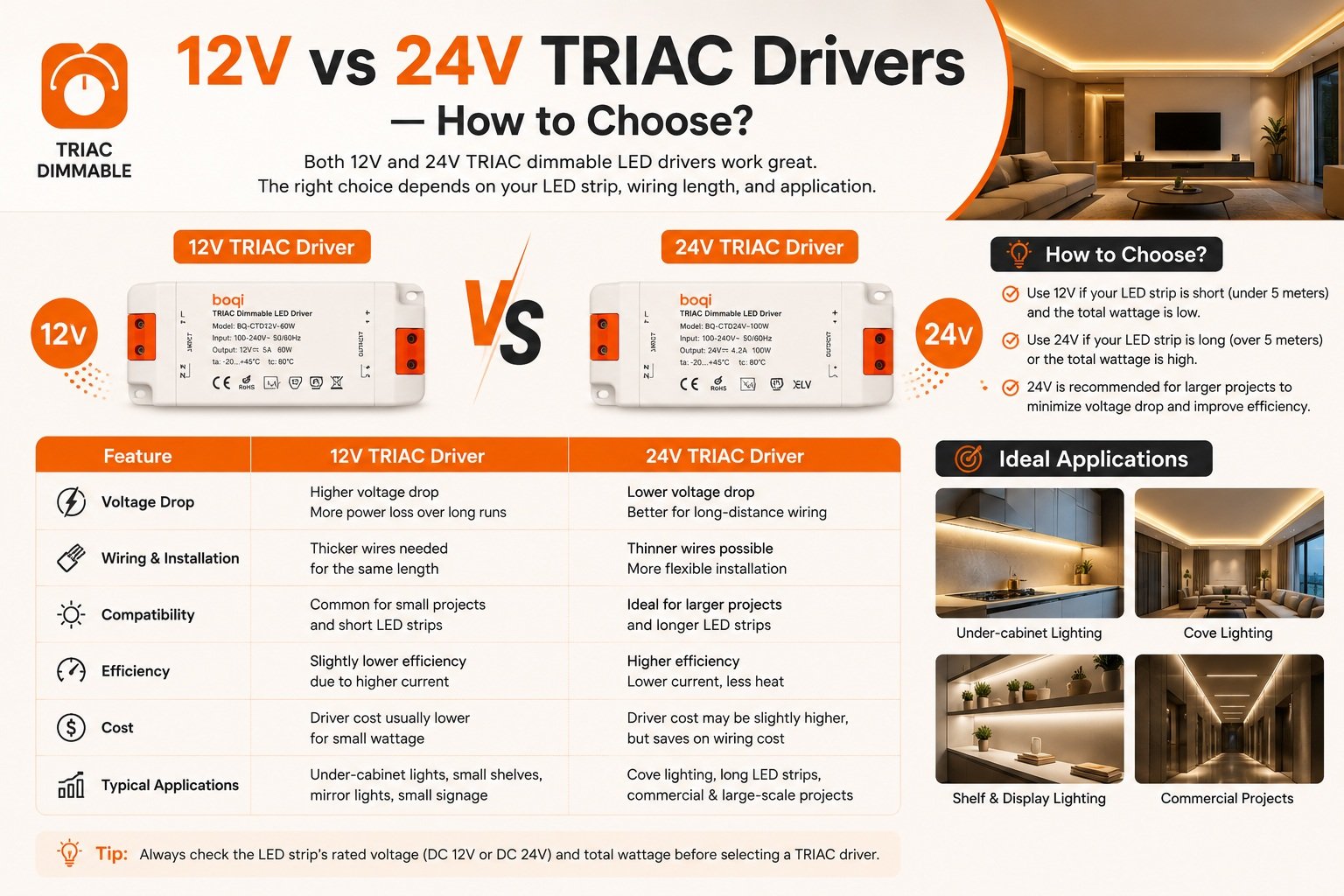
Сначала решайте по напряжению нагрузки, затем по длине линии и мощности. Выбирайте 12V для компактных, маломощных установок примерно до 5 метров с точными точками резки. Выбирайте 24V для более длинных линий, большей мощности или линий с питанием с одного конца, так как он потребляет вдвое меньший ток и меньше страдает от падения напряжения.

Первое, что я говорю покупателям: TRIAC-драйвер — это просто совместимый с сетью, диммируемый источник питания постоянного напряжения. Так что реальное решение — не “TRIAC против 12V/24V”. Это выбор из двух шагов. Во-первых, нужна ли вашей светодиодной ленте 12V DC или 24V DC? Во-вторых, действительно ли драйвер совместим с фазовым диммированием от вашего настенного диммера?
Начните с простого правила принятия решения
Вот краткая справочная таблица, которую мы отправляем новым клиентам:
| Фактор | Выберите 12V | Выберите 24V |
|---|---|---|
| Длина линии | До ~5 метров | До ~10 метров на линию |
| Шаг резки | Мелкая резка, часто через каждый 1 дюйм | Резка через каждые 2–4 дюйма |
| Уровень мощности | Низковольтное акцентное освещение | Линейное освещение высокой мощности |
| Потребляемый ток | Выше (вдвое при той же мощности) | Вдвое меньший ток при той же мощности |
| Типичное применение | Мебель, небольшие шкафы, установки в стиле RV | Кухни, гардеробные, коммерческие линии |
Напряжение не равно яркости
Одно заблуждение, которое я часто исправляю: напряжение само по себе не определяет яркость. Яркость зависит от мощности ленты, плотности светодиодов и подаваемой мощности. Практическая разница между 12V и 24V заключается в токе, максимальной длине линии, шаге резки и совместимости управления. На практике 24V обычно лучший выбор для систем высокой мощности или длинных кабельных линий, тогда как 12V остается полезным для компактных низкопотребляющих приложений. Оба работают с настенным диммером TRIAC, но только если драйвер специально поддерживает фазовое управление.
Какие факторы мне следует учитывать при подборе напряжения драйвера под мою LED-нагрузку?
Во время недавнего OEM-проекта для европейского бренда освещения наши инженеры отклонили спецификацию, потому что драйвер 24V был сопряжен с лентами 12V разных типов. Раннее обнаружение предотвратило гарантийную катастрофу.
Точно подберите выходное напряжение драйвера под вашу светодиодную нагрузку — никогда не смешивайте 12-вольтовые ленты с 24-вольтовыми драйверами. Затем проверьте суммарную мощность, удерживая нагрузку на уровне или ниже 80% от номинальной мощности драйвера, и убедитесь, что длина линии остаётся в пределах допустимого падения напряжения для данного напряжения.

Соответствие напряжения — обязательное условие. Драйвер на 24 В на ленте 12 В сожжёт светодиоды. Драйвер на 12 В на ленте 24 В едва зажжёт её. Но напряжение — лишь первая проверка. Запас по мощности, ток и длина кабеля важны не меньше.
Правило запаса 80%
Мы советуем каждому клиенту поддерживать общую светодиодную нагрузку не более 80% от максимальной номинальной мощности драйвера. Другими словами, оставляйте себе запас как минимум 20%. Драйвер, работающий на полной нагрузке, перегревается, быстрее стареет и может плохо диммироваться. На нашей производственной линии, тепловой стресс 3 является убийцей номер один для недостаточно рассчитанных драйверов. В частности, внутренние компоненты, такие как коммутирующие MOSFET и конденсаторы в 24V драйверах, испытывают меньший тепловой стресс, чем в аналогичных по мощности 12V устройствах, что часто продлевает срок службы драйвера.
Длина линии, сечение провода и падение напряжения
Падение напряжения — это скрытая проблема. Линия 12V обычно работает стабильно на расстоянии до примерно 5 метров. Линия 24V может растянуться примерно до 10 метров, прежде чем дальний конец заметно потускнеет. Поскольку 24V вдвое снижает ток, это также позволяет использовать более тонкий провод или размещать драйвер дальше от нагрузки.
| Параметр | Система 12V | Система 24V |
|---|---|---|
| Типичная максимальная длина линии | ~5 м | ~10 м |
| Ток при нагрузке 60 Вт | 5А | 5A |
| Необходимое сечение провода | Толще | Тоньше допустимо |
| Тепло в резисторах | Больше энергии теряется в виде тепла | Более эффективное использование напряжения, меньше потерь |
| ЭМП на линиях постоянного тока | Выше ток, выше риск ЭМП | Ниже ток, меньше ЭМП |
Также обратите внимание на тенденцию, которую мы четко видим в экспортных заказах: 24V становится стандартом для плотных COB-лент, поскольку эквивалент 12V концентрирует слишком много тепла на гибкой печатной плате.
Как мне убедиться, что мой выбор TRIAC-драйвера совместим с существующими диммерами?
Самые сложные запросы в поддержку, которые мы обрабатываем, никогда не касаются только драйвера. Они касаются настенного диммера на другом конце. Именно поэтому наша команда поддерживает список совместимости с протестированными диммерами для каждой серии драйверов, которую мы поставляем в Европу и Австралию.
Проверьте три вещи: драйвер явно поддерживает TRIAC фазовое управление; тип диммера — передний фронт или задний фронт — соответствует заявленной совместимости драйвера; и подключенная нагрузка находится в пределах минимального и максимального диапазона диммера. Протестируйте один блок перед полным запуском.

Вот ловушка: “диммируемый” в техническом описании не означает “совместим с вашим диммером”.” TRIAC-диммирование работает путем отсечения части формы сигнала переменного тока. Есть два типа — передний фронт и задний фронт. Диммеры переднего фронта (фазовое управление) были разработаны для ламп накаливания и магнитных низковольтных трансформаторных нагрузок. Диммеры заднего фронта (обратное фазовое управление) лучше подходят для электронных драйверов. Если драйвер и диммер не согласованы, вы получите гудение, мерцание или мертвые зоны в нижней части регулятора.
Практический чек-лист совместимости
- Проверьте техническое описание драйвера на явную поддержку TRIAC/фазового управления, а не только слово “диммируемый”.”
- Определите тип вашего настенного диммера: передний фронт или задний фронт.
- Проверьте минимальную нагрузку диммера. Некоторые старые TRIAC-диммеры неправильно работают с очень малыми светодиодными нагрузками.
- Проведите стендовое тестирование одной пары драйвер-диммер во всем диапазоне диммирования перед заказом больших объемов.
- Следите за мерцанием, гудением, ограниченным диапазоном или отключением на низких уровнях — все это признаки несоответствия.
Почему TRIAC все еще важен
Некоторые инженеры утверждают, что TRIAC-диммирование устарело по сравнению с 0-10V, PWM или цифровыми протоколами. Я слышу это возражение на выставках. Мой ответ: реальность модернизации побеждает. Миллионы домов уже имеют TRIAC-настенные диммеры, и домовладельцы хотят их сохранить. Именно поэтому мы строим нашу линейку диммируемых драйверов для бесшовного диммирования как на переднем, так и на заднем фронте. Еще один момент, который стоит знать: драйверы 24V часто обеспечивают лучшее разрешение диммирования на самых низких уровнях 1–5%, потому что запас напряжения помогает поддерживать прямое напряжение светодиодов во время коротких PWM-циклов.
Повлияет ли выбор неправильного напряжения на стоимость, эффективность или безопасность моего проекта?
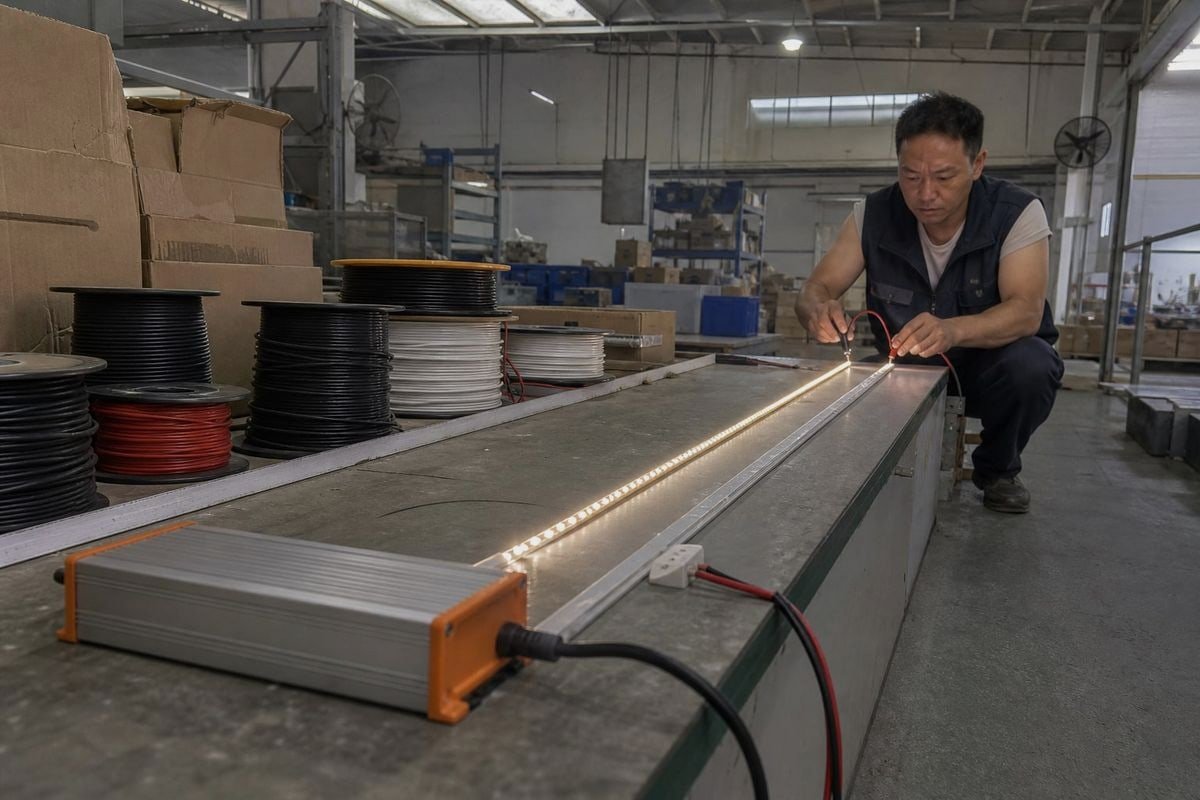
Однажды менеджер по закупкам спросила меня, почему ее проект с подсветкой под шкафами на 12V требовал вдвое больше блоков питания, чем конкурирующее предложение на 24V. Ответ изменил спецификацию всей ее линейки продуктов.
Да. Неправильное напряжение повышает общую стоимость из-за дополнительных драйверов, более толстых кабелей и исправления падения напряжения; оно тратит энергию в виде тепла при более высоком токе; а перегруженная или несогласованная система рискует перегревом. Правильное напряжение снижает стоимость владения и повышает надежность и безопасность.
Позвольте мне разделить три аспекта, потому что покупатели часто их смешивают.
Стоимость: цена за единицу против цены системы
Драйвер 24V может стоить немного дороже за единицу на некоторых рынках. Но на более крупных проектах он обычно экономит деньги в целом. Меньше блоков питания, более тонкий кабель и отсутствие необходимости компенсации падения напряжения быстро окупаются. Для небольших работ 12V остается дешевле и проще, потому что компоненты доступны везде, а линии короткие. Когда мы котируем OEM-проекты, мы всегда оцениваем систему, а не коробку.
Эффективность: драйвер против системы
Отличайте эффективность драйвера от эффективности системы. Некоторые драйверы 24V показывают на несколько процентных пунктов лучшие результаты, чем сопоставимые блоки 12V. Но больший выигрыш заключается в проводке: половина тока означает гораздо меньше потерь энергии в кабеле. Архитектура 24V также использует более высокий процент напряжения в самих светодиодах, поэтому меньше мощности сгорает в виде тепла в токоограничивающих резисторах. Более низкий ток даже снижает ЭМП вдоль линий постоянного тока — это актуально для домов с беспроводной автоматизацией или аудиосистемами высокого класса.
Безопасность и надежность
Как 12V, так и 24V находятся в безопасных пределах SELV 4, и каждый драйвер, который мы экспортируем, имеет сертификацию CE с изоляцией SELV. Реальный риск безопасности — термический: недостаточно рассчитанный драйвер 12V, работающий на нагрузке более 80%, или плотные COB-ленты, перегревающие гибкую печатную плату.
| Область влияния | Последствие неправильного выбора | Преимущество правильного выбора |
|---|---|---|
| Стоимость | Дополнительные драйверы, более тяжелый калибр провода | Меньше источников питания, проще кабельная разводка |
| Эффективность | Потери в кабеле, нагрев резисторов | Меньший ток потребления, более холодная работа |
| Безопасность | Перегрев драйверов и печатных плат | Система с SELV-рейтингом, термически стабильная |
| Затемнение | Мерцание, пропадание сигнала, гул | Плавное регулирование яркости без мерцания |
Заключение
Неправильное напряжение означает мерцание, пропадание сигнала и напрасные затраты. Решение простое: 12V для точности и компактности, 24V для эффективности и масштаба — всегда с проверенной совместимостью с TRIAC.
Сноски
Объясняет основной полупроводниковый компонент, используемый в фазовом регулировании яркости для светодиодных драйверов. ↩︎
Техническое объяснение электрического сопротивления и потерь мощности в низковольтных цепях постоянного тока. ↩︎
Объясняет влияние тепла на электронные компоненты и важность терморегулирования. ↩︎
Определяет стандарты безопасности для низковольтных электрических систем для предотвращения поражения электрическим током. ↩︎