













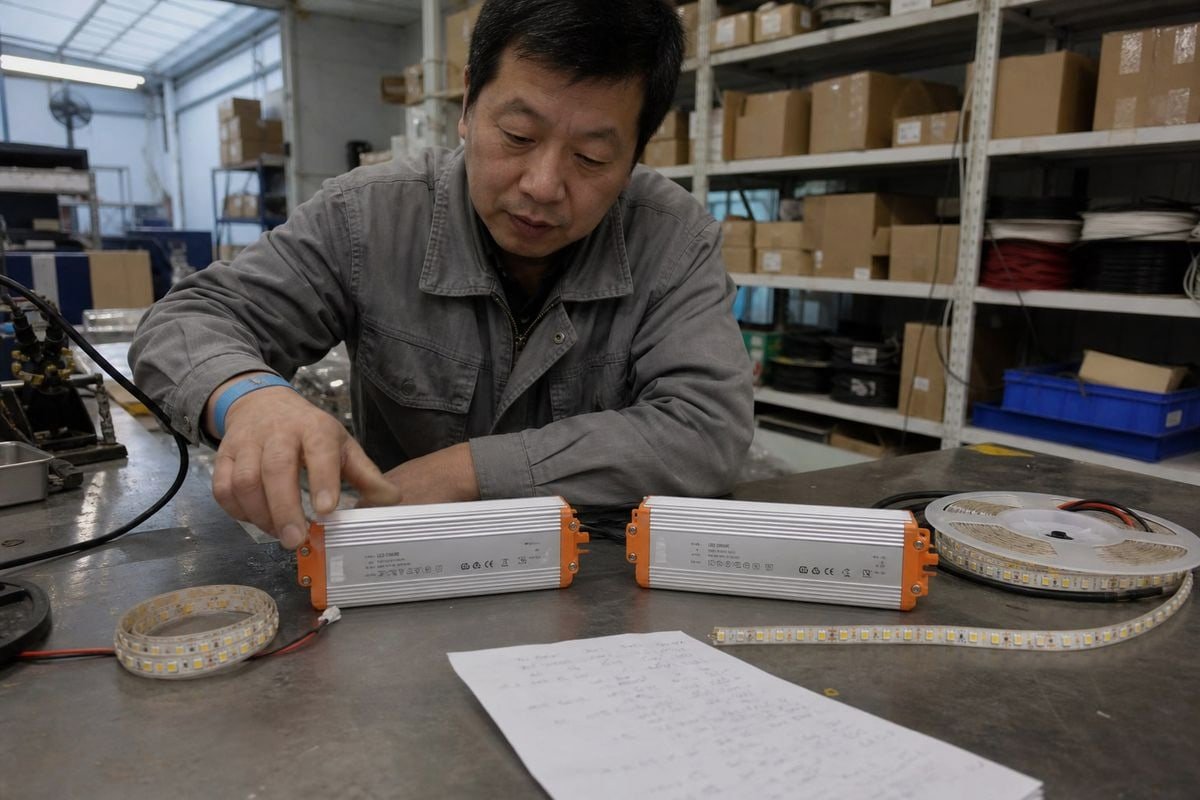
Att välja mellan 12V och 24V TRIAC-drivdon 1 förbryllar många köpare. Jag ser denna fråga varje vecka på vår fabrik i Shenzhen, och att välja fel innebär flimmer, spänningsfall 2, och kostsamt omarbete. Så här löser vi det.
Välj ett 12V TRIAC-drivdon för korta, lågeffekts, högt segmenterade LED-installationer där fina skärsteg är viktiga. Välj ett 24V TRIAC-drivdon för längre sträckor och högre wattal, eftersom det halverar strömförbrukningen, minskar spänningsfall och förbättrar systemets effektivitet. Matcha alltid drivdonets spänning med din LED-belastning.
Det är det korta svaret. Hela bilden involverar sträckans längd, ström, dimmerkompatibilitet och kostnad. Låt mig gå igenom varje beslut steg för steg.
Hur bestämmer jag mellan 12V och 24V TRIAC-drivdon för mitt projekt?
En distributör i Singapore skickade en gång en planlösning till mig innan hon beställde ett enda drivdon. Den vanan räddade hennes projekt. På vår fabrik börjar vi alltid med layouten, inte drivdonet.
Bestäm först utifrån belastningens spänning, sedan utifrån sträckans längd och effekt. Välj 12V för kompakta, lågeffektsinstallationer under cirka 5 meter med snäva skärpunkter. Välj 24V för längre sträckor, högre wattal eller enkeländsmatade linjer, eftersom det drar hälften så mycket ström och lider mindre av spänningsfall.

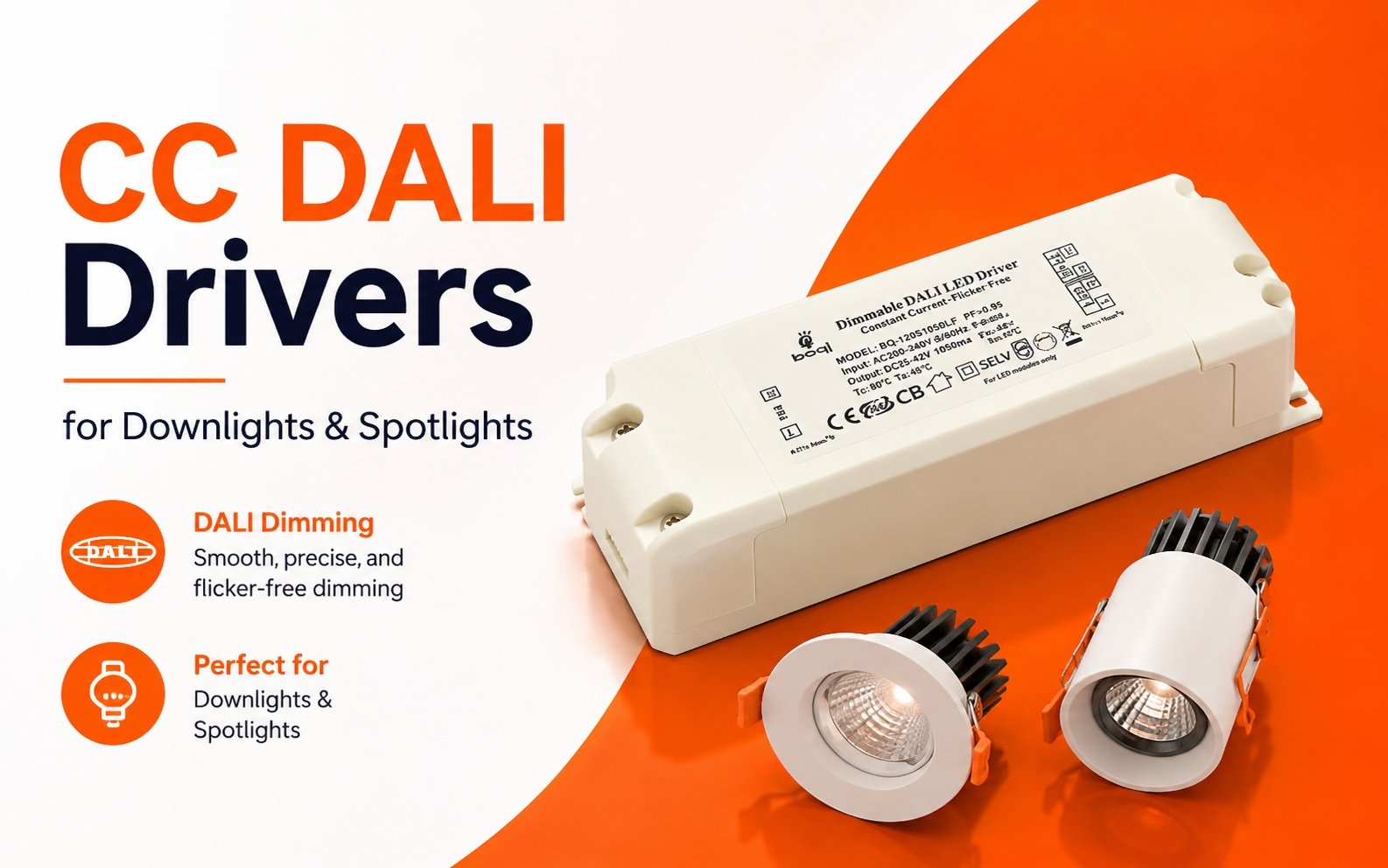
Det första jag säger till köpare är detta: ett TRIAC-drivdon är helt enkelt en nätkompatibel, dimbar konstantspänningsströmkälla. Så det verkliga beslutet är inte “TRIAC vs 12V/24V.” Det är ett tvåstegsval. Först, behöver din LED-remsa 12V DC eller 24V DC? För det andra, är drivdonet verkligen kompatibelt med fasklippningsdimning från din väggdimmer?
Börja med en enkel beslutsregel
Här är den snabbreferenstabell vi delar med nya kunder:
| Konstant ström (CC) | Välj 12V | Välj 24V |
|---|---|---|
| Sträckans längd | Under cirka 5 meter | Upp till cirka 10 meter per sträcka |
| Skärsteg | Fina skär, ofta varje 1 tum | Skär var 2–4 tum |
| Effektnivå | Lågeffekts accentbelysning | Högre effekts linjärbelysning |
| Strömförbrukning | Högre (dubbel vid samma wattal) | Hälften av strömstyrkan vid samma wattal |
| Typisk användning | Möbler, små skåp, RV-liknande installationer | Kök, garderober, kommersiella linjer |
Spänning är inte lika med ljusstyrka
En missuppfattning jag ofta rättar: spänning ensam avgör inte ljusstyrkan. Ljusstyrkan kommer från remsans wattal, LED-densitet och levererad effekt. Den praktiska skillnaden mellan 12V och 24V ligger i ström, maximal sträcklängd, skärspacing och styrkompatibilitet. I praktiken är 24V vanligtvis det bättre valet för högre effektsystem eller längre kabelförläggningar, medan 12V förblir användbart för kompakta, lågeffektsapplikationer. Båda fungerar med en TRIAC-väggdimmer, men bara om drivdonet specifikt stödjer fasklippningsingång.
Vilka faktorer bör jag överväga när jag matchar drivdonets spänning med min LED-belastning?
Under ett nyligt OEM-projekt för ett europeiskt belysningsmärke avvisade våra ingenjörer en specifikationsblad eftersom 24V-drivdonet parades med blandade 12V-remsor. Att fånga det tidigt förhindrade en garantikatastrof.
Matcha driverns utspänning exakt mot din LED-last — blanda aldrig 12V-remsor med 24V-drivrar. Verifiera sedan total effekt, håll lasten på eller under 80% av driverns märkkapacitet, och bekräfta att kabelsträckan håller sig inom spänningsfallgränserna för den spänningen.
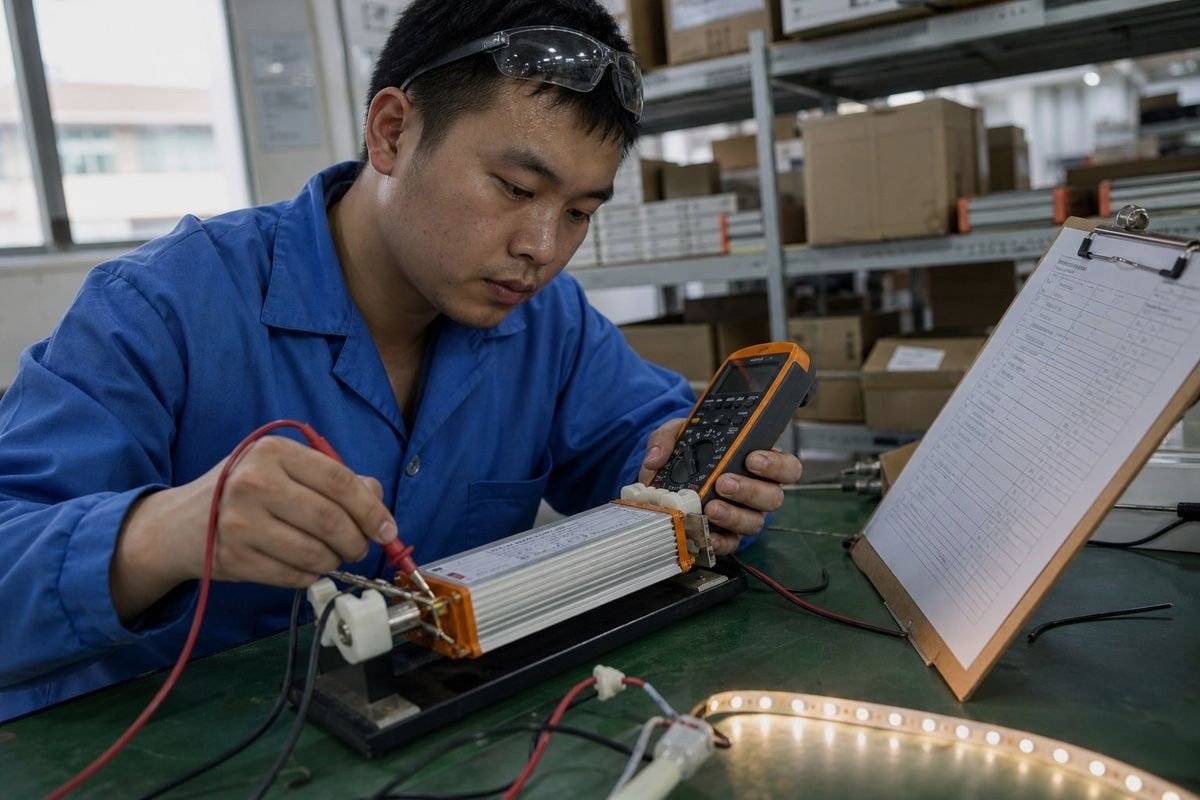
Spänningsmatchning är icke förhandlingsbart. En 24V-driver på en 12V-remsa bränner lysdioderna. En 12V-driver på en 24V-remsa ger knappt ljus. Men spänning är bara den första kontrollen. Effektmarginal, ström och kabelavstånd spelar lika stor roll.
80%-marginalregeln
Vi råder varje kund att hålla den totala LED-lasten på högst 80% av driverns maximala märkkapacitet. Med andra ord, ge dig själv minst 20% marginal. En driver som körs på full last blir varm, åldras snabbare och kan dimma dåligt. På vår produktionslinje, termisk stress 3 är den främsta dödaren av underdimensionerade drivrar. Noterbart är att interna komponenter såsom switchande MOSFET:ar och kondensatorer i 24V-drivrar utsätts för mindre termisk stress än motsvarande 12V-enheter med samma effekt, vilket ofta förlänger driverns livslängd.
Sträckans längd, kabelarea och spänningsfall
Spänningsfall är det tysta problemet. En 12V-sträcka håller sig vanligtvis ren upp till cirka 5 meter. En 24V-sträcka kan sträckas till ungefär 10 meter innan den bortre änden synligt dimmas. Eftersom 24V halverar strömuttaget, tillåter det också tunnare kabelarea eller att drivern placeras längre från lasten.
| Hänsyn | 12V-system | 24V-system |
|---|---|---|
| Typisk max sträcklängd | ~5 m | ~10 m |
| Ström vid 60W last | 5A | 2,5A |
| Kabelarea som krävs | Tjockare | Tunnare acceptabelt |
| Värme i motstånd | Mer energi förloras som värme | Högre spänningsutnyttjande, mindre spill |
| EMI på DC-ledningar | Högre ström, mer EMI-risk | Lägre ström, mindre EMI |
Notera också en trend vi tydligt ser i exportorder: 24V blir standard för högtäta COB-remsor, eftersom 12V-motsvarigheten koncentrerar för mycket värme på den flexibla kretskortet.
Hur kan jag säkerställa att mitt val av TRIAC-drivdon är kompatibelt med befintliga dimmerbrytare?
De svåraste supportärenden vi hanterar handlar aldrig om drivern ensam. De handlar om väggdimmern i andra änden. Därför underhåller vårt team en testad dimmerkompatibilitetslista för varje drivarserie vi levererar till Europa och Australien.
Bekräfta tre saker: att drivern uttryckligen stödjer TRIAC-fasklippning; att dimmertypen — ledkant eller bakkant — matchar driverns angivna kompatibilitet; och att den anslutna lasten ligger inom dimmerns min- och maxområde. Testa en enhet innan full utrullning.

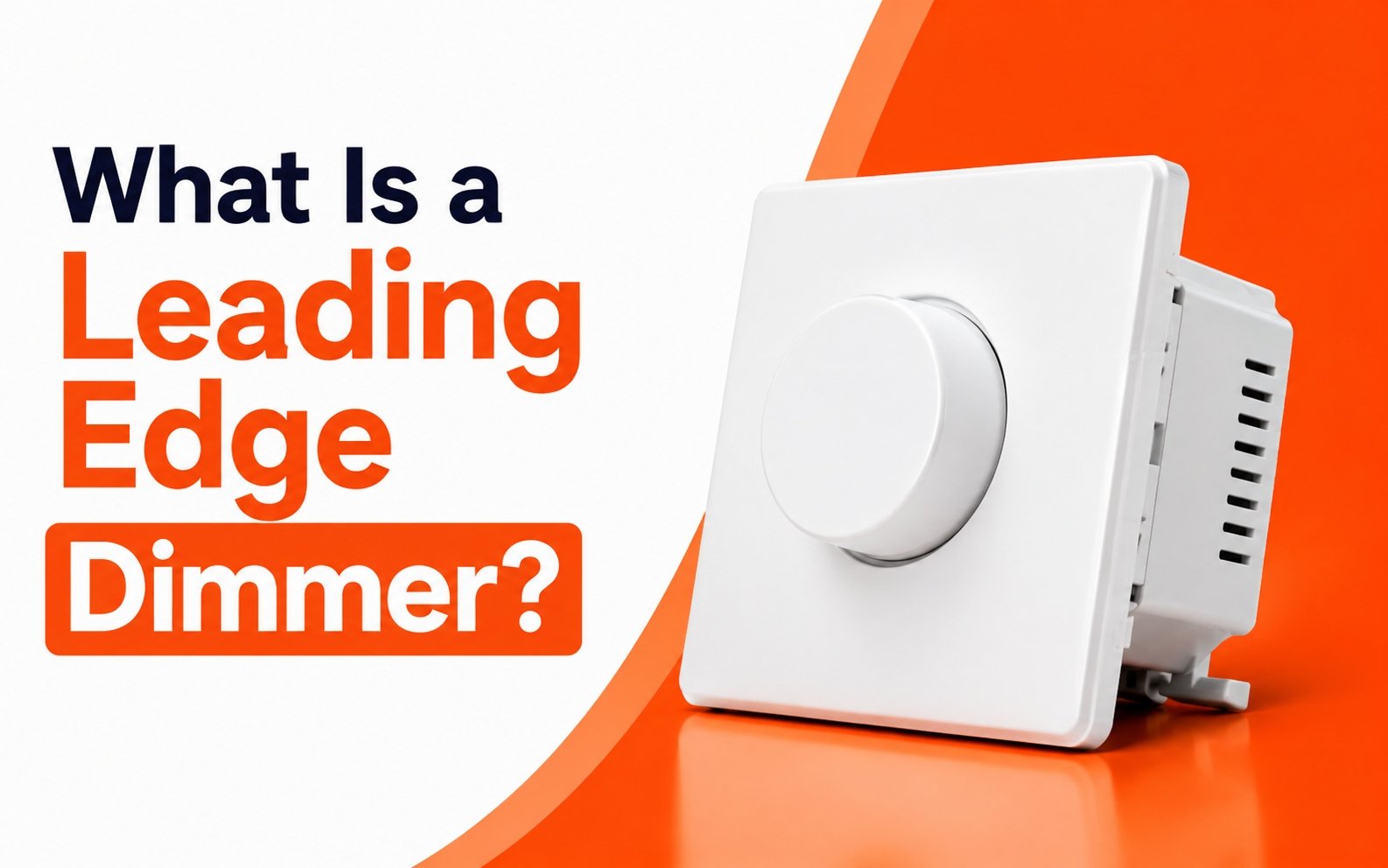
Här är fällan: “dimmable” i ett datablad betyder inte “kompatibel med din dimmer.” TRIAC-dämpning fungerar genom att klippa delar av AC-vågformen. Det finns två varianter — ledkant vs bakkant. Ledkantsdimmers (forward phase) designades för glödlampor och magnetiska lågspänningstransformatorlaster. Bakkantsdimmers (reverse phase) passar elektroniska drivrar bättre. Om drivern och dimmern inte överensstämmer får du surr, flimmer eller döda zoner i botten av reglaget.
En praktisk kompatibilitetschecklista
- Kontrollera driverns datablad för uttryckligt TRIAC/fasklippningsstöd, inte bara ordet “dimmable.”
- Identifiera din väggdimmertyp: forward phase eller reverse phase.
- Verifiera dimmerns minsta last. Vissa äldre TRIAC-dimmers beter sig fel med mycket små LED-laster.
- Bänktesta ett driver-dimmerpar över hela dimningsområdet innan du beställer i volym.
- Håll utkik efter flimmer, surr, begränsat område eller bortfall vid låga nivåer — alla tecken på missmatchning.
Varför TRIAC fortfarande spelar roll
Vissa ingenjörer hävdar att TRIAC-dimning är föråldrad jämfört med 0-10V, PWM eller digitala protokoll. Jag hör denna invändning på mässor. Mitt svar: retrofitverkligheten vinner. Miljontals hem har redan TRIAC-väggdimmers, och husägare vill behålla dem. Det är precis därför vi bygger vår dimbara drivarserie för flimmerfri dimning på både ledkants- och bakkantsingångar. En punkt till värd att känna till: 24V-drivrar ger ofta bättre dimningsupplösning på de lägsta 1–5%-nivåerna, eftersom spänningsöverheaden hjälper till att upprätthålla LED-framåtspänningen under korta PWM-cykler.
Kommer fel spänning att påverka mitt projekts kostnad, effektivitet eller säkerhet?
En inköpschef frågade mig en gång varför hennes 12V-projekt under skåp behövde dubbelt så många strömförsörjningar som den konkurrerande 24V-offerten. Svaret omformade hela hennes produktspecifikation.
Ja. Fel spänning höjer totalkostnaden genom extra drivrar, tjockare kablage och spänningsfallskorrigeringar; den slösar energi som värme vid högre ström; och ett överbelastat eller felmatchat system riskerar överhettning. Rätt spänning sänker livstidskostnaden och förbättrar tillförlitlighet och säkerhet.
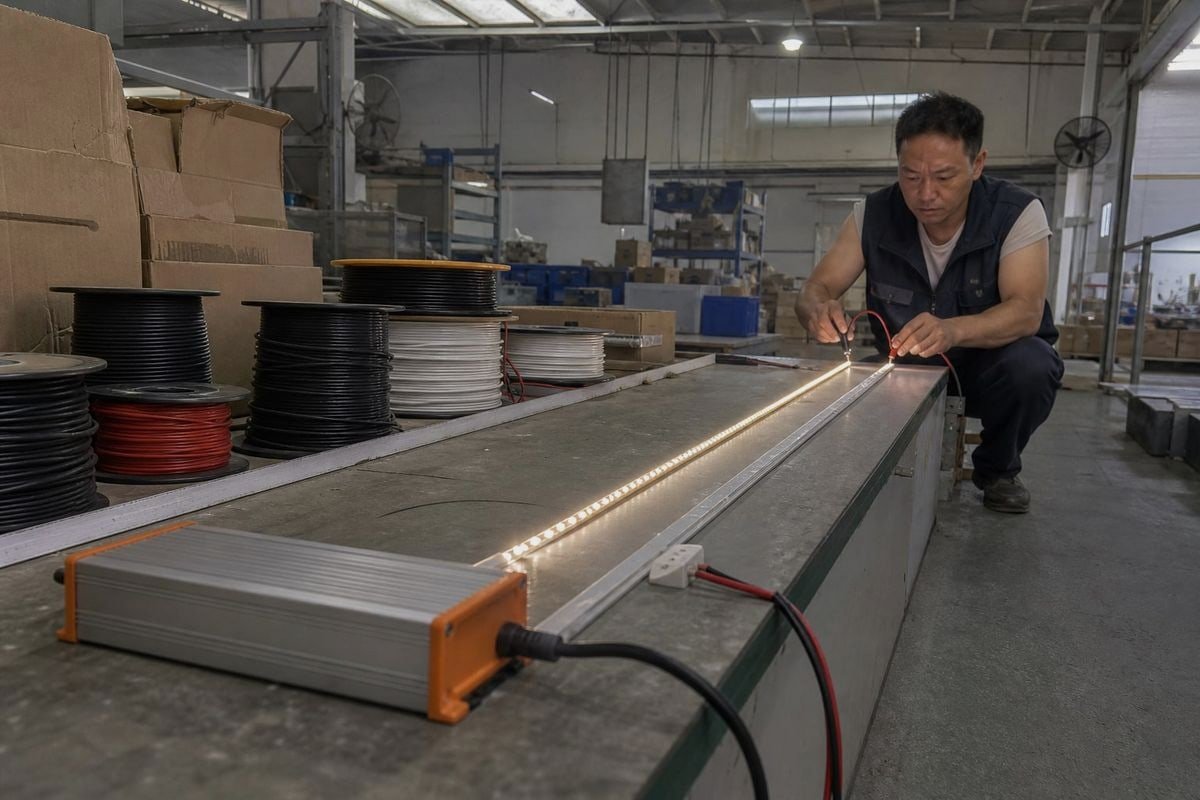
Låt mig separera de tre frågorna, eftersom köpare ofta blandar ihop dem.
Kostnad: Enhetspris vs systempris
En 24V-driver kan kosta något mer per enhet på vissa marknader. Men på större projekt sparar den vanligtvis pengar totalt. Färre strömförsörjningar, tunnare kabel och ingen spänningsfallskompensering summerar snabbt. För små jobb förblir 12V billigare och enklare eftersom komponenter finns överallt och sträckorna är korta. När vi offererar OEM-projekt prissätter vi alltid systemet, inte lådan.
Effektivitet: Drivdon vs system
Skilj driverns verkningsgrad från systemets verkningsgrad. Vissa 24V-drivrar testar några procentenheter bättre än jämförbara 12V-enheter. Men den större vinsten ligger i kablage: halva strömmen innebär mycket mindre energiförlust i kabeln. En 24V-arkitektur använder också en högre procentandel av spänningen i själva lysdioderna, så mindre effekt bränns bort som värme i strömbegränsande motstånd. Lägre ström minskar även EMI längs DC-ledningar — relevant för hem med trådlös automation eller high-end-ljud.
Säkerhet och tillförlitlighet
Både 12V och 24V ligger säkert inom SELV-gränserna 4, och varje driver vi exporterar bär CE-certifiering med SELV-isolering. Den verkliga säkerhetsrisken är termisk: en underdimensionerad 12V-driver pressad över 80% last, eller täta COB-remsor som överhettar ett flexibelt kretskort.
| Påverkansområde | Fel val konsekvens | Rätt val fördel |
|---|---|---|
| Kostnad | Extra drivdon, grövre kabelarea | Färre enheter, enklare kabeldragning |
| Effektivitet | Kabelförluster, motståndsvärme | Lägre strömförbrukning, svalare drift |
| Säkerhet | Överhettade drivdon och kretskort | SELV-klassat, termiskt stabilt system |
| Dimning | Flimmer, bortfall, brum | Jämn, flimmerfri dimring |
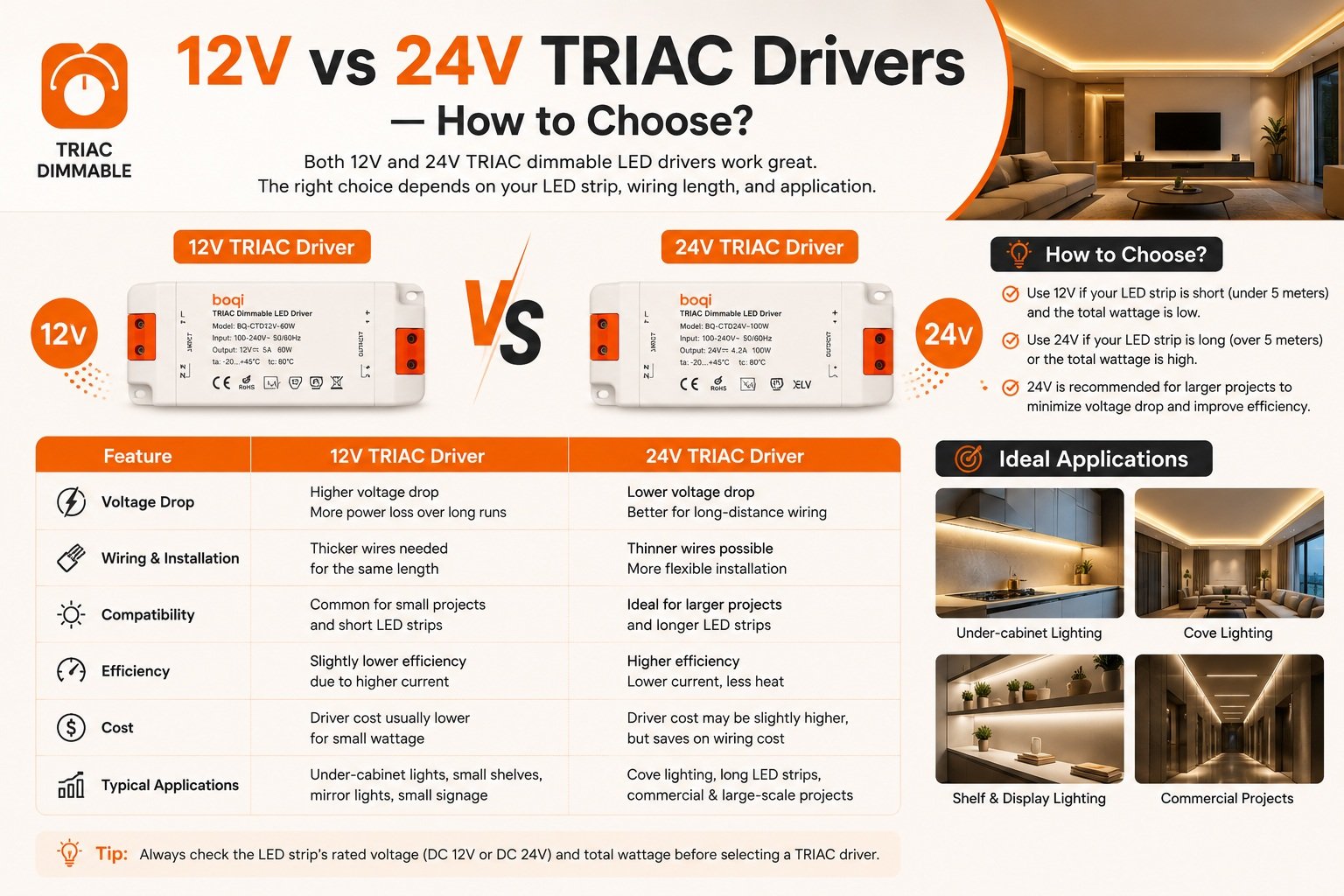
Slutsats
Fel spänning innebär flimmer, bortfall och bortkastad budget. Lösningen är enkel: 12V för precision och kompakthet, 24V för effektivitet och skala — alltid med verifierad TRIAC-kompatibilitet.
Fotnoter
Förklarar den grundläggande halvledarkomponenten som används i fasavsnittsdimmer för LED-drivdon. ↩︎
Teknisk förklaring av elektriskt motstånd och effektförlust i lågspännings-DC-kretsar. ↩︎
Förklarar värmens påverkan på elektroniska komponenter och vikten av termisk hantering. ↩︎
Definierar säkerhetsstandarder för lågspänningssystem för att förhindra elektriska stötar. ↩︎