













Käufer fragen mich oft, was Konstantstrom in der DALI-Beleuchtung bedeutet. Verwirrung hier führt zu retournierten Treibern, flackernden Leuchten und verzögerten Markteinführungen. Unser Shenzhen-Ingenieurteam entwirrt diese Frage täglich.
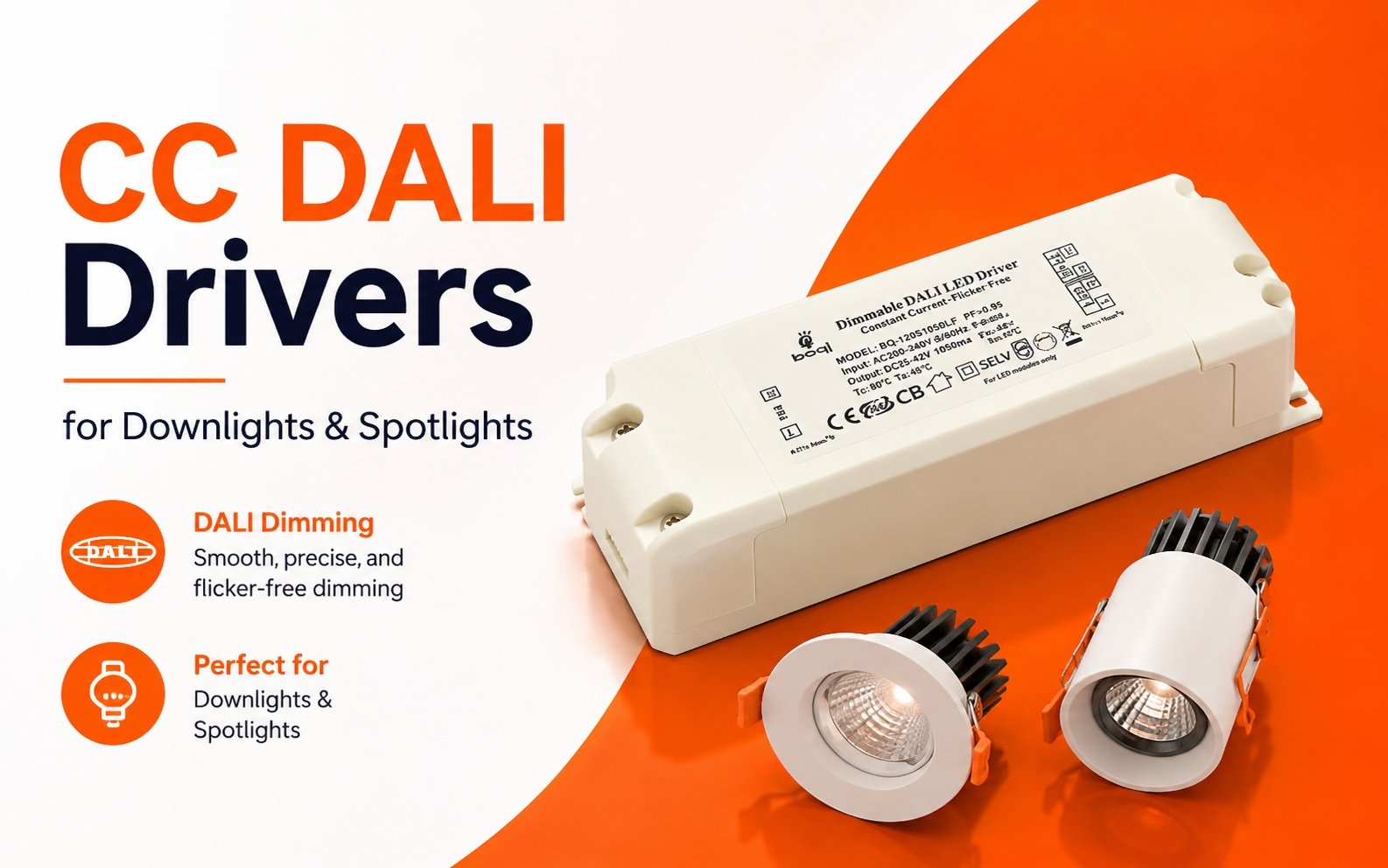
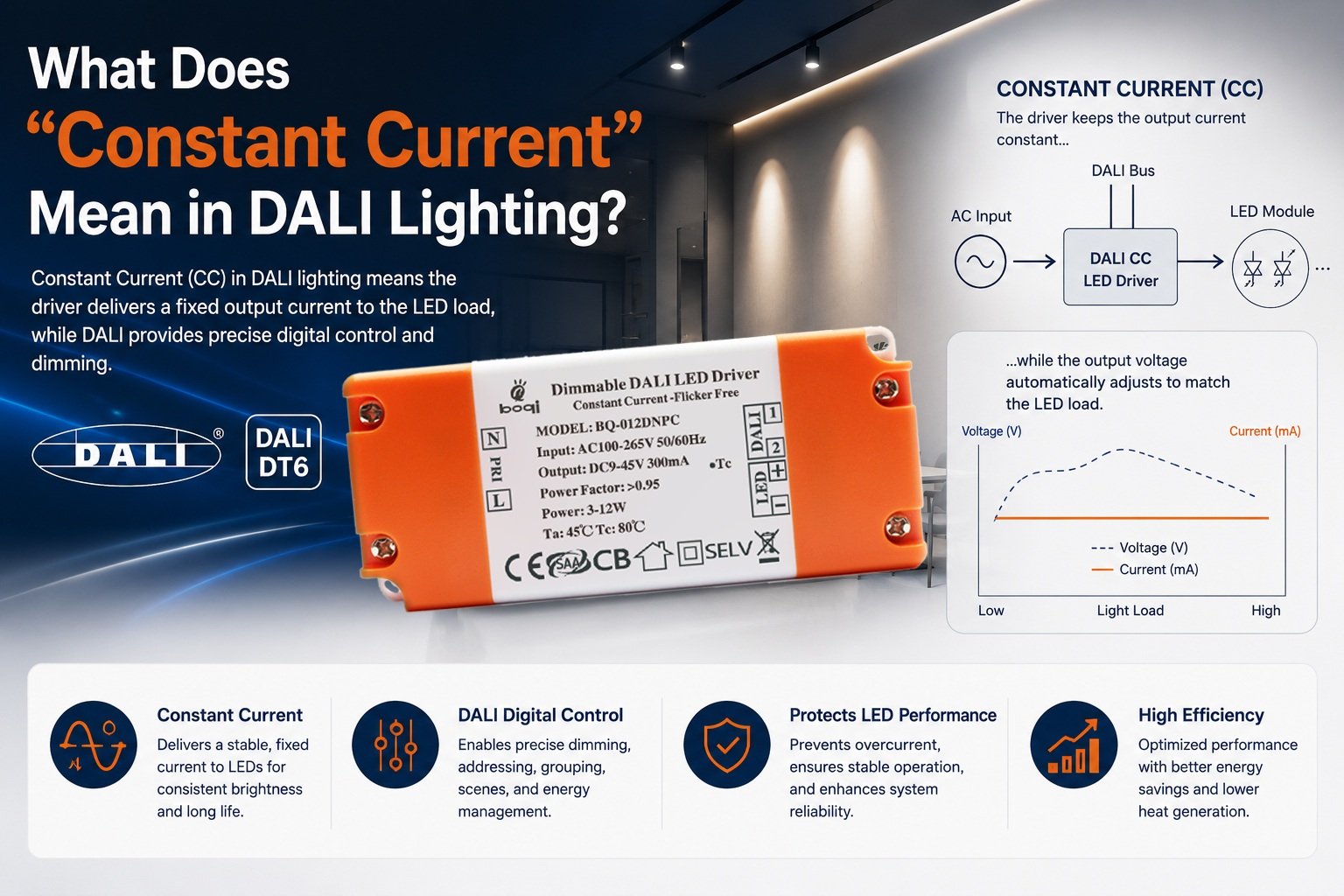
Konstantstrom in der DALI-Beleuchtung bedeutet, dass der LED-Treiber einen festen Ausgangsstrom in Milliampere an das LED-Modul liefert, während seine Spannung innerhalb eines Durchlassspannungsbereichs schwankt. DALI ist nur das digitale Dimmprotokoll; der Treiber selbst regelt und stabilisiert den Strom.
Diese Definition klingt einfach. Aber die Details entscheiden, ob Ihre Leuchten gleichmäßig dimmen oder früh ausfallen. Lassen Sie mich erklären, was wirklich zählt, wenn Sie diese Treiber kaufen oder spezifizieren.
Woher weiß ich, ob meine LED-Leuchten einen Konstantstrom-DALI-Treiber benötigen?
Letzten Frühling schickte uns ein Distributor in Italien eine Downlight-Probe, die ständig durchbrannte. Die Ursache war ein Konstantspannungstreiber, der mit einem stromgetriebenen COB-Modul kombiniert wurde.
Ihre LED-Leuchten benötigen einen Konstantstrom-DALI-Treiber, wenn das LED-Modul einen Nenntreibstrom in Milliampere angibt, z. B. 350mA oder 700mA. Nackte COBs, Downlight-Engines und Hochleistungsmodule sind stromgetrieben; LED-Streifen mit eingebauten Widerständen benötigen normalerweise stattdessen Konstantspannung.
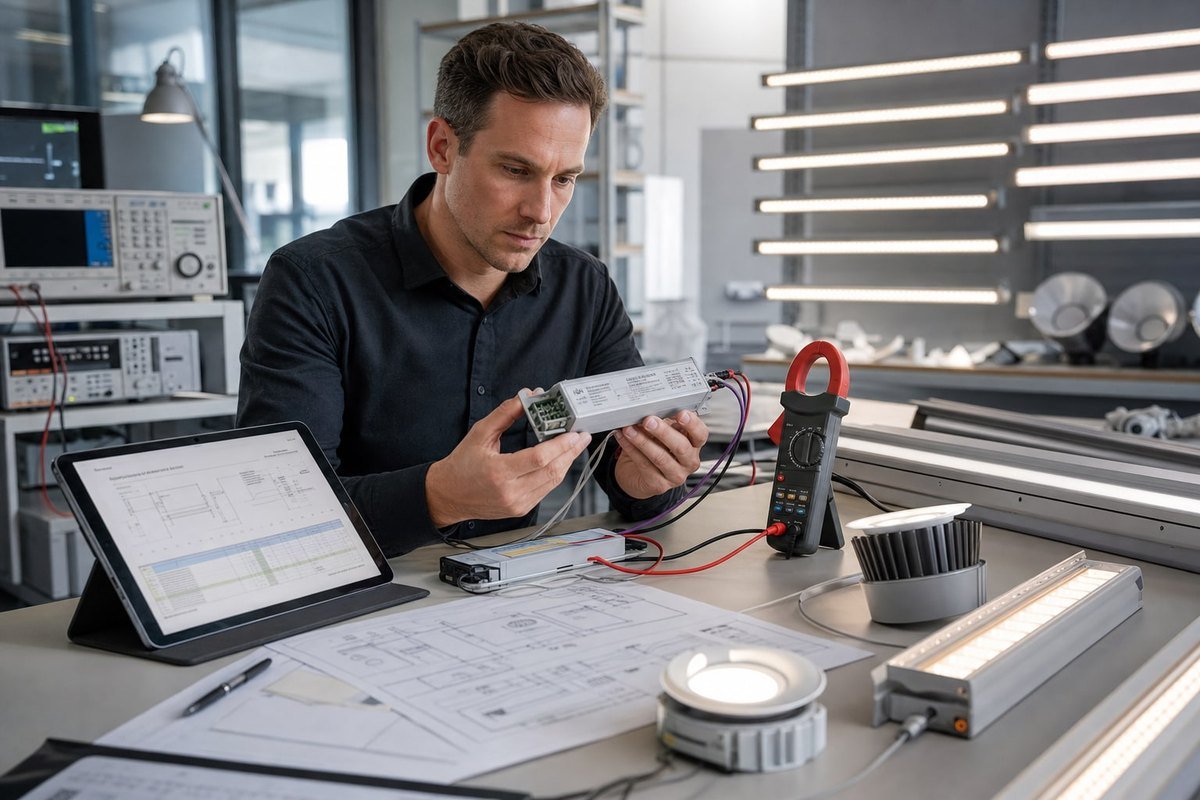
Der schnellste Weg zur Entscheidung ist das Lesen des LED-Modul-Datenblatts. LEDs sind stromgetriebene Halbleiter. Wenn Sie ihnen zu viel Strom zuführen, steigt die Wärme, der Widerstandmente 1 sinkt, und die LED zieht noch mehr Strom. Diese Kettenreaktion wird als thermischer Durchlauf 2, bezeichnet und zerstört den Chip. Ein Konstantstrom-Treiber verhindert dies, indem er den Ausgangsstrom in Milliampere stabil hält und die Spannung automatisch anpasst.
Prüfen Sie zuerst diese drei Dinge
Prüfen Sie zuerst die Modulbewertung. Wenn dort “700mA, 24–42V” steht, ist dieser Spannungsbereich der Durchlassspannung 3 Bereich, und Sie benötigen Konstantstrom. Zweitens prüfen Sie die Verkabelung. Konstantstrom-Systeme verwenden eine Reihenschaltung, sodass derselbe Strom durch jede LED in der Kette fließt. Drittens prüfen Sie Ihren Steuerungsplan. Wenn das Projekt ein adressierbares Beleuchtungssystem mit Szenen und Gruppen erfordert, benötigen Sie DALI-Betriebsgeräte, nicht analoges Dimmen.
Hier ist der Konstantspannungsvergleich, den unsere Ingenieure mit neuen Kunden teilen:
| Faktor | Konstantstrom (CC) | Konstante Spannung (CV) |
|---|---|---|
| Geregelter Ausgang | Fester Strom (mA) | Feste Spannung (V) |
| Typische Lasten | COBs, Downlights, Panels, High-Bays | LED-Streifen, Beschilderungsmodule |
| Verdrahtung | Ausfallrisiko bei falscher Kombination | Überstrom, thermisches Durchgehen |
| Ungleichmäßige Helligkeit, Hot Spots | Identisch über die gesamte Kette | Abfall über lange Strecken |
| Helligkeitskonsistenz | Ein weiterer Punkt, den viele übersehen. DALI selbst macht ein System nicht zu Konstantstrom. Der DALI-Bus überträgt nur digitale Befehle bei etwa 16V DC mit einem kleinen Strombudget. Die Ausgangsseite des Treibers ist eine separate Schaltung und kann je nach Produkt CC oder CV sein. | LED-Module, die einen Nenntreibstrom in Milliampere angeben, benötigen einen Konstantstrom-Treiber |
LEDs sind stromgetriebene Halbleiter, daher muss der Treiber den Strom fixieren und die Spannung innerhalb des Durchlassspannungsbereichs des Moduls schwanken lassen, um Überstromschäden zu verhindern.
Welchen Stromausgang sollte ich spezifizieren, wenn ich DALI-Konstantstrom-Treiber für mein Projekt beschaffe?
Den richtigen Stromwert zu ermitteln ist nur Schritt eins. Sie müssen auch prüfen, dass das Spannungsfenster des Treibers zu Ihrer Kette passt. Wenn Ihre Kette 30–42V bei 700mA benötigt, wird ein Treiber mit 25–40V Nennwert oben abschneiden und Ausfälle oder Flackern verursachen. In unseren OEM-Projekten für europäische Beleuchtungsmarken ist diese Spannungsfehlanpassung der häufigste Spezifikationsfehler, den wir bei der Designprüfung erkennen.
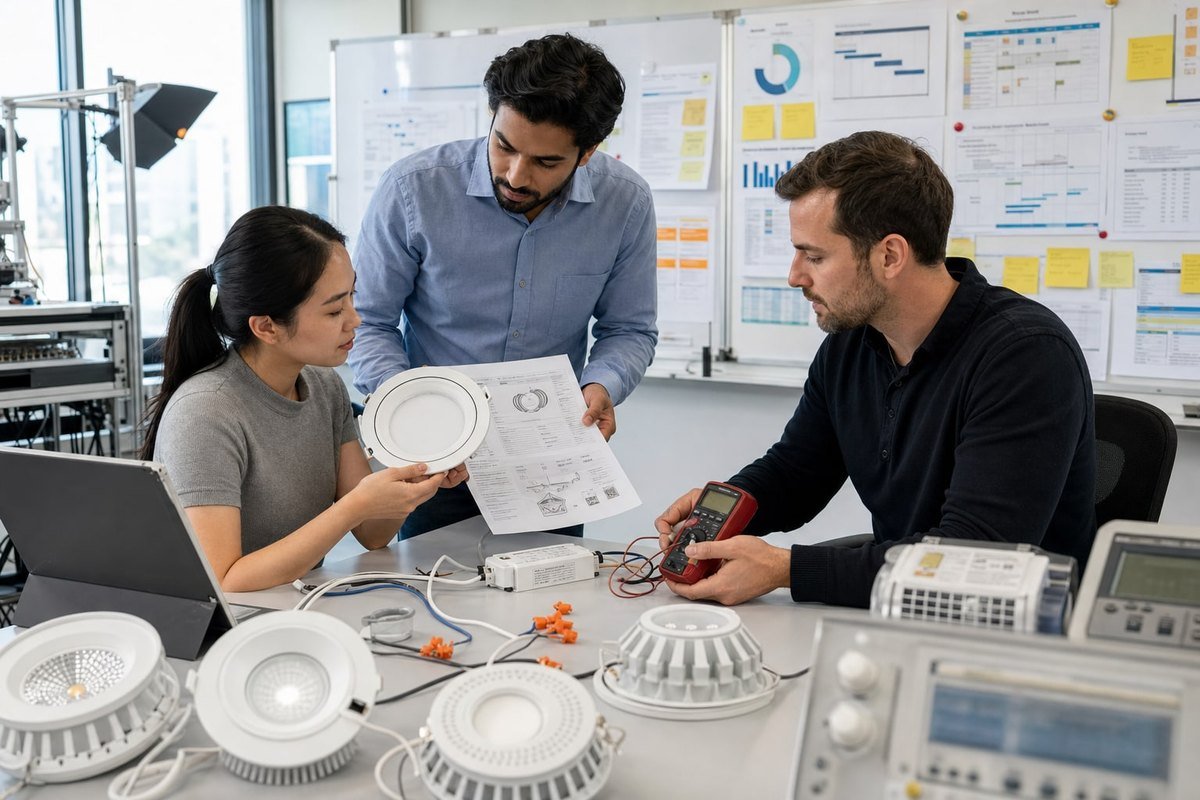
Verschiedene Leuchtenklassen gruppieren sich um typische Treibströme. Nutzen Sie dies als Ausgangspunkt und verifizieren Sie dann gegen Ihr tatsächliches Modul:.
Typischer Ausgangsstrom.
Strom an die Anwendung anpassen
Typischer Leistungsbereich
| Anwendung | Kleine Spotlights, Track-Heads | 350–500mA |
|---|---|---|
| 5–15W | Gewerbliche Downlights | 5–15W |
| Gewerbliche Downlights | 500–700mA | 10–25W |
| Panelleuchten, lineare Leuchten | 700–1050mA | 25–45W |
| Industrielle High-Bay-Leuchten | 1050mA und darüber | 60W+ |
Entscheiden Sie auch über das Dimverhalten
Der Strom ist nicht die einzige Zeile im Datenblatt. Fragen Sie, wie der Treiber dimmt. Bessere DALI-2-LED-Treiberdesigns verwenden Hybrid-Dimming: kontinuierliche Stromreduzierung bei hoher Helligkeit, dann hochfrequente Pulsweitenmodulation 4 bei niedrigen Stufen. Diese Kombination ergibt sanftes, flimmerfreies Dimmen bis hinunter zu 1% oder sogar 0,1%. Geben Sie auch den Gerätetyp an. Ein DALI-DT6-Controller steuert standardmäßiges Einkanal-Dimming, während DT8 zwei Stromkanäle für tunbares Weiß über eine Adresse ausbalanciert. Wenn Ihr Kunde Energie- und Temperaturfeedback für das Gebäudemanagement wünscht, fügen Sie D4i-Unterstützung zur Anforderungsliste hinzu.
Fordern Sie schließlich Sanftanlauf und Einschaltstrombegrenzung. Wenn Dutzende Treiber gleichzeitig an einem Schutzschalter hochfahren, lösen billige Treiber ihn aus. Gute tun das nicht.
Wie kann ich die Konstantstrom-Genauigkeit während der Qualitätskontrolle für meine Eigenmarken-Beleuchtungslinie verifizieren?
Ein Einkaufsleiter aus Singapur fragte mich einmal über WhatsApp nach unseren genauen QC-Schritten, bevor sie sich für einen Private-Label-Auftrag entschied. Dieses Gespräch wurde zu unserer Standard-Inspektionscheckliste.
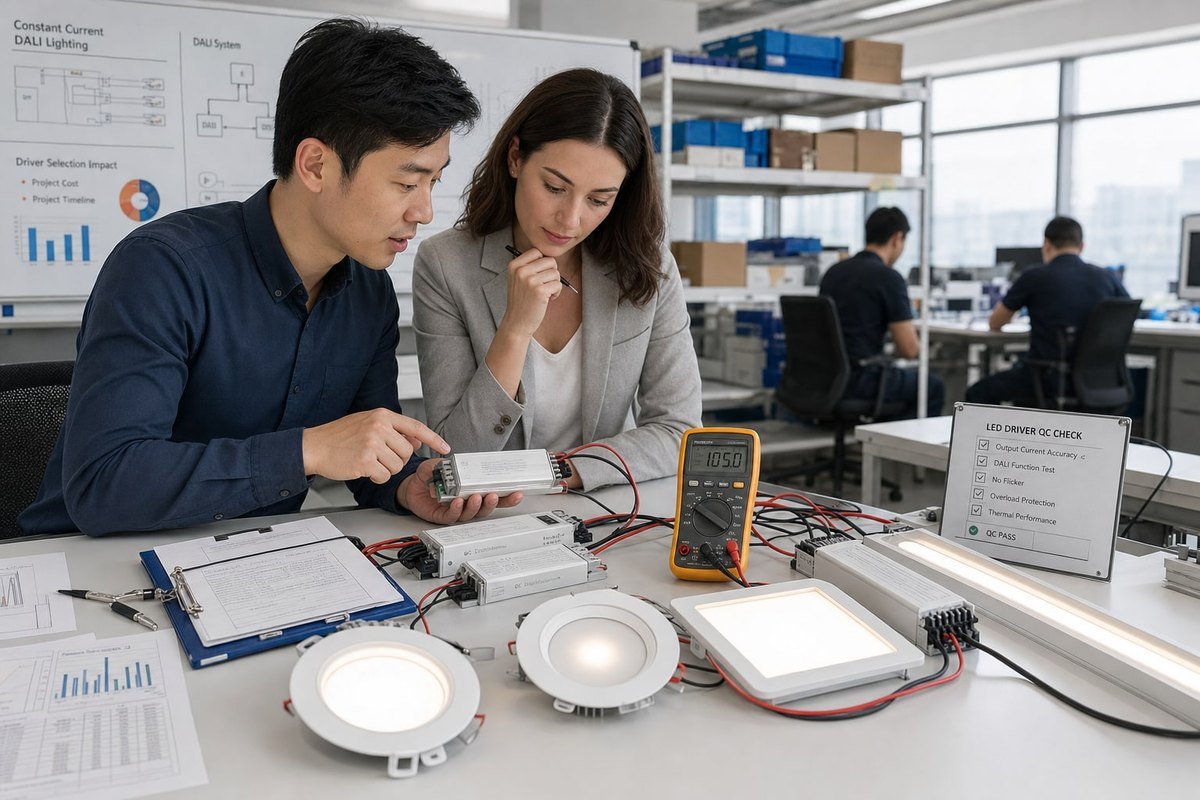
Überprüfen Sie die Konstantstromgenauigkeit, indem Sie den Ausgangsstrom mit einem kalibrierten Multimeter oder einer elektronischen Last bei voller Helligkeit und mehreren DALI-Dimmstufen über minimale und maximale Lastspannungen messen. Akzeptieren Sie Einheiten innerhalb von ±5% des Nennstroms und bestätigen Sie die Flimmerleistung mit einem photometrischen Flimmermessgerät.

Qualitätskontrolle für Private-Label-Treiber ist nicht kompliziert, muss aber systematisch sein. Auf unserer Produktionslinie in Shenzhen durchläuft jeder Treiber vor dem Aufbringen des Logos auf das Gehäuse automatisierte Tests. Ich empfehle Markeninhabern, eine verkleinerte Version dieses Prozesses während der Vorversand-Inspektion zu replizieren, entweder selbst oder durch einen Drittinspektor.
Ein praktisches Fünf-Schritte-QC-Verfahren
- Statischer Stromtest. Verbinden Sie den Treiber mit einer elektronischen Last, die innerhalb des Nenn-Durchlassspannungsbereichs eingestellt ist. Messen Sie den Ausgangsstrom bei 100% Helligkeit. Er sollte innerhalb von ±5% des Nennwerts liegen.
- Lastdurchlauf. Wiederholen Sie die Messung bei minimaler und maximaler Spannung des Treiberfensters. Eine qualitativ hochwertige Konstantstromstufe hält denselben Milliampere-Wert über die gesamte Spanne.
- DALI-Dimmlinearität. Senden Sie DALI-Befehle bei 100%, 50%, 10% und 1%. Bestätigen Sie, dass die Lichtleistung der logarithmischen Dimmkurve glatt folgt, ohne Stufen oder Sprünge. Dies prüft, ob das digitale Dimmprotokoll und die Stromregelungsstufe korrekt zusammenarbeiten.
- Flimmermessung. Bei niedrigen Dimmstufen müssen Treiber, die auf Pulsweitenmodulation umschalten, mit ausreichend hoher Frequenz laufen, um unsichtbar zu bleiben. Testen Sie mit einem Flimmermessgerät 6 bei 10% und 1%.
- Thermische und Lebensdauer-Stichproben. Führen Sie eine Stichprobencharge bei Volllast in einer beheizten Kammer für einen verlängerten Burn-in durch. Stromdrift unter Hitze deckt schwache Komponenten auf, bevor Ihre Kunden es tun.
Dokumentation, die Sie von Ihrem Lieferanten verlangen sollten
Fordern Sie Testberichte, die mit Seriennummern verknüpft sind, nicht generische Datenblätter. In unserer Exportarbeit in Märkte wie Deutschland, Japan und Australien haben wir festgestellt, dass Chargenrückverfolgbarkeit die Streitbeilegung von Wochen auf Tage verkürzt. Überprüfen Sie auch, ob die auf dem Gehäuse aufgedruckten Sicherheitszeichen wie CE- und SELV-Symbole mit echten Zertifizierungsdokumenten übereinstimmen. Gefälschte Zeichen auf Treibergehäusen bleiben ein echtes Risiko bei der Beschaffung von ungeprüften Fabriken.
Warum beeinflusst die Wahl des richtigen Konstantstrom-DALI-Treibers meine Gesamtprojektkosten und meinen Zeitplan?
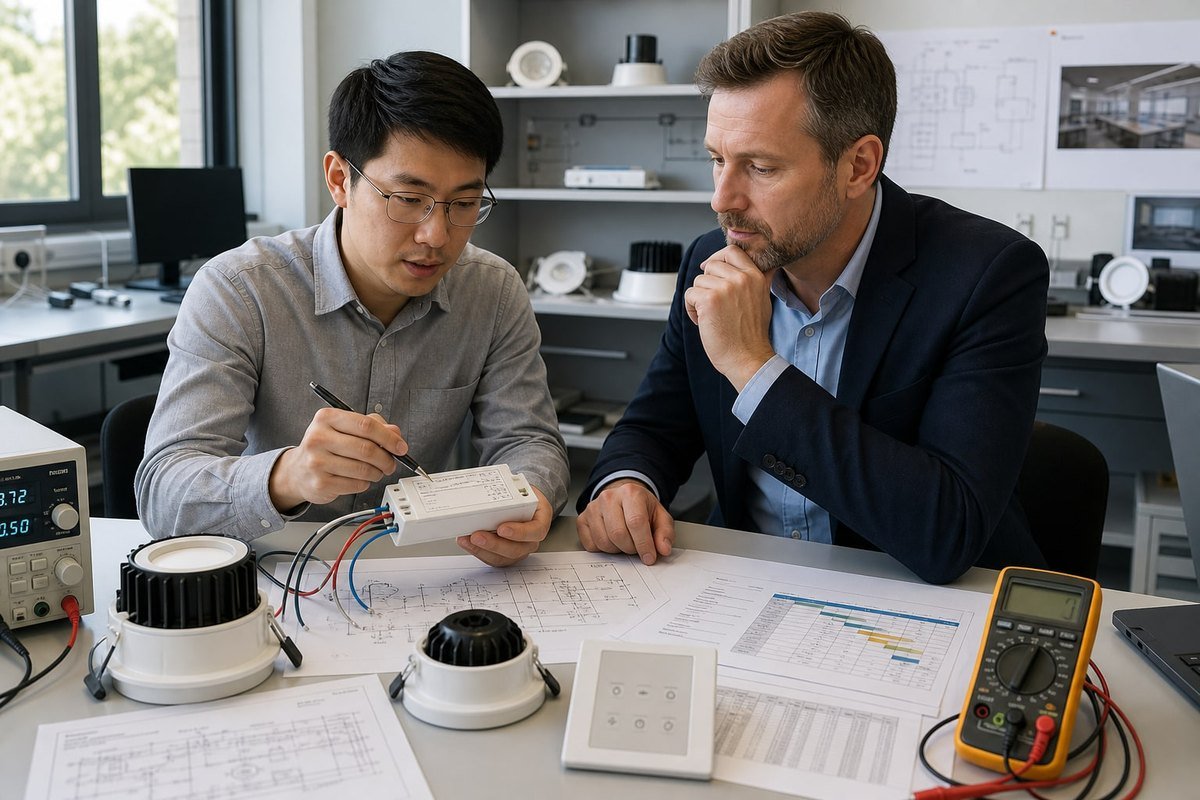
Wir halfen einmal einem britischen Kunden, ein ins Stocken geratenes Hotelprojekt zu retten. Der ursprüngliche Lieferant lieferte Treiber mit falscher Stromstärke, und jeder Downlight musste vor Ort neu angesteuert werden.
Der falsche Treiber erzwingt Nacharbeit, Ersatz und Inbetriebnahmeverzögerungen, die die Kosten weit über den Treiberpreis hinaus vervielfachen. Der richtige Konstantstrom-DALI-Treiber verhindert Feldausfälle, beschleunigt Adressierung und Inbetriebnahme, senkt den Energieverbrauch durch präzises Dimmen und schützt die LED-Lebensdauer, wodurch Budgets und Fristen eingehalten werden.
Die Treiberkosten liegen normalerweise unter 15% der Stückliste einer Leuchte. Dennoch verursachen Treiberfehler einen überproportionalen Anteil an Projektüberschreitungen. Der Grund ist einfach: Der Treiber sitzt zwischen der elektrischen Installation, dem Steuerungssystem und der LED-Last. Ein Fehler in dieser einen Komponente wirkt sich gleichzeitig in drei Richtungen aus.
Wo die versteckten Kosten auftreten
| Falsche Wahl | Sofortiges Symptom | Folgekosten |
|---|---|---|
| Stromstärke zu hoch | Überhitzung der LEDs | Früher Lichtstromabfall, Garantieansprüche |
| Spannungsfenster-Fehlanpassung | Flackern, Aussetzer bei Dimmstufen | Vor-Ort-Fehlerbehebung, Ersatzarbeitskraft |
| Nicht zertifizierte DALI-Schnittstelle | Adressierungsfehler | Inbetriebnahmeverzögerungen, Integratorengebühren |
| Keine Einschaltstrombegrenzung | Schutzschalterauslösung beim Einschalten | Elektrische Neugestaltung, zusätzliche Schütze |
| Altes DALI anstelle von DALI-2 | Keine Interoperabilitätsgarantie | Eingeschlossenes Ökosystem, zukünftige Nachrüstkosten |
Zeitplanrisiken sind größer als Kostenrisiken
Kostenüberschreitungen schmerzen, aber verpasste Fristen töten Projekte. Die Inbetriebnahme ist der Punkt, an dem schlechte Treiber die meiste Zeit stehlen. Ein DALI-2-LED-Treiber reagiert korrekt auf die Adressierung IEC 62386 7, Gruppenzuweisung und Szenenbefehle von jedem konformen Controller. Nicht zertifizierte Einheiten funktionieren oft in der Demo und versagen auf dem echten Bus, und Integratoren berechnen tageweise, während sie den Fehler suchen. In unserer ODM-Arbeit integrieren wir DALI-2-Konformitätstests genau deshalb, weil unsere Großhandelskunden Terminverzögerungen nicht absorbieren können.
Es gibt auch einen vorausschauenden Blickwinkel. Intelligente Gebäude verlangen zunehmend nach Daten. Treiber mit D4i-Rückmeldung melden Energieverbrauch, Betriebsstunden und Temperatur über den Bus zurück. Die Spezifikation dieser Fähigkeit kostet jetzt etwas mehr pro Einheit. Die spätere Nachrüstung bedeutet den Austausch jedes Treibers in der Decke. Wenn ich eine Projektspezifikation mit einem Kunden überprüfe, frage ich immer nach dem Fünfjahresplan, nicht nur nach dem Starttermin, weil der billigste Treiber am ersten Tag selten der billigste Treiber über die Lebensdauer der Installation ist.
Schlussfolgerung
Konstanter Strom beschreibt die geregelte Ausgabe des Treibers, nicht den DALI-Bus. Passen Sie Strom, Spannungsfenster und DALI-2-Konformität an Ihre Leuchten an und überprüfen Sie dies mit echter Qualitätskontrolle. Machen Sie es einmal richtig, und Ihre Projektkosten, Zeitplan und Markenreputation bleiben geschützt.
Fußnoten
1. Offizielle EU-Quelle, die das CE-Zeichen erklärt, auf das in der Qualitätskontroll-Dokumentation Bezug genommen wird. ↩︎
2. Definiert den Versagensmechanismus, auf den verwiesen wird, wenn LEDs durch übermäßigen Strom überhitzen. ↩︎
3. Erklärt die Halbleitereigenschaft, die den Konzepten der LED-Durchlassspannungsbereich zugrunde liegt. ↩︎
4. Hintergrund zur Dimmtechnik bei niedrigen Helligkeitsstufen. ↩︎
5. Bietet technischen Hintergrund zum Rückgang der Lichtleistung durch LED-Übersteuerung. ↩︎
6. Hintergrund zur Lichtflackermessung, die für die erwähnte photometrische Prüfung relevant ist. ↩︎
7. Verweist auf die internationale Normungsorganisation, die die DALI-Protokollspezifikationen regelt. ↩︎