













Köpare frågar mig ofta vad konstant ström betyder inom DALI-belysning. Förvirring här orsakar returnerade drivdon, flimrande armaturer och försenade lanseringar. Vårt ingenjörsteam i Shenzhen reder ut denna fråga dagligen.
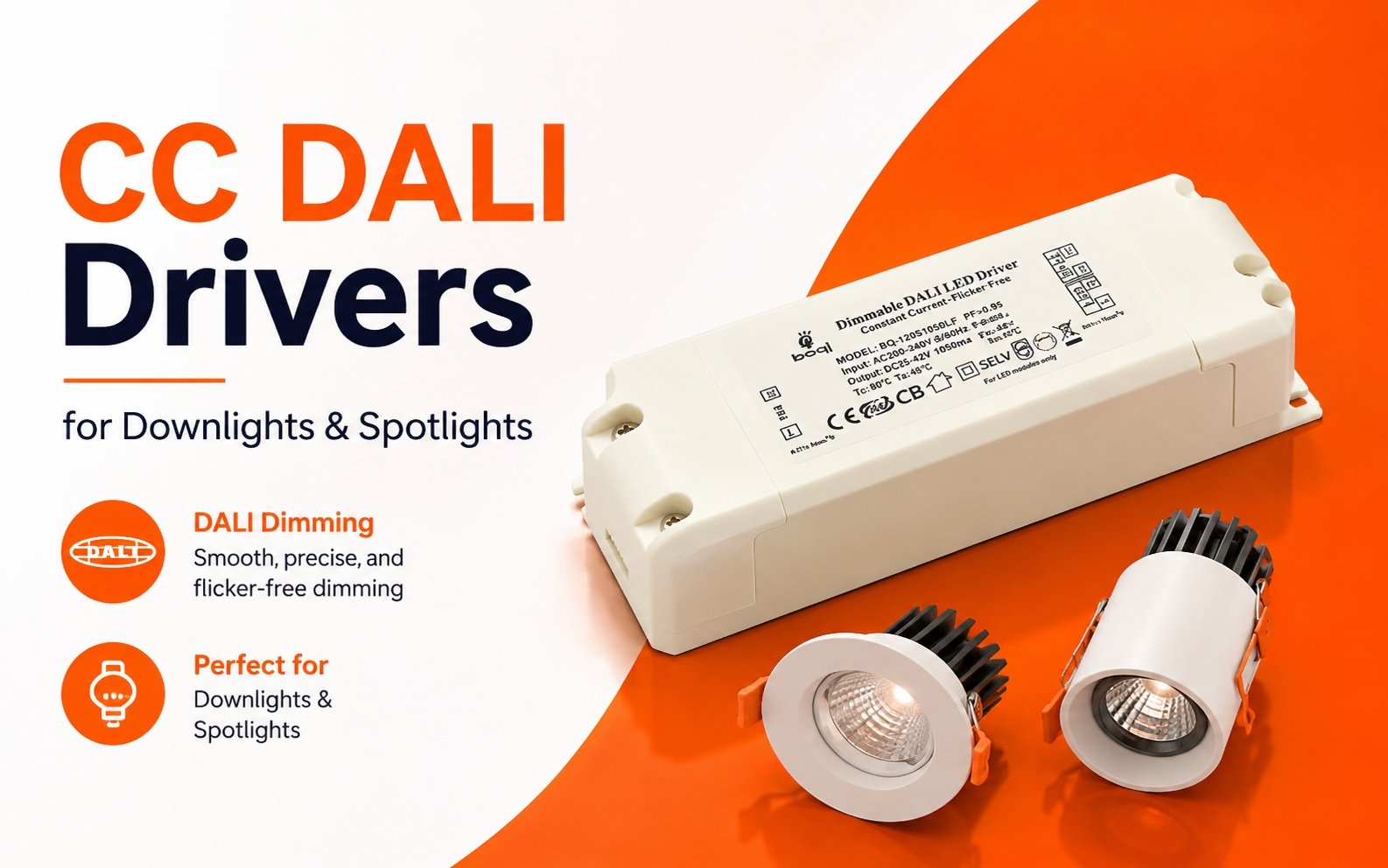
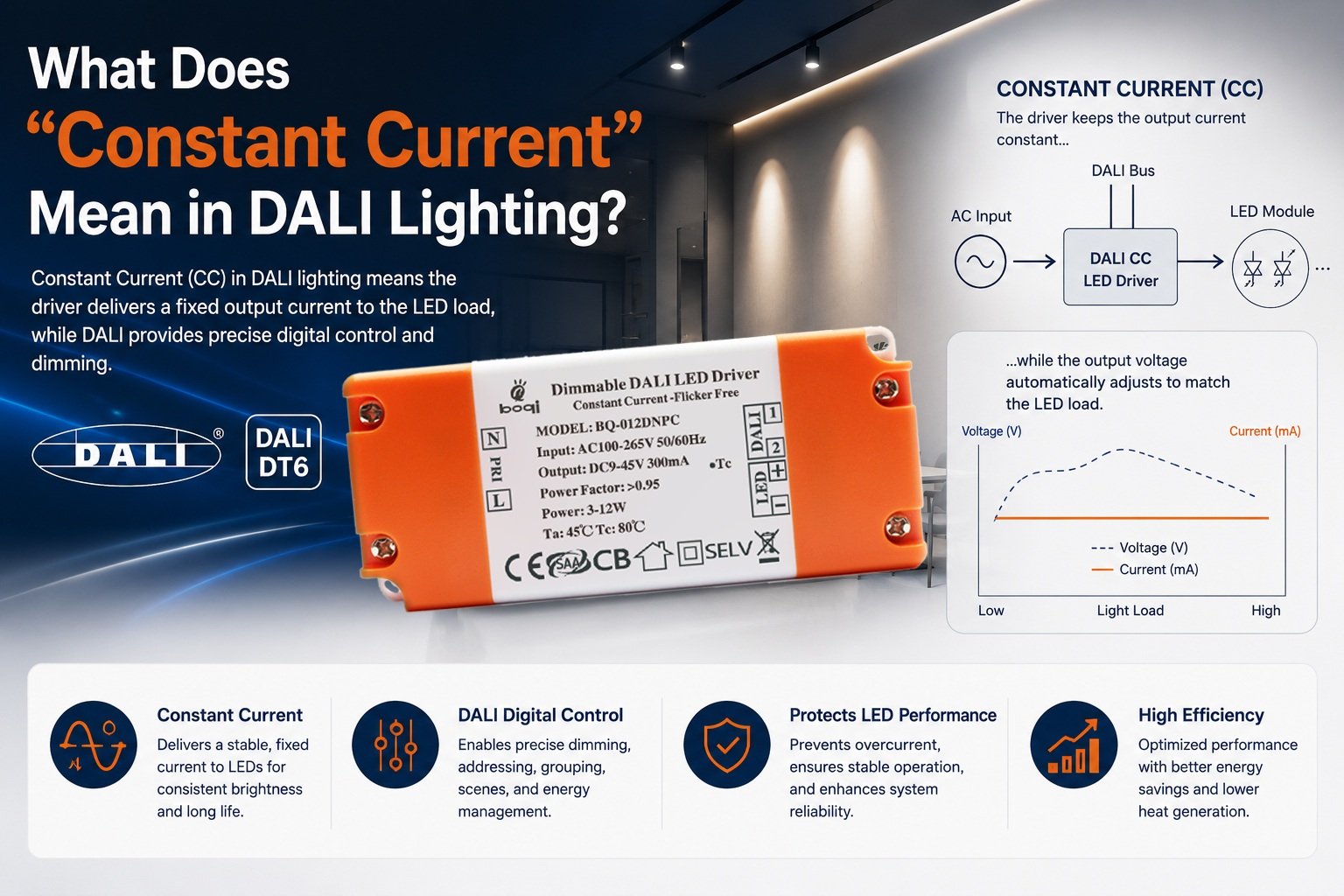
Konstant ström inom DALI-belysning innebär att LED-drivdonet levererar en fast utgångsström i milliampere till LED-modulen medan dess spänning flyter inom ett framåtspänningsområde. DALI är endast det digitala dimningsprotokollet; själva drivdonet reglerar och stabiliserar strömmen.
Den definitionen låter enkel. Men detaljerna avgör om dina armaturer dimmar smidigt eller går sönder tidigt. Låt mig gå igenom vad som faktiskt spelar roll när du köper eller specificerar dessa drivdon.
Hur vet jag om mina LED-armaturer behöver ett konstantströms-DALI-drivdon?
Förra våren skickade en distributör i Italien oss ett downlight-prov som fortsatte brinna ut. Orsaken var ett konstantspänningsdrivdon kopplat till en strömdriven COB-modul.
Dina LED-armaturer behöver ett konstantströms-DALI-drivdon om LED-modulen anger en märkdrivström i milliampere, såsom 350mA eller 700mA. Bara COB-moduler, downlight-motorer och högdrivna moduler är strömdrivna; LED-remsor med inbyggda motstånd behöver vanligtvis konstant spänning istället.
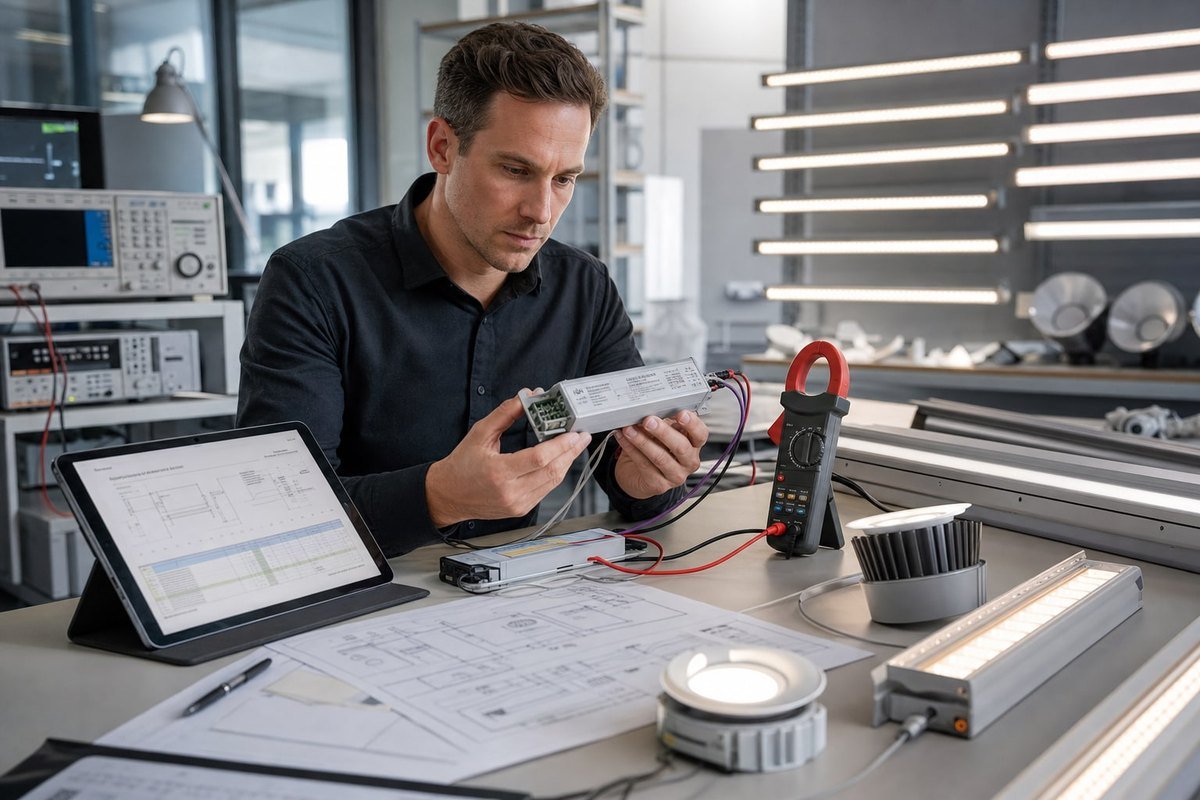
Det snabbaste sättet att avgöra är att läsa LED-modulens datablad. Lysdioder är strömdrivna halvledare. Matar du dem med för mycket ström stiger värmen, resistansensjunker, och lysdioden drar ännu mer ström. Den kedjereaktionen kallas 1 termisk rusning , och den förstör chippet. Ett konstantströmsdrivdon förhindrar detta genom att hålla utgångsströmmen i milliampere stadig medan den justerar spänningen automatiskt. 2, Först, titta på modulens märkning. Om den säger “700mA, 24–42V,” är det spänningsintervallet.
Kontrollera dessa tre saker först
framåtspänningsområdet , och du behöver konstant ström. För det andra, titta på kopplingen. Konstantströmsystem använder en seriekopplingskonfiguration, så samma ström flyter genom varje lysdiod i slingan. För det tredje, titta på din styrplan. Om projektet kräver ett adresserbart belysningssystem med scener och grupper, behöver du DALI-styrutrustning, inte analog dimning. 3 Här är konstantspänningsjämförelsen våra ingenjörer delar med nya kunder:.
Faktor
| Konstant ström (CC) | Konstant spänning (CV) | Reglerad utgång |
|---|---|---|
| Fast ström (mA) | Fast spänning (V) | Typiska laster |
| COB-moduler, downlights, paneler, high-bays | LED-remsor, skyltmoduler | Koppling |
| Seriekopplingskonfiguration | Parallell | Felrisk vid felmatchning |
| Överström, termisk rusning | Ojämn ljusstyrka, heta punkter | Ljusstyrkekonsistens |
| Identisk över slingan | Sjunker över långa sträckor | En punkt till som folk missar. DALI i sig gör inte ett system till konstant ström. DALI-bussen bär endast digitala kommandon vid ungefär 16V DC med en liten strömbudget. Drivdonets utgångssida är en separat krets, och den kan vara CC eller CV beroende på produkten. |
LED-moduler som specificerar en märkdrivström i milliampere kräver ett konstantströmsdrivdon.
Vilken strömutgång ska jag specificera när jag köper in DALI-konstantströmsdrivdon för mitt projekt?
Att välja en utström är en avvägning vi ständigt väger med kunder: högre milliampere ger fler lumen per modul, men också mer värme och kortare LED-livslängd.
Ange den utström som anges på din LED-moduls datablad, vanligtvis 350mA, 500mA, 700mA eller 1050mA, och bekräfta att drivrutinens framåtspänningsområde täcker din LED-slinga. För flexibilitet över SKU:er, välj en multi-current-drivrutin som är justerbar via DIP-omkopplare eller programmering.
Att få rätt strömvärde är bara steg ett. Du måste också kontrollera att drivrutinens spänningsfönster matchar din slinga. Om din slinga behöver 30–42V vid 700mA, kommer en drivrutin klassad 25–40V att klippa i toppen och orsaka bortfall eller flimmer. I våra OEM-projekt för europeiska belysningsmärken är denna spänningsmismatch det vanligaste specifikationsfelet vi fångar upp under designgranskning.
Matcha strömmen till applikationen
Olika armaturklasser grupperas kring typiska drivströmmar. Använd detta som utgångspunkt, verifiera sedan mot din faktiska modul:
| Ansökan | Typisk utström | Typiskt effektområde |
|---|---|---|
| Små spotlights, spårlister | 350–500mA | 5–15W |
| Kommersiella downlights | 500–700mA | 10–25W |
| Panelarmaturer, linjära armaturer | 700–1050mA | 25–45W |
| Industriella high-bays | 1050mA och över | 60W+ |
Bestäm även dimningsbeteendet
Ström är inte den enda raden på specifikationsbladet. Fråga hur drivrutinen dimmar. Bättre DALI-2 LED-drivrutinsdesigner använder hybriddimmning: kontinuerlig strömsänkning vid hög ljusstyrka, sedan högfrekvent pulsbreddsmodulering 4 vid låga nivåer. Den kombinationen ger dig jämn, flimmerfri dimning ner till 1% eller till och med 0,1%. Ange också enhetstypen. En DALI DT6-styrenhet hanterar standard enkanalsdimmning, medan DT8 balanserar två strömkanaler för tunable white genom en adress. Om din kund vill ha energi- och temperaturåterkoppling för byggnadsstyrning, lägg till D4i-stöd i kravlistan.
Slutligen, begär mjukstart och inrush-strömbegränsning. När dussintals drivrutiner startar tillsammans på en brytare, löser billiga drivrutiner ut den. Bra sådana gör det inte.
Hur kan jag verifiera konstantströmsnoggrannheten under kvalitetskontroll för min egen märkesbelysningslinje?
En inköpschef från Singapore frågade mig en gång över WhatsApp om våra exakta QC-steg innan hon åtog sig en private-label-order. Det samtalet blev vår standardinspektionschecklista.
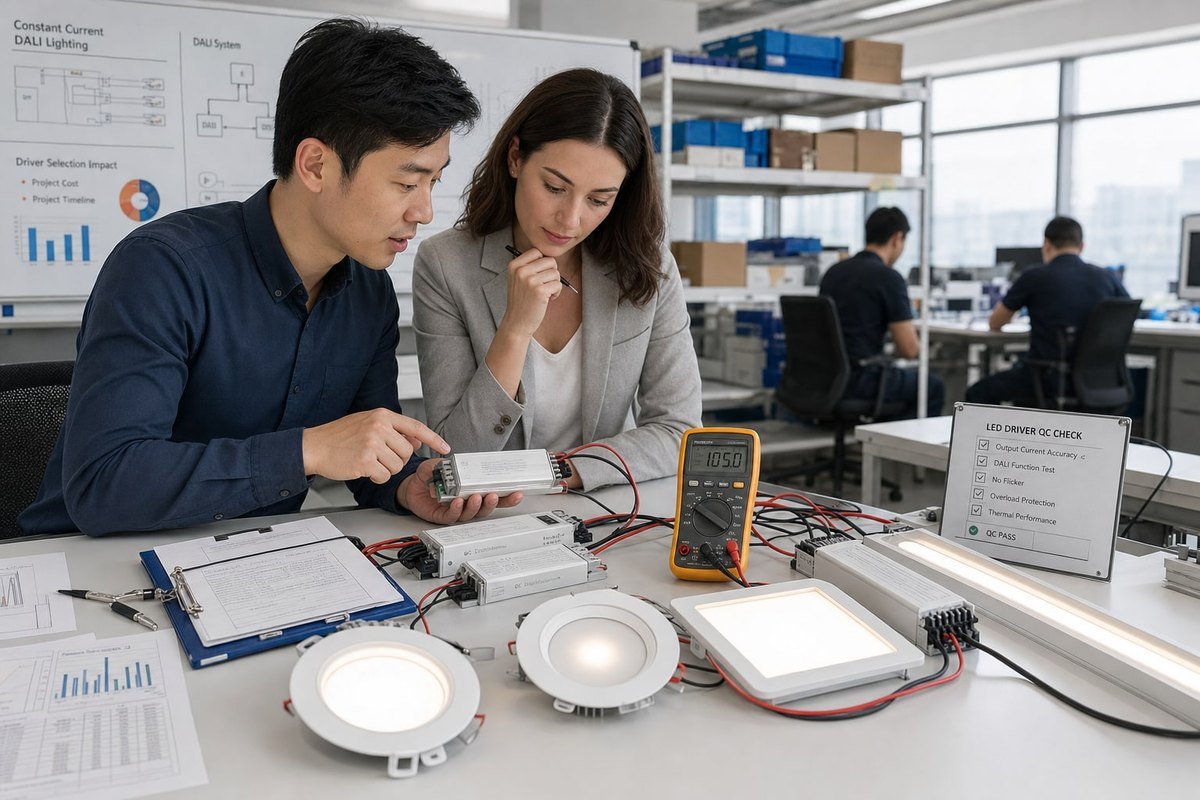
Verifiera konstantströmsnoggrannhet genom att mäta utström med en kalibrerad multimeter eller elektronisk last vid full ljusstyrka och flera DALI-dimmnivåer, över minsta och maximala lastspänningar. Acceptera enheter inom ±5% av märkström, och bekräfta flimmerprestanda med en fotometrisk flimmermätare.

Kvalitetskontroll för private-label-drivrutiner är inte komplicerad, men den måste vara systematisk. På vår produktionslinje i Shenzhen passerar varje drivrutin automatiserad testning innan logotypen sätts på höljet. Jag rekommenderar varumärkesägare att replikera en nedskalad version av denna process under före-leveransinspektion, antingen själva eller genom en tredjepartsinspektör.
En praktisk femstegs QC-procedur
- Statiskt strömtest. Anslut drivrutinen till en elektronisk last inställd inom det märkta framåtspänningsområdet. Mät utström vid 100% ljusstyrka. Den bör ligga inom ±5% av märkplåtens värde.
- Lastsvepning. Upprepa mätningen vid minsta och maximala spänning i drivrutinens fönster. Ett kvalitetskonstantströmssteg håller samma milliampereavläsning över hela spannet.
- DALI-dimmningslinjaritet. Skicka DALI-kommandon vid 100%, 50%, 10% och 1%. Bekräfta att ljusutgången följer den logaritmiska dimningskurvan jämnt, utan steg eller hopp. Detta kontrollerar att det digitala dimningsprotokollet och strömregleringssteget fungerar tillsammans korrekt.
- Flimmermätning. Vid låga dimningsnivåer måste drivrutiner som växlar till pulsbreddsmodulering köra på en tillräckligt hög frekvens för att förbli osynliga. Testa med en flimmermätare 6 vid 10% och 1%.
- Termisk och hållbarhetsprovtagning. Kör ett provparti vid full last i en värmekammare för en förlängd burn-in. Strömdrift under värme avslöjar svaga komponenter innan dina kunder gör det.
Dokumentation att kräva från din leverantör
Begär testrapporter kopplade till serienummer, inte generiska datablad. I vårt exportarbete till marknader som Tyskland, Japan och Australien fann vi att batch-nivå spårbarhet förkortar tvistlösning från veckor till dagar. Verifiera också att säkerhetsmärkena på höljet, såsom CE- och SELV-symboler, matchar riktiga certifieringsdokument. Förfalskade märken på drivrutinshöljen förblir en verklig risk vid inköp från icke-granskade fabriker.
Varför påverkar valet av rätt konstantströms-DALI-drivdon mina totala projektkostnader och tidsplan?
Vi hjälpte en gång en brittisk kund att återställa ett stillastående hotellprojekt. Den ursprungliga leverantören skickade drivrutiner med fel strömklassning, och varje downlight var tvungen att omdrivas på plats.
Fel drivrutin tvingar fram omarbetning, utbyten och driftsättningsförseningar som multiplicerar kostnader långt bortom drivrutinens pris. Rätt konstantström DALI-drivrutin förhindrar felfall i fält, påskyndar adressering och driftsättning, minskar energianvändning genom exakt dimning och skyddar LED-livslängden, vilket håller budgetar och deadlines intakta.
Drivrutinskostnaden är vanligtvis under 15% av en armats materialkostnad. Ändå orsakar drivrutinsfel en oproportionerlig andel av projektöverskridanden. Orsaken är enkel: drivrutinen sitter mellan den elektriska installationen, styrsystemet och LED-lasten. Ett fel i denna enda komponent sprider sig i tre riktningar samtidigt.
Var de dolda kostnaderna dyker upp
| Fel val | Omedelbart symptom | Nedströmskostnad |
|---|---|---|
| Strömstyrkan är för hög | Överhettade LED-lampor | Tidig ljusnedgång, garantianspråk |
| Spänningsfönstermismatch | Flimmer, bortfall vid dimningsnivåer | Felsökning på plats, utbytesarbete |
| Icke-certifierat DALI-gränssnitt | Adresseringsfel | Driftsättningsförseningar, integrationskostnader |
| Ingen inkopplingsströmsspärr | Brytare löser ut vid påslag | Elkonstruktionsändringar, extra kontaktor |
| Äldre DALI istället för DALI-2 | Ingen interoperabilitetsgaranti | Inlåst ekosystem, framtida eftermonteringskostnad |
Tidsrisker är större än kostnadsrisker
Kostnadsöverskridanden skadar, men missade deadlines dödar projekt. Driftsättning är där dåliga drivdon stjäl mest tid. En DALI-2 LED-drivdon svarar korrekt på adressering IEC 62386 7, grupptilldelning och scenkommandon från valfri kompatibel styrenhet. Icke-certifierade enheter fungerar ofta i demo och misslyckas på den verkliga bussen, och integratörer fakturerar per dag medan de söker felet. I vårt ODM-arbete bygger vi in DALI-2-efterlevnadstestning just för att våra grossistkunder inte kan absorbera schemaförseningar.
Det finns också en framåtblickande aspekt. Smarta byggnader kräver i allt högre grad data. Drivdon som stödjer D4i-återkoppling rapporterar energianvändning, drifttimmar och temperatur tillbaka över bussen. Att specificera den kapaciteten nu kostar lite mer per enhet. Att eftermontera den senare innebär att byta ut varje drivdon i taket. När jag granskar en projektspecifikation med en kund frågar jag alltid om femårsplanen, inte bara lanseringsdatumet, eftersom det billigaste drivdonet dag ett sällan är det billigaste drivdonet över installationens livslängd.
Slutsats
Konstantström beskriver drivdonets reglerade utsignal, inte DALI-bussen. Matcha ström, spänningsfönster och DALI-2-efterlevnad mot dina armaturer och verifiera med verklig QC. Gör det rätt en gång, så förblir dina projektkostnader, tidsplan och varumärkesrykte skyddade.
Fotnoter
Officiell EU-källa som förklarar CE-märkningen som refereras i QC-dokumentationskontroller. ↩︎
Definierar felmekanismen som refereras när LED-lampor överhettas från överström. ↩︎
Förklarar halvledaregenskapen bakom LED-framåtspänningsintervallkoncept. ↩︎
Bakgrund om dimningstekniken som används vid låga ljusnivåer. ↩︎
Ger teknisk bakgrund om ljuseffektminskning från överdriven LED-drivning. ↩︎
Bakgrund om ljusflimmermätning relevant för fotometrisk testning som nämns. ↩︎
Pekar på den internationella standardiseringsorganisationen som styr DALI-protokollspecifikationer. ↩︎